
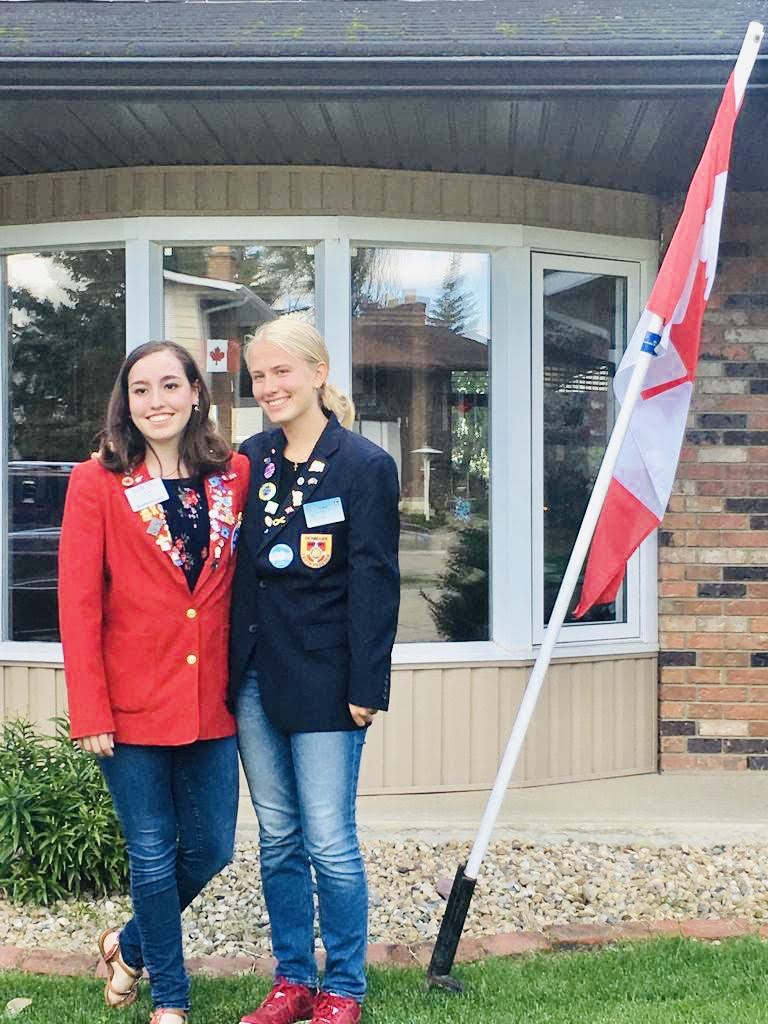
The Rotary Clubs of Edmonton Strathcona and Edmonton South are partnering in the Youth Exchange program for 2019-20.
Click on THIS LINKPERIODICALLY to open the photo album chronicling the adventures of our inbound student from Denmark, Celina Jensen and our outbound student Stephanie Leach being hosted in France.
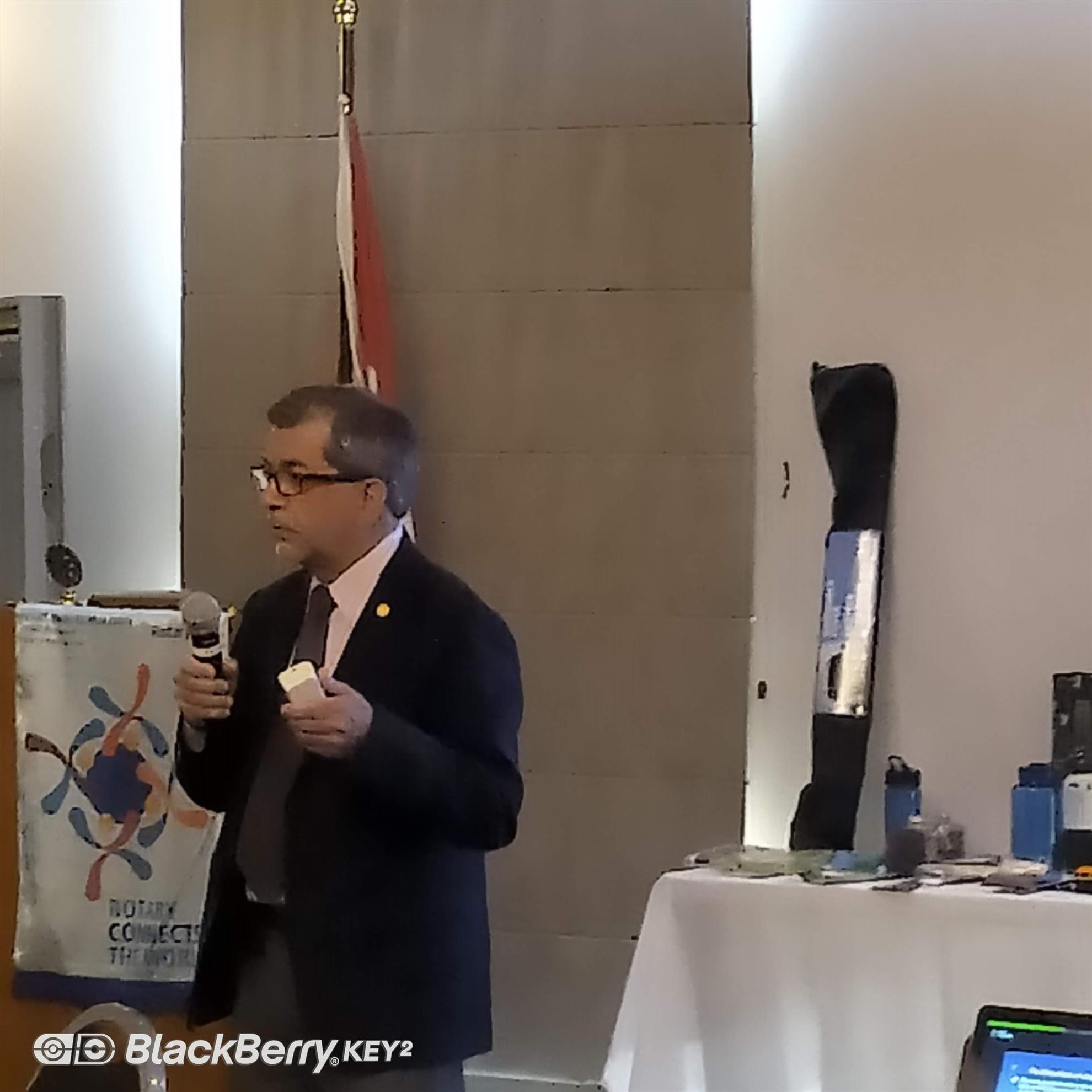
This past week we were honoured to hear from Dr. Jack H. Jhamandas, (MD and PhD) Distinguished University Professor, from the Department of Medicine, Division of Neurology. Dr. Jhamandas, a clinician and scientist at the University of Alberta, Edmonton, spoke to us about his search for a novel therapy against Alzheimer’s disease. He opened with a story about how random luck can play a life changing part in our lives, with a clip from Indiana Jones and the Last Crusade, where Indiana Jones chooses a non-descript cup to drink from, in place of a gold one, and lives as a result. Those who had chosen the golden cup died.
Dr. Jhamandas told us that Alzheimer’s disease is the most common form of dementia, comprising about eighty to ninety percent of cases. It causes a global loss of intellectual function. It affects about one in nine people at age sixty-five, increasing to about one in three at age eighty-five. About half a million Canadians are presently living with various stages of Alzheimer’s disease. It has been calculated that about one in six Albertans are affected either directly or indirectly by this disease. He said that this disease is not an obvious out-front type of disease that attracts public health attention. It plays out silently in our homes and lives on a daily basis. He then showed us a series of self-portraits made by an artist who made yearly drawings of his face, showing the slow dissolution of self that was very obvious in the changes from year to year, as the face became more and more distorted, until it was almost unrecognizable as a face. He said that, to date, there have been four hundred and thirteen clinical trials testing two hundred and forty four different compounds as treatments for this disease, and none proven to be effective or practical enough
Some of the practical considerations for easy administration (by mouth) and effectively crossing the blood brain barrier, a very difficult task for any foreign compound, make it truly difficult to find something that might work. We also need an animal model that is very similar to the human disease and fortunately we now have this in several strains of mice with genetic and symptomatic similarities. People with Alzheimer’s show a slow accumulation of a protein called amylin in their brains that disrupts the normal functioning, and this is also seen in the animal models.
Some years ago, it was noticed that some drugs used to treat diabetes also seemed to improve symptoms of Alzheimer’s. Dr. Jhamandas and his colleagues have been testing some of these compounds in cell culture, isolated organ studies and in the animal model, for many years.
They study the mice by using a navigation test where they introduce the mice, on a daily basis, to a large shallow pool of water with a platform in a fixed location. The normal mice quickly learn, after a few days of practice, to swim directly to the platform. The affected mice swim around and around in an erratic pattern, day after day. Affected mice treated with an effective compound learn to swim to the platform in much less time than the untreated mice. They study the cell culture and organ model (a part of the brain known as the hippocampus taken from the affected mice) using electrical stimulation before and after treatment with the compounds. He showed us overlaid response traces of each, and they are much more normal in the treated tissues.
One of the effective compounds they have been using is AC253, a small protein known as a peptide. It must be administered directly into the spinal fluid as the digestive system would destroy it and the blood brain barrier would block it from entry, if injected into the bloodstream. To overcome these problems, Dr. Jhamandas and his colleagues have studied the molecule and determined the chemical shape and properties of the critical portion of the molecule. Combine this with a chemical structure that will withstand digestion and also cross the blood brain barrier. They then used computer modelling to study the ‘fit’ of thousands of prospective compounds, synthesized a few of the best prospects and are now testing them in the models.
Dr. Jhamandas said that all of this is very expensive and there is always a shortage of funding. The regulatory framework that the University has in place also makes it cumbersome, and time consuming to get even simple sounding things like external testing done. These promising compounds are still years from the first stage of clinical trials, but they are hopeful that this path will lead to success. As Dr. Jhamandas so compassionately said, we need to keep hope, that there will be a better today and tomorrow for people who have Alzheimer’s disease.
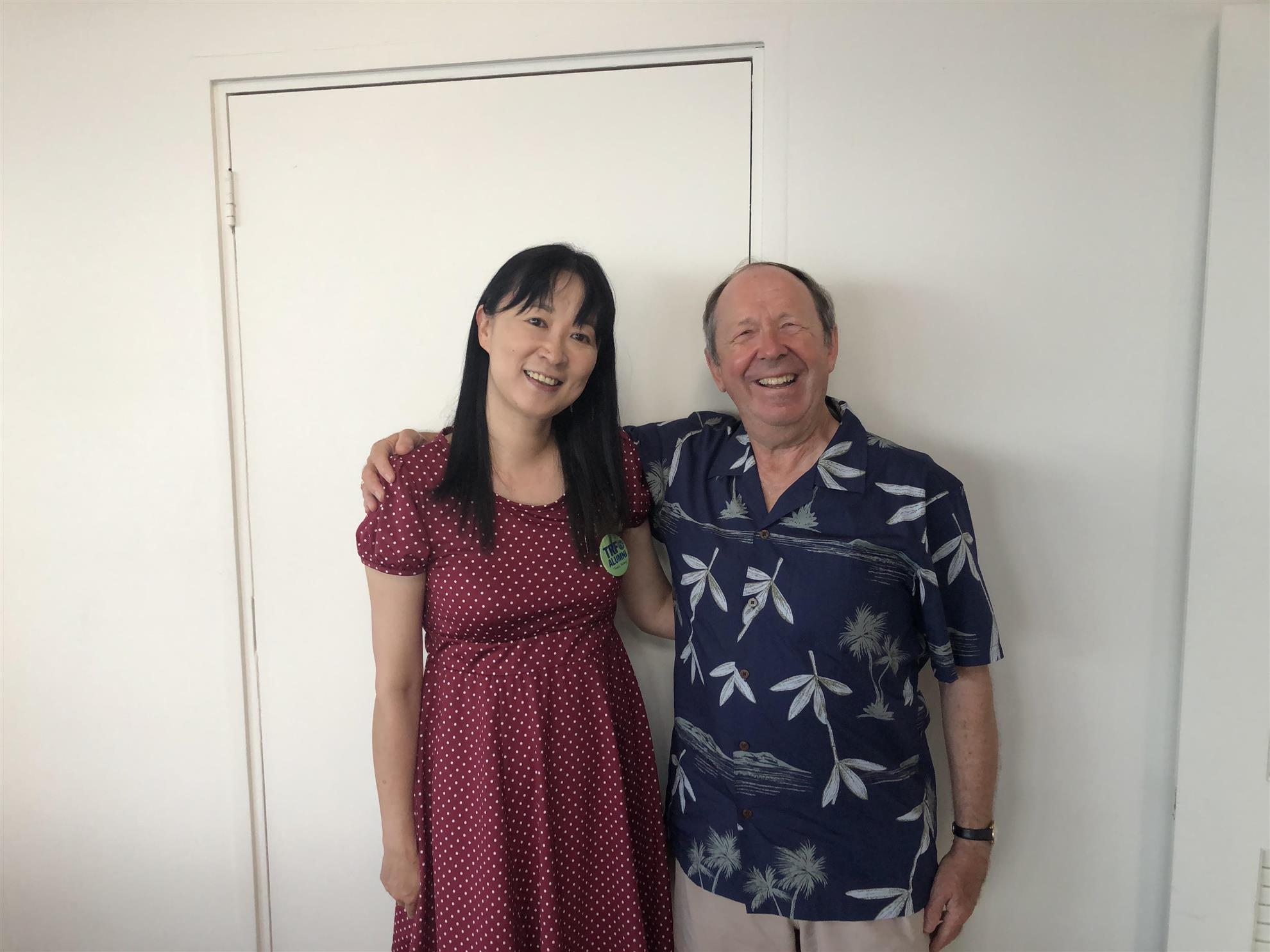
You never know who you meet when doing a makeup -- a fellow Rotary ambassadorial scholar!

Yukari started out as an ambassadorial scholar from Japan to Munich. After completing her year of undergraduate studies, she stayed in Munich to complete both her Masters and PhD degrees in Linguistics. Yes, although she was from Japan, she got hooked on Munich and stayed there, speaks excellent German naturally, and joined Rotary in 2009. We stayed after the meeting for a chat.
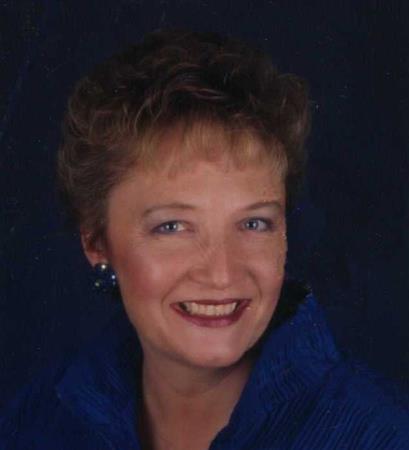
What a delightful and dedicated Rotarian! Hopefully the photo she sent is attached with her email.
Yukari wrote:
I was ambassadorial scholar from 2001-2002. I studied in Munich Linguistic (PhD). Since 2009, I am member of Rotary Club Munich Bavaria. I am still not club president. But I have lot of positions of Rotary. I am District Chair for Almuni, ICC in Germany (Contact Point Japan) and member and Board member (since 2019) of RFAD (= Rotary Foundation Alumni Deutschland).
This is an old home page. We are working to complete a new Home page of RFAD.
Ivan's bio:
It is not often that I meet a fellow ambassadorial scholar. My club is the Rotary Club of Edmonton Strathcona (District 5370) , in Edmonton, Alberta Canada. I was an ambassadorial scholar from 1972 – 1973, and my year of study was at the University of Southampton in England.
I joined the Rotary Club of Edmonton Strathcona in January, 1984, and was our club’s president from 1988 – 1989.
Your support has made a big difference around the world. You've given families the chance to recover from terrifying storms, rebuild after major disasters, and return to normal after losing their homes. Thank you for being a part of the ShelterBox family!
Your support helps change families lives all around the world.
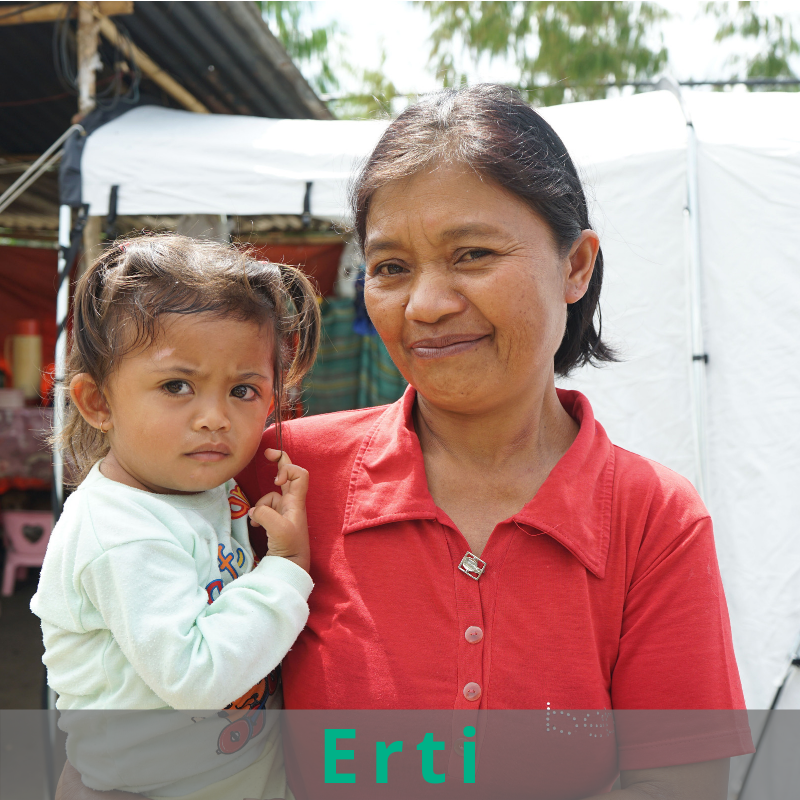
Today, you're helping families like Erti's, whose home was turned to rubble after a 7.8 magnitude earthquake hit. Because of you, ShelterBox was there to help her family recover.
Please read Erti's story to see the impact you make possible every day. Thank you for your continued support, and for believing that no family should be left wihtout shelter after disaster.
ShelterBox and Rotary are official Project Partners in international disaster relief. ShelterBox Canada is a registered charity independent of Rotary International and the Rotary Foundation. Charitable Registration # 84628 3208 RR0001
Are you interested in learning bridge? Please let us know as we have an experienced bridge player who is willing to teach. Lessons to start Tuesday afternoons after lunch at 1:00pm, from the beginning of March.
Tuesday, February 25: Lunch & Learn with Jacob on
“How to train your brain”
Tuesday, February 25: 1pm - Marilyn Lizee & Norma Spicer
Metis History 101: Culture & tradition of Metis People
Wednesday, February 26: Winter Wednesday Series
10a.m. – 12p.m. Prof. Emeritus David Barnet
Theatre and the Liberation Phase of Life: a look at the work of the intergenerational theatre company.
12p.m Lunch
1p.m. Book Club - postponed
Thursday, February 27: Birthday Thursday with Dr. Jerry Katz and a special celebration of Bozena’s dedication to the Centre!
If you want to acknowledge Bozena, please approach the Office!
Winter Wednesday Series
Wednesday, March 4: 10a.m – 12pm- Rabbi Zolly Claman
The Jewish Concept of the Soul
Thursday, March 5: 1pm – Abe Silverman
Deal of the Century: What it means for Israel & peace
for the Middle East.
Luba Allen,
Executive Assistant
JDIC Senior Citizen's Centre 10052 - 117 St. PO Box 17017 Edmonton, AB T5K 0G4
The notice below originates from Tim Schilds, District 5370 Rotary Foundation Chair
Hello and Happy New Year Everyone
So far it is not a very Happy New Year in Australia. I am sure you have all been watching the devastating situation as Australians suffer through the worst Bushfire season in their history. District Governor Tracey has been receiving many inquiries regarding the situation and Rotary’s reaction. The Rotary Foundation is not generally a First Responder in disaster situations. I am sure that many Rotarians in Australia are on the frontline and there is worldwide support of the idea that we need to help. And we will help, Rotary will be there for the long term rebuild. We have heard from The Rotary Foundation that they are working with Australian Rotarians to develop a plan which will ensure any donations will get to where they are needed most. We will wait to hear from our partners and follow their direction. If you or your club wants to help now I would suggest the options set out below:
If donating as a club or if you don’t require a charitable donation receipt you can donate directly to Australia. The note below is from Past Rotary International President Ian Risely and sets out how you or your club can contribute to Rotarians in Australia:
“Can I please express my great appreciation to all those friends from right around the world who have offered kindness and support to Australia as we suffer these terrible fires. It helps enormously to know that you are thinking of us. Rotary Australia World Community Service (RAWCS) has a fund supporting bushfire recovery through which you can donate from outside Australia. Go to https://rawcs.org.au/ follow the blue "Donate Now" button. It is not quite as easy as it should be to donate, but the trick is to ensure that on the second page in the address section, where it shows "State", all those from outside Australia need to choose the last option, which is "outside Australia". Then it should accept any district number. Thanks again!”
If you would like a Canadian Charitable donation receipt you can donate to Disaster Aid Canada which is a Rotary partner or follow this link to other Canadian Charities supporting relief from Australian Bushfires
If you have any questions or thoughts please feel free to contact me.
Our "Staying Connected" committee, chaired by Rose Marie Basaraba, in response to my request to recommend an alternative to our Story of the Week, has suggested that we rename the weekly opportunity as:
“Personal Story of the Day” or “Getting to Know You”.
This would enable fellow members to get to better know the speaker whether it be interests, experiences (Rotary or otherwise), life happenings learned through experiences, etc. (humorous or otherwise).
As of November 12, I would request that individuals scheduled to share their stories, keep these guidelines in mind and manage this sharing within a two minute time frame. I look forward to learning more about each member of our club and thank you to Rose Marie and the Staying Connected Committee for their suggestion.
I believe our Friendly Club is healthy and vibrant, but we should be willing to share and not keep our success to ourselves. Please complete the survey at your earliest convenience.
Please add mailservice@clubrunner.ca to your safe sender list or address book.
To forward this email to your friends, click here.
To view our privacy policy, click here.
ClubRunner
905.829.5299
102-2060 Winston Park Drive, Oakville, ON, L6H 5R7