Santa Rosa Sunrise Rotarians were shaken by the killing of George Floyd in June of 2020, one of a series of killings of Blacks by police and vigilantes. At Rotary, we denounce racism, celebrate diversity and demand ethical leadership. Our Club has a 35-year history of providing volunteer time and grants to both community and international non-profit organizations, serving people of all races and nationalities. We are committed to bringing people together to do good in our community and the world. While we have evolved over our 35-year history, we know we have more work to do individually and as a Club to help create a more just, open, diverse world.
With that in mind, our January 14 program will focus on educating our Club members and guests about the history of Blacks in America since the advent of slavery in 1619, through slavery, Jim Crow, the Civil Rights Movement to the present day. This will be done through a video by noted historians, comments by members of our Club, and a review of the actions of Rotary Intl regarding Black Lives Matter. We plan to organize a Black Lives Matter discussion group following the program, open to all interested. Follow-on programs and other actions will take place later. Please join us.
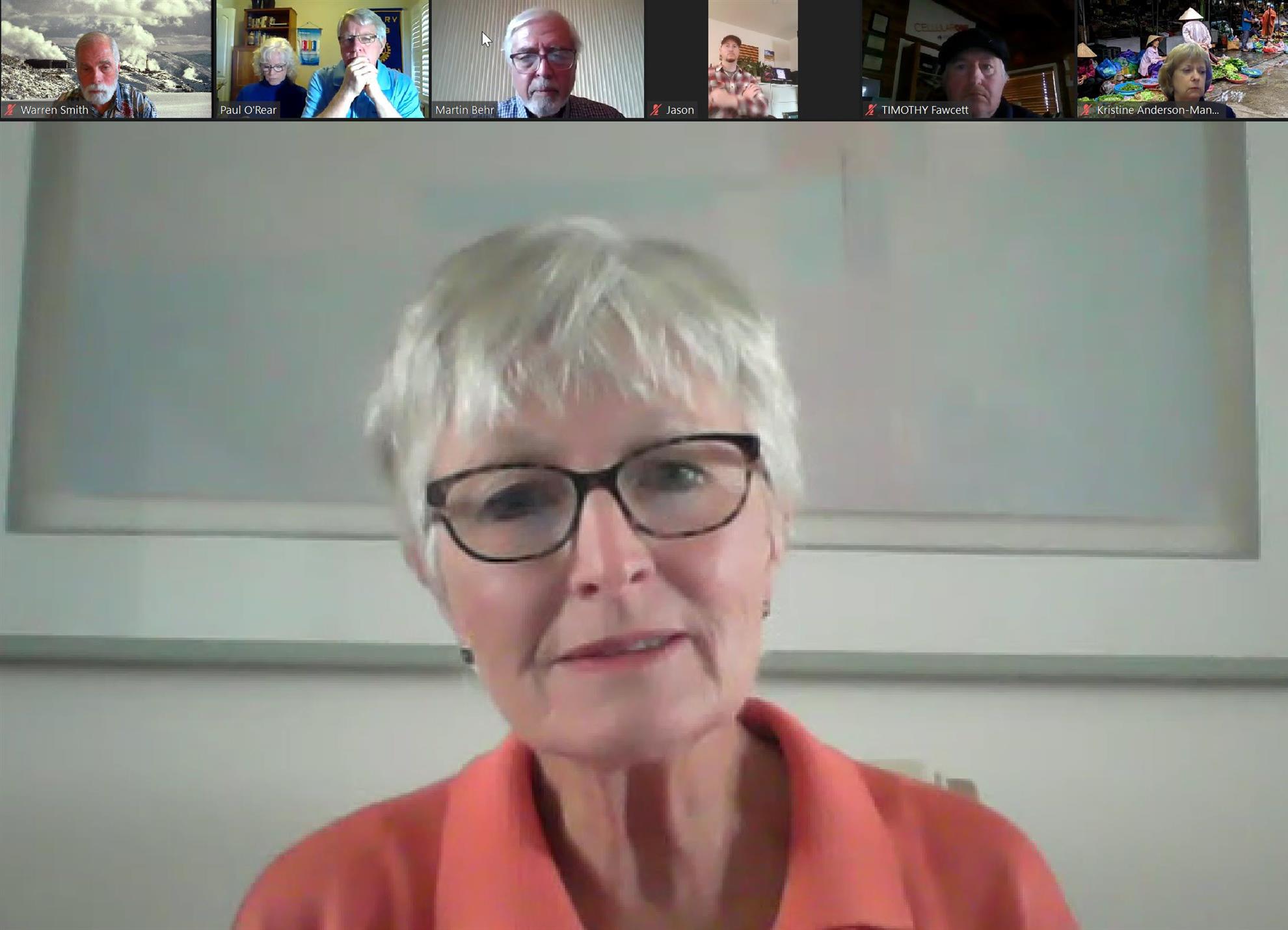
Fran Ulmer on "How Climate Change in the Arctic Affects You"
Our speaker for January 7th was Fran Ulmer, Global Chair of The Nature Conservancy. Ms. Ulmer presented “How Climate Change in the Arctic Affects You.”
Fran was the Chair of the U.S. Arctic Research Commission from 2011 through 2020; served as Advisor on Arctic Science and Policy at the State Department from 2014 through 2017; a former State of Alaska Lt. Governor; Chancellor of the University of Alaska, Anchorage, and Mayor of Juneau, Alaska for many years. She is currently a Senior Fellow at Harvard Belfort Center for Science and a Visiting Professor in Earth Science at Stanford University.
Fran pointed out that this last year we have all been talking about the pandemic and politics, so for a change of pace we should talk about the Arctic! Fran presented three questions to guide the discussion of the Arctic throughout the presentation: What is changing and why; who is impacted and how; and why we should care? She then took us back to 2017 on a virtual tour of her trip to the North Pole. On the trip she saw lots of shallow ice, animals, and, surprisingly, rain. She used her trip to highlight that the Arctic is warmer than it should be and that as it opens up the Arctic is becoming an international tourist attraction.
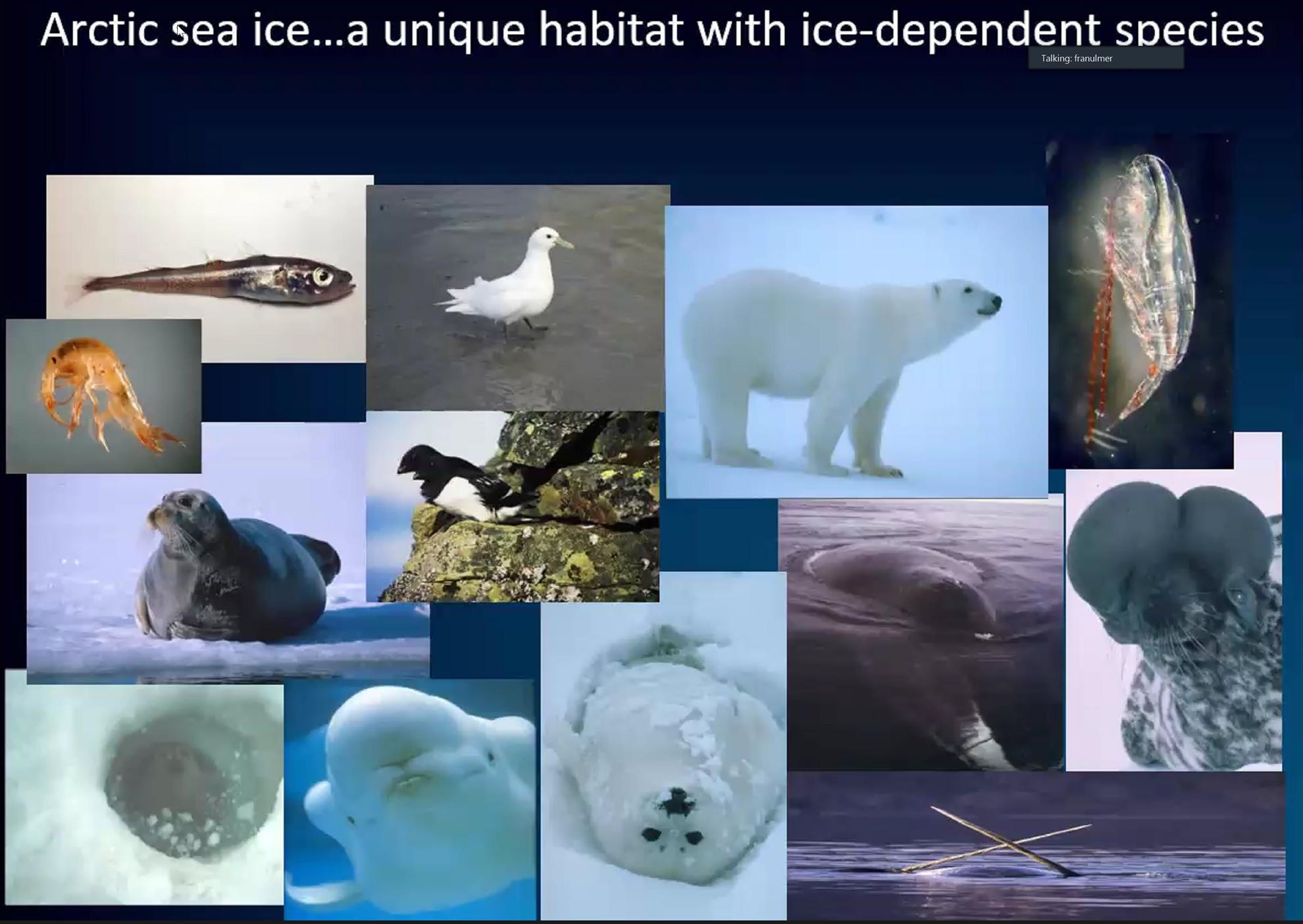
The Arctic is warming so quickly that glaciers are shrinking and there is less sea ice, ecosystems are altering, permafrost is thawing, seasons are changing, and sea levels are rising. The changes are dramatic and continuing to trend negatively. Animals that depend on Arctic sea ice face huge changes. Another concern is that the Greenland Ice Sheet is melting faster than ever before. Permafrost, permanently frozen ground, makes up much of the land in the Northern Hemisphere but as it thaws it releases more greenhouse gases into the atmosphere, further speeding up global warming. The indigenous peoples of the Arctic face massive health, safety, food security, and cultural changes. People are considering leaving their ancestral home because of these changes.
People who do not live in the Arctic are going to see a multitude of changes as well, such as more warming, sea level rise, changing weather, and easier access to the Arctic region. Fran compared the Arctic to an air conditioner; if the air conditioner loses power, it can no longer cool the planet. She also pointed out that sea level rise is not a future problem; it is a problem now. In Virginia and California coastal areas, we are seeing problems associated with flooding and erosion. Arctic warming contributes to unpredictable weather, which affects us all. Fran also said that this ocean is now more accessible for many people, “new ocean,” so to speak. The potential for economic development is attracting more international interest, which may continue to change shipping routes, and increase Russian investment in oil and gas and China’s research and efforts to become an Arctic “player.” This involvement from various countries has raised uncertainty and increase international tension. However, to date most of these nations are still more interested in cooperation and continue to promote peace, such as the Arctic Council. The Arctic 8 and fishing countries agreed on a moratorium on all commercial fishing in the Central Arctic Ocean - “Precautionary Approach.”
Summary: the valuable and vulnerable Arctic region is dramatically and quickly changing, which has serious changes in recourses, relationships, and global implications. Not only are the animals and people who live in the region impacted, but so is the entire planet because we all need the ice for stability and biodiversity.
Thank you so much, Fran, for the amazing presentation. Your expertise and thoughtful discussion of this wonderful ocean is so greatly appreciated!
On a regular basis, our resident photo pro Warren Smith, submits pictures of what is going on at the weekly meetings. You can always find the most recent pictures at the websites photo journal called "Meeting Sighting" Please note that all the meeting photos for the entire Rotary year are at this location with the most recent on the last page.
Thanks for all the great pictures Warren!Link to Meeting Sightings. The most recent are on the last page!
Do you know someone either local, elsewhere in the country or even overseas that would make a compelling speaker? While we are exploring retaining our Zoom capability when we eventually go back to live meetings, we are in a unique time right now where our speakers don’t have to be geographically nearby. We have great speakers through the end of January but the schedule is wide open from February onward! Everyone knows someone with a good delivery capability and an interesting story- whether it’s information about a current event, travel adventure, a cause, an interest, just about anything you can think of can be a compelling talk for the club. Think of something different, odd, something we haven’t seen before. If you know the “someone”, that’s best- let Cindy Gillespie know and her Speakers Bureau team can help with logistics. If you have a great idea but don’t know anyone in the field, maybe someone else on the Bureau has a name of someone.
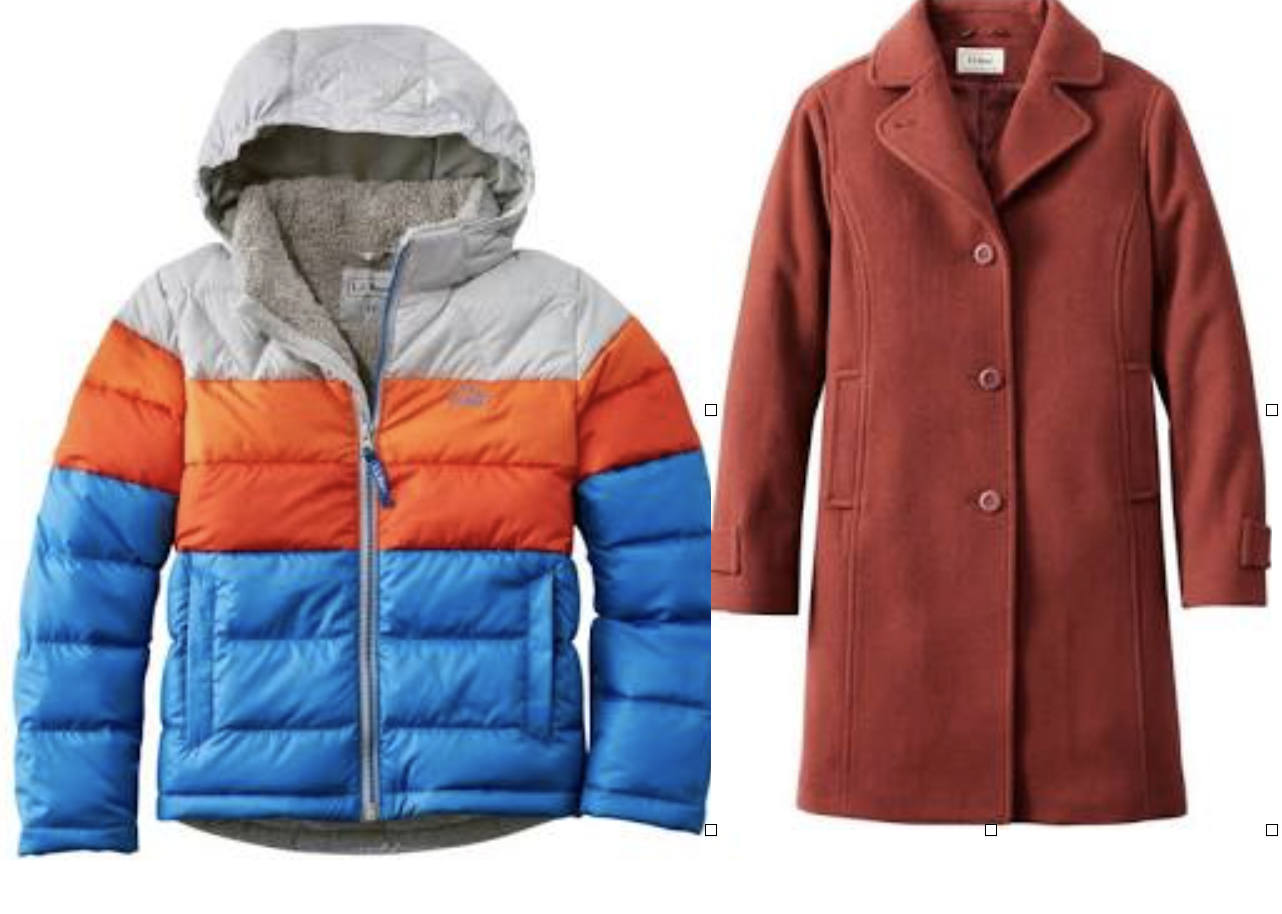
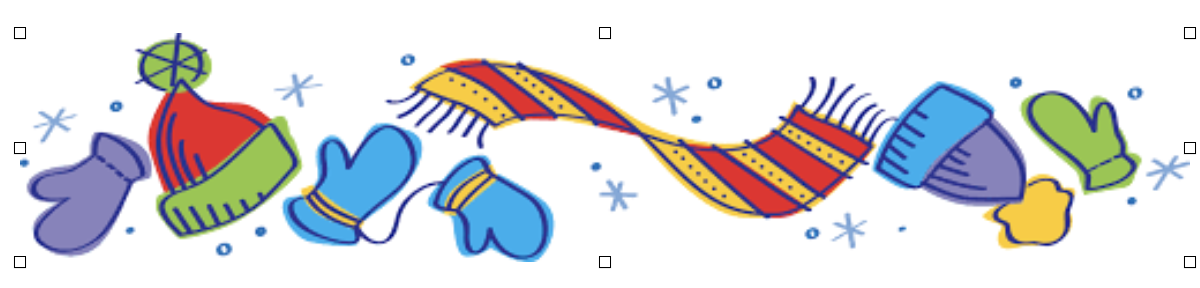
For the past 10 years, Sunriser Stacy Drucker-Andress has been working with our Elsie Allen Interact teens and their advisers to collect warm coats, socks, beanies, gloves, blankets and other winter wear to bring warmth to our homeless communities in West County, along the River and at the Glazer Center -- where she has also served breakfasts for the three years running
Without school in session this year, Stacy turned to our Sunrise Rotarians and other contacts to continue providing warmth to meet basic needs for our underserved populations.
Large sizes are best. Many homeless layer their clothing and need outerwear to top off other garments. This year, Stacy also received. cash gifts and was able to purchase thick coats and jackets at sale prices. One generous donor even sent four coats directly to Stacy from Amazon.
Warm socks are critical for those who do not have ready access to laundry facilities. And many also need sleeping bags and blankets.
Stacy delivered four carloads of goods, this winter. She reports many rewards in the joyful; faces of those who desperately need protection, particularly at this time of year. Stacy distinctly remembers one man who put on his jacket and went to sit quietly by the river. When questioned he beamed and said, "Now, I am warm!"
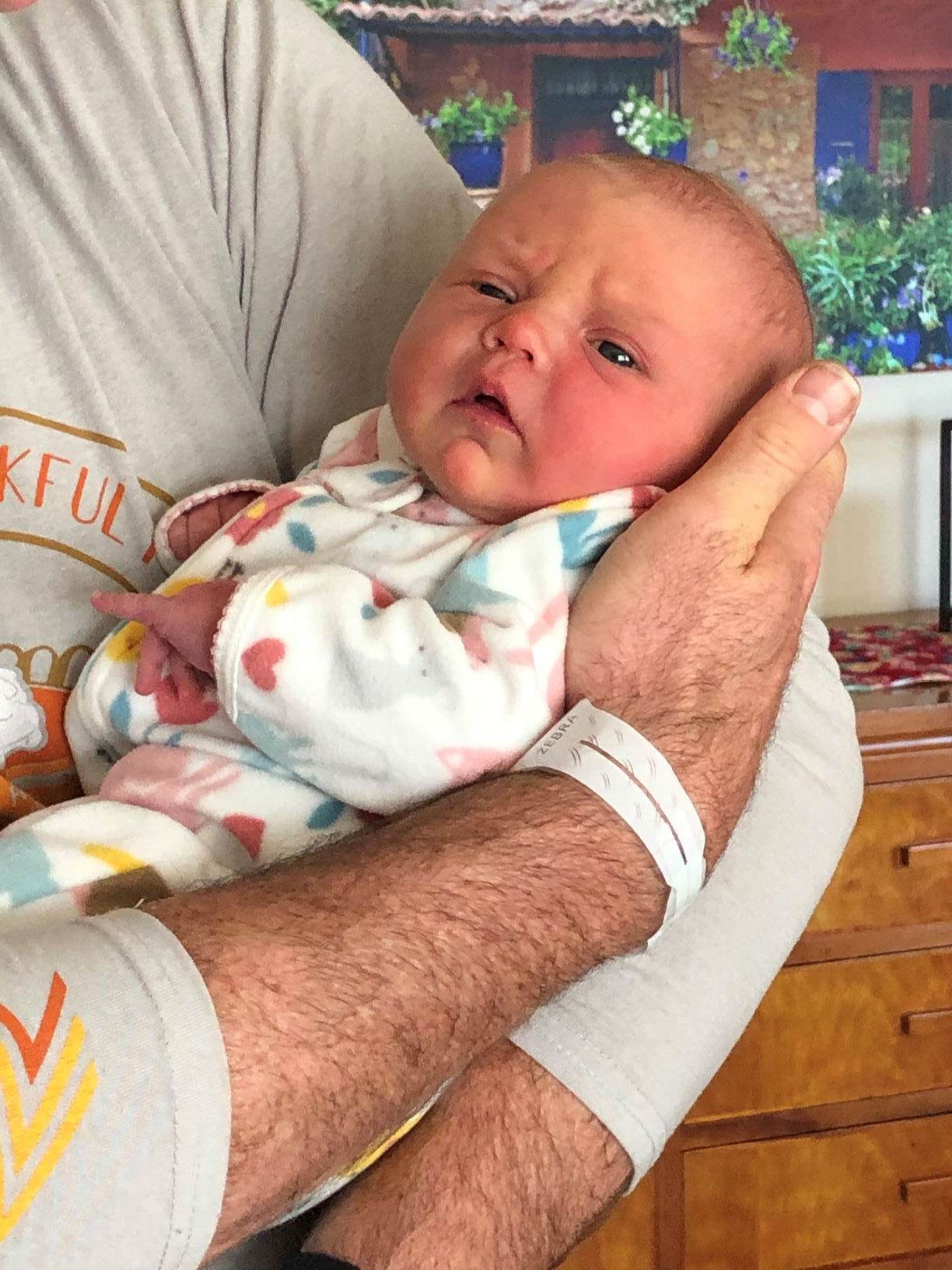
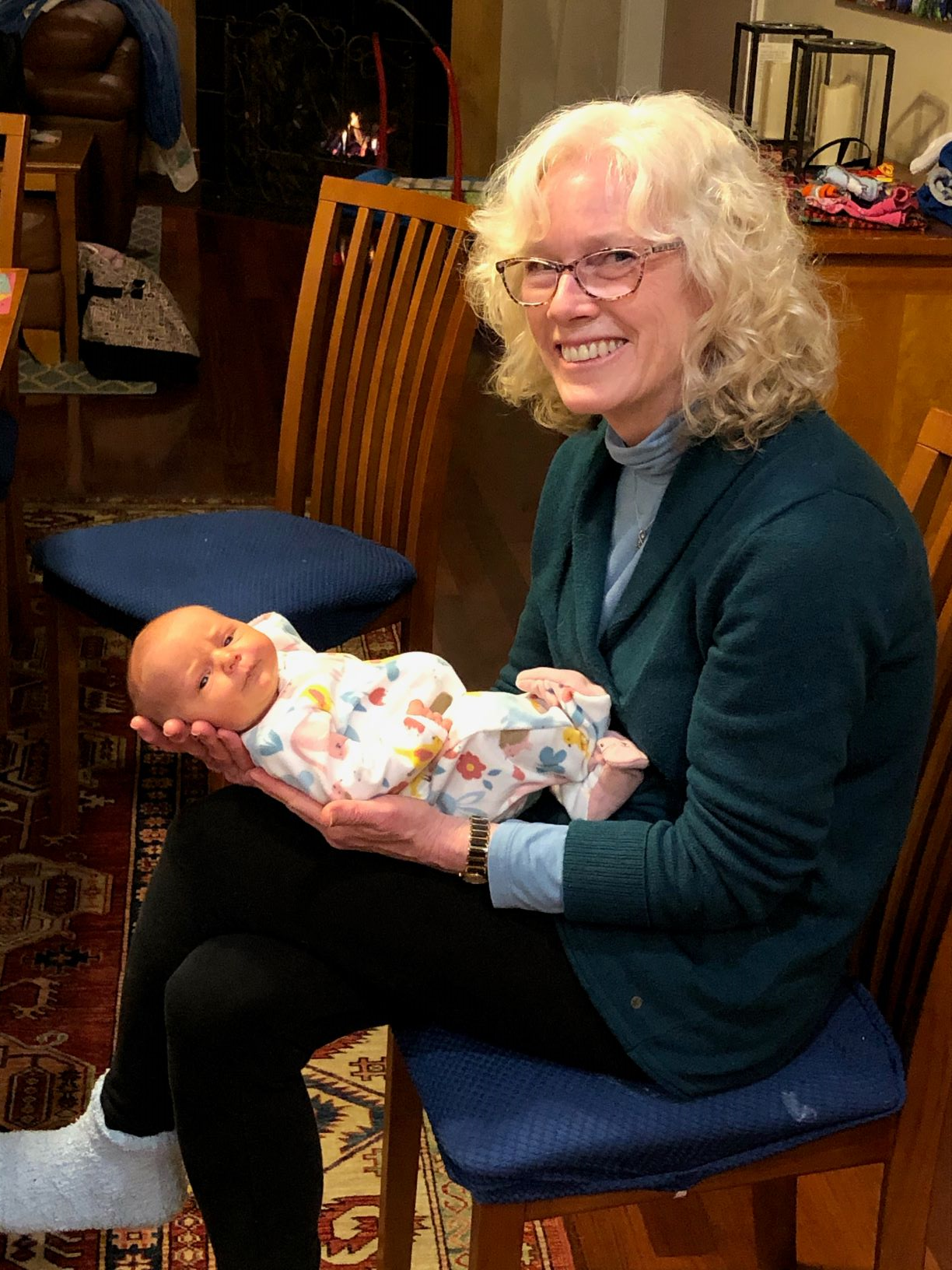
Paul and Penny Millar welcomed the arrival of their beautiful new granddaughter in their home!
Proud parents, James (Penny's son) and Katrina had a heathy baby girl! Adilynn Josephine Bolduc was born on Monday, January 4th weighing in at 8 pounds 1 ounce. Congratulations to our growing Rotary family!
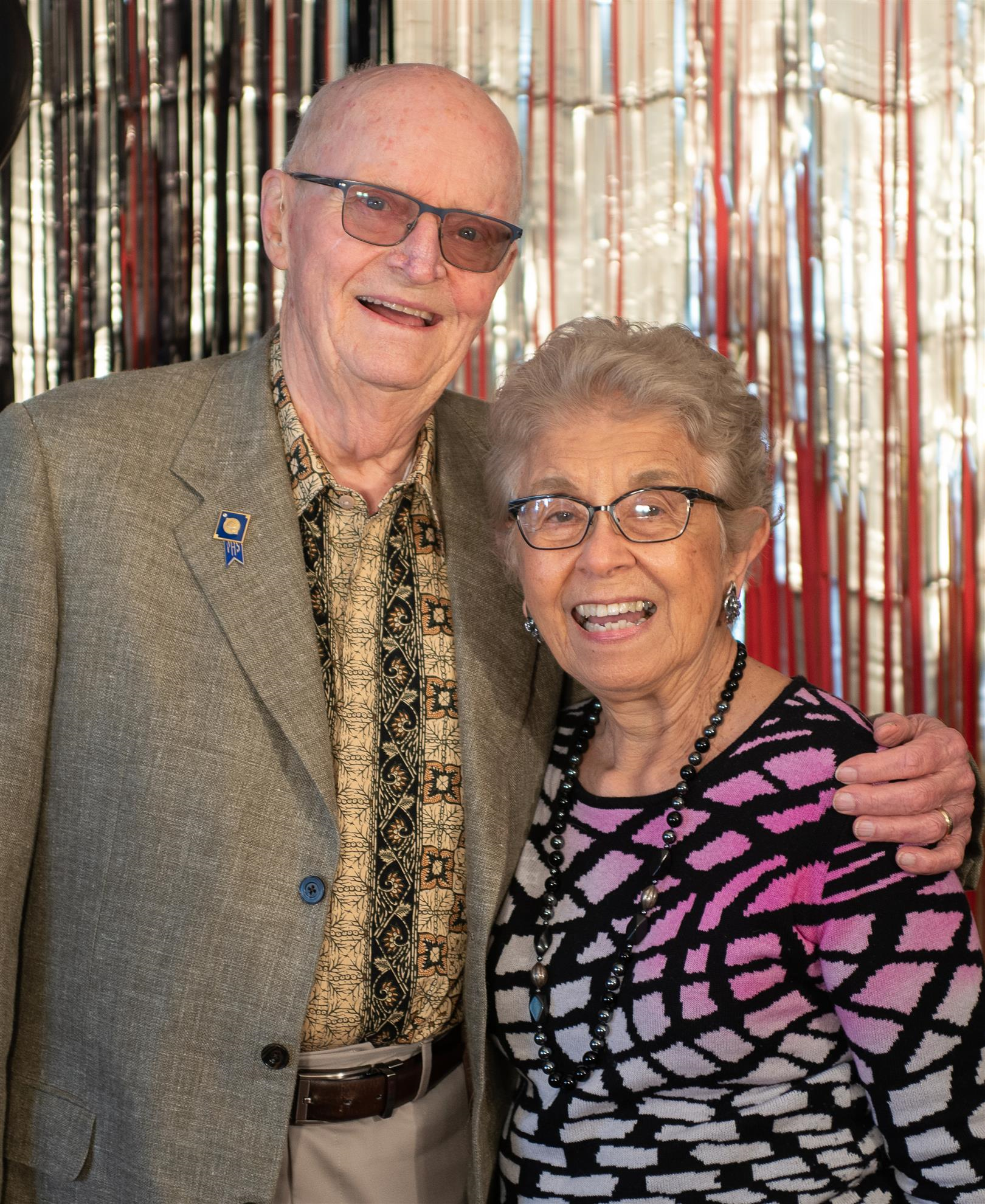
After nearly a week in the hospital, Jon returned home today, to rejoin Terry in moving forward in their Covid19 recovery.
With the risk of pneumonia to high to ignore, Jon was treated immediately. His medical team commented on his resilience and overall fitness. Jon is an advocate of regular exercise, and credits much of his rapid recovery to home workouts on Bowflex and Nordic Track. The elliptical apparatus eliminates the stress on Jon’s knees, left by years on the basketball courts.
Another preparation Jon and Terry are grateful for is the stair chair they installed from their garage to the house. “It allows us to transfer groceries from the car to the kitchen easily” noted Jon.
In his 90’s, Jon’s health is no accident. We are all thankful for his return home and the impressive effect of his consistent attention to being fit.
Jon and Terry welcome your calls or texts. At this time their support is deep and wide.
A blonde walks into a bank in New York City and asks for the loan officer. She says she’s going to Europe on business for two weeks and needs to borrow $5,000. The bank officer says the bank will need some kind of security for the loan, so the blonde hands over the keys to a new Mercedes Benz SL-400. The car is parked on the street in front of the bank. She has the title, and everything checks out. The bank agrees to accept the car as collateral for the loan. The bank’s president and its officers all enjoy a good laugh at the blonde for using a $110,000 Benz as collateral against a $5,000 loan. An employee of the bank then proceeds to drive the Benz into the bank’s under- ground garage and parks it there. Two weeks later, the blonde returns, repays the $5,000 and the interest, which comes to $15.41. The loan officer says, “Miss, we are very happy to have had your business, and this transaction has worked out very nicely, but we are a little puzzled. While you were away, we checked you out and found that you are a multimillionaire. What puzzles us is, why would you bother to borrow $5,000?” The blonde replies, “Where else in New York City can I park my car for two weeks for only $15.41 and expect it to be there when I return?”
The sad truth about altruism is that there aren’t enough altruists
The people who fill the truly essential roles in society are often in short supply
By Joe Queenan Illustrations by Sébastien Thibault
From time to time, societies run low on the things — and the people — they really need. We wake up one day and realize that there are too few doctors. Or far, far, far too few nurses. Or it suddenly dawns on us that there aren’t enough teachers, engineers, or plumbers to go around. There are certainly never enough guys who work well with sheetrock.
Other professionals we have in spades. There are always more than enough landscapers, baristas, actors, masseurs, personal trainers, hairdressers, IT guys, and chefs. Nor are we ever in any real danger of running out of hedge fund managers, ballerinas, real estate agents, claims adjusters, standup comics, bartenders, aspiring singer-songwriters, or car salesmen. But the people who fill the truly essential roles in society are often in short supply.
Something like this may already be happening with Good Samaritans. From time to time, societies run desperately low on the kinds of devoted, implacable altruists who are always ready to pitch in and make the world a better place.
Institutional altruism is rarely a problem. Plenty of churches, foundations, and government agencies are working night and day to help better society. These people do good for a living. But institutional philanthropy alone can’t handle a problem as large as the one created by the current pandemic. Societies always and everywhere rely on large numbers of those people sometimes derisively referred to as “do-gooders” to keep things running smoothly. And right now there aren’t enough do-gooders to go around. It doesn’t help that a lot of do-gooders are stuck indoors because of the pandemic.
The vexing problem of Good Samaritan Shortfall was driven home to me last February while I was visiting Washington, D.C. Strolling down M Street, I was approached by a young man in a red vest who was raising money for a worthy cause. I told him that I already contributed to the organization he represented, thanks to my wife, who regularly, reflexively, almost automatically sends checks to a large number of indisputably saintly enterprises. In other words, to use a reliable old phrase, I gave at the office. Well, she did.
The young man smiled amiably. He was not pushy. He was not judgmental. He did not try to embarrass me with that sneering “Have a nice day” that virtuous para-professionals so often employ when people start to drift away without opening their wallets. He thanked me for my generosity, or, to be perfectly accurate, for my wife’s generosity. He said that regular contributions by people like us were the very lifeblood of the organization. But in this case, he added, he was out raising money for a specific initiative.
I now tried to explain that asking me to give more to a cause I already supported seemed like philanthropic double dipping. It was like asking someone who was already writing checks to save endangered hippos to write a second check to save endangered rhinos. It was like asking someone who was already demonstrably a “good” person (or who at least had some sort of conjugal affiliation with one) to become an even better person. My question — a pretty obvious one, I thought — was: Why couldn’t somebody else carry the ball for a change?
The young man patiently listened, then waved away my protests. “We ask people who’ve already given to give again because we know that those people are generous,” he said. “Doesn’t it make more sense to target people who already think like us than to go after strangers?”
The deceptively cunning logic of his argument floored me. My feeling had always been that if we — as a family — had already given to the Fresh Air Fund and the Sierra Club, then we didn’t have to give to the Red Cross or the Salvation Army. In my mind, I had conflated all the organizations that were trying to make the world a better place into one monolith of merit. My wife, Francesca, didn’t look at things that way. In her view, just because you had already given to this didn’t mean you couldn’t give to that. The way she sees it, there is no ceiling for good works.
I disagreed. I even wisecracked that we should adopt a simple ethical cap-and-trade policy, stipulating that if we helped clean up the rivers, we didn’t have to help clean up the lakes. At least not both of us. She was having none of it. Who ever said that you were allowed to take a vacation from virtue? Bad people didn’t take sabbaticals from wrongdoing, so why should good people take a break from doing good? If you were altruistic, you were required to be uninterruptedly altruistic. In the parlance of her native England, if you were in for a penny, you were in for a pound.
There isn’t enough altruism to go around
This got me to thinking about the Good Samaritans I knew personally. At some point I realized that the high-profile do-gooders in my community almost never limited their good-doing to a single activity. If you saw them volunteering at the library book sale on Saturday, you would probably also see them at the Girl Scout bake sale on Sunday. If they were out brandishing petitions to save a historic building, you would probably also see them fighting to save a historic mural. At first I thought that people like this practiced virtue on such a large scale mainly because it made them feel better about themselves — which it indisputably does. But over the years I have come to realize that these neighbors do not necessarily engage in so many virtuous activities merely because they are good, caring people. It’s because they know that there aren’t enough good, caring people to go around.
It is often said that in the world of altruism, it’s the thought that counts. Incorrect. If you’re going to do the right thing, you have to do it the right way.
Baseball teams rely on a pipeline of minor league talent that eventually gets called up to the majors. I think that those who perform altruistic activities at the major league level could benefit from this kind of system. I’ve noticed that my wife, who runs a senior citizens center on a pro bono basis, ceaselessly cultivates civic-minded individuals who are roughly a generation younger than us. It’s not enough to be good. It really helps to also be young.
All of which suggests a rebuttal to the seemingly impregnable argument made by the young man in the red vest that I encountered on the streets of Washington. If you want to make the world a better place, you cannot keep raising money from the same people over and over, as he suggested, no matter how generous they are. Society cannot depend exclusively upon the pathologically altruistic or the congenitally compassionate to keep things going. There simply aren’t enough of them. Virtuous people need help. Virtuous people need to recruit new talent. All the time. This, in fact, is why Rotary clubs exist.
Good Samaritan versus the Intermittently Good Samaritan
At this point, it’s worth discussing the difference between the Good Samaritan and the Merely Adequate Samaritan. Like most people, I am not an inherently good person; goodness is learned behavior. Left to my own devices, I might eventually have morphed into a halfway decent human being. But I don’t think I would ever have gotten much further than that. Never in my wildest dreams did I think I would ever flower into a paragon of virtue. The closest I could come to that was being married to a paragon of virtue. This is the opposite of guilt by association. It is guiltlessness by association.
When we first married, my wife and I developed a division-of-labor approach to civic-mindedness. She would handle all the volunteer work involving the schools, the community, the senior citizens, the underprivileged, the ozone layer, and the manatees, and I would buy the opera tickets. While she wrote checks to the Red Cross, Children’s Aid, Greenpeace, and Doctors Without Borders, I would buy tickets to the New York Philharmonic or the Tokyo String Quartet. I also purchased memberships to all the local museums. Thus, the good works practiced in our household were split right down the middle. She devoted herself to keeping society afloat; I devoted myself to keeping civilization afloat. Her job was a lot more time-consuming.
Since the coronavirus epidemic hit, as I have watched growing numbers of people who have never done anything civic-minded in their lives pitching in and helping, I have thought more and more about the essence of philanthropy. When all the good works are done by just a few people, which is almost always the case in small towns like the one where I live, it hurts the community, because people who do not regularly do good works either forget how to do them or never learn how in the first place. There’s an art to cleaning up polluted lakes or litter-strewn playgrounds. There’s an art to sitting patiently with people and helping them learn English as a second language. For that matter, there’s an art to going out into the street and asking complete strangers to fork over their money.
This is where the Good Samaritan and the Intermittently Good Samaritan part company. For a few years, my college-age son would help us deliver turkeys and groceries to needy members of our community at Christmastime. This was immensely satisfying work, because he could see how his efforts were brightening people’s lives, however fleetingly. Occasionally, other college students or retirees would offer to help. These individuals were fiercely well-meaning.
Virtuous people need help. Virtuous people need to recruit new talent. All the time. This, in fact, is why Rotary Clubs exist.
But when the chips are down and it’s time to drop off the Christmas baskets, well-meaningness isn’t enough. It is often said that in the world of altruism, it’s the thought that counts. Incorrect. If you’re going to do the right thing, you have to do it the right way. This is often impossible, because those who are only periodically virtuous are usually clueless. They give chickens to people who asked for turkeys and turkeys to people who asked for hams. They put too many Oreos in one bag and none in the other. At the end of those food runs, we invariably had to make a second trip to the supermarket because we always came up a couple of turkeys short. This was no way to run a railroad, much less a charity.
This gets to the crux of the matter: Good Samaritans are basically amateurs — but they shouldn’t be rank amateurs. Those who are going to get serious about altruism need to develop skills, to know where their talents are useful and where they are not. Virtue, like mastering the hammered dulcimer, requires practice. This is one of the few good things about the pandemic: It has given an awful lot of people who have never lifted a finger to help their fellow man a golden opportunity to learn the ropes, to go from bumbling amateurs to effective doers of good. People in my town who had never been especially altruistic now give big tips to those who work in the service industry, or they drop off food for those who cannot leave their homes, or they help clean up the garbage strewn along the riverfront. I never knew they had it in them.
In search of the next generation of do-gooders
But what of those who stubbornly refuse to lend a hand? I personally am not in favor of coercing people into doing good works, the way some progressive companies strong-arm their employees into doing community service in their free time. But I am not opposed to embarrassing people into doing good works. When I was growing up on the mean streets of Philadelphia — and yes, those streets were mean, and remain mean to this day — my parents were devout Catholics. They were also poor. The wolf was not always at the door, but it was usually somewhere in the vicinity. Yet no matter how bad things got, my parents always put something in the church collection basket on Sunday morning. They did not tithe, but they tried.
They did so by using envelopes sent by the church listing their name, address, and the amount donated each Sunday. Every month the church would publish a list of parishioner contributions. It was embarrassing when your name appeared next to a paltry $5. But it was better than not appearing at all.
I think society needs to try something like this. For years, I have watched the same do-gooders get older and older, waiting for the cavalry to arrive. And as they wait, the same people work at the polling stations, the same people visit the sick, and the same people staff the PTA. The simple as that. That’s why we might need public bulletin boards listing all the good works done only relief column these people are ever going to see is if every one of us voluntarily joins the cavalry. It’s as by local volunteers, with vast, blank spaces next to the names of those who have done nothing. Confrontational? Yes. Judgmental? Yes. But as the old saying goes: If you can’t beat ’em, browbeat ’em.
My daughter once dated a very smart young man whose specialty was economics. An implacable defender of the “rational actor” theory, he insisted that every human activity had some economic underpinning, that people who engaged in altruistic activities were secretly deriving some economic reward from doing so. This theory never made sense to me.
But now it does. Well, sort of. Helping your fellow man makes you feel better about yourself. It really does. And this helps cut down on expenses. In a society where all those Pilates classes, all those continuing education courses, all those self-help books and videos and boot camps are basically expensive, time-consuming, invariably unsuccessful ways to make you feel better about yourself, altruism is the obvious solution to your problem. No matter what the economists say, you can’t put a price on happiness. There aren’t any numbers that go that high.
• This story originally appeared in the December 2020 issue of Rotary magazine.
• Joe Queenan is a frequent contributor to Rotary magazine. Since March, he has written four one-act plays (all of which will be performed on Zoom), a screenplay, and a rock opera.
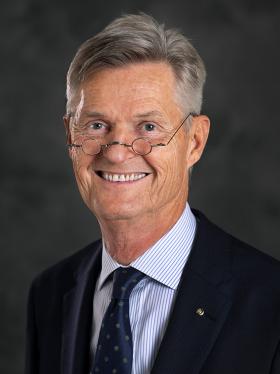
January is finally here. As we look forward to 2021, our thinking doesn’t have to stop at the end of these 365 days. Are you thinking ahead about what you will be doing in 2022, 2023, and beyond?
We cannot foresee the future, but we can steer ourselves where we want to go. I think it is important that every Rotary club hold a strategic meeting at least once a year. Past RI Director Greg Yank, who has a lot of experience working with clubs on their plans, shares his viewpoint.
A famous aphorism states, “By failing to prepare, you are preparing to fail.” Planning is essential to achieving success in all areas of life, including Rotary, and we’re getting better at it every year.
Strategic planning for Rotary clubs works. I have helped many clubs find that pathway by working with them to build what I call a blueprint, a multiyear plan that answers the fundamental question: “What is our vision for our club?” The best plans I have seen are those that are focused, when a club concentrates its resources on the best opportunities it has. Your Rotary club cannot be all things to its members and to the community it serves; it has limited human, financial, and time resources. A successful plan factors in assets and limitations to chart the desired pathway for your members.
Begin building a multiyear strategic plan by brainstorming with your club, asking, “What are our initiatives and priorities for the next two to three years?” Document your answers using action-oriented language that is specific, concrete, and measurable about the goals you want to achieve.
Next, narrow down your initiatives to a core set of three to five priorities. Your club will then develop specific objectives for each initiative, outlining who will be involved, key milestones of achievement, how progress will be tracked, and a timeline for completion. Keep your plan short and simple.
Then go out and do it. Review the progress you make toward accomplishing the initiatives, and revise as needed at least once a year. Rotary has a solid template to assist clubs in their planning, which you can find at my.rotary.org/en/document/strategic-planning-guide.
We want to enrich and enliven our clubs with new discussions and ideas. But how do we attract the diverse professionals, from different backgrounds, ages, and experiences, who are all driven by as strong a sense of integrity as we are?
Through strategic planning, we explore this question to define the very nature of our club and the value it offers to its members and to the community. Each club is different, and each club’s value will be unique. During the planning process, clubs may also find that some of the activities they used to do are no longer relevant or attractive.
Once your club makes a strategic plan, it’s time to take action and carry out the necessary changes. When we do that — as we engage members in vibrant and active clubs that not only have fun but also serve their communities with projects that have real and lasting impact — our clubs grow stronger. And when we discover what makes our own clubs unique and build upon those core values in all our efforts, Rotary Opens Opportunities to enrich the lives of everyone.
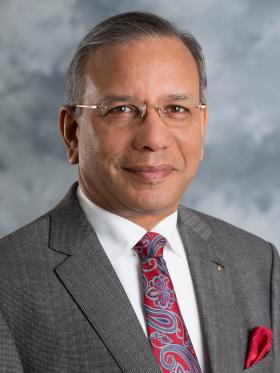
Having grown up amid lush green forests in the mountainous landscape of Sri Lanka, I always recall the words of the great poet Rabindranath Tagore: “Trees are the earth’s endless effort to speak to the listening heaven.”
How sad that so often we humans insist on interrupting this conversation.
Just like every other living thing, we are a part of nature. But we are also the only species that bears the responsibility of protecting the environment for future generations. The coronavirus pandemic has shed light as nothing has before on the relationship between environmental degradation and threats to public health.
A few years ago, the government-owned electricity company in my country planned to build a second coal power plant, in eastern Sri Lanka. It would suck 93 million liters of water per hour from a bay where fragile ecosystems meet the deep sea, the site of one of the largest spawning grounds for sperm whales in the world. After processing, those 93 million liters per hour would be dumped into the ocean, now loaded with toxic chemicals that put that marine life at great risk.
Learning from the lessons of the damage caused by the first plant, a coalition formed, made up of many public advocates, including Rotarians. They ran a campaign that alerted the media, the public, and the local community to the potential dangers, in addition to taking legal action. The government eventually abandoned its coal plant idea after the resulting public outcry.
We can truly move mountains when we come together.
When some of us moved to add the environment as Rotary’s newest cause, we did so because of the urgency of the problem. In 1990-91, RI President Paulo V.C. Costa set forth a vision, and today we will take this work to the next level. We live in a time of great stress on our environment, of rapidly rising sea levels, massive storms, disappearing rainforests and wildlife, and destructive forest fires. Climate change touches us all, rich and poor.
We will face the challenge strategically, as with the other areas of focus. In fact, the six other areas of focus depend on this one. For what good is it to fight disease if our polluted environment causes us to become sick again?
The Rotary Foundation will be central to this work. More than $18 million has gone toward environment-related global grants in the past five years. Building upon this work to protect the environment, we will give yet another Rotary gift to future generations. And you can be a part of it today.
Rotary Club of Santa Rosa Sunrise - Founded June 30, 1986


.png)

.jpg)












 Other professionals we have in spades. There are always more than enough landscapers, baristas, actors, masseurs, personal trainers, hairdressers, IT guys, and chefs. Nor are we ever in any real danger of running out of hedge fund managers, ballerinas, real estate agents, claims adjusters, standup comics, bartenders, aspiring singer-songwriters, or car salesmen. But the people who fill the truly essential roles in society are often in short supply.
 The young man patiently listened, then waved away my protests. “We ask people who’ve already given to give again because we know that those people are generous,” he said. “Doesn’t it make more sense to target people who already think like us than to go after strangers?”
 At this point, it’s worth discussing the difference between the Good Samaritan and the Merely Adequate Samaritan. Like most people, I am not an inherently good person; goodness is learned behavior. Left to my own devices, I might eventually have morphed into a halfway decent human being. But I don’t think I would ever have gotten much further than that. Never in my wildest dreams did I think I would ever flower into a paragon of virtue. The closest I could come to that was being married to a paragon of virtue. This is the opposite of guilt by association. It is guiltlessness by association.