Fran Ulmer on "How Climate Change in the Arctic Affects You"
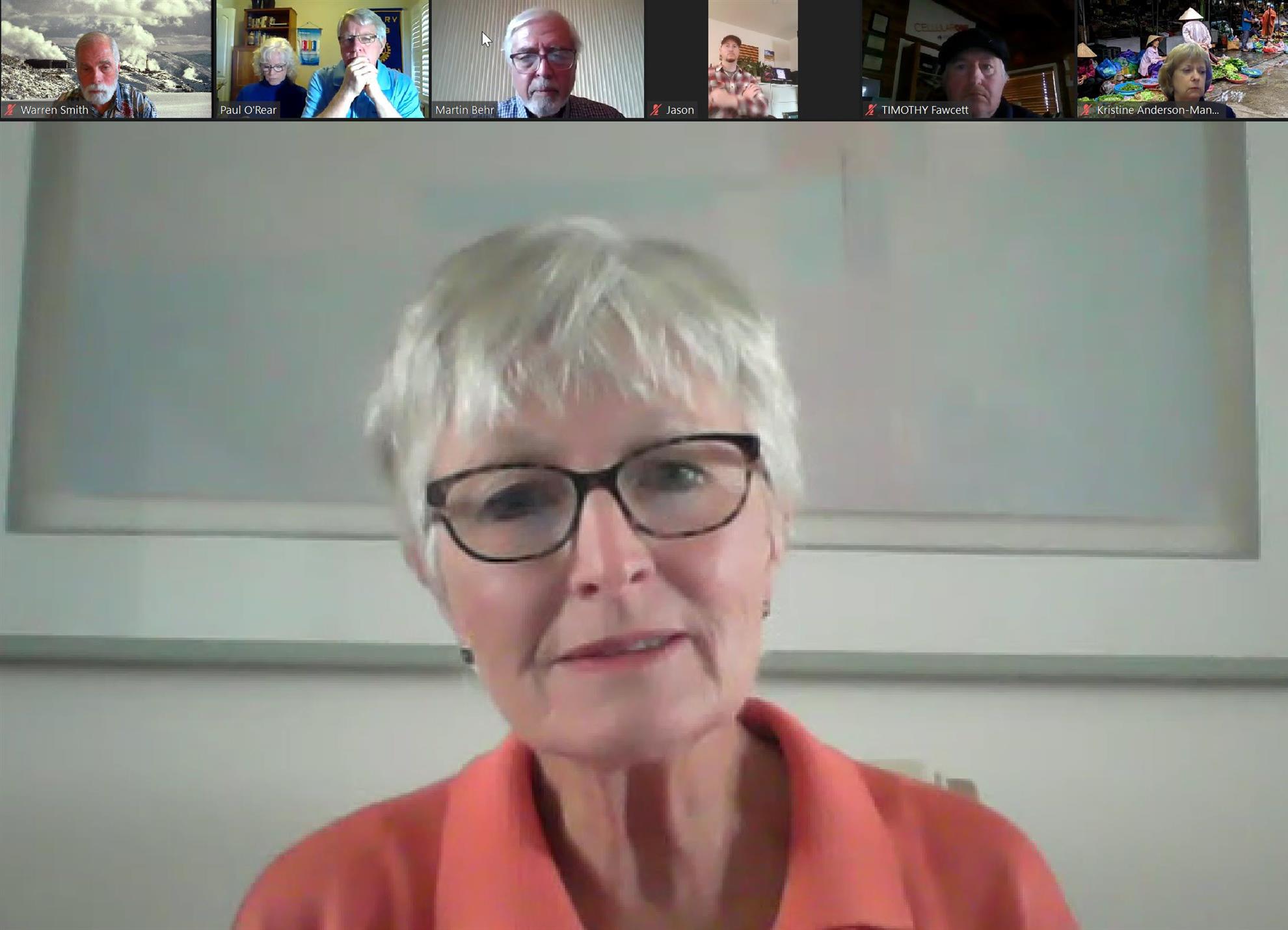
Our speaker for January 7th was Fran Ulmer, Global Chair of The Nature Conservancy. Ms. Ulmer presented “How Climate Change in the Arctic Affects You.”
Fran was the Chair of the U.S. Arctic Research Commission from 2011 through 2020; served as Advisor on Arctic Science and Policy at the State Department from 2014 through 2017; a former State of Alaska Lt. Governor; Chancellor of the University of Alaska, Anchorage, and Mayor of Juneau, Alaska for many years. She is currently a Senior Fellow at Harvard Belfort Center for Science and a Visiting Professor in Earth Science at Stanford University.
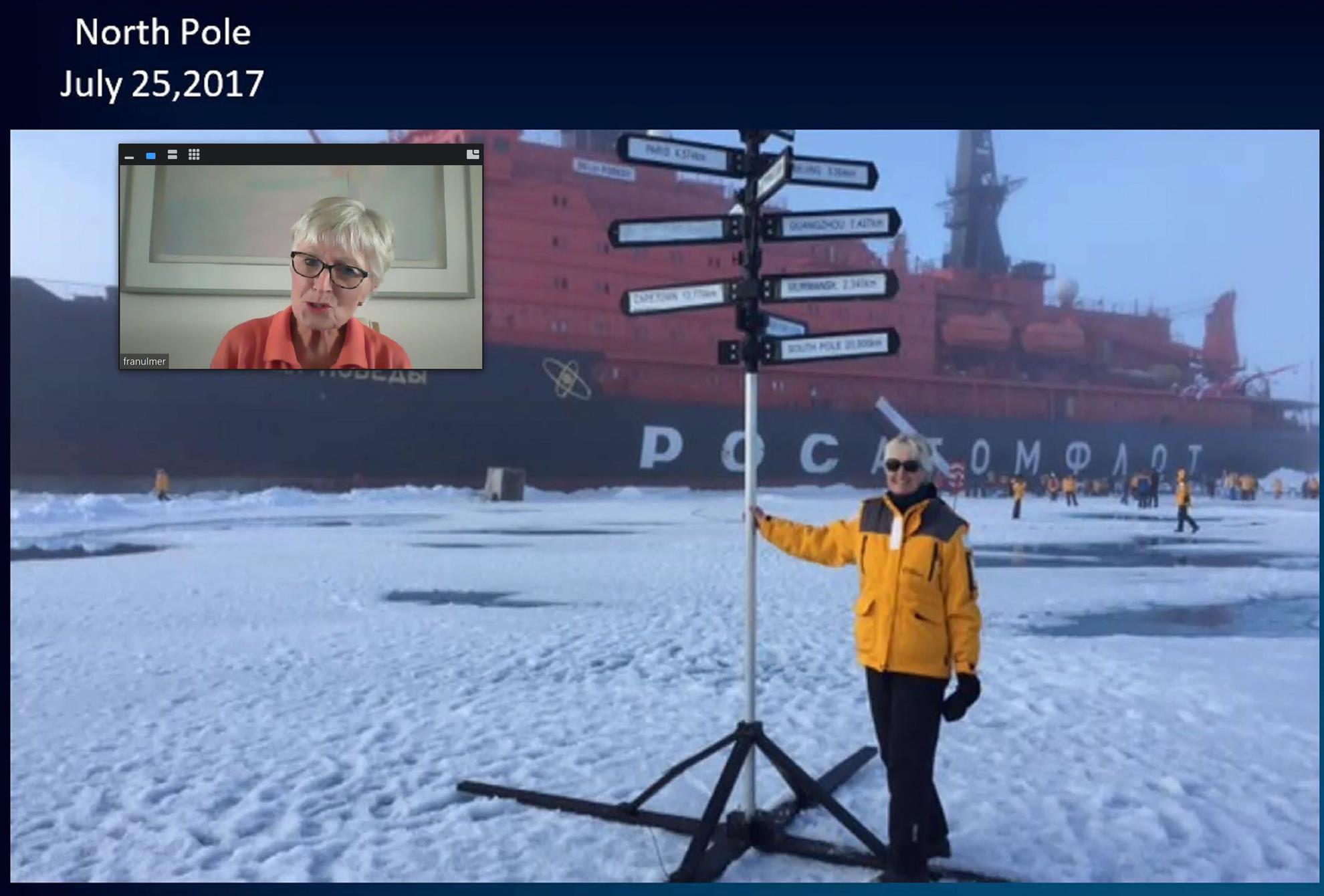
Fran pointed out that this last year we have all been talking about the pandemic and politics, so for a change of pace we should talk about the Arctic! Fran presented three questions to guide the discussion of the Arctic throughout the presentation: What is changing and why; who is impacted and how; and why we should care? She then took us back to 2017 on a virtual tour of her trip to the North Pole. On the trip she saw lots of shallow ice, animals, and, surprisingly, rain. She used her trip to highlight that the Arctic is warmer than it should be and that as it opens up the Arctic is becoming an international tourist attraction.
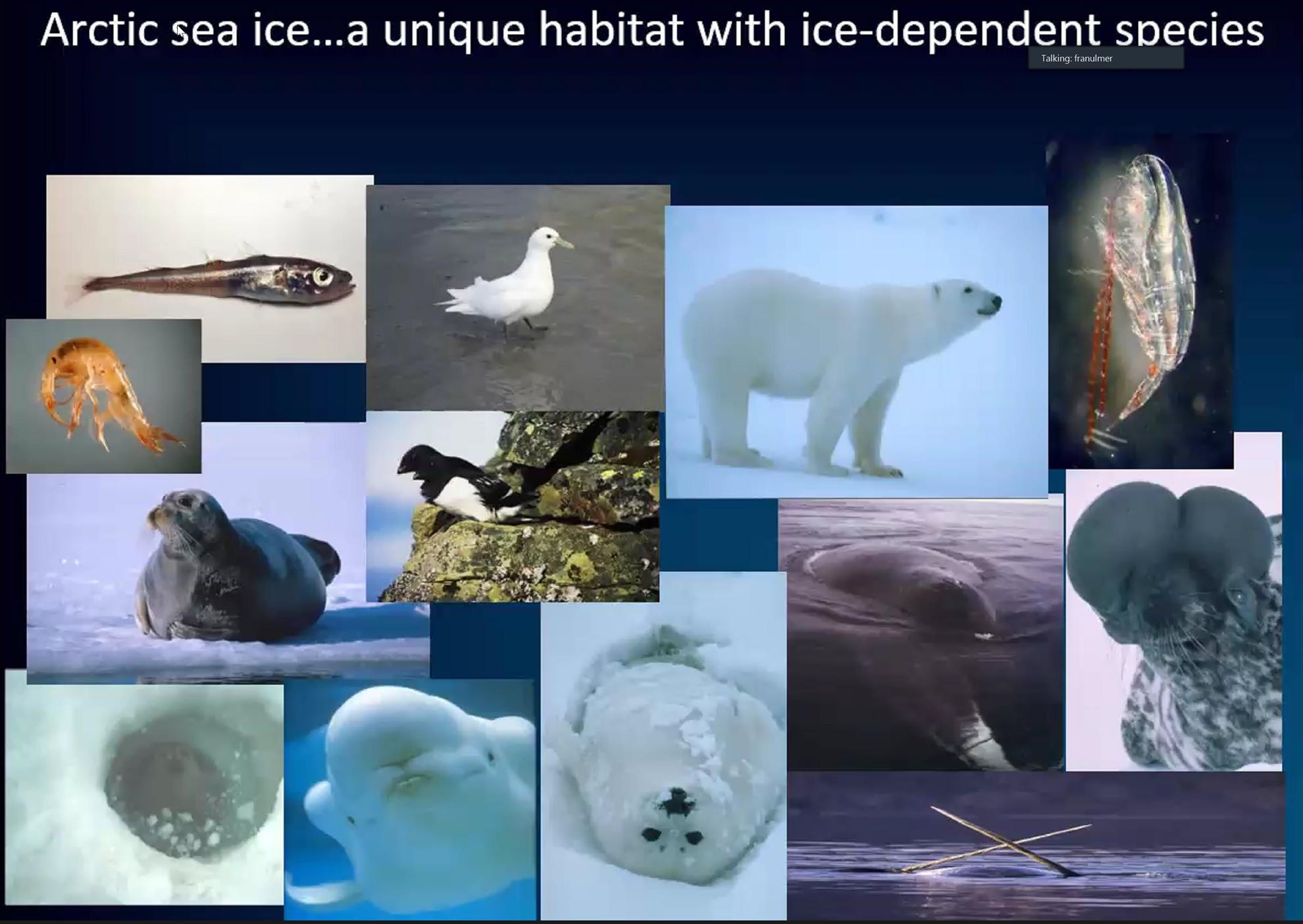
The Arctic is warming so quickly that glaciers are shrinking and there is less sea ice, ecosystems are altering, permafrost is thawing, seasons are changing, and sea levels are rising. The changes are dramatic and continuing to trend negatively. Animals that depend on Arctic sea ice face huge changes. Another concern is that the Greenland Ice Sheet is melting faster than ever before. Permafrost, permanently frozen ground, makes up much of the land in the Northern Hemisphere but as it thaws it releases more greenhouse gases into the atmosphere, further speeding up global warming. The indigenous peoples of the Arctic face massive health, safety, food security, and cultural changes. People are considering leaving their ancestral home because of these changes.
People who do not live in the Arctic are going to see a multitude of changes as well, such as more warming, sea level rise, changing weather, and easier access to the Arctic region. Fran compared the Arctic to an air conditioner; if the air conditioner loses power, it can no longer cool the planet. She also pointed out that sea level rise is not a future problem; it is a problem now. In Virginia and California coastal areas, we are seeing problems associated with flooding and erosion. Arctic warming contributes to unpredictable weather, which affects us all. Fran also said that this ocean is now more accessible for many people, “new ocean,” so to speak. The potential for economic development is attracting more international interest, which may continue to change shipping routes, and increase Russian investment in oil and gas and China’s research and efforts to become an Arctic “player.” This involvement from various countries has raised uncertainty and increase international tension. However, to date most of these nations are still more interested in cooperation and continue to promote peace, such as the Arctic Council. The Arctic 8 and fishing countries agreed on a moratorium on all commercial fishing in the Central Arctic Ocean - “Precautionary Approach.”
Summary: the valuable and vulnerable Arctic region is dramatically and quickly changing, which has serious changes in recourses, relationships, and global implications. Not only are the animals and people who live in the region impacted, but so is the entire planet because we all need the ice for stability and biodiversity.
Thank you so much, Fran, for the amazing presentation. Your expertise and thoughtful discussion of this wonderful ocean is so greatly appreciated!
For more information: www.arctic.gov, www.arctictoday.com, www.arctic.noaa.gov, www.arctic-council.org.