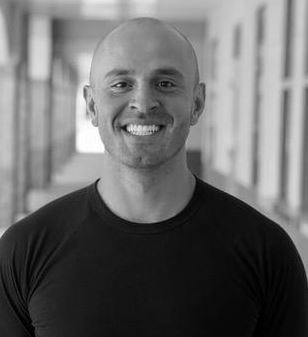
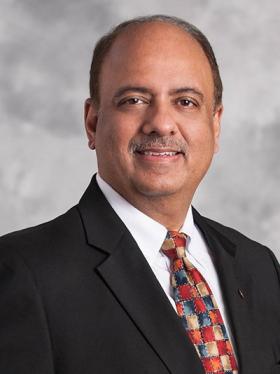
Born and raised in Guerneville, Herman attended the Santa Rosa Junior College and graduated from San Diego State University. He is proud to be the first from his family to graduate from college and is grateful for the support he received on his educational journey. Herman has served on the Foundation since 2012; he also serves on the Sonoma County Office of Education School Board; he is the proud Co-President of the College Tee Project; and proud Russian River Rotarian. He lives by the Rotary motto, “service above self” and strongly believes that where there’s unity, there’s community and success
Independent Booksellers - State of the Industry by Ann Seaton of CALIBA
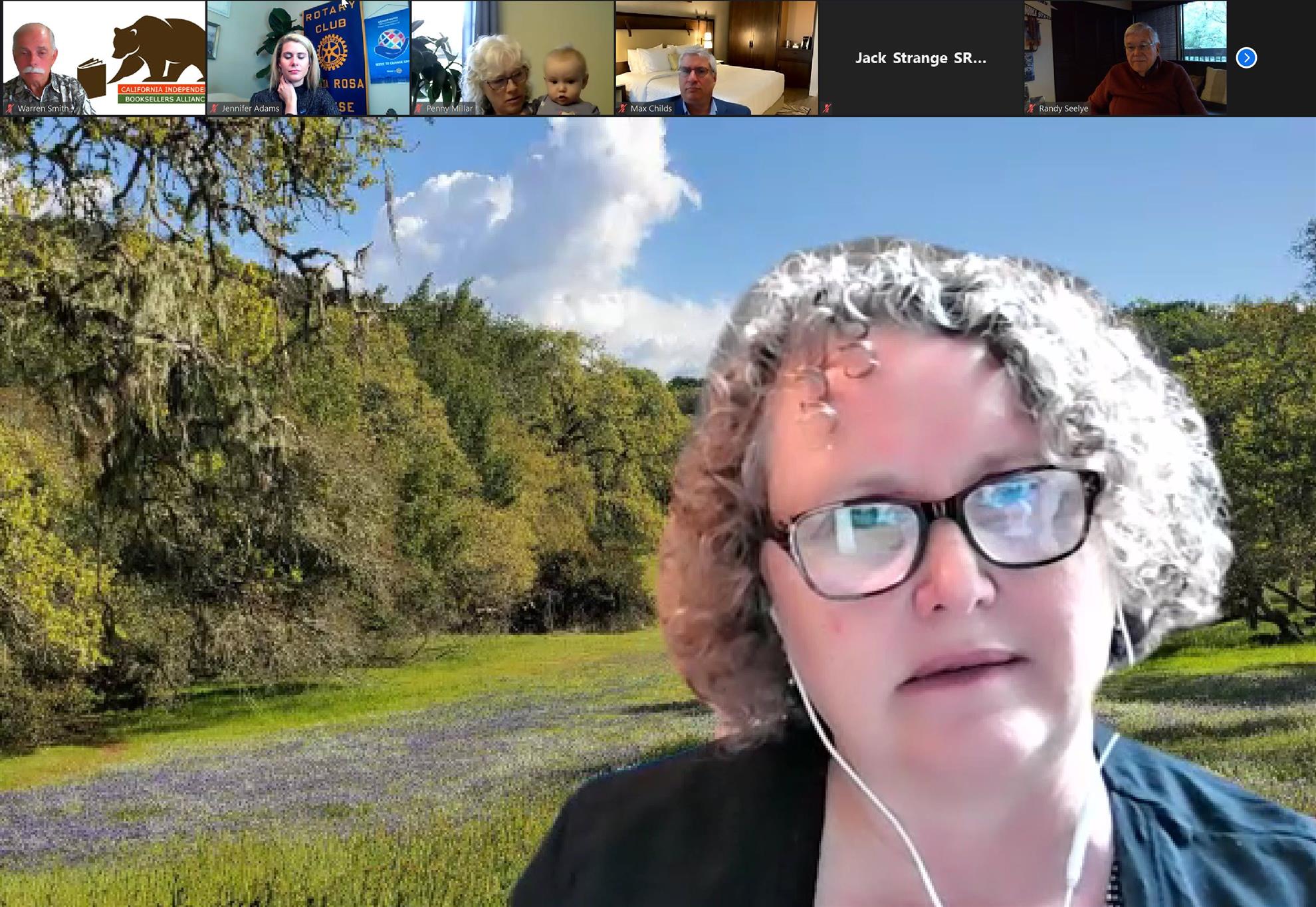
Our speaker for August 5, 2021, was Ann Seaton, a Co-Executive Director for the California Independent Booksellers Alliance (“CALIBA”). She was previously a bookstore manager and buyer in the South Bay. Her presentation was entitled “Independent Booksellers – State of the Industry.” CALIBA is a mutual benefit 501c(6) non-profit corporation dedicated to supporting, nurturing, and promoting independent retail bookselling in California. It is one of 8 regional non-profit independent organizations in the U.S. CALIBA’S goal is to further education efficacy and provide a platform for independent (“indie”) stores. CALIBA was founded by booksellers and publisher sales representatives to be the voice of the independent bookselling community. One of their major priorities is to fight predatory national retailers. For example, they successfully fought companies like Amazon who did not have to collect sales tax.
Indie stores sell 15% of all books sold in the U.S. They are very independent and bring new perspectives by selling books that owners and staff like. The size of indie stores varies greatly, from a Booneville train car to large stores like Book Passages in San Francisco and Corte Madera. Publishers put up with indie stores because they are pacemakers; they set the tone for the book market. Indie stores are all unique and different from bookseller chains like Barnes & Noble. They offer discovery of new and different books and realtime conversations with sellers. They are not just about the product; you walk into a store to buy a book you’ve heard about, and it pops up on the shelf in a new and interesting way. They have curated selections, often leading to new thought processes and discovery of new books.
How do indies survive? They were at the forefront of the Shop Local movement. They offer an experience not found elsewhere, with discussion forums, author events, birthday, weddings, and food offerings. They can also offer an array of gifts, which helps their profit margins. Indies have proven that the big box model does not always work. Neighborhood bookstores embrace downtowns and consumers. They are surviving the pandemic; many pivoted into online fulfillment centers. They worked long hours, offered free local delivery, social media, and curbside pick-up. The bottom line was that stores closed during the pandemic but some reopened with new owners. In fact, more stores opened in 2020 than in many years. CALIBA provides booksellers with best practices, new tools, advice on how to make it through the pandemic, on-line chats, remote desktop issues, and how to manage stores from a remote workstation. They tell booksellers what works and what doesn’t work. They offer workshops for their members on a wide range of subjects. They recommend books and stay on top of responses to legal and political action – before it happens. Ann gave us an interesting perspective regarding demographics: she said that younger people tend to like physical books over ebooks. Something physical happens when you look at the cover of books.
Many thanks to Ann for her interesting discussion of the independent bookstore perspective. Let’s hope that indie bookstores stay at the forefront of book sales in the U.S.!
You may view Ann's presentation HERE on Zoom. It will be available for a about a week.
On a regular basis, our resident photo pro Warren Smith, submits pictures of what is going on at the weekly meetings. You can always find the most recent pictures at the websites photo journal called "Meeting Sighting" Please note that all the meeting photos for the entire Rotary year are at this location with the most recent on the last page.
Thanks for all the great pictures Warren!Link to Meeting Sightings. The most recent are on the last page!
Sunday August 8th we were graced with a new moon in Leo. The new moon is leading up to a profound explosion of energy in the Universe. On August 11th, the fixed star Sirius reveals its bright splendor in the night’s sky and can be seen on the eastern horizon before dawn.
The reappearance of Sirius is known as “The Lion’s Gate Portal.” This is a magical and powerful time to set our intentions and manifest our deepest desires. Sirius means, “glowing” in Greek and it is revered as one of the most spiritual stars in the cosmos. It is known to bring a divine spark when it reemerges from the shadows of the inky black sky.
This week while you’re in the shower, taking a stroll at Spring Lake Park, or listening to your favorite song on the radio, ask yourself this question, “In what part of my life do I feel like a king/queen?”
M.J. Girard is currently an on air personality on KOWSfm.com His “Roots of Rock” is broadcast every Sunday morning at 7 AM
Fifty-two years ago…. almost on this same weekend…the World was once again altered with the celebration of Peace and Music in upstate New York at the Woodstock Exposition. The premise was straight forward, bill topflight rock and roll acts and the world will beat a path to your door!
Over 400,000 showed up, thirty-two acts performed, at times in drenching downpours, the festival is considered a pivotal apex in popular music history as the definitive event of the burgeoning counterculture.
Rolling Stone periodical listed the event at number 19 of the 50 Moments That Changed the History of Rock and Roll, not to mention how it affected the lives of those in attendance.
In early 1969, Creedence Clearwater Revival became the first act to agree to appear. Previously, the promoters were having great difficulty in finding acts willing to commit. However, after CCR signed on, the majority of the available acts followed suit.
As one of the biggest music festivals of all time, as well as a “cultural touchstone” of the late 1960’s, Woodstock has over time been referenced by the phrase “Woodstock Generation”. Cartoonist Charles Schultz named his heretofore unnamed Peanuts bird character after the festival as a tribute to the event and as a reminder of its significance.
A few of the statistics: 3 deaths, 2 births. 1,300 pounds of food ferried in by helicopter. 17 mile long stopped traffic on route 17B heading to the festival. 250,000 who never made it to the event as they had planned. 110 days between Woodstock and the disastrous Altamont festival.
This Sunday’s edition of the “Roots of Rock” will feature some of the highlights of the event.
Former Olympic skier Pickabo Street donated money to a local hospital. In gratitude, the hospital named their emergency ward after her-- it's now the Picabo ICU.
As we focus on membership in Rotary this month, I ask you to help make history this year. For more than 20 years, our membership has stood at 1.2 million. Rotary is a vibrant organization with a 116-year history, members in more than 220 countries and geographic areas, and a rich legacy of work in polio eradication and other humanitarian programs. Rotary has changed so much in our own lives and the lives of others. As we Serve to Change Lives, don’t you think Rotary could have an even greater impact on the world if more people were practicing Service Above Self?
My vision is to increase Rotary membership to 1.3 million by July 2022, and the call to action is simple: Each One, Bring One. This year, I want every Rotarian and Rotaractor to introduce a new person into their club.
We are a membership organization, and members are our greatest asset. You are the ones who contribute so generously to The Rotary Foundation. You are the ones who dream big to bring good into the world through meaningful projects. And of course, you are the ones who have put the world on the brink of eradicating polio.
As we make membership a priority this year, let us focus on diversity by reaching out to younger people and especially to women. Every club should celebrate its new members, and every Rotarian who sponsors a member will be personally recognized by me. And those who are successful in bringing in 25 or more members will be part of our new Membership Society.
Even as we share the gift of Rotary with others, let us be sure to engage these new members, because an engaged Rotarian is an asset forever. And remember that engaging our current members and keeping them in our clubs is just as important as bringing in newcomers. Let us also be ready to form new clubs, especially flexible ones. I am very bullish on clubs that hold virtual or hybrid meetings, and satellite clubs and cause-based clubs can also be very effective ways of growing Rotary.
As you grow more, you will be able to do more. Let us keep empowering girls through our work in each of the areas of focus. Scholarships for girls, toilets in schools, health and hygiene education — there is so much we can do. Projects focused on the environment are also attracting interest the world over. Do participate in these projects locally and internationally to make this world a better place for us and for all species.
Each of you is a Rotary brand ambassador, and all of the wonderful work done by Rotarians around the world needs to be shared outside the Rotary community. Use social media to tell your friends, colleagues, and relatives the stories of Service Above Self.
Finally, I’m challenging every club, during the coming year, to plan at least one Rotary Day of Service that will bring together volunteers from inside and outside Rotary and will celebrate and showcase the work of your club in your community. Visit rotary.org to find out more about all of these initiatives, along with other ways to Serve to Change Lives.
In August, we focus on membership — exploring ways we can expand Rotary’s ranks and reach. As we form new clubs and answer RI President Shekhar Mehta’s call of Each One, Bring One, let’s consider how these efforts will have a positive impact at every level of our organization.
Rotary’s two greatest assets are its members and The Rotary Foundation, and they are linked. Our organization is made up of more than 48,000 Rotary and Rotaract clubs, and without our dedicated club members, we can’t perform service. Our members also carry out the Foundation’s mission of doing good in the world, by working on grassroots projects and making contributions that support countless Foundation programs and grants.
With more members in Rotary, the Foundation could do even more good in the world. We would have more hands to set up water, sanitation, and hygiene projects, so that more people could access clean water. We would have more minds to plan global grants projects that support prenatal services, so that more babies could live. We could fund more district grants that support literacy, so that more people could learn to read.
Today, roughly a third of our members actively support the Foundation through annual giving or other means. Imagine how we could extend Rotary’s reach if we were to increase that engagement, even by just a little. More Rotarian contributions would mean additional funding for the Rotary Peace Centers, as well as more matched contributions to help eradicate polio, thanks to our partnership with the Bill & Melinda Gates Foundation.
The Rotary Foundation is a powerful force that efficiently carries out impactful and sustainable projects around the world; Charity Navigator has recognized The Rotary Foundation with a four-star rating annually for 13 consecutive years. All Rotary members can be proud of this. And how great it would be if all Rotarians would support the Foundation in whatever way they could.
I have a simple request this month. Please take 10 minutes during your next club meeting to discuss ways to get more involved in the Foundation this year. It could be planning an online fundraiser to benefit the Foundation or partnering with other clubs for a global grant project.
Whatever you do, remember that our members — all of us — drive Rotary’s efforts and sustain our Foundation.
In Ciudad Juárez, one woman’s work to protect children from street violence has blossomed into Soles de Anapra, a center serving some 80 young people. Since 2014, the Rotary Club of El Paso, Camino Real, Texas, had been donating goods to Lourdes Contreras for the after-school program she ran out of a small house. In 2015, the club decided to find her a bigger, better space. With $25,000 donated by the 16 clubs in Ciudad Juárez and two partners in New Mexico — the Rotary clubs of Los Alamos and Silver City, frequent contributors and visitors to the center — and $10,000 raised from a 5K run sponsored by the Eaton Corporation, the club purchased a 6,000-square-foot warehouse in 2016 and went to work. In April, the club completed a refurbishment of the building, carried out even as the pandemic temporarily halted the after-school program.
United States
In October, about a dozen Rotarians from the Rotary Club of Eau Claire Morning, Wisconsin, along with some of their family members, used a product called Invisible Spray to stencil temporary, water-activated artwork on sidewalks throughout the city. Rainworks, manufacturer of the hydrophobic, nontoxic liquid spray, donated the product, which allows users to create designs that only appear when the sidewalks get wet. At a cost of about $130, 16 ounces can cover up to 110 square feet. “We thought in the difficult times of the pandemic, we could bring smiles to our community” and inspire other organizations to do the same, says Sarah Stackhouse, a co-president of the club. A “thank you” below an image of a firefighter’s hat was traced outside a fire station, while a drawing at the entrance to a theater featured musical notes and suggested “singing in the rain.”
This story originally appeared in the August 2021 issue of Rotary magazine.
Rotary Club of Santa Rosa Sunrise - Founded June 30, 1986


.png)

.jpg)
















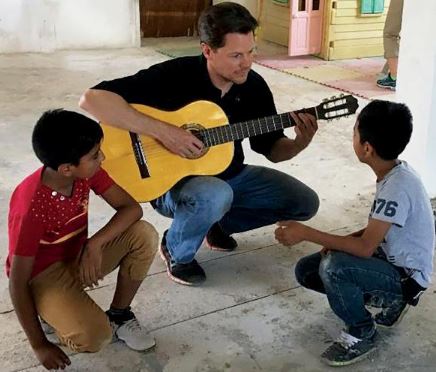 In Ciudad Juárez, one woman’s work to protect children from street violence has blossomed into Soles de Anapra, a center serving some 80 young people. Since 2014, the Rotary Club of El Paso, Camino Real, Texas, had been donating goods to Lourdes Contreras for the after-school program she ran out of a small house. In 2015, the club decided to find her a bigger, better space. With $25,000 donated by the 16 clubs in Ciudad Juárez and two partners in New Mexico — the Rotary clubs of Los Alamos and Silver City, frequent contributors and visitors to the center — and $10,000 raised from a 5K run sponsored by the Eaton Corporation, the club purchased a 6,000-square-foot warehouse in 2016 and went to work. In April, the club completed a refurbishment of the building, carried out even as the pandemic temporarily halted the after-school program.
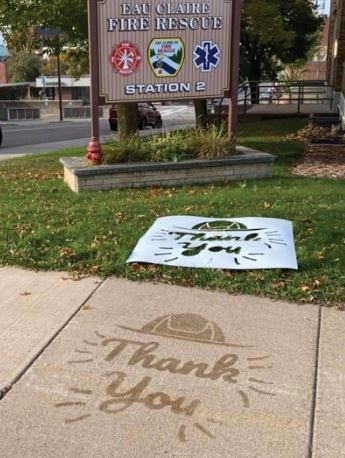 n October, about a dozen Rotarians from the Rotary Club of Eau Claire Morning, Wisconsin, along with some of their family members, used a product called Invisible Spray to stencil temporary, water-activated artwork on sidewalks throughout the city. Rainworks, manufacturer of the hydrophobic, nontoxic liquid spray, donated the product, which allows users to create designs that only appear when the sidewalks get wet. At a cost of about $130, 16 ounces can cover up to 110 square feet. “We thought in the difficult times of the pandemic, we could bring smiles to our community” and inspire other organizations to do the same, says Sarah Stackhouse, a co-president of the club. A “thank you” below an image of a firefighter’s hat was traced outside a fire station, while a drawing at the entrance to a theater featured musical notes and suggested “singing in the rain.”