Independent Booksellers - State of the Industry by Ann Seaton of CALIBA
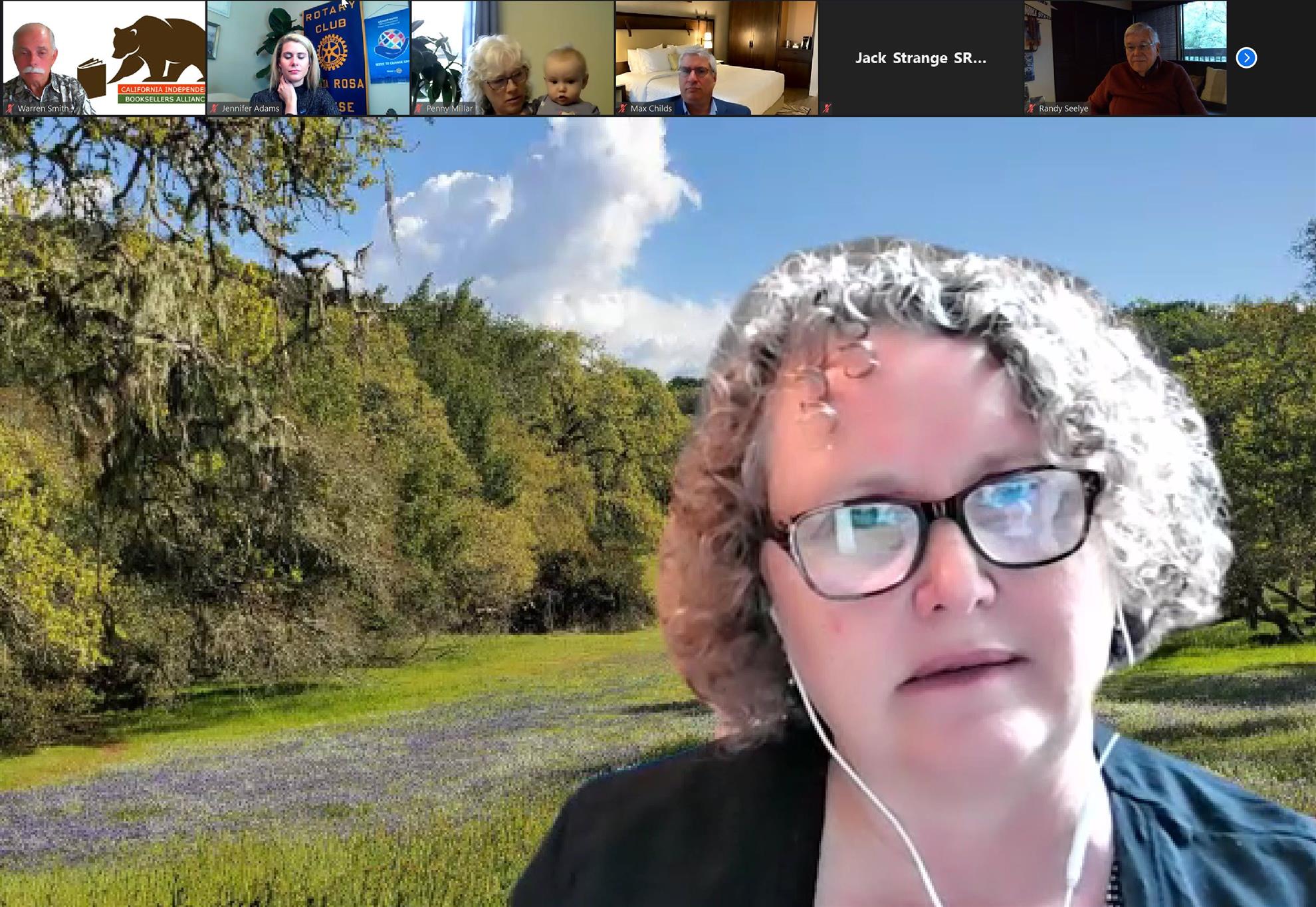
Our speaker for August 5, 2021, was Ann Seaton, a Co-Executive Director for the California Independent Booksellers Alliance (“CALIBA”). She was previously a bookstore manager and buyer in the South Bay. Her presentation was entitled “Independent Booksellers – State of the Industry.” CALIBA is a mutual benefit 501c(6) non-profit corporation dedicated to supporting, nurturing, and promoting independent retail bookselling in California. It is one of 8 regional non-profit independent organizations in the U.S. CALIBA’S goal is to further education efficacy and provide a platform for independent (“indie”) stores. CALIBA was founded by booksellers and publisher sales representatives to be the voice of the independent bookselling community. One of their major priorities is to fight predatory national retailers. For example, they successfully fought companies like Amazon who did not have to collect sales tax.
Indie stores sell 15% of all books sold in the U.S. They are very independent and bring new perspectives by selling books that owners and staff like. The size of indie stores varies greatly, from a Booneville train car to large stores like Book Passages in San Francisco and Corte Madera. Publishers put up with indie stores because they are pacemakers; they set the tone for the book market. Indie stores are all unique and different from bookseller chains like Barnes & Noble. They offer discovery of new and different books and realtime conversations with sellers. They are not just about the product; you walk into a store to buy a book you’ve heard about, and it pops up on the shelf in a new and interesting way. They have curated selections, often leading to new thought processes and discovery of new books.
How do indies survive? They were at the forefront of the Shop Local movement. They offer an experience not found elsewhere, with discussion forums, author events, birthday, weddings, and food offerings. They can also offer an array of gifts, which helps their profit margins. Indies have proven that the big box model does not always work. Neighborhood bookstores embrace downtowns and consumers. They are surviving the pandemic; many pivoted into online fulfillment centers. They worked long hours, offered free local delivery, social media, and curbside pick-up. The bottom line was that stores closed during the pandemic but some reopened with new owners. In fact, more stores opened in 2020 than in many years. CALIBA provides booksellers with best practices, new tools, advice on how to make it through the pandemic, on-line chats, remote desktop issues, and how to manage stores from a remote workstation. They tell booksellers what works and what doesn’t work. They offer workshops for their members on a wide range of subjects. They recommend books and stay on top of responses to legal and political action – before it happens. Ann gave us an interesting perspective regarding demographics: she said that younger people tend to like physical books over ebooks. Something physical happens when you look at the cover of books.
Many thanks to Ann for her interesting discussion of the independent bookstore perspective. Let’s hope that indie bookstores stay at the forefront of book sales in the U.S.!
You may view Ann's presentation HERE on Zoom. It will be available for a about a week.