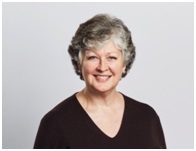
Bonny Landers is a senior finance professional with 25 years in international banking, primarily with JP Morgan and Chase Manhattan Bank. From 2005 to 2015, Bonny was CEO of several private single-family offices in Hong Kong and has been head of Sustainable, Responsible and Impact Investment for a private multi-family office in London as well as the Senior Client Advisor for Wealth Impact Advisory for Bridges Fund Management, the pioneer impact fund manager in the UK. Bonny also established her own international consulting company to advise families and private foundations on how to transition their investment portfolios toward more responsible, sustainable and impact investments – Bay Street Consultants.
Bonny’s expertise is recognized in the field of SRI and impact investing; she has been a frequent speaker at mainstream investment conferences as well as family office forums.
Bonny is an Honours graduate of Harvard University, a Rotary International Graduate Fellow in International Relations and has done post-graduate work in International Economics and Politics. She enjoys being an advisor to several social enterprises and charitable organisations and a mentor to young people.
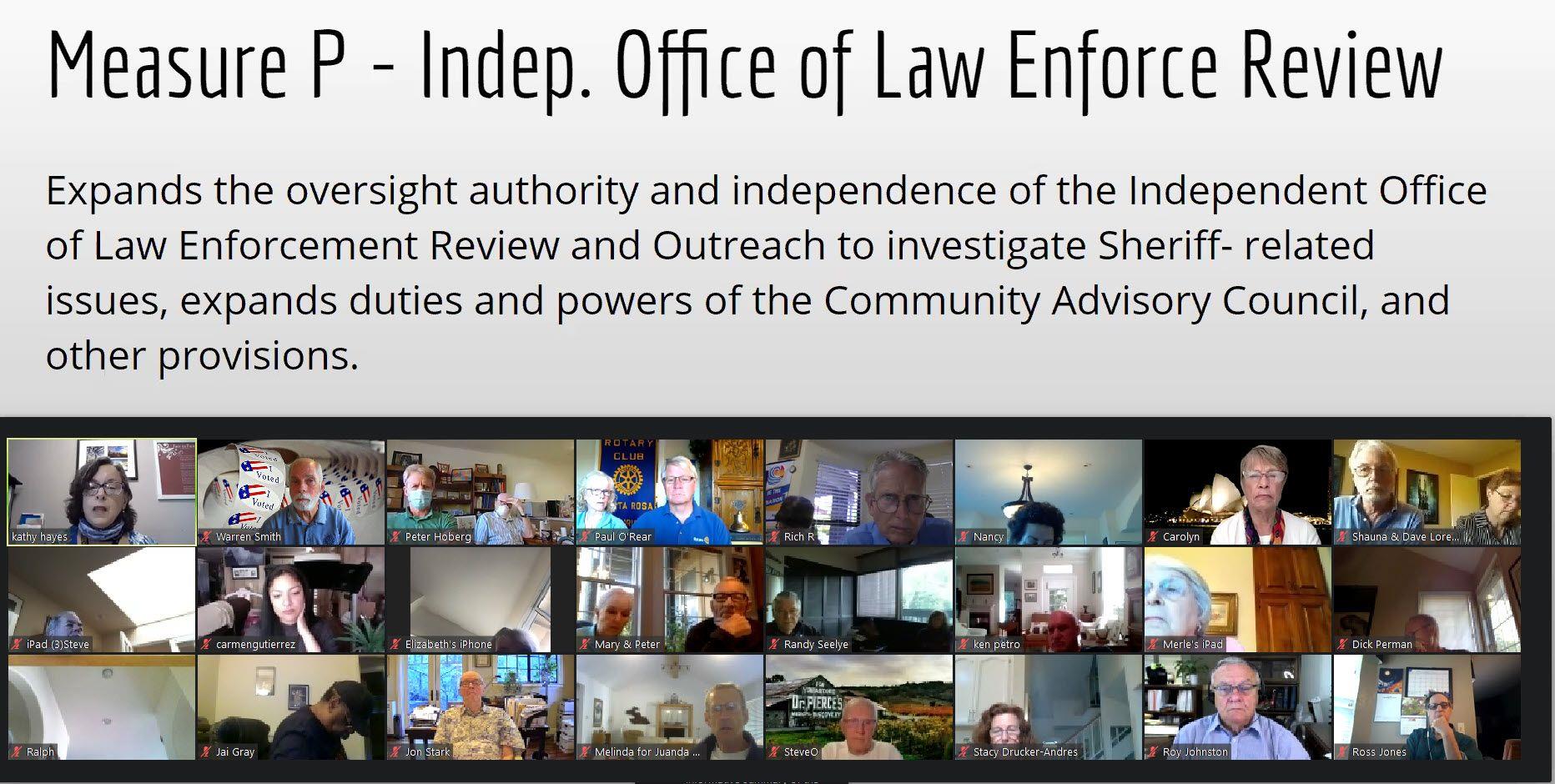
Our guest speaker for the October 15, 2020 meeting was Kathy Hayes, California Proposition guru extraordinaire. Kathy is also famous for being Merle Hayes’ daughter and the mother of Elsie Allen grads/current U.C. students! Kathy gave us a whirlwind tour of at least 12 propositions and several County “measures” on the ballet this November. Kathy’s description of these ballot items will be very helpful for all Sunshine voters because these propositions are complicated and are not always as described in television ads or in mail promotions.
Among the helpful information given by Kathy was something we rarely hear about; the difference between propositions that if passed will result in an amendment to the state Constitution and those propositions that would result only in new statutes (which can presumably be changed by future legislative action). For example, Proposition No. 16, the effort to repeal a prior proposition regarding affirmative action, will result, if passed, in an amendment to the Constitution. The legislature cannot change it. Conversely, Proposition 22, which would exempt Uber, Lift and other “app-based drivers” from state law definitions of “employee,” is an attempt to amend a statute, not the Constitution.
Another distinction we do not usually consider, but which may be important to us, is how the proposition was introduced. Some propositions are put on the ballot by the legislature and others are from signatures by a significant number of voters. Proposition 18, allowing some 17-year-olds to vote, was put on the ballot by the legislature. The same is true of Propositions 16, 17 (restoring right to vote to people on parole), and Proposition 19 (portability of property tax breaks for aged, disabled or victims of natural disasters). These are typically efforts by the legislature to amend the state’s constitution. Most of the rest of the propositions come by signatures from voters.
Kathy also provide other helpful hints about propositions in general. She mentioned that some of these propositions seem so complicated that it is almost impossible to figure out what effect they may have. Proposition 15, the commercial property tax “split roll” effort, may fall into this category. Another highly complicated proposition is Prop. 21, dealing with rent control. These require a special effort to understand. Not specifically speaking about these two propositions, Kathy mentioned that saying “no” to a proposition you feel is overly confusing and complex is always an option. The other helpful hint is that when reviewing bond measures, you should ask yourself if you are concerned in general about the amount of bonds already on the books. For example, when discussing Proposition 14, a bond for stem cell research, Kathy said you should consider both your attitude towards spending and whether you support state-funded research and development.
Great job, Kathy. Your lightning tour of the strange array of propositions was very helpful to me and to all of us. The slides were amazing! Thank you for taking the time to really get into the weeds on these issues of state-wide important.
On a regular basis, our resident photo pro Warren Smith, submits pictures of what is going on at the weekly meetings. You can always find the most recent pictures at the websites photo journal called "Meeting Sighting" Please note that all the meeting photos for the entire Rotary year are at this location with the most recent on the last page.
Thanks for all the great pictures Warren!Link to Meeting Sightings. The most recent are on the last page!
I was told that I needed to come up with a joke for this thing, and I’ve always been one of those people who messes up the punchline, so I figured I should probably prepare for it.
So I went to a bookshop and found a good joke book, to try and get some inspiration, or just plain steal a joke to use.
When I got home, I realized I’d accidentally bought a thesaurus. As you can understand, I was pretty crushed… upset… disappointed… vexed… disconcerted.
Sixty-five years ago, in 1955, I was diagnosed with polio. I was two years old, so I was unaware of what it meant to have been infected with the poliovirus, but I became more aware of it in subtle ways as I got older. And at some point, I understood what my mother meant when she said I was “one of the lucky ones.”
My mother came from Jersey City, New Jersey, and she sounded like it all her life, aided and abetted by a daily regimen of unfiltered Kool cigarettes. She drove a supply truck as a civilian during World War II and delighted in telling a tale about a GI who tried to “get fresh” with her when she gave him a lift back to the base. When she told him she was married and her husband was deployed overseas, he said, “Baby, what’re you saving it for — the worms?”
She stopped the truck and told him, “Ride in back, buster!” I have no doubt that she used an expletive, although she never employed one in the retelling, Jersey accent notwithstanding. But she still thought “saving it for the worms” was the funniest line she had ever heard. She was a woman who could take things in stride, the quintessential “tough cookie.”
But there was one recollection that could unravel my mother like no other — the one that involved her youngest son being diagnosed with polio and the palpable fear that stalked parents across the country during the summers of the early 1950s. She could not stop her voice from cracking when she spoke about that time. That, along with her warnings about staying out of “polio puddles” after it rained, shaped my awareness of how frightening the epidemic had been.
Among my childhood memories, getting the oral polio vaccine is as vivid as the classroom drills that taught us to seek safety under our desks in case of a nuclear attack. While I can now joke about how sturdy school desks must have been back then, there’s no amusement in my recollection of lining up outside the local firehouse for the Sabin sugar cube — that was serious, important business. I knew it then, and I know it now.
My appreciation for having survived polio faded away over time, but returned in force about 12 years ago when I began writing for Rotary magazine. I had assumed polio had been eradicated — or, more accurately, I didn’t think about it. I have since had the opportunity to get to know, and be awed by, some of the Rotarian volunteers who are working to achieve that goal.
One of the lucky ones
Now, as the novel coronavirus makes its way across the world, I feel a renewed gratitude for what it means to be one of the lucky ones — and a deeper understanding of how terrifying life was for many people six decades ago. As a 67-year-old former smoker, I’m among those now considered vulnerable — I have two adult children to keep reminding me of that — but I’m also among the privileged. My wife and I are able to work from home, we live in a single-family house with creature comforts, and we can afford to practice social distancing with little sacrifice.
Although adults were not immune to polio — President Franklin D. Roosevelt famously contracted the disease at age 39 — most of its victims were young children. Today, COVID-19 appears to pose the most danger to people over 60 — that is, the same group that polio targeted 65 years ago. “There was a high level of fear in the country then, very similar to what we have now,” says Cort Vaughan, who is one of those volunteers I’m awed by. When we spoke in April, Vaughan and his wife, Tonya, had recently returned from participating in a polio vaccination campaign in India.
A member of the Rotary Club of Greater Bend, Oregon, and a past End Polio Now coordinator, Vaughan began his work on the polio front before he was even aware of it: He was a March of Dimes poster child in Riverside, California, when he was three years old. He still has a copy of an article from a local newspaper with a photo of him dressed as a cowboy guarding the spare change that people contributed during a fundraising drive in 1955.
Vaughan doesn’t remember contracting polio at age two in October 1954, but, he says, “I have clear memories of my parents relating stories about it, and I could feel the emotion in their voices about what they went through. For my mother, it was like she was reliving the fear and anxiety of having her child stricken with a potentially deadly disease. Their stories were so vivid, so palpable, they almost became my own memories.”
The darkest story starts with his mother discovering one morning that her toddler was suddenly unable to walk, calling the doctor, and rushing him to the hospital. “If you had to go to the hospital, there was a high probability of being crippled for life,” Vaughan says. “Once my parents took me there, it was out of their hands.” At that time, polio wards restricted visitors, and Vaughan’s mother was desperate to be with him. “She discovered a women’s group that was sending volunteers to hospitals. She joined the Junior League primarily to get to see me.”
Vaughan’s illness paralyzed his right leg from the knee down, requiring him to wear a brace and sentencing him to a childhood in which frequent trips to the hospital for physical therapy replaced playing outdoors with friends. “I didn’t feel lucky then, but looking back, now I do,” he says. He also believes that the knowledge that comes from living with the scars of polio has heightened his grasp of what is required to overcome the current pandemic. “I know what it’s like to face a hidden threat, and I understand the need for people to stay vigilant and work together to prevent the spread,” he says. “I was defending the stay-at-home order in Oregon early on, when friends and relatives were thinking it was not really serious.”
Breaking the silence around polio
If the term “tough cookie” ever makes it back into common parlance, Carol Ferguson could be its poster adult. It wasn’t until her late 40s that she realized the pain and muscle weakness she was experiencing were post-polio syndrome linked to contracting the virus four decades earlier. Six years ago, Ferguson enlisted the help of three other polio survivors and five friends to launch the Pennsylvania Polio Survivors Network, a volunteer advocacy organization that shares people’s stories, provides information about post-polio syndrome, and lobbies legislators to increase awareness of polio and of the need to prevent infectious diseases through immunization.
Ferguson, a member of the Rotary Club of Doylestown, Pennsylvania, and District 7430 PolioPlus subcommittee chair, says the stories she began hearing at the start of the first wave of COVID-19 bear an eerie resemblance to those her fellow polio survivors tell: a girl hospitalized at age five who remembers weekly visits from her parents during which she could only wave to them through a window; a two-year-old boy who was turned away from a hospital because no beds were available.
Ferguson’s own story is revealing for what her parents didn’t tell her. “When I was two years old, I had the ‘summer grippe,’ which we now know to be polio,” she says. “Ten years later, a doctor examined me and said I had a ‘polio foot.’ That was the only time that word was mentioned. My mother lived to be 92, but she didn’t speak about polio until shortly before she died. My father died having never spoken the word. I realize now that this is a reflection of the fear that they felt.”
Ferguson feels no such need for silence. Earlier this year, she spearheaded an initiative, in partnership with the Pennsylvania Immunization Coalition and local Rotary clubs, to produce a vaccination information and resource card to distribute to new parents in the state.
When Jonas Salk announced the success of his historic vaccine trial in April 1955, there was widespread acceptance of the need for mass immunizations. At some point in the future, a modern-day Salk or Albert Sabin will emerge to announce a vaccine to control the spread of COVID-19. But it’s anyone’s guess how widely accepted that vaccine will be.
Although we now have the benefit of communications technology that people in the 1950s could hardly imagine, that technology can also allow misinformation — and disinformation — to spread as rapidly as a virus itself. Ferguson is hopeful that credible and accurate information about vaccines will prevail. Oh, do I hope she’s right.
• This story originally appeared in the September 2020 issue of Rotary magazine.
• Paul Engleman is a polio survivor and a frequent contributor to Rotary magazine.
Rotary Club of Santa Rosa Sunrise - Founded June 30, 1986


.png)

.jpg)






 She stopped the truck and told him, “Ride in back, buster!” I have no doubt that she used an expletive, although she never employed one in the retelling, Jersey accent notwithstanding. But she still thought “saving it for the worms” was the funniest line she had ever heard. She was a woman who could take things in stride, the quintessential “tough cookie.”