California Ballot Measures by Kathy Hayes!
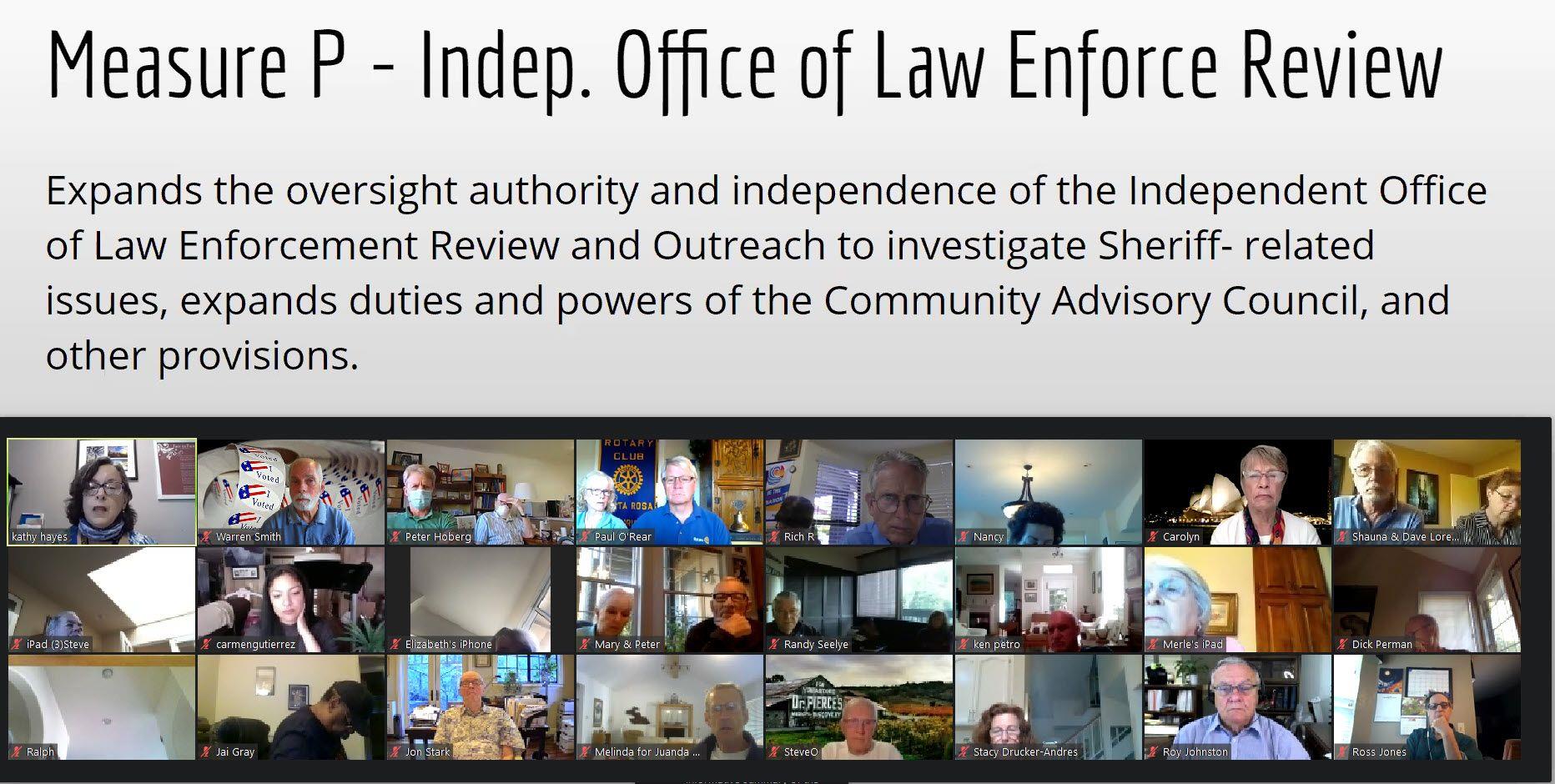
Our guest speaker for the October 15, 2020 meeting was Kathy Hayes, California Proposition guru extraordinaire. Kathy is also famous for being Merle Hayes’ daughter and the mother of Elsie Allen grads/current U.C. students! Kathy gave us a whirlwind tour of at least 12 propositions and several County “measures” on the ballet this November. Kathy’s description of these ballot items will be very helpful for all Sunshine voters because these propositions are complicated and are not always as described in television ads or in mail promotions.
Among the helpful information given by Kathy was something we rarely hear about; the difference between propositions that if passed will result in an amendment to the state Constitution and those propositions that would result only in new statutes (which can presumably be changed by future legislative action). For example, Proposition No. 16, the effort to repeal a prior proposition regarding affirmative action, will result, if passed, in an amendment to the Constitution. The legislature cannot change it. Conversely, Proposition 22, which would exempt Uber, Lift and other “app-based drivers” from state law definitions of “employee,” is an attempt to amend a statute, not the Constitution.
Another distinction we do not usually consider, but which may be important to us, is how the proposition was introduced. Some propositions are put on the ballot by the legislature and others are from signatures by a significant number of voters. Proposition 18, allowing some 17-year-olds to vote, was put on the ballot by the legislature. The same is true of Propositions 16, 17 (restoring right to vote to people on parole), and Proposition 19 (portability of property tax breaks for aged, disabled or victims of natural disasters). These are typically efforts by the legislature to amend the state’s constitution. Most of the rest of the propositions come by signatures from voters.
Kathy also provide other helpful hints about propositions in general. She mentioned that some of these propositions seem so complicated that it is almost impossible to figure out what effect they may have. Proposition 15, the commercial property tax “split roll” effort, may fall into this category. Another highly complicated proposition is Prop. 21, dealing with rent control. These require a special effort to understand. Not specifically speaking about these two propositions, Kathy mentioned that saying “no” to a proposition you feel is overly confusing and complex is always an option. The other helpful hint is that when reviewing bond measures, you should ask yourself if you are concerned in general about the amount of bonds already on the books. For example, when discussing Proposition 14, a bond for stem cell research, Kathy said you should consider both your attitude towards spending and whether you support state-funded research and development.
Great job, Kathy. Your lightning tour of the strange array of propositions was very helpful to me and to all of us. The slides were amazing! Thank you for taking the time to really get into the weeds on these issues of state-wide important.