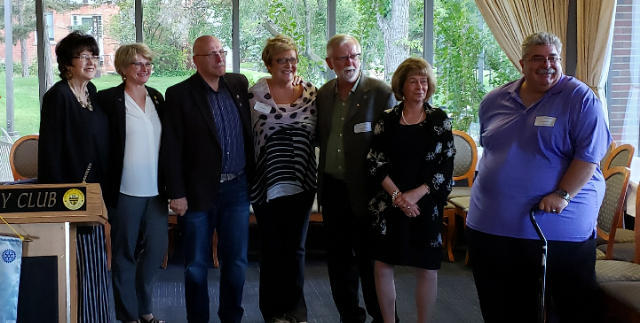
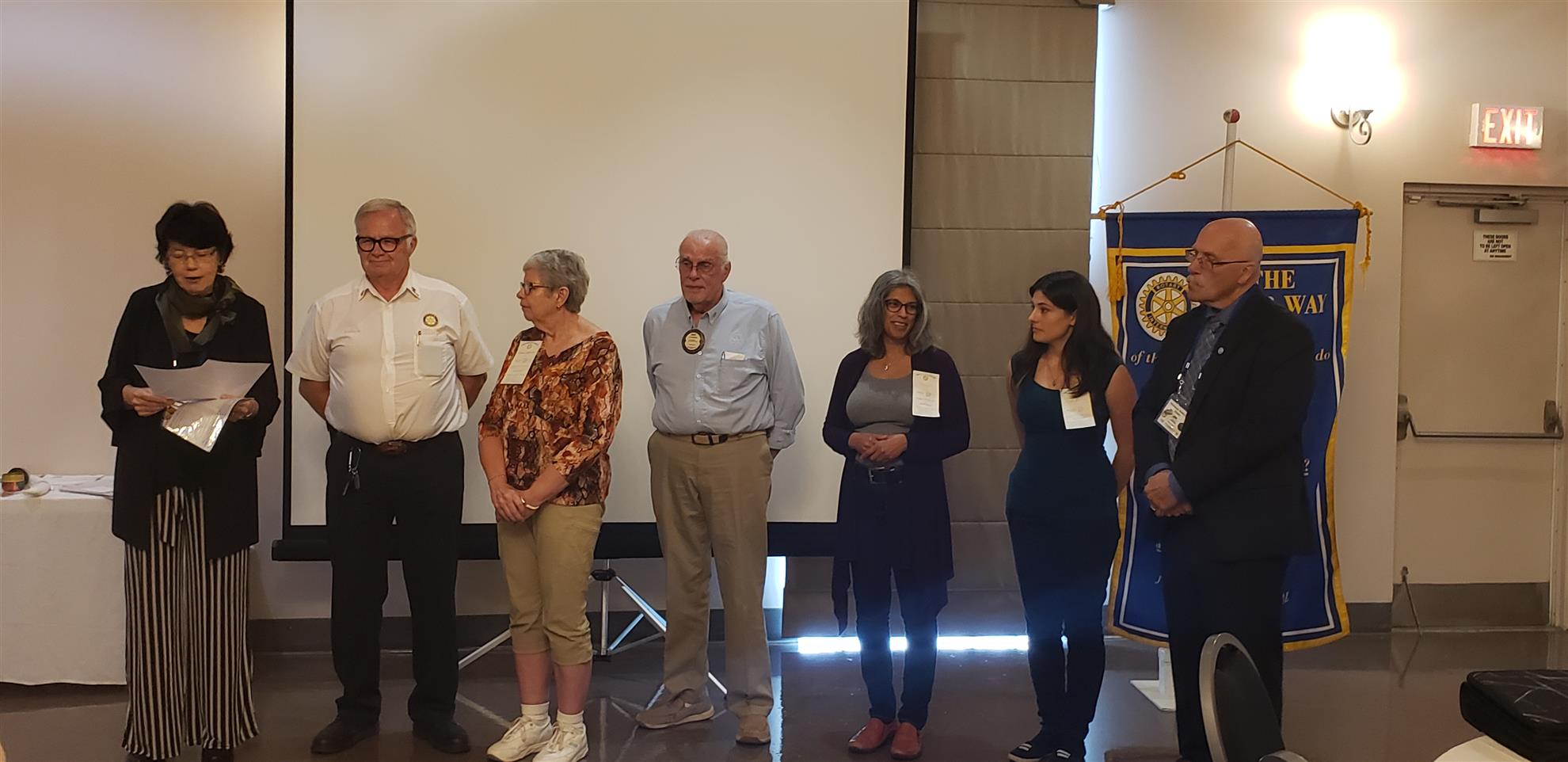
L to R: Ellen Weber, Membership; Carin Jansen van Vuuren, Youth Service; Jim Peddie, President Elect; Donna Hutton, President; Vince Campbell, Immediate Past President; Audrey Martyn, Secretary; Graham Gilchrist, Treasurer.
Bob Sandercock has graciously submitted the following UPDATE:
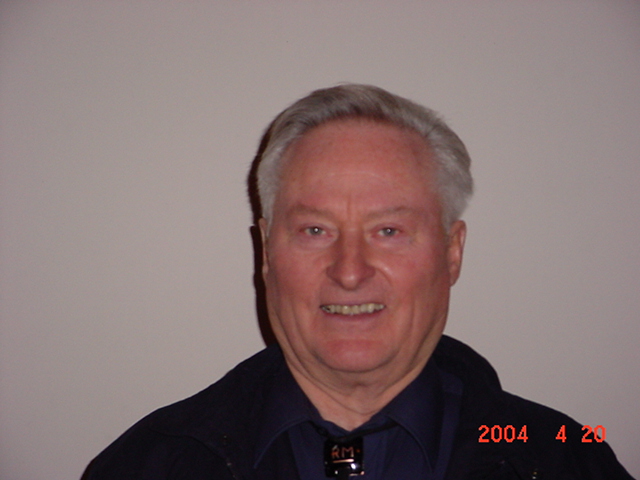
Bruce is and has been in the hospital for two weeks. I had talked to him when he first went in but he was discharged after one day. I did not know he was readmitted a day later. He is in good spirits but still needing tests and therapy. He is turning 88 on Saturday!!
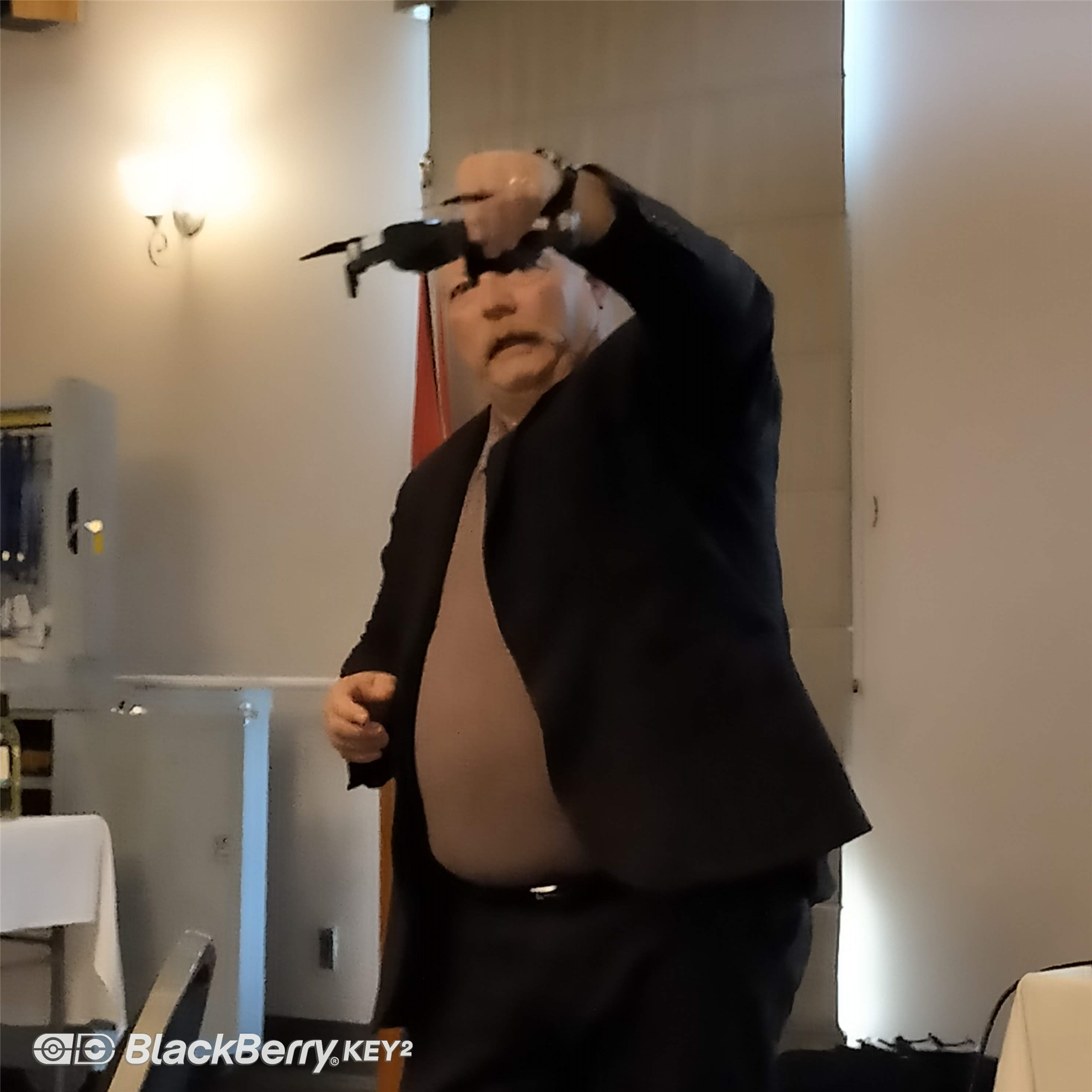
This Tuesday we were treated to a talk by one of our long-time members, Patrick Gibson, on his latest obsession in retirement, drone flying and photography. Patrick said that the use of drones is just starting to take off and they have a very bright future in Alberta and Canada in the future. Drones have opened up a whole new world of aerial photography.
All basic drones come with a camera, but the quality varies a lot. They also come in all sizes, from very small fold up hand-held drones to very large drones built to carry heavy payloads. Some come with a built-in camera and others have a mount to which any type of camera can be attached. The quality of the cameras is commercial grade and Patrick said that he has lowered the picture quality from 4K to 1080p so that his small drone is easier to fly. They are able to be flown either in first person mode, by active control using the screen, or by preprogrammed computer control. The memory needed to save the photos or to send them to a computer as it flies, was causing pauses in the screen picture and made the drone harder to control in first person mode. This meant that the drone could collide with an object in a second while the screen was on pause. His small drone also takes thirteen Mega pixel still photos., which is more than enough for the average person.
Commercial uses for drones are just beginning to be realised. Most drones come with built in GPS, altimeters, collision avoidance sensors and WIFI. The types of camera that can be attached are almost limitless. Drones, cameras and software to control them and analyze the data for all types of commercial uses are now available. One of the most common types of software to control the drone is called waypoint software. It allows the user to preplan the route they want the drone to fly and upload it to the drone. It will then take off, fly the pattern that was programmed, which can be well out of sight of the operator. It will return to the point is was launched from for a battery or memory card replacement and then take off again and return directly to the pattern where it left off to continue with the planned route.
Aerial mapping and three dimension modelling is the future of drones. The images taken by the camera can be used to identify where a sod crop needs more water, where there is standing water in a field, what type of tree saplings are present on a piece of land, what the elevation of selected points of land are and many, many other uses.
The larger drones that can handle payloads, can also be programmed to spray crops and orchards. They can do a better job in nearly all cases, as they are not restricted by accessibility issues and do not crush the crop as they move across it. Drones will put some types of occupations onto the scrap heap of time and will, in turn, create new ones to take their place.
Drone users are big proponents of a 5 G network as this would make it easier for a drone to transmit data as it flies along without having to return to home to get its memory card swapped out. Technology is changing so fast in this field that it is hard to imagine where it will take us.
All drones over a weight of two hundred fifty grams (a very small drone) require a license to fly them for recreational purposes. There is currently no commercial licensing for drones, but this is coming and will open up all kinds of new uses for drones. Patrick is confident that drones will find all kinds of new and currently unimagined uses in the future.
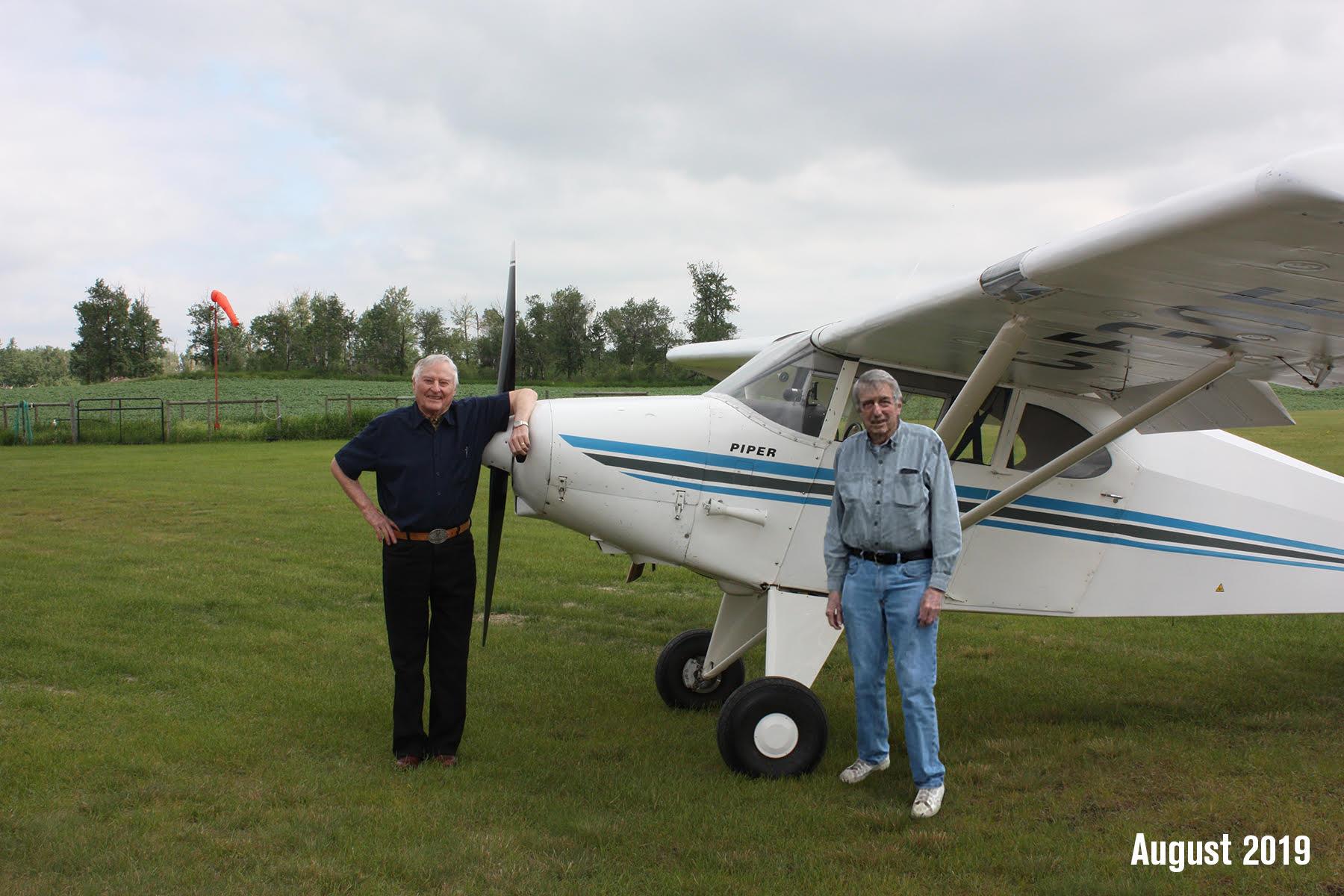
We found our airplane 60 years later, just 40 km. south of Edmonton
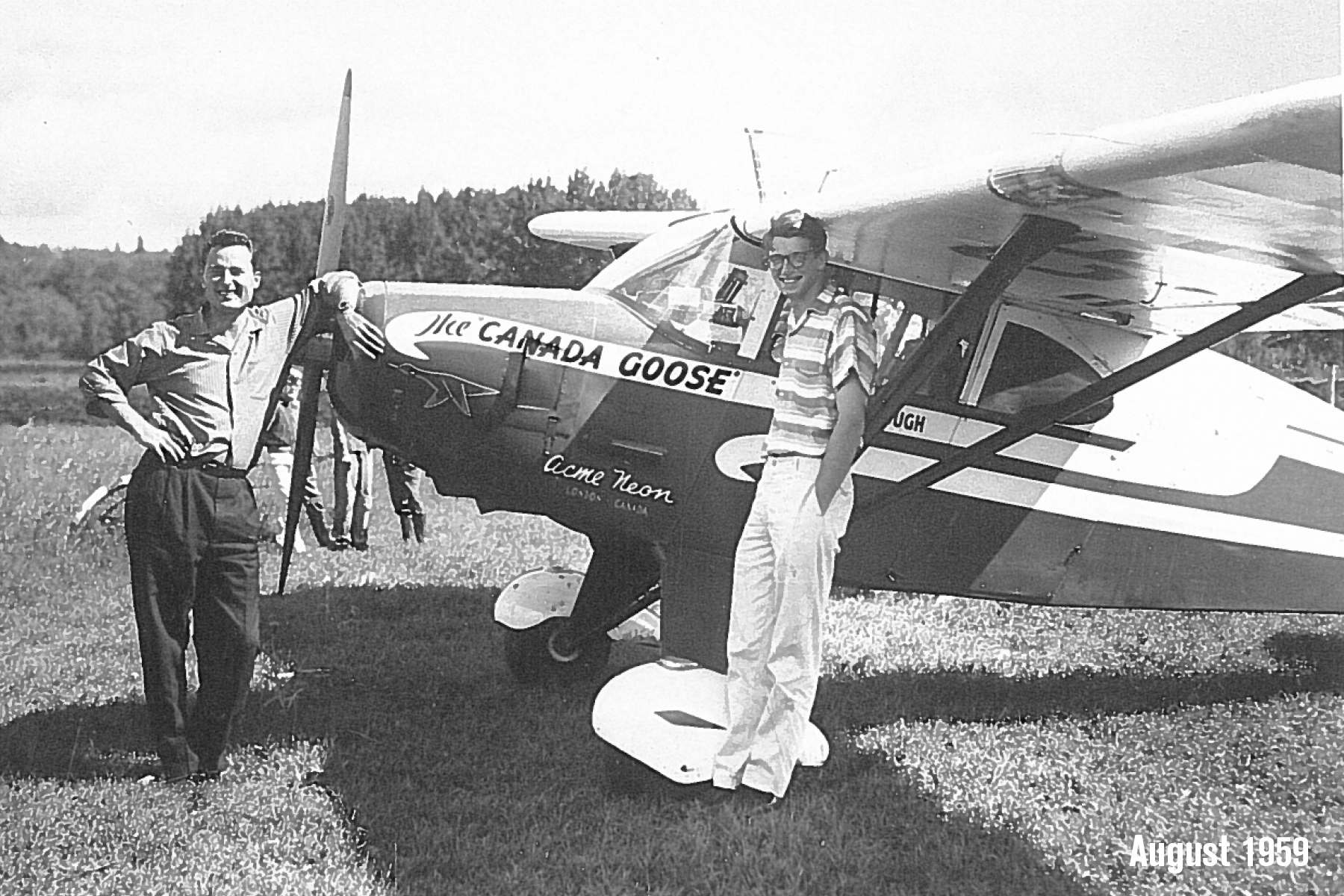
Sixty years later, Class of ’60 MBA students Ron McCullough and Robin Eccles find an old friend.
The story begins during a Marketing class in April 1959 with a note from Ron to Robin reading: “Let’s do something different on this summer break!”
“Sure, what’ve you got in mind?” Robin wrote back.
“Let’s buy an aeroplane and tour South America!” - Ron was a licensed pilot with over 2000 hours.
“You’ve got to be kidding.......... seriously?”
“Seriously!”
“OK, let’s do it!”
And so began an adventure which was to take them a total of 27,000 miles in 92 days down the Pacific coast of Central and South America; to cross the Andes via the Curico Pass 150 miles south of Santiago de Chile; across the Pampas to Buenos Aires; returning north through Brazil and the Caribbean across N. America to Ron’s home ranch headquarters near Red Deer, Alberta.
Ron had already identified a single-engine Piper aircraft which they bought for $4,200.00.
A frantic three weeks followed, securing the charts, visas, flight permits and other paraphernalia they would need to overfly the countries they would be visiting. Robin rushed through a crash course for his pilot’s license.
Finally, on 6th June, Mrs. F.W.P. Jones, the Dean’s wife, christened the aircraft “The Canada Goose”. Fellow student Rev. Barry Brooks, MBA blessed it. And away they went to Laredo, Texas.
In Laredo they had the back seats replaced by a large auxiliary fuel tank to give them the 1,000 miles range they would need in places where aircraft fuelling facilities were few and far between.
Of their many adventures, the closest call they had was the passage through the Curico Pass. The charts showed the altitude as 12,000 ft. The ceiling of the aircraft was about the same - leaving no margin for error with controls made sloppy by the thin air. Members of the local flying club were adamant the altitude was less, and that The Canada Goose could get through quite safely. (“American charts...... gringos.......what do they know!”). In fact the charts were accurate. But by the greatest of luck there was a strong breeze off the Pacific blowing up the valley towards the summit. The updraft this created lifted the ‘plane sharply over the crest with 400 or 500 ft to spare and dropped it equally sharply down the other side. Without that following wind, they would certainly have crashed in the high Andes - one of the bleakest places imaginable.
But their relief was soon tempered by the realisation that they were seriously off course. The plan had been to follow a valley running northeast out of the mountains towards Mendoza where they intended to spend the night. Instead, they were dropped into a valley which veered southeast towards flat grasslands without any features they could use for navigation. They were lost. The only thing to be done was to keep going in the hope of finding a ranch or village where they could land before running out of fuel. Again fortune was on their side when they came across a well-equipped runway complex not marked on the charts. They landed - only to be arrested and jailed for landing at a military airport without permission.
That incarceration was the first of three in which the Canadian Consular Service demonstrated its skill in getting their citizens out of trouble!
Over the years since that trip - it was once described as “Our Dream Flight to South America” in an article they sold at the time - Ron and Robin had wondered whatever happened to the little CANADA GOOSE aircraft that served them so well. This year, sixty years later, another search discovered it near Edmonton - owned by commercial pilot Forrest Miller - extremely well maintained and still happily flying!
The JSCC (10052-117 St., Edmonton) is sponsoring several programs, talks and films that would be of interest to many of our members. Please call their office at 780-488-4241 for further information on cost and registration. Here is a selection of some of their offerings:
Wed
28 Aug
10-12 am
The Dead Sea Scrolls
Dr. Peter Sabo
Mon
09 Sep
16 Sep
10-12 am
Venezuela and Guatemala
Dr. Morris Maduro
Mon
09 Sep
16 Sep
23 Sep
1-3 pm
Israel: Past, Present and Future
Abe Silverman
Tues
17 Sep
1 pm
Forms of Tradition in Contemporary Spain, Josep Pujiula I Vila and his Great Labyrinth, Film
Sam Koplowicz
Tues
24 Sep
12 noon
Lunch and Learn, Traditional Jewish Melodies
Jack Goldberg
Wed
25 Sep
7 pm
Italian Opera Masterpieces
Edmonton Opera
Thurs
26 Sep
12 noon
Lunch and Learn, Traditions and Symbolism Associated with Rosh Hashana
Rabbi Mendy
Mon
28 Oct
04 Nov
11 Nov
10-12 noon
Politics: Edmonton and Alberta
Stephen Mandel
Tues
29 Oct – 03 Dec
1-3 pm
Solo Flight: The Concerto from Vivaldi to Ravel
Michael Thomas Roeder
Wed
30 Oct – 04 Dec
10-12 noon
Revolutionary Exploration: Rock’n Roll’s First Tumultuous Decade
D T Baker
Thurs
31 Oct – 05 Dec
1-3 pm
YEG’s Public Art
Kathleen Silverman
Tues
12 Nov
12 noon
Lunch and Learn, Geriatric Psychology and Dementia
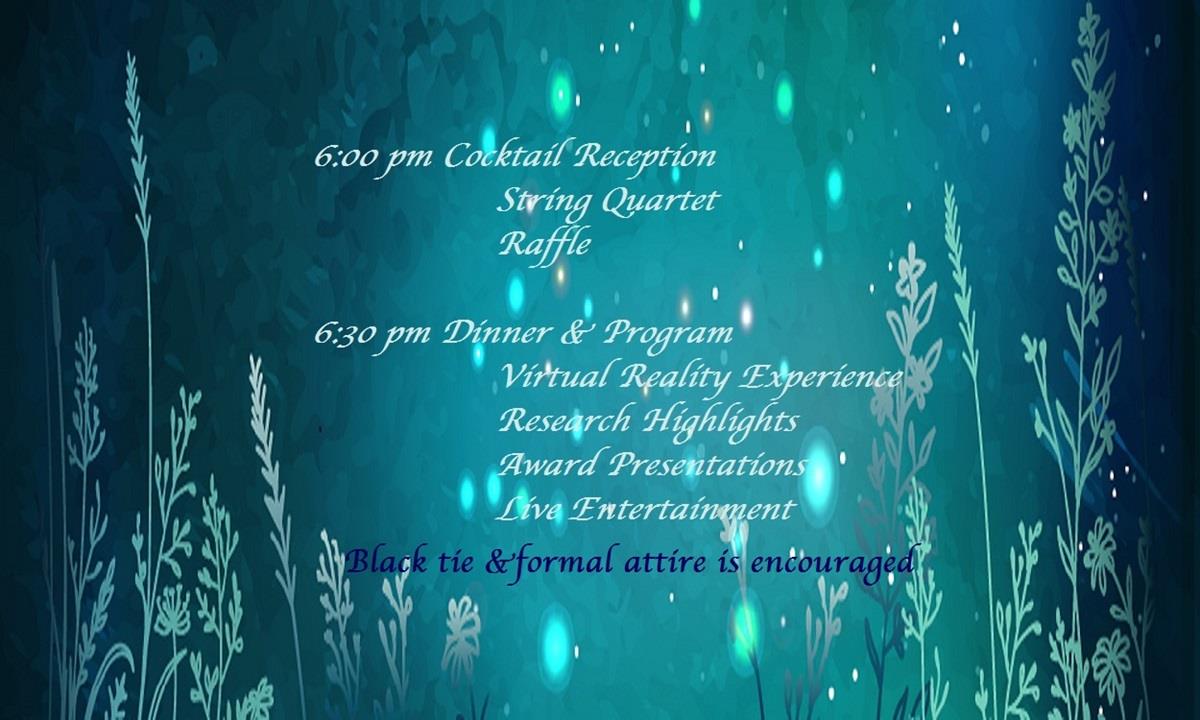
Our second annual Eyeball Gala will bring together ophthalmic specialists, surgeons, business and community leaders, and loyal friends to raise awareness and funds for the fight for sight and life-enhancing work of the Eye Institute of Alberta.
Please contact Audrey Martyn for more information.
I believe our Friendly Club is healthy and vibrant, but we should be willing to share and not keep our success to ourselves. Please complete the survey at your earliest convenience.
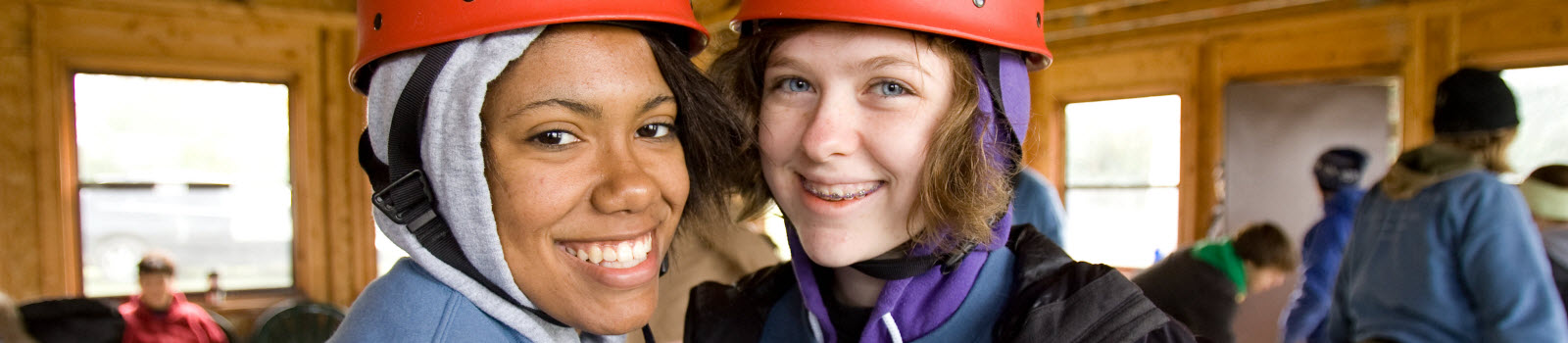
DiscoverE is a nonprofit organization through the Faculty of Engineering at the University of Alberta that provides fun, accessible, and inclusive summer camps to youth in Edmonton.
Please add mailservice@clubrunner.ca to your safe sender list or address book.
To forward this email to your friends, click here.
To view our privacy policy, click here.
ClubRunner
905.829.5299
102-2060 Winston Park Drive, Oakville, ON, L6H 5R7





.jpg)

.jpg)
 RI link: