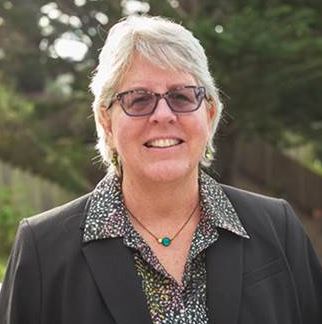
Anne has worked in wildlife conservation for more than three decades, including 24 years as a wildlife biologist and refuge manager with the U.S. Fish and Wildlife Service in Colorado, Alaska, Florida, and California, and six years as a wildlife biologist with the Bureau of Land Management in Alaska. She was most recently the manager of the San Francisco Bay National Wildlife Refuge Complex which includes seven National Wildlife Refuges in the San Francisco and Monterey Bay areas and the Farallon Islands. Originally from Miami, Florida, Anne received a degree in Wildlife Biology from Colorado State University and an M.S. in Zoology from the University of Wyoming. Anne is passionate about restoring native habitats and conserving imperiled wildlife through promoting science-based climate adaption, fostering collaborative partnerships, and connecting people to nature.
TOPIC: Anne will provide an update on the work of the Laguna de Santa Rosa Foundation and identify several ways in which Sunrise Rotary might sponsor or participate in environmental projects.
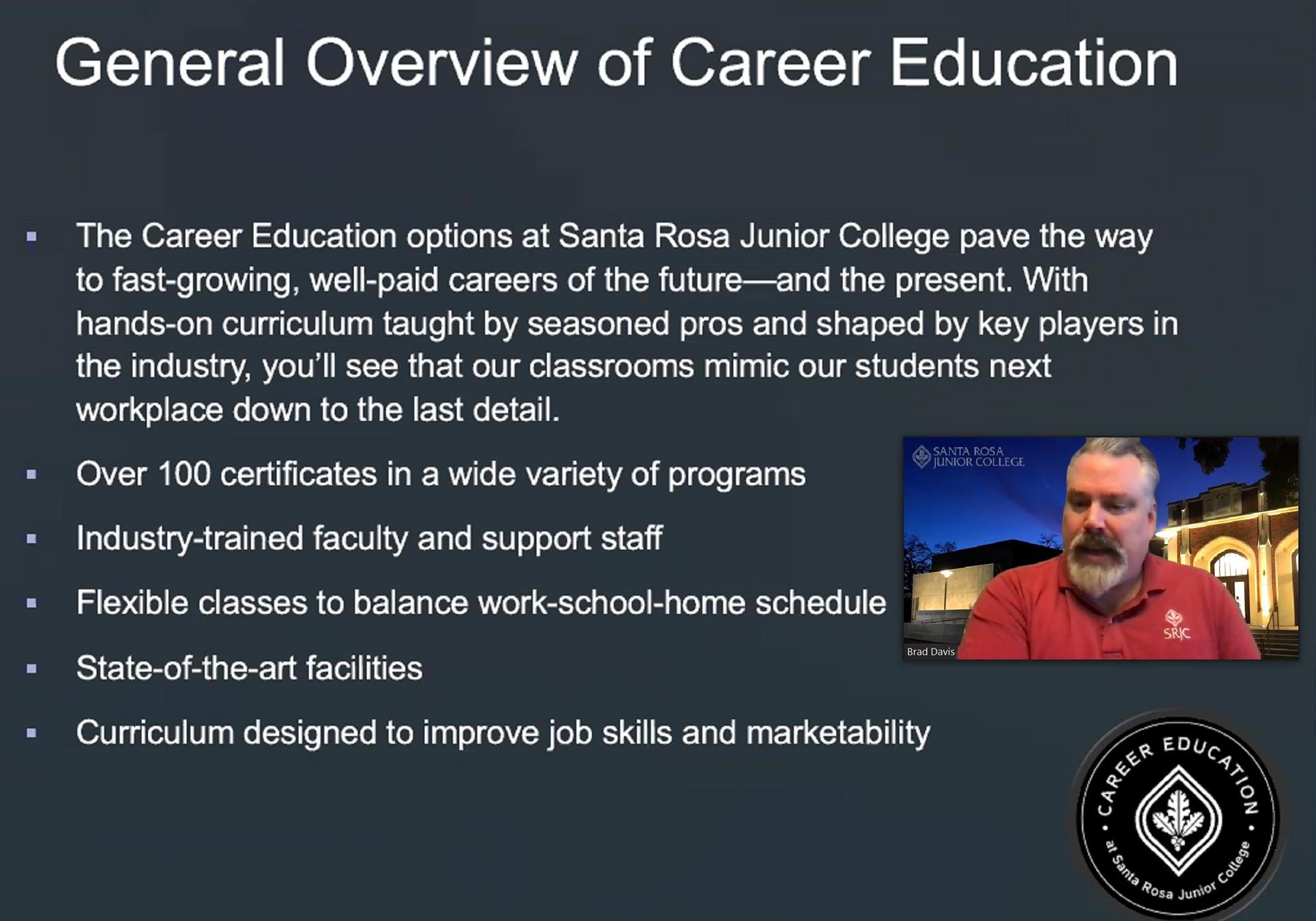
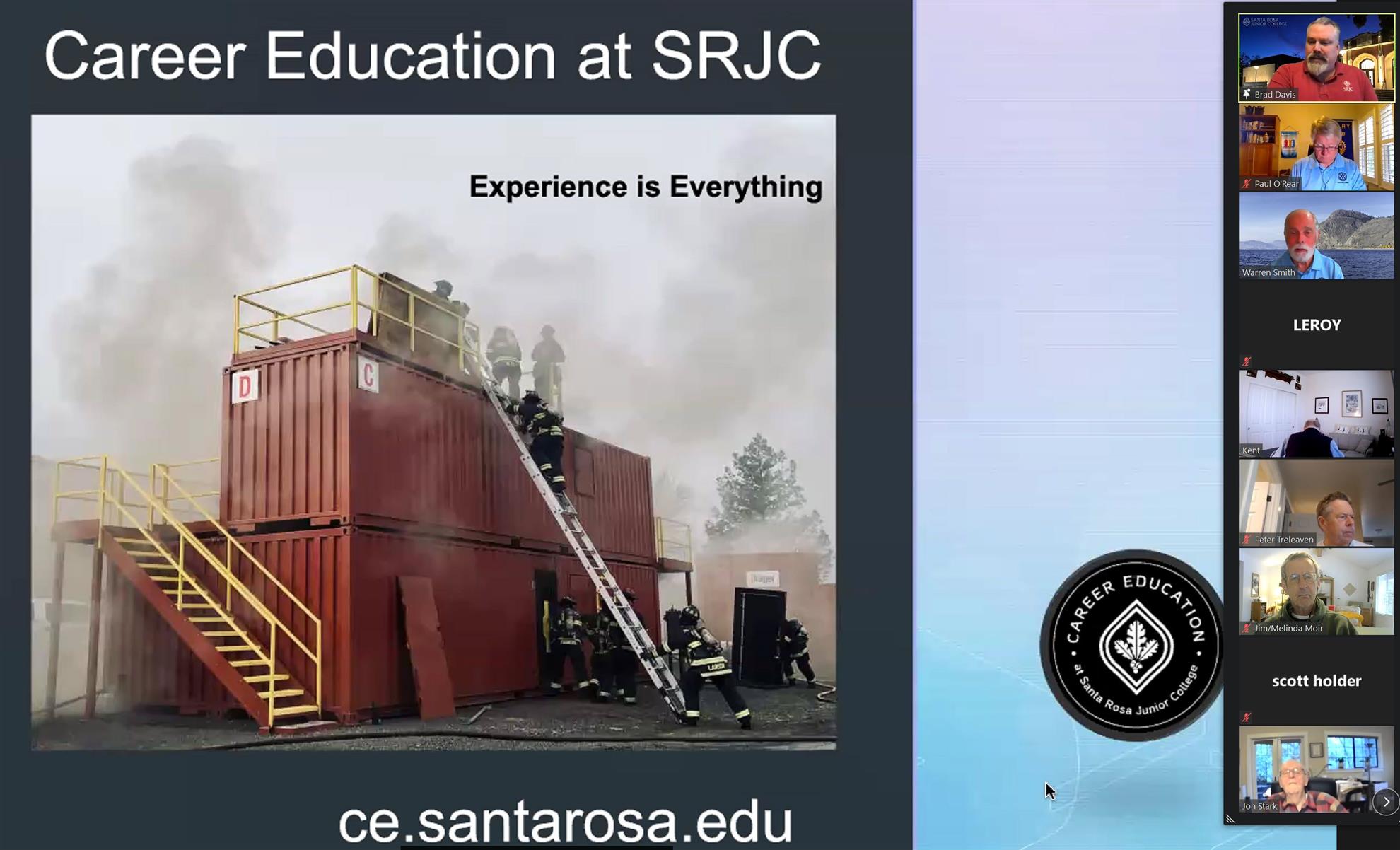
Our Guest Speaker for the April 15, 2021 meeting was Brad Davis, Dean of Workforce Development at Santa Rosa Junior College. Workforce Development is part of SRJC’s Career and Technical Education and Economic Development. Brad gave us a very informative overview of the many Career Education programs offered by SRJC.
Brad outlined key components of the CE program, including industry-trained faculty and support staff, flexible classes, state-of-the-art facilities, and over 100 certificates in a wide variety of programs. The curriculum is designed to improve job skills and student marketability. As an example, Brad mentioned that if you are taking a welding class, your instructor is not just someone who learned welding, they are experienced professional welders. Flexible classes are very important since many of the students have full or part time jobs. State-of-the-art facilities are required because SRJC has to train students with the same tools and facilities used in the workforce. The courses in automotive, welding, and culinary are good examples of this requirement. The CE curriculum is designed with the help of Advisory Committees, who are industry-trained experts.
The Pandemic has significantly disrupted on-campus education. Most of the classes were moved to on-line learning but some, like nursing, were approved for on-campus classes. To be allowed on-campus, these courses had to be for essential workers and had to be approved by SRJC and by the County Health Director. Public safety, some welding, health sciences (dental and medical assisting), welding, and public safety are the main courses still taught on-campus.
SRJC also offers work experience opportunities for employed students. The focus is on the job site as a classroom for learning job skills. Advisors visit the workplace and make recommendations and suggestions to the employer and the student. Students receive college credit based on the number of hours worked per week in approved jobs. Some programs also require work experience as a condition for the certificate.
An important project is the SRJC Construction Center currently being built in Petaluma. This building was funded by a FEMA grant and by local philanthropy. The building will be used to train students in a variety of construction-related fields, including building construction, H-vac, and solar. FEMA’s grant was based, in part, on the incredible need for trained construction workers after the Tubbs Fire in 2017. The shortage of construction workers continues to be a major problem in this area, and the Construction Center is designed to fill that need.
Career Education is very expensive. Students need tools, uniforms, and other equipment. School labs need state-of-the-arts “stuff,” not just books, to effectively train students to go straight to journeyman-level jobs. The State of California has a grant program that helps fund these needs in junior colleges throughout the State. In the first year of the State grant program, 2016, the State paid out about $250 million. SRJC typically receives about $2 million per year. Examples of “tools” purchased with help from these State grants include a new ambulance for EMT courses, a diesel engine, and a magnificent new tractor for Shone Farm!
Way to go Brad; this was an amazing presentation. SRJC is truly a Sonoma County jewel and your hard work, and the hard work of those in your department, is paving the way towards helping Sonoma County students move into career-oriented and well-paid jobs. Thank you so much for your time and efforts.
You may view Brad's presentation HERE. It will be available only for the next week or so.
On a regular basis, our resident photo pro Warren Smith, submits pictures of what is going on at the weekly meetings. You can always find the most recent pictures at the websites photo journal called "Meeting Sighting" Please note that all the meeting photos for the entire Rotary year are at this location with the most recent on the last page.
Thanks for all the great pictures Warren!Link to Meeting Sightings. The most recent are on the last page!
Five Sunrisers attended the virtual District Training Assembly this last weekend- Jennifer Adams, Steve Amend, Stacy Drucker-Andress, Jack Strange and Paul O’Rear. The District did a remarkable job of keep a good pace going and 140 District 5130 Rotarians brainstormed, shared best practices and learned about Rotary’s direction as we come out of the pandemic. For example, Rotary has four goals for 2021/22: Increase our impact, Expand our reach, Enhance participant engagement and Increase our ability to Adapt. We revisited the pathway to success on a project: Idea > Check for Community Partners > Strategy > Action Plan > Implementation > Measure Progress. In the afternoon close to half of the attendees chose to attend a breakout session on the new Environment area of Rotary focus. The session ran long as so many people shared what their clubs were doing in the area of environmental project and were planning to undertake- river clean ups, community gardens, tree planting, reducing plastic in the environment. Adopt-a-County Road cleanup and porch/balcony small gardens for those without access to land. So much good vibe and energy with everyone on the same page.
Remembering Judith Ann Lambden Leasher, beloved wife of Olin
The Bulletin editors join all Sunrise Rotarians in remembering the beautiful presence Judy Leasher brought to Sunrise events and activities. We offer our most sincere sympathies to Olin and all who morn her untimely passing.
Judith Ann Lambden Leasher left us for her final journey on April 10, 2021. Her departure was peaceful and attended by her family together with her devoted husband of 55 years, Olin Leasher.
Judy grew up in Hayward, California, and in her youth dreamed of traveling the world. After leaving college, she traveled to Mexico where she studied Spanish while living with family friends. She loved Mexican art and danced in the Ballet Folklorico in Mexico City.
From there she went to Washington DC to be trained to work in overseas embassies for the US State Department. She hoped to find employment that would take her around the world. In Alameda she met the great love of her life at a US Navy officer’s club party. Olin was a Michigan farm boy working on a project for the Navy. He remembers that he could not believe his good fortune in meeting such a beautiful and accomplished woman. And Judy was smitten.
They soon discussed marriage, but at first Judy worried that marriage might limit her travel plans. Her hesitation was quickly resolved when Olin proposed a pact that they organize their married life around their mutual desire to see as much of the world as possible. They shared a hunger to see far places and meet people.
They were married in April 1966 and Judy worked in the financial district in San Francisco while Olin finished school. When Olin finished his studies, they had enough money saved to travel and arranged to take delivery of a car in Europe. They spent six months driving thousands of kilometers around Europe while accumulating friends. All the while Judy worked on her French.
Returning to the Bay Area, Olin worked in the aerospace industry. They acquired a big fixer-upper house in San Carlos, which they used to entertain guests they had met during their travels. Everyone in the family knew they were unlikely to stay put if an opportunity to travel beckoned.
When Olin was offered an opportunity to travel to Japan to assist with the testing and launch of a Japanese satellite, they quickly accepted. Judy began studying Japanese even before they left the United States and was soon fluent in the language.
Even today foreigners or "gaijin" are relatively uncommon in many parts of Japan. And a beautiful blonde American who is fluent in Japanese is even more rarely seen. Judy's brother James recalls that she was frequently mistaken for a movie star. She was often asked to pose for photographs with strangers she met during her travels in Japan.
Influential Japanese friends were drawn to Judy and introduced her to famous kabuki actors, sumo champions, and artisans. Her friendships gained her entrance to places, such as the Imperial gardens, ordinarily closed even to the Japanese public.
When it came time to launch Olin's satellite, they moved to the remote island of Tanegashima at the furthest southern tip of the Japanese Islands. No one could remember whether an American woman had ever lived on Tanegashima. The sight of Judy riding her motorbike around the island stopped traffic. She astonished those she met with her ability to speak the language and with her knowledge of Japanese etiquette. She spread goodwill wherever she went.
Judy and Olin next traveled to Bangalore, which is today a sophisticated technical hub in Southern India. In those days, however, the available accommodations were primitive. Judy met those challenges with alacrity and applied her energy to advocate for women's rights.
The couple next moved to the city of Cannes in southern France where the French aerospace industry is located. The Cote d'Azur was idyllic and their time in France was so enjoyable that they considered retiring there. Ultimately, they returned to California to settle in Santa Rosa to enjoy the California wine country's similarity to the parts of France they loved.
Although Judy's health began to fail she redoubled her activities, and was especially vigorous in finding any opportunity to dance. She continued her work to support women's rights organizations. She and Olin were active in the International Rotary Club. She became a Zumba zealot.
When illness took her voice, Judy taught herself American Sign Language, which became her final language. She was fluent enough to tell jokes and make puns in sign language. When it came time for her final departure, she said goodbye in sign language. She went gently to sleep, traveling once again to a new place, and quietly reminding us of the beauty of the wide world and all its people.
Posted by Carolyn Anderson Rich Randolph on Apr 19, 2021
Their Growth Continues
Sunrise Rotary's engagement continues with The Living Room, a long established and growing resource for women in recovery, many with children.
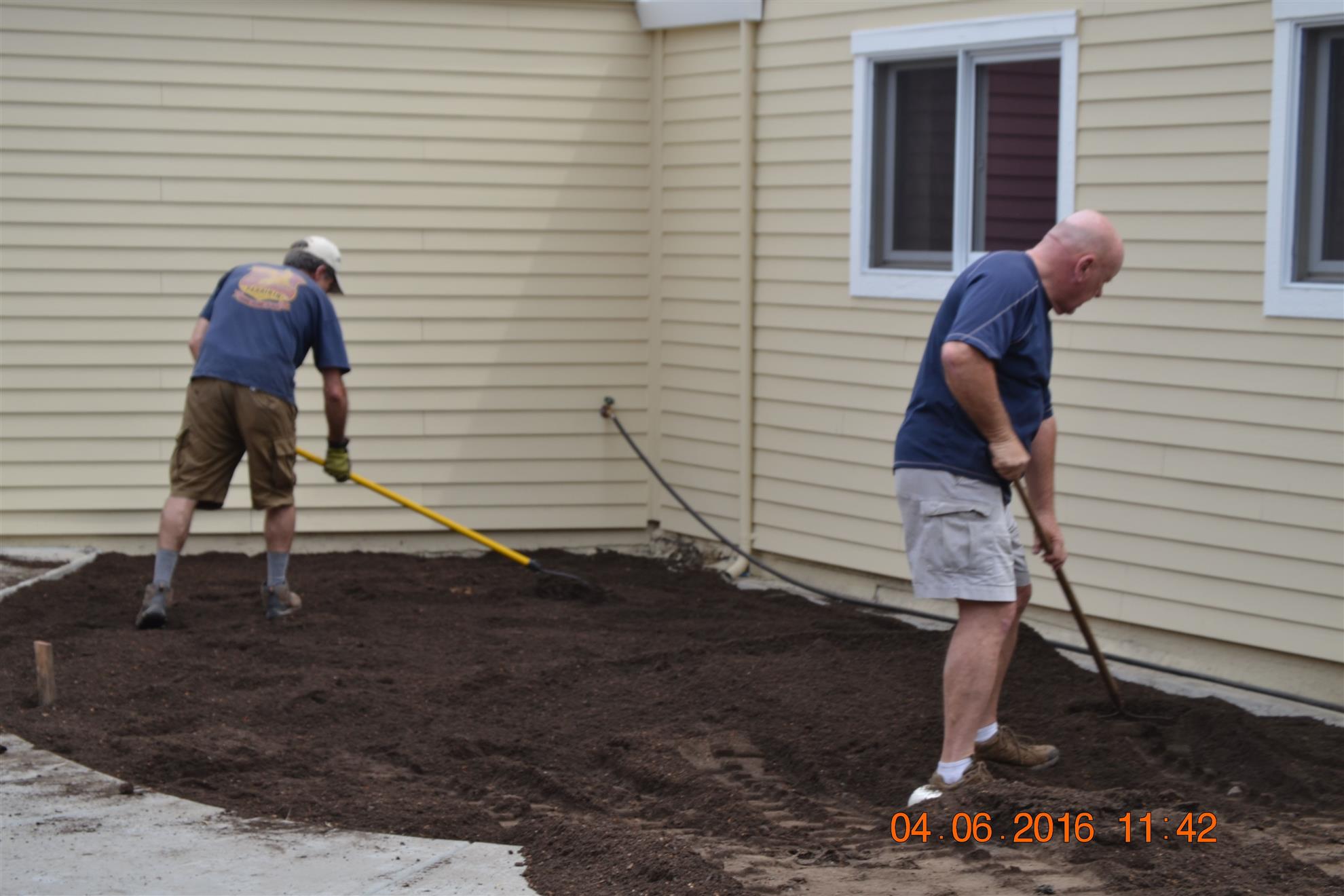
This is 2016 during Sunrise early intervention as Jim Kirkbride and Doug Shureen deposit their sweat equity.
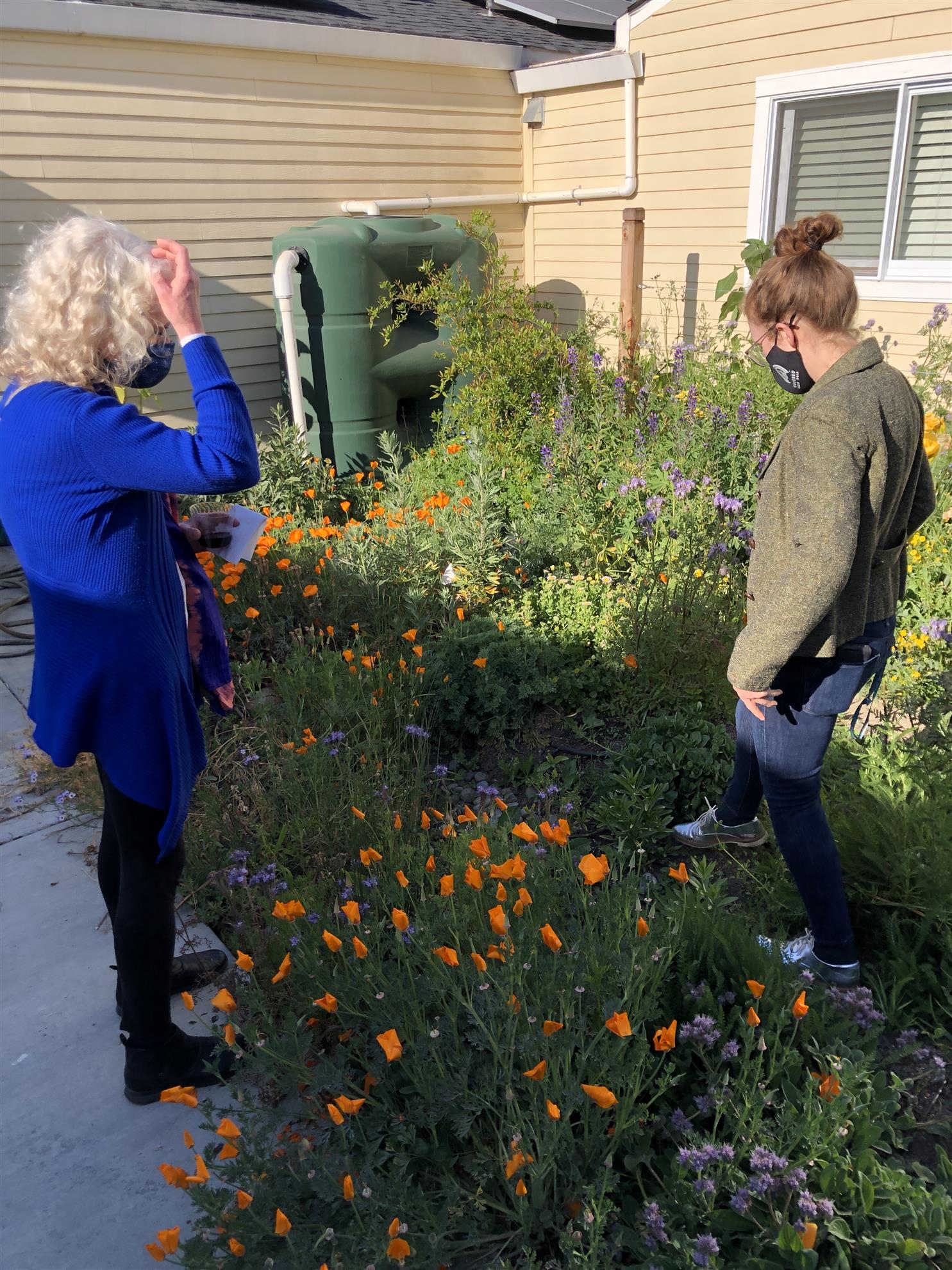
Fast forward 5 years of further weeding and envisioning.
This year's International theme "Rotary Opens Opportunity" aptly describes the melding of resources and skill to meet such a venture. In addition to Sunrise, Elsie Allen Interact members, Exchange Bank and Conservation Works.
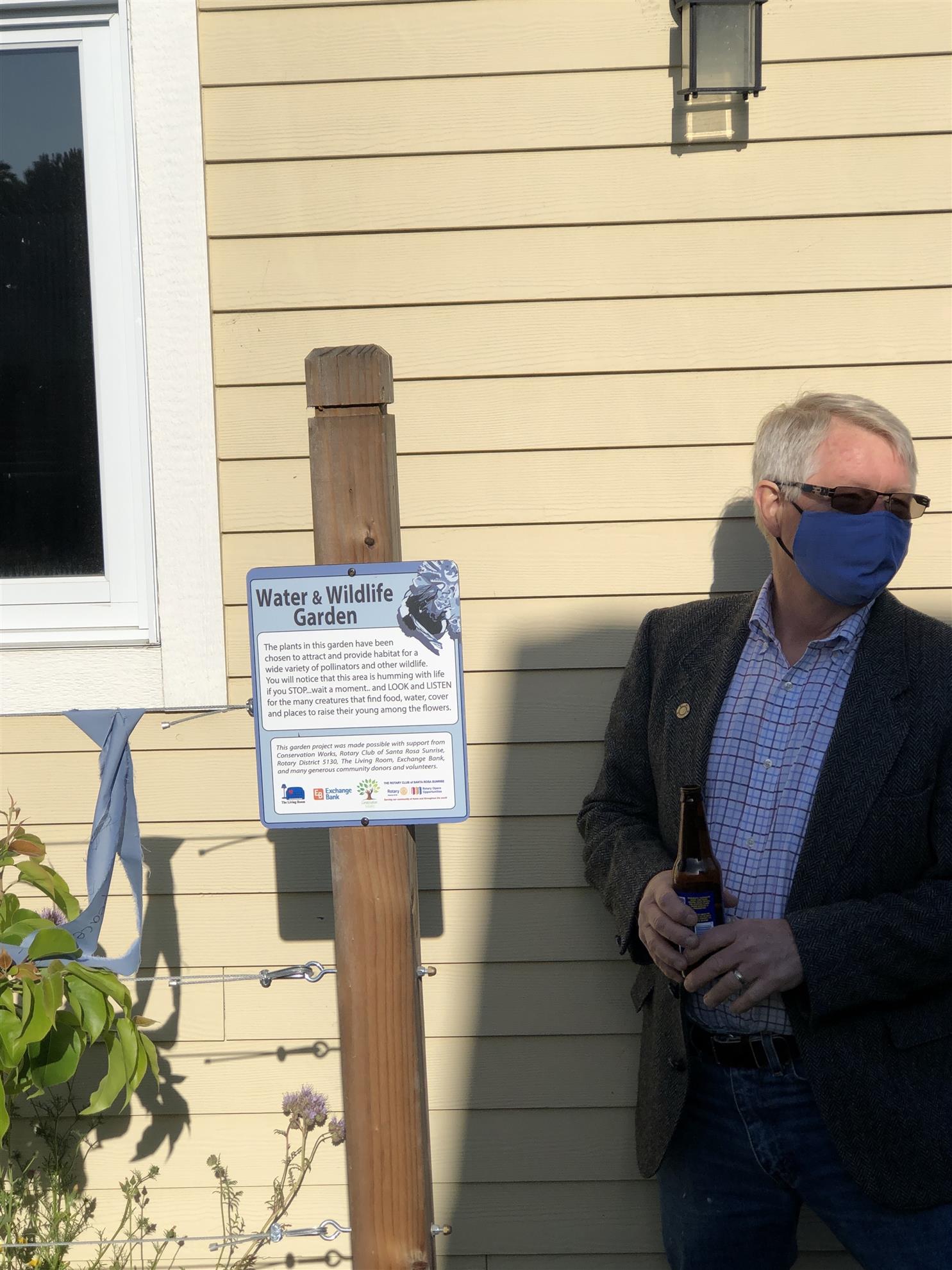
Our latest collaboration, the Serenity Garden was dedicated Friday April 16.
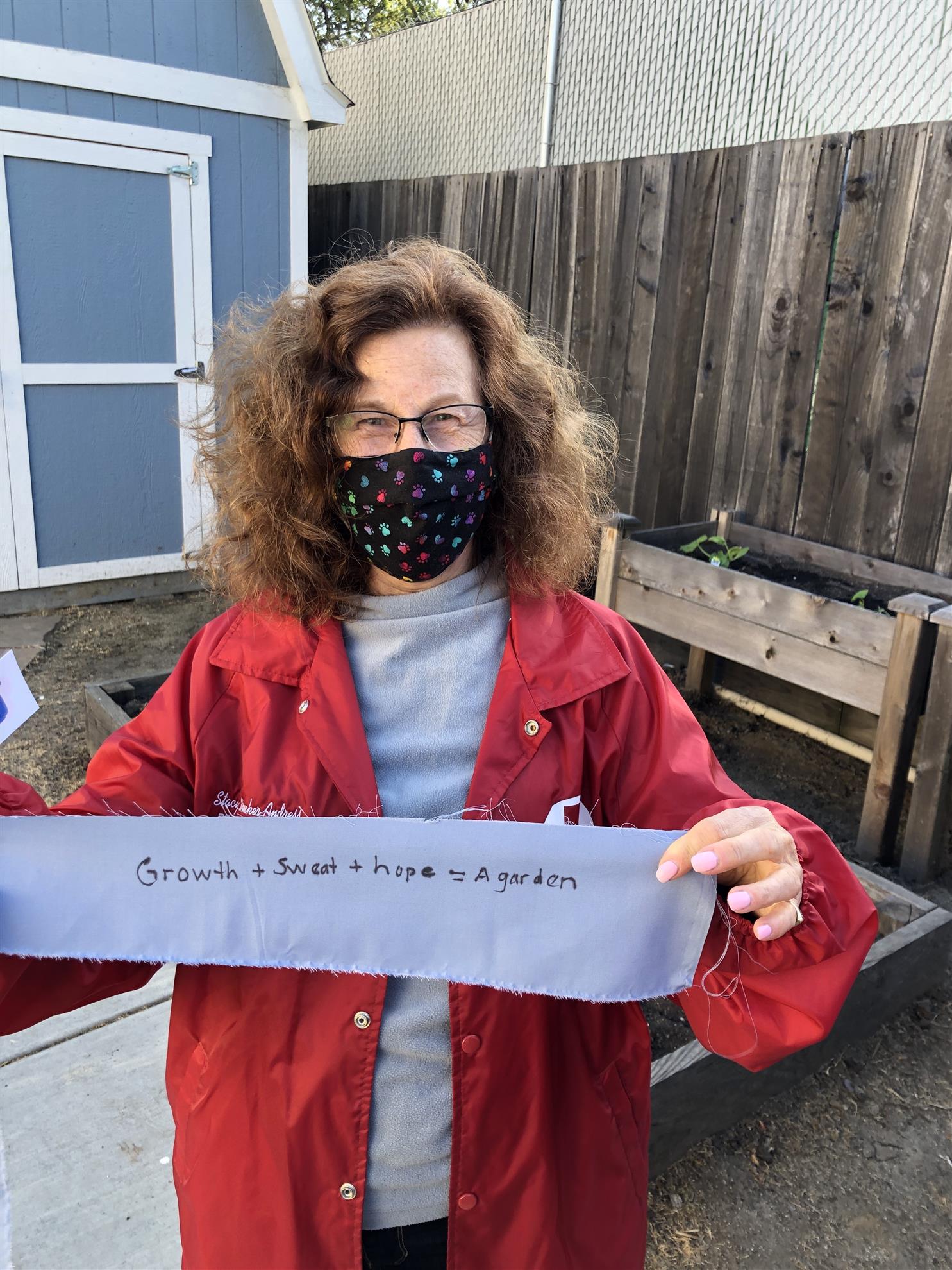
Stacy Druckr-Andress holds one of the banner messages to celebrate Serenity Garden's new blooms.
Through a District Grant drafted by Sunrise Community Philanthropy Chair Carolyn Anderson, funding for materials were obtained and partners, Conservation Works and Sunrise Golden Hammer, Leroy Carlenzoli's, irrigation and botanical elements fused into a haven for pollenating bees and butterflies to catalyze growth and appreciation of nature's seasons.
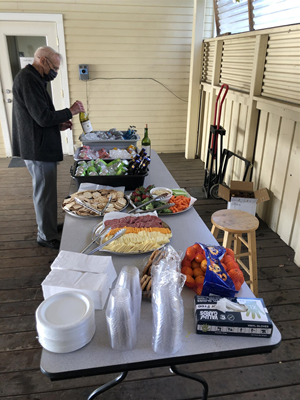
Great refreshments were provided, here George Reeves, Carolyn's husband runs the gauntlet.
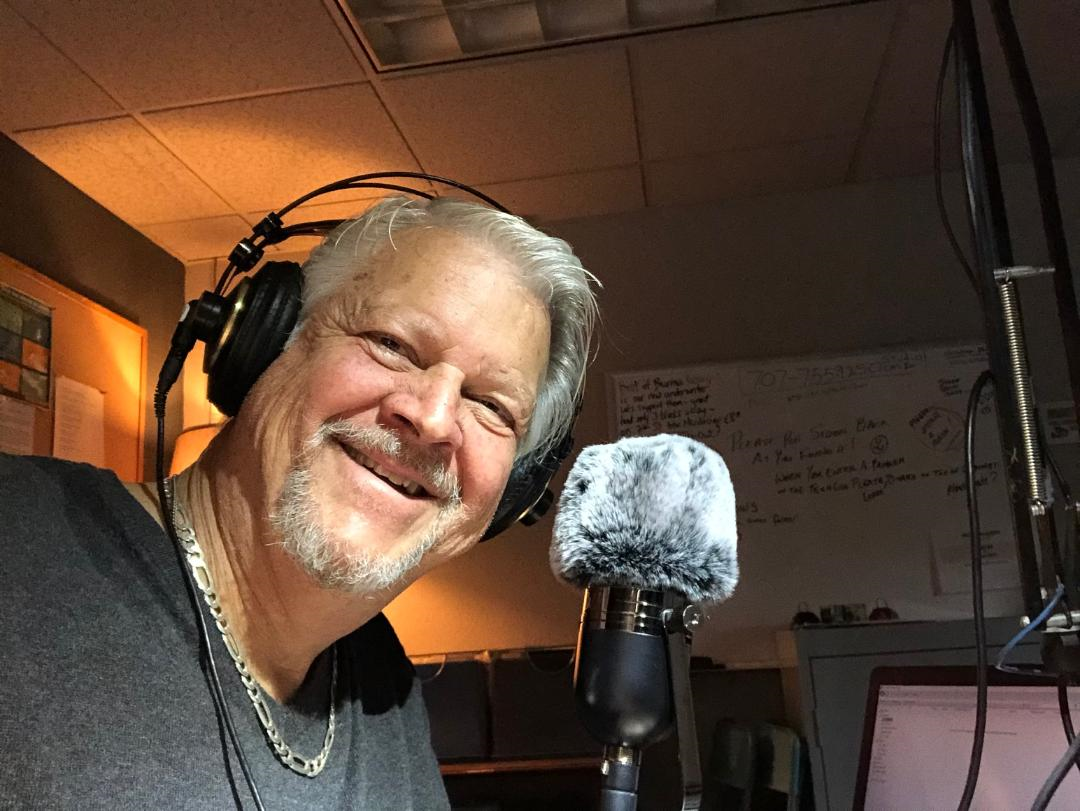
M.J. Girard is currently an on air personality on KOWSfm.com His “Roots of Rock” is broadcast every Sunday morning at 7
Greetings Music Lovers! For those of you who have “Tuned In” to the previous two Sunday editions of the Beatles Spring Special ...Thank You!
This Sunday we delve into the third studio release “A Hard Days Night”. Hitting the music stores in mid July 1964 in the U.K., the American copies arrived two weeks prior.
Contrasting the previous two L.P.’s, this third release contains Lennon and McCartney songwriting exclusively, showcasing their dynamic joint abilities of conveying a message via lyrics and medley.
Side one of the Parlophone (UK) release is the song from the Beatles first feature film of the same name. I have viewed this movie many times over the years, and enjoy it on every occasion.
“A Hard Days Night” and “Can’t Buy Me Love” reached the number one position in both America and the United Kingdom, featuring George Harrison’s exquisite handling of the twelve string Rickenbacker amplified guitar, also heard on other selections on this album. Harrison’s musical abilities influenced many groups, the Byrds in particular.
As no covers were included in this 13 cut collection, the Lennon-McCartney partnership exhibited their growing sophistication as the Beatles became more influential in the world, both musically and in the overall culture.
If one had to explain the Beatles to an individual totally devoid of their presence, playing “A Hard Days Night” in toto would enlighten the listener as to the potential of their impact, up-ending the British class system, conquering the Americas with lightening speed and spreading charm and love around the globe.
As an aside, the title of the film and title song was an off-the-cuff remark by drummer Ringo Starr to film director Dick Lester in a car ride back home. A “Ringo-ism” said not in jest but to share the days work filming.
I am taking the first half of May off to explore some of America’s National Parks, the KOWS studio will air a collection of my previous shows, hope that you enjoy them.
A climate scientist and a climate change denier walk into a bar. The denier says, bartender, show me your strongest whiskey. The bartender says, this one here. It’s 95 percent alcohol. The denier slams down his fist and leaves the bar in a hurry. The scientist says, you know, that’s the problem with these guys. You show them the proof, and they still don’t buy it.
Residents of two communities near Aurangabad, India, get their water from wells that are recharged annually by monsoon rains. But within a few months after the rains end, the wells run dry, and community members either must go further afield to fetch water or must buy it, which many cannot afford.
The Rotary clubs of Aurangabad East and Chatswood Roseville, Australia, collaborated on an eco-friendly solution using a simple, traditional technology: check dams. These small dams are constructed across gullies to control the rate of stormwater flow. They decrease erosion and increase the amount of water that percolates into the ground. More than 200,000 check dams have been built across India for this purpose; a check dam constructed in India in the second century is one of the world’s oldest water diversion structures still in use.
In Aurangabad, the monsoon rains flow via a channel across a government-owned sports training center toward the sewage-contaminated Kham River. Rotary members funded the construction of two concrete check dams on the campus. The increased percolation of the monsoon rains into the ground is expected to lengthen the period each year during which the area’s 20,000 residents can obtain water from their wells. The dams have an anticipated life span of 75 years and require little maintenance.
This story originally appeared in the March 2021 issue of Rotary magazine.
Philippines
In 2020, seven Rotary clubs in the Philippines hosted a webinar, Logging for Good, to discuss the threat of illegal logging, and how it can erode an important natural protection against cyclones and tropical storms.
Conrad Vargas, Executive Director of Save Sierra Madre Network Alliance, Inc., spoke about the importance of the Sierra Madre Mountain Range and the threat from illegal logging. He also spoke about the needs of the indigenous people, quarrying, and the hazards that have been caused by dams in the area.
This story originally appeared in the February issue of Rotary Philippines magazine.
Rotary Club of Santa Rosa Sunrise - Founded June 30, 1986


.png)

.jpg)











 `
`


 Residents of two communities near Aurangabad, India, get their water from wells that are recharged annually by monsoon rains. But within a few months after the rains end, the wells run dry, and community members either must go further afield to fetch water or must buy it, which many cannot afford.