Brian Sobel Gives us the Results of the 2020 Election (As it stood on Thursday morning)
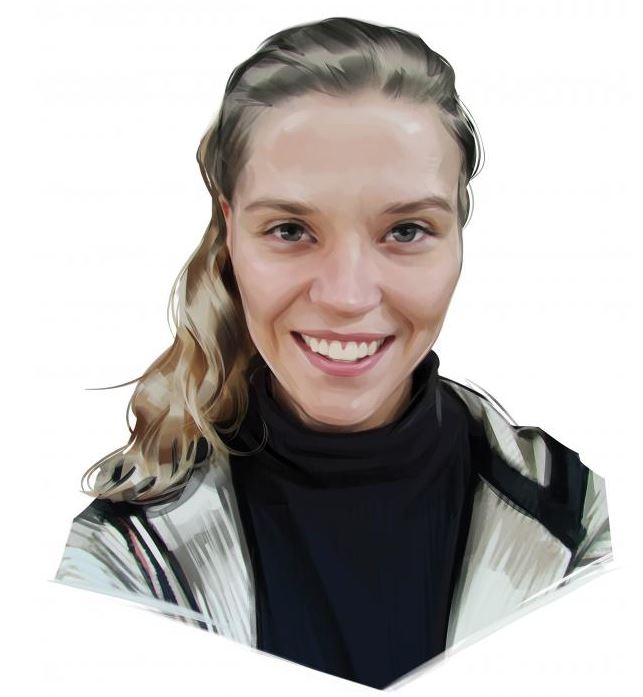
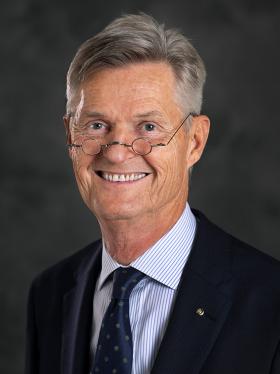
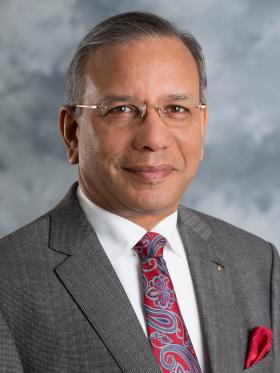
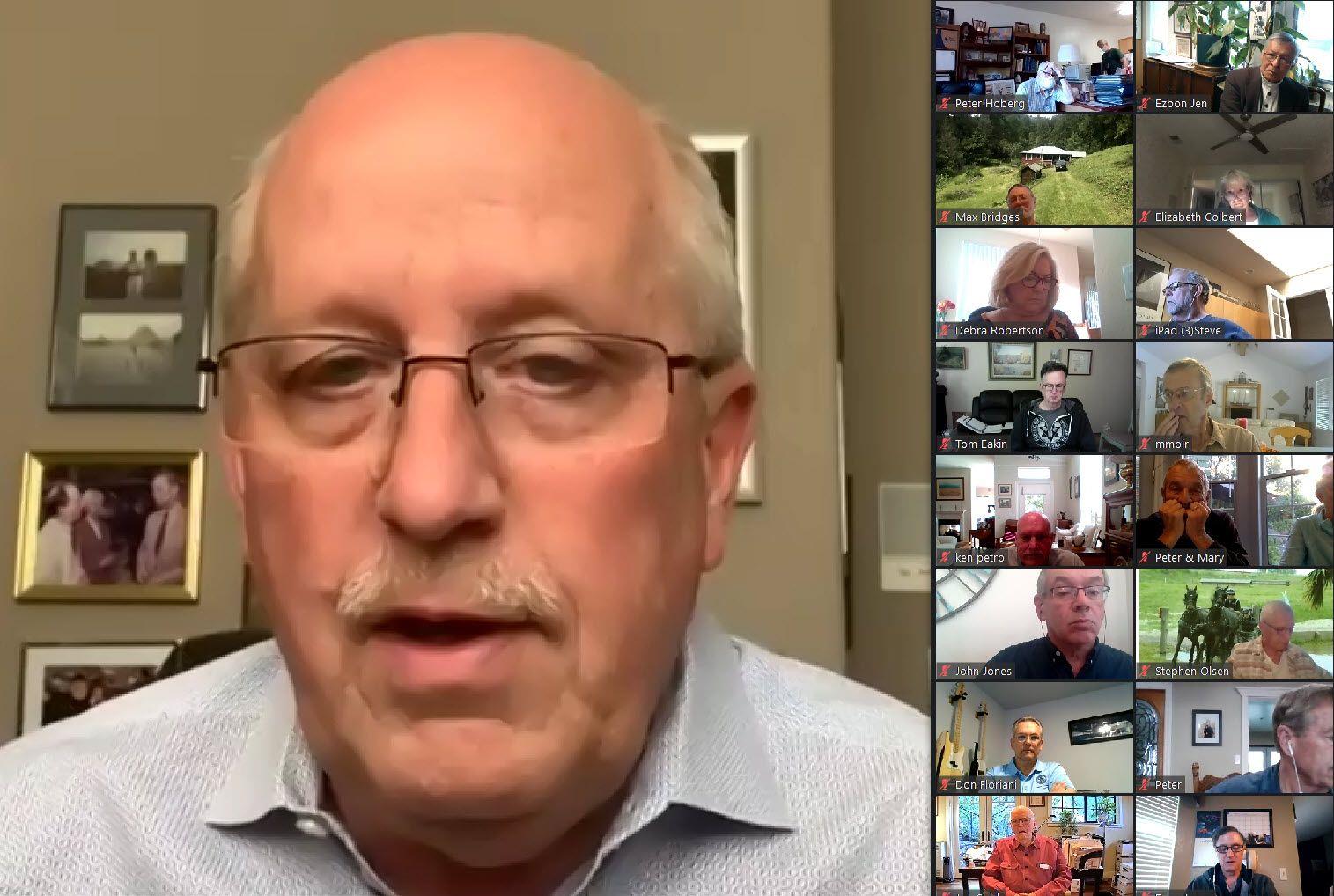
Our speaker for November 5, 2020 was Brian Sobel of Sobel Communications. Brain’s topic: The 2020 Election. Brian is a long-time political analyst and member of various local boards, including the Planning Commission of Petaluma and the Golden Gate Bridge Board. He has also written 3 books and been featured in such media outlets as the Wall Street Journal, the History Channel, the Northern California Radio Network, and various local radio stations. Brian last spoke with us in June 2020 to discuss the 2020 election (his coolest quote from June, referring to Biden: “he’d attend the opening of an envelope.”)
Brian spoke extensively about the status of election results and the unfolding drama of counting the ballots in various states. At that time, the key states in dispute for the presidential election were PA, North Carolina, Georgia, Nevada, and Alaska. His tally at the time was that Biden had 264 Electoral College votes. He thought that ‘absent litigation’ any of those states could go to Biden. Trump’s pathway was difficult at best, but Biden could go over the top to 270 Electoral College votes if any of those states voted for him. (Brian knew was correct because on Saturday all of the major networks forecast that Biden had won the PA vote and was elected President of the United States.)
As Brian foretold, however, there is litigation in various states filed by the Trump campaign and others. Brian mentioned that such litigation raises a variety of voting fraud and related challenges. Brian noted that one of the key objections from President Trump’s supporters is that because the election night vote was so one-sided in the President’s favor, the subsequent reversal of the President’s fortunes was somehow fraudulent. But Brian noted that U.S. elections are never decided on election night; our history shows that it takes a while to finalize election results. When a network states that someone has won an election, they are projecting future votes using mathematical formulas. It is not surprising that fortunes change in the days after election night, and Brian reminded us of the famous “Dewey Defeats Truman” signs.
Brian’s big takeaway from the election was that it showed massive voter involvement with the largest percentage of eligible voter turnout in history. It appeared on Thursday that turnout would be approximately 66-68% of eligible voters (compare this to 64% in the race between President Obama and John McCain in 2008). Increased voting by minority voters was also notable. He did not know the percentage of younger voters but noted that they typically talk a good game but do not vote.
The local elections had not yet been fully analyzed but Brian noted that District Elections was definitely changing the scene in the City of Santa Rosa, Rohnert Park, San Rafael, and throughout the Bay Area. As to California and local propositions/measures, Brian thought it surprising the all the tax measures passed, including Measure U in Petaluma for a 1 cent sales tax. Measure P requiring greater oversight of police activity also apparently passed.
Brian’s key message: Congratulations to Sonoma County for its amazing 90%+ voter turnout. We are in the top 3 counties in California for voting percentage! And California turnout is also huge, even though we know the results long in advance. Californians apparently wanted to make a statement to the country (and vote on local measures)!
Great job Brian, you nailed it. Thank you for the great analysis and, especially, for putting this in context: Unprecedented turnout means that participatory democracy is still alive in the United States!
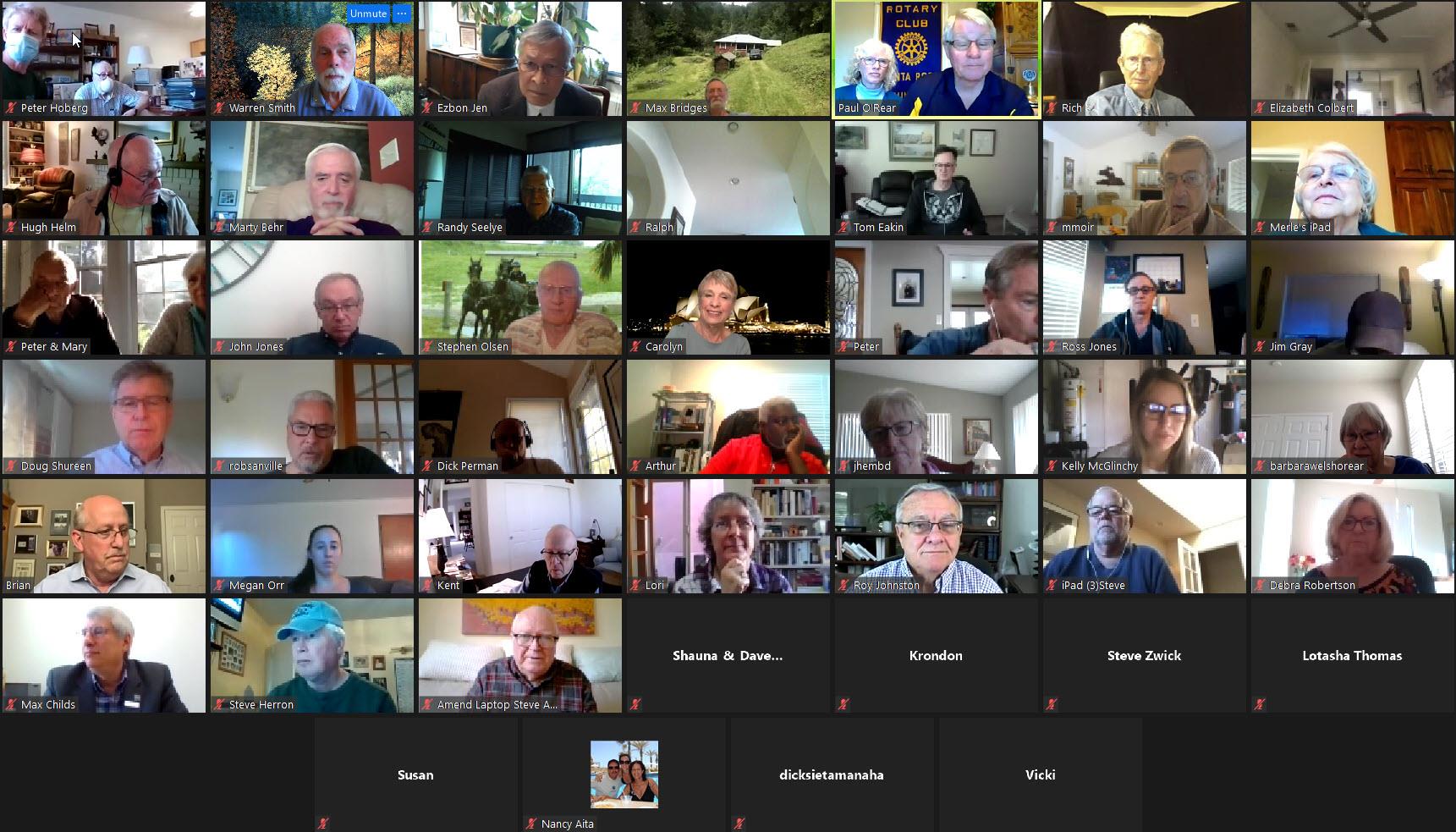
On a regular basis, our resident photo pro Warren Smith, submits pictures of what is going on at the weekly meetings. You can always find the most recent pictures at the websites photo journal called "Meeting Sighting" Please note that all the meeting photos for the entire Rotary year are at this location with the most recent on the last page.
Thanks for all the great pictures Warren!Link to Meeting Sightings. The most recent are on the last page!
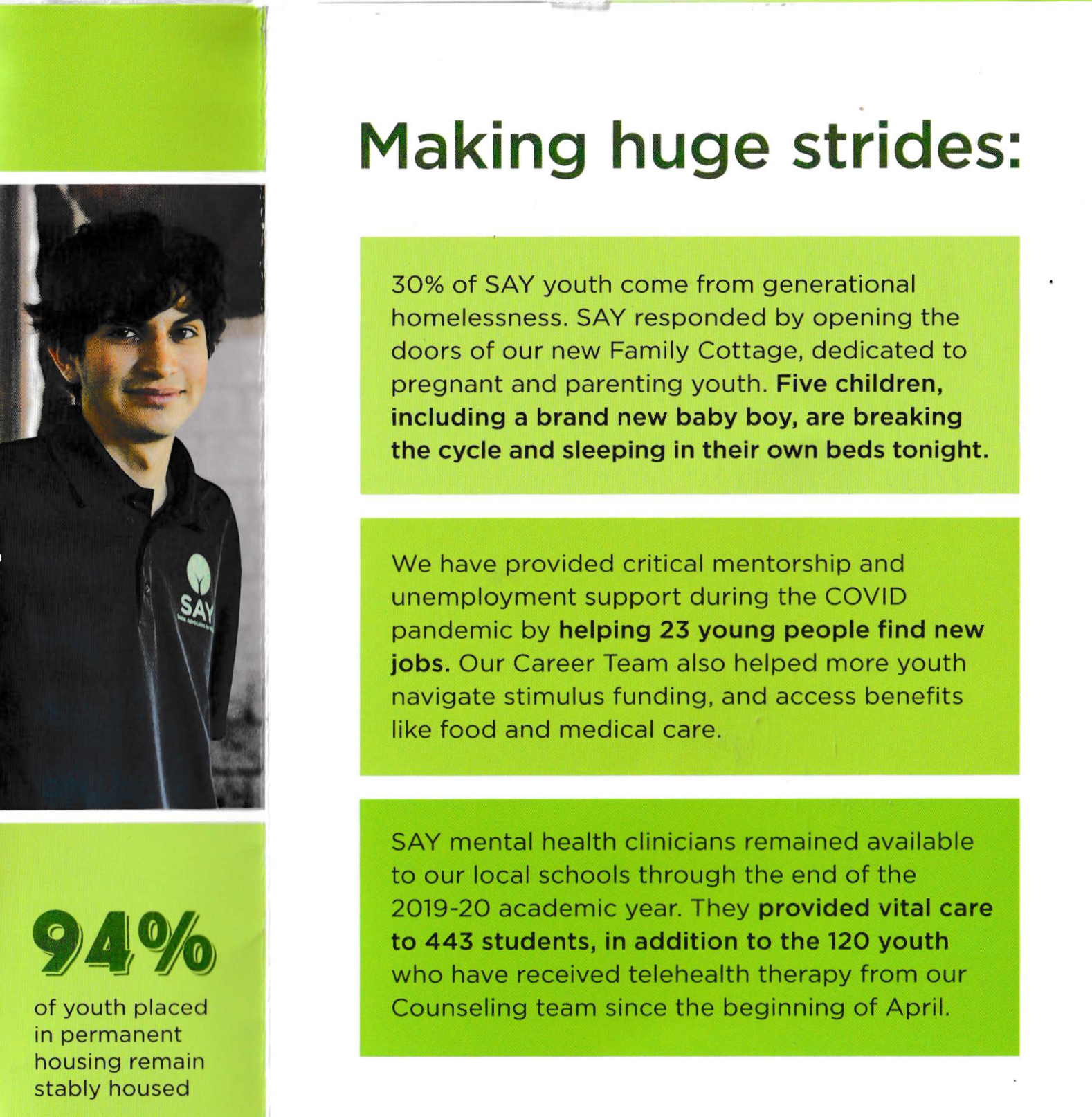
Thought you would be interested in the attached thank you note from SAY. Over the Last year we donated a total of $300 to provide for our homeless youth in Santa Rosa and an additional $281 in maintenance services through Leroy's Golden Hammer. As you can see, from their report, we are making a significant difference in the lives of these young adults, many of whom have aged out of Foster Care.
YIRS, Carolyn
Support Elsie Allen High School's Virtual Career Day
Please help us invite professionals to participate in our Virtual Career Day. We are asking interested professionals to film a 5-7 minute video that covers their educational and career journey. It is modeled after other high schools and the work they are doing to engage their students with careers!
RSVP to be a Career Day featured Video Speaker.
We invite you to record a 5 - 7 minute video.
If you are interested in this opportunity please email Herman G. Hernandez at hermang@eahsfoundation.org describing the 1) highlights of your career, 2) how you got there, 3) why you chose your career, and 4) how students can start planning today.
Once you RSVP, we will follow up with a google form, questions and instructions to help guide you.
Deadline to submit videos: December 11, 2020
We ask that you submit your video by December 11th, 2020. This will give us enough time to upload your video to our website. Counselors and teachers will promote Virtual Career Day(s) and the students will have a virtual experience to learn about career paths they can start planning.
Day of virtual career day: January 27 and January 28, 2020.
And on a personal note: Our latest adorable orphans
These are our latest orphans, 7 sheep.
Holding the babies is my granddaughter Emma Pierson.
Emma and her fiancé Chase Cianfichi own ChasinGoat Grazing, and their business is engaged in fire mitigation throughout Sonoma, Napa, Marin and Lake counties.
The baby sheep have been abandoned by their mothers for various reasons, some first timers just don't know what to do - especially with twins! Others have no milk. Occasionally a passerby will pick one up, and when a human scent is on the baby the mother will reject it.
Emma is generally hand raising upwards of a dozen babies throughout the year. The first week they spend in a pen in the kitchen. later they are moved outdoors to a larger pen. They overnight in a pen in the garage. (We had one taken, from the outdoor pen, by a coyote, earlier this year.) Bottle feeding is a time consuming process for the first 2-4 months until they are able to learn to graze, then weaning begins. At 6-9 months they join the herd!
We really enjoy having them as part of the family💕
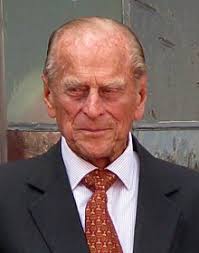
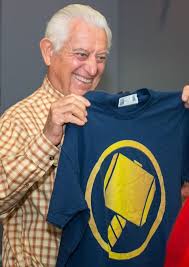
Can you identify the mystery man, who once had lunch at a Rotary club meeting in London, and was feted in song, along with Prince Philip (also present at the meeting) for the occasion of his birthday, and also by the traditional anthem, "God Save the Queen" (regularly sung at each of these Rotary meetings). What is the identity of this mystery Sunriser who shared his amazing story at the November 5th meeting?
Rumor has it that "Golden Hammer" Leroy Carlenzoli is working under cover on a special project. If anyone knows of the "Hammer's" whereabouts and what secret assignments he is up to, contact Sunrise Bulletin staff immediately with details!
Cronacoaster noun: the ups and downs of a pandemic. One day you’re loving your bubble, doing work outs, baking banana bread and going for long walks and the next you’re crying, drinking gin for breakfast and missing people you don’t even like.
Don’t be worried about your smartphone or TV spying on you. Your vacuum cleaner has been collecting dirt on you for years.
After returning home, many students miss their lives abroad. Rotex helps keep the international connections going
by Diana Schoberg Illustration by Viktor Miller Gausa
Riikka Muje had a fantastic time when she lived in Brittany, France, in 2011-12 as a Rotary Youth Exchange student. “At the beginning it was hard,” she recalls. “I didn’t speak the language. I didn’t know anyone. But then it’s amazing how you can form a life in another place.”
After her exchange, adjusting back to life in her hometown of Rovaniemi, Finland, was just as hard — until she joined a Rotex alumni association, Rotex for short. Rotex alumni associations are groups of Rotary Youth Exchange alumni who act as intermediaries between Rotarians and Youth Exchange students. They provide mentoring and organize events with exchange students in their home country as a way to give back and keep their international connections alive.
Now Muje is a fifth-year medical student at the University of Turku and president of Rotex Finland, which has more than 80 members across the country’s five districts.
“Rotex gives you a chance to continue interacting with people from other countries, and to get to know people who have had the same experience as you.”
Are Rotex clubs everywhere?
It depends on the area. In Germany, Taiwan, Brazil, and Finland, for example, Rotex is well established. There are other places where it is just getting started. And there are some countries where Rotex alumni associations have yet to be founded or chartered with Rotary International.
Rotex alumni associations have organized four international conventions in different host cities. We founded Rotex International four years ago to spread awareness about Rotex. We have five board members from different countries. And last year, Rotex International was chartered as a Rotary alumni association, which gave us official standing in the Rotary family.
What’s the role of Rotex in Rotary Youth Exchange?
In Finland, when someone applies for Rotary Youth Exchange, the Rotex members are there for the interviews to help the Rotarians choose the students who will go on exchange. When Rotarians host educational events for outbound students, we are there as well, to tell about our own experiences. And after the students come back home, we send them an email to invite them to join. Rotex is a good way to give back after a really good experience.
How else do you work with Rotarians?
Rotarians ask us to help with many local Rotary Youth Exchange events. In Finland, we help organize language and culture camps that are held at the beginning of an exchange. There are always 10 to 15 Rotex members who work as camp leaders. When Rotarians in Finland host tours for Youth Exchange students — the EuroTour or Lapland tour, for example — they also invite us to help with organization and practical things. We do smaller Rotex events as well, every month or two by district. We help promote exchanges by visiting schools and doing social media campaigns. And in some countries, such as Germany and the United States, Rotex members do fundraising events. As president of Rotex Finland, I also take part in Finnish Youth Exchange meetings to provide a youth opinion as they develop their programs.
Why did you join Rotex?
I had a good Rotary Youth Exchange experience in France, and when I got back I felt so empty. Rotex gives you a chance to continue interacting with people from other countries, and to get to know people who have had the same experience as you. It helps you readapt to your old life, which can be surprisingly difficult.
I joined Rotex in my hometown of Rovaniemi, which is in the north of Finland, on the Arctic Circle. When I moved to Turku in the south to attend university, I didn’t know people outside of those I met at school. Rotex has helped me to make friends who do things in life other than medicine. I think that’s really valuable.
• This story originally appeared in the October 2020 issue of Rotary magazine.
We all know Rotary's tremendous power to transform our communities and ourselves. However, in every community, people have been left out, and we have not made a strong enough effort to reach them.
The RI Board of Directors is taking action to make Rotary more welcoming and diverse. We formed a task force to promote diversity, equity, and inclusion to help clubs attract new members regardless of gender, race, religion, age, or other factors. This will help us speed up the change we all want and need. The selection of Jennifer E. Jones as Rotary president for 2022-23 — the first woman to lead our organization — is another step in this direction.
At the grassroots level, clubs drive inclusion and diversity. Alia Ali — who serves on the board of directors at the Big West Rotaract Multidistrict Information Organization and is a Rotary Youth Leadership Awards alumna and past president of the Rotaract Club of Surrey-Newton, British Columbia — offers her perspective.
I still remember the relief I felt as a RYLA participant four years ago. I had finally found my people: people who cared as much as I did. All over the world, Rotary has the same heart. We serve our communities and take action where others feel paralyzed by the size and scope of a problem.
Let's continue that spirit, especially when the conversation is difficult. Racism, prejudice, and discrimination take on different forms but exist in every country, in every city, and in every person. How do we root it out?
As a diversity, equity, and inclusion consultant, I help organizations create a culture that empowers and attracts everyone using the power of empathy. When we feel with others as if they were ourselves, we cannot hold prejudice in our hearts. When every child reminds you of your own child, when every woman or man reminds you of your mother or brother, you start seeing the world differently.
We can apply The Four-Way Test through the lens of empathy. Are we building goodwill and friendship with everyone in our area, including women? Are things fair and beneficial to people of all ages? Who has to make choices that you don't have to make?
I made a heartbreaking choice between Rotary and my religion when a Rotary convention was held during Ramadan. I wondered: When we ask if this is fair and beneficial to all concerned, did that not include me as a Muslim? Would the convention ever be held over Easter? Only by asking difficult questions can we begin the work of creating a more inclusive and diverse Rotary.
We already connect so many people across the world. Imagine the possibilities when we bring even more people along for the ride. That's the future of Rotary I want to see: one where we are unstoppable in our service, relentless in our kindness, and intentional in the change we want to see.
Rotary has a big enough heart. If we open our door wider, we might find a lot of interesting people with new voices and new perspectives. We already have a variety of clubs offering different styles, cultures, and opportunities — and those who do not feel welcome in any particular club might be great candidates for new clubs created on different models. It's important that we make sure every new Rotary member is a good fit for their club. Rotary Opens Opportunities through diversity.
In the early 1870s, a genius toiled in his laboratory, driven by a vision to improve life through technology. After many failed attempts, by 1880 Thomas Edison had perfected a new light bulb that could be produced on a mass scale.
When someone pointed out to him that he had tried and failed 10,000 times before succeeding, he responded that he had merely found 10,000 ways it wouldn't work!
Just like Edison, The Rotary Foundation is driven by a vision for a better world. And we, too, remain determined and creative in the face of setbacks.
Earlier this year, our vital polio immunization activities had to be temporarily paused to ensure that the polio eradication program did not contribute to the COVID-19 pandemic. And so we adapted: The polio-fighting infrastructure that Rotary helped build was enlisted to assist in the response to COVID-19 in many vulnerable countries, as we had done before during outbreaks of Ebola, yellow fever, and avian flu.
Thankfully, we resumed polio immunization activities in July, having first taken all precautions to protect frontline workers and communities.
During these challenging days, our business — reaching out to people in distress — is not business as usual. The way we prepare and deliver projects and the methodology we use need to change. And the way we communicate what we do also must change.
The success of our global grants model is unmistakable. At its introduction in 2013-14, the Foundation awarded 868 grants worth over $47 million. By 2019-20, the number of approved grants had risen to 1,350, worth over $100 million. While the number of grants shot up by more than 50 percent, and funding by 123 percent, corresponding Annual Fund contributions showed only a 5 percent increase, and that's troubling.
To reach those who need us, to spread the love that our Foundation brings, we will need to rise to this challenge and work together to meet our funding needs.
Mother Teresa once said that if we want a message of love to be heard, it has to be sent out. To keep a lamp burning, we have to keep putting oil in it.
The Rotary Foundation offers the best opportunity I know for us to invest in a better future for communities around the world. Your generosity today and throughout this year is the oil that keeps our grants burning bright, reaching the ones who need us most.
Rotary Club of Santa Rosa Sunrise - Founded June 30, 1986


.png)

.jpg)













 Congratulations