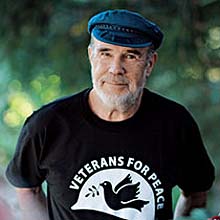
Fred is a Vietnam Veteran, one of the original founders of Climbers for Peace (CFP) and has participated in all 6 CFP adventures. He has three daughters and one son. His oldest daughter, Laura, participated in CFP 1 and 2 and daughter Lindsey participated in CFP 3. His son Alex and wife Jeannette were part of CFP 6.
He was a co-founder and is the current president of the Sister Cities programs between Cherkassy, Ukraine and Santa Rosa.
Fred is a past president and current member of Veterans for Peace, Chapter 71. He works as a financial advisor helping companies and individuals invest their money in a socially responsible way that is consistent with their ethical and moral values.
The Nut Tree; a California Classic, by Diane Zimmerman
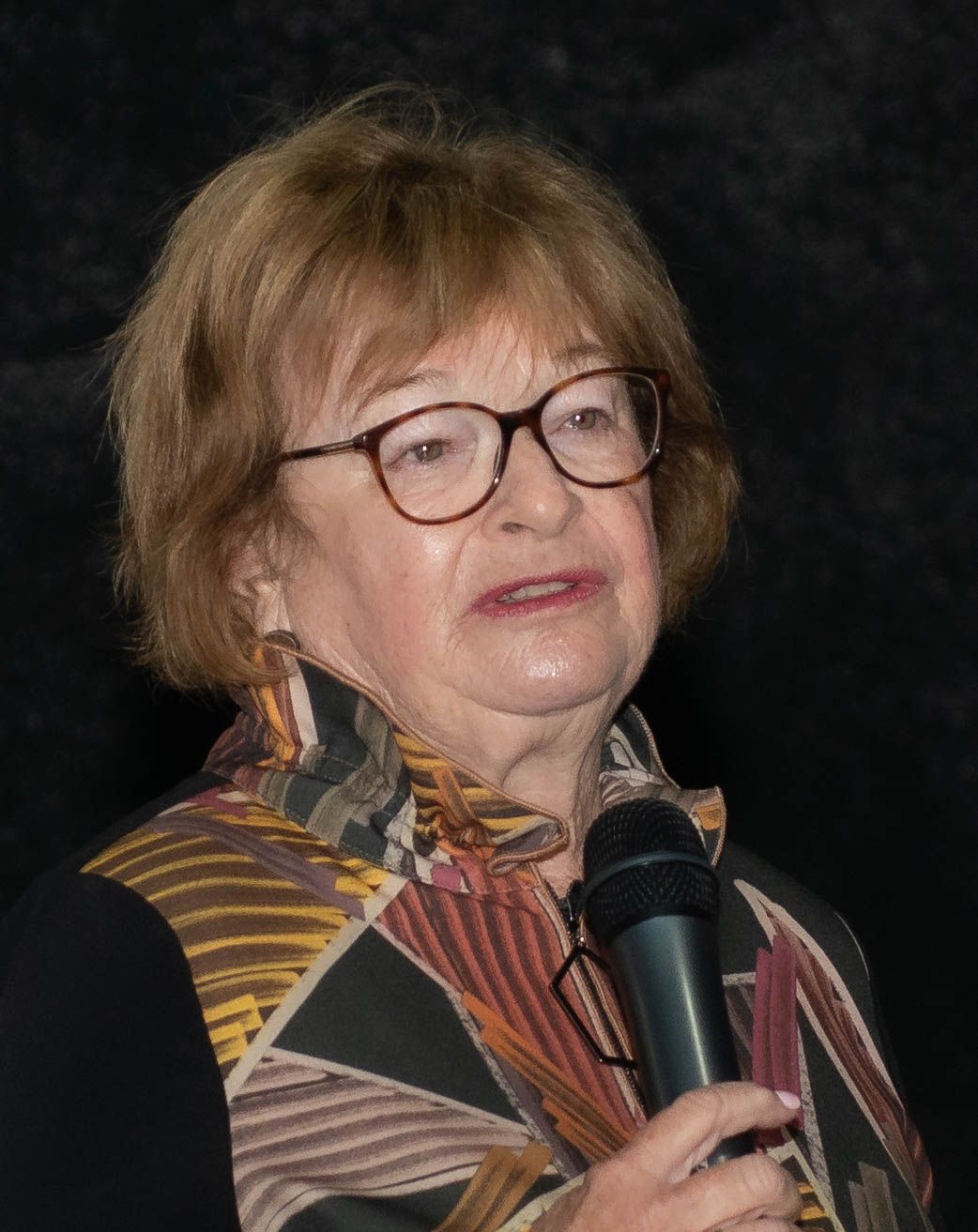
Our guest speaker for July 31, 2025 was Dr. Diane Zimmerman, who spoke about the history and development of the Nut Tree, a famous Solano County restaurant and entertainment center situated on Highway 80. Diane is a descendant of the family that ranched and developed the Nut Tree and worked there as a youngster. Diane is a former speech therapist and Superintendent of Schools of the Old Adobe Union School District. She is also the author of “Nut Tree: From a California Ranch to a Design, Food, and Hospitality Icon.”
Diane’s great, great grandparents moved their family from Iowa to Solano County in 1852. They were farmers and ultimately purchased one of the last ranch properties on the outskirts of the great farmland region. The property, not particularly valuable at the time, had one very important attribute for the future: it was situated in the middle of what later became the main highway between San Francisco and Sacramento! Her family grew all sorts of fruits and vegetables, but peaches became a mainstay of their ranch. The area’s farmers grew large quantities of produce but had a limited market until the intercontinental railroad arrived in 1869, which allowed them to sell fresh produce to population centers all over the Midwest and eastern states. Crop failures in 1921 led the family to start a small fruit stand near the SF-Sacto highway. The automobile revolution allowed people the freedom to travel further distances and sample food and other products on their journeys. The small fruit stand eventually became a full-fledged restaurant and entertainment center.
Before it closed the Nut Tree was world famous. It was the place to eat on the highway between SF and Sacramento. They also sold a wide variety of other products; Diane got her start at age 12 selling toys! They even served the Queen of England! Herbert Hoover always stopped to try the tamales. The Nut Tree helped popularize Mexican cuisine!
Thank you, Diane, for the insights about your family’s creation of a California icon.
On a regular basis, our resident photo pro Warren Smith, submits pictures of what is going on at the weekly meetings. You can always find the most recent pictures at the websites photo journal called "Meeting Sighting" Please note that all the meeting photos for the entire Rotary year are at this location with the most recent on the last page.
Thanks for all the great pictures Warren!Link to Meeting Sightings. The most recent are on the last page!
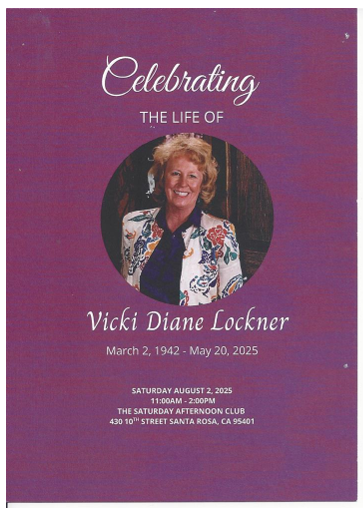
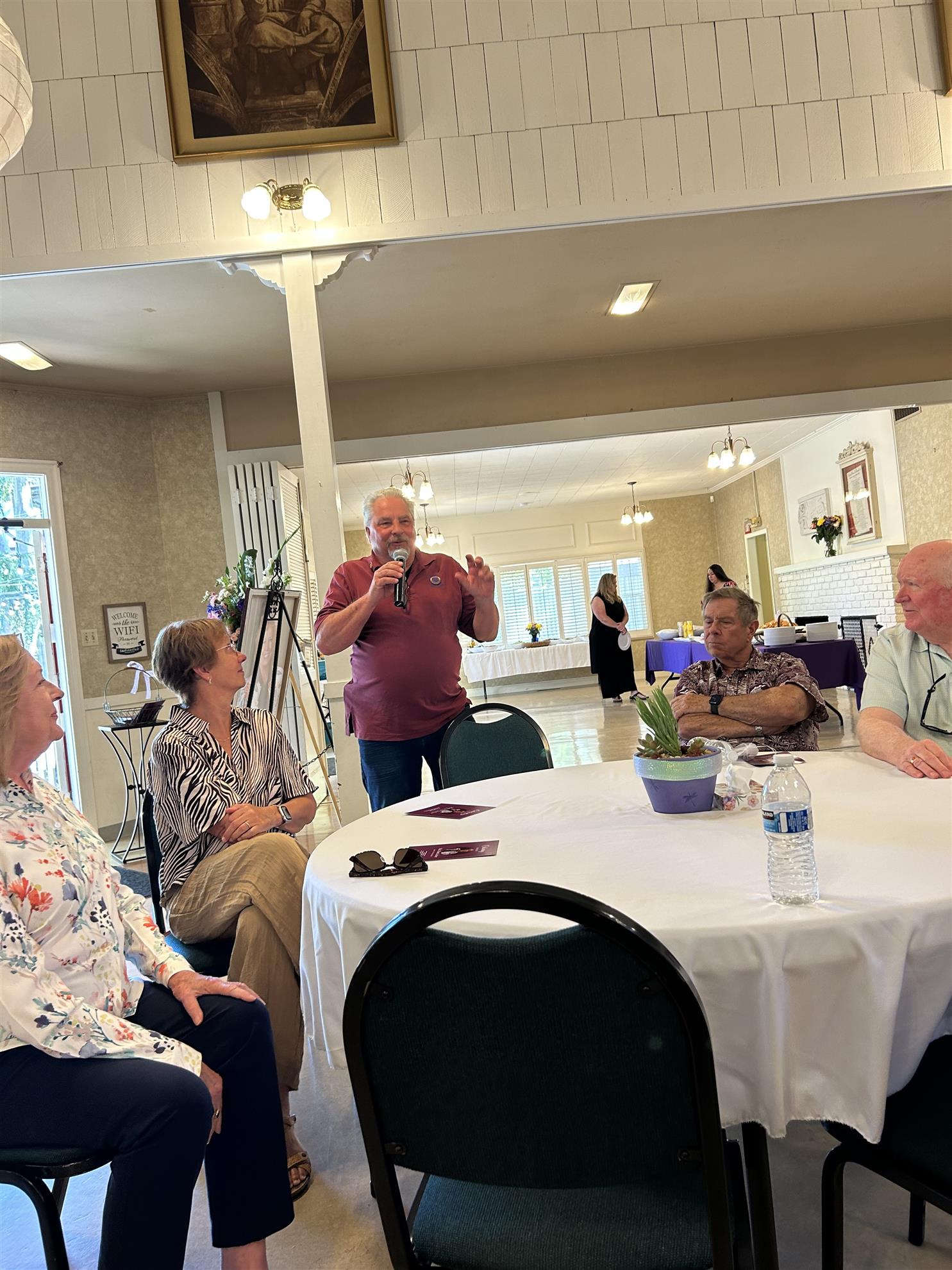
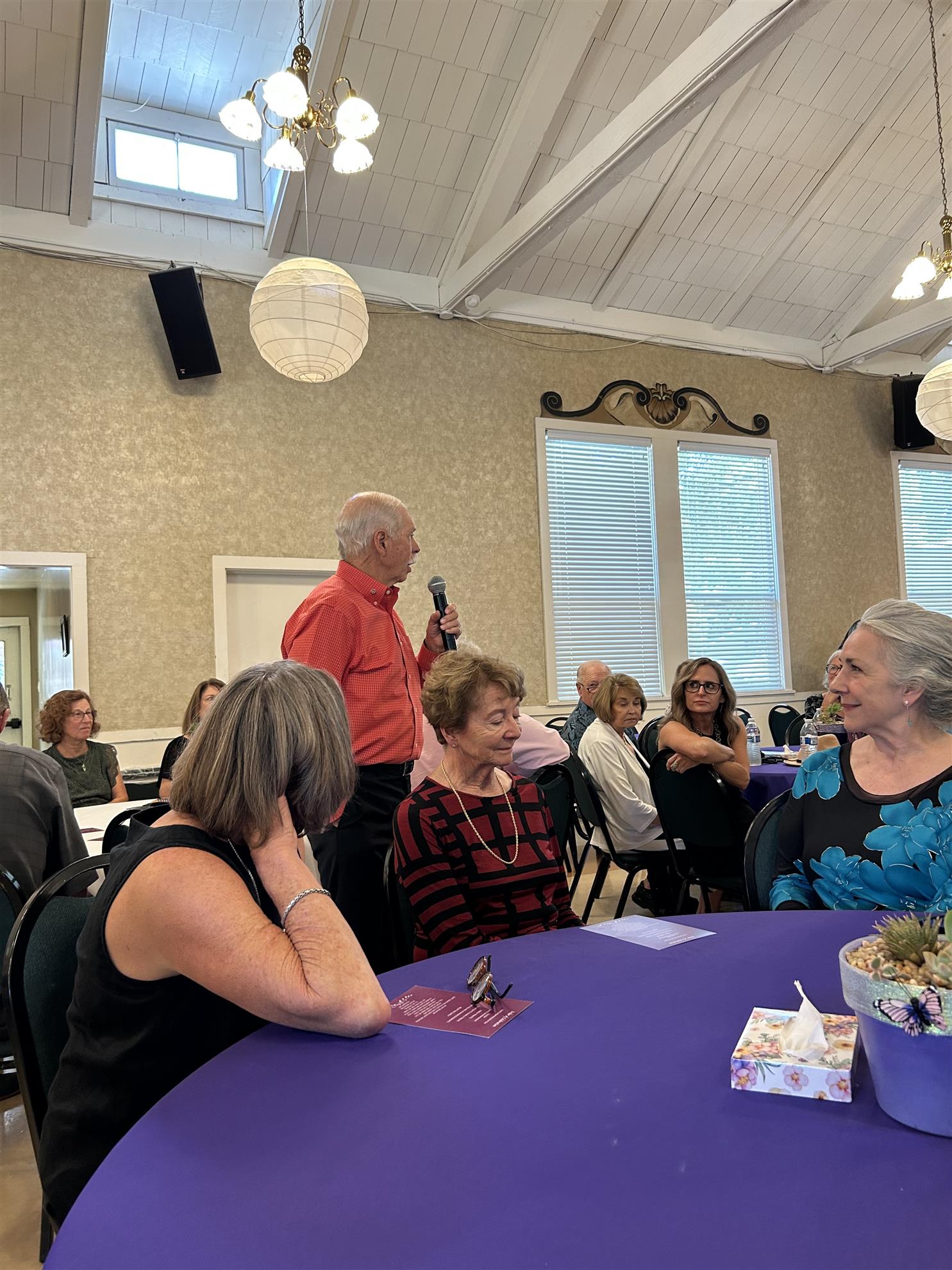
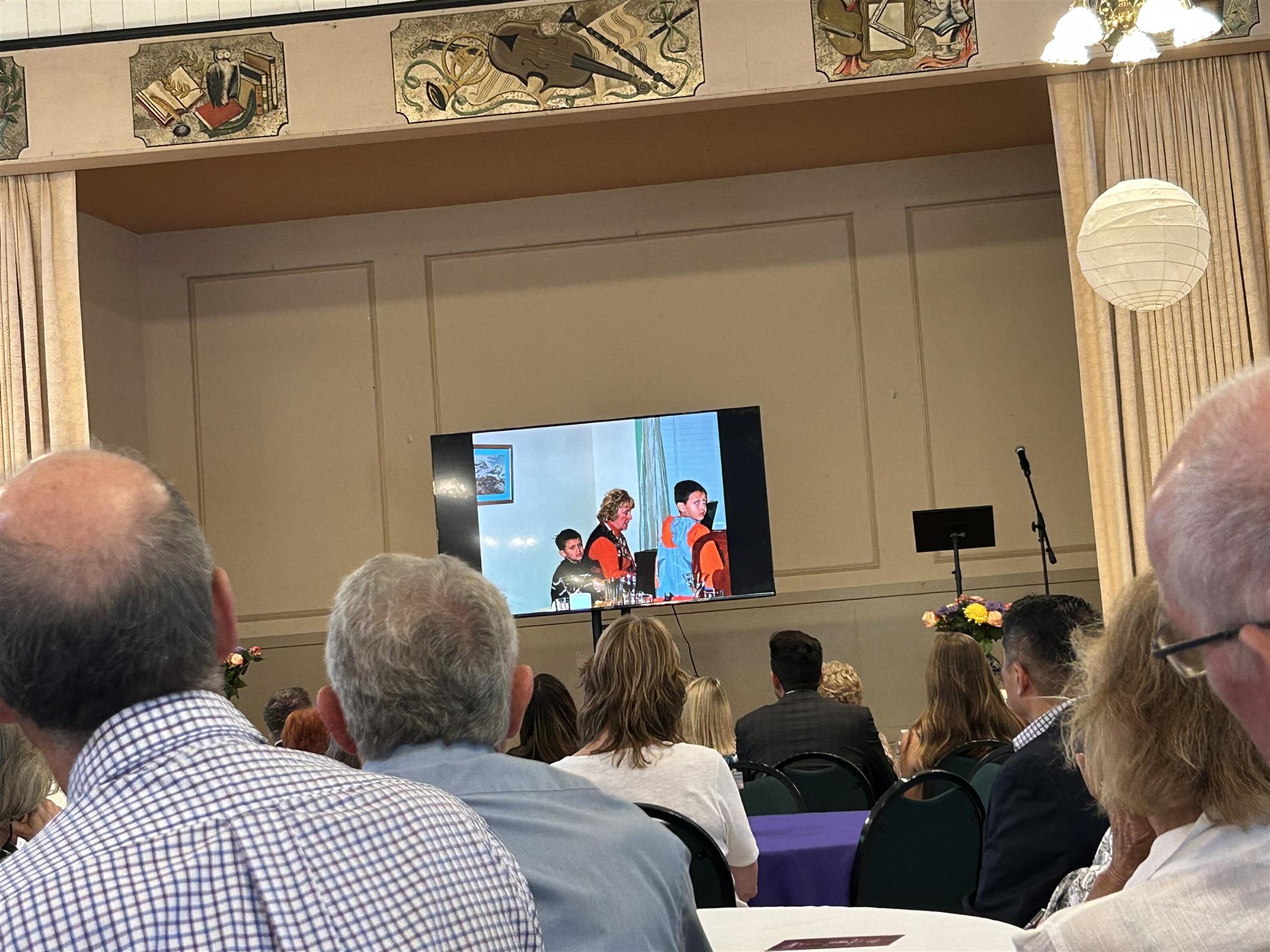
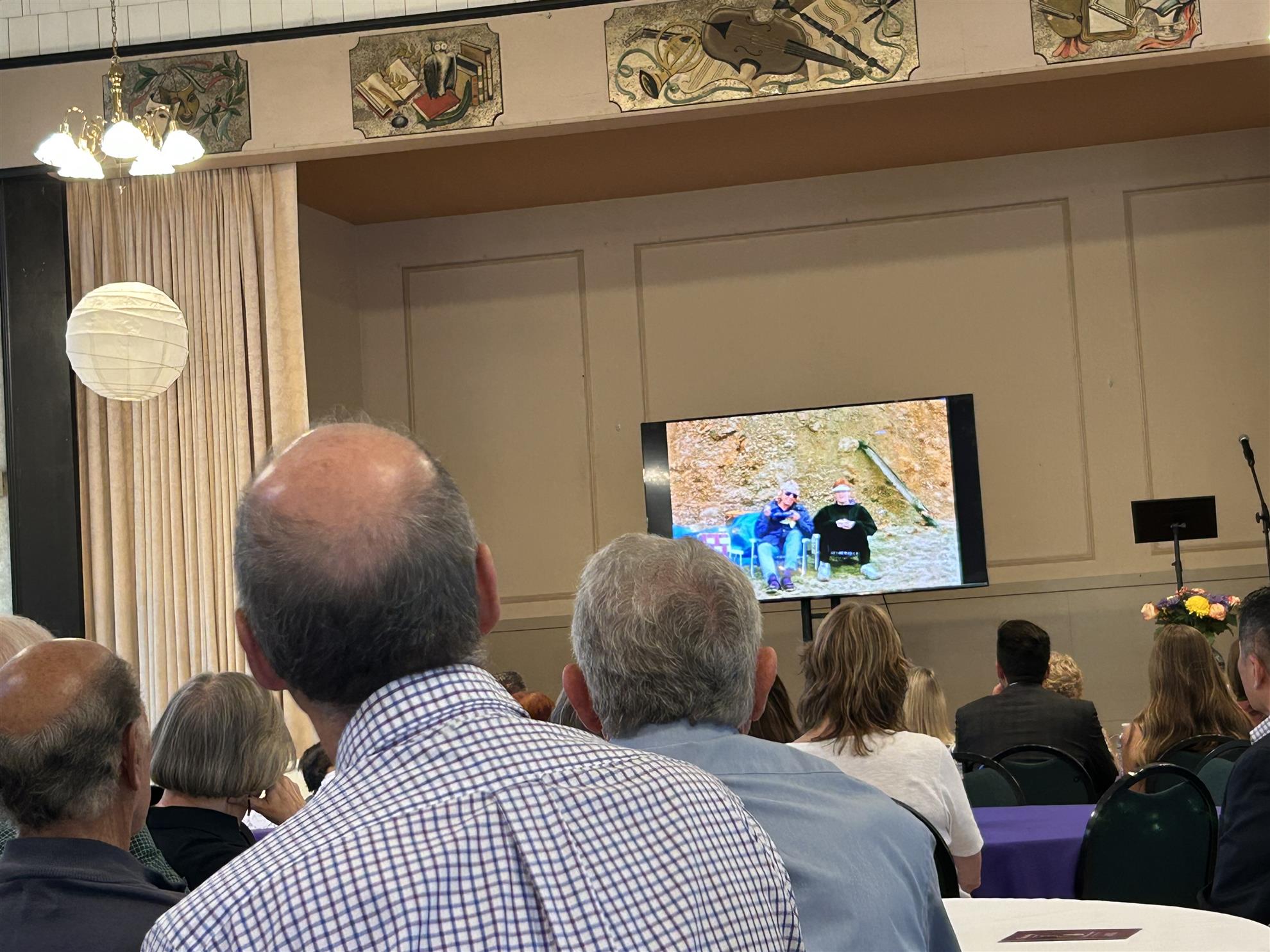
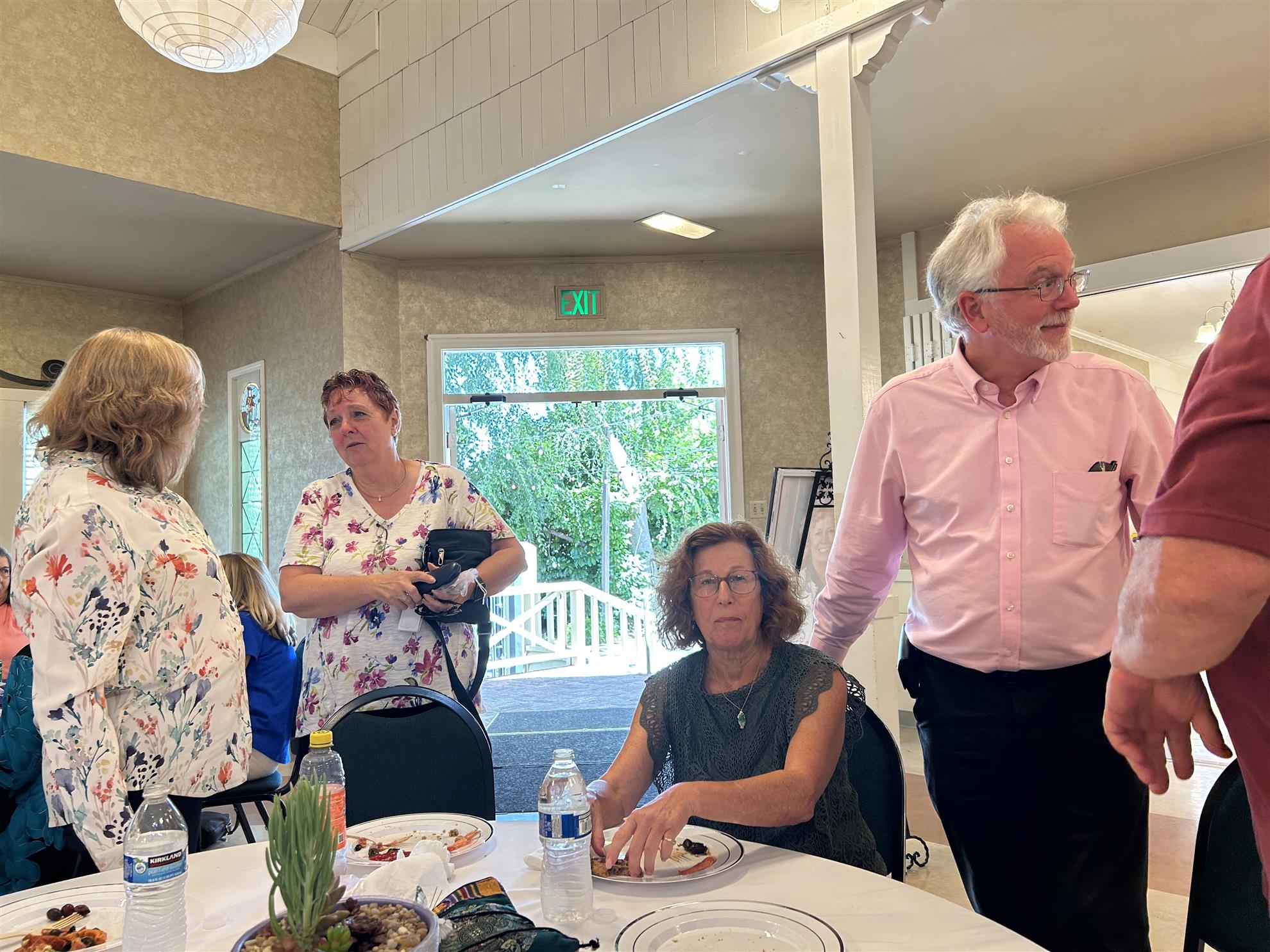
Our Club will be forever grateful for our member, Vicki Lockner!
Steve Amend was among the first to given tribute to Vicki, recalling her hosted Mexican dinner fun-fund raiser, and getting Vicki's Principal got-ya look!
Rob Sanville noted Vicki's debut as a rock-jazz pianist emerging from her classically trained style.
Warren Smith shared Vicki's very popular golf tournament Tequilla watering hole.
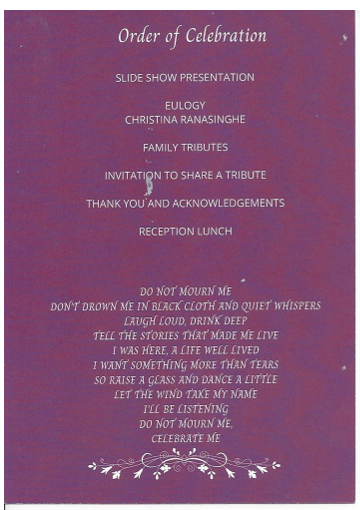
Christina Ranasinghe led the celebration, reminding everyone how very much Vicki's caring, compassion and family priorities were her compass.
Teachers from Vicki's Steele Lane School covered decades of her leadership and inspiration. What Principal would take a forlorn student home, cook supper until his late pick up arrived? What Principal would, could arrange fly-fishing equipment and give lessons to her students?
Blue is Vicki's signature color. Her scarf greeted friends. Memento sachets contained tea and a message: "Think of me as you enjoy the tea. Add boiling water and watch a flower grow or the water turn a magnificent blue."
Eloise Tweeten, Stacy Drucker-Andress, Dave and Shauna Lorenzon say good-bye with Steve and Kathleen Amend. Vicki has the closing lines:
A husband and wife find a magical genie lamp. They rub it, and a genie comes out, granting them both a wish. The wife wishes to travel around the world. The genie nods, and poof! She has tickets in her hand. The husband thinks for a moment and says, “I wish my wife was 30 years younger than me.” The genie nods, and poof! The husband is now 90.
August is Membership Month, but our commitment to growth and connection is year-round. When we focus on growing Rotary, we grow our ability to serve, to lead, and to bring lasting change.
Membership growth isn’t just about numbers. It’s about opening doors. It’s about inviting more people who are ready to give their time, talents, and hearts to a cause greater than themselves. When we welcome new members, we bring in fresh ideas and new energy. We expand our impact, strengthen our clubs, and ensure that Rotary continues to evolve with the world around us.
Remember, there is now great flexibility in fashioning nontraditional club models. I’m inspired when I see these innovative clubs thrive by offering new and prospective members more ways to connect and serve.
In Korea, the growth of satellite clubs has created opportunities for nearly 1,000 new members to find their place in Rotary. In Romania, the close collaboration between Rotarians, Rotaractors, and Interactors has built a pipeline of future leaders. In India, some Rotarians gather around a shared interest — whether it’s professional development or a passion for service — and those connections deepen their commitment and their joy in being part of Rotary. And we’ve seen cause-based clubs thrive in regions as diverse as Southeast Asia, Africa, and Europe.
There’s a common thread: Where clubs are growing, membership is a priority and there is a willingness to try something new. Rotary is not limited to one structure or tradition. We are a global network of people of action, and that means there is room for many kinds of clubs, many ways to serve, and many paths into our organization.
This spirit of innovation is also guiding our efforts to reach new communities. In places where there has never been a Rotary club — or where a club once existed and faded — Rotarians are finding ways to grow Rotary. They are identifying areas of potential and building clubs that reflect the character and needs of their communities.
Every member plays a part in this journey. Whether you introduce a friend to your club, support a new meeting format, reconnect with program alumni, or simply share your Rotary story, you are helping our organization grow stronger and more vibrant.
No one owns a Rotary club. It is a gift we pass on to the next generation. When we nurture that gift, when we invite others to share in it, we ensure that Rotary continues to be a force for good.
Let’s prioritize membership growth — not just in August but every month of the year. Together, through friendship, creativity, and shared purpose, we will grow Rotary and Unite for Good.
You can find all prior "RI President's Messages" at this LINK
When most people join Rotary, they know little, if anything, about The Rotary Foundation.
Membership Month is a great time to highlight the powerful connection between membership and our Foundation.
People who are drawn to Rotary care deeply about their communities and want to make a substantive difference. They’re looking for meaningful, hands-on ways to serve — and the Foundation helps make those opportunities possible.
Cause-based Rotary clubs are one exciting way new members are finding purpose in Rotary, and these clubs also bring fresh energy and activity to our Foundation. I invited Marisol Chianello, president of one such club, to share her perspective:
“As a nonprofit attorney, I long believed I didn’t have the time to be part of Rotary. But when I heard about a new cause-based e-club — the Rotary Club of Mental Health and Wellness District 5280 — I felt I had to be part of it.
In just three years, our club has done a lot to support mental health needs in Southern California and awarded thousands of dollars in scholarships to graduate students in the field, including one this year to a student in Uganda.
Just a few months ago, we were approved for our first global grant to provide a mix of in-person and digital mental wellness support to survivors of the 2023 earthquakes in southeastern Turkey.
Through our service, we’ve attracted new members from across the United States, including women and younger members who might not have otherwise joined Rotary. Cause-based clubs like ours offer a meaningful entry point for people committed to a specific cause — backed by the global reach and Foundation support of Rotary.”
Marisol’s story reminds us what’s possible when Rotary service meets Foundation support. I wonder how many cause-based club members knew the full extent of Foundation resources when they began. How many existing clubs could partner with these groups on grants?
As we build new Rotary and Rotaract clubs and welcome new members, let’s keep The Rotary Foundation at the forefront. The Foundation enriches the membership experience, supports club growth, and deepens our impact.
The Rotary Foundation is more than just a source of funding; it is an invitation to endless opportunities. It’s a living expression of who we are as Rotary.
The Foundation, too, can be a vital part of every member’s experience when they join us or start a new club.
You can find all prior "Messages from the Foundation Trustee Chair" at this LINK
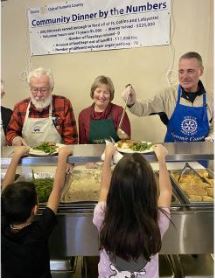
To help people affected by the financial crisis of 2008, the Rotary Club of Summit County (Frisco) began serving a weekly dinner free of charge in the Colorado ski town. Sixteen years later, they haven’t stopped. In January, the club and its partners served their 200,000th meal. “The housing and mortgage crisis deeply affected people in Summit County, so in November 2008 I went to a nonprofit in the county and asked the director what was needed to help people through it,” says club member Deborah Hage. “For people displaced, living in their cars, or sofa surfing, there was no way for them to prepare meals with the food being distributed by the food banks and pantries.” On a typical Tuesday night, 100 to 500 people — children, families, retirees, and even donors who simply enjoy the camaraderie — come together to share restaurant-quality dinners and good company.
Canada
Dogs are feeling especially lucky in the Yukon territory thanks to the Rotary Club of Whitehorse-Rendezvous, which bakes, packages, and sells pet treats to raise funds. The club’s annual dog biscuit sale has generated about CA$3,000 since it began three years ago. Proceeds benefit the Mae Bachur Animal Shelter and the Food Bank Society of the Yukon in Whitehorse. “This fundraiser brings Rotarians together for enjoyable social occasions in our various homes, and local people love the biscuits for their dogs,” says Kevin Rumsey, immediate past president of the club. Rumsey’s mother created the recipe, which includes pumpkin and peanut butter. “We always sell out,” he adds. “We even deliver to people’s homes.”
This story originally appeared in the August 2025 issue of Rotary magazine.
Rotary projects make a difference in communities around the world.


.png)










 To help people affected by the financial crisis of 2008, the Rotary Club of Summit County (Frisco) began serving a weekly dinner free of charge in the Colorado ski town. Sixteen years later, they haven’t stopped. In January, the club and its partners served their 200,000th meal. “The housing and mortgage crisis deeply affected people in Summit County, so in November 2008 I went to a nonprofit in the county and asked the director what was needed to help people through it,” says club member Deborah Hage. “For people displaced, living in their cars, or sofa surfing, there was no way for them to prepare meals with the food being distributed by the food banks and pantries.” On a typical Tuesday night, 100 to 500 people — children, families, retirees, and even donors who simply enjoy the camaraderie — come together to share restaurant-quality dinners and good company.
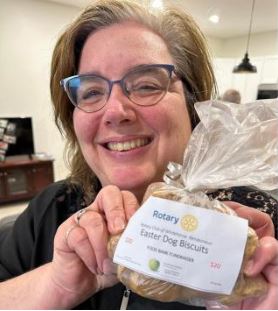 Dogs are feeling especially lucky in the Yukon territory thanks to the Rotary Club of Whitehorse-Rendezvous, which bakes, packages, and sells pet treats to raise funds. The club’s annual dog biscuit sale has generated about CA$3,000 since it began three years ago. Proceeds benefit the