May 21 meeting is a Club Assembly for members only to discuss Proposed Bylaw Changes, our new Club Foundation Service Fund, and when and how to return to live meetings.
Community Needs in Reponse to the Coronavirus Pandemic
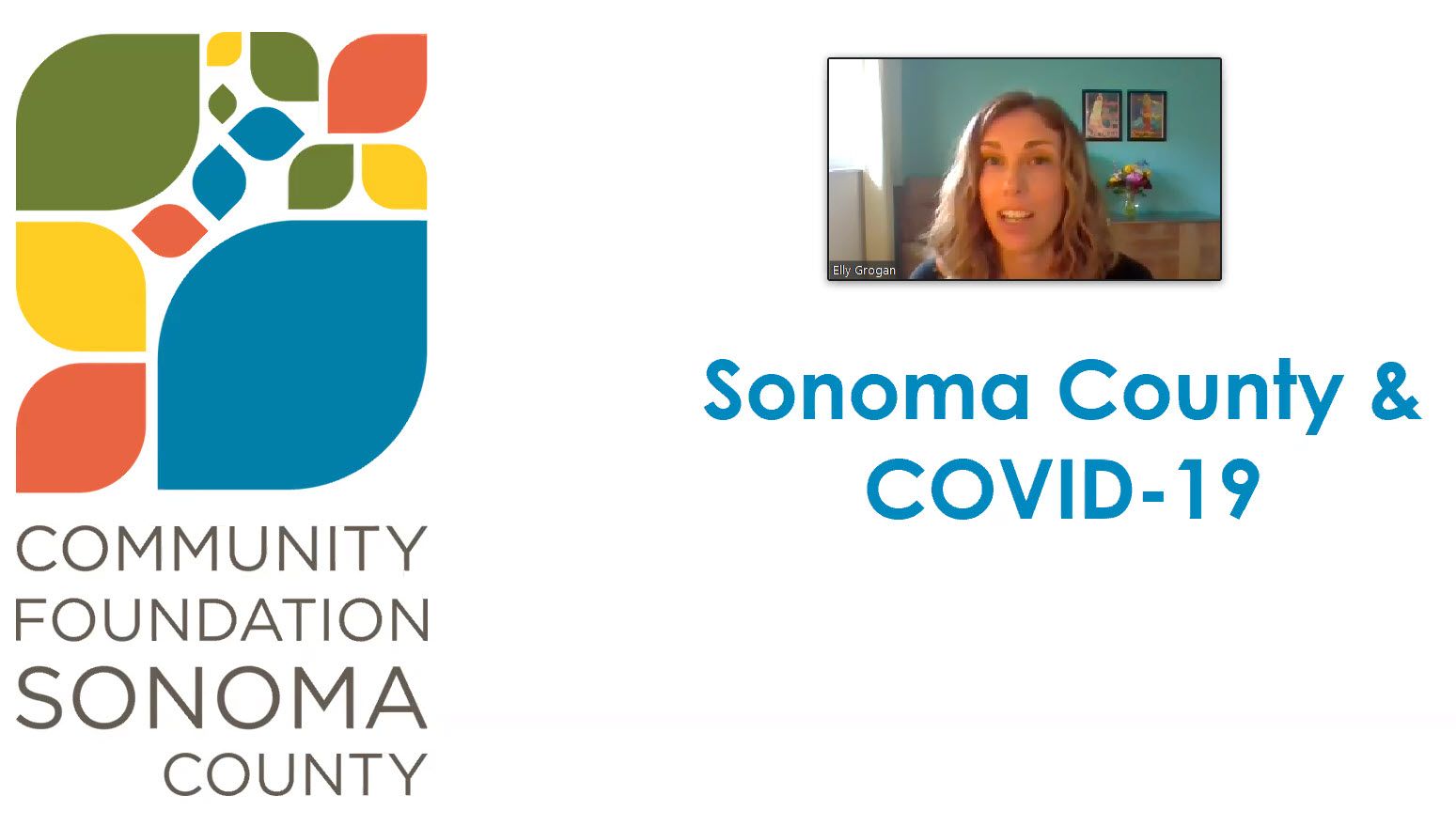
Our speaker for the May 14th virtual meeting was Elly Seelye Grogan, Senior Philanthropy Officer with the Community Foundation Sonoma County. Elly has a long history with charitable organizations, starting with some of Sunrise’s earliest international missions in 2001 and 2003 (including our first Nicaragua eyeglass/dental mission) and continuing working with StoveTeam International in Eugene, Oregon. As a Senior Philanthropic Officer, Elly helps donors develop strategies to meet their own charitable goals.
The Community Foundation holds assets of over $175 million in 450 charitable trusts. It has made over $250 million in grants, mostly in Sonoma County. Its focus is typically arts, education, environmental, and health & human services. The day after the October 2017 fires, the Foundation started its “Resilience Fund,” which is dedicated to mid and long-term relief, including trauma relief and housing solutions.
The Coronavirus Pandemic brings new challenges to charitable giving in Sonoma County. Unlike the fires, CV-19 is an international problem and out-of-area donations are not typically available. Funding for CV-19 problems in Sonoma County must come from local donations, even at a time when local non-profits are extremely insecure. The pandemic has also blurred the lines between philanthropy and business because businesses are facing extreme distress, are often fighting to keep their employees, and are no longer able to donate. Elly mentioned that 87% of local businesses with less than 20 employees are now effectively closed.
The Foundation has identified 4 primary areas of focus: housing, income support/assistance, health care and food/meals. The need for emergency food access is acute. There has been an increase of 50-200% at local food pantries. The Food Bank spent $1.4 million last month, equal to its annual budget. Its operation has shifted from bulk distribution to local pantries serving individually boxed meals out of new distribution sites. There are significant distribution gaps in coastal, rural, and tribal areas.
Sonoma County’s vulnerable populations are even more at-risk. Homelessness, food anxiety, and domestic violence are increasing among the at-risk populations, including seniors (particularly homebound seniors), the undocumented, and children. Heightened levels of stress will likely result in long-lasting trauma. The Foundation is working with Sonoma County charities to assist them in their response to the pandemic. Non-profits such as the Community Action Partnership, Undocufund, the Living Room, and many others are receiving funding and support from the Foundation.
Elly’s message is that we should all consider making whatever donations and support we can to assist non-profits serving vulnerable populations in Sonoma County. Do your year-end giving now, keep supporting non-profits you love, and remember that ‘today is the rainy day.’
Thank you, Elly, for the informative and thoughtful presentation. You are in inspiration to us all.
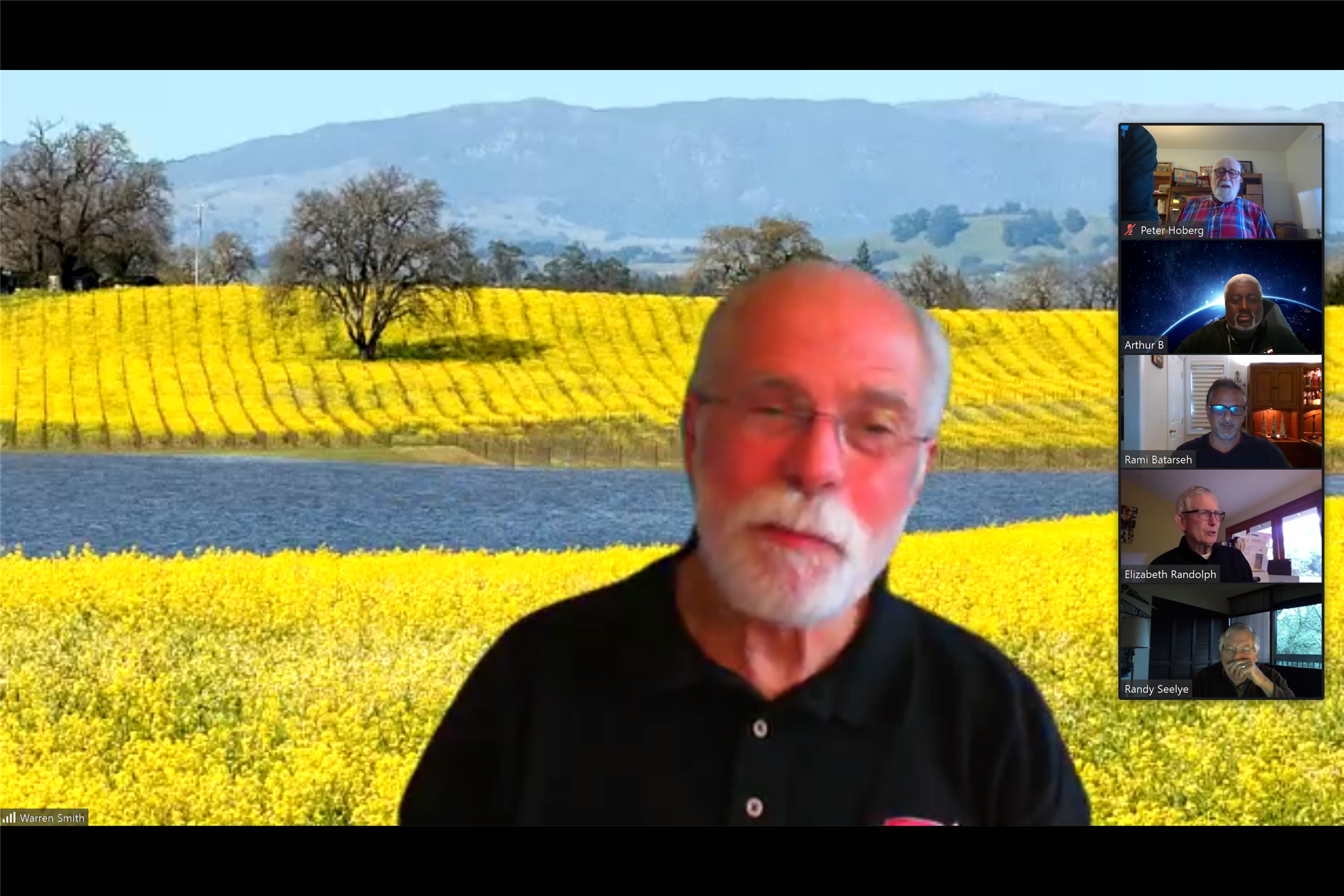
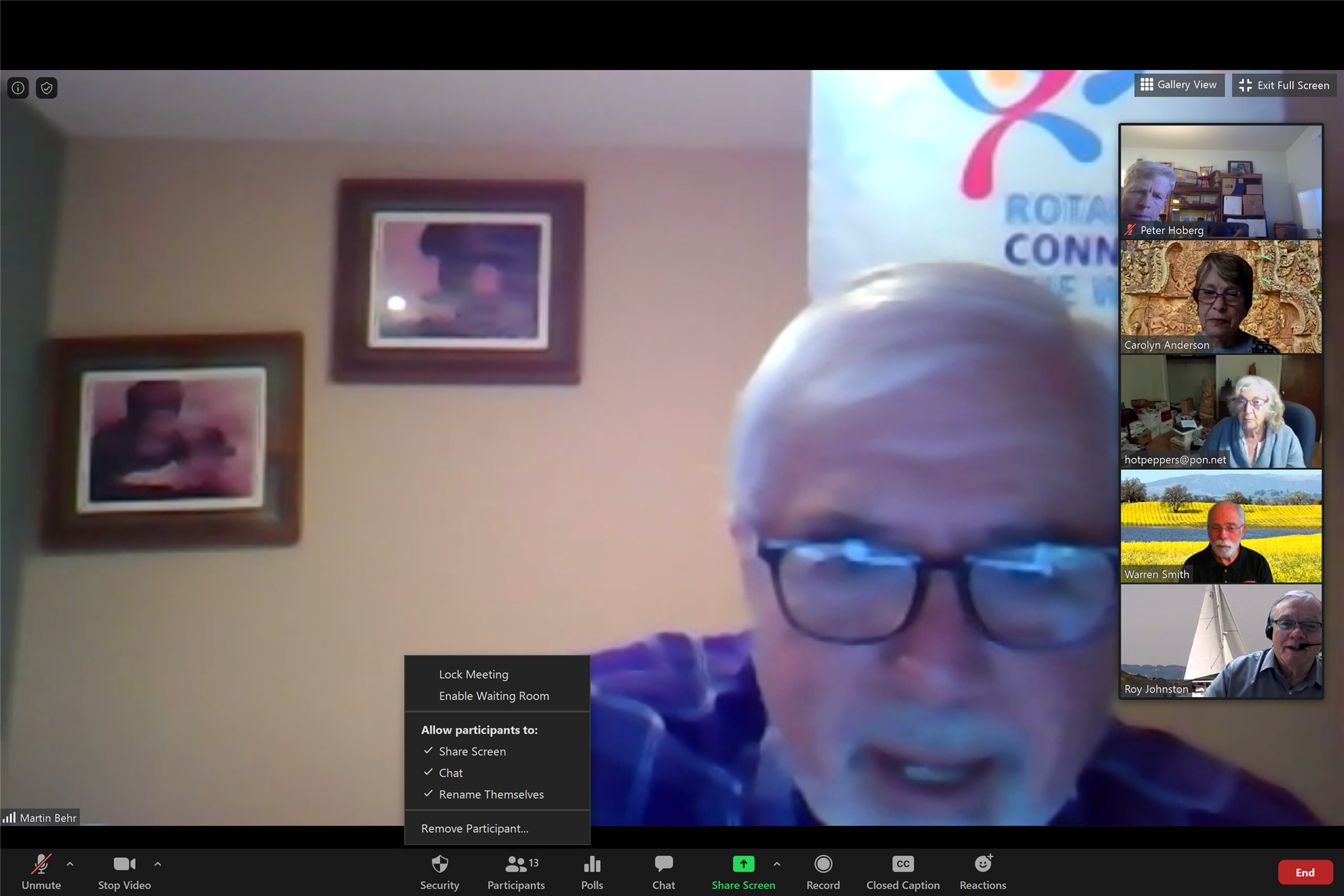
On a regular basis, our resident photo pro Warren Smith, submits pictures of what is going on at the weekly meetings. You can always find the most recent pictures at the websites photo journal called "Meeting Sighting" Please note that all the meeting photos for the entire Rotary year are at this location with the most recent on the last page.
Thanks for all the great pictures Warren!Link to Meeting Sightings. The most recent are on the last page!
Posted by Rich Randolph Eloise Tweeten on May 17, 2020
New Gen Peace Builders Deliver!!
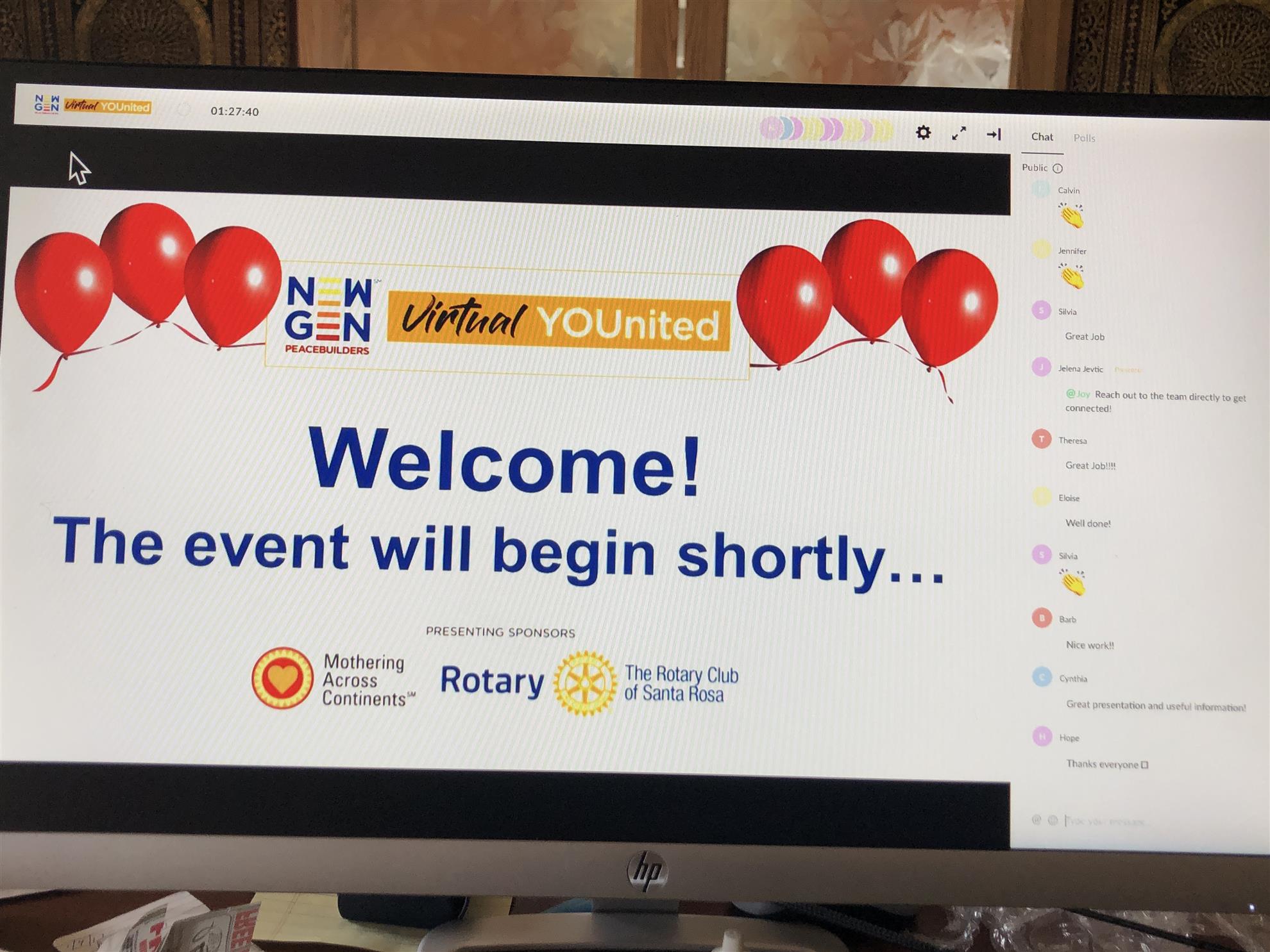
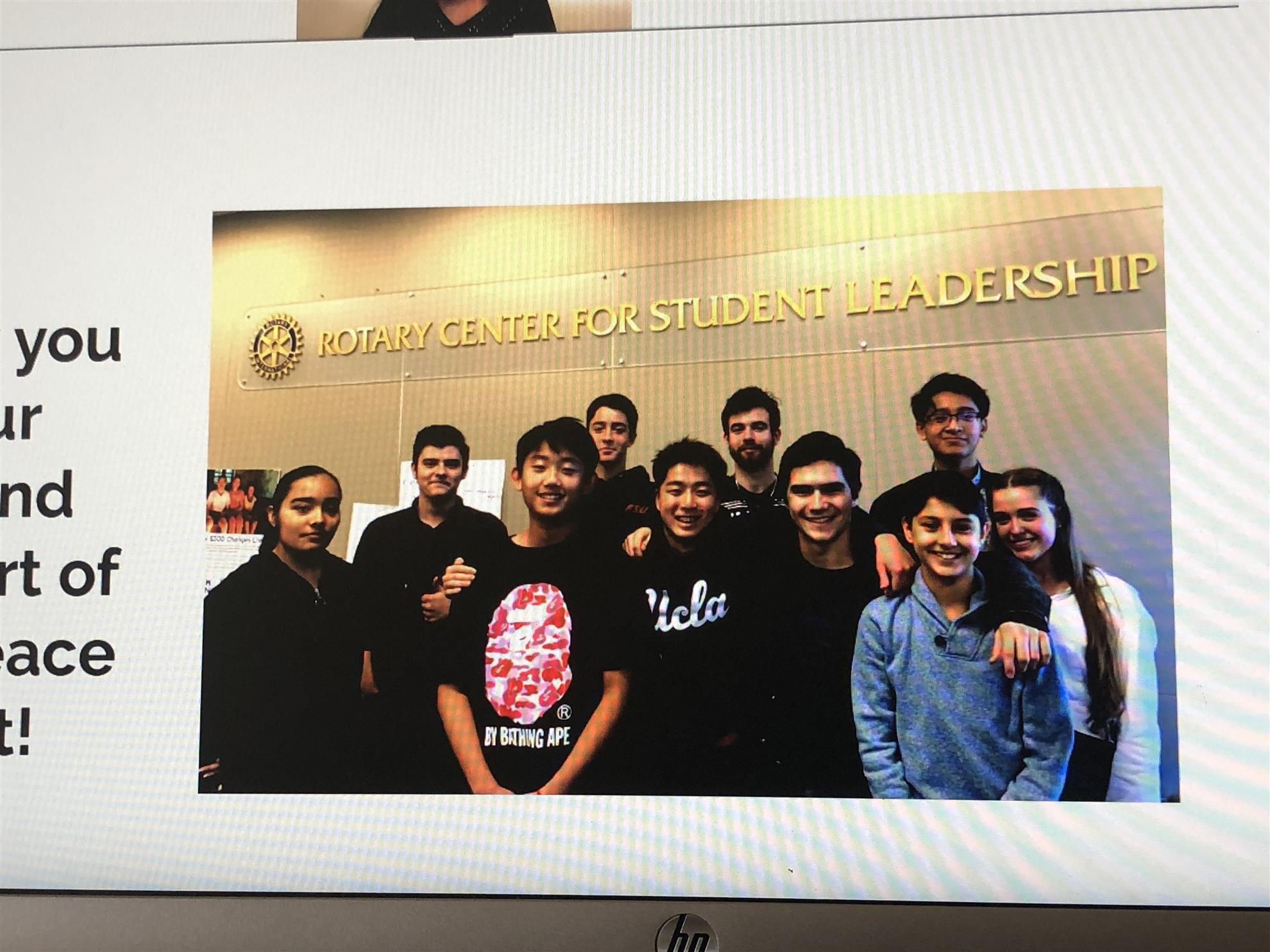
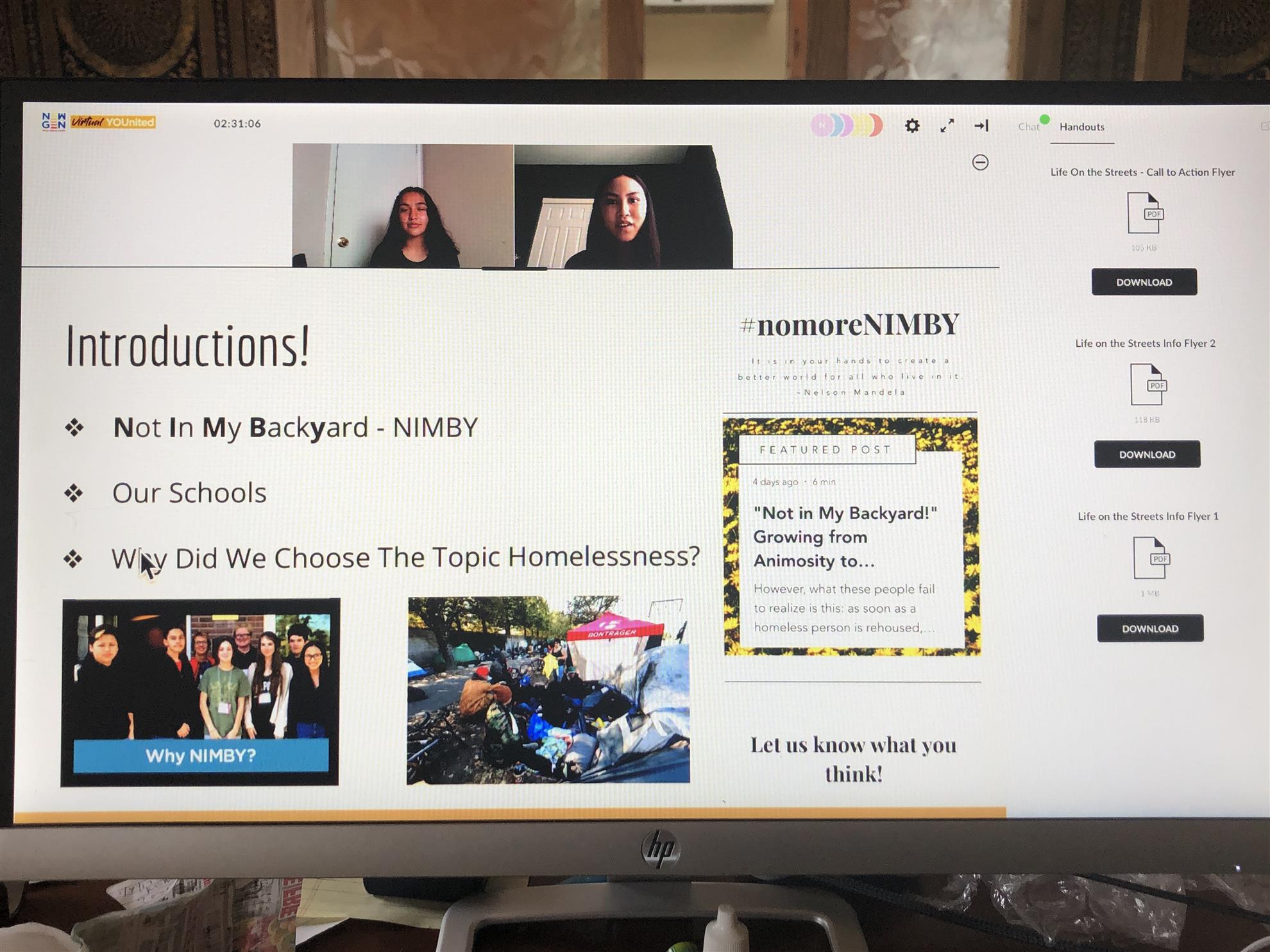
Local high school students joined fellow New Gen Peacebuilders from across the country and around the globe in presenting the fruits of their 12 week pursuit of a peace-building goal.
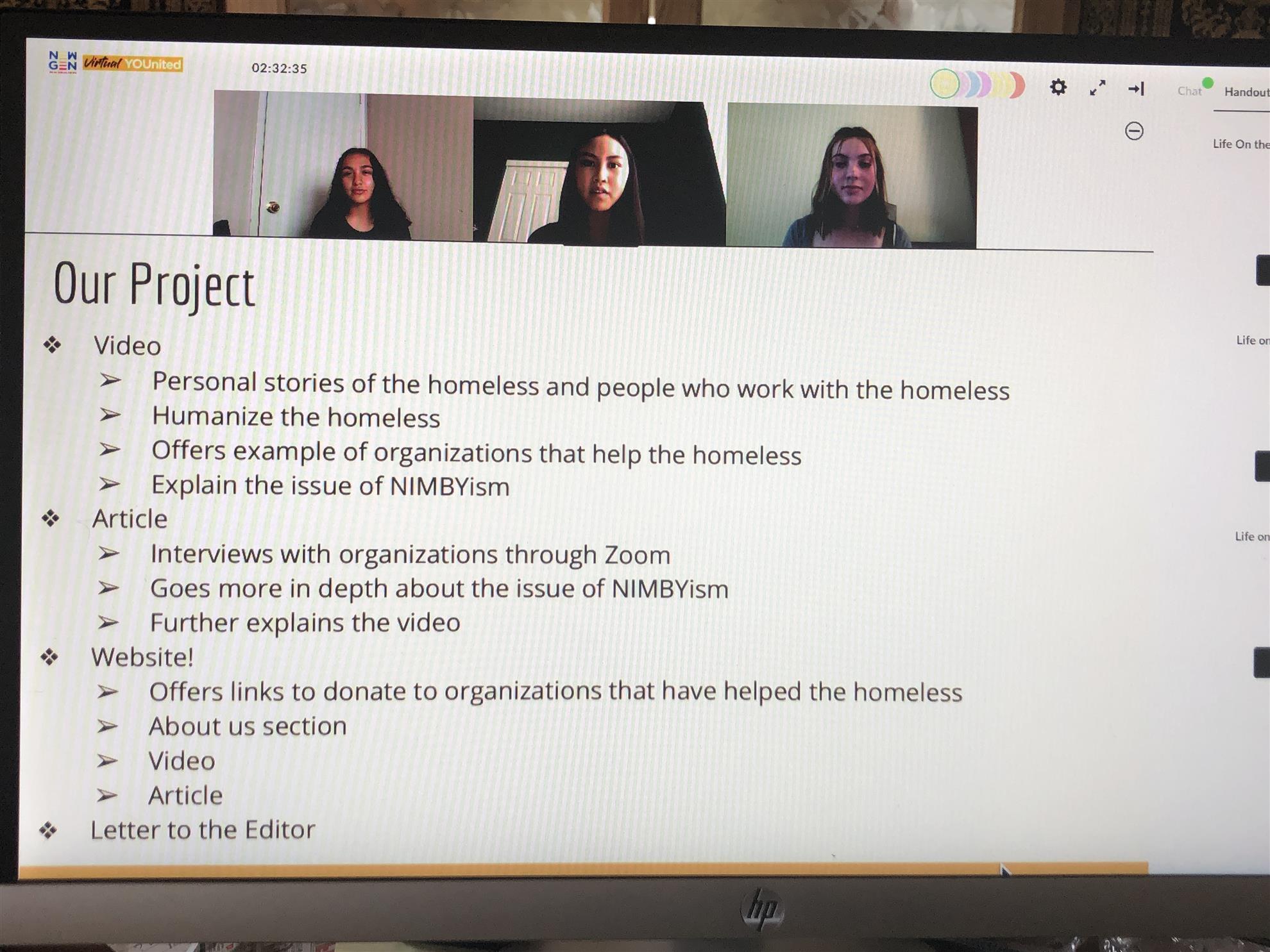
Sunrise Rotarian Eloise Tweeten's cohort of students presented a compelling case for a more humane response to local homeless people. Calling their project "NoMoreNIMBY", students offered stories and statistics chronicling their research. The seven remarkable young adults mastered technology and composure delivering their online presentation seamlessly. Four of the cohort are Roseland College Prep students, Adam, Alice, Omar and Steven, Molly from Analy, Miriam attends Montgomery and Amaya Sonoma Academy. Can you imagine the logistics in getting together to plan?
Students interviewed Sunriser Steve Worthen of Casa SAY for perspective, gaining insight from SAY's ( SocialAdvocates for Youth) decades-long efforts to eliminate homelessness. St Vincent de Paul, Catholic Charities and The Living Room were also contacted.
Students met for 12 weeks, adapting to the current new circumstances, learning how to collaborate, with the support of Eloise keeping their attention focused toward this presentation.
The extent of interest in New Gen Peacebuilders is global. In addition to Eloise's group on local on homeless people, social alienation of youth, and campus recycling challenges, orphaned children in Kinshasa Democratic Republic of Congo were the other three local cohort's focus. New Gen support from headquarters in North Carolina and advocates in Atlanta and Serbia were in attendance at Saturday's virtual platform conference, underscoring the international reach of Rotary and echoing the 2019-2020 Theme "Rotary Connects the World." Believe It!
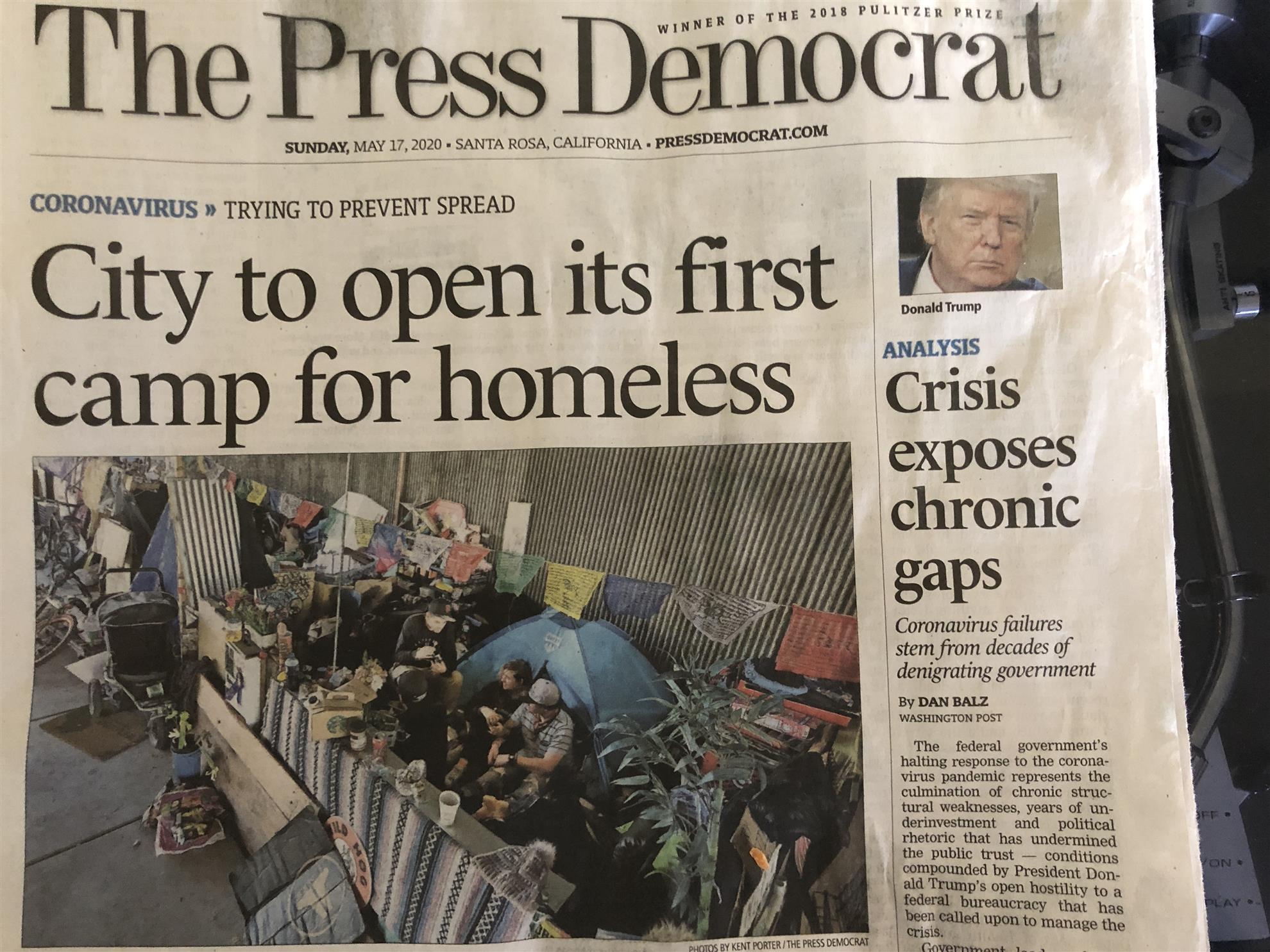
Congratulations Eloise and your cohort. Did you notice Sunday's Santa Rose Press Democrat Headline:
Camp fires: Every year, dozens of District 7780’s Rotary Youth Leadership Awards alumni ages 17 to 27 return to Camp Hinds near Portland, Maine, to serve as staff. The Rotarians who oversee the program created a Rotary club tailored to these RYLA champions, with the operation of the four-day summer camp as a central part of its mission. Club members get invaluable experience in matters such as applying for grants.
Club innovation: The club, with a widely scattered membership, relies on digital tools to connect. There is a monthly online meeting, and members conduct frequent chats using the Google Hangouts app. The club is tailored to RYLA alumni but is open to all.
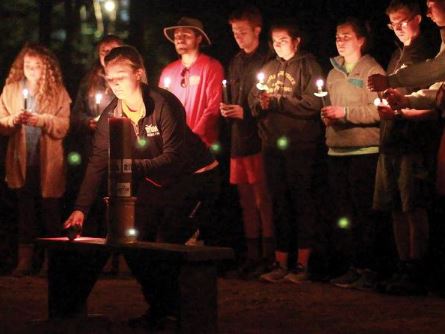
A nighttime RYLA ceremony
Phil Giordano, a member of the Rotary Club of Scarborough, Maine, and the executive director of the Camp Hinds RYLA, noticed the chemistry among program alumni who serve as camp staff. “Instead of just coming together one week out of the year, they started getting together many times during the year,” he says. “They wanted to do more and be more.” So he broached the subject of chartering a Rotary club tailored to them. “I started texting, and within 15 minutes I had 10 to 15 people wanting to start.” He and Marty Helman, a past district governor and member of the Rotary Club of Boothbay Harbor, Maine, saw an opportunity to create a club built around these highly engaged members of the Rotary family.
“Rotary has some absolutely marvelous youth programs,” says Helman, a staunch proponent of Rotary’s evolution. But once the program is over, she says, too often “we say, ‘Have a nice life. Go look for a Rotaract club, if there is one.’ There’s no reason why a young person has to go through Rotaract to become a Rotarian.
“Members are in their first adult experience in a volunteer organization, so they need some guidance,” Helman adds. “Not in how to run a meeting or work with each other. But in expectations, how to communicate with other Rotary clubs, process points. That’s why we’ve got tenured Rotarians helping.”
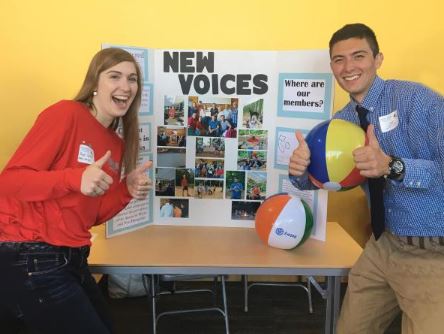
New Voices members have a ball promoting their club
After attending RYLA camp in high school, Sam Klemarczyk, now the club’s co-president, remained active in Rotary through college but was struggling to stay involved. “I moved to Raleigh, North Carolina, and I’m transitioning into a new job. The flexibility of New Voices was a big thing. It helps open a lot of doors,” says Klemarczyk, 25.
New Voices requires five hours of service a month, not counting the work overseeing RYLA. “We’ve completely gotten past the obstacle young professionals face, which is the idea that they are not ready for Rotary,” Klemarczyk says. One club initiative is a project to raise awareness of Lyme disease, a potentially debilitating infection transmitted by tick bites. “The focus is on creating a coloring book targeted to elementary school students about when you’re outside in the fields and woods,” says Caitlin Morrison, co-president-elect and a cellular and molecular biology student at the University of Rhode Island. “It also consists of informational posters and cards at RYLA each year. In Maine and New Hampshire, everybody knows five-plus people who have been affected by Lyme disease.”
While the camp “defined the kind of person I wanted to be and my commitment to others, I like how being a Rotarian is a long-term commitment,” says Morrison. “I have something I can stay with for many years to come.
— BRAD WEBBER
• This story originally appeared in the May 2020 issue of The Rotarian magazine.
Rotary Club of Santa Rosa Sunrise - Founded June 30, 1986



.png)
.jpg)