Community Needs in Reponse to the Coronavirus Pandemic
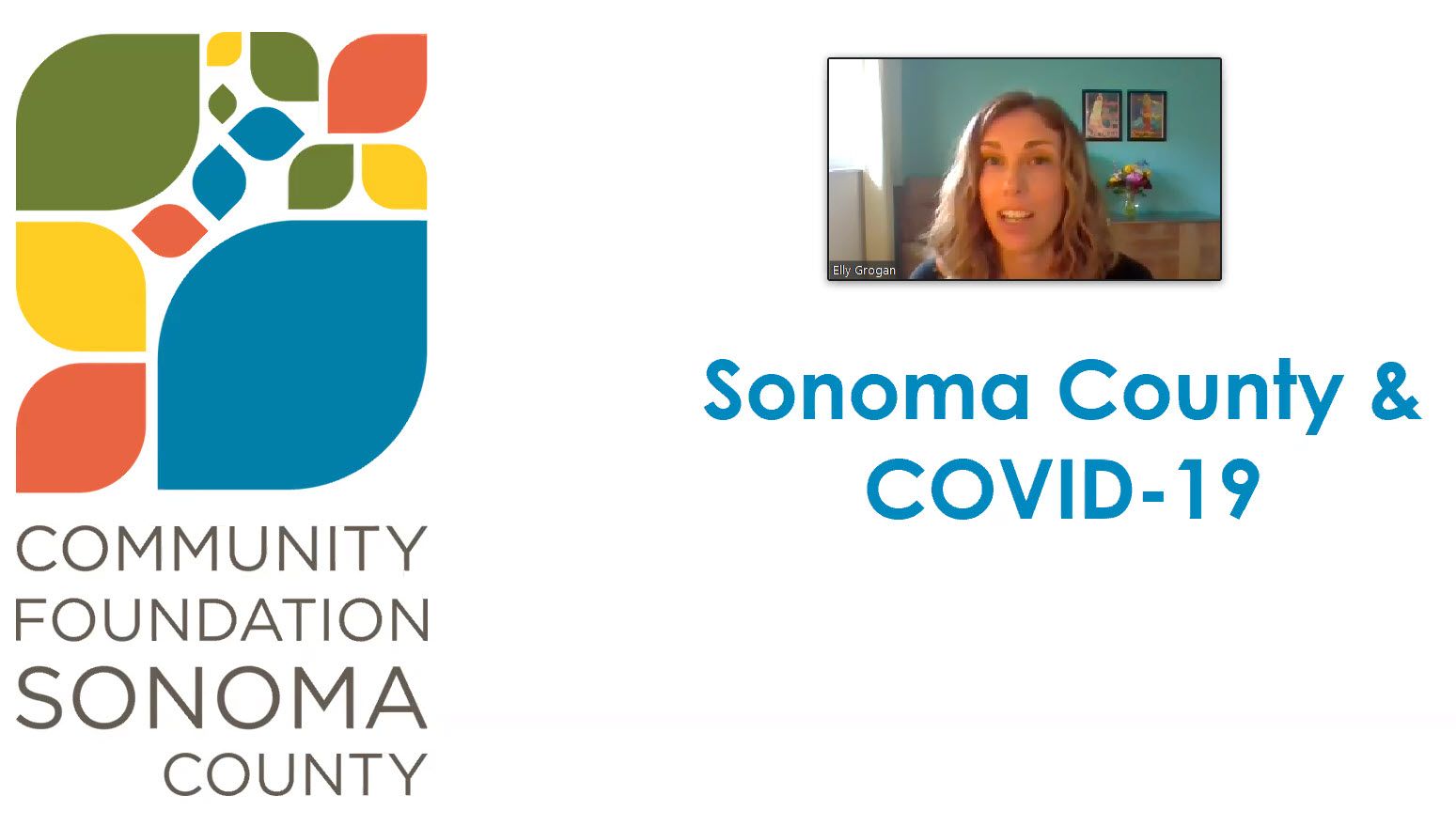
Our speaker for the May 14th virtual meeting was Elly Seelye Grogan, Senior Philanthropy Officer with the Community Foundation Sonoma County. Elly has a long history with charitable organizations, starting with some of Sunrise’s earliest international missions in 2001 and 2003 (including our first Nicaragua eyeglass/dental mission) and continuing working with StoveTeam International in Eugene, Oregon. As a Senior Philanthropic Officer, Elly helps donors develop strategies to meet their own charitable goals.
The Community Foundation holds assets of over $175 million in 450 charitable trusts. It has made over $250 million in grants, mostly in Sonoma County. Its focus is typically arts, education, environmental, and health & human services. The day after the October 2017 fires, the Foundation started its “Resilience Fund,” which is dedicated to mid and long-term relief, including trauma relief and housing solutions.
The Coronavirus Pandemic brings new challenges to charitable giving in Sonoma County. Unlike the fires, CV-19 is an international problem and out-of-area donations are not typically available. Funding for CV-19 problems in Sonoma County must come from local donations, even at a time when local non-profits are extremely insecure. The pandemic has also blurred the lines between philanthropy and business because businesses are facing extreme distress, are often fighting to keep their employees, and are no longer able to donate. Elly mentioned that 87% of local businesses with less than 20 employees are now effectively closed.
The Foundation has identified 4 primary areas of focus: housing, income support/assistance, health care and food/meals. The need for emergency food access is acute. There has been an increase of 50-200% at local food pantries. The Food Bank spent $1.4 million last month, equal to its annual budget. Its operation has shifted from bulk distribution to local pantries serving individually boxed meals out of new distribution sites. There are significant distribution gaps in coastal, rural, and tribal areas.
Sonoma County’s vulnerable populations are even more at-risk. Homelessness, food anxiety, and domestic violence are increasing among the at-risk populations, including seniors (particularly homebound seniors), the undocumented, and children. Heightened levels of stress will likely result in long-lasting trauma. The Foundation is working with Sonoma County charities to assist them in their response to the pandemic. Non-profits such as the Community Action Partnership, Undocufund, the Living Room, and many others are receiving funding and support from the Foundation.
Elly’s message is that we should all consider making whatever donations and support we can to assist non-profits serving vulnerable populations in Sonoma County. Do your year-end giving now, keep supporting non-profits you love, and remember that ‘today is the rainy day.’
Thank you, Elly, for the informative and thoughtful presentation. You are in inspiration to us all.