|
When you go to your Rotary club meeting this week, look around at your fellow members and think about this: In North America, anyone younger than 70 likely doesn’t remember a time before the polio vaccine. Those under 40 were born after polio was no longer endemic in the United States. And among your club’s youngest members, the very word “polio” probably conjures a bygone age when children regularly died of diseases like measles, smallpox, or whooping cough. Now, however, we know that measles is staging a comeback. Tuberculosis, which might bring to mind 19th-century sanitariums, is gaining greater resistance to treatment. Until a disease is really gone, eradicated, extirpated from the planet, it will always be looking for ways to come back, for breaches in our defenses. We’ve come very far in the 64 years since the introduction of Jonas Salk’s vaccine — and especially in the 40 years since Rotary decided to take on polio. Every day it gets easier to forget why it’s so critical that we eradicate this disease. Most of us don’t see polio in our daily lives. Whole generations have never experienced its terrifying power. We let our guard down when we think that polio is a disease that happens only in faraway places, or that almost eradicated is good enough. But if we stop and remember what it was like when polio was everywhere and people felt powerless against it, we know that if we don’t finish the fight, we’ll soon be back where we started. 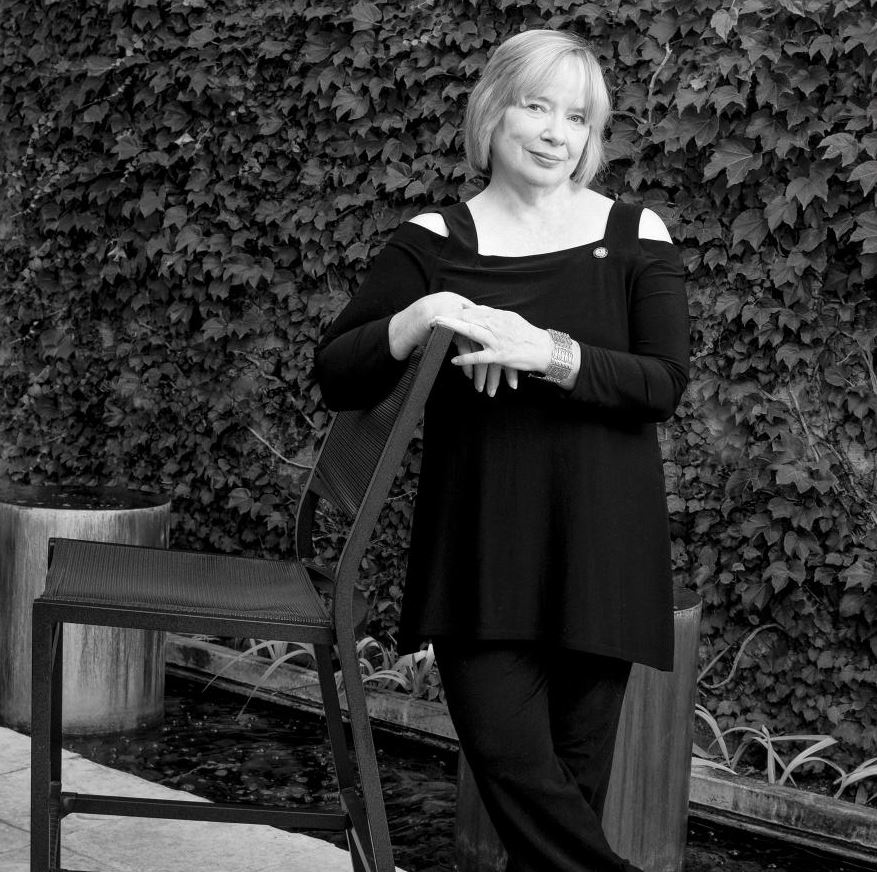
Julie Jenkins Rotary Club of Cambria, California I had never heard anyone called a polio survivor until I became a Rotarian in 2005. For me, I had polio, and life went on. I contracted the virus when I was eight months old. The disease left me with a limp. My left foot is a drop foot, which means I can’t lift the front part, so I pick up my whole foot when walking to avoid dragging my toes on the ground. It was always clear that I was never going to be a lead dancer for the Bolshoi Ballet, but I chose my goals and went after them. I had a successful career in marketing for movie studios. It was always go, go, go, and there was a lot of travel. I left the industry at age 60 because the travel and hours were taking a toll on me physically. But at that point, I still hadn’t consulted with a doctor who knew anything about polio. My dad died in 2008 after being bedridden for years. He had contracted polio at the same time I did, but the impact on him was more severe. It affected his right leg and right arm. In his name, I traveled to India to take part in a National Immunization Day in 2010 and again in 2012. What really shocked me in India was seeing polio survivors on the street. There was a young man, I’m guessing he was in his early 20s, who I saw at St. Stephen’s Hospital in Delhi. He is burned in my memory because of the way he was forced to walk. In the United States, you might occasionally see a polio survivor who limps. But it was completely different in India. Going on an NID showed me what a polio survivor living in poverty suffers. They can’t work. Many are carried from place to place. It’s devastating. In 2013, I climbed Machu Picchu. That night, I remember taking a shower and trying to walk 50 feet to dinner. I could barely get there. I used my walking stick, but I had to keep stopping. It was so hard to move. A few months later, I consulted with a doctor who explained to me how polio initially kills off nerves. Some of the surviving nerves grow little sprouts, and when those die off, they don’t regenerate. He said I should always use a wheelchair going through airports. He told me, “Your life is now a choice about what is worth killing nerve sprouts for.” He advised me that I shouldn’t do anything that I would need more than 20 minutes to recover from. The biggest thing that concerns me today is that people here in the United States are not vaccinating. I’ve lived in Los Angeles for 38 years, and so many people come through this city. I worry about how easy it would be for the virus to travel back to the United States and affect a child who isn’t vaccinated. Yes, I survived and lived a full life, but I would have done more physical activities if I hadn’t had polio. I want every opportunity to be open to every child. • This story originally appeared in the November 2019 issue of The Rotarian magazine.
|

.png)
.jpg)

)





.JPG)
