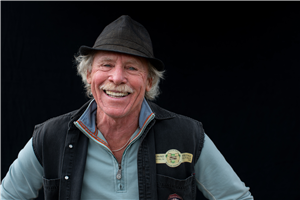
Michael Bug Deakin, a British Columbia native, built his first home out of reclaimed materials in 1970, and that was just the beginning. Along the way he has planted trees, designed, built and remodeled custom homes, boats, movie sets, rock walls, gardens, parade floats, tree forts, dog houses, ship models, furniture and a splendiferous array of art forms from repurposed materials. As a member of Ivy Deakin’s story telling family of 10 children, everything was re-used and recycled, especially all the great stories. Bug takes to heart the story and origin of the buildings, people and materials that make their way in and out of the Petaluma yard. With relentless focus on sustainable enthusiasm and talking story, Heritage Salvage has become a center of creativity and sustainability. As he waltzed his way through years of planetary wanders and events of wonder, he learned from many teachers and was affected by design without limits. From an Amazon Tree house to a Japanese Teahouse, a Balinese Birdhouse, a Driftwood Palace and the pleasing decay of a Western Barn, every nuance notched its niche. Bug’s passion is the art and reward of re-purposing, re-using, and recycling as a part of a sustainable way of life. Teaching others to see the beauty in what is here, sharing treasures and stories of the past, and sharing the joy of turning old, sometimes falling down, structures into beautiful new things fuels each day. Just as in the Deakin family, there is always enough to share, and Heritage Salvage goes out of it’s way to help those that need it and those that help others. Michael Bug has a sprawling enthusiastic family in British Columbia, including a fabulous Daughter Suzy and two grandsons in Salmo!
Our speaker for March 14, 2024, was Dana Smith of Solarcraft, a leading solar contractor in the North Bay. Dana has been with Solarcraft since 2010, where he currently leads the commercial sales team. Prior to working in solar, Dana worked for a series of companies that offered Software as a Service (SAAS) and cloud hosted business services. He’s an avid North Bay hiker and mountain bike enthusiast.
Dana provided some tips on finding the right solar company. It’s important to have a good partner in solar. He noted that there are some very good companies here, but you should try to avoid companies that are too small or too large. A larger company can provide a range of specialists for different parts of your solar installation, getting you someone with specific knowledge and experience in each category of work. Larger, well-established companies also sometimes provide better warranties and a greater degree of continuity. On the other hand, a company that is too large will often have customer service problems. A good partner is a company that will be in business throughout the life you’re your system; someone to call upon to handle a variety of servicing issues in the future.
The cost of electricity in California has skyrocketed and we are seeing huge rate increases every year. The rate increase announced in January this year was 13%! Part of the reason for the increases is to allow PG&E to recover from the huge payments they are making to insulate the power grid from fire-related failures (and to pay for the big settlements and judgments caused by PG&E’s own failures to make power lines safer). Right now you can pay up to $.63 cents per kilowatt hour on a summer afternoon!
The big change in solar was effective for new installations starting in April last year. The PG&E solar-customer agreement went from Net Energy Metering (NEM) 2 to NEM 3. Under NEM 3, customers only receive wholesale credits for energy they export to the utility. This essentially means that when you sell energy to PG&E (because you don’t use all the energy you generate with your solar system), PG&E only credits you for the wholesale price of the energy. Under NEM 2 the customer received retail credit for the energy they exported. NEM 3 drastically undercut the financial benefit of solar. To combat this problem, almost every solar system installed these days has a battery backup, which allows for the use of energy stored in batteries during the time when the solar system is not generating energy. These battery systems, however, are extremely complicated. A recent big change in battery installations is the “Bill Saving Battery.” These batteries only offset PG&E bill costs (they don’t store energy for later use in a grid power failure), are cheaper and easier to install, and have a fast payback.
The chart below shows the cost of not going solar assuming typical inflation rates and an average monthly electricity bill of $400.
Another thing to consider in deciding whether to go solar is the current federal tax credit of 30%. A 6kW DC solar system with a 15kWh bill saving battery might cost you about $39,000, but with the federal tax credit the net cost is $27,000. There are also a number of financing options, including cash purchase, solar loan, and leasing/power purchase agreements. Sonoma County also has a unique energy efficiency program that provides loans at below market rates.
Many thanks to Dana for the super clear explanation of the cost of going solar (or of not going solar) and the effect of the new net energy metering system imposed by PG&E.
On a regular basis, our resident photo pro Warren Smith, submits pictures of what is going on at the weekly meetings. You can always find the most recent pictures at the websites photo journal called "Meeting Sighting" Please note that all the meeting photos for the entire Rotary year are at this location with the most recent on the last page.
Thanks for all the great pictures Warren!Link to Meeting Sightings. The most recent are on the last page!
Two Elsie Allen standouts recently received recognition for their leadership: Luz Hernandez, an Interact graduate and current Music Director.
Luz was selected as one of twelve TEDx presenters out of over 200 candidates. Click HERE to learn more about her.
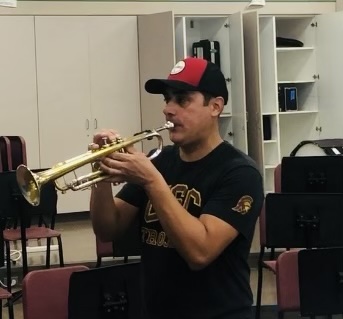
Music Director, Efrain Nava, was honored as District teacher of the Year. His inspirational leadership is growing band membership and community awareness.
An accomplished USC Trojan graduate, Efrain can blow his own horn proudly!
Support of Elsie Allen students in scholarships, service opportunity and grants for performing arts is yielding tangible & audible results!
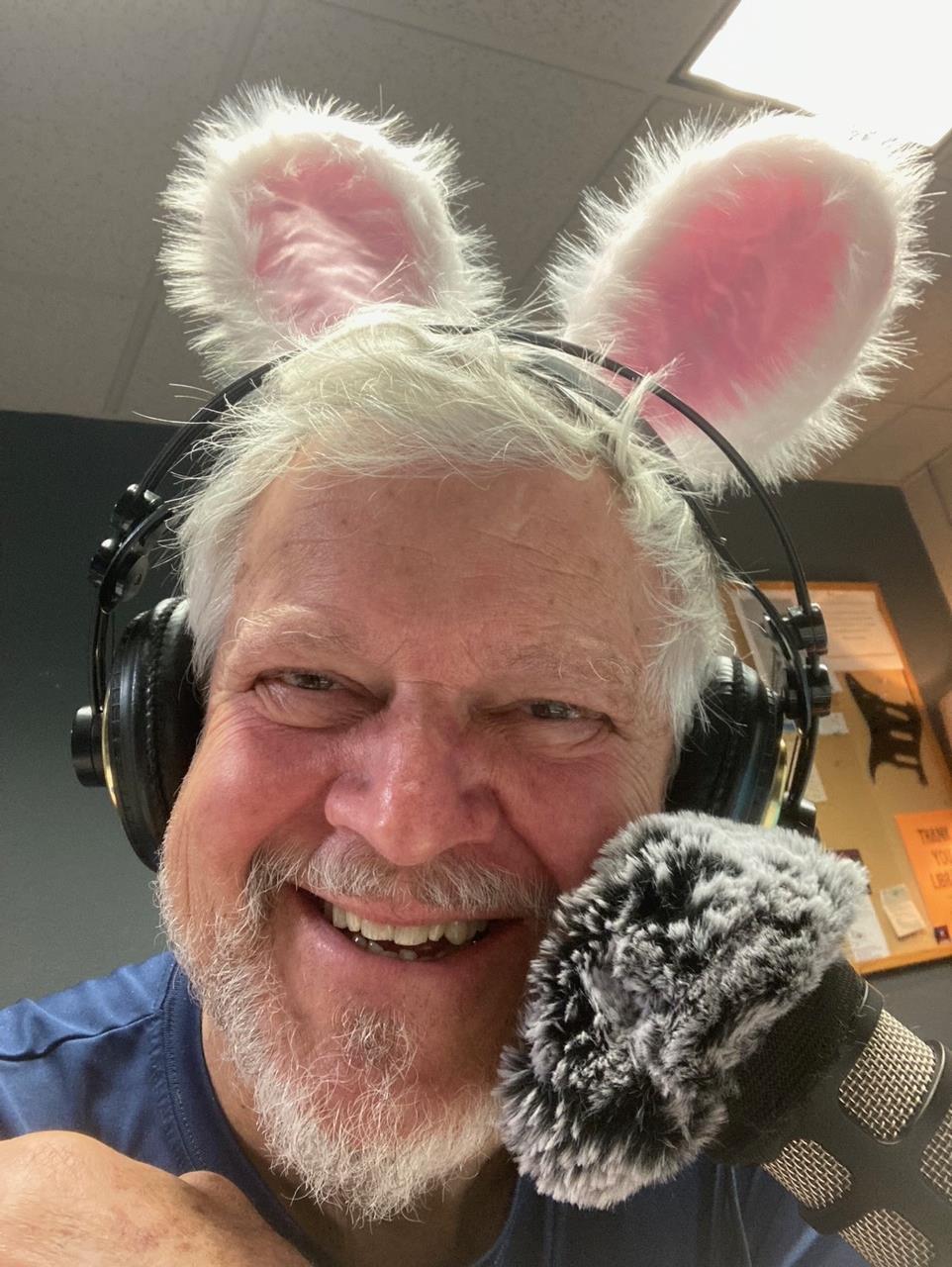
M.J. Girard is currently an on air personality on KOWSfm.com His “Roots of Rock” is broadcast every Sunday morning at 7 AM
What a dull world it would be without music! Of course, my preference is contemporary, or “POP” aka “Rock & Roll” when I started disc jockeying in my junior year of school at Potter Valley High…way back in ‘66 at Ukiah’s radio station KMSL. I was a summer replacement DJ and weekend warrior when school started in the Fall. Ah…the times were great, small-town closeness that replaced my childhood in San Francisco.
As the host of the “Roots of Rock” program aired every Sunday on community radio station KOWS, I continue to share my love of “R&R” which keeps one “young at heart” even though I don’t cut a rug or shake a leg as I used to!
Often asked what the origin of this genre was, I must confess, that music is in the very soul of all beings. Imagine the earliest cave dwellers, beating on hollow logs with the leg bones of Mastodons, maybe humming the primitive sounds from within their heads and hearts, joining together with others to raise their voices and spirits in unison. If there was such a group, maybe they called themselves “The Cavemen Seven.” …too bad Columbia records wasn’t around to record them and add them to their record club collection!
More to the point, R&R found its roots in the mid twentieth century, primary in the forties and fifties originating with Black American music e.g., gospel, jazz, boogie woogie, rhythm and blues as well as country music. One can even say that elements can be heard in blues recordings of the’20’s and country music of the 30’s, however the genre itself wasn’t named until Cleveland’s famed disc jockey Alan Freed coined the name on his show, omitting the reference to its alluded origins of making love.
In the earliest stages the piano or saxophone was the leading instrument, however the electric guitar soon became the dominant instrument in the mid-fifties. Dancing was the primary form of entertainment with the back beat provided by the drummer’s snare. Up front, the lead and rhythm guitarist accompanied by bass, rounded out the musical ensemble. The lyrics sung by a popular singer, who may also play an instrument, most always a lead guitar, although the piano was popular as well.
Rock and Roll had a polarizing influence on lifestyles, attitudes, clothing fashion as well as language and its contributions towards civil rights issues. Music elicits memories and remains at the heart of the American culture, that of freedom of expression and the hopes and dreams of youth.
So, enjoy your day with music in the background, attend a concert or make your own music, there’s a song in everyone’s heart…just sing it!
New film tells story of Sir Nicholas Winton, World War II hero and humanitarian
Rotarian saved hundreds of children at risk of being killed by the Nazis in the lead up to World War II
By Dave King
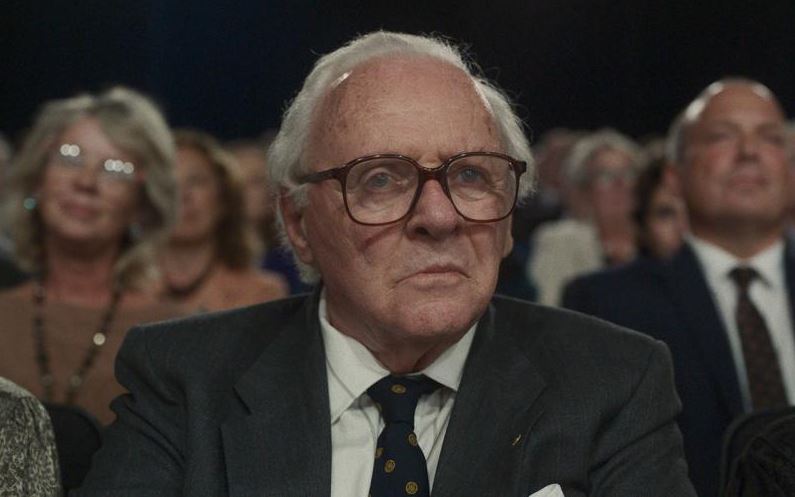
“If something is not impossible, there must be a way to do it,” Rotarian Sir Nicholas Winton once said. Known to his friends as “Nicky,” the British stockbroker rescued hundreds of predominantly Jewish children from the Holocaust in the months leading up to World War II. Winton, who died in 2015 at the age of 106, is now the subject of a new film, “One Life,” starring Sir Anthony Hopkins and Helena Bonham Carter. It was released in January 2024 in the United Kingdom.
The film tells the true story of how Winton rescued 669 children from the Nazi advance and found homes for them in the United Kingdom. During a visit to Prague, Czechoslovakia, in December 1938, Winton saw numerous families who had fled the spread of Nazism in Germany and Austria. The refugees were living in desperate conditions, with little or no shelter or food, as the German invasion of Czechoslovakia loomed. Winton immediately realized it was a race against time: How many children could he rescue before the borders closed?
Producers Emile Sherman and Iain Canning first contemplated telling Winton’s story when they co-founded See-Saw Films more than 15 years ago.
“We were very lucky to have had the opportunity to meet Nicholas Winton before he passed away,” Canning says. “He was the most modest, generous human being. [He] felt the film should not glorify him, but celebrate how the most ordinary of people can make a huge impact.”
With the blessing of Winton’s daughter, Barbara Winton, See-Saw approached screenwriter Lucinda Coxon to adapt Barbara’s 2014 book “If It’s Not Impossible.” Collaborating with Barbara, the screenwriting team gained access to Nicholas’ archives and letters. Barbara was a familiar face at Rotary district conferences. She passed away in 2022, during the making of the film.
Barbara’s book was an essential resource for the cast. Explaining how she got a sense of Nicholas Winton’s mother, Babi, Bonham Carter said, “Barbara was named after Babi. I was very lucky to speak to Barbara, to have her perspective as a granddaughter.”
It was Barbara’s wish that Sir Anthony Hopkins should play her father.
“When Barbara read the first draft of the script, she called us to say that Anthony Hopkins would be perfect for the role, which we of course agreed with,” Canning says. “But [that] left us with a challenge because it was beyond our wildest dreams that Hopkins would read the script and want to play Nicky. Incredibly, he did, and it was magical for all of us to know we had an extraordinary actor playing a man who was such an inspirational humanitarian.”
Hopkins got to meet some descendants of the people Winton saved, who were featured in one scene of the film.
“It was like a kick in the chest when all the descendants came in,” Hopkins says. “It was hard to try not to be sentimental, but it was very moving.”
The screenplay addressed Winton’s family history and how it informed his choices.
“Nicky’s Jewish ancestry meant he was alert to what it meant to be an émigré from the rise of Nazism in Europe,” says Nick Drake, who wrote the screenplay with Coxon. “He was ashamed by the Allies’ betrayal of the Czech people in the Munich Agreement. [He] saw the consequences of that agreement in human terms, [in] these appalling camps where refugees from Germany [and] Austria… were living in intolerable conditions. He was motivated by the reality he saw in front of him and decided to do something about it.”
The film was shot in Prague and England, working with two crews in two languages. It used authentic Prague locations, even filming on the same station platform where the children said goodbye to their families and departed for the UK more than 80 years ago. A bronze statue of Winton marks the historic spot.
Winton faced many challenges in bringing the children to the UK.
“There was a belief in the UK [that] they weren’t at risk; a lot of people saying, ‘It’s fine, there’s no issue… they’re not in Austria or Germany,’” says James Hawes, the film’s director. “Another challenge was British bureaucracy and xenophobia: the newspapers and politicians saying, ‘We’re a small, crowded island. There’s no place for more people here.’ Nicky had to fight that prejudice – raising the public consciousness, writing articles – way before the Internet or broadcast news.”
Hopkins adds that he hopes the film will keep the memory of Winton’s effort alive.
“I only hope this will send a message, lest we forget,” he says. “Because we forget so quickly.”


.png)






.png)