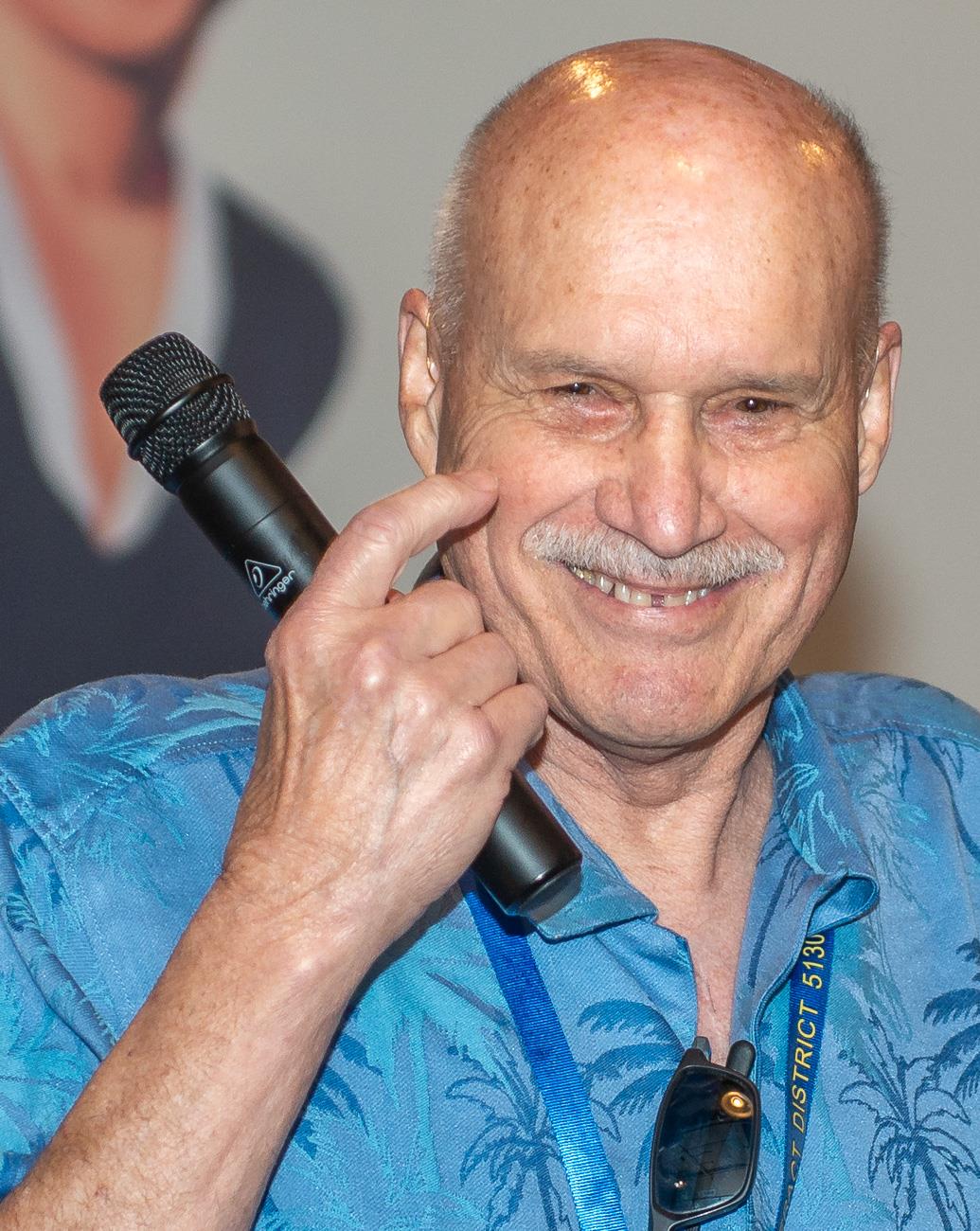
Above the door of George Steinmetz’s garage hang two unusual traffic signs: one of a llama from the Altiplano high desert of Bolivia, the other of a dromedary camel, the type that he has photographed in his trips across the Arabian Desert.
Inside the house, surfaces are stacked with books and collections from his travels, including butterflies and giant insects, hats, and bottles of desert sands. His sunny studio looks out on treetops, and cabinets full of photographic transparencies line the walls. Museum-worthy framed photographs are everywhere — some his own, others by his talented and famous friends and colleagues from around the world.
"I had no photography training; I just started taking pictures, and I fell in love with it."
In more than 40 years as a photographer, Steinmetz has captured panoramic aerial images of the plains of Africa, the Gobi desert, the vast sand dunes of Brazil, and the frozen expanses of Antarctica. He has photographed New York City’s urban landscape, Kansas’ wheat fields, and Indonesia’s palm oil plantations. He has done much of his work while dangling from a paraglider in what looks like a flimsy motorized lawn chair.
His photographs have appeared in the New Yorker, Smithsonian, Time, and the New York Times Magazine, and he is a regular contributor to National Geographic. He has also published several books: African Air, Empty Quarter, Desert Air, and New York Air.
Steinmetz is used to being the observer, not the observed. Talking about himself may not be his preference, but he proved a lively conversationalist when he sat down with frequent contributor Julie Bain at the New Jersey home he shares with his wife, Lisa Bannon, and their daughter and twin sons. In a lengthy chat, interrupted by a tour of the house and a photo show-and-tell on his studio computer, he described what it’s like to capture the world from an aerial perspective.
.JPG)
In Wijdemeren, the Netherlands, peat was harvested from a bog until it became a lake with long, narrow islands.
© George Steinmetz
Q: You grew up in Beverly Hills, with all the privilege that confers, then studied geophysics at Stanford. When and how did the iconoclastic adventurer side of you emerge?
A: Beverly Hills is not a normal place, and I wanted to get away from it. I was majoring in geophysics almost by accident; I realized that I had most of the coursework done, and somebody pointed out to me that it was the highest-paying major at the time because oil prices were really high. This was in the late 1970s. In 1977, after my sophomore year, I went on a summer trip to Europe with a friend. With our rail passes we could go anywhere for free in the European network, plus Morocco. I thought, “Morocco? Cool! That might be interesting!” So I went to Morocco. While I was there, I met a guy who had just ridden a motorcycle across the Sahara. I couldn’t stop thinking about what an adventure that would be. The next summer, I got a job as an intern for Texaco. I saved about five grand and thought, “This is my Africa money.” Instead of going back to Stanford for my senior year, I bought a used camera and decided to hitchhike through Africa for a year, or as long as my money held out.
Q: How did that experience shape your life?
A: To be honest, I went to Africa to get away from my upbringing of privilege. But when I got there, I realized how much there was to learn and understand. Sometimes I couldn’t get a ride for days, so villagers would invite me to stay with them. From villagers and truck drivers, I learned how to get around in Swahili, French, and Arabic. It was exciting to be 21 years old and out on my own in a place like Zaire. I went from London to Zaire and back on my own. It was like graduate school for me.
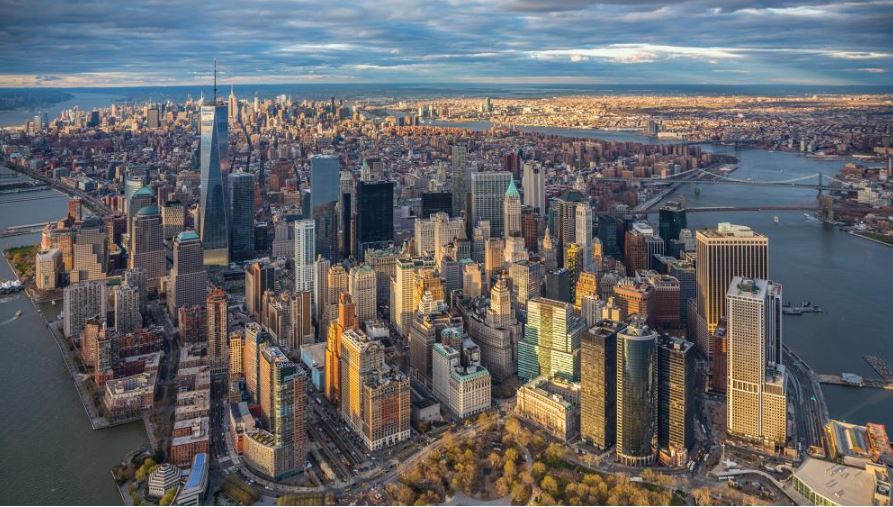
For his book New York Air, George Steinmetz saw everything from the southern tip of Manhattan...
© George Steinmetz
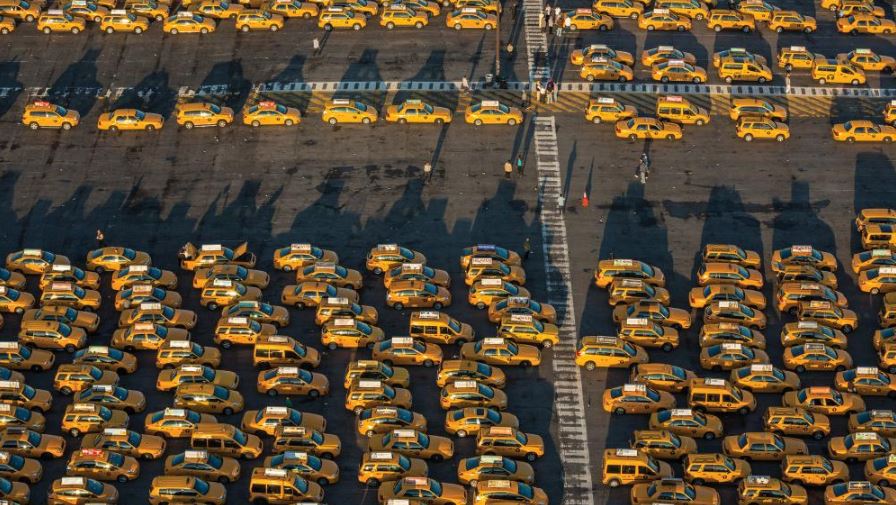
... to the taxi waiting area at John F. Kennedy International Airport.
© George Steinmetz
Q: When did the photography bug hit?
A: I thought I’d see the kind of scenes that I grew up seeing in the pages of National Geographic, like bare-breasted women and people with plates in their lips, so I thought I should have a camera. I didn’t find much of that, but I saw things I’d never seen before. I came across some Tuareg people in northern Niger. They’re semi-nomadic camel and goat herders. I became interested in understanding the traditional ways of people in Africa, and I started to seek out those cultures to try to document their lives.
Q: Did you have any photography background to guide you?
A: I really didn’t know what I was doing! I had no photography training; I just started taking pictures, and I fell in love with it. It forced me to extend my own boundaries. Of course, I had to wait to get the film developed to figure out what mistakes I’d made. Nobody told me, “Do not take pictures in the middle of the day in Africa.” I remember coming back to my mother’s house after a year of traveling, staying up all night going through about 80 boxes of film, and seeing that I’d messed up so many times. All these amazing things I remembered, and the light was bad and the photos were mostly crappy. But I found a few pictures that worked. That’s how I learned. After traveling for almost a year, I went back to Stanford and finished college, then returned to Africa for another year and a half. I saw 20 countries, very slowly. I developed an intuitive feel for Africa. I got to know it on a grassroots level.
"I saw 20 countries, very slowly. I developed an intuitive feel for Africa."
Q: How did you, as an untrained, unproven photographer, figure out how to make a living at it?
A: When I got back, I moved in with college friends in San Francisco. I’d show my work from Africa to local magazine editors and they’d say, “Well, this is great, but we don’t need pictures of people in Africa; we need pictures of things here in San Francisco.” So I made a new project for myself: to photograph just the block where I was living. There was a gospel church up the street, and a motorcycle shop where the Hells Angels hung out. It was the early ’80s during the start of the AIDS crisis, and my upstairs neighbors were drag queens who would go out on roller skates wearing nun’s habits and give out condoms. I started digging and found stuff that I never would have expected. I showed that work to editors and slowly started getting jobs.
I’ve been a freelancer ever since. I never had a job job. When you’re a freelancer, a friend of mine says, you’re like a jungle cat — always a little hungrier and lighter on your feet.
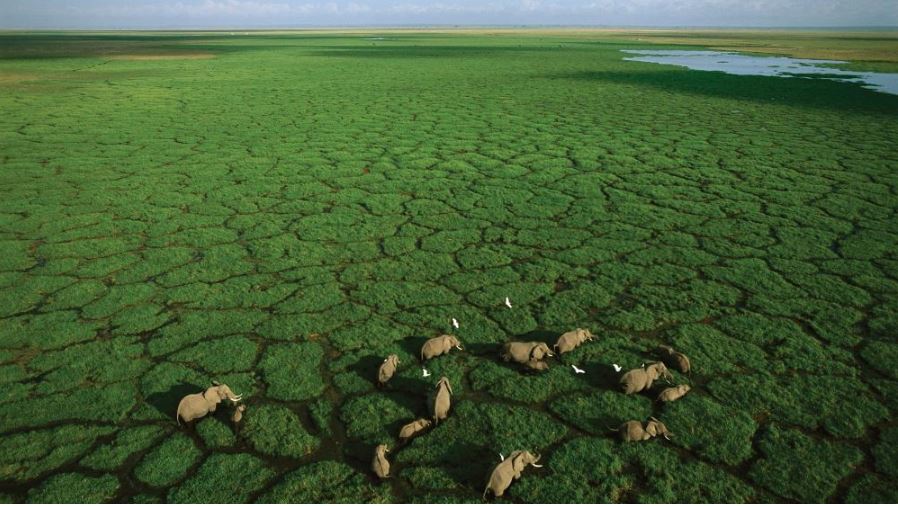
African bush elephants graze in a marshy lake in Kenya’s Amboseli National Park, which is home to more than 900 elephants.
© George Steinmetz
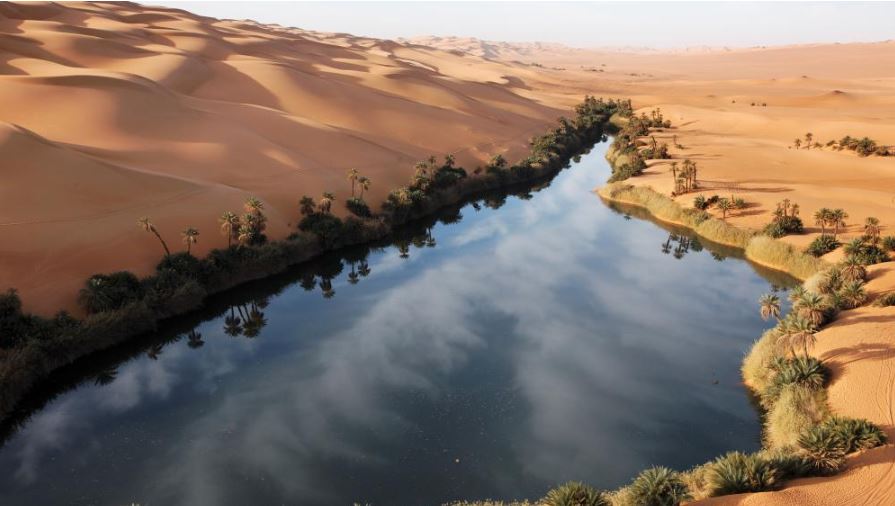
Umm al-Maa is one of a dozen salty pools in Libya’s Ubari Sand Sea.
© George Steinmetz
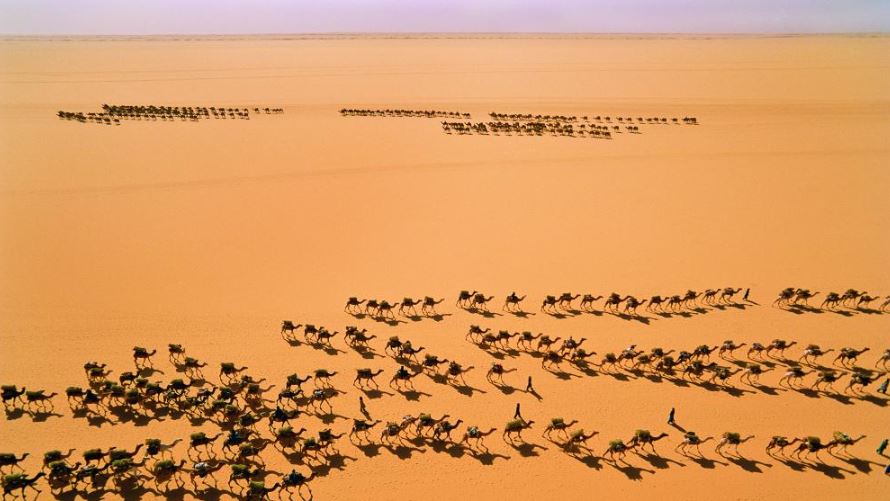
In Niger, the Tuareg people use camels to carry salt across the desert to market.
© George Steinmetz
Q: What made you want to get off the ground and take photos from the air?
A: When hitchhiking in Africa, I would often ride on top of a truck, where you get a pretty great view. I thought, “Wouldn’t it be amazing if I could fly over this landscape and see it that way?” I wasn’t so interested in going to flight school to be a pilot. I wanted to fly like a bird with my camera. I also wanted to fly at low altitude, as slowly and quietly as possible, to blend in and not disturb whoever or whatever was below. This was long before drones came along, of course. So I heard about motorized paragliders and started taking lessons. The whole thing packs up into three bags weighing less than 72 pounds, so I was able to take it with me into most airports and countries as standard baggage.
"Everybody thought of [deserts] as wastelands, but to me, they were spectacular, exquisite wildernesses."
Q: Once you figured out how to fly over stuff, how on earth did you decide what to focus on?
A: I do a lot of research before I travel. Before Google Earth, I would find ways to get satellite imagery from scientists and would pore over detailed maps looking for interesting features. And I make a lot of phone calls. I collect a lot of information. In the field I started collecting stuff too, like bugs and men’s hats. I had never thought about this before, but photography is kind of like collecting things. And I especially loved flying over deserts. Everybody thought of them as wastelands, but to me, they were spectacular, exquisite wildernesses. I discovered that nobody had done a book on all the world’s deserts, and I worried, “Well, maybe that’s because nobody cares.” But I did, and I trust my judgment. I decided to focus on the most extreme deserts because they were the most bizarre, like the earth with its living skin peeled away. Each one I explored was more interesting than the one before. Then I said, “Well, hell, I’ll try to go to all of them.” It’s a slow process with the glider, and I didn’t realize it would take 15 years.
Q: Some of your photos of Antarctica look like you’re on another planet. Does that continent really qualify as a desert?
A: I defined “extreme” by setting a limit of 10 centimeters of annual precipitation, and most of Antarctica qualifies. I applied for a grant from the National Science Foundation and described it as a “frozen desert,” which was a way that nobody had really thought of before. I was there for 10 weeks, which is about a month longer than I like to be away from my family. But it was incredible.
Q: Were you able to use your paraglider over Antarctica?
A: I was thinking about it, but the National Science Foundation was concerned about safety because of the extreme cold and fierce winds. But they gave me 15 hours of dedicated helicopter time so I could have control over where we went, and then I got around by mooching rides with the scientists. The NSF likes to promote what their scientists are doing. If pictures of their scientists appear in publications, it helps them get funding.
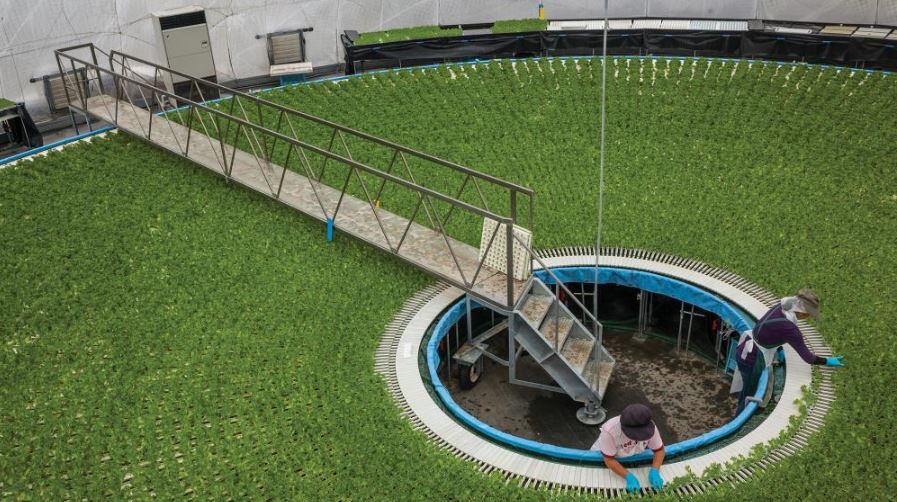
Workers plant lettuce in a hydroponic farm near Tokyo.
© George Steinmetz
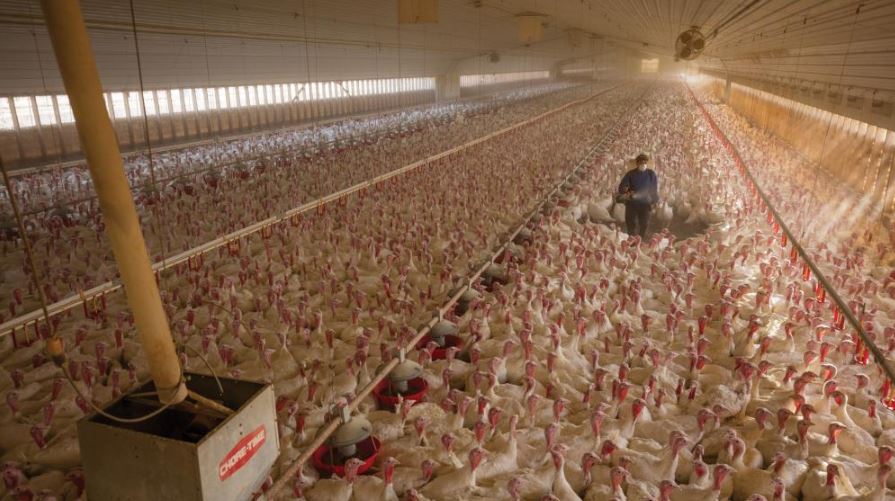
For a project on 21st-century agriculture, Steinmetz visited a turkey farm in Iowa.
© George Steinmetz
Q: What is your fear factor in the glider? Are you one of those fearless adrenaline-junkie guys?
A: No. Oftentimes when I am flying, I get really frightened. On my first trip in Africa with the glider, I went up to about 5,000 feet for a view of a big volcanic crater, and it scared the crap out of me. People just don’t belong up there. You’re basically in a lawn chair with a harness on, and it’s quite frightening, and I thought, “I might die up here, but at least I should get a picture before I die.” That was the biggest altitude gain I ever attempted.
Q: You take many safety precautions, yet you’ve still had some mishaps. Best crash stories?
A: Everybody wants crash stories. All right. My splash story was in Mexico, where I was photographing whales in Baja California. It’s one of the biggest breeding grounds for California gray whales, and the mothers were out there with their newborns. I thought I could get a unique image from low, like a few hundred feet above the water. Then the motor stopped. I had a world champion of motorized paragliding with me as my assistant in a boat below, connected by radio. As soon as the motor quit, I called Alain on the radio. Bad move. I should have headed straight for the shore, where I might have been able to glide to safety. Save yourself before you call for help! I crashed into the water.
"I was asked by National Geographic to do a big project on the global food supply and how to meet the growing demands of the population."
Alain was not watching me from the boat when the motor stopped, but still got to me within a couple of minutes and pulled me up before I sank. I had a lot of safety gear — I was wearing a life vest that inflates on contact with salt water with a CO2 cartridge, so it inflated automatically — and I probably wouldn’t have drowned, but it was very expensive and a major catastrophe. The motor was trashed, and so were my camera and my radio. We had had to think it out for ourselves; there’s no license for this kind of flying.
Q: I’m sure going into the water was scary, but wouldn’t crashing on land be worse?
A: Unfortunately, I did that, too. In 2006, I was assigned to do an aerial portfolio of China for National Geographic. It was a great gig, to cover the whole country. I decided to start in the Taklamakan Desert in Xinjiang province. It was a dry riverbed in a steep valley, with poplar trees on both sides and a big gravel bar in the riverbed. Alain and I had arrived late the night before, so we couldn’t scout the location beforehand. The next morning, we were rushing around in the predawn light and had to work quickly so I could be in the air before sunrise. We were a little groggy, and the equipment probably wasn’t set up quite right. Just as I took off from the gravel bar, the wing came up and — boom — I veered right into a tree. I tried to clear it, but I was at full throttle and hit the treetops seconds later. I woke up on the ground a bloody mess. Alain thought I was paralyzed at first, but I was OK. They took me to the hospital, which had a facial surgery department, and I was first in line. The doctors who sewed me up did a great job, and it cost like four bucks. After a day of rest, I continued on our trip.
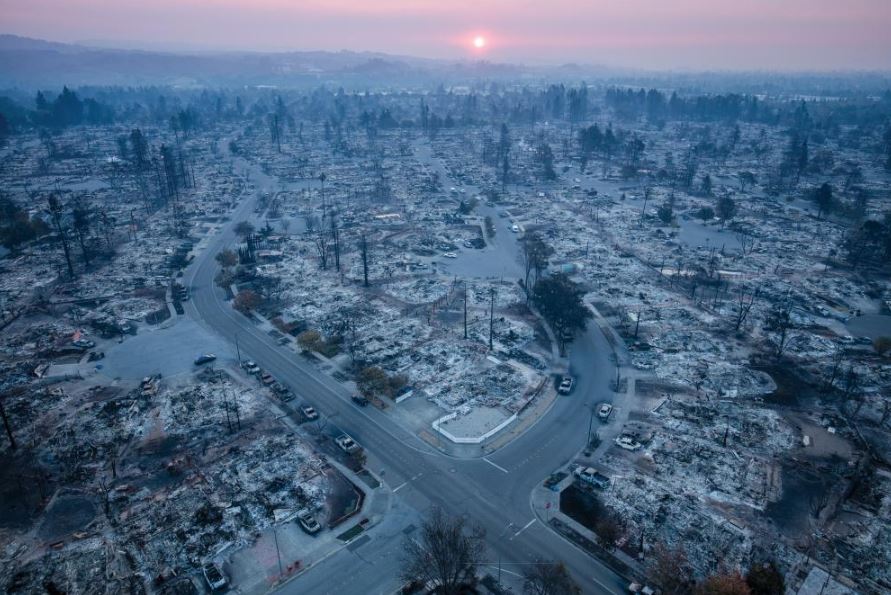
Severe drought left Santa Rosa, California, vulnerable to wildfires in 2017.
© George Steinmetz
Q: You’ve said you are a bit of an accidental environmentalist. How did you pivot from wanting to see the world to wanting to save it?
A: I didn’t start out as a tree-hugger. But as I traveled around the deserts, I kept seeing signs of desiccation and hearing old people talk about how their natural environment was changing. Then I was asked by National Geographic to do a big project on the global food supply and how to meet the growing demands of the population, which could reach 9 billion people by 2050. I told them that for interesting pictures, we should look at mega-agriculture, and that’s when it got interesting. I envisioned aerial photos of cattle as far as the eye can see. The first place I went was Kansas. My first week there, I ended up in jail.
One morning, I was flying over thousands of cattle in a feedlot with my paraglider. The feedlot manager stopped my assistant on the ground and wanted to know what I was doing. My assistant explained that I was working for National Geographic, but the man wanted me to come down. I radioed back, “I’ll be happy to talk to him, but after I finish my flight.” Then he threatened to call the sheriff. I said, “If he wants to call the sheriff, call the sheriff. It’s a free country.” Well, he did call the sheriff, and I was arrested when I landed. I was put in the county jail for criminal trespass.
"You’re training your eye through editing and feedback as you try to figure out what works for you."
We had arrived before sunrise, and there was nobody around, nobody to ask. There was no “no trespassing” sign, no fence, no gate. We just pulled off the road and found an empty patch with stubbly grass, and I took off. No damage to the place at all. It was a bogus charge, and they had to drop the case. I got into environmental issues through food. When you start looking at greenhouse gases, most people ignore the fact that agriculture is almost as big a contributor as transportation. To me, feeding people is the less well-told story. As a journalist, that’s what I find most interesting: to tell people what they don’t know about.
Q: How and when did you give in to the lure of drones for photography?
A: Drones came along while I was working on my food project. A lot of environments aren’t safe for the glider, like over water or industrial facilities, and I thought using a drone might be a better option. I went on a few trips where I had two paragliders and two drones. I filled up a whole Chevy Suburban with all my junk. I realized that the quality of the drone photos was not as high as what my cameras could produce. But I can’t maneuver the paraglider to the exact point in the sky as easily as I can with the drone, so it’s a trade-off. The drone has opened up new possibilities, but it’s not that good for exploring, because it only has about a couple kilometers of range and all you can see is the little screen in front of you. Often, while flying the glider, I discover things that I never could have imagined from the ground.
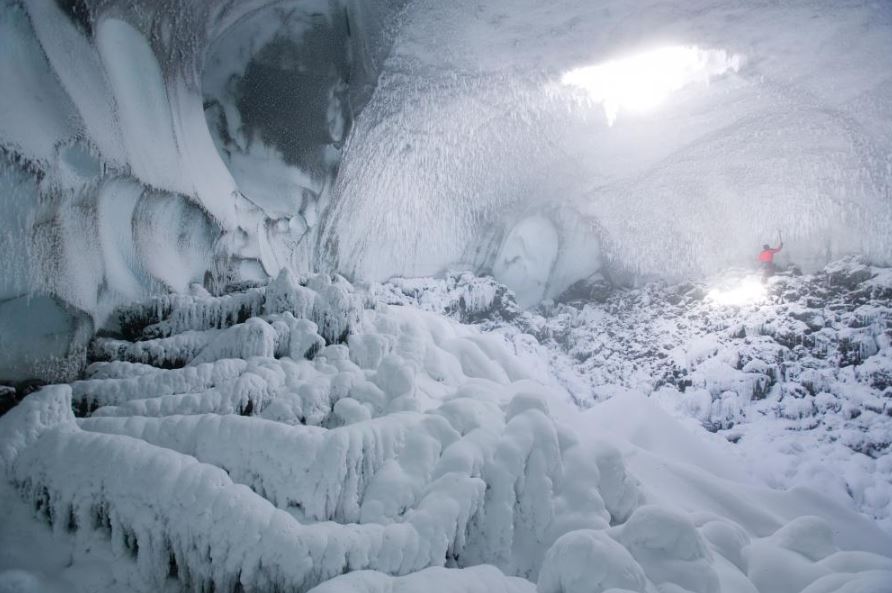
A steam vent on Mount Erebus, Antarctica, creates the intricate ice formations in this cave.
© George Steinmetz
You’re training your eye through editing and feedback as you try to figure out what works for you. It takes a lot of time, and I think that’s what separates the pros from the amateurs. It’s like when you hear somebody play the guitar in a very distinctive way, and you can just tell that they have spent gazillions of hours honing their craft. There’s no cheap trick.
— New York writer Julie Bain interviewed three previous Rotarian photo contest judges.


.png)
.jpg)

.jpg)