banner
Bulletin Editor
Max Bridges
Sponsors
Interested in being a sponsor?
Download the website sponsorship guide
Meeting Responsibilities
Presiding At Meeting
Behr, Marty
 
Greeter
Herron, Steve
 
Pledge Leader
Lorenzen, Dave
 
Thought of the Day
Tamanaha, Dicksie
 
Microphone Usher
Herron, Steve
 
Sunshine Committee
Girard, MJ
 
Web Site Editor
Lorenzen, Dave
 
Bulletin Editor
Bridges, Max
 
Bulletin Notes
Shureen, Doug
 
Bulletin Notes
Tamanaha, Dicksie
 
Photographer
Smith, Warren
 
Speakers
Oct 24, 2019
Topic – Intensive English Pilot Class
Oct 31, 2019
Rotary Efforts to End Polio
Nov 07, 2019
Vet Celebration
Nov 14, 2019
Senior Advocacy Services
Nov 21, 2019
Sonoma Raceway
Nov 28, 2019
Happy Thanksgiving
View entire list
Upcoming Events
Santa Rosa Symphony
Green Music Center at SSU
Nov 04, 2019
5:30 PM – 10:00 PM
 
Holiday Party
Fulton Crossing
Dec 07, 2019
5:00 PM – 8:00 PM
 
HIKE - Healdsburg Historical Walk and Lunch
Dec 14, 2019
 
Game Night Potluck
Penny and Paul's
Jan 25, 2020
6:00 PM – 9:00 PM
 
HIKE - Taylor Mountain
Taylor Mountain Regional Park
Feb 16, 2020
 
Meeting at Gerard's Paella Class/Dinner
Gerard's Paella
Feb 27, 2020
5:30 PM – 7:00 PM
 
Progressive Dinner
Various Rotary Homes
Mar 28, 2020
6:00 PM – 10:00 PM
 
HIKE - Kortum Trail
Kartum Trail
Apr 18, 2020
 
SCARC Meeting -- Hosted by our Club
Franchetti's
May 28, 2020
5:30 PM – 8:30 PM
 
HIKE - Bartholomew Winery
Jun 14, 2020
 
View entire list
Birthdays & Anniversaries
Member Birthdays
Ralph Harryman
October 8
 
Cindy Gillespie
October 9
 
Flo Floriani
October 14
 
Jennifer Adams
October 14
 
Steve Worthen
October 20
 
John Jones
October 24
 
Spouse Birthdays
Bill Bailey
October 1
 
Anniversaries
Michael Riel
Rebecca Johnson-Riel
October 15
 
Brian Rondon
Karen Rondon
October 28
 
Join Date
Lizzie Colbert
October 5, 2017
2 years
 
Brian Rondon
October 8, 1998
21 years
 
Merle Hayes
October 9, 1997
22 years
 
Dicksie Tamanaha
October 14, 2004
15 years
 
Steve Worthen
October 28, 1999
20 years
 
John Jones
October 30, 1986
33 years
 
Links
Links
Partners of Santa Rosa Sunrise Rotary
What Are My Make Up Options?
How to Contact the Sunshine Committee
SR Sunrise Facebook Page
Youth Exchange - District 5130
SCARC Meeting Schedule
Rotary International Business Portal
Latest "Rotarian Magazine"
Executives & Directors
President
 
President Elect
 
President Elect Designate
 
Secretary
 
Treasurer
 
Past President - Public Relations
 
Rock-N-Roll
 
Rotary Foundation
 
Activities
 
Club Administration
 
International Service Chair
 
Member at Large - Membership
 
Russell Hampton
ClubRunner
ClubRunner Mobile
Stories
The program for October 24th

Antonio Vigil

Topic – Intensive English Pilot Class


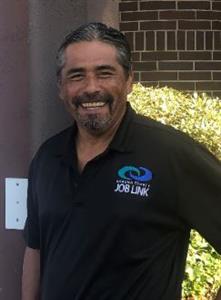
Antonio Vigil, born and raised in Sebastopol to a first generation farmworker family whose parents faced the challenges of being an immigrant with limited English skills in Sonoma County.  He attended Santa Rosa Junior College and then UC Berkeley School of Business graduating with major in marketing and minor in finance.  He currently works for County of Sonoma in the Employment and Training Job Link program for over 25 years, as a Supervising Employment and Training Counselor.  Sonoma County Job Link helps connect job seekers with employers including providing skills upgrades to job seekers to allow them to compete a highly competitive job market.

Topic – Intensive English Pilot Class (13 week program 4 days a week for 4 hours daily)

Sonoma County’s immigrant community is an important part of our culture and our economy.  For most of our immigrants, language is an obstacle preventing them from improving their economic situation. In 2017 Antonio, invited various partner agencies (current workgroup has 15 partner agencies) who help our immigrant community to a convening hosted by Sonoma County Job Link to discuss the viability of an intensive English class.  The response from the community partners at the convening was overwhelmingly positive, seeing English as the key to opening opportunities for their limited English speaking clients.  The workgroup accessed Workforce Innovation and Opportunity Act (WIOA) funding and private foundation funding (to help 5 undocumented students) to start the first cohort of 15 students at SRJC’s Southwest campus on August 20th 2018 and had the first graduation on November 8th 2018.  The second cohort graduated May 30th with 13 students. The 3rd cohort started September 9th at Petaluma Adult School with 11 students.

There are other English as a Second Language classes in our community but they are not as intense as what we were proposing.  The hope of the workgroup was to improve students English skills quicker with a more intense model, so our students could access skills training sooner or be able to compete for higher paying jobs with their improved English skills.  Limited English immigrants bring great skills from their country of origin but sometimes aren’t able to use them due to the language barrier.  In our current class we have a dentist from Nicaragua who is hoping to be a dental hygienist.  As a pilot we are learning and improving the class with the hopes of making it a model program that other counties in the state can potentially offer to meet the needs of their limited English community.


The Program from October 17th
 

John Jones On the Run-Up to the Longest Day


John Jones, Sunrise Rotary’s world traveler (and sometime accountant), gave us an immensely interesting overview of World War II and the run-up to the D-Day invasion on the beaches of Normandy.  John started with the battle for Sicily, took us through the campaign in Italy, and then to the preparation for and invasion at Normandy. John was supremely organized for his presentation: His talk included a map of Europe with the protagonists color-coded and the cast of the main players, including Hitler, Rommel, Stalin, the U.S. (230,000 killed in action), the Russians (10 mm killed in action), the Germans (5mm koa), Stalin, Churchill, FDR, Ike, Patton, Italy, and Admiral Hewitt (who took an aggressive stance bombing Axis land forces from his destroyer during the landings at Sicily and Normandy). John noted that the campaign in Sicily (which followed the destruction of German and Italian forces in North Africa) was relatively simple (it took only 30 days) and that the Italian mainland campaign was drawn-out, arduous, plagued by horrible weather, and nearly disastrous. He recounted the German aerial bombardment of Bari, Italy, in which the U.S. Navy faced its second worst naval defeat in history (remember Pearl Harbor?), losing 25 ships.

John also gave us some important but often ignored facts about the D-Day landings on Normandy. The weather was terrible and the naval and aerial bombardments were almost worthless; they badly missed their objectives and did not create the expected chaos or punctures in the German lines. This resulted in leaving the infantry to more-or-less fend for itself in horrible conditions (the first wave of soldiers on the beach suffered an 85% casualty rate).  On the other hand, the terrible weather contributed to German inattention; they didn’t believe that such a massive invasion would be attempted without better weather. German Field Marshall Rommel even left his post in charge of the defense to be with his wife in Germany just before the landings! John also noted that when Hitler was informed of the Normandy invasion, he refused to believe it was anything more than a feint, expecting that the invasion would be centered in Calais. As a result, the Germans did not use their large reserve units at Normandy until after the Allies had established beachheads at all of their objectives.  Too late!

Thank you, John, for putting the time and effort into this presentation. You gave us an important frame of reference for the upcoming Veteran’s Day holiday!


Photo of the Week

Photo of the Week

On a regular basis, our resident photo pro Warren Smith, submits pictures of what is going on at the weekly meetings. You can always find the most recent pictures at the websites photo journal called "Meeting Sighting" Please note that all the meeting photos for the entire Rotary year are at this location with the most recent on the last page.

Thanks for all the great pictures Warren! Link to Meeting Sightings. The most recent are on the last page!

Additional photos may be found on the SR Sunrise Facebook Page.
 
 
October Board Meeting

Never Boring!!


And ~  You are welcome to attend!!

Here is a brief summary of the topics discussed at the Club's Board of Directors meeting  October 16 at the home of Treasurer Penny Millar and President Elect Paul Rear. 

A $500 donation for Hurricane Dorian relief was approved.

Rich & John are exploring issues involved in renaming our Club Foundation "Community Development Fund, along the lines of Windsor Rotary's endowment.

Paul and Eloise are collaborating on a major fundraiser for April 2020.

Our proposed credit card platform is still in formation.

The Gran Fondo & Humanearty at FultonCrossing with  Society activities generated fun and fellowship.  Nov 4th Symphony event will feature multi-club participation  Sigh up next week! Dec 7 is our Holiday Party at Fulton Crossing, come hear our member Don, Rob & Brian of The Flomasters.  Rich & MJ are meeting with Theo Fightmaster to enhance Club PR and Social Media presence.

Our Matching Grant for Sabalos has been approved.  The board approved a $1270 grant for the Minmahaw School in Thailand, a 50/50 partnership with Rohnert Park-Cotati.  Our 2020 vision-dental project to Nicaragua will be January 24-February 2.  14 members-family will travel.

SRKSEP promotion and planning will be further discussed at November's board meeting.  Steve Amend with Dave and Shauna Lorenzen came to represent and advocate for this legacy program.

Paul presented thorough summary of the member survey and Club Assembly results.  They will appear in a following article in this bulletin edition.

November meeting 11/12, 5:30 at Penny  Paul's, 249 Boas  Meetings last 2-2.5 hours.


Recognitions from October 17

President Marty Recognized the following!


MJ Girard--Mexico Vacation

Rob Sanville--Hawaii Vacation

Rich Randolph--European Vacation

Eloise Tweeten--Swim Meet in Mississippi

Marty Behr--"Business trip" to Southwest Canyonlands


Member Survey Summary

Members Speak

Leaders Listen and Record

Summary of Member Survey and Club Roundtable Discussion.  More complete notes will be posted on Club Runner for your access and review.

Club Leadership

Talk to members about possible changes prior to Board vote to get input. Share information and instruct members how to access information.

Groom leaders- organize two assistants for fundraisers to help succession.  Non-participation is not an option.

Membership

Invite guests based on interest in speakers.  Partner with Chamber of Commerce.  Improve Social Media to increase club activity, visibility.

Service Projects

Ask members what they are passionate about and plan accordingly. Include Interact student schedules so as to include them. Help w their transportation.  Send toys and games to Nicaragua with vision-dental team.  Set up international pen-pal connections

Meetings

Give key speakers more time. Designated Askers to invite guests.  Follow up Friends to stay in touch, welcome Ambassadors and Mentors.

Fundraising

Track bidding, encourage repeat attendance, comp tickets. Around the first of January, orient members to the event. Devote ½ a meeting to present goals and member involvement. High-energy multi media promotion.  High touch Fund-the–Need.

What is next?  Come on Thursday!


News From "The Rotarian"

VIEWPOINTS

Extra Helping

Volunteers keep food pantries from going without

By David Sarasohn

Image credit: Richard Mia

The space looks a bit like a small-town grocery store. Open cartons of potatoes, cabbages, oranges, and other produce stretch down the middle of the room. Boxes and cans of food are arranged on shelves along the walls. Customers walk around, checking out the items on offer.

What’s missing is a cash register.

There are 66,000 food pantries in the United States, places where millions of people come to fill the empty space between their cupboards and the end of the month. The pantries operate in church basements, community centers, and schools. This one — the Westside Food Pantry of FISH (Friends in Service to Humanity) of Vancouver, Washington — used to be tucked into a corner of St. Paul’s Lutheran Church. But at the end of 2015, it bought its own building with the help of a state grant, a mortgage — and a capital campaign led by Katlin Smith, a member of the Rotary Club of Vancouver and the current president of the FISH of Vancouver board of directors.

Smith, whose day job is in public relations, also puts in a regular shift at the pantry’s front desk. “When I’m checking people in, they’re so calm, and it’s all I can do to keep from crying,” she says. “If I were in that situation, I don’t know how I’d react.”

Like many U.S. cities, Vancouver has a growing number of homeless residents. The pantry has opened a walk-up window specializing in food for people with no way to cook: sandwiches, fruit, and other ready-to-eat items.

Inside the pantry, clients putting together a regular food box often get help from Glenn Hess, a retiree who says he practices “Glennism,” a philosophy that seems to focus on giving out chocolate and eliciting a smile from people who might not have much reason to wear one. “When you see someone who’s homeless, don’t ever think you know their story,” he advises.

Larry Smith (no relation to Katlin) retired from the Army as an infantry colonel. Since then, he has been involved in Vancouver city government, the Vancouver Rotary club, and the pantry, where he’s also on the board. He takes a particular interest in his fellow veterans. “I make eyeball-to-eyeball contact,” Smith explains. “I ask where they live — on the streets, in a car. I look at them very closely and see how they’re dressed.” The pantry might have a supply of socks or blankets.

In his time volunteering at the pantry, he has also noticed other things. “I’m seeing a lot more women out there,” he says. “That scares me, because women on the streets are very vulnerable. The toughest thing for me, and most of the volunteers, is seeing the little kids that come in.

“In a country like ours,” he says firmly, “no one should go hungry.”

Several members of the Rotary Club of Vancouver serve on the FISH board; many also help out regularly at the pantry. “Our club has a history of volunteer projects,” says Katlin Smith. “And every volunteer here gets something a little bit different out of it.”

Volunteers are critical to keeping things running, says Susannah Morgan, who has been in the food bank world for 23 years — she went from San Francisco to Boston to Alaska before becoming executive director of the Oregon Food Bank. That organization helps supply the FISH pantry in Vancouver, which sits just across the Columbia River from Portland, Oregon. “There’s no question in my mind that the food assistance system would crumble without volunteers,” Morgan says, noting that across the country, most pantries have no paid staff.

And Rotary clubs are a major source of volunteers. “The East Anchorage Rotary Club started Alaska’s first mobile food pantry,” she notes. But the volunteer-based formula is both a strength and a weakness. “The volunteer system is beautiful, but it’s fragile, because people’s lives change,” Morgan says. “We have a lot of churn.”

The experience of being a volunteer adds meaning to people’s lives, she says. It also helps them understand how even their own lives could change. As a volunteer, “you see how economic status is temporary.”

In 2015, Terri Childress, then president of the Rotary Club of Lake Oswego, Oregon, got an email from an eighth grader at Lakeridge Junior High School who, after volunteering at a food pantry in the next town, noticed there weren’t any in Lake Oswego and wanted to start one. It might not have been an obvious idea: The Portland suburb is one of the wealthiest towns in Oregon, home to rambling houses and upscale restaurants. “People say, why have a pantry in Lake Oswego?” admits Linda Mathes, who now oversees the operation, called Hunger Fighters Oregon. “But everybody has problems.”

Childress looked into the idea and concluded that, contrary to appearances, the community had a need for it. The junior high school provided a small room; at 550 square feet, the pantry is too small for the Oregon Food Bank to support, so it relies on food drives and contributions, along with help from a local food market. It’s open only on Saturdays, to ensure that no student is embarrassed on a school day. It helps about 10 clients and families a week.

A Rotarian who is a lawyer set up the pantry’s nonprofit status, and another member who is a banker worked on the books. Mathes, whose husband, Malcolm, is also a member of the Lake Oswego club, came to an organizational meeting and has been running things ever since.

Rotary members are on the pantry board and show up regularly for Saturday volunteer shifts, helping clients gather the ingredients for a food box that will work for their family. Rotarians also run food drives and contribute money, including funds for the pantry to subscribe to a weekly produce package from a local farm. A member drives out to pick up the produce every Thursday. “We can call on them for any extra help we need,” Mathes says about the Rotarians, “and they’re always there.”

Lake Oswego may be prosperous, but its residents face the same problems as people anywhere: They lose jobs, they get divorced, they have medical crises. The volunteers supported one client through her husband’s cancer treatment and its unhappy outcome. They shared another’s joy on the day her 18-year-old child with autism was at last able to come to the pantry on his own.

One Saturday, a local homeowner arrived with a box of apples from her own tree, and soon afterward a mother came in with her daughter. In tears, she said, “I prayed you’d have apples before I came.” And because another donor had contributed two boxes of fleece blankets, the pantry was able to give one to her daughter.

“Apples and a blanket gave that mother some encouragement when she needed it,” Childress says. “There are so many needs that you never anticipated. I’m grateful to be a part of it.”

• David Sarasohn, a longtime columnist for The Oregonian in Portland, has published three books, including Waiting for Lewis and Clark: The Bicentennial and the Changing West.

• This story originally appeared in the October 2019 issue of The Rotarian magazine.


Rotary Club of Santa Rosa Sunrise - Founded June 30, 1986