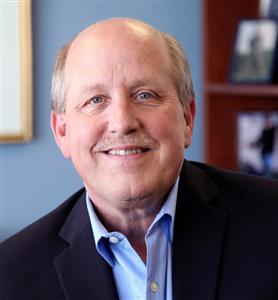
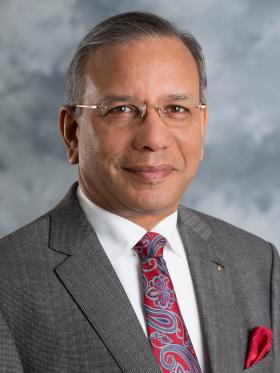
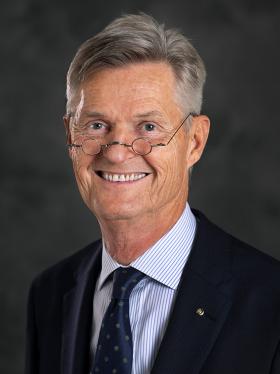
Brian Sobel is the principal consultant for Sobel Communications of Petaluma, California.
Sobel majored in Broadcast Communication Arts and Journalism at San Francisco State University. In addition to working in radio and television, Sobel spent several years working for a major corporation as a writer, training consultant and video producer before opening his consulting firm.
Sobel was a candidate for the California State Assembly and is a former planning commissioner and vice-mayor of Petaluma. He is also past chairman of the Sonoma County Transportation Authority and a current member of the Golden Gate Bridge, Highway and Transportation District Board of Directors. He also served as a member of the Board of Directors of the 4th District Agricultural Association, appointed by governor of California, for nine years and as president of the board for one year.
Additionally, Sobel served a three-year term as president of the Board of Directors of Northbay Family Homes and was a corporate officer and trustee of the Cedars Foundation of Ross. He is a past-president of the Board of Directors of the Petaluma Area Chamber of Commerce and is currently the Chairman of the Board of Directors for the Bank of Marin, headquartered in Novato, California.
He has authored three books, including, The Fighting Pattons, the story of the famous general and his only son, who also became a general and fought with distinction in Korea and during three tours of duty in Vietnam. Along with writing books, Sobel has contributed articles to a variety of national publications including The Wall Street Journal, and has often appeared on the History Channel, along with hosting a weekly talk radio program on the Northern California Radio Network.
Sobel also served for several years as the on-air political analyst for KFTY 50 Television located in Santa Rosa, and today provides political and military commentary for numerous media outlets, including KTVU TV2, and KCBS and KSRO radio in the San Francisco Bay Area.
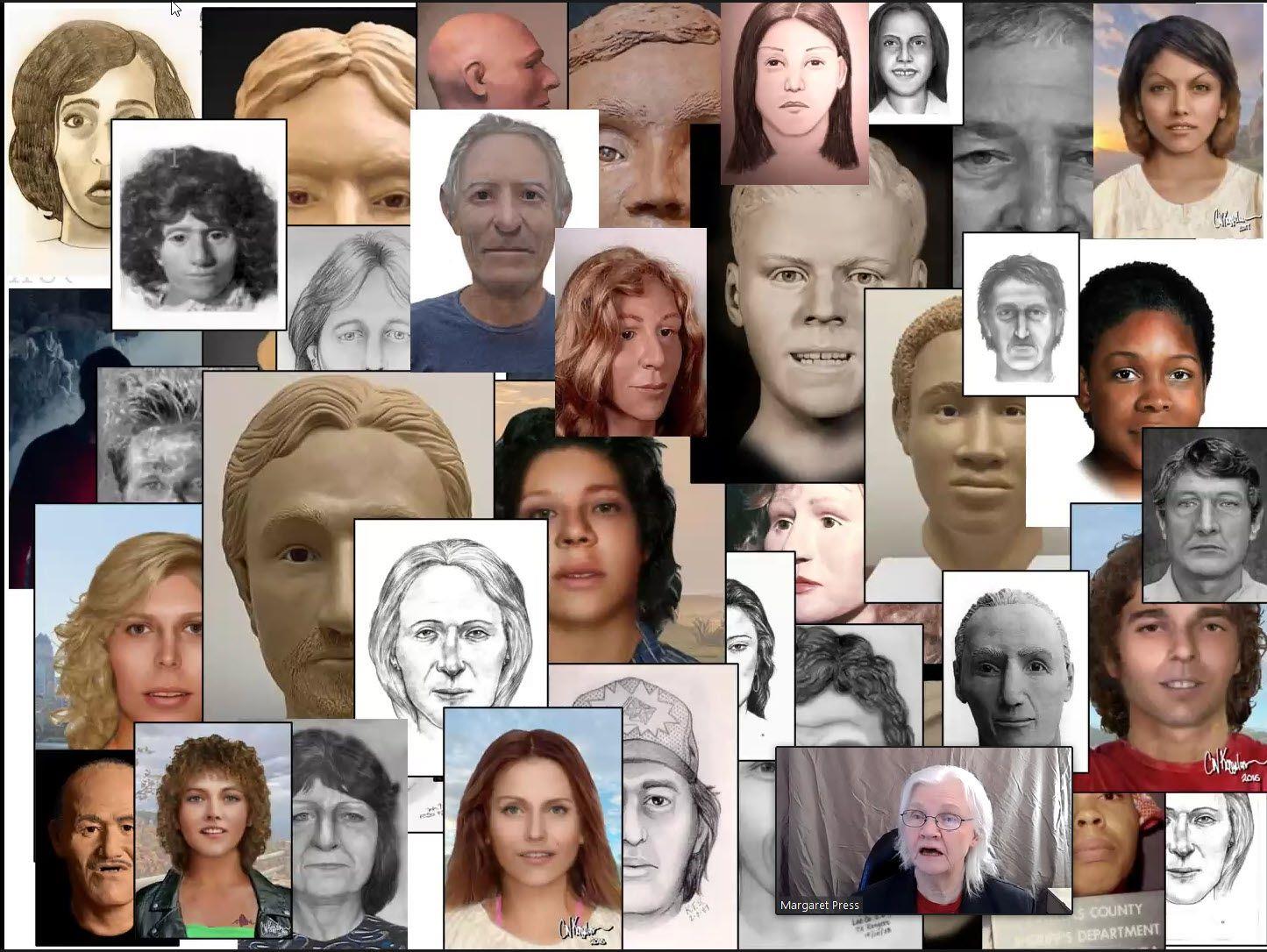
Our Speaker for Thursday, October 29, 2020 was Margaret Press, whose topic was “The DNA Doe Project.” Margaret’s talk provided us with an inside view of her efforts to identify decedents’ remains using DNA evidence. Margaret studied Linguistics in college and received a doctorate from UCLA specializing in Native American languages and child development. She spent much of her early professional career in software development but became interested in writing and publishing mystery novels and a true crime book. Margaret also became interested in DNA evidence and genealogical research. Reading the Sue Grafton mystery novel “Q is for Quarry” helped create an epiphany for Margaret about new ways to use DNA matches to identify human remains. In February 2017 she co-founded the DNA Doe Project as a non-profit focused using DNA research to identify human remains.
The problem addressed by the Project is that there are likely 50,000 sets of unidentified remains, most of which are in the United States. These remains cannot be identified using the historical methods, such as visual identification, fingerprinting, dental records, or even the more recent CODIS system for DNA identification. Margaret’s genius plan was to access the vast new pools of DNA records obtained in various genealogical research platforms, such as Ancestry, 23andMe, My Heritage, and others. Individuals obtaining their DNA records can upload them to a program such as GEDmatch. The result is that GEDmatch contains autosomal DNA data files from different companies. Once GEDmatch had sufficient data, it became Margaret’s “go to” company for genealogical DNA information. The search relies upon a basic foundational proposition: “If two DNA matches share the same segment with John Doe, we can guess that the segment all three share comes from the same ancestor that all three are descended from.” Once she knows the common ancestor she can guess that the John (or Jane) Doe must descend from that same family. In other words, “triangulation.”
Margaret’s method has been successful. The DNA Doe Project has already identified 40 remains and they are working on many more. The Project gets all of its referrals from agencies; at this time they do not work for individuals. One example of their good work is the young woman whose remains were found in 1981, often referred to a “Buckskin Girl.” The Project ultimately identified her as Marcia Lenore Sossoman King.
Well done, Margaret. While I did not understand the technical stuff, it all made sense. What a great project! We have no doubt that your work has already brought, and in the future will bring, a sense of peace and finality to many families. Thank you for helping us understand your wonderful work.
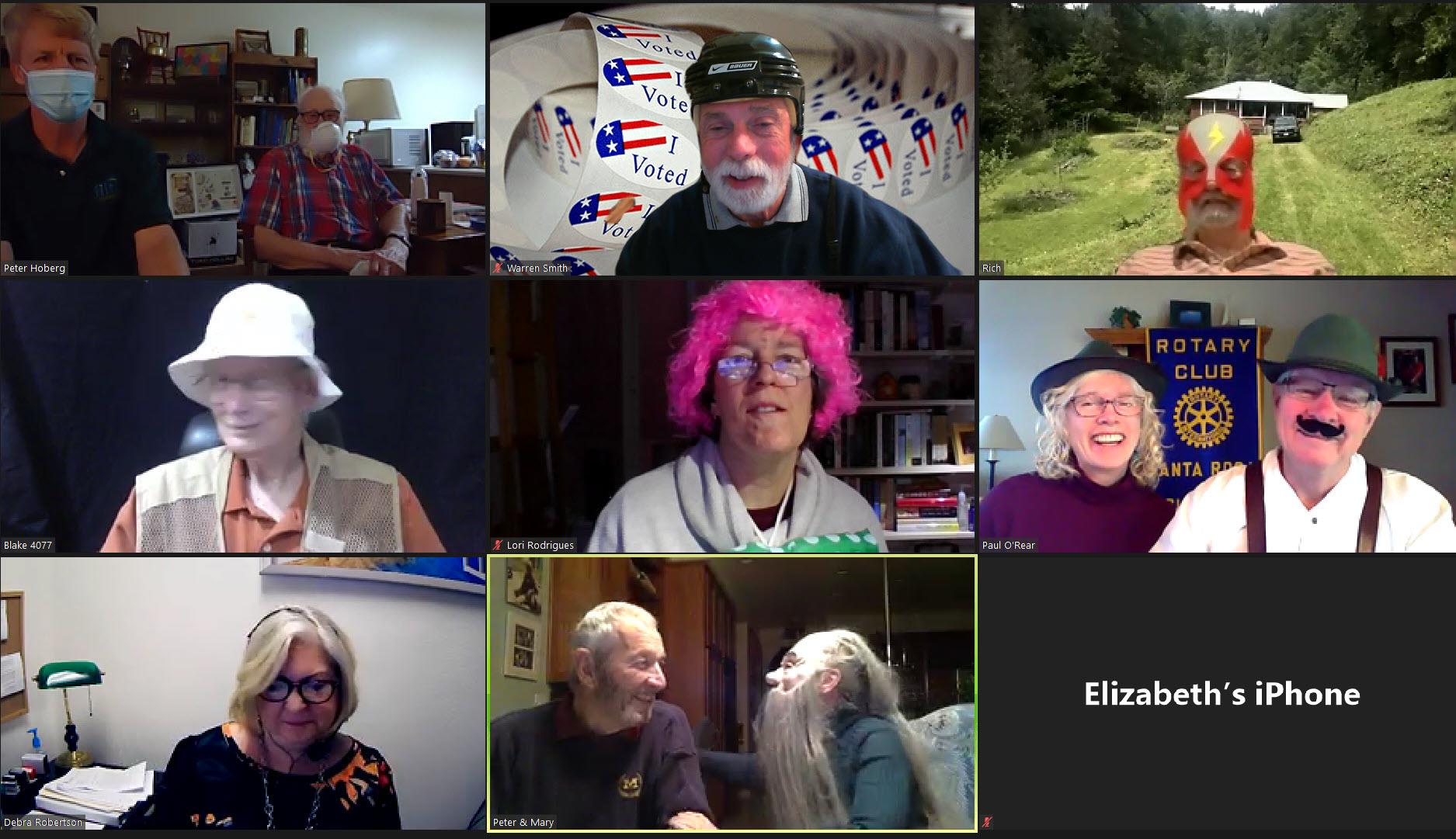
On a regular basis, our resident photo pro Warren Smith, submits pictures of what is going on at the weekly meetings. You can always find the most recent pictures at the websites photo journal called "Meeting Sighting" Please note that all the meeting photos for the entire Rotary year are at this location with the most recent on the last page.
Thanks for all the great pictures Warren!Link to Meeting Sightings. The most recent are on the last page!
My husband purchased a world map and then gave me a dart and said, “Throw this and wherever it lands—that’s where I’m taking you when this pandemic ends.” Turns out, we’re spending two weeks behind the fridge.
The World Health Organization announced that dogs cannot contract COVID-19. Dogs previously held in quarantine can now be released. To be clear, WHO let the dogs out.
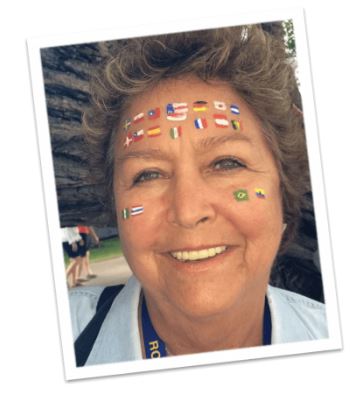
For Mother’s Day this year, Melody St. John’s husband, Paul, himself a member of the Rotary Club of Los Angeles, organized a virtual get-together with 20 people — all former Rotary Youth Exchange students who have stayed with the couple in their Los Angeles home. “They surprised me with a beautiful slideshow” of photos from their exchanges, she says. “We talked about how we’re doing and how we’re coping” with being in lockdown because of COVID-19.
Melody St. John
The St. Johns almost didn’t become exchange hosts. “I was hesitant because we didn’t have kids,” Melody explains; she wasn’t sure they would know how to navigate integrating a teenager into their household. But when the couple’s first student, Federico, arrived from Argentina in 1996, everything clicked — and their lives changed. “We had so much fun with him,” she remembers. “It was such a joy. We took him everywhere, and he brightened our lives.” For the next two decades, the St. Johns continued opening their home to new students — some of whom were siblings of students who had stayed with them earlier. They even started organizing a cross-country train tour for all the exchange students in their district.
In 2018, they took a break from hosting as Melody prepared to serve as 2019-20 governor of District 5280 — but in the midst of the COVID-19 crisis, they opened their home yet again. “One of our former students, Pietro, lives nearby. He asked if he could shelter here with us,” Melody explains. “He also wanted to do the shopping for us, so we didn’t have to go out.”
The couple now can’t imagine their lives without Rotary Youth Exchange. “I was sad for a long time because I couldn’t have kids,” Melody says. “But now I’ve got over 20 of the coolest kids, and they all call me Mom. We’ve gone to our former students’ weddings; we’ve been to Poland for Easter and Spain for Christmas. We have family all over the world.”
• Illustration by Ruby Taylor
• This story originally appeared in the September 2020 issue of Rotary magazine.
In the early 1870s, a genius toiled in his laboratory, driven by a vision to improve life through technology. After many failed attempts, by 1880 Thomas Edison had perfected a new light bulb that could be produced on a mass scale.
When someone pointed out to him that he had tried and failed 10,000 times before succeeding, he responded that he had merely found 10,000 ways it wouldn't work!
Just like Edison, The Rotary Foundation is driven by a vision for a better world. And we, too, remain determined and creative in the face of setbacks.
Earlier this year, our vital polio immunization activities had to be temporarily paused to ensure that the polio eradication program did not contribute to the COVID-19 pandemic. And so we adapted: The polio-fighting infrastructure that Rotary helped build was enlisted to assist in the response to COVID-19 in many vulnerable countries, as we had done before during outbreaks of Ebola, yellow fever, and avian flu.
Thankfully, we resumed polio immunization activities in July, having first taken all precautions to protect frontline workers and communities.
During these challenging days, our business — reaching out to people in distress — is not business as usual. The way we prepare and deliver projects and the methodology we use need to change. And the way we communicate what we do also must change.
The success of our global grants model is unmistakable. At its introduction in 2013-14, the Foundation awarded 868 grants worth over $47 million. By 2019-20, the number of approved grants had risen to 1,350, worth over $100 million. While the number of grants shot up by more than 50 percent, and funding by 123 percent, corresponding Annual Fund contributions showed only a 5 percent increase, and that's troubling.
To reach those who need us, to spread the love that our Foundation brings, we will need to rise to this challenge and work together to meet our funding needs.
Mother Teresa once said that if we want a message of love to be heard, it has to be sent out. To keep a lamp burning, we have to keep putting oil in it.
The Rotary Foundation offers the best opportunity I know for us to invest in a better future for communities around the world. Your generosity today and throughout this year is the oil that keeps our grants burning bright, reaching the ones who need us most.
We all know Rotary's tremendous power to transform our communities and ourselves. However, in every community, people have been left out, and we have not made a strong enough effort to reach them.
The RI Board of Directors is taking action to make Rotary more welcoming and diverse. We formed a task force to promote diversity, equity, and inclusion to help clubs attract new members regardless of gender, race, religion, age, or other factors. This will help us speed up the change we all want and need. The selection of Jennifer E. Jones as Rotary president for 2022-23 — the first woman to lead our organization — is another step in this direction.
At the grassroots level, clubs drive inclusion and diversity. Alia Ali — who serves on the board of directors at the Big West Rotaract Multidistrict Information Organization and is a Rotary Youth Leadership Awards alumna and past president of the Rotaract Club of Surrey-Newton, British Columbia — offers her perspective.
I still remember the relief I felt as a RYLA participant four years ago. I had finally found my people: people who cared as much as I did. All over the world, Rotary has the same heart. We serve our communities and take action where others feel paralyzed by the size and scope of a problem.
Let's continue that spirit, especially when the conversation is difficult. Racism, prejudice, and discrimination take on different forms but exist in every country, in every city, and in every person. How do we root it out?
As a diversity, equity, and inclusion consultant, I help organizations create a culture that empowers and attracts everyone using the power of empathy. When we feel with others as if they were ourselves, we cannot hold prejudice in our hearts. When every child reminds you of your own child, when every woman or man reminds you of your mother or brother, you start seeing the world differently.
We can apply The Four-Way Test through the lens of empathy. Are we building goodwill and friendship with everyone in our area, including women? Are things fair and beneficial to people of all ages? Who has to make choices that you don't have to make?
I made a heartbreaking choice between Rotary and my religion when a Rotary convention was held during Ramadan. I wondered: When we ask if this is fair and beneficial to all concerned, did that not include me as a Muslim? Would the convention ever be held over Easter? Only by asking difficult questions can we begin the work of creating a more inclusive and diverse Rotary.
We already connect so many people across the world. Imagine the possibilities when we bring even more people along for the ride. That's the future of Rotary I want to see: one where we are unstoppable in our service, relentless in our kindness, and intentional in the change we want to see.
Rotary has a big enough heart. If we open our door wider, we might find a lot of interesting people with new voices and new perspectives. We already have a variety of clubs offering different styles, cultures, and opportunities — and those who do not feel welcome in any particular club might be great candidates for new clubs created on different models. It's important that we make sure every new Rotary member is a good fit for their club. Rotary Opens Opportunities through diversity.
Rotary Club of Santa Rosa Sunrise - Founded June 30, 1986


.png)

.jpg)