Margaret Press: The DNA Doe Project
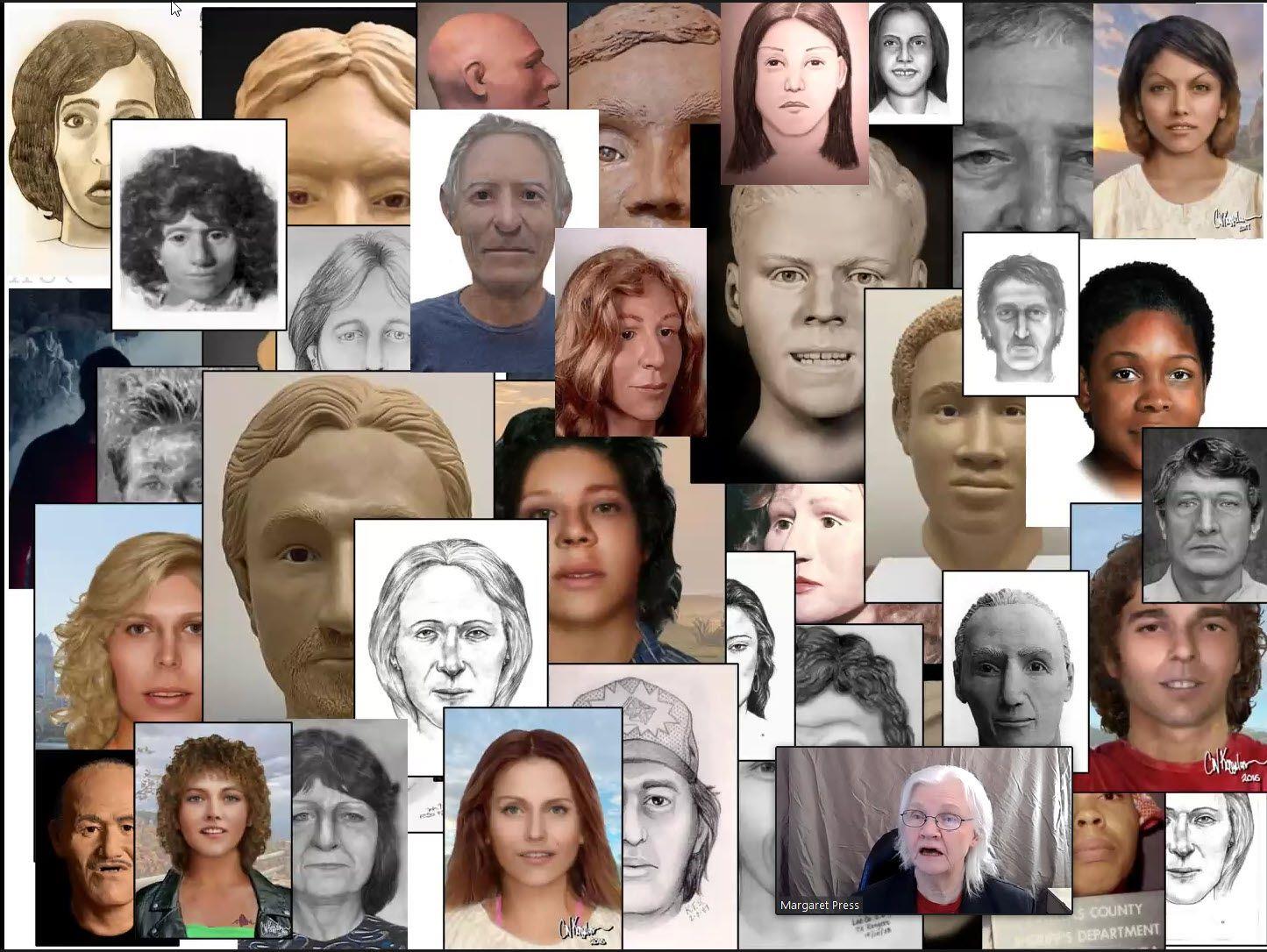
Our Speaker for Thursday, October 29, 2020 was Margaret Press, whose topic was “The DNA Doe Project.” Margaret’s talk provided us with an inside view of her efforts to identify decedents’ remains using DNA evidence. Margaret studied Linguistics in college and received a doctorate from UCLA specializing in Native American languages and child development. She spent much of her early professional career in software development but became interested in writing and publishing mystery novels and a true crime book. Margaret also became interested in DNA evidence and genealogical research. Reading the Sue Grafton mystery novel “Q is for Quarry” helped create an epiphany for Margaret about new ways to use DNA matches to identify human remains. In February 2017 she co-founded the DNA Doe Project as a non-profit focused using DNA research to identify human remains.
The problem addressed by the Project is that there are likely 50,000 sets of unidentified remains, most of which are in the United States. These remains cannot be identified using the historical methods, such as visual identification, fingerprinting, dental records, or even the more recent CODIS system for DNA identification. Margaret’s genius plan was to access the vast new pools of DNA records obtained in various genealogical research platforms, such as Ancestry, 23andMe, My Heritage, and others. Individuals obtaining their DNA records can upload them to a program such as GEDmatch. The result is that GEDmatch contains autosomal DNA data files from different companies. Once GEDmatch had sufficient data, it became Margaret’s “go to” company for genealogical DNA information. The search relies upon a basic foundational proposition: “If two DNA matches share the same segment with John Doe, we can guess that the segment all three share comes from the same ancestor that all three are descended from.” Once she knows the common ancestor she can guess that the John (or Jane) Doe must descend from that same family. In other words, “triangulation.”
Margaret’s method has been successful. The DNA Doe Project has already identified 40 remains and they are working on many more. The Project gets all of its referrals from agencies; at this time they do not work for individuals. One example of their good work is the young woman whose remains were found in 1981, often referred to a “Buckskin Girl.” The Project ultimately identified her as Marcia Lenore Sossoman King.
Well done, Margaret. While I did not understand the technical stuff, it all made sense. What a great project! We have no doubt that your work has already brought, and in the future will bring, a sense of peace and finality to many families. Thank you for helping us understand your wonderful work.