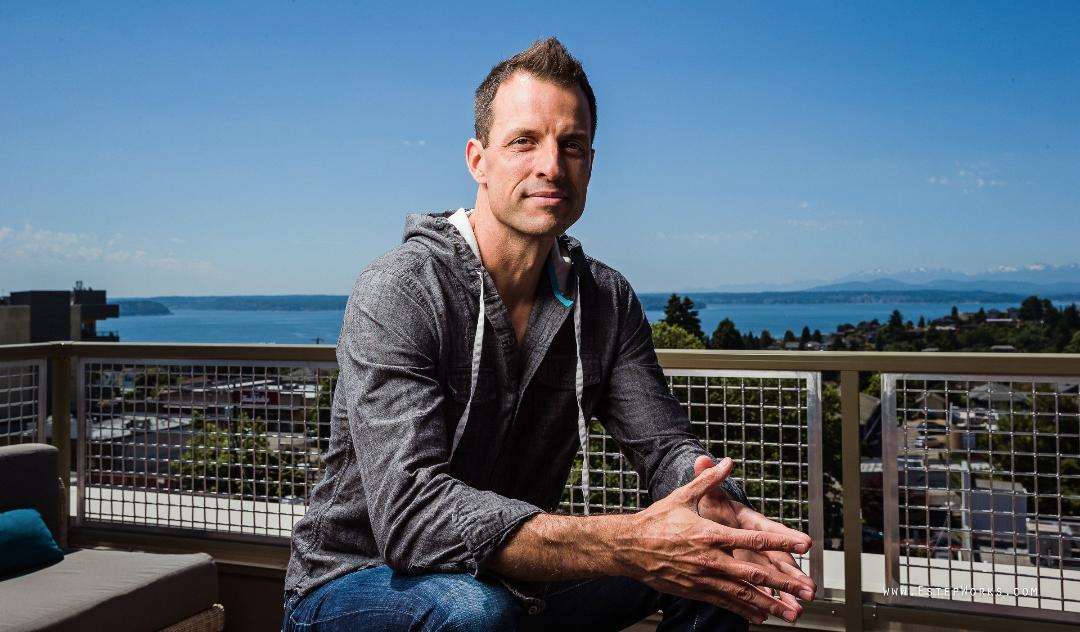
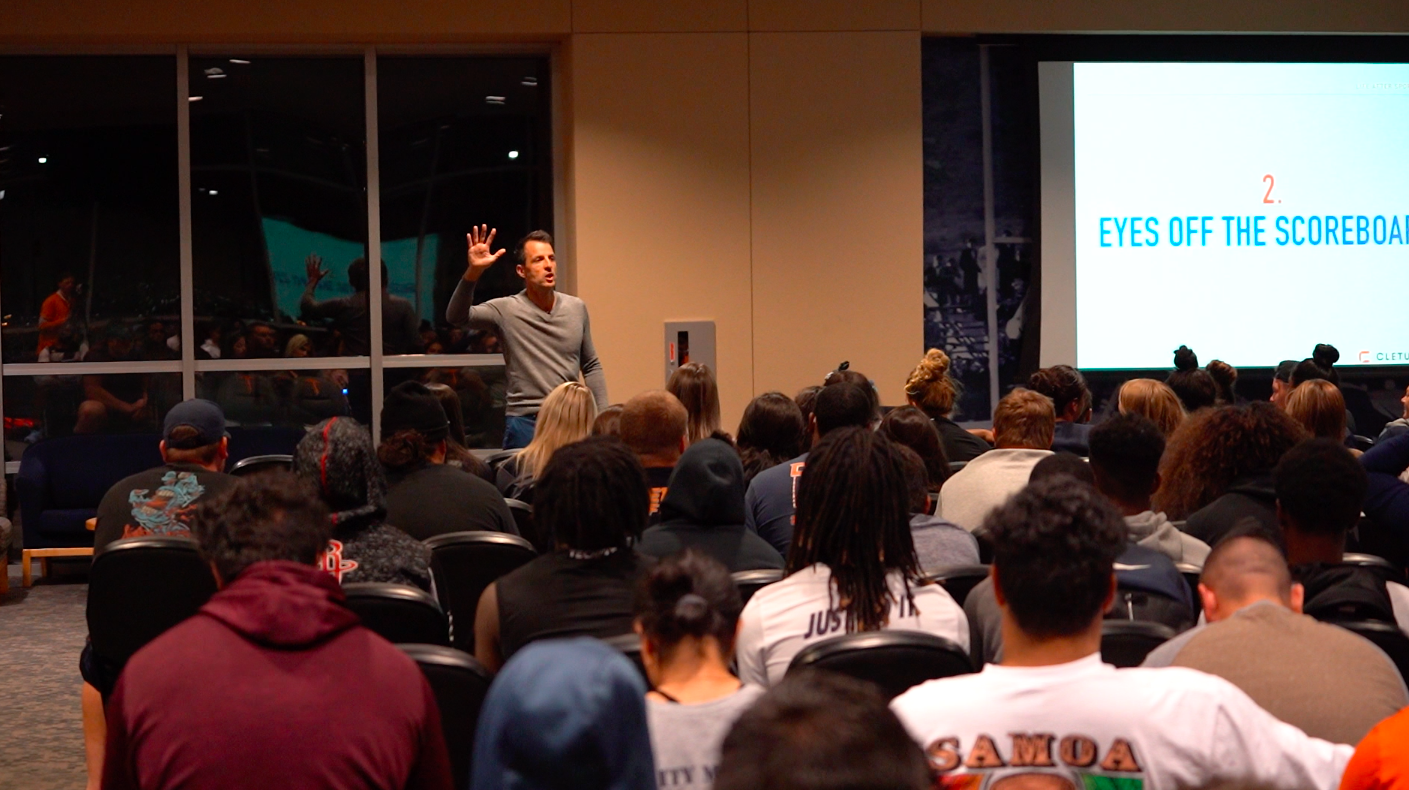
Cletus Coffey is a former professional and world champion athlete, turned elite performance coach and trainer helping former athletes transform out of struggle and mediocrity in their "new game" of life after sports. Having faced many challenges in his own transition, Cletus founded his company Recovering Athlete to support former athletes with the tools and strategies for making a greater impact in the world than they ever did in sports. In addition to working with athletes of all competitive levels from Olympic and professional athletes to college and high school student athletes, he has worked with organizations and teams such as the Chicago Bears, Washington Football Team, Minnesota Twins, Seattle Sounders, State Farm, Charlie Palmer Collective and many universities across the country.
Special Black Lives Matter Presentation: Marty Behr, Jim Gray, and Arthur Chaney!
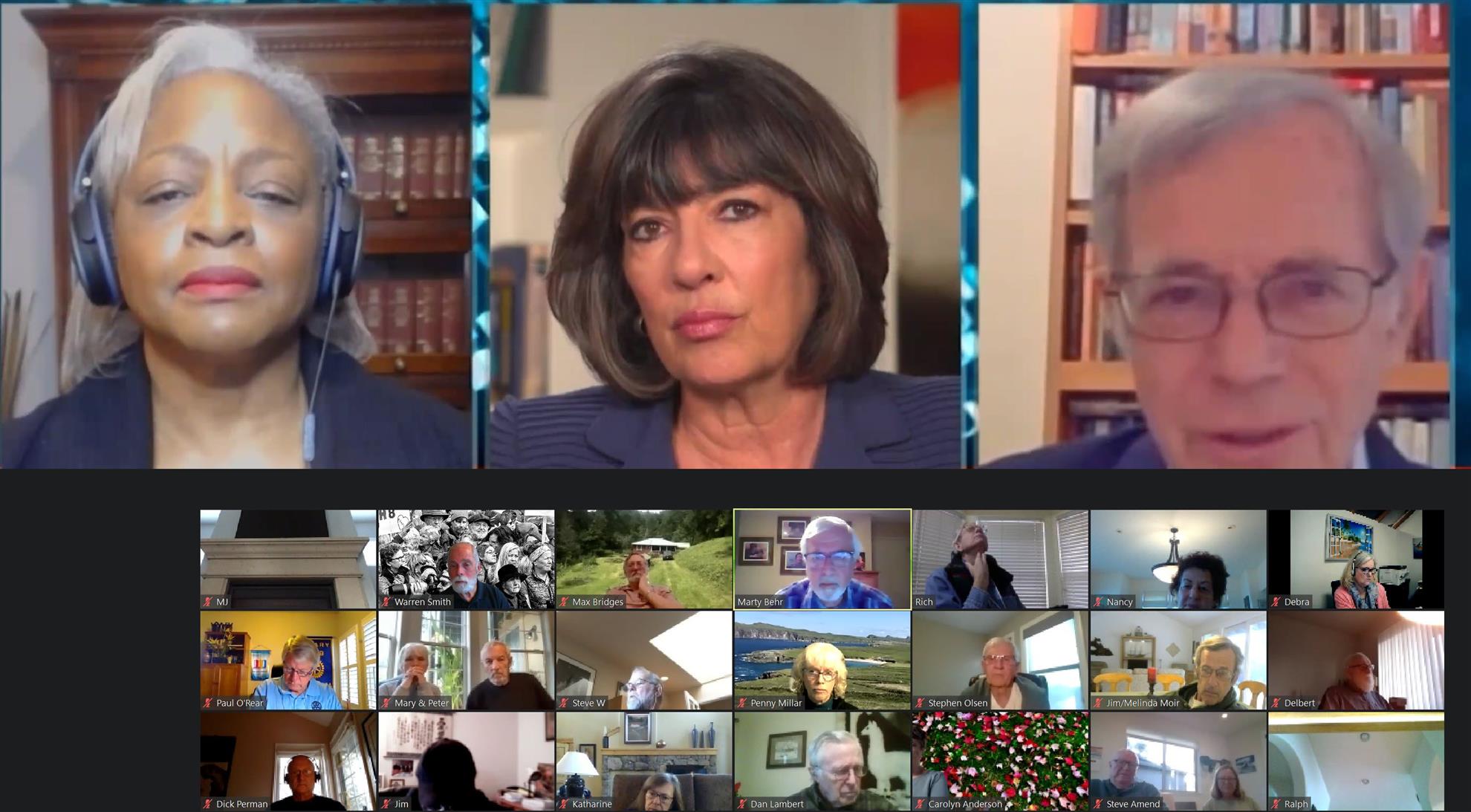
In our January 14, 2021 meeting, Past President Marty Behr led a special presentation on “Black Lives Matter,” featuring “guest” speakers Jim Gray and Arthur Chaney, along with a segment from a PBS Amanpour & Company program from June 19, 2020. Marty noted that he and other Club members have put together a working group to study and deal with the issues raised by this past summer’s Black Lives Matter movement. This work has included reading, educating each other, and discussing the issues, among other things. Marty reminded us that Rotary International has published an official statement on the subject of racism: “At Rotary, we have no tolerance for racism.”
In the Amanpour & Company program, Amanpour interviewed Professors, Carol Anderson of Emory University and Eric Foner of Columbia University. Dr. Anderson mentioned that the deaths of George Floyd, Ahmaud Arbery, and Breonna Taylor were not shocking to her because they are part of a pattern. Our history is a pattern of racial injustice, efforts to reform, and backlash against reforms. She and Dr. Foner were both excited by the Black Lives Matter movement but apprehensive about potential backlash. Significant examples of this progress/backlash cycle include giving/taking away property (40 acres and a mule) to ex-slaves after the Civil War; economic progress/massacre in Tulsa, Oklahoma in the early 1920’s; “emancipation”/evisceration of freedoms by the Dred Scott decision; school desegregation/white “flight” to private schools after Brown v. Board of Public Ed.; and Obama progress/Trump backlash. The program also explored some of the structural disadvantages faced by African Americans: Did you know that the net worth of white families averages ten times that of African American families? Or that African Americans are twice as likely to experience barriers to voting?
Jim Gray was born in Texas and came to Santa Rosa as a child. He told us that preparing to speak on this topic brought memories that he would rather forget. His family experienced housing discrimination when they first tried to buy a home in Santa Rosa and ultimately ended up in South Park, in a predominantly black area. He recalls being turned away because of his race when he tried to get into Morton Hot Springs as a teenager. He talked about going with his family to a “sit-in” at a local store and having dog poop thrown at him and his family. He told us about holding a white woman’s hand as a student at Santa Rosa Junior College and having white men call the girl a “n-lover.” Jim ‘went academic’ on us. He thinks that culture makes people comfortable and they go ‘subconscious.’ When they see something different, it pulls them out of their subconscious state and causes a reaction. Jim told us that at that time he wanted to make those people aware of what was going on and that he could not tolerate it.
Arthur Chaney grew up in Oakland. When he was a kid, if he and his friends crossed the tracks into San Leandro they would be chased back to Oakland. He talked about discrimination in employment: While employed by an insurance company and under consideration for a promotion he was told by his boss that she had seen him with a mean look on his face. She questioned whether he was promotion material. Arthur tried to explain that he was only concentrating on a work-related question at the time, but he was never promoted. He also talked about discrimination while visiting relatives in Texas and Alabama. In Alabama they could not go into specific movie theaters and he recalls that in a restaurant in Texas a waitress would not wait on his table. Arthur offered us some additional reading material, including his statement on behalf of 100 Black Men of Sonoma County and his 6-page personal statement. Arthur summed up his comments with a four-letter word: VOTE. He said that the right to vote is so powerful that only by suppressing the right to vote can people be controlled.
Great presentation! Thank you all for the hard work and thoughtful commentary. And, weren’t the comments about backlash, made in June, prophetic?
On a regular basis, our resident photo pro Warren Smith, submits pictures of what is going on at the weekly meetings. You can always find the most recent pictures at the websites photo journal called "Meeting Sighting" Please note that all the meeting photos for the entire Rotary year are at this location with the most recent on the last page.
Thanks for all the great pictures Warren!Link to Meeting Sightings. The most recent are on the last page!
District Governor Doug Johnson is starting a new Rotary initiative this year to get “Rotary Values” out into the broader community. People know Rotarians are……..good people……….do stuff in the community……….seem like fun sorts…………hey, what is Rotary anyway? DG Doug wants people to associate Rotary with positive business ethics and recognize people and firms that exhibit and live out exemplary ethics in how they run their companies, treat customers, staff and suppliers. At his District Conference in October of this year he will be awarding firms that demonstrate excellence in business ethics and has asked all clubs to begin thinking about nominees, similar to how the North Bay Business Journal recognizes “The Best _______” each year. This Thursday we will have a 5-minute presentation by William Russeau who is assisting DG Doug with his initiative. Start thinking about who you see in the community living out “Rotary values” in their business, whether they’re a Rotarian or not.
Two factory workers are talking. The woman says, "I can make the boss give me the day off." The man replies, "And how would you do that?" The woman says, "Just wait and see." She then hangs upside down from the ceiling. The boss comes in and says, "What are you doing?" The woman replies, "I'm a light bulb." The boss then says, "You've been working so much that you've gone crazy. I think you need to take the day off." The man starts to follow her and the boss says, "Where are you going?" The man says, "I'm going home, too. I can't work in the dark."
When clubs cultivate relationships with Rotary alumni, both sides benefit
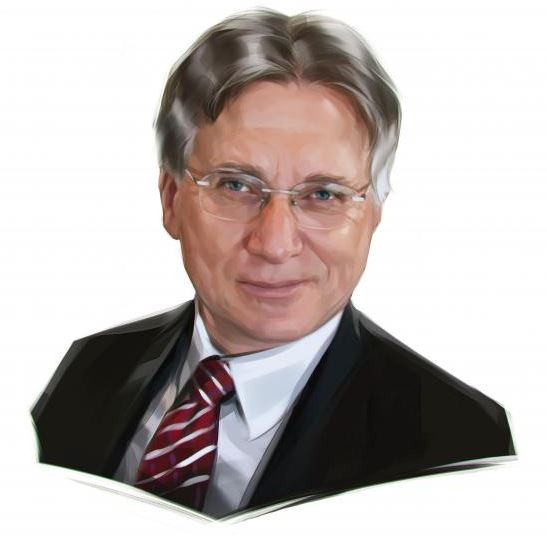
by Paul Engleman Illustration by Viktor Miller Gausa
It’s always a pleasant surprise for Rotarians to meet someone who notices their Rotary pin and then to learn that the person was once a Rotary Youth Exchange student or Rotary Scholar. These conversations with Rotary alumni are great reminders of how many lives Rotary has had a positive effect on.
Rotary alumni can also have a positive effect on the organization, and many are looking for ways to reengage with Rotary. Chris Offer, a past governor of District 5040 in British Columbia, has seen firsthand what Rotary Peace Centers alumni can bring to the table. He and his wife, Penny, also a past governor of District 5040, were so impressed with the peace centers program that they established an endowment fund to support it; Offer now serves on the Rotary Peace Centers Committee. And peace fellows are only one part of the community of Rotary program alumni. One of them could make a fantastic speaker at your next meeting, bring valuable expertise to your club project, or be a great addition to your membership.
1. Why engage with program alumni?
There’s a great opportunity for Rotary clubs to hear firsthand from alumni — whether it’s Rotary Peace Fellows, Youth Exchange students, Rotaractors, or Rotary Scholars — about their challenges and successes. They’ve been there, they’ve done that, they’ve worked in the field. They can relate their experiences personally, not in an abstract way. Some alumni have incredible stories about how the experience changed their lives.
“Some alumni have incredible stories about how the Rotary experience changed their lives.”
2. What is the best resource for contacting peace centers alumni for speaking engagements?
The Rotary Peace Fellowship Alumni Association launched an online database last year. The database is voluntary in terms of who wants to be listed on it, so privacy restrictions aren’t an issue. And remember, peace fellows can be consultants as well as presenters. They aren’t just potential speakers to a club or at a conference. The database has a brief description of what kind of consulting they can do and where their expertise lies. If you’re doing a water project, you may need an engineer. If you’re dealing with a peace initiative, you should have someone who can help you avoid faux pas that can arise from cultural differences. Peace fellows bring all sorts of skills and can be a valuable resource.
3. What is the procedure for contacting alumni to speak at meetings or events?
There are no do’s and don’ts. Getting hold of most alumni can be more challenging than contacting peace fellows, because we still don’t have those types of databases readily available for other alumni. If you want a recommendation for a good alumni speaker, the district alumni chair would be a smart place to start, or any of our youth program chairs. If you’re interested in hearing about a vocational training team, you could contact a district grants chair. There are district chairs related to various alumni activities who can help connect you. Keep an eye on who is speaking at other clubs by following them on Facebook and Twitter and be sure to check the social media of the alumni groups. That may give you a lead on a potential speaker.
4. Many clubs have shifted to virtual meetings. How has that changed our engagement with alumni?
Alumni are everywhere around the globe, and with Zoom you can have a speaker from anywhere in the world. People are more available, and alumni are very willing in most cases. Our club had a peace fellow speak to us from London. You could have your Rotary Youth Exchange student talking to you live from a foreign country instead of sending a letter. Whenever the “new normal” finally arrives, one of the legacies for Rotary clubs will be having remote speakers.
• This story originally appeared in the January 2021 issue of Rotary magazine.
Rotary Club of Santa Rosa Sunrise - Founded June 30, 1986


.png)

.jpg)