On Tuesday we heard from Stacy Maurier, pictured, a lawyer and founder of Estate Connection Law Firm. Stacy ha been a wills and estates lawyer in the Edmonton area for many years. She has had a lot of experience both personally and professionally with people whose will and estate planning has been less than the best and had lots of tips to offer to avoid pitfalls. She stressed that being open and honest with your family about what your wishes are, even though it could be awkward or difficult, was uppermost in preventing your family from falling apart due to conflict once you pass away. You should put some thought and consideration into what your family issues are and how best to deal with them, so that you can leave your family with solutions, and not more problems.
She mentioned the fact that most people either do not have a will, or have a will that is problematic as all of the family issues have not been dealt with. She also discussed holographic wills and do-it-yourself wills. Holographic wills are legal and do not require a witness, and in fact are best when not witnessed. She has seen many cases where the witness used was not appropriate, or not even legal. Do-it-yourself, fill in the blanks wills are fine for very simple estates, but only when completed properly. She has seen cases where people mentioned everything but the big items like their home or bank accounts!
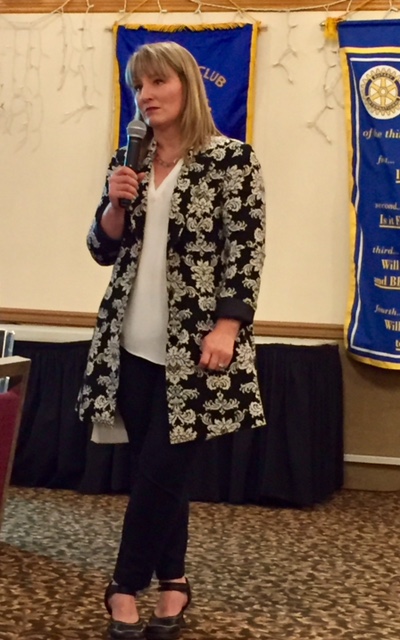
Stacy Maurier
She then went on to describe some of the common complicating issues that families can have. These include second marriages, blended families, handicapped children receiving government support such as AISH, young children or irresponsible family members who can not handle money, family members who simply can not get along, and complicated business ownerships or investment interests. People with any of these issues should consult an experienced lawyer to help with drafting their will, to avoid any expensive complications when it comes time to execute their will.
Stacy then went on to talk about the importance of carefully selecting your executor/s. You should consider whether they will have the time and ability to perform their duties properly and legally. It should be someone who can be non-partisan and lives in the same legal jurisdiction as your assets, to avoid expensive complicated legal issues. If this is not possible, appoint a lawyer or trust company instead.
She also talked about methods of distributing your estate to your beneficiaries, to avoid some common pitfalls. When leaving your home to a second wife, where you have children from a previous marriage, consider setting up a home trust, so that your second wife can live in the home until she dies, but the assets from the home sale will be split evenly with all of your children once she passes on. When setting up a trust, consider how long a trust may need to be cared for. It may outlast the life span of the executor responsible for looking after it! The public trustee fees to look after a trust can be sizable, so the trust should be at least ten thousand dollars or more, if the public trustee will be involved. Try not to divide your estate between more than ten or twelve people, as this will entail substantial legal fees. You should also consider setting out a remuneration for your executor, if they will be responsible for a complicated estate or a trust with ongoing duties, in order to recognise the work involved.
The last item related to wills that she mentioned, was leaving bequests to charity. She highly recommends doing this, as it leaves a lasting legacy. She recommended that any bequest be a set sum of money, not a percentage of your estate, as this means that your executor has to give a detailed financial report for your estate to the charity. The charity can then come back and dispute even the smallest expenses, such as the cost of appetizers served for the memorial lunch. In fact, she has actually seen this happen many times.
She also had some general recommendations for end of life planning. Pre-planning your funeral will relieve your family of many possibly costly choices they would need to make, while not in the best frame of mind. Choose your coffin, type of funeral or memorial, type of burial or cremation and place of burial, urn or ash placement. Have a family gathering to let all of your family members know simultaneously what your wishes are, and who to contact when the time comes. Make lists of all your assets, accounts, debts, loans etc., where they are located and how to access them. Do not forget things like email and electronic subscriptions, mobile phone accounts, safe deposit boxes etc. Consider the tax implications. Set up trusts to protect funds, or give tax free cash to your children now, versus leaving them taxable assets in the future. Check your home ownership paperwork. If you have old wording mentioning ‘tenants in common’, have it updated to say ‘joint tenants’. This can save money and legal headaches in the future. Remember that all wills involving property or large sums of money held by a bank will need to be probated in court before the assets can be accessed. There is a fee for this that will need to be paid. Two more things everyone should do is set up an Enduring Power of Attorney to appoint someone to look after their estate if they are alive but no longer able to do so, and, also to appoint a Personal Care Agent, who makes personal care decisions for you, if you are not able to do this.
Her parting words were to live life prepared. Where there is a will there is a way.