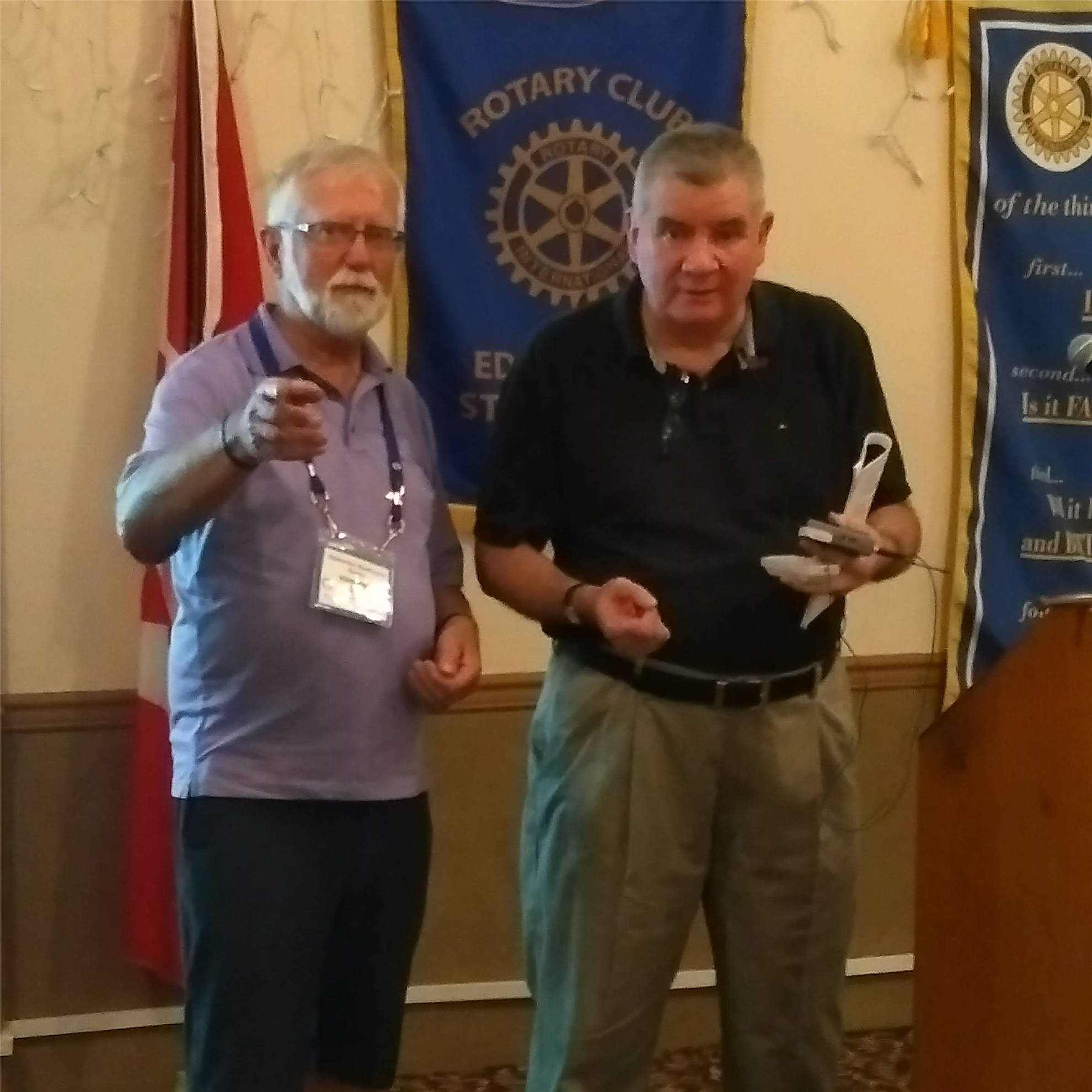
This past Tuesday we heard from Les Campbell, Genealogical Courses and Outreach chairman of the Edmonton Genealogical Society. Les has been researching his own family history for over twenty years and gave us a very knowledgeable talk on how to get started on our own family histories. Les admonished us to get organised before you start. The paper can pile up fast and having a system to keep track of it all as time goes on is important. He also said that making assumptions about things can lead to disappointment. Keep an open mind and don’t believe anything until it is backed up with the facts.
Start with yourself and work backwards, gathering all the information you can on each person before moving on to the next person. Keep in mind that most people have trouble getting back any further than four generations easily. Always make sure you have citations for all of your information. Names, dates, places and any other information. Write down each piece of information as you find it and record where you acquired the information (your source). Take your time and keep good records, even if you searched some record for information and came up empty handed, write it down. It will save you from repeating the same search later on, when you have forgotten all about it.
Setting goals for yourself helps, as does keeping a written research log of what you have done and what you think is next to be done. Things to look for at home that will help you with your search are baptism and confirmation certificates, birth, marriage and death certificates, diaries and journals, family bibles, newspaper clippings and family photo albums. Recording your information on preprinted forms that are available for free online ( from familysearch.org and other sites) is a good idea and helps to keep your information organised. Some of the forms you can use are pedigree charts and family group record sheets. These are handy to help keep you focused on your goal. You can use either paper or genealogy software to keep track of things. Each has it’s own merits. There are many different computer software packages to choose from, so choose carefully, which one is best for you. Three of the most popular ones are Roots Magic, Legacy and Reunion.
Remember that accuracy is vital, typos and abbreviations can cause all kinds of problems. Spell out the month when recording dates to save confusion. You may also find the internet databases are handy for putting out queries that may eventually be answered years later. If you are not sure about a name do not guess, simply leave it blank. Databases can also help with record searches, and there are many of these available online.
Les will be back in a few weeks to give us some information on more advanced searching, and we look forward to hearing from him again.