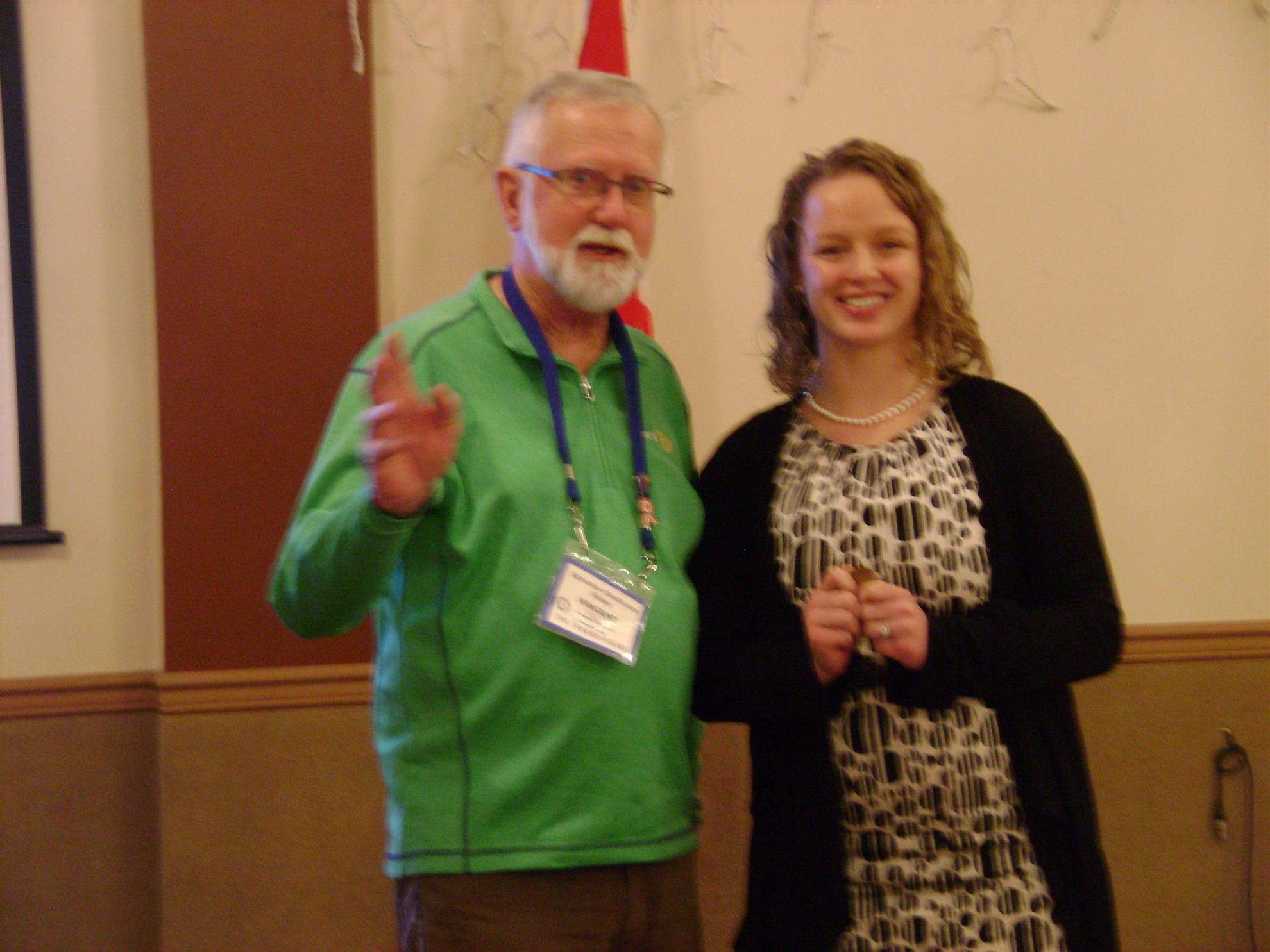
On Tuesday this week we heard from Brittany Beatty, from Operation Eyesight. Operation Eyesight was founded in Calgary, some thirty-five years ago. She talked to us about some of the initiatives they have with their partner hospitals in India. She said that losing one’s eyesight is especially harmful for the very young, the very old and the very poor. The provision of eyeglasses, or performance of a simple surgery for cataracts, at a nominal cost of around fifty dollars, can be life altering for these people. It also has an effect on other family members, as many times, girls or women are forced to stay home from work or school to look after someone who has lost their sight. Eyesight problems are more prevalent in poor countries for several reasons. Lack of knowledge about the treatments for eye conditions, combined with harmful cultural practices such as using salt in the eyes as a treatment, can result in almost two and half percent of the population suffering from some type of blindness in some countries. This makes it a major health issue.
Over the years Operation Eyesight has established over one hundred vision centers in India. They work in conjunction with government and local hospitals, many of which are non-profit, to educate and screen people and deliver needed eye care. In the past year they screened more than three million people in India. They do this through training local volunteers, who then go door to door in small villages, to screen and educate the local people, and to offer transport and access to treatment when needed. They also help by providing equipment and training for staff and volunteers. They work on a cost recovery basis and ask people receiving their services to pay a small fee.
They are very proud of the fact that in 2017, they received a Sustainable Development Goals Award from the United Nations, in recognition of the fact that they met seven of the seventeen goals that they have established. They have helped to reduce poverty, promote good health and well being, provide quality education, ensure gender equality, provide clean water and sanitation, ensure reduced inequalities and created partnerships to fulfil their goals. Recently they have not been able to qualify for matching grants from the federal government as their goals do not align with the current government’s new focus on supporting charities that are more focused on women. They can use our support, now more than ever.