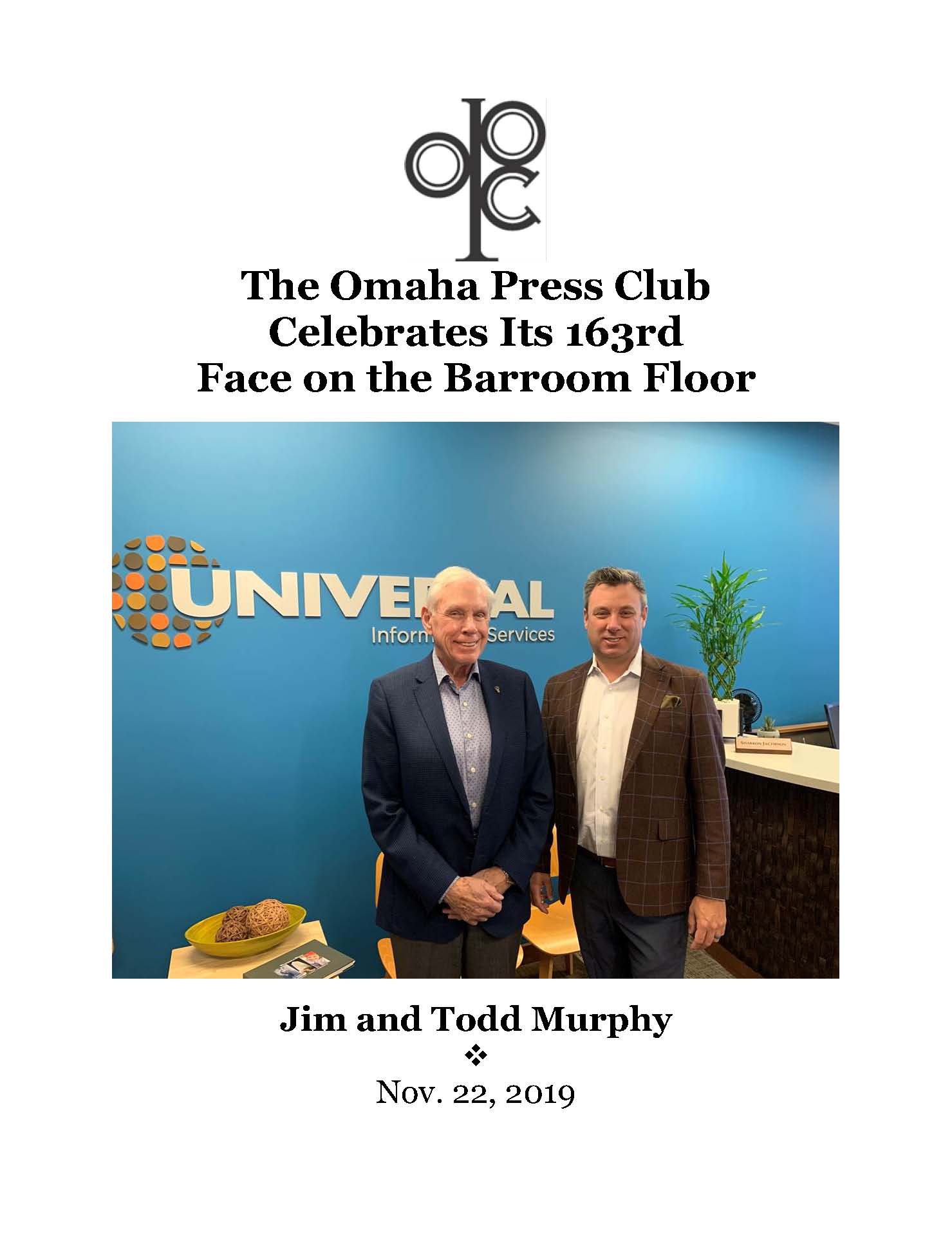
After a rousing introduction by Todd Murphy who, by the way, cancelled his trip to climb Machu Picchu in order to hear our guest speaker (which we all believed) we were delighted by the information brought to us by Jackson Berkey.
Jackson is an American composer, pianist and singer best known for his work with Mannheim Steamroller, which he co-founded with Chip Davis. Jackson and his wife Almeda have travelled all over the world with their music and Jackson has had several compositions published and performed by many choirs and artists.
Jackson and Almeda have a Recording label called SDG Records as well as a publishing company. He was classically trained at the Julliard School with the goal of teaching and being an academic. One day he ran into a colleague on a subway platform in NYC who convinced him to audition to play a tour with Norman Luboff. The first year he toured doing a duet with a woman experienced in a piano bar with only 3 fingers and this made him wonder about the money and time spent at Julliard, but soon felt that this was a wonderful turn to his life.
Jackson then laid out the process of making a CD. First step is to decide whether it’s a commercial project to be sold or a personal cd. A recording studio needs to be decided on and in spite of the technology available it is best to go to a professional engineer in a professional environment. This will avoid issues with mastering and the follow up processes to the recording itself. He recounted the time the Soli Deo Gloria Cantorum (a group I sang with for years) was recording in a church and right at the conclusion of the recording a cricket started chirping and we had to start all over. Quiet is essential.
An artist will play or sing through the entire piece and the engineer is responsible for keeping track of any issues and marking that on his score or notes to be enabled to go back and find the spot to correct. At this point pickups or intercuts will be used to correct the issue in the track. This will happen on several different tracks because it is a rare occasion when the artist can record perfectly on the first take. After the editing happens, which can be very lengthy, the cd is passed to the mastering process. This ensures many things including making digital sound like analog. Also making sure that each song is consistent from track to track regarding quality, distortion and other aspects to add to your listening pleasure. Once the cd is completed it can be replicated by a disk company, which includes the graphics, liner notes and any other packaging features the artist may want.
At this point the distribution of the CD is important. He discussed the progress of technology in the industry as in going from recording on tapes, where instruments had to be recorded twice to get a stereo sound to doing all on computers now. We thank them for their visit and presentation. It was a breath of FRESH AIRE!  -Camille |