


A Rotary model for eliminating preventable blindness
By Dr. Avanika Khanna
By Dr. Avanika Khanna
Imagine living with or waking up one day unable to see the faces of your loved ones and the world around you. For millions of people worldwide, this is not imagination—it is daily reality.
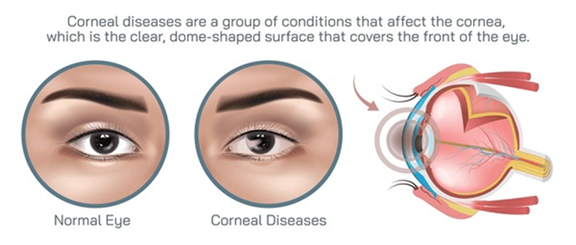
Corneal blindness, caused by infection, injury, or disease, slowly clouds the cornea, preventing light from entering the eye. Unlike many other forms of blindness, it is entirely reversible. A single corneal transplant can restore vision. Yet lack of awareness, limited access to care, and financial constraints keep this solution out of reach for millions.
The cornea—the transparent, dome-shaped front layer of the eye—plays a critical role in vision. Because it contains no blood vessels, corneal transplantation has one of the highest success rates of any human tissue transplant. Still, success depends on more than surgical skill. It requires timely eye donation, meticulous tissue handling, coordinated logistics, trained surgeons, and reliable systems that track each step from donor retrieval to post-operative care.
More than a decade ago, the Rotary Club Midtown Hoshiarpur in India recognized this gap and took action. During a visit to India, Plano Metro Rotarian Sanjeev Khanna learned of the program’s success from Rotarians Manoj Ohri and J.B. Behl. What stood out was not only the medical results, but the systems behind them. Khanna proposed an ambitious idea: replicate the model globally so that Rotary clubs everywhere could tackle corneal blindness in their own communities. Working with local doctors and eye banks, the club developed a sustainable, high-impact corneal transplant program. To date, the project has restored sight through more than 4,000 surgeries.
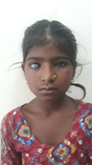
Before and after pictures of two corneal transplant patients:
That idea became reality through a partnership between the Rotary Club of Plano Metro, Plano, Texas, USA and the Rotary Club Hoshiarpur Midtown, Hoshiarpur, Punjab, India. Together, they developed standardized operating procedures (SOPs), strengthened fundraising mechanisms, and built partnerships with hospitals, surgeons, nonprofits, and government agencies—creating a program designed to scale.
Technology played a critical role. Salesforce became a cornerstone partner, providing software and ten free licenses to manage the project’s data. Salesforce volunteers contributed hundreds of hours to build, customize, and train teams on the platform, ensuring transparency and accountability across continents.
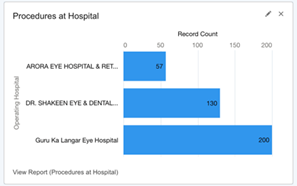
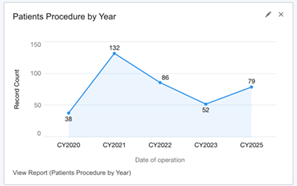
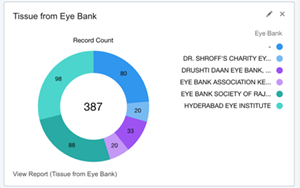
Salesforce Reports for 2025 YTD:
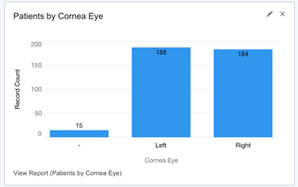
Philanthropic support amplified the impact. The Tony Robbins Foundation sponsored 1,000 corneal transplants. The Rotary Club of Plano Metro also secured two Rotary Global Grants totaling over $100,000, enabling the program’s expansion and raising funds from members and locals.
Through collaboration with surgeons who donated their time, negotiated reductions in eye bank fees, and optimized medication costs, Rotarians reduced the cost per transplant from $200 US to $150 US —allowing resources to reach even more patients.
“Watching a child see the world for the first time after surgery is unforgettable,” says Khanna. “It made this the most meaningful $150 I have ever spent.”
Since 2018, the Plano Metro Rotary Club has supported more than 1,000 corneal transplants, contributing systems expertise, funding, and global coordination. Combined with Hoshiarpur’s long-standing leadership, the partnership has restored functional vision to thousands.
Beyond surgery, the project addresses the root challenge: lack of eye donation. Working with government agencies and nonprofits across India, Rotarians lead awareness campaigns through print and social media, educating communities about preventable blindness and the life-saving power of corneal donation.
Now, the program is ready for its next phase.
The Plano Metro Rotary Club is offering this proven model to Rotary clubs worldwide. Any club willing to take on corneal blindness locally can adopt the system. Plano Metro will sponsor up to 5 Rotary Clubs, the first 50 transplants (up to $150/transplant, maximum $7,500). Plano Metro Rotary Club and Rotary Club Hoshiarpur Midtown will provide complete training, standard operating procedures, and database templates—tools refined through years of service and thousands of restored lives.
This is Rotary in action: combining compassion with systems, local commitment with global collaboration, and medical science with the power of service.
Because when sight is restored, lives—and futures—are transformed.
Get Involved
To support or replicate this initiative, please contact:
Sanjeev Khanna
Plano Metro Rotary Club, Plano, Texas, USA
📞 +1 (469) 556-5006 ✉️ skk2913@gmail.com
Plano Metro Rotary Club, Plano, Texas, USA
📞 +1 (469) 556-5006 ✉️ skk2913@gmail.com
Manoj Ohri
Rotary Club of Midtown Hoshiarpur
Hoshiarpur, Punjab, India
Rotary Club of Midtown Hoshiarpur
Hoshiarpur, Punjab, India
📞 +91 94630 21200
Acknowledgments
Salesforce Team: Padma Muppidi, Ritu Khanna, Harpreet Garewal, Pratima Rana, Gaurav Singla
Rotary Club of Midtown Hoshiarpur, India: Manoj Ohri, Parveen Palial, Parveen Pabbi, Jagmeet Singh, Avtar Singh, Satish Gupta, et all
Rotary Club of Plano Metro, USA: Sanjeev Khanna, Susan Plonka, Laurie Williamson et all
Rotary Club of Midtown Hoshiarpur, India: Manoj Ohri, Parveen Palial, Parveen Pabbi, Jagmeet Singh, Avtar Singh, Satish Gupta, et all
Rotary Club of Plano Metro, USA: Sanjeev Khanna, Susan Plonka, Laurie Williamson et all