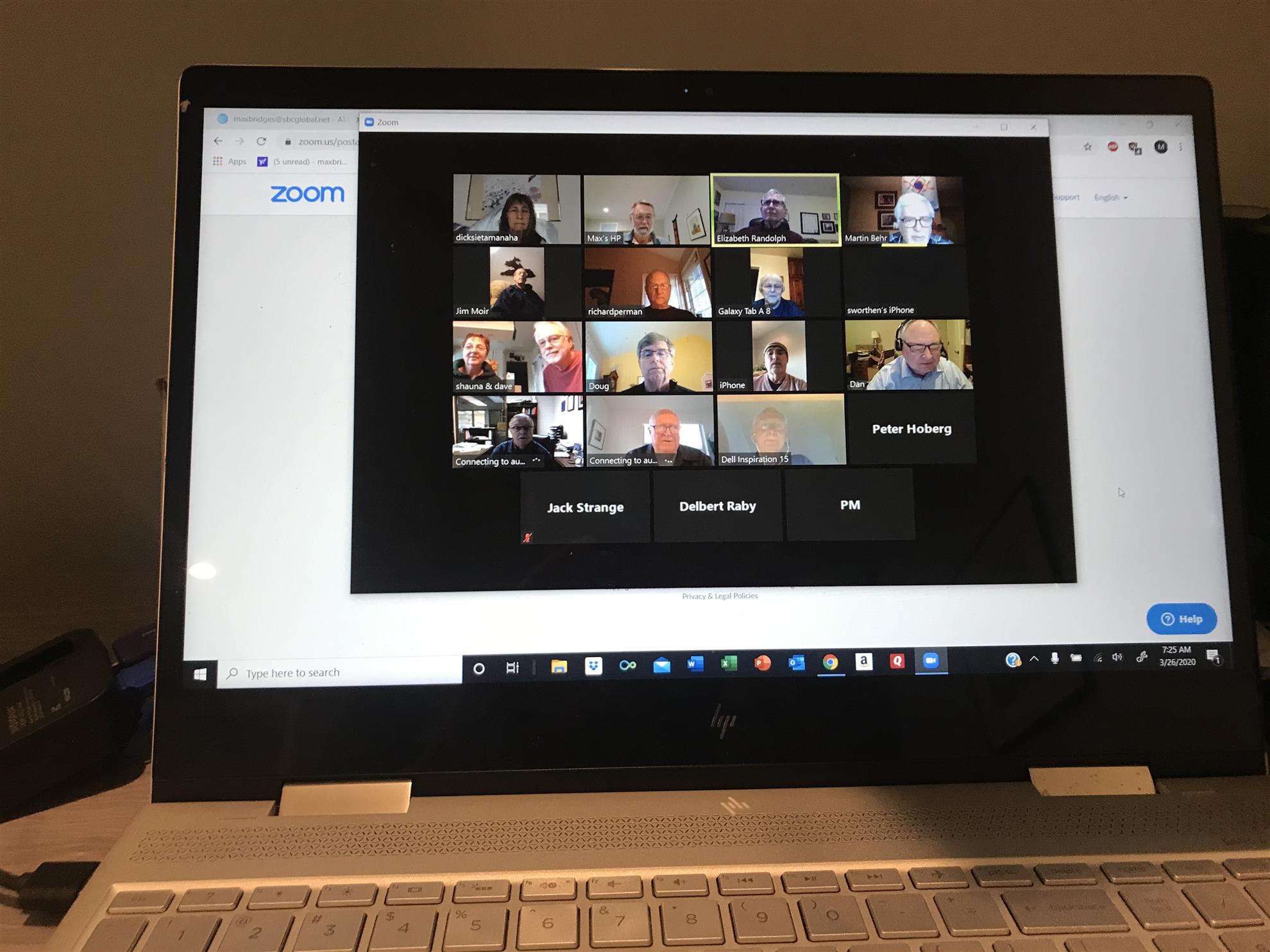
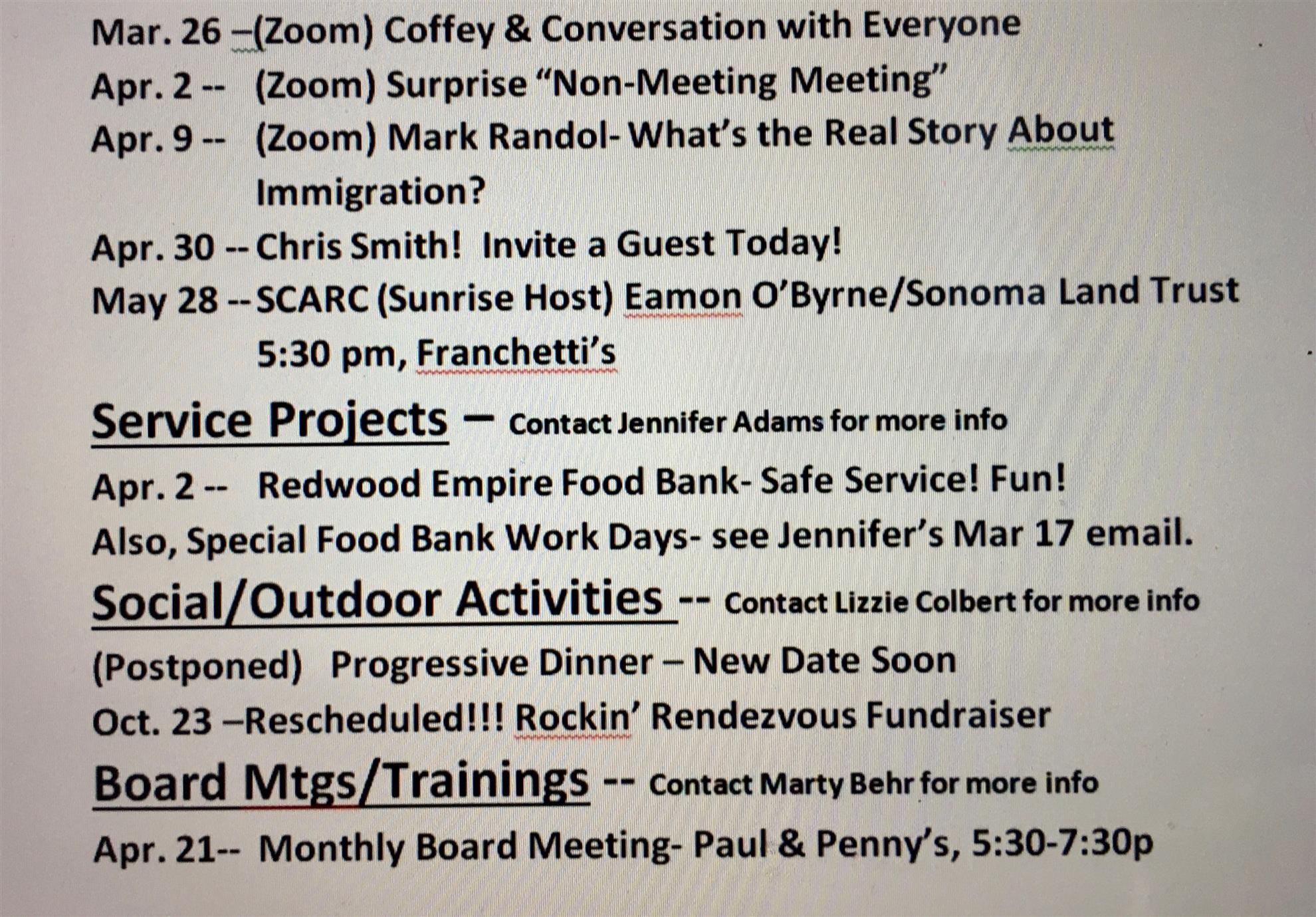
We will have a shortened business meeting followed by “Coffee & Conversation with President Marty” where all members will be encouraged to share their thoughts and coping mechanisms for Sheltering In Place and anything else they want to discuss. Very open format.
Coffee and Conversation: Who's Doing What in the Time of COVID–19?
Our March 26th program was a discussion of what Sunrisers are doing during this pandemic, Shelter-in-Place, social distancing time. Some Sunrisers discussed their travel adventures, including Dave and Shauna (last ones out of Africa), Ross Jones (whose family didn’t want to leave Hawaii), and Carolyine (Australian travel adventures – Carolyn thought hunkering down in Australia was a good idea, but, like Ross, she was overruled). Leroy, known for extravagant birthday gifts for his wife, wanted us all to know that he bought his wife toilet paper (maybe this coming meeting we’ll find out how Carol responded – I don’t have a good feeling about this despite Carol’s known patience with Leroy). Stacey Drucker-Andress continues feeding the homeless at the Unitarian Church on Saturday mornings. The C-19 work-arounds include more sandwiches, bagged lunches and handing out food through screened doors. Max Childs’ Hotel La Rose is still open and he’s still going to work. The restaurant is closed, but they have rooms on standby for first responders and it’s a great place to Shelter-in-Place. Rob Sanville is busier than ever doing non-stop Zoom conferences so he’ll likely miss some meetings and apologized in advance (Hey Rob, can you find me a webcam – they seem to be out-of-stock everywhere?).
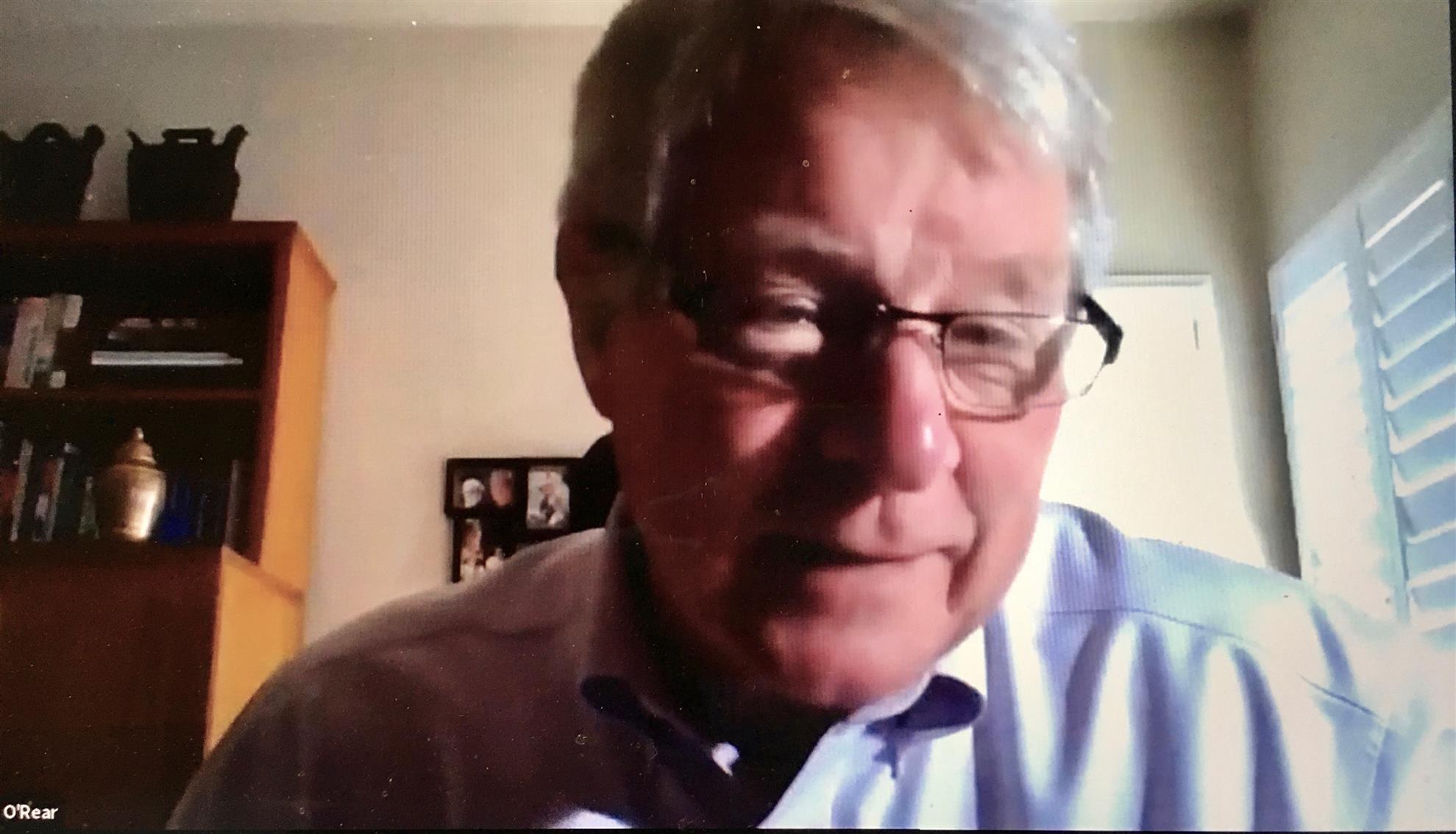
Paul O’Rear, ever the gamer, asked us about oddest things missing from grocery stores. Before we got sidetracked, people mentioned toothpaste, pickles and mint chocolate chip ice cream (my least favorite so I’m good with that). Another question was raised about grocery delivery services. Pres. Marty’s daughter brings his food. Dick Perman recommends Instacart (subsequent reports are that Instacart workers are on strike due to complaints about lack of Covid-19 protections! – I hope Dick and wife aren’t getting hungry).
We also discussed nonprofits that might need charitable contributions. Steve Worthen mentioned SAY. Someone also mentioned Women’s Recovery Services. Marty advised that he’ll compile a list and provide it via email.
What a great meeting! It’s amazing how much we can learn about each other, and other useful information, in this Coffey (sic) and Conversation format. Many thanks to all contributors!
On a regular basis, our resident photo pro Warren Smith, submits pictures of what is going on at the weekly meetings. You can always find the most recent pictures at the websites photo journal called "Meeting Sighting" Please note that all the meeting photos for the entire Rotary year are at this location with the most recent on the last page.
Thanks for all the great pictures Warren!Link to Meeting Sightings. The most recent are on the last page!
Assistant District Governor, John LemMon, joins Zoom meeting
Assistant Governor John LemMon, of the Kenwood-Glen Ellen Club, joined Sunrisers in Thursday's virtual meeting and commended all for their diligence and innovation in continuing Rotary fellowship and service during these challenging times. LemMon is responsible for all four Santa Rosa Clubs – Sunrise, Downtown, East and West. He reports directly to the District Governor.
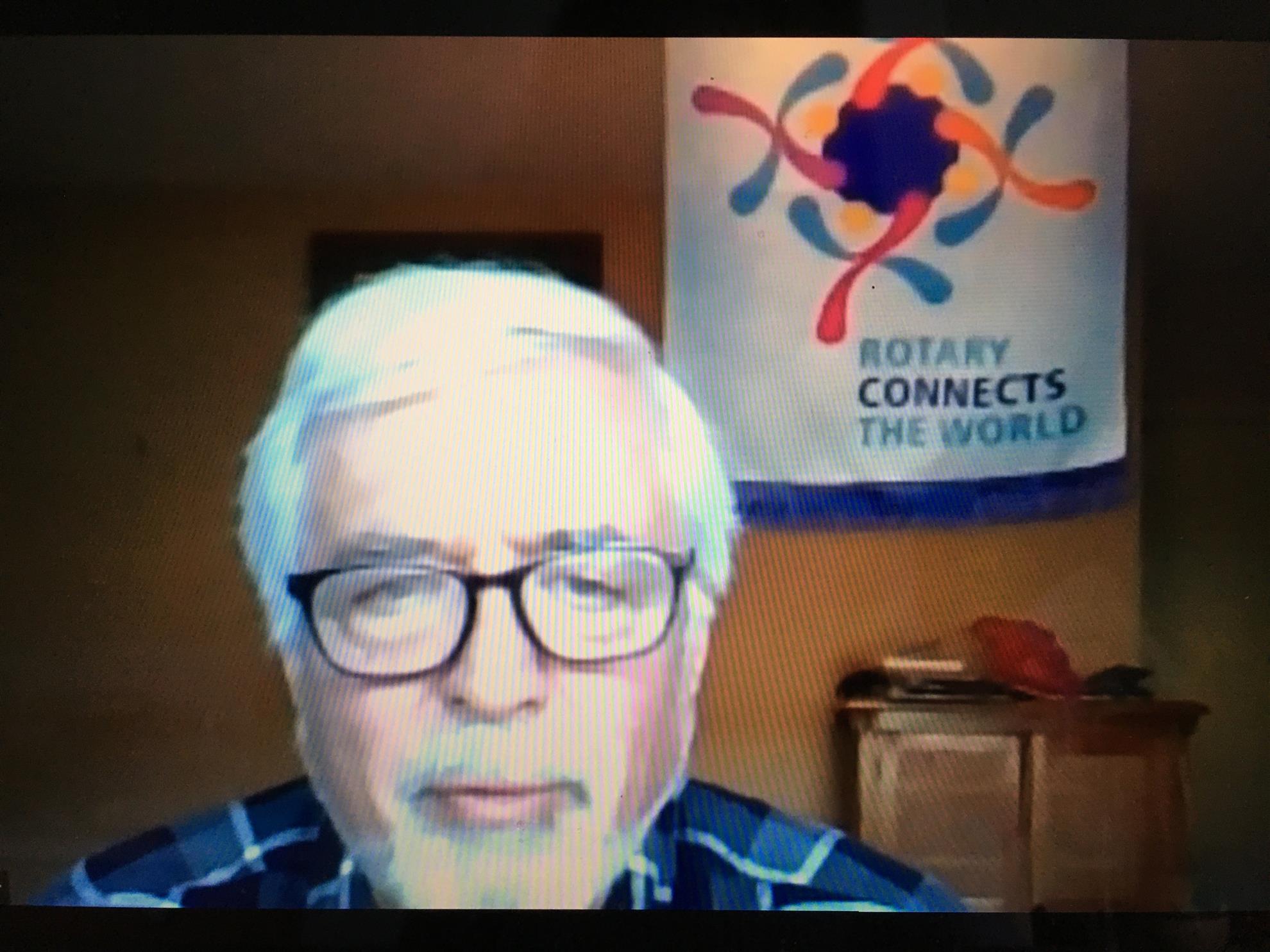
supported by the technical virtuoso of Peter Hoberg, more than 30 Sunrisers joined the prez from their offices, kitchens, living rooms and bedrooms to see and hear one another via the popular app Zoom.
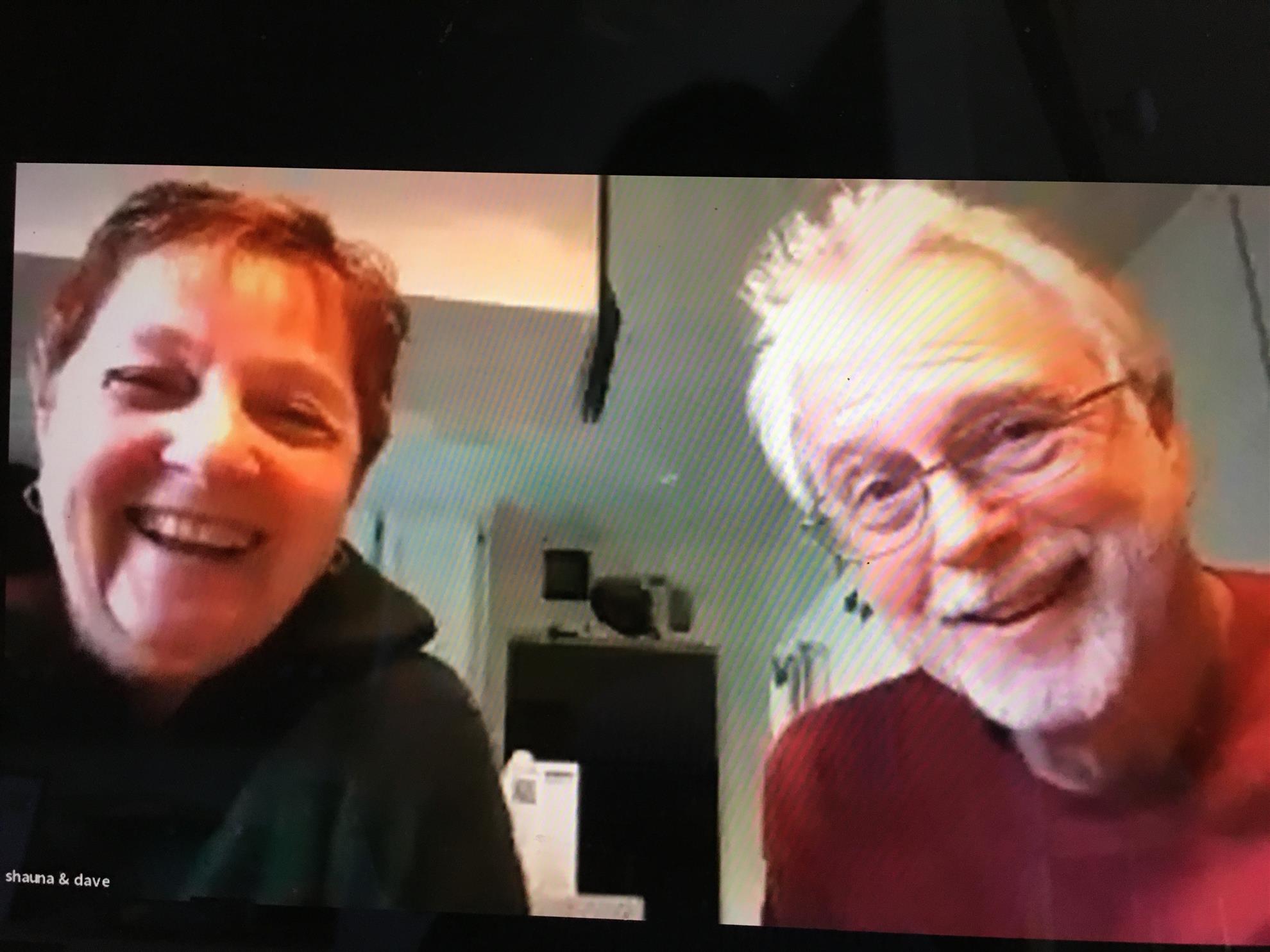
Shauna and Dave Lorenzen shared a screen.
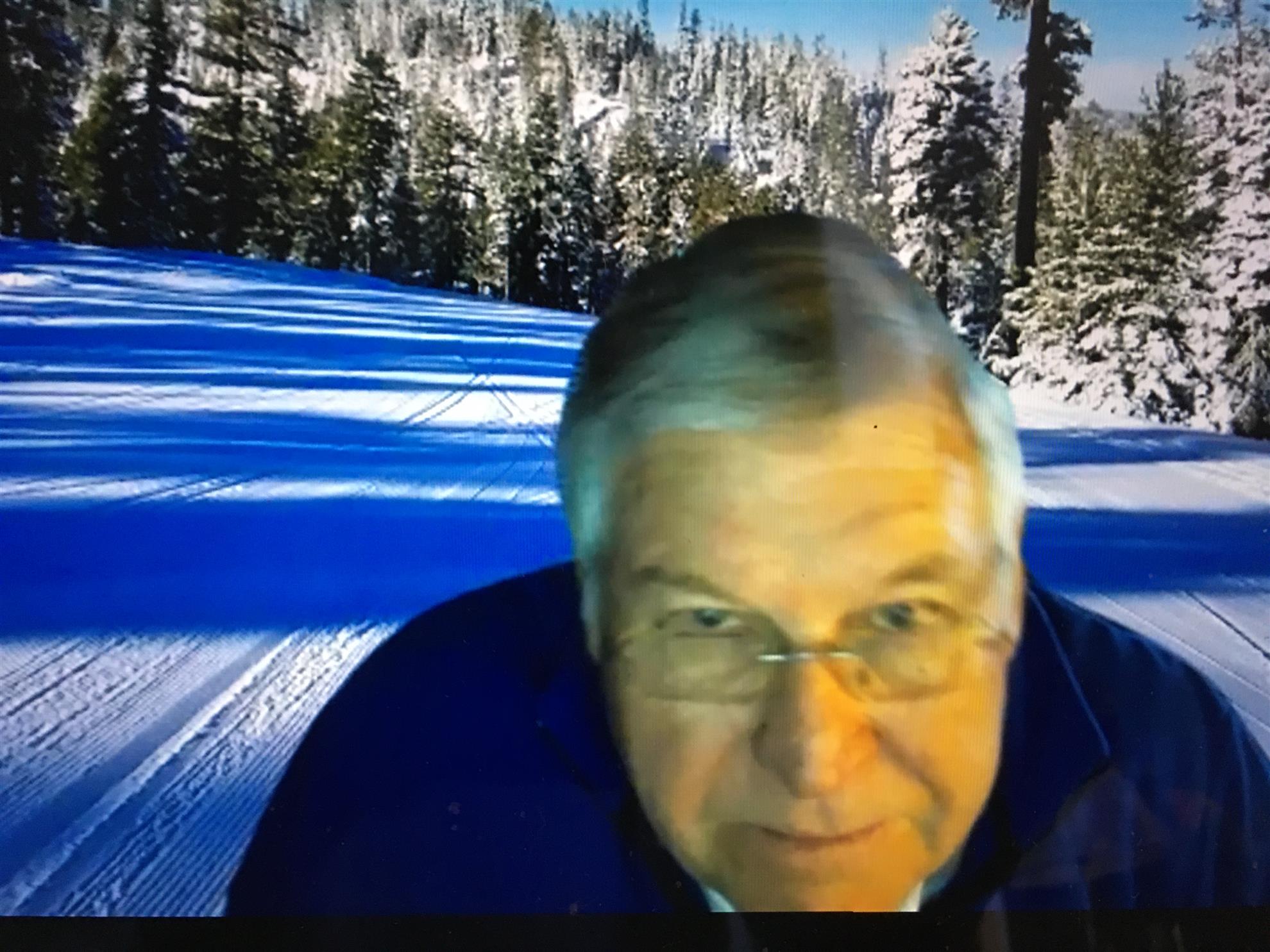
Randy Seelye joined from the slopes of a mountain retreat using a clever background option.
Ross Jones appeared in front of an artistic backdrop, towering over his screen -- looking down on all...
.
Max Child's reported on how he and his hotel are faring amidst the crisis.
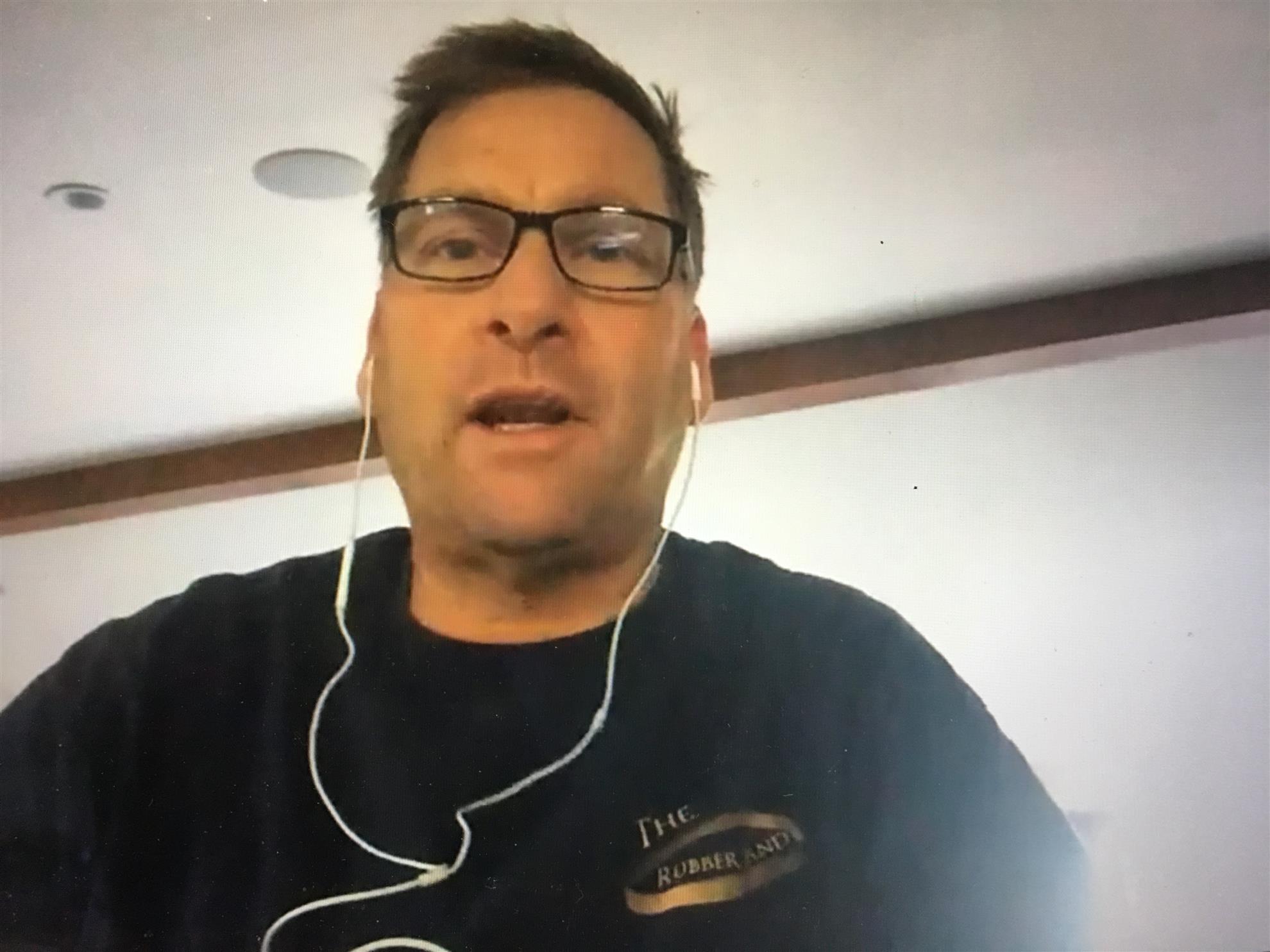
Rob Sanville "complained" that he is busier than ever responding to many "issues" his clients are experiencing.
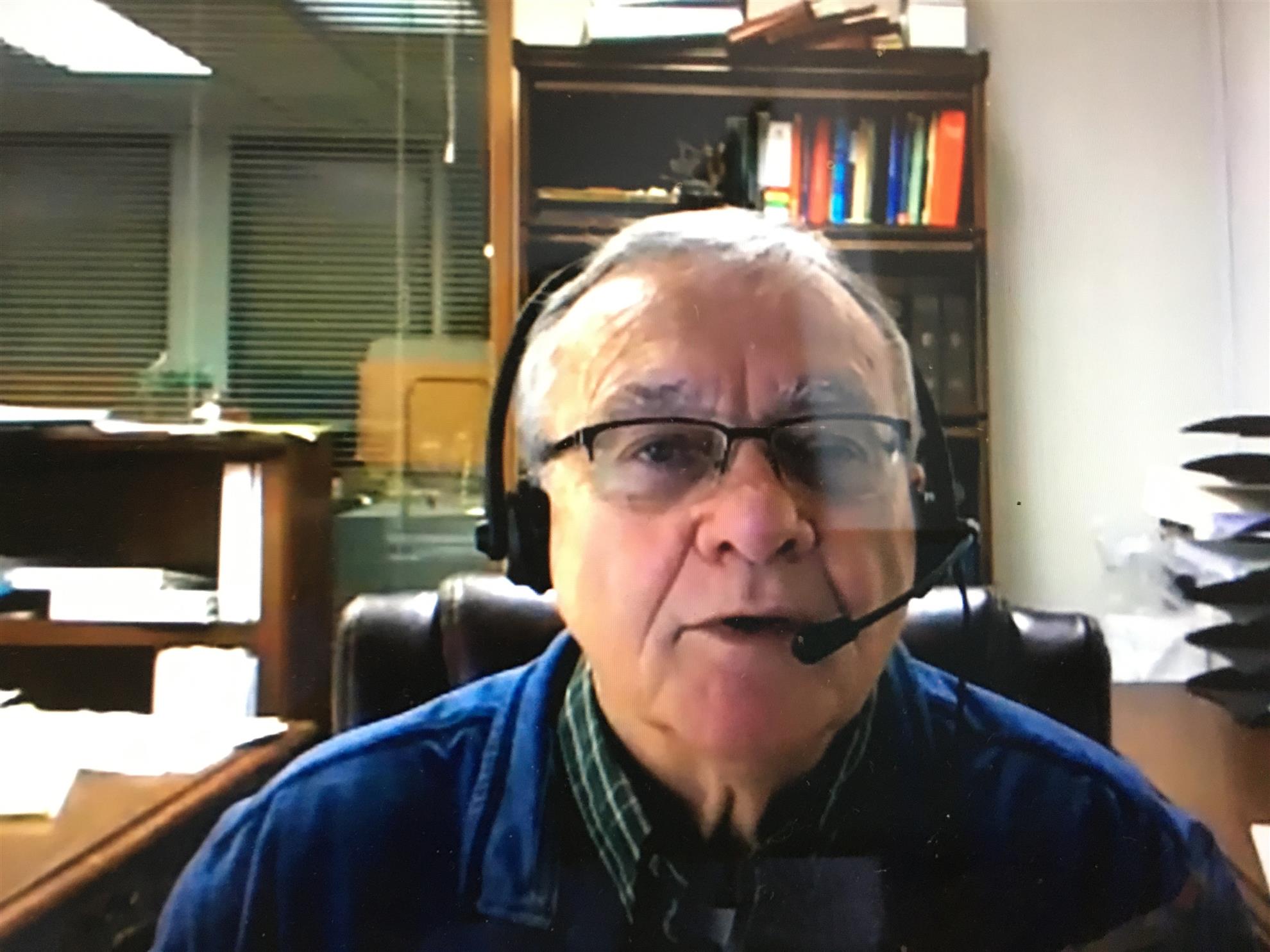
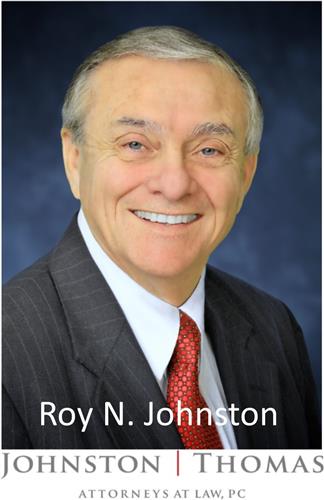
Roy Johnson appeared very professional in his home office with headphone and mic.
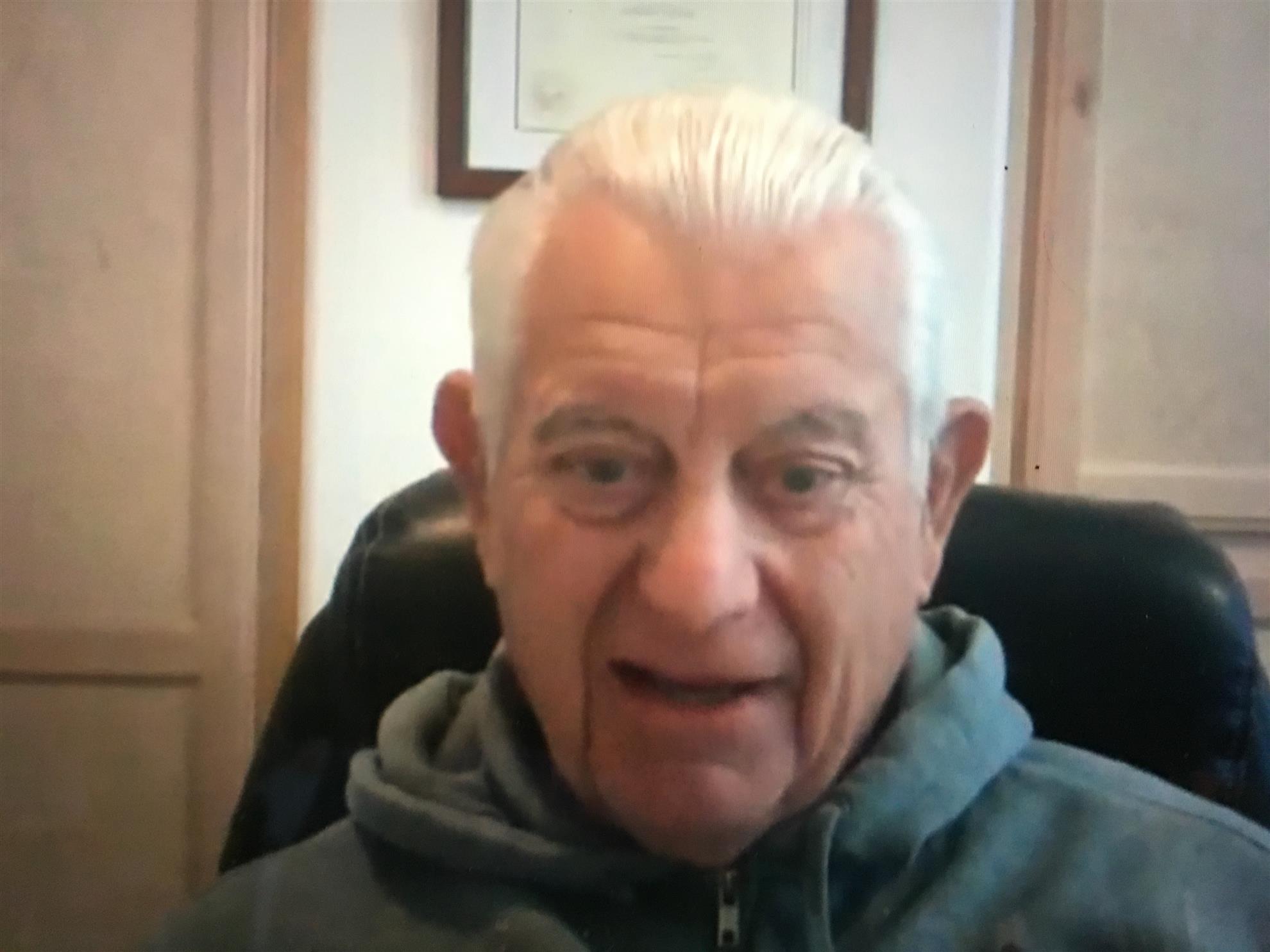
LeRoy Carlenzoli -- who gets the award for the most pleasing and well balanced background -- reported on the escalating needs of the Women's Recovery Center.
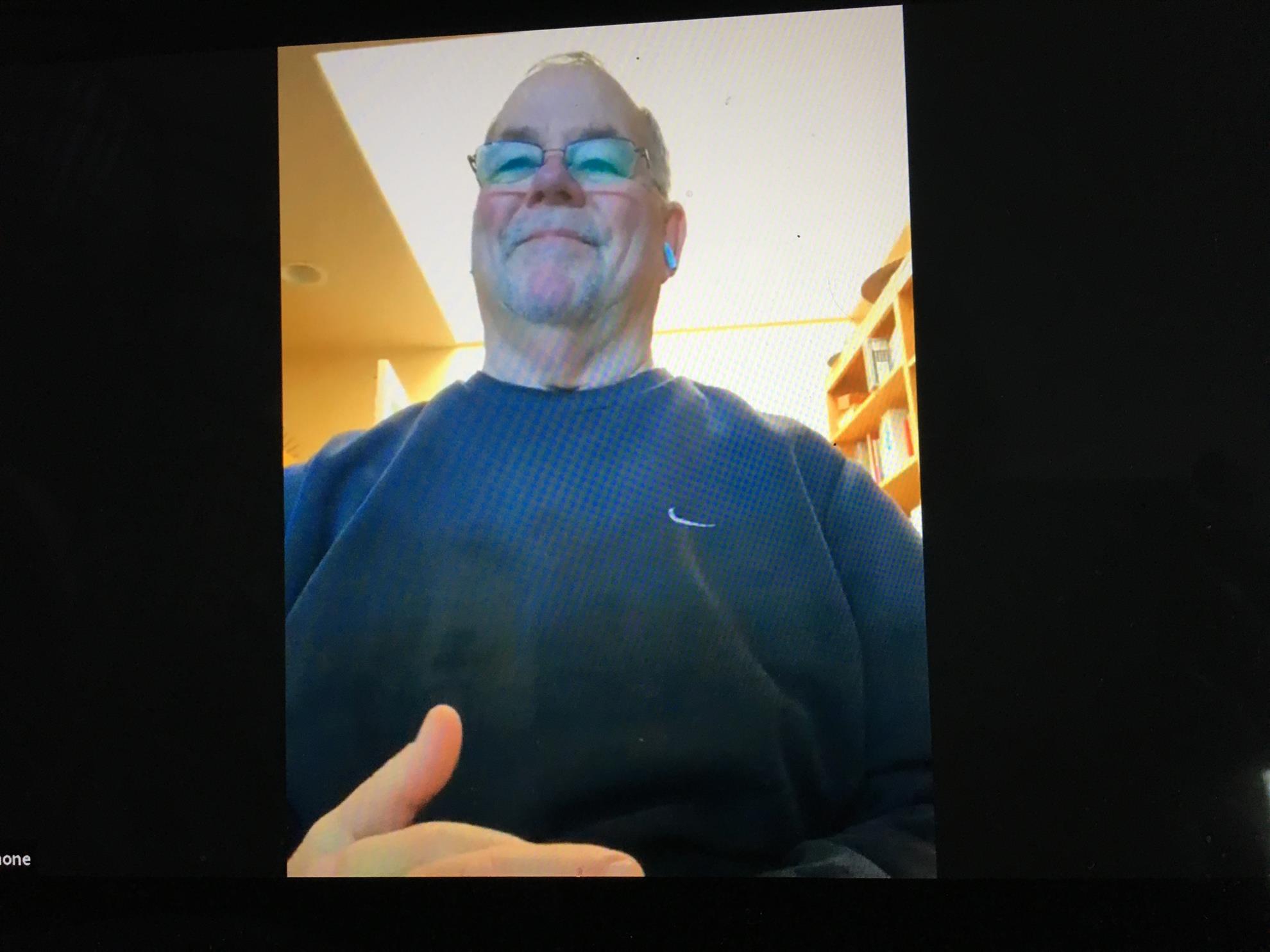
Steve Zwick -- the best lighted and most well focused of all participants -- dropped in towards the end of the meeting to report on attendance.
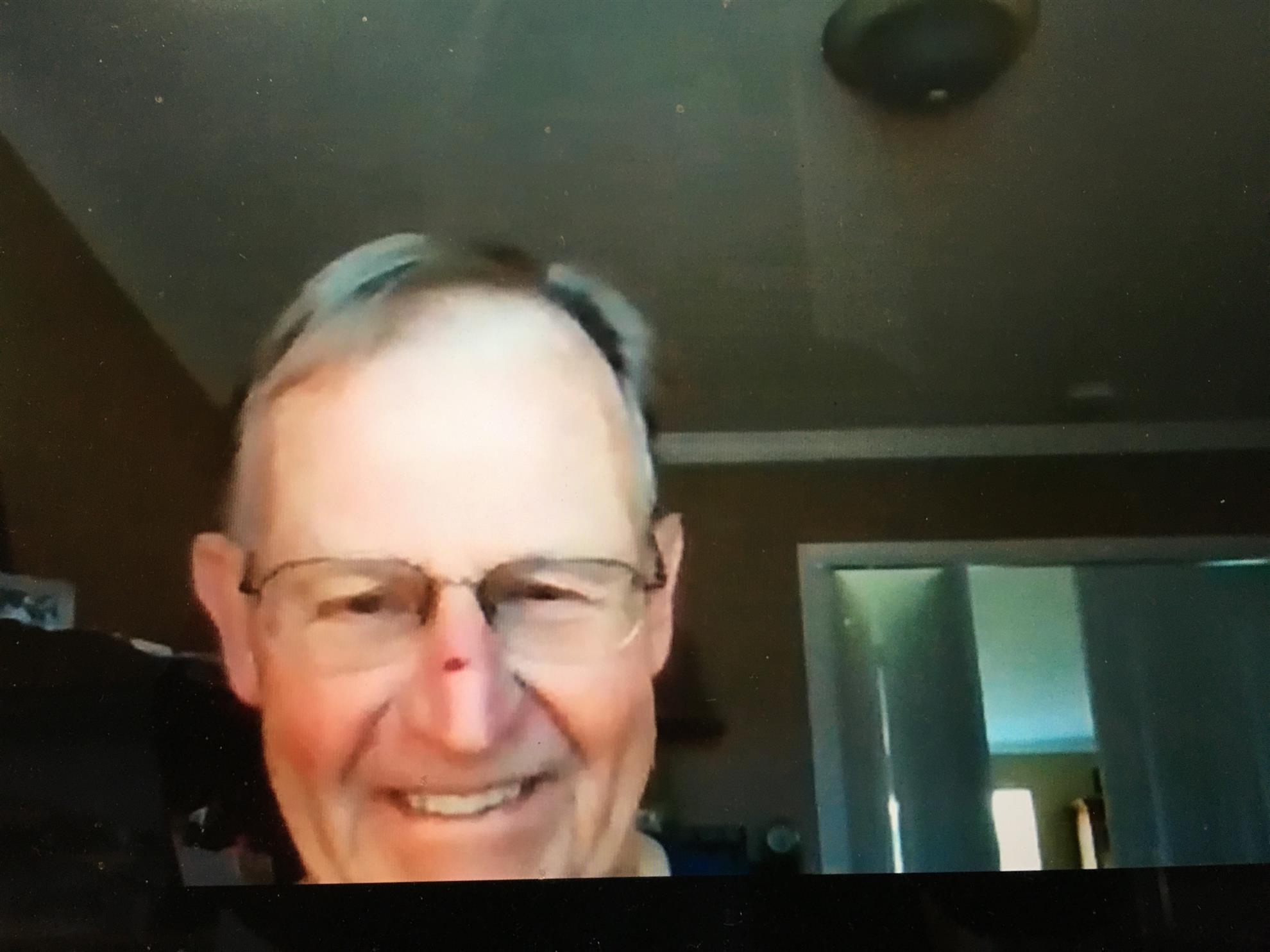
Steve Worthen beamed benevolently into the camera...
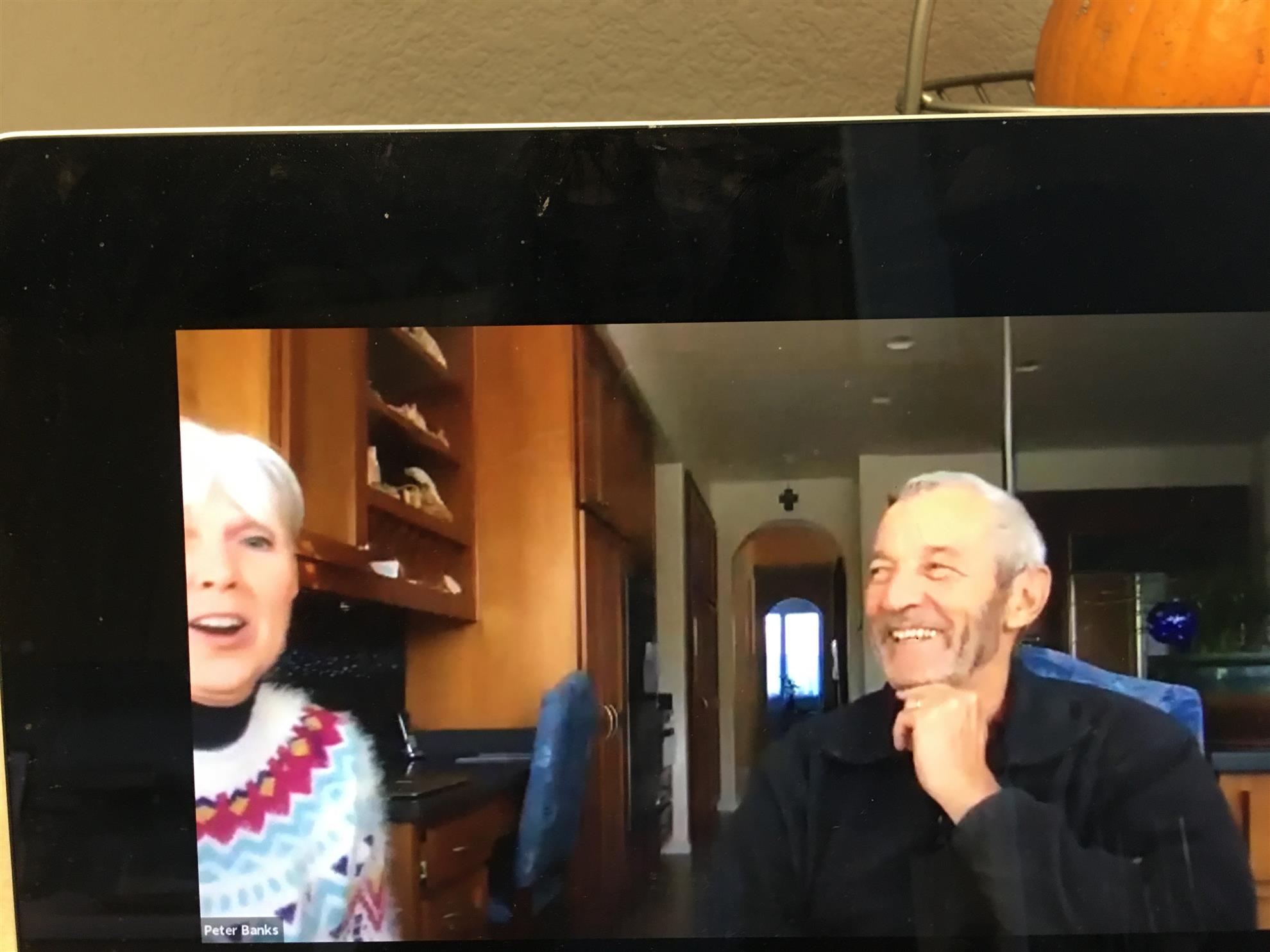
And Mary and Peter Banks chuckled as they shared a story about a mama and baby duck who were enjoying their pool
Vick Lockner, Penny Millar, Carolyn Anderson and many other Sunrisers appeared with or without video, using Zoom's audio component to enjoy seeing and hearing each other via this new technology -- which will be repeated for future meetings and social gatherings.
Have you been restless lately? With a bit more discretionary time on my hands, deciding just how to spend the time has been a dilemma.
Not that I am at a loss of a "Things to Do List". The absence of other wise easily distracting activities gives more mental bandwidth to examining my priorities.
This past week the Executive Committee of The Rotary Foundation met in response to changing priorities for the Foundation. They have expanded availability of funding for 2020-2021 District and Global Grants which impact COVID-19 responses.
This year's Rotary Theme is "Rotary Connects the World". What new links are incubating during your pause?
I spend a lot of time thinking of family, not just my own or the extended family of Rotary, but also the families we are helping in the communities we serve. In many parts of the world, mothers and children face challenges to survive that most of us will never comprehend. According to the World Health Organization, the risk of a woman in a low-income country dying during pregnancy or childbirth, or from related causes, is about 120 times higher than that of a woman living in a high-income country. It is encouraging that infant mortality rates are declining globally, yet 4 million babies annually still die within the first year of life.
In April, Rotary turns its attention to maternal and child health. And when we think of what we can do to help, we can look to clubs like the Rotaract Club of Calabar South-CB, Nigeria, for inspiration. It teamed up with the Rotaract Club of Canaan City (CB) in a program focused on educating mothers on best practices to prevent infant mortality and promote postnatal health for themselves and their babies. In Bangladesh, the Rotary Club of Dhaka North provides free surgeries and medicine to pregnant women who cannot afford the hospital costs associated with giving birth. I encourage you and your club to go to ideas.rotary.org to find projects like these that are helping to save mothers and children.
We also have witnessed how millions of people — families and entire communities — have been ripped away from their homes because of conflict, poverty, and disasters during the past decade. But Rotary has not stood idly by during the global refugee crisis.
During Rotary Day at the United Nations last November, we honored a Rotary Peace Fellow and five Rotarians who are taking action to help refugee communities. Among them was Ilge Karancak-Splane of the Rotary Club of Monterey Cannery Row, California. After visiting several tent camps in Turkey, she led a Rotary project that collected 1,000 pairs of children's shoes and socks for families in the camps and, later, led a global grant project to help educate refugee children. In March, Gay and I had the privilege of visiting a tent camp in Torbalı and seeing firsthand the good work that Rotarians from Turkey and California were accomplishing with Syrian refugees.
The challenges faced by mothers, their children, and refugee communities around the world are daunting. But when we remember our greatest strength — how Rotary Connects the World — we can begin to find solutions. Through our creativity, our resources, our dedication, and our networks, Rotary can and will open opportunities to face these challenges.
Perhaps the most fulfilling of all human endeavors is to give back, and Rotary offers countless opportunities to do it, such as donating to The Rotary Foundation. Each Rotarian and club can choose the level of Foundation giving that is right for them.
When you give $100 or more per year to the Annual Fund, you can become a Rotary Foundation Sustaining Member. Multiply that gift by 10 and you are a Paul Harris Fellow — one of those who donate $1,000 or more to the Annual Fund, the PolioPlus Fund, or approved global grants. Since 1957, there have been more than 1 million Paul Harris Fellows. And when Rotarians give $1,000 or more to the above annually, they become Paul Harris Society members. The Rotary Club of James River (Richmond), Virginia, is just one club that reached 100 percent membership in the society, and your club can do it, too.
Let's multiply by 10 again. Rotarians who commit to future gifts of $10,000 or more to the Foundation join the Bequest Society. Major Donors are those who have already given $10,000 or more to our Foundation. I am still proud of how we added 106 Major Donors in Taiwan during Rotary's centennial, exceeding our goal of 100. Together with the 103 additional Major Donors recruited the following year, they contributed more than $2 million to the Annual Fund! The gifts these donors make can change entire communities.
The Arch Klumph Society recognizes the highest level of giving at Rotary, at $250,000 or more, touching hundreds if not thousands of lives for generations to come. This month, I salute the 11 individuals and couples recognized during this year's International Assembly for increasing their giving level within the society. These generous supporters traveled from Japan, Nigeria, Taiwan, and the United States to celebrate their philanthropy.
Now, imagine what your club can do, what contribution you would like to make, what legacy you would like to leave, and find a giving level that works for you. Whatever you choose to give, whatever goal your club sets, remember that the gifts we give today will help Rotary and the communities we serve this year, next year, and beyond, in ways we may never know.
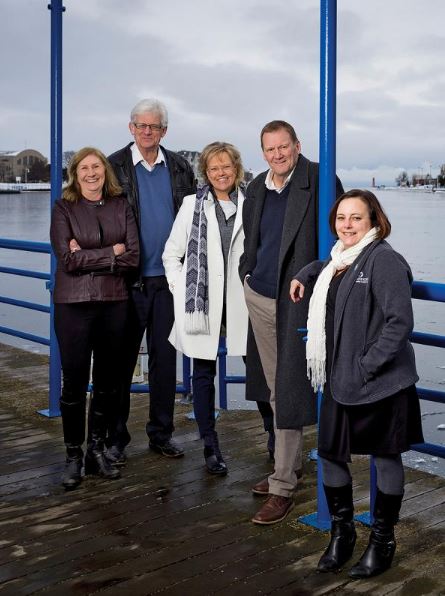
Sheboygan Rotarians Deborah Wente (from left), Mike Roth, Sheryl Dyksterhouse, Scott Luedke, and Kristin Stearns.
Image credit: Frank Ishman
Situated on the shore of Lake Michigan — the fifth-largest lake in the world, with a surface area about twice that of Belgium —Sheboygan, Wisconsin, is known among surfers as the “Malibu of the Midwest.” As home to generations of German Americans, it has been declared “Bratwurst Capital of the World,” although Germans in Germany might have something to say about that. It’s also where you’ll find “America’s Best Restrooms”: at the Kohler Arts Center, where the bathrooms boast hand-painted toilets and floor-to-ceiling tile murals.
“People call it ‘the Kohler,’ like they do ‘the Guggenheim,’” says Mike Vandersteen, the city’s mayor and a Sheboygan Rotarian for more than two decades. The art museum is famous for its residency pairing artists with the Kohler Co., a plumbing fixture manufacturer located just west of the city. (The company’s founder invented one of the first modern bathtubs here in 1883.)
As Vandersteen and Sheryl Dyksterhouse, the club’s co-president, show a visitor around, the work of Sheboygan’s Rotarians is visible throughout the community. In 2006, the club funded an eco-trail through the sand dunes along the lakeshore. And back in the 1980s, the Rotarians raised $75,000 to build Riverview Park along the Sheboygan River, whose banks are lined with rustic fishing shacks that have been converted into restaurants and shops.
“This club has a lot of projects, and any one of us could talk about them for an hour, or two or three hours,” says Tony Fessler. He talks about trees: When Ian H.S. Riseley, 2017-18 Rotary president, asked Rotarians around the world to plant 1.2 million trees, Fessler headed the fundraising for the Sheboygan club. It wasn’t a hard sell: Sheboygan has been named a “Tree City USA” by the Arbor Day Foundation for more than 40 years running. But the region is battling an infestation of an invasive beetle called the emerald ash borer, so the club also has a project to monitor ash trees and replant when needed, and to raise funds as well as awareness of the issue.
Judith Slawny talks about the club’s many projects: making deliveries for Meals on Wheels; sponsoring projects in India and Malawi; providing support for students and building homes in Guatemala; organizing a fundraiser that “leases” 3-by-5-foot American flags to local residents and installs them on lawns for national holidays; erecting an elaborate holiday light display; and assembling kits for victims of human trafficking that include clothing, toiletries, water bottles, and journals.
German immigrants settled in the area and began dairy farming.
The club also sponsors two Interact clubs and a Rotaract club, and provides scholarships for local high school students to attend leadership programs. Stuart Schmidt, the club’s youngest member at 25, was one of those students. He attended the World Affairs Seminar, an initiative organized by District 6270 that focuses on international issues. “I left the experience changed,” he recalls, “and I needed to get involved.” He joined the Interact club at his high school and, after he returned to the city after college, the Sheboygan Rotary club. “I dove right in,” he says.
Sheboygan is believed to be a Chippewa name meaning “passage or waterway between the lakes.” In the 1600s, French explorers encountered a large Potawatomi village at the mouth of the Sheboygan River, and beginning in the late 18th century, fur traders set up along the river. Later, German immigrants settled in the area and began dairy farming, helping to found Wisconsin’s famous cheese industry.
In the late 1800s, Sheboygan was known as “Chair City”; although its once-booming furniture industry has all but disappeared, the Sheboygan area is still home to manufacturers including Vollrath (cookware), Sargento (cheese), and Old Wisconsin and Johnsonville (sausage). On the subject of sausage, Sheboyganites will tell you that their namesake brats are served — often two at a time — on a hard roll called a semmel, never on a hot dog bun. Appropriate toppings are mustard, ketchup, pickles, and onions. “And no sauerkraut,” says Vandersteen. “It’s a sin to put on sauerkraut here in Sheboygan.”
The Rotary Club of Sheboygan, which was chartered in 1916, meets at the Elks Lodge, where a giant mounted elk’s head looms over the buffet — today featuring chicken Kiev and baked potatoes. Even in Sheboygan, people can’t eat bratwurst every day.
As the meeting starts, Dyksterhouse and Deborah Wente share the podium. Because the two are serving successive terms as president, they decided to share the duties. It has worked very well, Wente says, and the model has allowed the club to make progress on some long-term initiatives, including launching a satellite club. Kristin Stearns, the chair of District 6270’s alumni committee, is heading that effort. Stearns first got involved with Rotary in 2005, when she participated in a Group Study Exchange trip to Australia. “I loved it. I loved everything about Rotary,” she says. No matter how busy everyone gets, she says, she can count on Rotarians to pitch in. “I know things will get done.”
— DIANA SCHOBERG
• This story originally appeared in the April 2020 issue of The Rotarian magazine.
Rotary Club of Santa Rosa Sunrise - Founded June 30, 1986


.png)
.jpg)