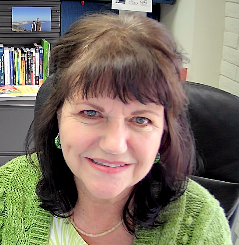
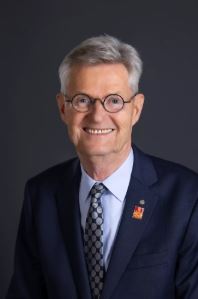
Dr. Nancy Brown is the Community Preparedness Program Manager for the Sonoma County Department of Emergency Management. Originally from Southern California, she earned her Master of Science in Emergency Management Administration from California State University, Long Beach, and completed her PhD in Emergency Management at Massey University in Wellington, New Zealand. Her dissertation looks at building resilience in the hotel sector. Dr Brown’s research has been published in the International Journal of Disaster Risk Reduction, the Journal of Hospitality and Tourism Management, Hotel Executive, the Journal of Emergency Management, and the Autralasian Journal of Emergency Management.
Prior to her current position, Nancy served as the Emergency Preparedness Coordinator for the Hotels at the Disneyland Resort in Anaheim. She has also worked on international emergency response planning projects, including contributing to the development of the National Disaster Response Framework for Indonesia. Nancy’s long-term goals focus on developing pragmatic strategies to enhance disaster resilience, engaging communities and businesses in a systemic manner to foster a culture of preparedness and resilience.
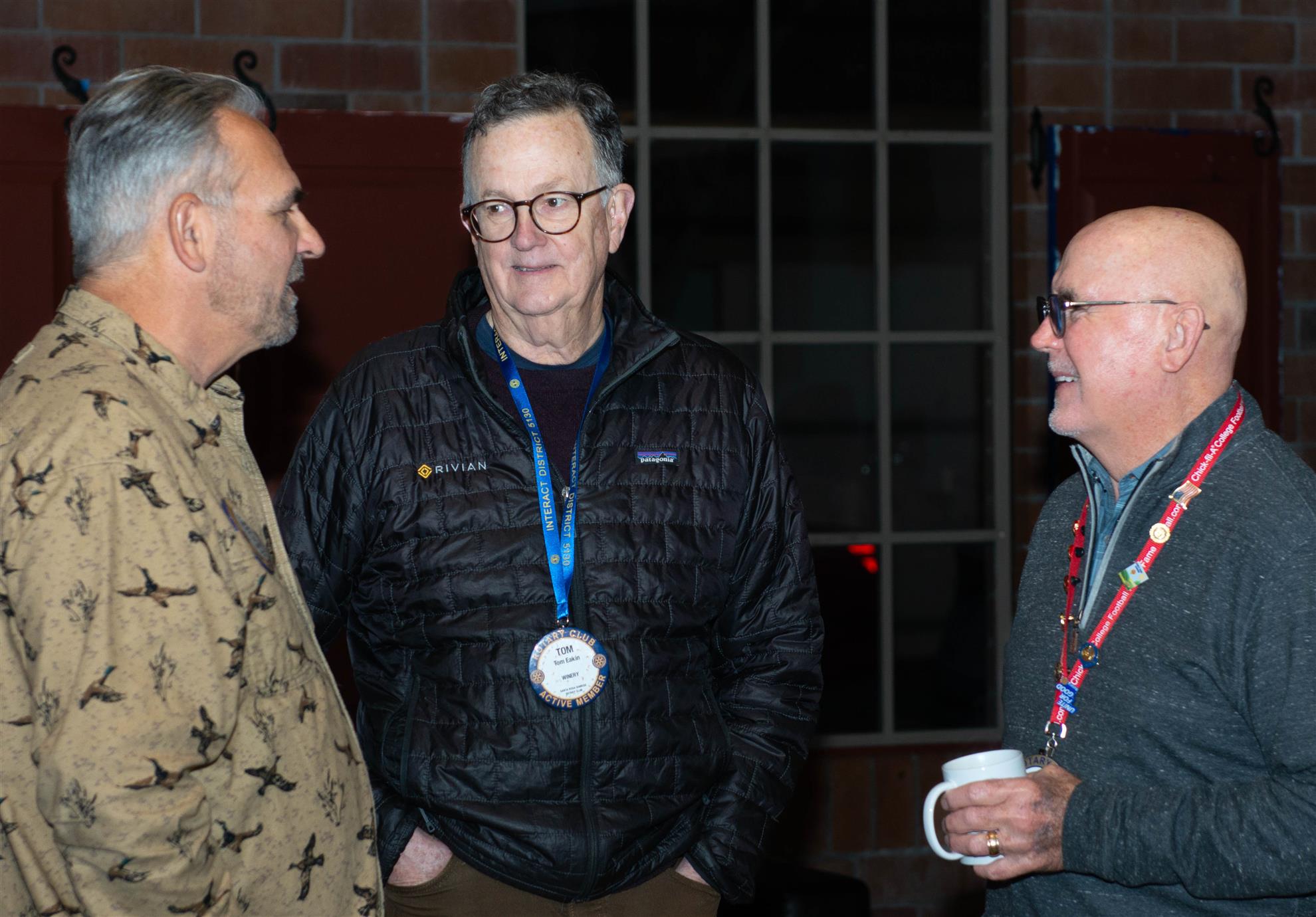
On a regular basis, our resident photo pro Warren Smith, submits pictures of what is going on at the weekly meetings. You can always find the most recent pictures at the websites photo journal called "Meeting Sighting" Please note that all the meeting photos for the entire Rotary year are at this location with the most recent on the last page.
Thanks for all the great pictures Warren!Link to Meeting Sightings. The most recent are on the last page!
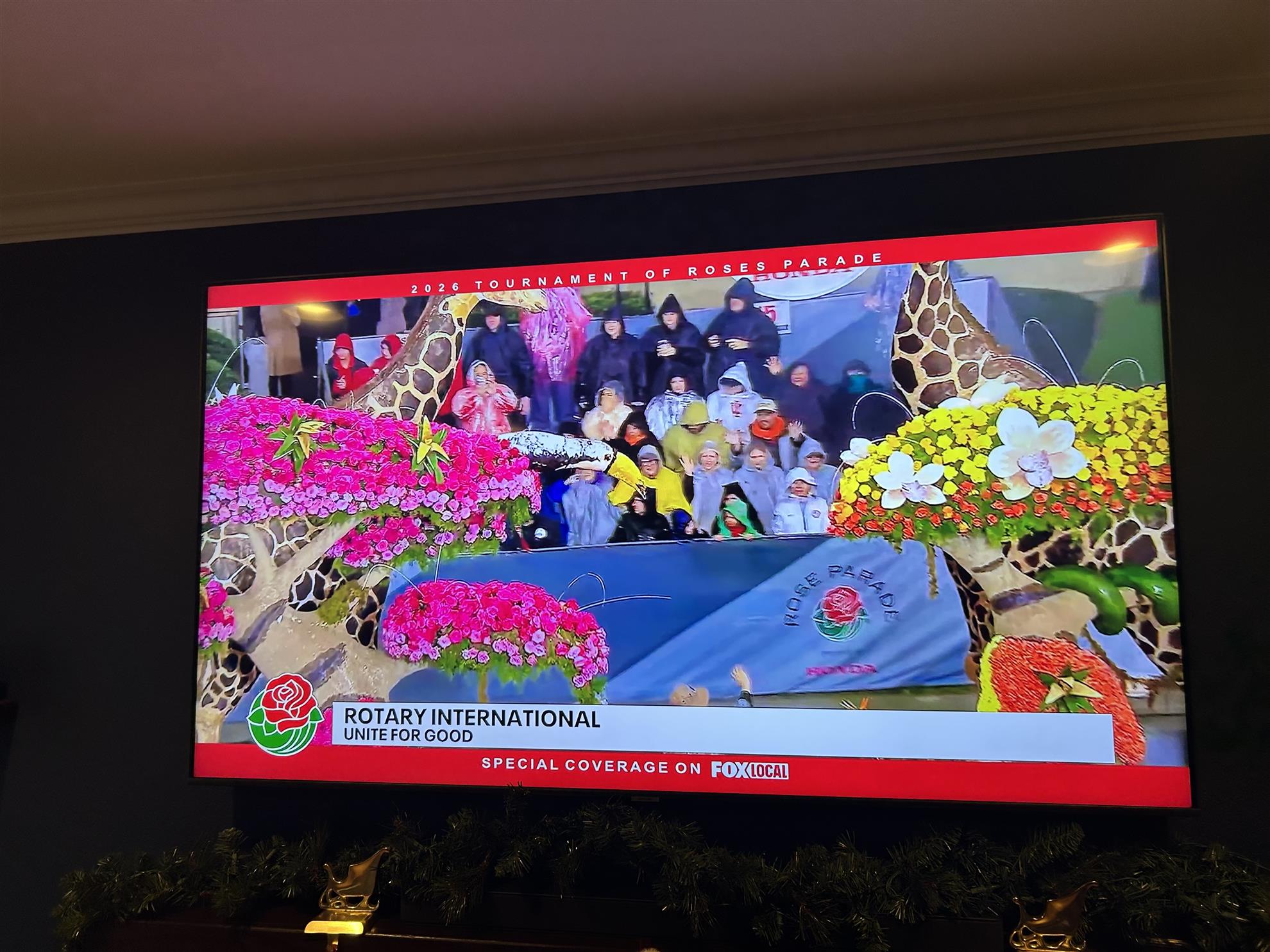
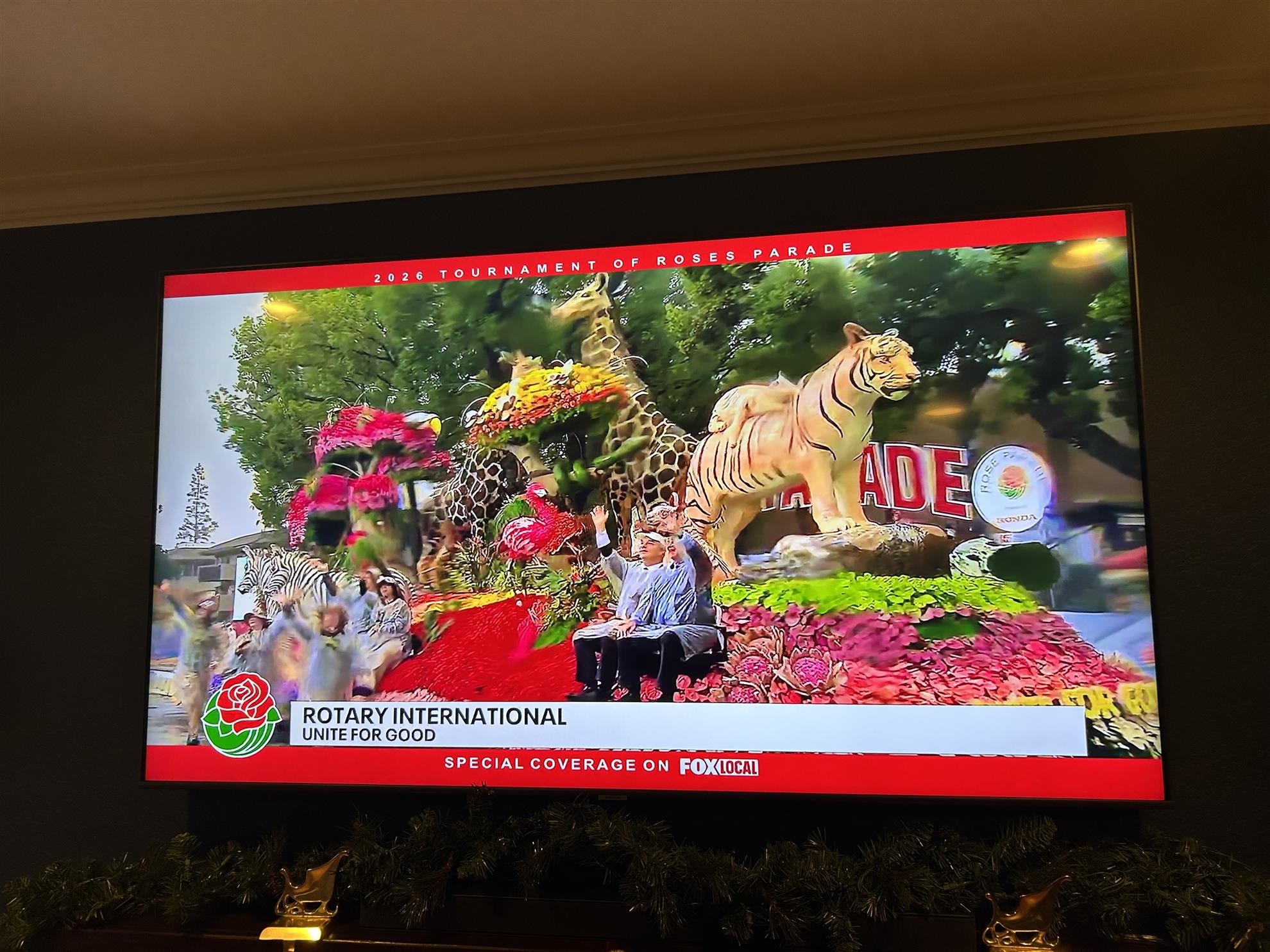
United for Good, Rotary International's 2025-2026 theme blended very well with this year's Tournament of Roses Parade theme "The Magnificence of Teamwork".
This image was captured in front of the viewing stands with the Rose Parade banner in the background. The Rotary float proudly displayed the international theme "united for good". Commentators on the broadcast highlighted Rotary work in polio, eradication, clean water, initiatives and public health partnerships, including the Bill and Melinda Gates Foundation.
For more on other floats featured, click HERE to check it out!
In a garage outside Salinas, California, young people who are learning to restore classic cars are doing more than developing a skill — they are reclaiming their futures. This training program provides mentorship and, for some, a path away from gang involvement toward meaningful employment. Graduates leave with certifications, practical experience, and hope.
This is what Rotary’s Vocational Service Month celebrates each January — the power of bringing together people with unique skills to do good in the world. It reminds us that integrity isn’t just about our actions matching our words. Integrity is in everything we do.
The California automotive program has been such a success because it was built on integrity. Members of the Rotary Club of Carmel-by-the-Sea didn’t assume they knew what the community needed. They listened. They learned there was a shortage of skilled mechanics as well as a large number of young people lacking job training. They recognized that technical skills alone wouldn’t be enough, so they partnered with Rancho Cielo, a nonprofit offering counseling and support services alongside vocational training.
That is The Four-Way Test in action. Those four simple questions help us not judge others but guide us toward genuine, effective service.
Consider our commitment to ending polio. For nearly 40 years, we have promised the world’s children we will eliminate this disease. Despite obstacles, we persist, and today we are closer to defeating the virus. Keeping this promise is the very definition of integrity.
The same integrity must drive our vocational service. With 1.2 billion young people in emerging economies reaching working age in the next decade and only 420 million jobs projected, we face a critical gap. Communities long excluded from economic opportunities need our support.
But support doesn’t mean imposing our will. It means listening to local needs, building partnerships, and designing projects that communities can sustain themselves.
You have knowledge that can transform lives. Whatever your profession, your expertise combined with Rotary’s values creates lasting change. The question isn’t whether you have something to offer, it’s how you’ll use your skills to serve.
This January, I encourage you to ask how your club can address vocational needs in your community. What skills do your members have that could change someone’s life? How can your networks open doors for young people? What partnerships can create sustainable jobs?
Let integrity guide you. Let The Four-Way Test light your path. And let the young people in California and the multitudes worldwide who need job skills remind you why vocational service matters.
Let us celebrate putting our professional skills to work for humanity with integrity at the heart of everything we do.
You can find all prior "RI President's Messages" at this LINK
When we think of global projects at Rotary, we often think of the cooperation between two clubs or districts that goes into Rotary Foundation global grants. These efforts form the backbone of our international grant activities. Yet we have also seen how larger projects can have even greater impact by attracting significant partners and long-term funding. These initiatives are measurable and visible, attracting yet more partners and new Rotary members who see the work in action.
Together for Healthy Families in Nigeria, one of the Foundation’s Programs of Scale, embodies this vision. I asked Dolapo Lufadeju, a Rotarian from Nigeria and co-founder of the Rotary Action Group for Reproductive, Maternal, and Child Health, to share why this model has been so successful:
Together for Healthy Families in Nigeria, which began in 2022, aims to reduce maternal and neonatal deaths by 25 percent. We focus on training doctors, midwives, nurses, and community health extension workers in emergency obstetrics, neonatal care, respectful maternity practices, and long-acting reversible contraceptives.
The most vital aspect is community engagement. We conduct dialogues with traditional, religious, and youth leaders. We are organizing joint medical outreach and home visitations. State ministries of health are increasingly adopting these approaches as part of their primary health care interventions, using the template and methodologies Rotary developed.
Our electronic data-tracking system allows better monitoring of maternal and child deaths. Notably, our community-based system now tracks maternal deaths during home deliveries, something previously unmeasured.
Most significantly, maternal deaths dropped by 20 percent and neonatal deaths decreased by 28 percent in supported facilities, while postnatal clinic attendance increased by 10 percent.
I am also a member of the action group and have followed this project for over 20 years, long before it was awarded a Programs of Scale grant. In November I observed the dedicated work there of the teams with midwives and health workers.
This evolution shows what’s possible when Rotary dedication meets strategic partnerships. The program’s success prompted Nigerian philanthropist Sir Emeka Offor to contribute $5 million, allowing the initiative to expand. Other countries are interested in this model.
Every contribution you make to The Rotary Foundation strengthens its power as a global force for change that channels your generosity into lasting transformation.
You can find all prior "Messages from the Foundation Trustee Chair" at this LINK
Since its start, Rotary has been a place for genuine connection
By John Hewko
In the summer of 1910, while visiting his cousin in Chicago, P.A.C. McIntyre, a businessman from Winnipeg, heard about a club where people of different trades and professions gathered weekly to share friendship and perform community service. Since members of the club rotated their meetings at one another’s offices, they settled on “Rotary” as a fitting name. Keenly interested, McIntyre met with Paul Harris, the young Chicago lawyer who had founded the first Rotary club there five years earlier.
During their conversation, Harris explained that the club was intended to restore the sense of camaraderie and community he had known growing up in small-town Vermont but found absent in urban life. “Everywhere there were people but nowhere a familiar face,” Harris recalled in his autobiography as he described the loneliness and social alienation that he and others had experienced. He wanted to establish a place for people to come together — not just to conduct business, but to form lasting, genuine connections.
Impressed by Harris’ vision and Rotary’s early success in Chicago and other U.S. cities, McIntyre returned to his hometown and formed the first Rotary club outside the U.S. in 1912. That one club in Winnipeg soon became dozens and then hundreds in Canada as the passion for fellowship and good deeds swept across the country.
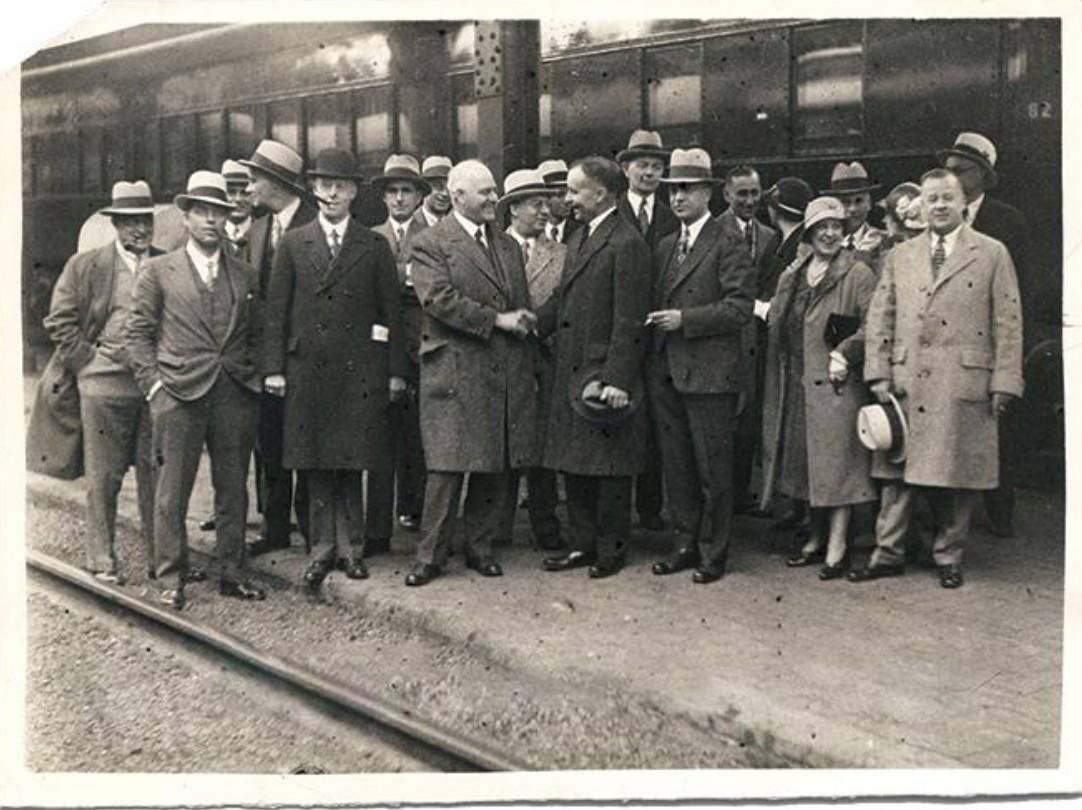
Members of the Rotary Club of Winnipeg travel by train to a district conference in 1932.
Rotary International archive
In recent years, there’s been much talk about social isolation or the “loneliness epidemic.” Even though it’s portrayed as a modern illness or a long-term effect of the COVID-19 pandemic, loneliness is hardly a new phenomenon, as Rotary’s story shows. At the beginning of the 20th century, loneliness and isolation became increasingly recognized as a societal problem in North America because rapid urbanization shifted populations from smaller, tighter rural communities into more anonymous city existences. In response to the social crisis, organizations such as Rotary, Kiwanis, and Lions emerged and flourished.
Unfortunately, in the past decade the idea of belonging to a traditional civic organization has become perceived as obsolete. Many see the groups as relics of their grandparents’ generation and instead flock to online communities. Despite being more digitally connected than ever, those same people are struggling to forge the kind of deep, meaningful relationships that give life purpose.
The Commonwealth Fund’s 2021 survey of older adults ranked Canada as the loneliest among 11 developed nations. According to Statistics Canada, nearly 1 in 4 people ages 15 to 24 report feeling lonely always or often.
Loneliness is more than a personal struggle; in 2023, Dr. Vivek Murthy, who was then the U.S. surgeon general, declared loneliness a public health crisis on par with smoking or obesity in terms of its detrimental effects.
We don’t have to go far to search for a cure. Canada’s historical ties to Rotary make it the perfect place for an antidote to the loneliness epidemic. While joining civic organizations might seem outdated to some, it has proved to be effective at creating connections — much like Grandma’s homemade chicken soup, which, after many generations, still provides spoonfuls of comfort.
At their core, Rotary and other groups complement governments by addressing social needs and advocating for change. The 2025 Rotary Convention in Calgary, which brought together 15,000 Rotary members from more than 120 countries and regions, offers a powerful reminder of the strength of service organizations.
At present, the trend toward isolationism is taking hold in many countries; in some instances, it’s accompanied by drastic shifts in governmental policies that have led to significant cuts in funding for humanitarian programs and economic development. Civic organizations are stepping in to fill the gaps in essential social services. They wield a potent soft power and project their values of compassion and giving onto universal issues, from global health and disaster response to development programs and education.
For more than 100 years, civic organizations have fostered the kinds of connections that sustain us. This time-tested cure can work miracles at a time when loneliness threatens our collective well-being.
John Hewko is general secretary and CEO of Rotary International.
This story originally appeared in the January 2026 issue of Rotary Canada magazine.
Rotary clubs operate around the globe and online, in a variety of formats. Which one is right for you?



.png)