Almost immediately after the first horseless carriages appeared on America’s roads, motorists began organizing auto clubs to advocate for traffic safety, etc.
Whether it be planning a trip or assisting a Member at the side of the road,
AAA Northern California, Nevada & Utah (AAA NCNU) was founded to help people. Join us to learn how AAA NCNU is continuing to serve Members, and the community, during the COVID-19 pandemic.
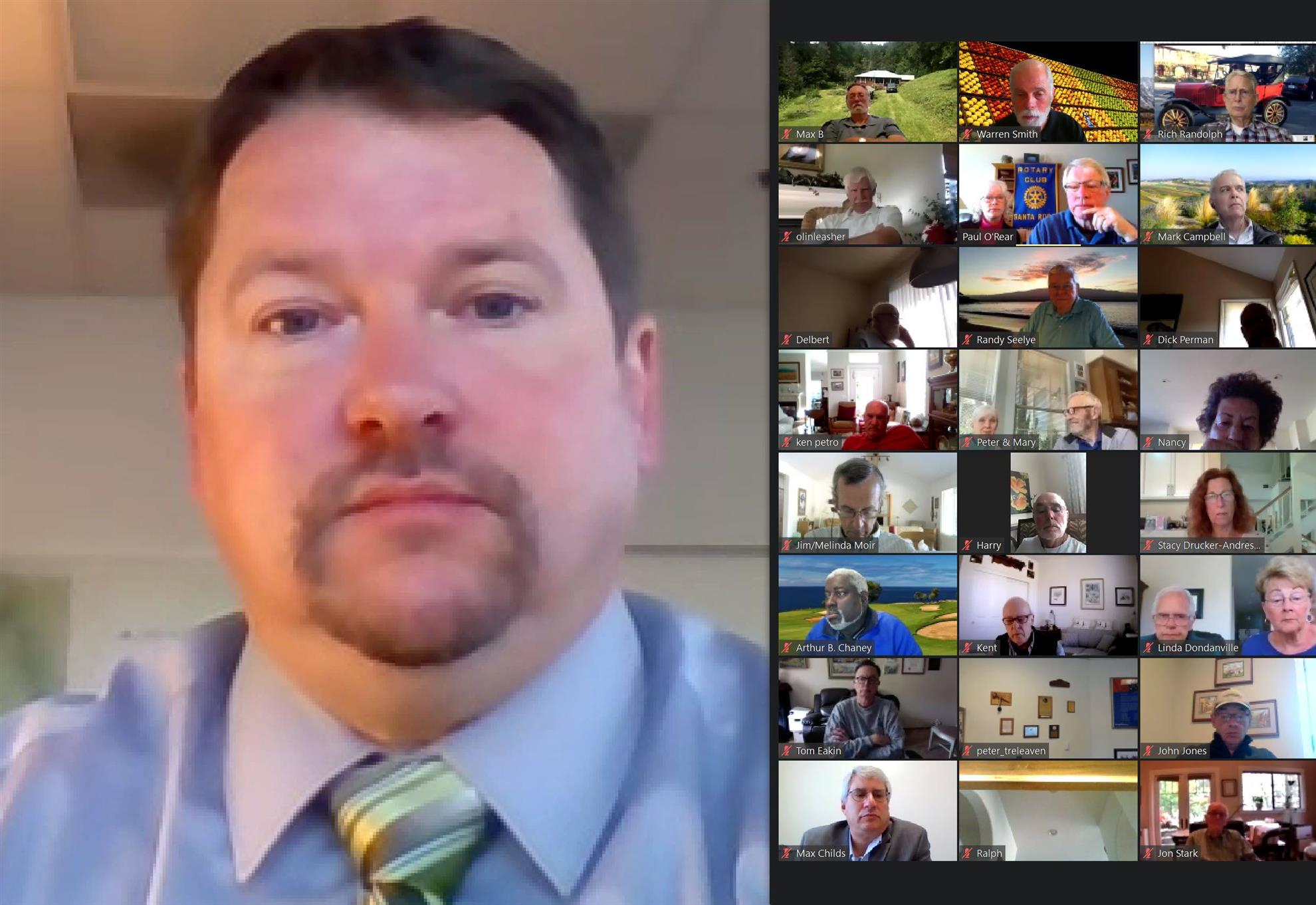
Andrew Smith, the Sonoma County Agricultural Commissioner!
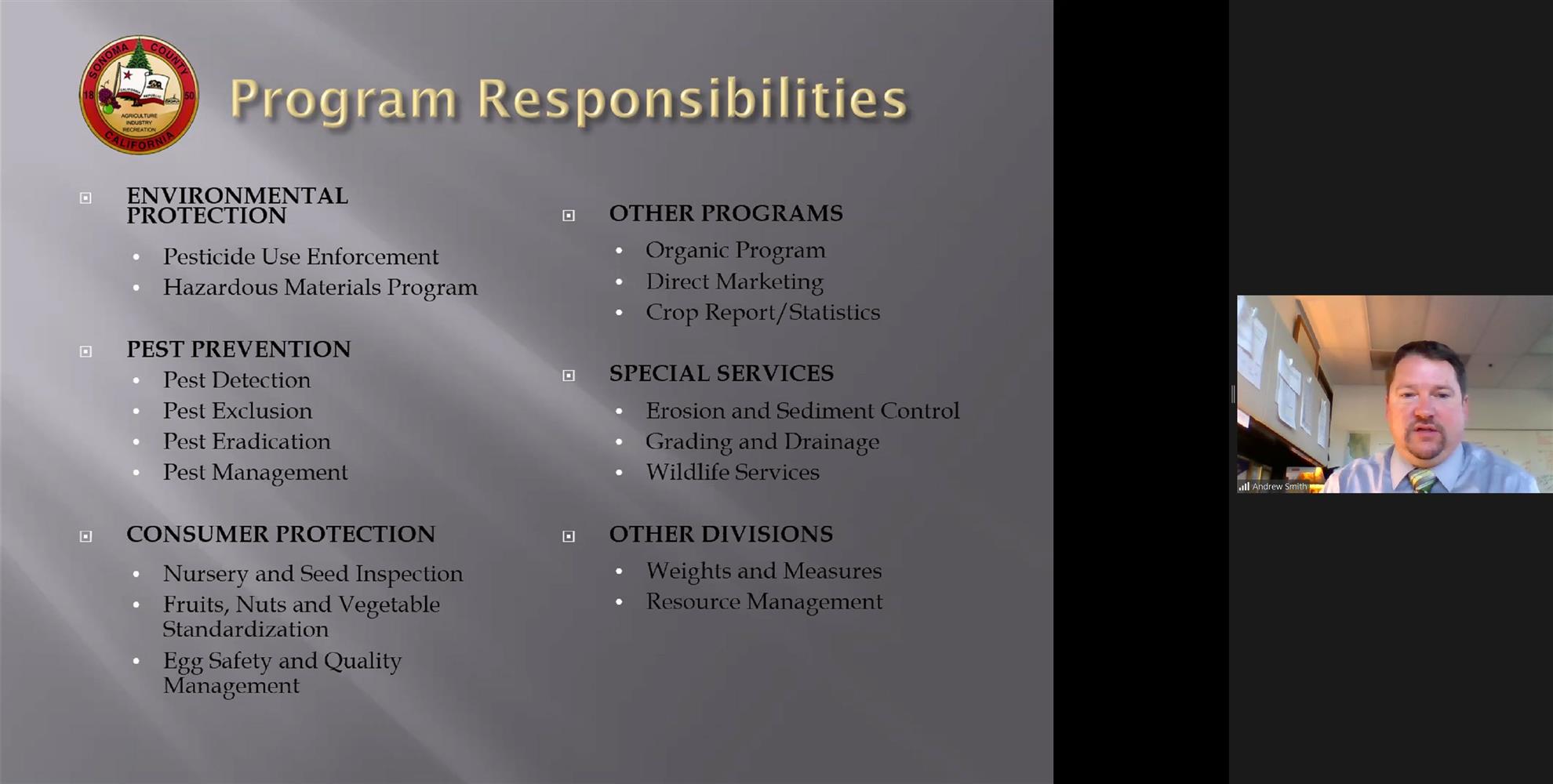
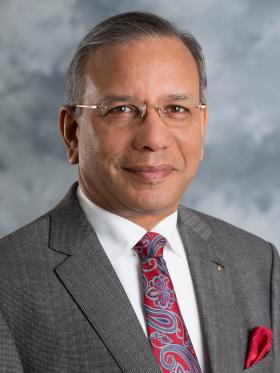
Our Guest Speaker for April 29, 2021 was Andrew Smith, the County Agricultural Commissioner/Sealer of Weights & Measures (and son of Warren Smith!). Andrew’s topic was “Regulating Agriculture in Sonoma County.” Andrew was born and raised in Sonoma County, attended SRJC and graduated in Agroecology from the University of British Columbia in Vancouver. Andrew learned to love dirt, bugs, and plants from his father! He has worked for the Ag Commissioner’s office since returning from college, spending time in all of the Ag division programs. He became the Ag. Commissioner in 2020.
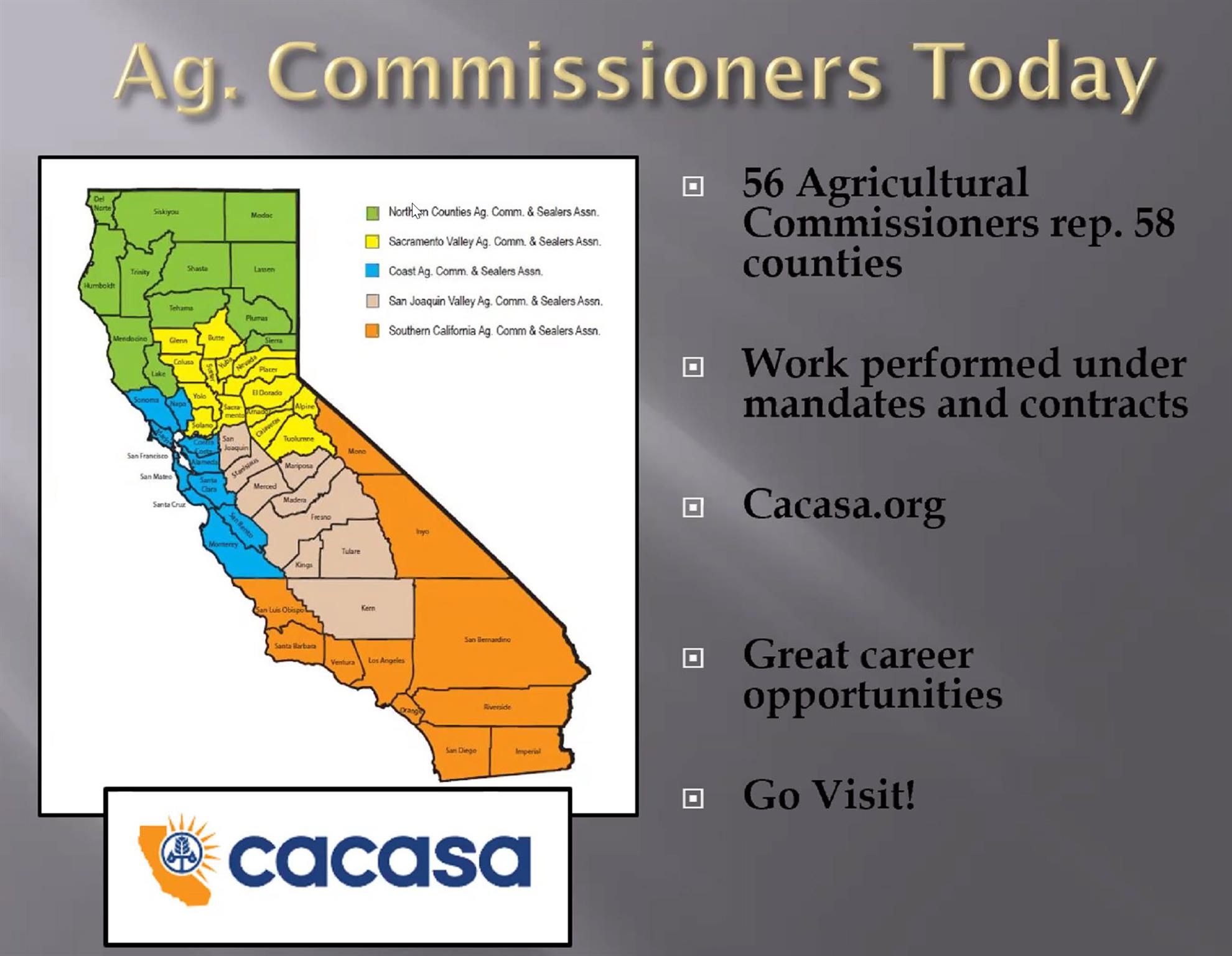
The roots of the Ag. Commissioner’s history run back to the 1800’s. The Commissioner’s historical responsibilities included ensuring food safety, stopping invasive species, and generally promoting agriculture. In 1919, California established the CA Department of Food and Agriculture. Fifty-six California counties have their own Commissioners, who perform work under statutory mandates and contract. Ag. Commissioners also enforce the Weights & Measures laws.
The Commissioner’s responsibilities include environmental, pest, and consumer protection. These responsibilities require the office to, among other things, enforce pesticide use, run the County’s hazardous materials program, control pests (through pest detection, exclusion, eradication, and management), inspect nurseries and seeds, ensure compliance with minimum standards regarding quality and marketing of produce, and inspect egg packagers and retailers. The office also licenses the use of pesticides and runs programs for the detection of pests, including the use of traps to help identify pests.
The Weights & Measures Division works to preserve and maintain confidence in the accuracy of weighing and measuring instruments, product standard, and business practices. The Division monitors, enforces and licenses Weighmasters and inspects all sorts of measuring and weighing devices. Other Ag. Commissioner programs include erosion and sediment control, the Hemp program, and water use efficiency through supervising groundwater recharge and management.
Thank you, Andrew, for explaining the amazingly complex world of the Agriculture Commissioner’s duties and responsibilities. You made it all sound so simple and straightforward!
You may view Andrew's presentation by clicking HERE. It will be available for the next week or so.
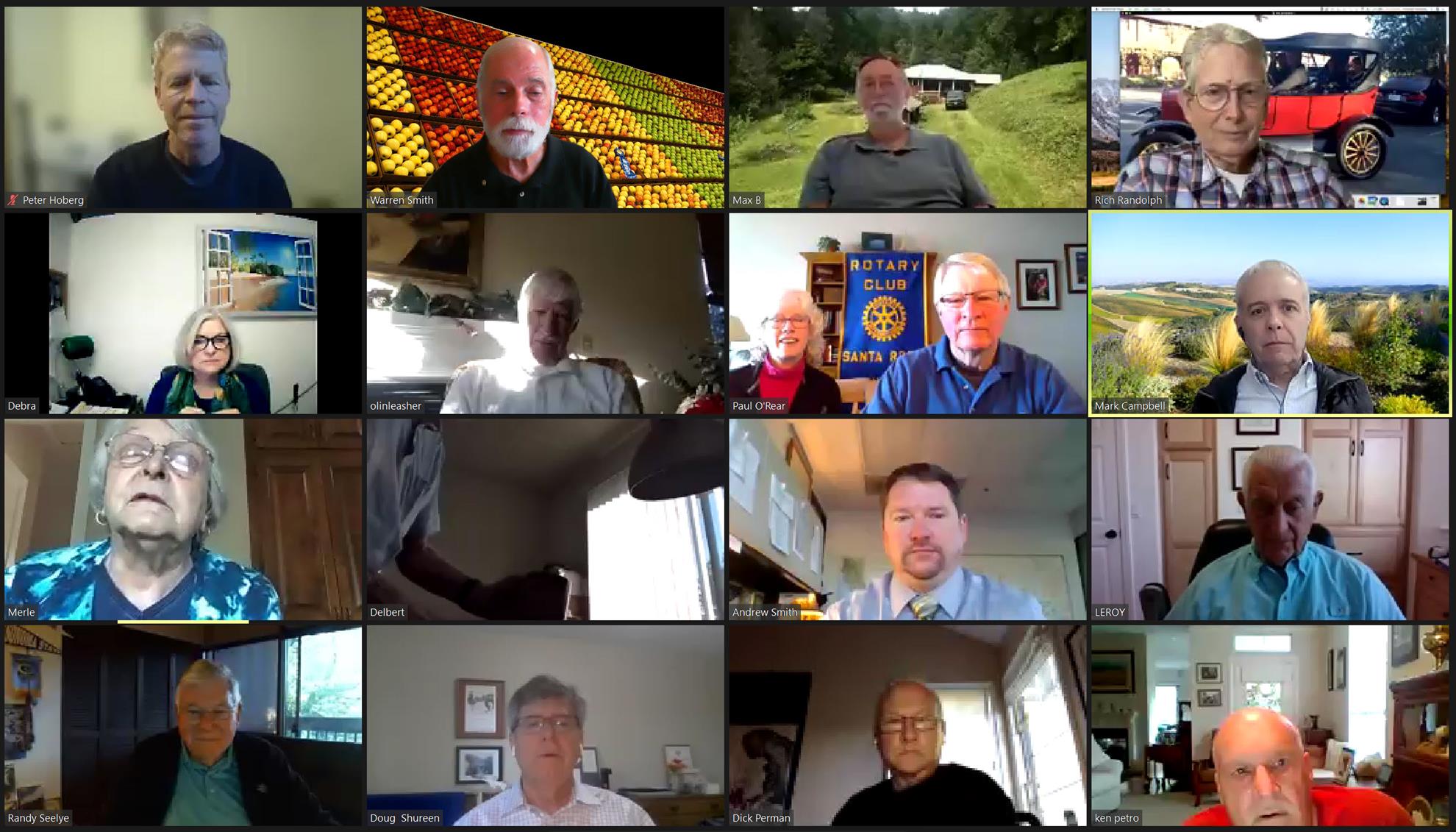
On a regular basis, our resident photo pro Warren Smith, submits pictures of what is going on at the weekly meetings. You can always find the most recent pictures at the websites photo journal called "Meeting Sighting" Please note that all the meeting photos for the entire Rotary year are at this location with the most recent on the last page.
Thanks for all the great pictures Warren!Link to Meeting Sightings. The most recent are on the last page!
There was an elderly couple who in their old age noticed that they were getting a lot more forgetful, so they decided to go to the doctor. The doctor told them that they should start writing things down so they don't forget. They went home and the old lady told her husband to get her a bowl of ice cream. "You might want to write it down," she said. The husband said, "No, I can remember that you want a bowl of ice cream." She then told her husband she wanted a bowl of ice cream with whipped cream. "Write it down," she told him, and again he said, "No, no, I can remember: you want a bowl of ice cream with whipped cream." Then the old lady said she wants a bowl of ice cream with whipped cream and a cherry on top. "Write it down," she told her husband and again he said, "No, I got it. You want a bowl of ice cream with whipped cream and a cherry on top." So he goes to get the ice cream and spends an unusually long time in the kitchen, over 30 minutes. He comes out to his wife and hands her a plate of eggs and bacon. The old wife stares at the plate for a moment, then looks at her husband and asks, "Where's the toast?"
For years, Susanne and I hosted many Rotary Youth Exchange students in our home. This program was an entry point to Rotary for me, and my heart is truly in it. When Rotary’s exchange programs were suspended because of COVID-19 to keep students and families safe, we felt sorry, especially for the participants, because those years cannot be repeated.
Because of the many uncertainties of the pandemic, the Rotary Board has decided to suspend in-person exchanges through June 2022. As we look ahead with hope, we thank Youth Exchange officers, host families, and volunteers for their contributions in years past, and we encourage districts to offer virtual exchanges as a way of connecting students around the world with each other and with our communities.
For those who are not able to participate in Rotary Youth Exchange, Rotary offers other opportunities. New Generations Service Exchange (NGSE) is a Rotary program that deserves wider recognition: It is an excellent opportunity for young people ages 18 to 30 to participate in community service as individuals or in a group and to gain internship experience. Simukai Matshalaga, a Rotaractor from Zimbabwe, stayed with us in Ratzeburg during her NGSE experience three years ago.
When I applied for the New Generations Service Exchange program, I did not realize that I was signing up for a life-changing experience. This program gave me that opportunity and much more. It taught me about the importance of failing fast, learning quicker, and being myself.
Some of my greatest experiences happened at the dinner table. The warmth and kindness of every home I lived in still resonate with me today. It took me weeks to understand how a stranger could care for me as deeply as these members of the Rotary family did. I am inspired by the lessons of humility I learned from all the amazing people I met. I came to understand a new culture and realized that the only things that separate us as people are our experiences and, at times, our false assumptions.
Professionally, it gave me confidence in my own abilities as an engineer. Seeing how other organizations handled problems made me aware that the best person to solve the challenges in my country was me. Returning home from northern Germany, I declined a promotion, quit my job, and began building a family business — a decision that previously I would have never made, out of fear.
I am indebted to the Rotary family. I am not sure whether the friends, mentors, and families I left behind knew that they changed my life permanently. I hope they now do.
New Generations Service Exchange changed Simukai’s life. It can change yours, too. All Rotary members can experience something similar at any time: I encourage everyone to take a virtual journey this month and visit meetings of other clubs online. You will see how different Rotary is around the world as you meet great people and make new friends.
Let us build upon these connections forged online — and later, when the time is right, enjoy in-person exchanges through Rotary Friendship Exchange, another excellent program for Rotary members of all ages.
Our ability to meet in person is limited now, but we know that Rotary Opens Opportunities, always. Now is the time to get ready, so that when the pandemic is behind us, Rotary’s exchange programs will come back stronger than before, serving a world that is yearning to reconnect.
In the classic film Lawrence of Arabia, Peter O’Toole plays T.E. Lawrence, the British scholar, military officer, and author who helped Arab tribes in their struggle for independence against the Ottoman Empire.
Lawrence leads a group of Bedouin warriors through the desert for a surprise attack on the Ottoman port of Aqaba. As they reach the end of the desert, they discover that a soldier, Gasim, has fallen off his camel during the night. But it is morning, and the tribesmen, led by Sherif Ali, played in the movie by Omar Sharif, advise Lawrence that going back to find him would be futile, that Gasim would already be dead given the sandstorms and the scorching heat. “Gasim’s time has come; it is written,” one of the soldiers tells Lawrence.
But Lawrence does go back and finds Gasim near death, staggering in the dunes. When they return to camp, Ali offers Lawrence water. Before taking a drink, Lawrence looks at him and says: “Nothing is written.”
This unforgettable scene means more than just a quotable movie line; it represents a way of looking at the world. It is a challenge to fatalism — that we must accept a certain outcome because of the way it has always been. No, Lawrence says, history is not written, yet.
So it is with The Rotary Foundation. We have not yet emerged from the sandstorm of the COVID-19 pandemic and the economic fallout from it. We are still occupied by work to raise awareness, deliver critical personal protective equipment, and provide support for frontline workers.
We do not know the day when, standing beside our polio eradication partners, we will announce that for the second time in history, a disease has been eradicated. We do know that, because we have worked steadfastly for years, the end of that story will be written soon.
And thanks to a $15.5 million contribution from the Otto & Fran Walter Foundation, we are also adding a new chapter in the story of our expansion of the Rotary Peace Centers: Plans are underway to launch a new peace certificate center in the Middle East or North Africa.
Rotary is engaged in so many noble efforts; it is an ongoing story that inspires me even more than Lawrence of Arabia. We do not yet know the name of the baby whose life will be saved because of a maternal and child health grant from Rotary, or the name of the girl who will learn to read with our support. When will those grants start, and will your district — or you — be directly involved?
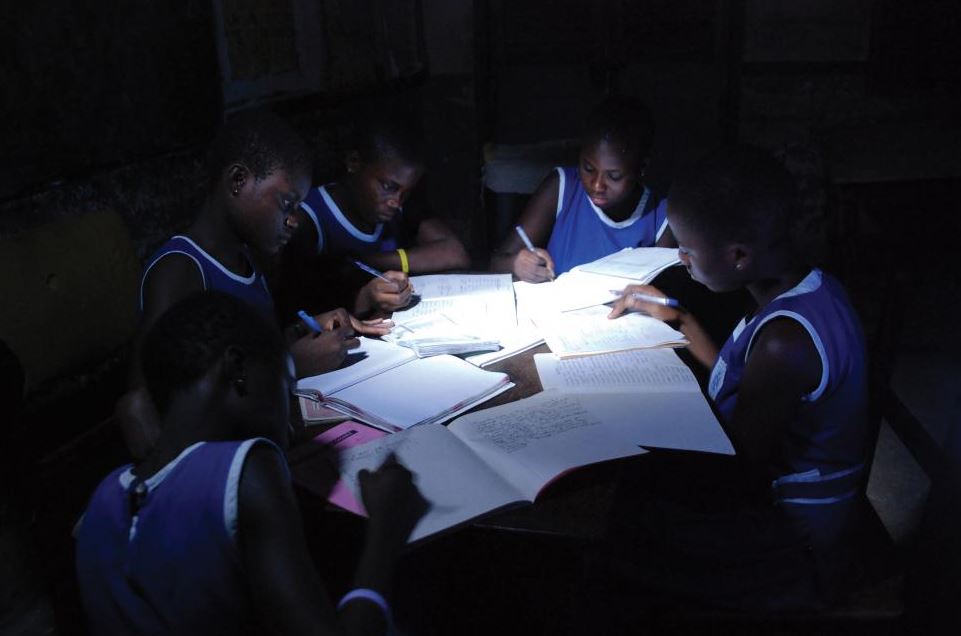
In the remote villages of Ndandini and Kyaithani in eastern Kenya, families live on less than $1 per day, and their homes are not connected to any electrical grid. Most cannot afford kerosene or paraffin to light their homes, which means students cannot see to do their homework in the evenings. The Rotary clubs of Sunshine Coast-Sechelt, British Columbia, and Machakos, Kenya, learned about the problem while working in the area on other projects. In 2014, the Rotarians embarked on a project bring environmentally friendly solar power into homes and schools.
About 1,500 students attending local schools were each provided a solar light under a rent-to-own program; students pay $1 per month, less than the cost of paraffin, for eight months, after which they own the light. The proceeds are used to provide another student with a solar light the following year. Project partner Kenya Connect, noting that the time students spend reading has tripled with the introduction of the solar lights, described the program as “a game changer in our efforts to improve the quality of education for rural schools.”
The project also included the construction of computer labs at two schools and a solar system to provide enough power for the entire setup. More than 200 teachers received training on digital learning and ways to better make use of computers in their teaching.
This story originally appeared in the March 2021 issue of Rotary magazine.
Rotary Club of Santa Rosa Sunrise - Founded June 30, 1986


.png)

.jpg)