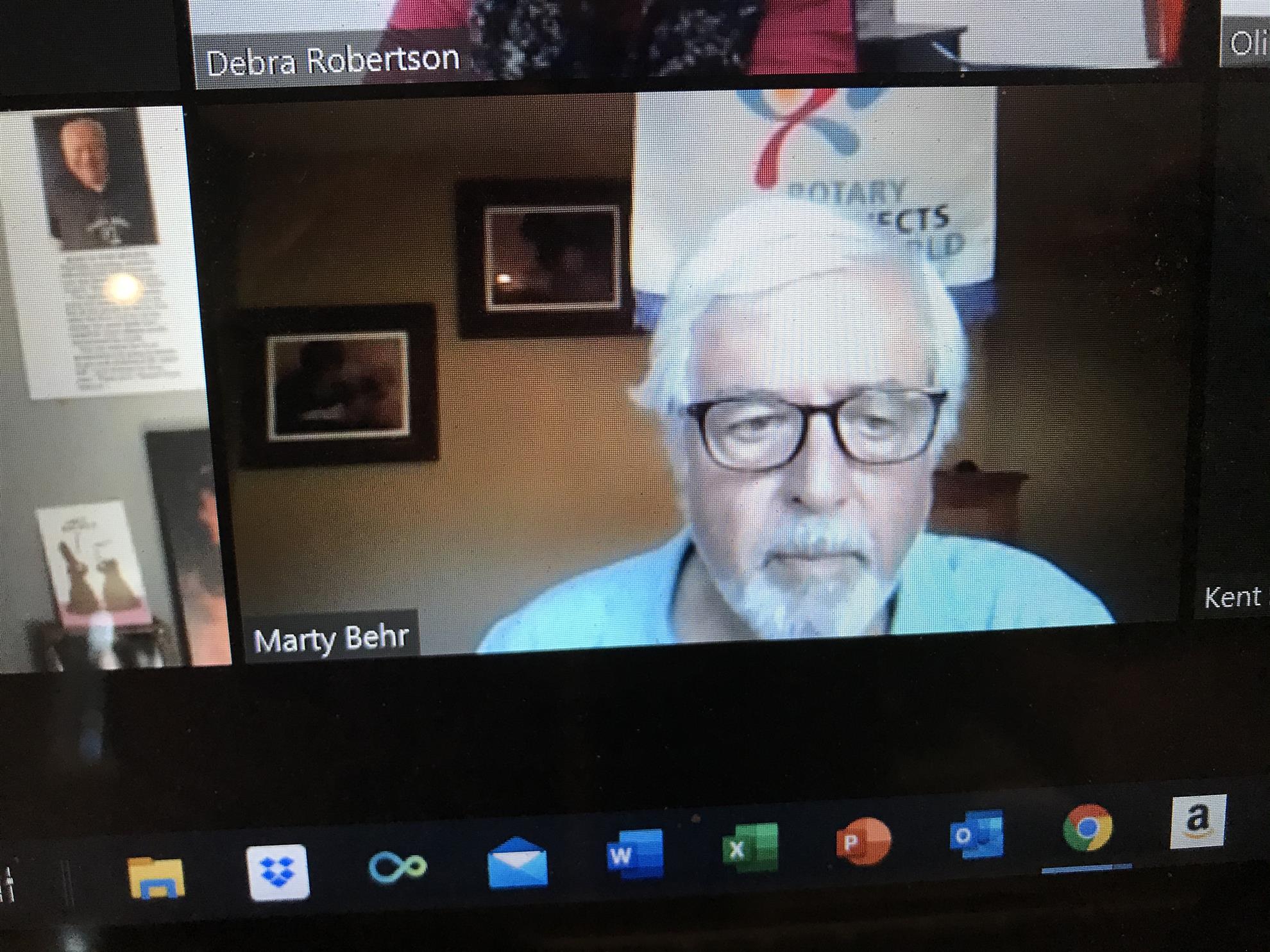
Since 1996, LifeWorks has earned a reputation for providing mental health services that are informed, respectful and culturally responsive. LifeWorks vision is to build a stronger community where access to effective mental health services supports individuals and families throughout their lifespan. The organization works collaboratively with city, county and state programs, other service providers and the community to support the well-being of Sonoma County.
Samantha will speak to us about the organization in general and how they are impacted and responding to the stresses on individuals in our community created by the COVID-19 pandemic.
The Press Democrat's Inspiring Columnist, Chris Smith
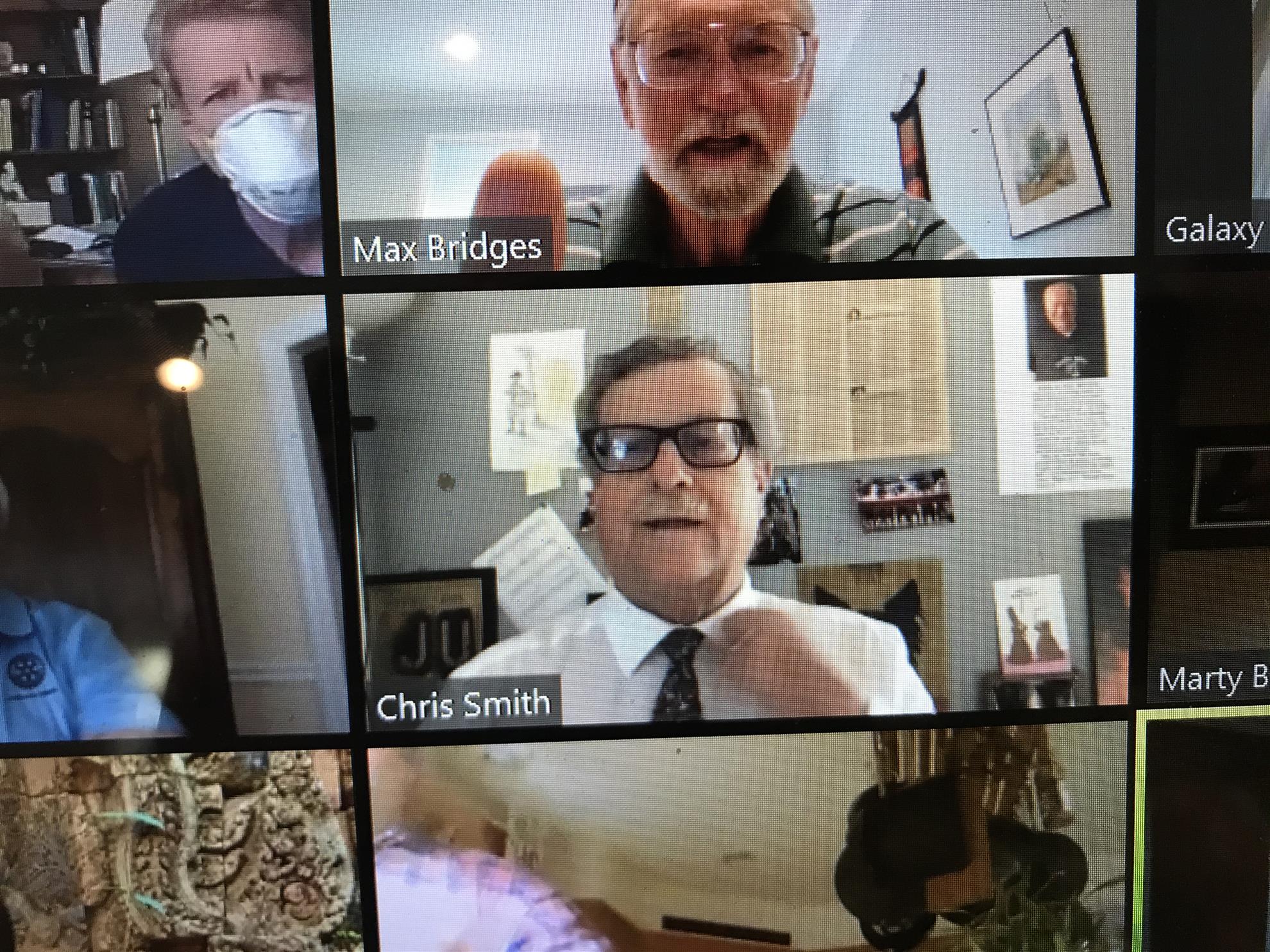
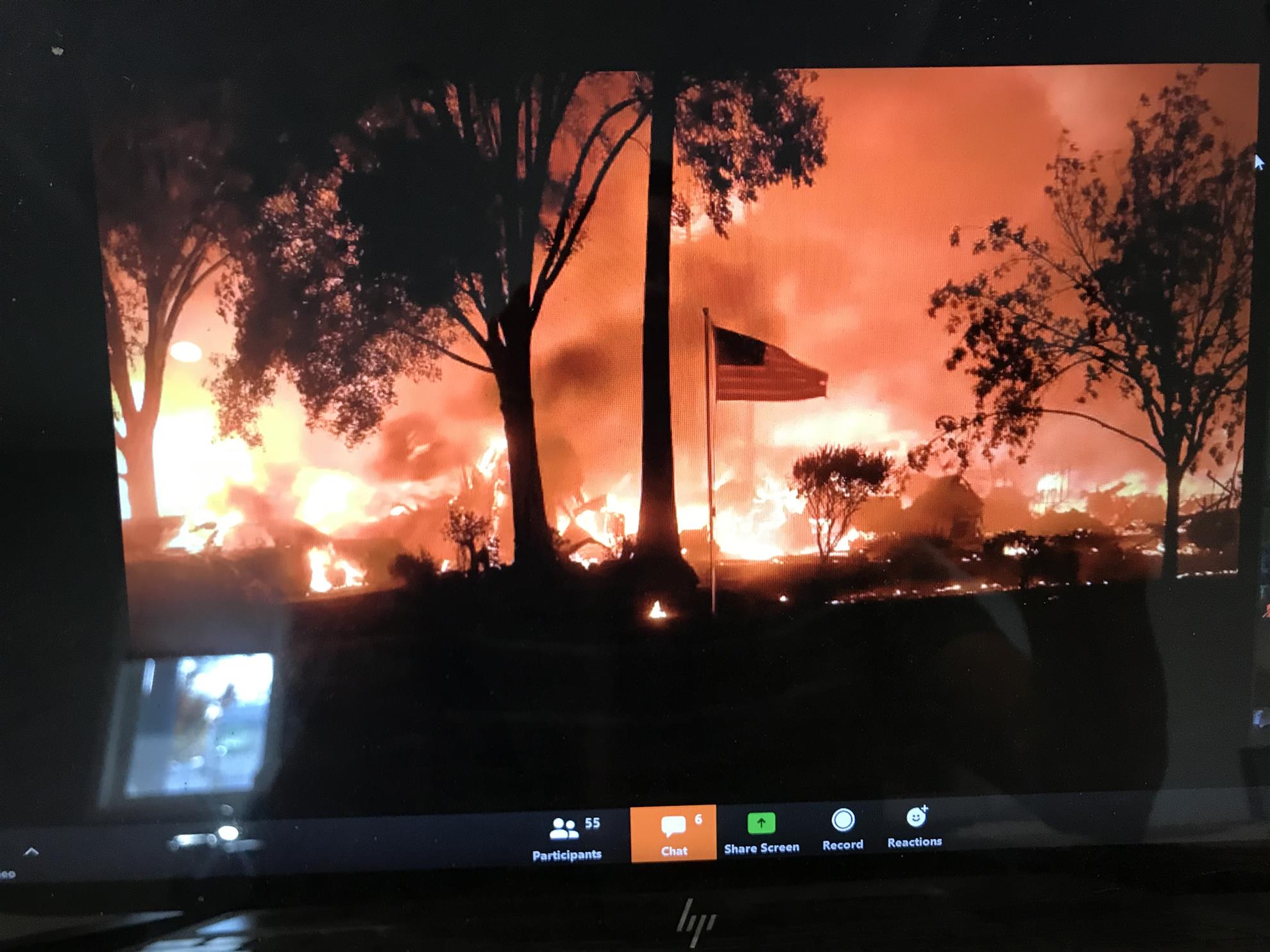
Our speaker for April 30, 2020 was Chris Smith, the Press Democrat’s columnist extraordinaire! Chris is a homegrown hero, having started his career in journalism at the PD upon graduation from high school. He’s worked at the paper for 35 years and counting. Randy Seelye, who worked with Chris at the PD for many years, introduced Chris as the “Must be Friday” columnist who worked for years with Gaye LeBaron. Chris talked about some of his most recent columns, the big Pulitzer Prize for the October 2017 fire coverage, and the challenges for newspapers in this new digital age.
Chris mentioned the “daily miracle” of turning a seemingly random set of stories into a complete newspaper every single day, and how that miracle has become even more difficult with lower staffing and ‘shelter-in-place’ rules. Most of the PD’s writers are now working remotely. On most days the front page is devoted to COVID-19 coverage. In fact, every newspaper is covering the story and every U.S. newspaper is under siege by the lack of advertising. The PD itself has lost something like $700,000 in advertising revenue in the last month! Some newspapers have shut down during this pandemic. Even a 100-year-old newspaper in New Hampshire recently eliminated its daily print version except on Sunday.
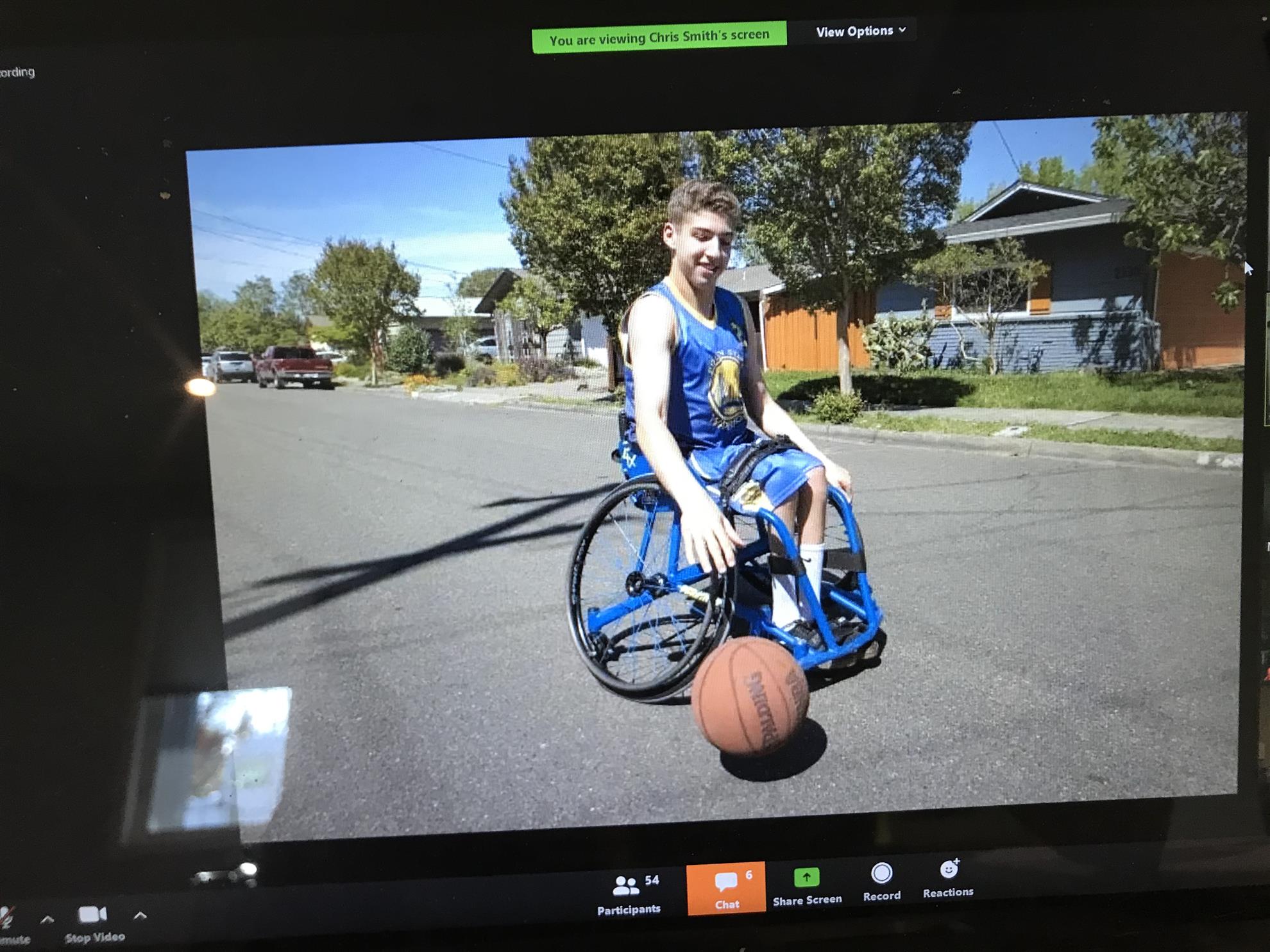
Chris also spoke about some amazing recent stories, including the Ben Thornton story. This story was first told by the PD in 2006, when Ben was 3 ½ years old and needed a heart transplant. He was in full cardiac arrest but was brought back on life support until they could find a new heart. The surgery was successful but due to a blood clot Ben became paralyzed. Chris recently heard about Ben again from a friend of his father. Ben is now on his way to the University of Arizona on a full-ride scholarship! (See April 26 story by, you guessed it, Chris Smith). Another great story is Angel the Cow (April 30th). This is about the October 2017 fire, the death of Angel’s owner, Valerie Evans, and the rebuilding of the family home demolished by the fire. You can see the log cabin-style home’s construction progress (I see it almost every day) on the west side of Highway 101 in the Coffey Park area.
Ben Thornton
During the worst fire in California’s history (at the time), the Press Democrat stood out in its coverage of the fire. As with the current pandemic, the PD was stretched to the limit in responding to the fire. Every story was about the fire; how it happened, how it spread and how it affected the people of Sonoma County. This amazing coverage resulted in the PD winning the 2018 Pulitzer Prize for Breaking News Reporting. This was not, as Chris said, the ‘small local paper division’ prize; it was the prize for all papers in the United States in that important category. This is one of the greatest achievements in journalism and it was earned by our very own amazing paper, the Santa Rosa Press Democrat!
Thank you, Chris for the talk for the stories and for being an important voice in our community. Amazing job!
On a regular basis, our resident photo pro Warren Smith, submits pictures of what is going on at the weekly meetings. You can always find the most recent pictures at the websites photo journal called "Meeting Sighting" Please note that all the meeting photos for the entire Rotary year are at this location with the most recent on the last page.
Thanks for all the great pictures Warren!Link to Meeting Sightings. The most recent are on the last page!
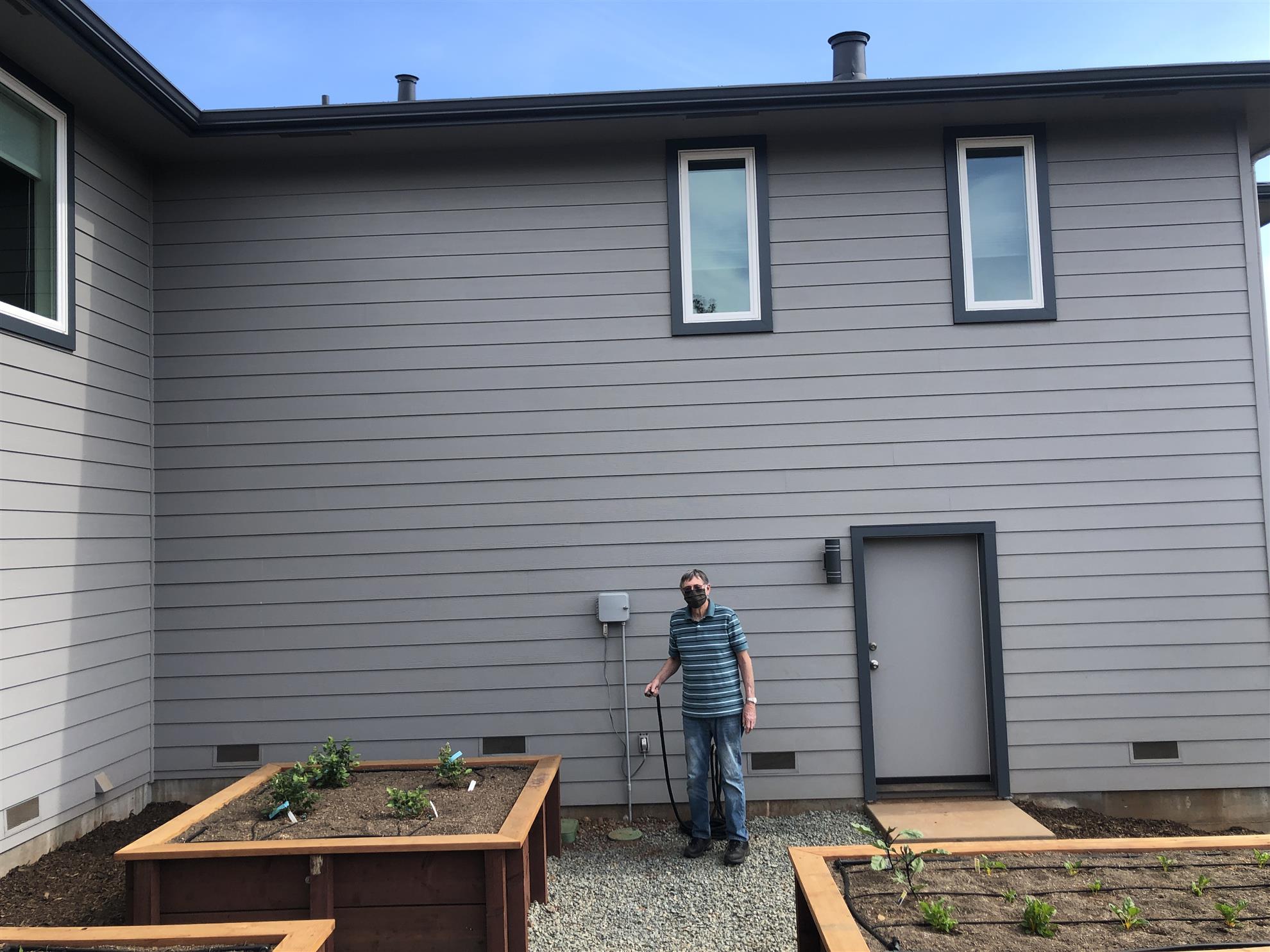
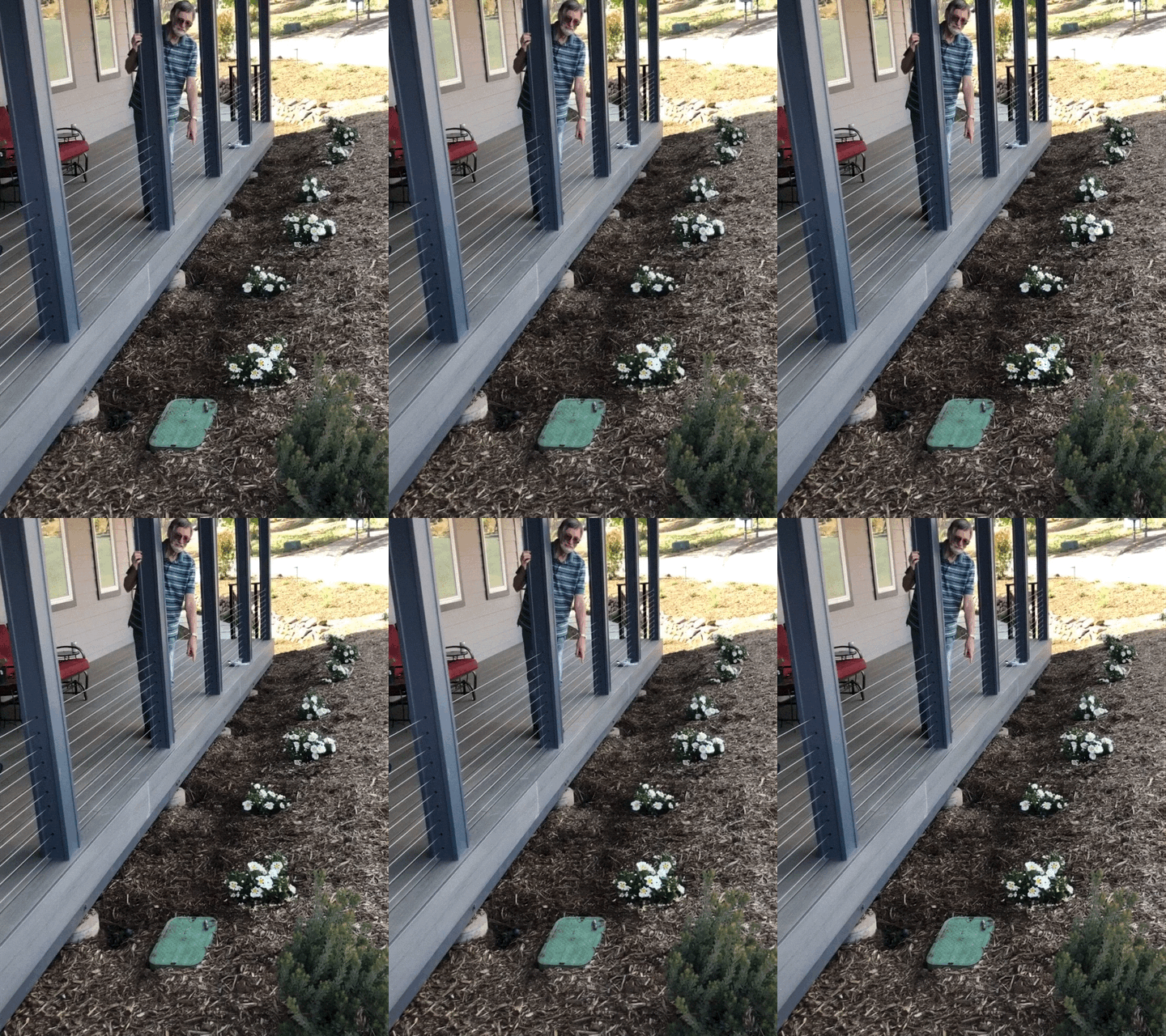
Above Max Bridges begins his daily tending of his and DeeDee's recently planted vegetable garden.
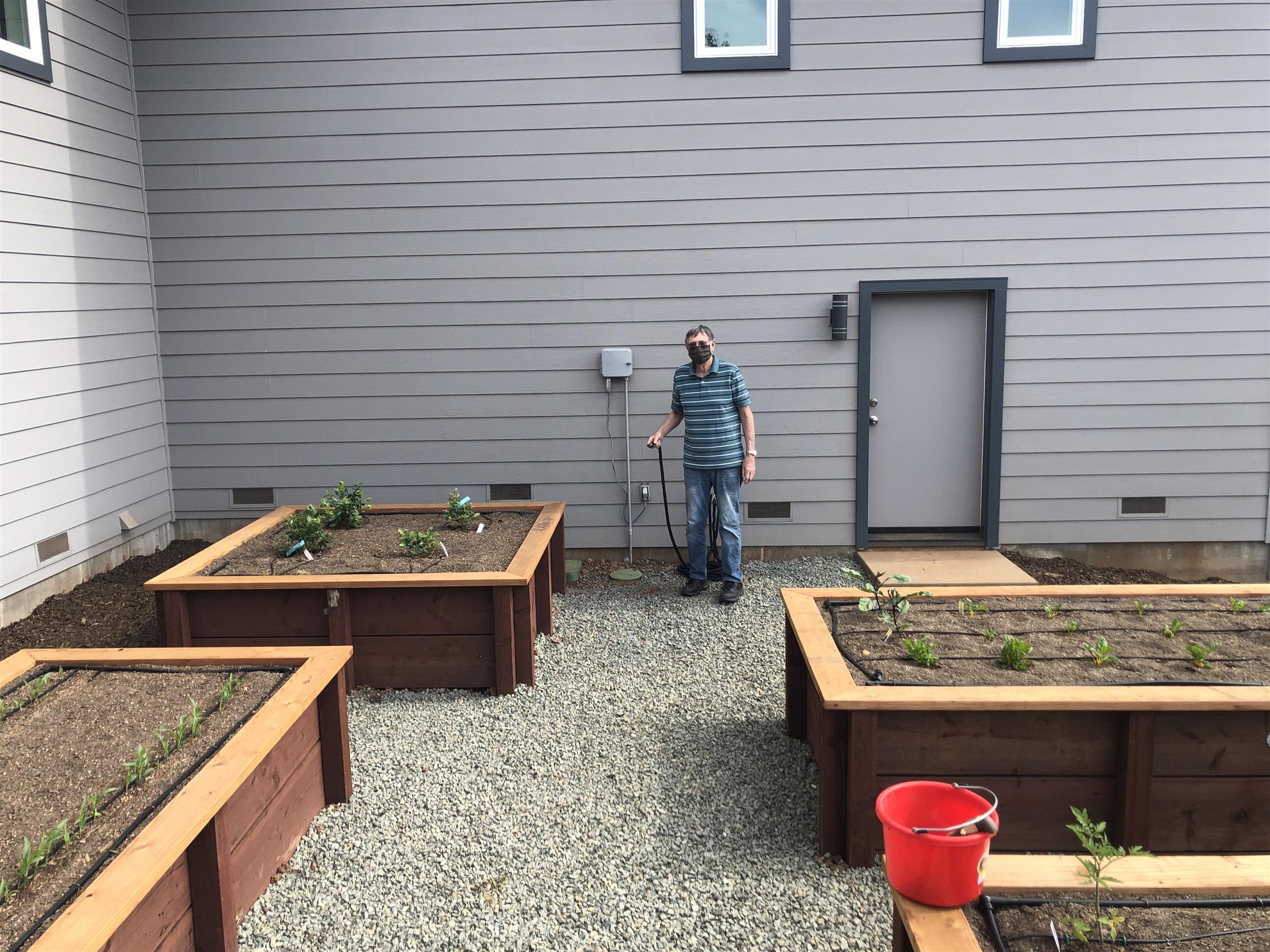
Here the extent of his 4 raised, drip irrigated, pressure treated beds, farm can be seen.
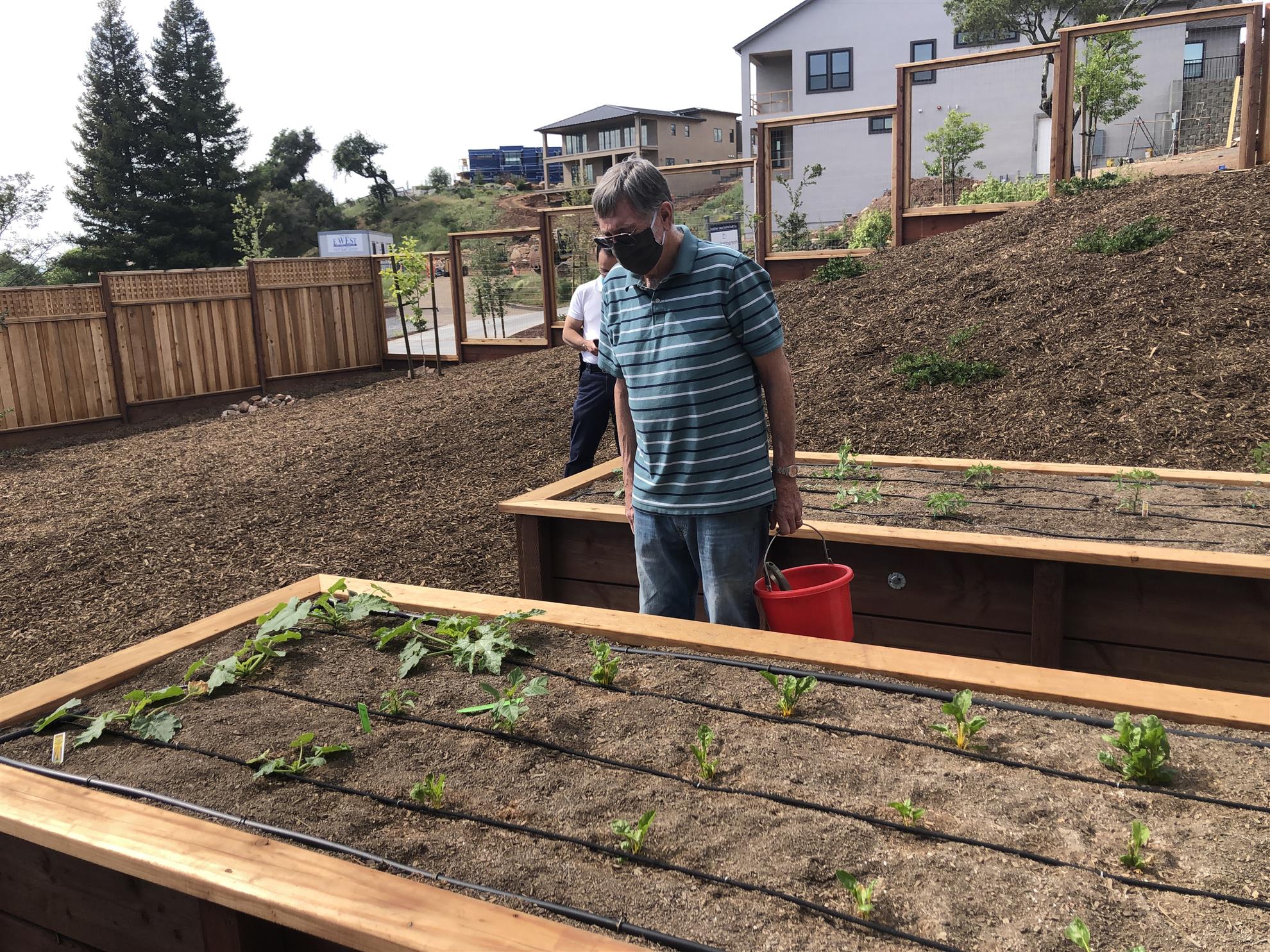
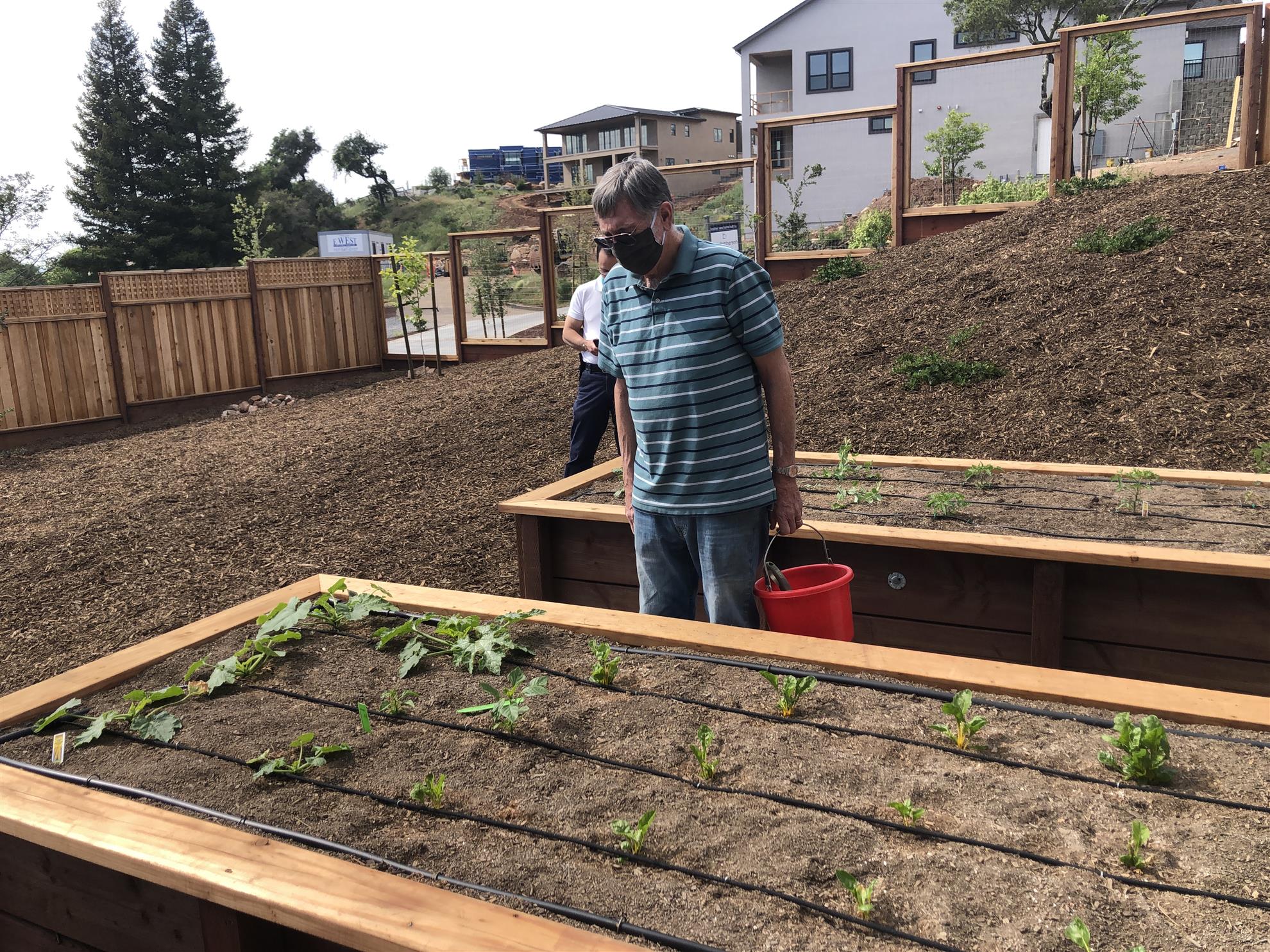
Max' yard-to-table success is enhanced with the drip system, here hydrating his green beans.
Max lot has a significant back 40, including a downslope. Max' engineering eye utilized the large field stones to act as runoff-erosion control. His peach, apple and oak shade trees will provide good root holding.
Max spends some time on ornamental tending too. Here he gloats over his recently installed lines on the white non-edibles!
Nice going Max!
How do you, Sunriser readers, spend your new found home bound time? Send a photo!
Increasing our ability to adapt: That is one goal of our new Rotary Action Plan. And wow, have we seen that ability put to the test this year.
In March, Gay and I were to visit Zimbabwe, Turkey, and eight other countries over the course of 30 days. After participating in a medical mission in Zimbabwe and Commonwealth Week activities in London, on the 11th day, we were packing our suitcases for Switzerland and Liechtenstein.
While attending a dinner at the High Commission for Pakistan in London, we received word that it would be impossible to travel everywhere on our itinerary. So, instead of flying to Zurich, we returned to Evanston and One Rotary Center.
Throughout early March, the news about COVID-19 became increasingly serious throughout the world. Following the advice of local officials, we canceled UN presidential conferences in Paris and Rome. Soon, the World Health Organization declared the virus a global pandemic, and we consulted with authorities on more critical decisions. We asked all Rotary districts and clubs to curb face-to-face meetings until further notice and to hold virtual meetings instead. To the districts and clubs that have adapted so quickly, thank you.
The Rotary Board of Directors held its first-ever virtual meeting to make the most difficult decision of all, to cancel the 2020 Rotary International Convention. Like the more than 20,000 registrants who planned to attend, I am disappointed. We acted to protect the health and safety of convention attendees and their families, friends, and colleagues, as well as those who call Honolulu home, and I am confident we made the right decision.
I want to thank the 2020 Honolulu Convention Committee, the Host Organization Committee, the 2020 Honolulu Convention Promotion Committee, and Rotary staff for planning what would have been one of the best Rotary conventions yet. I appreciate their hard work.
This issue of The Rotarian was going to press as the decision about canceling the convention was made, and many other decisions across the Rotary world were still up in the air. Future issues of The Rotarian and of Rotary's regional magazines, along with Rotary's social media channels, will keep you informed.
We began this Rotary year promoting the importance of the new Action Plan for all Rotarians and Rotaractors. Today, we are putting that plan into action out of necessity. That includes the possibility of a convention-like experience with you through a virtual event. We will have more to say about this in the near future.
The world is changing rapidly, and so must Rotary. Our adaptability and strength will help us navigate this experience. The world needs our leadership today more than ever. Truly, Rotary Connects the World.
Every year, as we near the end of the Rotary year, we look back on the path we've traveled. Of course, this year has presented special challenges as we face a global coronavirus pandemic that has changed our lives and the way we do service.
The great philosopher Zhuangzi once said, "A path is made by walking on it." Only by forging ahead into the unknown do we actually make progress, and only by looking back can we see how far we've come. The coronavirus crisis is an unprecedented event, and I want us to look back years from now, knowing that we played a decisive role in helping the world overcome this devastating threat.
I am proud of the work that Rotary members and our Foundation are carrying out to stop the spread of COVID-19 and to help people affected. Taiwanese clubs have donated 200,000 face masks. In England, the Rotary Club of Maidenhead Bridge launched a COVID-19 Volunteer Community Response Team to help those in self-isolation by shopping, dropping off prescriptions, and supporting those in need.
The Foundation Trustees worked quickly to add COVID-19 projects to their list of eligible activities for disaster response grants, transfer $3 million to our Disaster Response Fund for COVID-19 grants, and waive the 30 percent foreign financing requirement for any new global grant that addresses COVID-19.
Of course, we have applied the knowledge and resources we have built over many years in fighting another infectious disease: polio. The polio eradication program is already using its infrastructure to protect the vulnerable from COVID-19, especially in polio-endemic countries.
Please give what you can to help our Foundation, and our members will transform your gift into humanitarian efforts that are saving lives.
We will overcome this virus together, and when we do, we will be able to look back and know that we did not stand by and do nothing when a global public health emergency paralyzed the world. Instead, we took action and gave all that we could to stop this virus and make lasting change in our communities to help people survive and recover. Thank you for your past, present, and future support of our Foundation.
When El Niño caused abnormally intense rainfall in April and May 2019, Paraguay experienced massive flooding that displaced an estimated 60,000 people. In Asunción, the capital, the Paraguay River overflowed, and tens of thousands had to live in temporary settlements with inadequate shelter and poor sanitation. With the high waters persisting for months, residents needed humanitarian assistance while they figured out what to do in the long run.
That’s how Ned Morris, a member of the Rotary Club of Walla Walla, Washington, found himself in Asunción for 22 days in July and August. It was Morris’ fifth deployment since late 2017, when he completed his training with ShelterBox, Rotary’s partner for disaster relief.
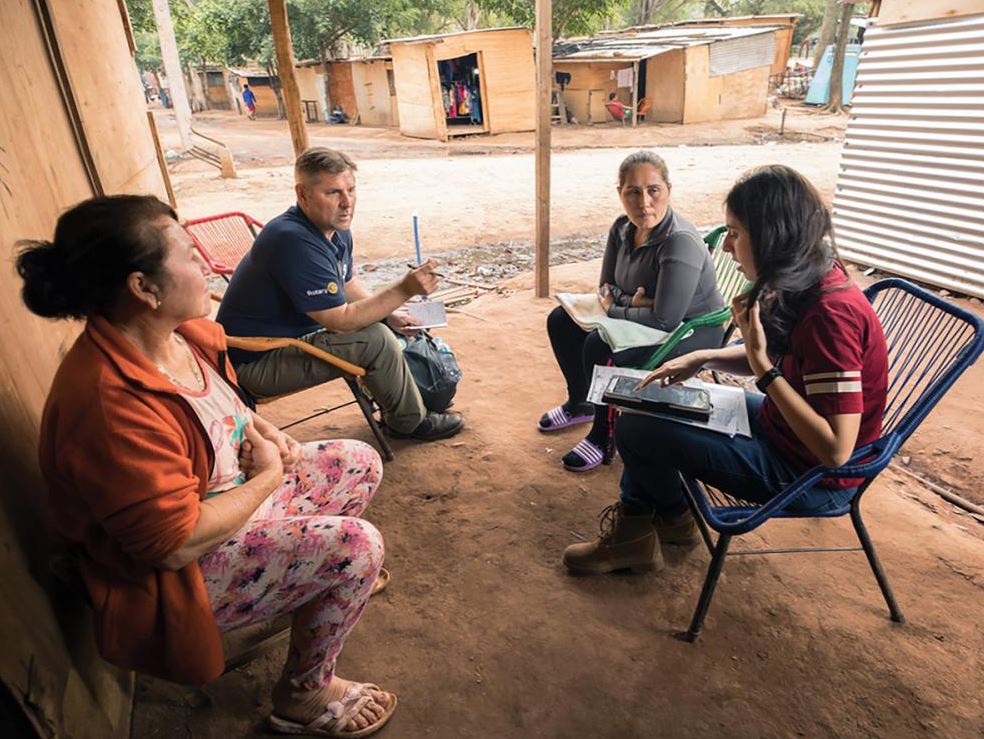
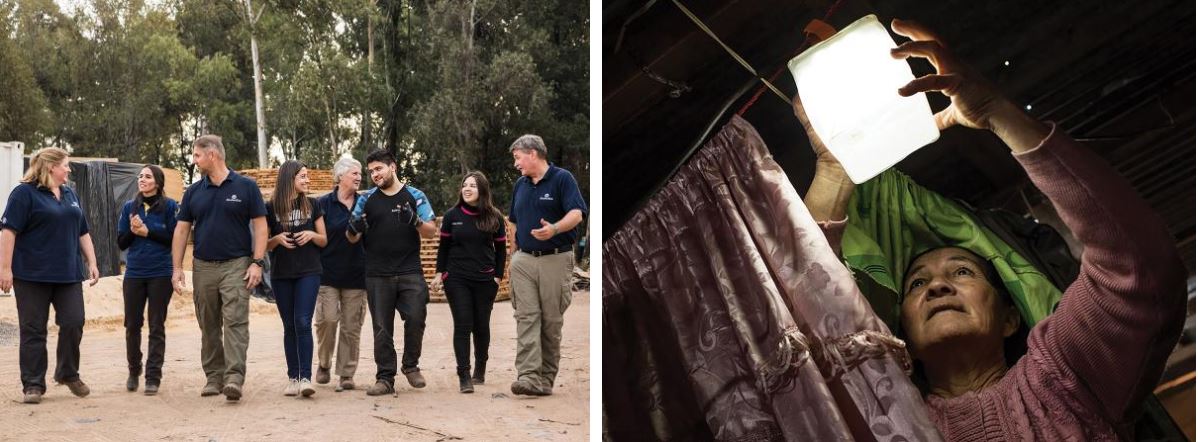
Ned Morris (second from left) worked closely with ShelterBox team members and community members to ensure that displaced people were getting things they needed.
Image credit: Alyce Henson / Rotary International
In its May 2018 issue, The Rotarian followed Morris, fellow Rotarian Wes Clanton, and Rotaractor Katelyn Winkworth as they trained to become members of the ShelterBox Response Team. After 11 months developing the skills needed to assist displaced people around the world, they were invited to participate in the intensive final stage of training conducted by ShelterBox in the rugged countryside in Cornwall, England. After nine days dealing with simulations of the disasters they might encounter on a deployment, ShelterBox welcomed Morris, Clanton, and Winkworth to its response team, which numbers about 200 people worldwide.
Since then, Morris has supported families in the Caribbean, Ethiopia, and Kenya as well as Paraguay, experiencing firsthand the power of the Rotary-ShelterBox partnership. “When we hit the ground on any deployment, Rotarians and Rotaractors are our first contact,” he says. “They help us identify safe and unsafe areas, the right places to set up base. They provide drivers and translators. We wouldn’t have the impact we do without the partnership.”
In Paraguay, members of the Rotaract clubs of Asunción and Asunción Catedral were crucial to the mission’s success. Mariana Santiviago and Oliver Lugo Fatecha helped with translation, and Gabriela Grasso, Fanny Santos, and others provided logistical support.
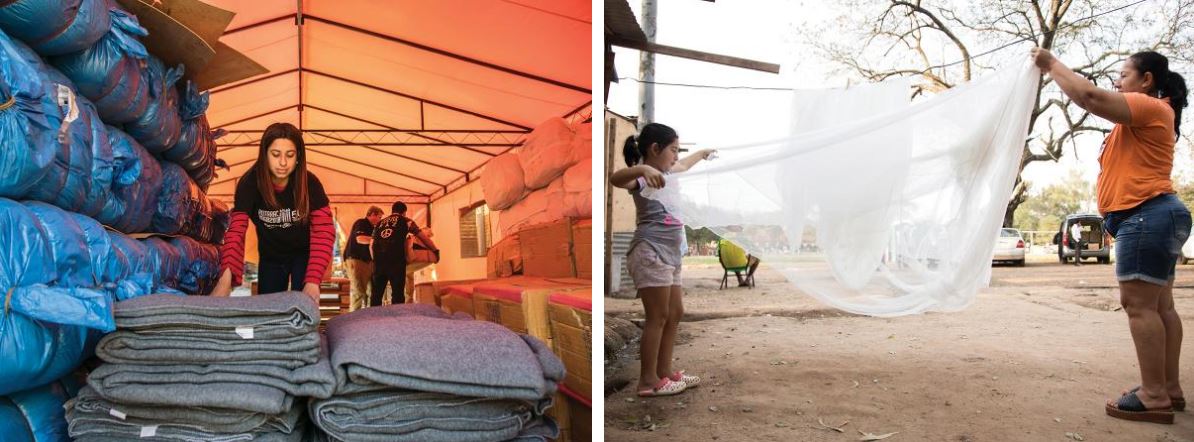
ShelterBox Response Teams provided shelter kits packed with tarpaulins and tools to help repair homes. They also distributed solar lights, mosquito nets, and blankets to displaced people in Asunción. As for Morris, he served on a team dedicated to monitoring, evaluation, accountability, and learning (MEAL), part of ShelterBox’s effort to garner knowledge from each deployment. “The purpose of the MEAL team is to make sure we’re providing the right type of aid that’s needed now,” he explains. “And if they need other things, we want to know what those are. If it’s something that we can bring in the future to improve our response, we want to know.”
ShelterBox distributed thermal blankets for the cold nights; mosquito nets are essential for disease prevention.
Image credit: Alyce Henson / Rotary International
Community engagement is key to the partnership’s success. The response teams work with local leaders and teach them to show others how to use the resources ShelterBox provides. That means the ShelterBox teams can be small, with lower deployment costs and greater ability to adapt to changing circumstances.
The response teams also work directly with the people most affected by a disaster, but they are careful not to be intrusive. “These people are in a horrible situation and they deserve to be respected, consulted, and treated with dignity,” Morris says. “We don’t want to be a burden on them. They’ve already gone through enough.”
ShelterBox is always preparing for its next deployment, without knowing where that might be. “We fundraise for the next disaster,” says Morris, who also works as a ShelterBox ambassador, spreading the word about the Rotary-ShelterBox mission. “We already had the supplies in place that we’re delivering now. We are ready when the next hurricane or earthquake hits, wherever that might be. Whatever it is, as soon as the next disaster hits, we are ready.”
— HANK SARTIN
• This story originally appeared in the April 2020 issue of The Rotarian magazine.
The ShelterBox team, including Rotarians from the UK and the United States, worked alongside local Rotaractors; solar lights make it possible to do chores and cook at night, and provide a sense of comfort.
Image credit: Alyce Henson / Rotary International
Rotary Club of Santa Rosa Sunrise - Founded June 30, 1986



.png)
.jpg)