19th Annual Tribute To Our Veterans A Luncheon Honoring America’s Veterans Presented by the Rotary and Kiwanis Clubs of Santa Rosa THURSDAY November 7, 2019 11:30 am - 1:30 pm Veterans Memorial Building Santa Rosa, CA
Highlighting
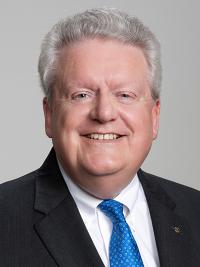
Chris L’Orange, USMC Viet Nam Combat Veteran SHARING HIS EXPERIENCES And PAYING TRIBUTE TO OUR VETERANS Featuring the Elsie Allen High School Marching Band Tickets $15 each No cost to Veterans Rotary and Kiwanis members are encouraged to host a veteran. Members may contact your club representative for tickets. Veterans may contact any Rotary or Kiwanis Club to obtain tickets or email to vetstribute@gmail.com
On a regular basis, our resident photo pro Warren Smith, submits pictures of what is going on at the weekly meetings. You can always find the most recent pictures at the websites photo journal called "Meeting Sighting" Please note that all the meeting photos for the entire Rotary year are at this location with the most recent on the last page.
Thanks for all the great pictures Warren!Link to Meeting Sightings. The most recent are on the last page!
Where and when did it all begin? The origins of Rock and Roll music is debated even to this day, however, most agree that it’s “Roots” are embedded in the Southern states, where most of the earlier performers emerged. A blend of Country, Jazz, Blues, Gospel and Folk came together to transfix the segregated styles into one coherent unique sound. As mentioned in an earlier column, Disc Jockey Alan Freed coined the term “Rock and Roll” on his radio show “Moondog’s Rock and Roll Party” aired in the early 1950’s. However this style of music didn’t make national prominence until the release of “Crazy Man Crazy” performed by Bill Haley and His Comets in 1953 when it hit the Billboards National best selling charts.
Prior to the advent of “R&R” as a separate genre, the heart of the music industry was “Tin Pan Alley”. A&R (Artist & Repertoire) agents dominated the music industry, representing sheet music publishers and such stars as Bing Crosby, Billie Holiday, Frank Sinatra, Perry Como, Ella Fitzgerald, Al Martino, Louis Armstrong, Dean Martin, Vic Damone, the Ames Brothers, Tony Bennett, et al., to name but a few. Their records were pressed on to hard rubber discs known as “78’s” bulky at best, but with the introduction of “45’s” and the raising popularity of this new music phenomenon, the emphasis shifted to the recording companies, initially on the East Coast, Columbia, Victor and Decca, here on the West Coast, Capitol and MGM, with Mercury setting up shop in Chicago in the late forties.
This “New” music initially altered the emphasis from brass and piano to amplified guitars and drums. Replacing the Big Bands with smaller, more economical combos. Chuck Berry developed his brand of “R&R” by transposing the familiar two-note lead of jump boogie piano directly to his electric guitar, establishing the easily recognizable Rock guitar as THE centerpiece instrument of “R&R”… with bass and drums in supporting roles. His 1955 Classic “Maybellene” set the tone for those who held Berry with the greatest of eminence.
In our next edition, we’ll explore the likes of Jerry Lee Lewis, Bo Diddly, Bill Halley, Little Richard, among others… Until then…”Keep The Beat!”
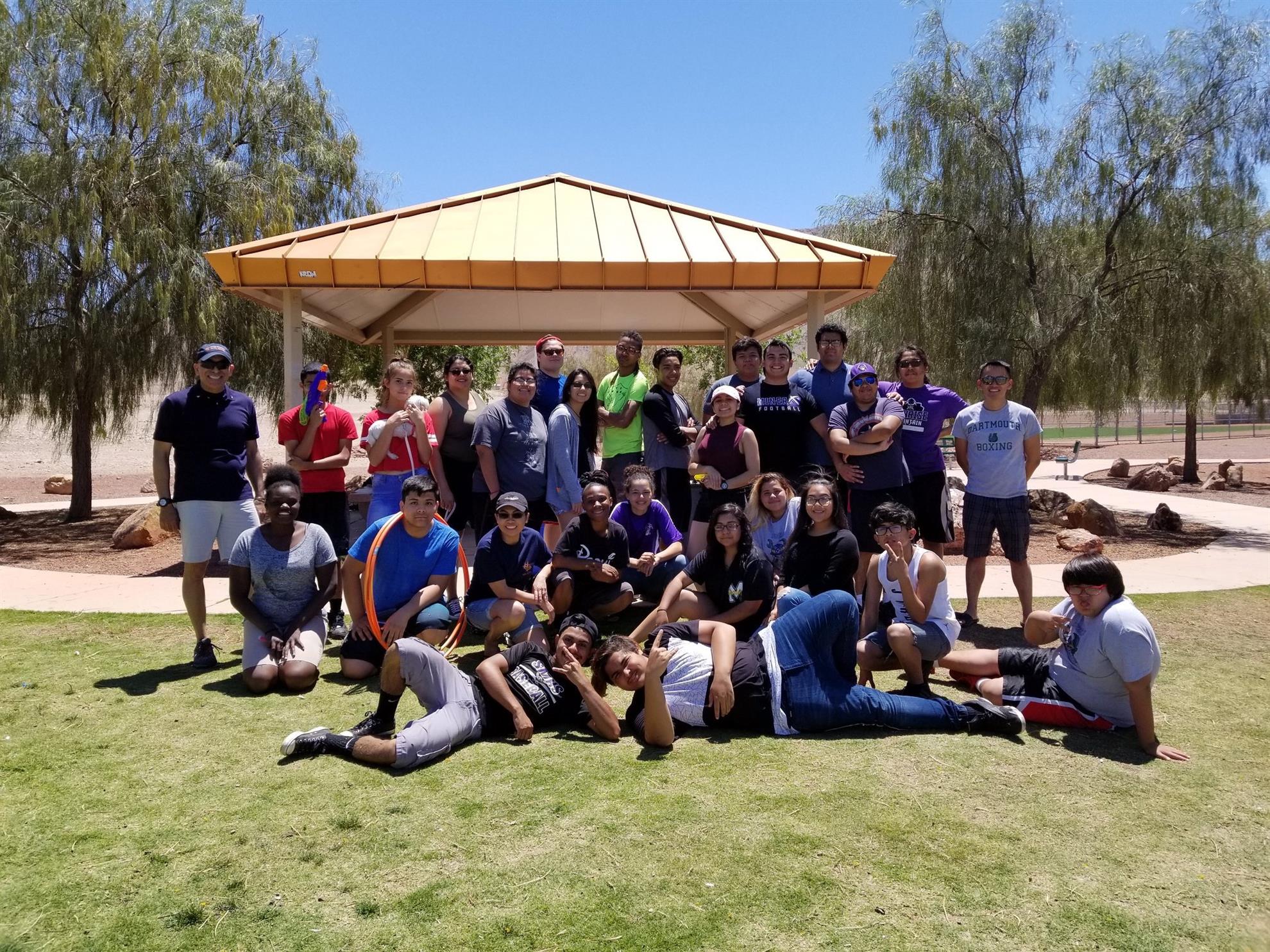
Ben Nguyen is a graduate of Elsie Allen High School. He went on to Dartmouth College where in addition to his academic success founded their ongoing drum corp in the model of his heart pounding Elsie Allen troop. He recently was awarded a Milken Educator Award for hi exemplary teaching at Sunrise High School in Las Vegas Nevada.
Ben's connection to Sunrise Rotary began with an interest by Ross Andress in Ben's Interact participation. Reluctant to be distracted from his studies, Ben sought Ross support in assuring Ben's parents that Ben could do both successfully. Ben's Milken Award is ample proof of his ability and determination.
in this not too distant photo, Stacy, Ross and Ben bask in the sunshine of their long friendship. As a mentor, encouragers to Interact youth, Ross and Stacy have seen first-hand the powerful results which encouragement an empowerment can produce.
Congratulations Ben!! Your aspiring to the Teaching Profession is an inspiration to all of us to understand and exercise our opportunity to serve and bridge to a finer future for everyone.
If you would like an immediate opportunity to help a student succeed, contact Antonio Vigil, our recent speaker on his Intensive English Classes. Help is needed with mock interviews November 18 and 19. Antonio may be reached via avigil@schsd.org
Can you recall your first job interview? Were you nervous, excited, anxious? All the above!
Our three guest students, Luis, aspiring to be n Electrical Contractor, Otelia and Vicky seeking careers as Medical Assistants need YOUR experience in personnel and mentoring to prepare and polish their interviewing confidence and skill.
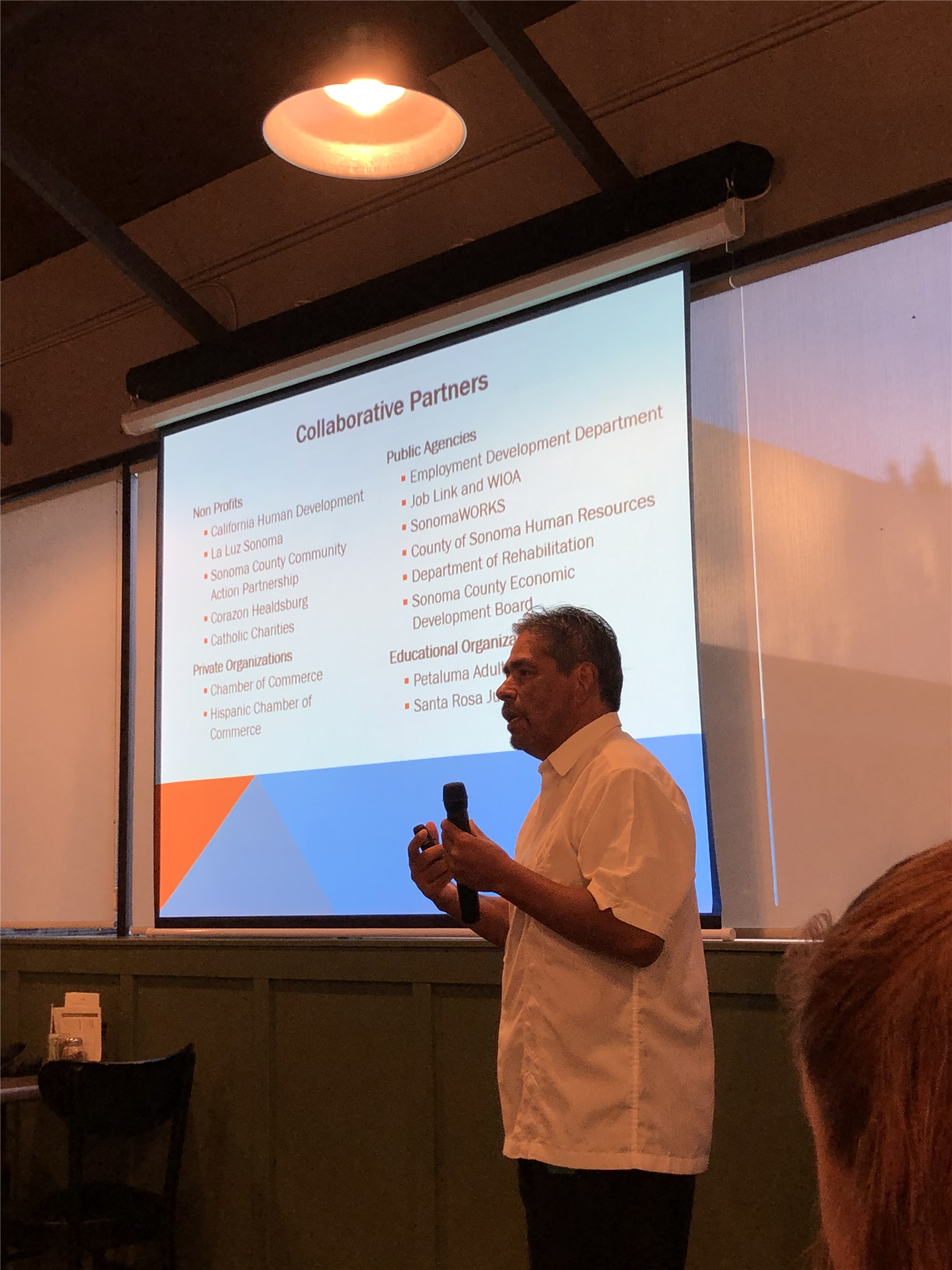
Antonio Vigil, the creator of this collaborative Intensive Vocational English Second Language Program describes the extent of the community, public and private agencies supporting these future members our OUR Workforce.
Who is missing? Yes, YOU! YOUR seasoned experience as owners, managers, leaders can help advance both the careers of these future leaders as well as our community strength.
Monday November 18 and Tuesday November 19 are the class dates for their mock interviews. Regardless of your specific professional background, you can add to the quality of these practice interviews. Contact Coordinator Antonio at to share your success! avigil@schsd.org
Rotary Day at the United Nations, which we celebrate each November, is an important reminder of the historic relationship between our organizations. But this year’s event is even more important than usual, because we are building up to the 75th anniversary of the signing of the UN Charter in June 2020.
You might ask, why celebrate this anniversary? For Rotary, it is entirely appropriate, because we played such a critical leadership role in the San Francisco Conference that formed the United Nations in 1945. Throughout World War II, Rotary published materials about the importance of forming such an organization to preserve world peace.
Not only did Rotary help influence the formation of the UN, but this magazine also played a leading part in communicating its ideals. Rotary educated members about plans to create the UN through numerous articles in The Rotarian and through a booklet titled From Here On! When the time came to write the UN charter, Rotary was one of 42 organizations the United States invited to serve as consultants to its delegation at the San Francisco Conference.
Each organization had seats for three representatives, so Rotary International’s 11 representatives served in rotation. The people officially representing Rotary included the general secretary, the current and several past presidents, and the editor of The Rotarian. In addition, Rotarians from Africa, Asia, Australia, Europe, and North and South America served as members of or consultants to their own nations’ delegations.
We have a deep and lasting relationship with the UN that deserves to be celebrated and appreciated. To recognize this relationship, Rotary will host five special events between now and June: Rotary Day at the UN in New York on the 9th of this month; three presidential conferences next year in Santiago, Chile, in Paris, and in Rome; and a final celebration just before the Rotary International Convention in Honolulu.
The focus on the UN in the year ahead is not only about the past; it also lights a path to our future. There are so many parallels between the work we do through our areas of focus and the work of the UN Sustainable Development Goals. While those goals are indeed incredibly ambitious, they provide inspiration and direction — and are similar to many Rotary goals, which have proven to create lasting, positive change in our world. The goals can be achieved, but only if undertaken with the same long-term commitment and tenacity that Rotary understands so well. Alone, we cannot provide clean water for all, we cannot eliminate hunger, we cannot eradicate polio. But together with partners like the United Nations, of course we can.
Please consider attending one of our five UN celebrations. I look forward to sharing news of these special events with you throughout the year.
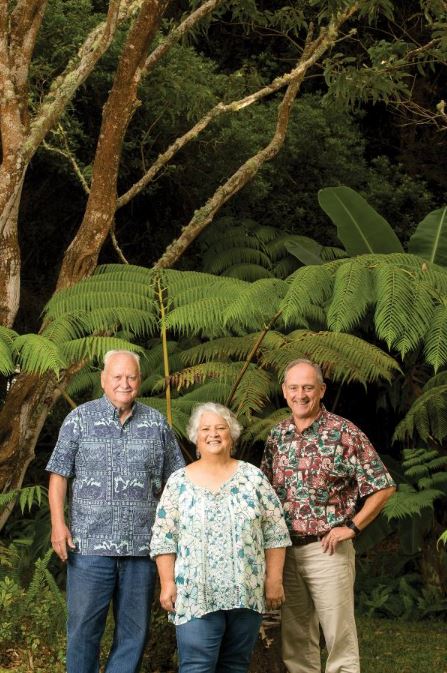
Club members Bill Hamilton (left) and Carol Hamilton with District 5000 Assistant Governor Randy Hart.
In early May 2018, the Kilauea volcano on the Big Island of Hawaii erupted, shooting lava 150 feet into the air. The lava pool in the volcano’s crater dropped 1,500 feet as it flowed out cracks that formed along Kilauea’s sides, the molten rivers consuming entire neighborhoods and creating new land forms as they reached the ocean. Earthquake after earthquake rattled the area — an estimated 60,000 over three months, as the crater collapsed inward and quadrupled in size. Plumes of ash billowed. Hawai‘i Volcanoes National Park shut down.
The Hawaiian volcano goddess, Pele, had made her power known.
Members of the Rotary Club of Volcano lived through all of this: Their club met a five-minute hike from the crater’s edge.
A year later, they’re holding a breakfast meeting in the cafeteria of the Kilauea Military Camp, a quaint, century-old recreation spot for military families located in the national park. (The camp’s director, Randy Hart, is a member of the Rotary Club of Hilo.) It has been raining for days; between the fog and the steam, you can’t even see the other side of the caldera.
The community of Volcano is situated within a lush rainforest at 4,000 feet in elevation, 30 miles of winding road up from the coastal town of Hilo. The town’s main commercial strip is barely a mile long; B&Bs and restaurants are tucked away on side streets. “Without getting too spiritual, there really is something about the area,” says Michael A. Nelson, a member of the Rotary Club of Volcano and the executive director of the Volcano Art Center, who built his home in Volcano after a career in hotel and event management in Honolulu and in Hollywood, California.
The Volcano club was chartered in 2001, and most of its 14 members are retired veterans and other transplants. Though the setting is serene, the Rotarians are used to working hard. “Who moves to Hawaii to live at 4,000 feet?” observes Doug Adams, a visiting member of the Rotary Club of South Hilo. “Hearty people. People who understand this is a place to work. The club helps with everything. And they all get together. At the small clubs, they all show up.”
The eastern part of the island of Hawaii is the state’s poorest region, and Volcano Rotarians are hyper-focused on community service. They do a highway cleanup once a month. They read to schoolkids. They run a program that places American flags in people’s yards six times a year. They painted the firehouse — twice. “I’m on a couple of other boards,” says Paul Field, club president. “When they think about doing something, they say, ‘We can ask Rotary to help.’”
Kilauea is one of the world’s most active volcanoes.
The club has informally adopted the Volcano School of Arts and Sciences charter school. “It’s probably the poorest school I’ve seen,” says Bill Hamilton, whose wife, Carol, is also a Rotarian. Club members help with repairs, donate books, and are constructing an outdoor classroom.
Kilauea is one of the world’s most active volcanoes, and Hawai‘i Volcanoes National Park is the state’s most visited tourist destination — the week before Kilauea erupted, the National Park Service released a report touting the park’s estimated $222 million in economic impact. So when the park closed for an unprecedented four months during and after the eruption, the entire community was affected. Restaurants and gift shops cut hours or closed completely. The Volcano Art Center, whose revenue is generated primarily by sales at a gallery within the national park, had to lay people off.
During that time, the club met at different restaurants to boost local businesses, and it’s helping support “Experience Volcano,” a longer-term plan to bring tourists back to the community. The club was also one of five in eastern Hawaii that came together to work on a project, led by the Rotary Club of Pahoa Sunset, to help relocate a school that was buried by lava.
As a small club in a small town, the Volcano Rotarians don’t hold traditional weekly meetings — there aren’t a lot of speakers around here, and members felt they were rehashing the same topics every week. Instead, they clean the highway one Thursday morning each month, and hold a breakfast meeting another. Most of them have their own pet projects, such as volunteering at the park, the art center, the school, or the community center. And, Bill Hamilton says, “we get together quite a bit. Whether or not we’re getting together for a true club meeting, we’re getting together at other people’s houses or at the military camp,” which is a social center of the community.
This flexibility also allowed them to shift this week’s meeting to Friday to accommodate a visitor, and Hamilton presents her with a lei made of nuts from the kukui, Hawaii’s state tree, painted with purple flowers. They observe the usual Rotary traditions — the bell, the Pledge of Allegiance, happy dollars, The Four-Way Test — but mostly they simply chat about Volcano and Rotary over a casual cafeteria breakfast.
As the meeting ends, Jane Field has one final thought for their visitor: “I know of a house for sale,” she says. “You would love it here.”
— DIANA SCHOBERG
• This story originally appeared in the November 2019 issue of The Rotarian magazine.
Rotary Club of Santa Rosa Sunrise - Founded June 30, 1986

.png)
.jpg)

)




.jpg)
.JPG)