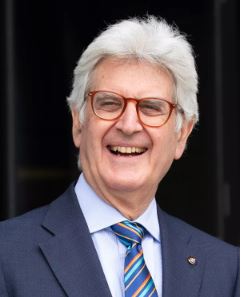
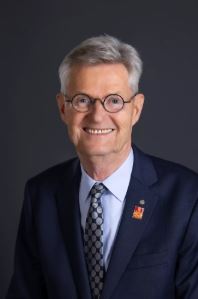
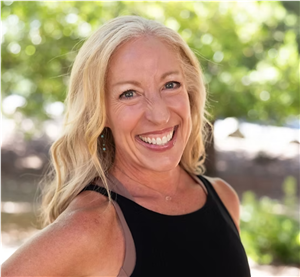
Lisa is the founder of Soul Yoga. She has been teaching yoga since 2001 in Sonoma County. She has received the highest level of training with Baptiste Institute (over 1200 hours) and is passionate about applying the tools from the yoga practice in all areas of her life.
Lisa is the lead trainer of the 200 and 300 hour teacher training at Soul Yoga as well as the founder of Soul Yoga Foundation, bringing the tools of yoga and wellness out of the studio and into the community.
UmeCobra and the Boom Technology, by Adithya M.R. Padala
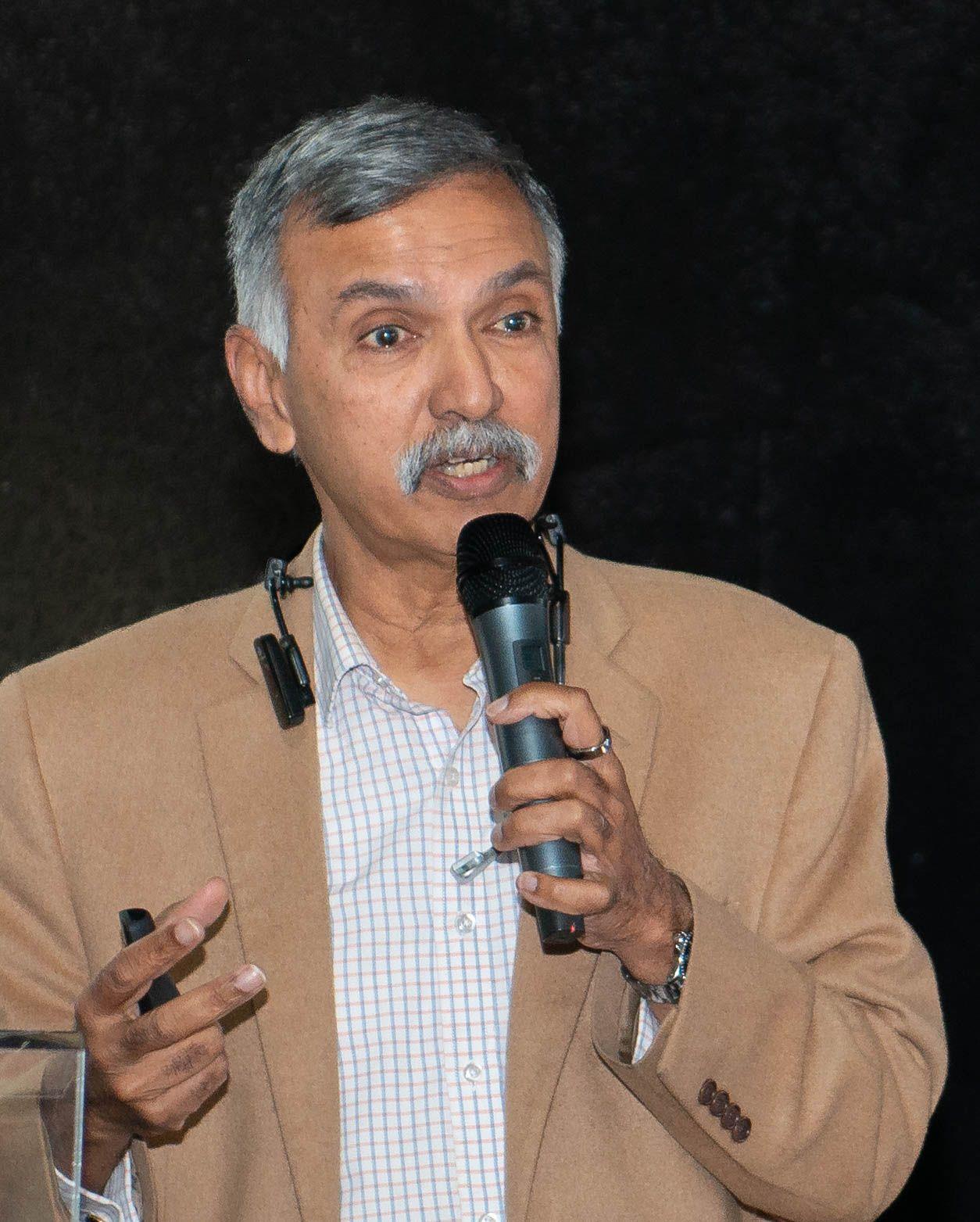
Our speaker for March 5, 2026 was Adithya Padala, founder and CEO of Umi Voice, Inc. Adithya presented on his 35-year entrepreneurial journey, from his first speech recognition programs for major corporations to his development of microphone technology for consumer and military products. Adithya started his company 35 years ago when he started building speech recognition for trading companies. The company’s first customer was Goldman Sachs for its trading floor. They developed a technology which allowed the traders to pick up a handset and make orders in a very loud environment. They also used this technology for customers like Credit Suisse, UBS Wallberg, and others.
After working with this technology for a dozen years, Goldman Sachs asked him if the company could make it work on the New York Stock Exchange. When he visited the stock exchange he discovered that it was so loud you not only couldn’t understand what people were saying, you often couldn’t even hear them! He tried all the noise-cancelling technology on the market but couldn’t find anything that worked. A “mad scientist” friend of his invented a solution to this problem. This was their first consumer product; they called it the “Boom.” The technology is passive (no chips) -- it’s "secret sauce" is based on physics. The company’s products are widely used by U.S. military forces, particularly in helicopters and aircraft. They created the "Cobra mic" specifically for military aviation helmets. He gave us demo audio comparison between standard microphones and the UmeCobra mic in the Blackhawk helicopter environment. Boom products are also used in satellite phones, hospital emergency rooms, and on legal apps. The company also makes a variety of consumer Boom products, which can be purchased on their website.
Adithya also shared several business insights. He recommends that where possible entrepreneurs use self-funding mechanisms rather than by raising capital. He also discussed international manufacturing, particularly in China. He views it as a matter of trust; he builds relationships based on trust regardless of geographic location. He thinks entrepreneurs should focus on "must-have" rather than "nice-to-have" products. He is also personally committed to clean energy. He’s put over 350,000 miles on electric cars and hasn’t been to a gas station in 13 years! He also produces wine under the Genevieva label, named after his daughter. His vineyard has solar and batteries and has achieved net zero energy.
Thank you, Adithya, for the excellent presentation of your amazing 35-year entrepreneurial journey.
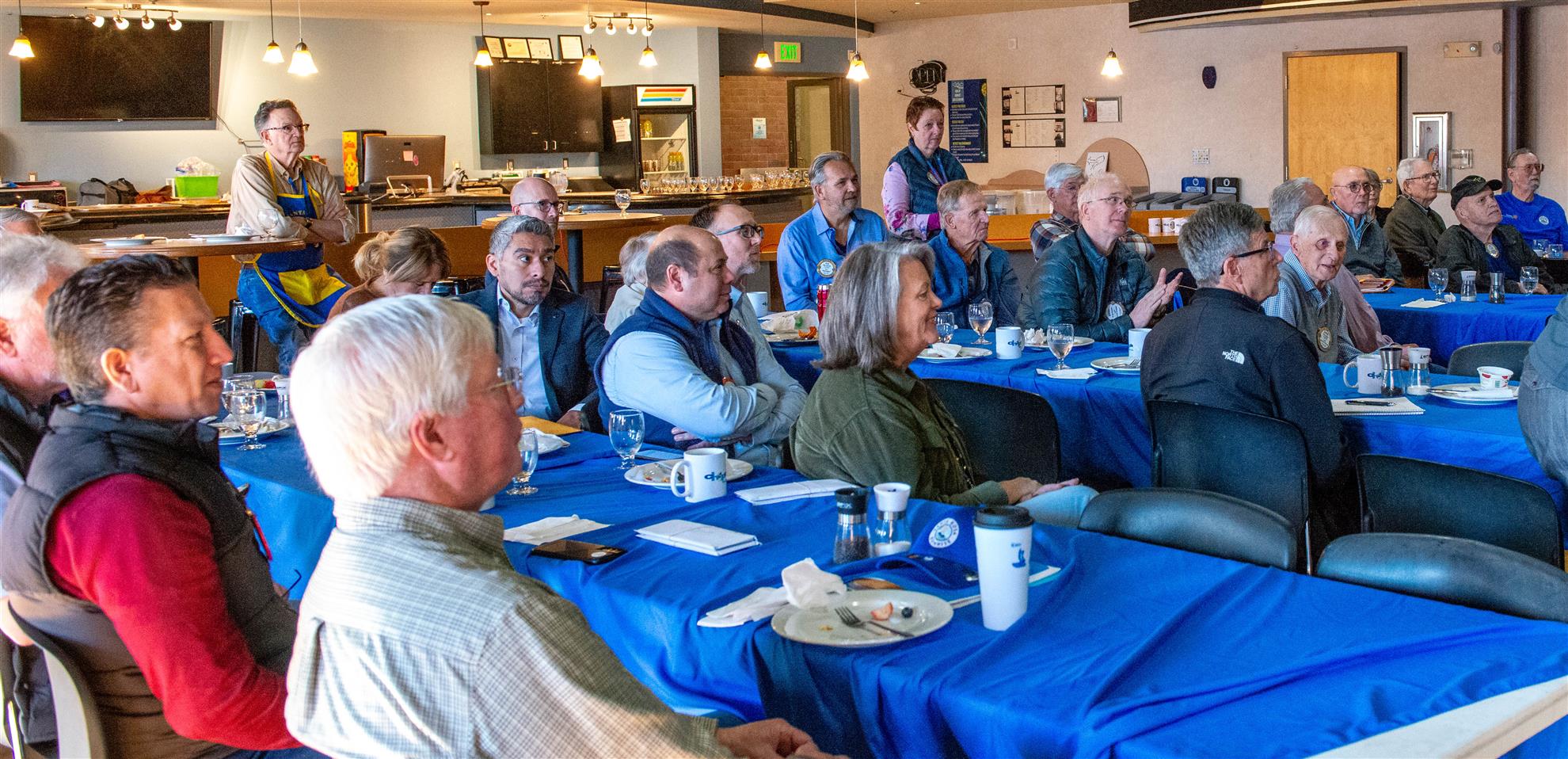
On a regular basis, our resident photo pro Warren Smith, submits pictures of what is going on at the weekly meetings. You can always find the most recent pictures at the websites photo journal called "Meeting Sighting" Please note that all the meeting photos for the entire Rotary year are at this location with the most recent on the last page.
Thanks for all the great pictures Warren!Link to Meeting Sightings. The most recent are on the last page!
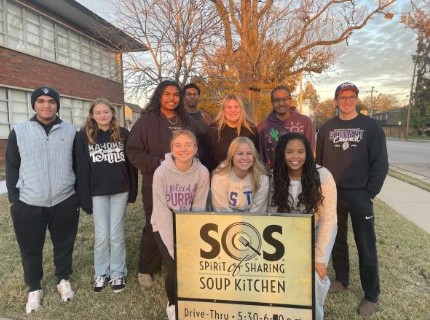
Everett Singleton was an educator who helped integrate schools in Collinsville, Illinois, in the 1950s. When Interactors from Collinsville High School learned that Singleton’s gravesite lacked a marker, they organized a Dine-to-Donate event to raise the $1,700 needed for a proper headstone. Honoring Singleton, who died in 1970, was second nature to the civic-minded students, says Brad Skertich, the club adviser. Singleton, who grew up in the town’s Black neighborhood during segregation, served as a teacher at various schools and as a principal. “Our students have been eager to get involved, give back to their community, and help others,” says Skertich, a member of the Rotary Club of Collinsville, Maryville, Caseyville.
Canada
The Rotary Club of Chilliwack Mt. Cheam in British Columbia aced its volleyball tournament in November, attracting 28 teams to a fundraiser that the club has hosted since 1995. “Many local businesses participate by registering a team, and they have their staff come out and play,” says Kim Ashley, the club’s president. “Each player brings a new toy to donate to Chilliwack Community Services as part of the Christmas Sharing Program.” The project supports the club’s foundation, which focuses on the needs of children, including dental work, medical assessments, and counseling. In all, the matches have raised more than $300,000 and collected 15,000 toys over the past 30 years.
This story originally appeared in the March 2026 issue of Rotary magazine.
Rotary projects make a difference in communities around the world.
Water connects us all. From a river in a remote forest to a stream running past a city neighborhood, freshwater ecosystems sustain humanity. Yet these waters are increasingly under strain. Pollution, overuse, and climate pressures remind us that protecting freshwater is a global challenge.
Rotary has always believed change begins within communities. Now we are working to see how far the impact of community action can travel. When local service is connected, measured, and shared, it becomes a force that extends beyond geography and borders.
A water project led by the Rotary Club of Panamá Nordeste exemplifies this idea. The project served Indigenous communities in Panama’s Darién province, a region accessible only by canoe and small boat. With no roads, limited electricity, and reliance on untreated river water, families faced serious health risks.
To reach these communities, Rotarians had to rethink how supplies and services could be delivered. Working with a partner club in the United States and a specialized water organization, they introduced solar-powered water treatment systems for an area without access to an electrical grid. Local leaders were trained to operate and maintain the system, ensuring that clean water would continue flowing long after installation crews departed.
The results were immediate. Children who once missed school due to illness returned to classrooms. No longer needing to haul water from rivers, adults gained time and strength to work and support their families. What began as a water project became a foundation for healthier, more resilient communities.
This is how we extend our reach: combine local leadership with global partnerships, technical expertise, and long-term thinking.
That same spirit is at the heart of Rotary’s partnership with the United Nations Environment Programme through the Community Action for Fresh Water initiative. Around the world, Rotary and Rotaract clubs are restoring waterways, protecting wetlands, and safeguarding vital freshwater sources. By collecting data to map and measure this work, we can better understand its impact and show how local service contributes to worldwide solutions.
Data is not an end. It is a tool that helps us learn and improve so that Rotary’s service delivers real, measurable change. Each project entered and each waterway restored adds to a shared story of stewardship and responsibility. You can learn more and get involved at communityactionforfreshwater.org.
As we observe Water, Sanitation, and Hygiene Month, I encourage you to reflect on the freshwater systems that sustain your community and the role Rotary can play in protecting them.
When we connect local action to a global vision, we strengthen Rotary’s ability to make lasting change. Together, by extending our reach and working side by side, we truly Unite for Good.
You can find all prior "RI President's Messages" at this LINK
Since 2013, The Rotary Foundation has invested more than $230 million to support thousands of water, sanitation, and hygiene initiatives. Behind these numbers is Rotary’s unique approach. Rather than offering one-time fixes, we train communities to manage systems for generations, moving beyond charity to lasting change. Erica Gwynn, manager of Rotary’s water, sanitation, and hygiene area of focus, shares her perspective:
I have worked with hundreds of members, providing technical support to improve the sustainability and impact of their projects. During site visits, I am struck not only by their dedication but by how far-reaching their impact truly is — oftentimes in ways no one anticipated.
In northern Uganda for RI work, I met a Rotary member who had been a child soldier in the rebel Lord’s Resistance Army and escaped. During the conflict, he said, schools and health care facilities became places of refuge. Years later, after joining Rotary, he wanted to give back. He volunteered to improve water and sanitation in those same schools and facilities, which were once again centers of refuge — this time for the health, safety, and vitality of the entire community.
In Maharashtra, India, I witnessed how our Programs of Scale grant initiative, Partners for Water Access and Better Harvests in India, is bringing irrigation to a traditional farming region that gave women a voice. Though the women couldn’t own land, the water project enabled them to engage in silviculture, or care for forests, and other income-generating activities. They became knowledgeable about farming techniques, increasing their economic agency and dignity.
It’s no coincidence that water challenges are most acute in areas affected by conflict. In Haiti, I have seen how these projects are central to rebuilding resilience in communities recovering from instability and violence. I see the same theme playing out everywhere: These projects deliver so much more than clean water. They boost Rotary’s other areas of focus and are a source of safety, pride, and hope.
Indeed, water projects improve health, foster economic opportunity, and amplify education through increased school attendance, especially for girls who no longer spend hours fetching water. And they fight poverty.
By giving to our Foundation and volunteering in water projects, you are part of this success. Everything we do opens an opportunity for someone, somewhere.
You can find all prior "Messages from the Foundation Trustee Chair" at this LINK
Rotary Club of Santa Rosa Sunrise - Founded June 30, 1986


.png)








 United States
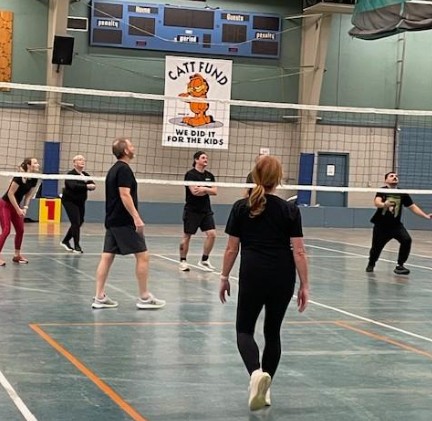 The Rotary Club of Chilliwack Mt. Cheam in British Columbia aced its volleyball tournament in November, attracting 28 teams to a fundraiser that the club has hosted since 1995. “Many local businesses participate by registering a team, and they have their staff come out and play,” says Kim Ashley, the club’s president. “Each player brings a new toy to donate to Chilliwack Community Services as part of the Christmas Sharing Program.” The project supports the club’s foundation, which focuses on the needs of children, including dental work, medical assessments, and counseling. In all, the matches have raised more than $300,000 and collected 15,000 toys over the past 30 years.