This week's presentation will be led by our very own Past Presidents, Shauna Lorenzen, Paul O’Rear, Randy Seelye and Steve Amend about all things Rotary Foundation.
Rick Coates, Executive Director of Forest Unlimited
Rick Coates, Co-founder and Executive Director of Forest Unlimited, was our speaker for Santa Rosa Sunrise Rotary’s March 3, 2022, hybrid meeting. Rick has a degree in chemistry from the University of California. He has been a teacher at both secondary and college levels and is a former Executive Director of Northern California River Watch. He also serves on the Board of Directors for SMART. He has served as the ED for Forest Unlimited since 1995. Forest Unlimited’ s mission includes planting trees and protecting forests. Rick asked us which is the more important in in protecting the environment; planting trees or protecting forests. He emphasized that Forest Unlimited has a major role in planting trees in our area, including its annual planting event which results in planting about 1,600 redwood seedlings annually. Planting trees is important for many reasons, including CO2 absorption, shade, clean air, saving water, reducing erosion, beautifying landscapes, adding property value, and creating habitat. Trees also serve as a conveyor belt for rain and moisture, sending moisture from coastal areas inland.
Despite the importance of planting trees, Rick believes that protecting forests is even more important, at least in the short term. Young trees do not “fix” or sequester as much carbon as older trees and take years to grow to peak carbon storage. Forests can also retard the advance of wildfires since mature trees are more resistant to wildfire than residential areas. One example is the Paradise Fire; the town was leveled but the trees are generally still standing. Forests also preserve water for firefighting. One Forest Unlimited project includes advocating for community-owned forests. We have two in Sonoma County, one in Graton and another near the Santa Rosa Wastewater Treatment Plant. The Graton forest is particularly important because it uses Redwood trees, which sequester more carbon than other trees. Rick gave us some suggestions for protecting our homes from wildfires, including installing metal roofs and fire-resistant siding, using metal instead of plastic gutters, and maintaining defensible space in our landscaping.
Rick also chastised PG&E for its failure to do enough to protect against fires. He mentioned that PG&E has a long history of failing to consider the environment and has even been convicted of involuntary manslaughter in connection with wildfire deaths. One of the problems with PG&E’s power grid is the practice of running power lines overhead rather than underground. This practice leads directly to wildfires because it is nearly impossible to remove or trim trees far enough away from overhead power lines to avoid fires. Another key area of emphasis for Forest Unlimited is California’s Board of Forestry, which is generally controlled by corporate lumber interests. The Board’s composition and rules do not protect the forest’s ecosystems. Rick also believes that the Board favors large corporate interests over small businesses and that small businesses often do a much better job protecting the environment.
Rick asks Rotarians to consider joining or volunteering Forest Unlimited. Public action is the best way to further the goal of environmental protection. Thank you, Rick, for the great presentation. And thank you for advocating on behalf of our forests!
View the recording of Rick's talk HERE. It will be available to the next week or so.
On a regular basis, our resident photo pro Warren Smith, submits pictures of what is going on at the weekly meetings. You can always find the most recent pictures at the websites photo journal called "Meeting Sighting" Please note that all the meeting photos for the entire Rotary year are at this location with the most recent on the last page.
Thanks for all the great pictures Warren!Link to Meeting Sightings. The most recent are on the last page!
his week I want to explore certain measures we can take to protect ourselves from negativity or evil spirits. Enter the Evil Eye talisman or amulet. This is prominent in the Mediterranean and West Asian cultures. It is not uncommon to see an evil eye talisman hanging near a door or the hearth in a household. It is designed in an eye shape and is traditionally blue or green, which indicates spiritual protection..
This is something to take seriously, and it is a blessing that these amulets are available for protection. An evil eye is a look or stare that is believed to bring back luck for the person at whom it is directed as a result of envy or dislike. We have all been susceptible to an evil eye—I like to call it a malignant side-eye. My dog Dexter is famous for giving other dogs and small children an epic side-eye.
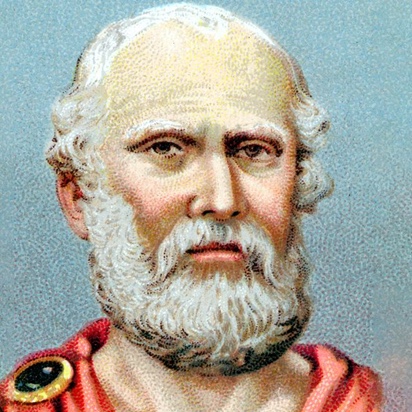
Belief in the evil eye dates back all the way to the 6th century B.C. Iconic Greek thinkers such as Plato, Plutarch, and Hesiod all reference the power of the evil eye. The evil eye transcends a multitude of religions and cultures worldwide. It is recognized in Christianity, Judaism, Islam, and even referenced by William Shakespeare.
Before science was able to explain ill health, disasters, and other unfortunate circumstances, the evil eye was the reason why “bad things happen to good people.”
In order to be protected, it is best practice to wear an evil eye piece of jewelry (necklace or a bracelet) and display an evil eye talisman near your doorway in your house. This will ensure that you have good luck, excellent health, and prosperity.
Do you have an evil amulet or talisman? If so, what part of the world did you procure this symbol of protection?
Seeing the musical Hair, at 6th Street Playhouse, which was held over for two additional weekends, brought back memories of more than the long hair and free love that was depicted. The 1960s changed our lives in many ways that continue to this day and beyond. It was the time when the baby boomers (me) made their entrance onto the world scene. And we were a force to be reckoned with.
Our infancy became a scientific process through the work of Dr. Spock.
The “teenager” became a distinct marketing group. And the period that emerged between childhood and adulthood came to be known as “youth” throughout the world.
Our generation invented the phenomenon of active protest against government, the status quo and the war.
We also championed the civil rights movement that would later evolve into Black Lives Matter..
The printed program for Hair, states that the 1960s was a time when the moon, Mercury, Venus, Mars, Jupiter and Saturn; aligned in the constellation of Aquarius. And these heavenly bodies had not come together for 2,500 years.. This alignment prompted creativity and communalism.
It was a time of dissent, a time of progress, a time a time of activism, and a time of change supported by the compounded energy of the planets and stars And a time when our Baby Boomer generation emerged demanding to be reckoned with. A time that has and will forever shape our lives.
Peter starts his new job at the London Zoo and is given three tasks. First is to clear the exotic fish pool of weeds. As he does this, a huge fish jumps out and bites him. To show who is boss, Peter beats it to death with a spade. Realizing his employer won't be best pleased; he disposes of the fish by feeding it to the lions, as lions will eat anything.
Moving on to the second job of clearing out the chimp house, Peter is attacked by the chimps that pelt him with coconuts. He swipes at two chimps with a spade killing them both. What can he do?
Feed them to the lions, Peter says to himself, because lions eat anything. He hurls the corpses into the lion enclosure.
Peter moves on to the last job which is to collect honey from the South American Bees. As soon as he starts, he is attacked by the bees. He grabs the spade and smashes the bees to a pulp. By now he knows what to do and throws them into the lion's cage because lions eat anything.
Later that day a new lion arrives at the zoo. He wanders up to another lion and says, 'What's the food like here?'
The lion replies, 'Absolutely brilliant!..... Today we had fish and chimps with mushy bees.'
We have overcome so many challenges these past two years and changed numerous lives. It brings me great joy that we have worked so hard this year to grow Rotary through the Each One, Bring One initiative. The result has been excellent growth in membership. Let us keep up the momentum. I am happy that you have put a spotlight on all we do by organizing projects around the world in our Rotary Days of Service. The future looks brighter than ever for Rotary and our 1.4 million members.
On 11 March 2020, the World Health Organization declared that COVID-19 constituted a pandemic, and two years later it is important that we continue to draw on our expertise in our disease prevention and treatment area of focus to help people worldwide cope with the continuing challenges. The pandemic continues to defy all expectations, but we cannot be frozen in fear. Our work is too important. It is also important that we make time for each other, and I urge you to register for the upcoming 2022 Rotary International Convention in Houston. It is a great way for all of us to safely celebrate Rotary service.
We can continue to build hope and spread peace in the world by using our resources to help the most vulnerable and keeping our faith in the future. The pandemic has had an especially devastating impact on girls worldwide. On the first anniversary of the pandemic, Henrietta Fore, the executive director of UNICEF, said that “immediate action is needed to mitigate the toll on girls and their families.” This need, unfortunately, remains just as strong a year later. The ripples of the pandemic have affected girls in unique ways — stunting their educational attainment, weakening their job prospects, and contributing to other terrible results such as child marriages and increased human trafficking.
Data from UNICEF reveals why our action is so essential. In the 2010s, important progress was made toward eliminating the practice of child marriage, and UNICEF estimates that 25 million such marriages were averted worldwide. Unfortunately, the pandemic reversed those positive trends, and as a result an additional 10 million girls are vulnerable to becoming child brides by the end of this decade.
This is why our focus on Empowering Girls is such vital work, and I am delighted that at this year’s virtual International Assembly, President-elect Jennifer Jones committed to continuing this initiative for another year. In my travels, I have witnessed many wonderful examples of club projects that back our Empowering Girls goals. But all Rotary members know that real change requires big efforts sustained over many years. This is the power of our global grants and actions taken within our areas of focus.
I encourage clubs to think of innovative ways to empower girls when designing their grant projects. Every step we take to improve education, health care, and economic opportunities for girls makes an important difference in helping them achieve their full potential. With opportunity we create hope, and with hope we address the root causes of conflict around the world, setting the stage for sustainable peace.
None of us know how long the COVID-19 virus will linger — and as an organization that has worked tirelessly for decades to eradicate polio, we understand better than most the difficult work that lies ahead for the world. That is why we need to remain focused on the future and on what is possible — not feeling nostalgic for the way our lives were, but looking hopefully to a future that uses this opportunity to Serve to Change Lives. I look forward to continuing this good work with you.
In the mid-18th century, Benjamin Franklin wrote: “When the well’s dry, we know the worth of water.”
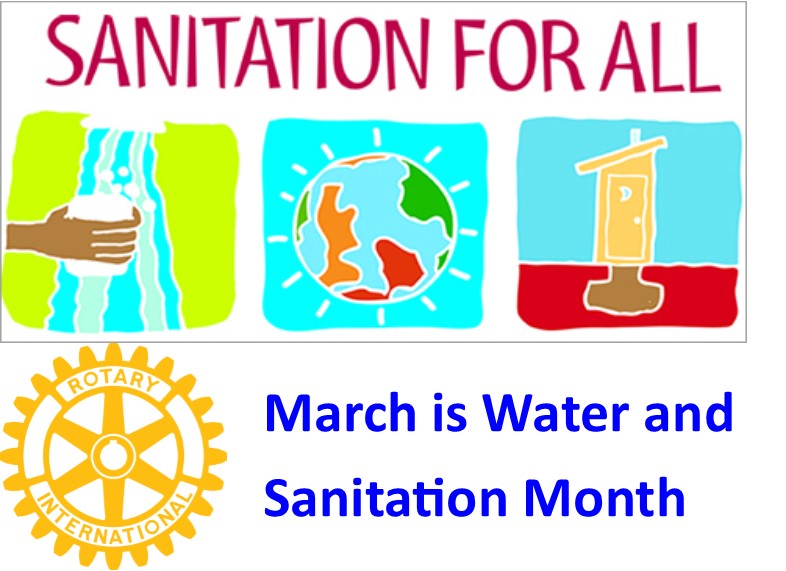
Right now, in the 21st century, many of us take water for granted because we have been fortunate to live in places where clean water is plentiful. But that’s not the case for millions of others around the world. The United Nations estimates that 2 billion people — about 1 in 4 people on the planet — lack safely managed drinking water. Just under half of the world’s population lives without access to safely managed toilets and sanitation systems, and nearly a third lacks basic hand washing stations with soap and clean water.
Isn’t it astounding that, in an age of instant information and space tourism, we still haven’t managed to guarantee the necessities of water, sanitation, and hygiene (WASH) to so many?
Rotary is doing something about it; WASH projects are among the most funded within our areas of focus: Since 2014, Rotary clubs have carried out more than 2,100 global grants related to WASH by using $154 million in Foundation funding, impacting countless people.
In addition, Rotary’s WASH alliance with USAID, more than a decade strong, is considered Rotary’s largest partnership outside of PolioPlus. Rotary and USAID have committed a combined $18 million in WASH funding to large-scale strategic efforts at the national level in countries such as Ghana and Uganda. The partnership unites the technical expertise of USAID’s development professionals with the local leadership and advocacy of Rotary members to find workable, sustainable WASH solutions in hundreds of communities. You can learn more at riusaidwash.rotary.org.
The theme of World Water Day, 22 March, is Groundwater: Making the Invisible Visible. This is an opportune time for clubs to learn more about WASH issues and take action collectively to create and sustain momentum for expanding access to universal WASH services. Rotary members can bring attention to the WASH challenges that impact us locally by sharing the stories, experiences, and WASH needs of those we serve globally.
We can be proud of the work that Rotary clubs and our Foundation continue to do to provide communities with clean water and working sanitation and hygiene systems. But let’s not stop there.
This month, let’s look out for our neighbors around the world whose wells are running dry or who lack toilets or soap. Rotary has the resources, partnerships, and passion to improve WASH services for millions in need worldwide. And most important, we have the people who can make it work — you and me.
When Elise Zwicky’s three children were 10, 13, and 14, they organized a ragtag carnival in the backyard of their Pekin, Illinois, home and invited their neighbors and friends to join the fun.
They charged admission, sold snacks, and raised a couple hundred dollars, which they donated to the Pulmonary Hypertension Association, a nonprofit that advocates for patients who suffer from the chronic heart and lung condition. Zwicky was diagnosed with pulmonary hypertension when Sean, her youngest, was 4 years old. The fundraising carnival was his idea.
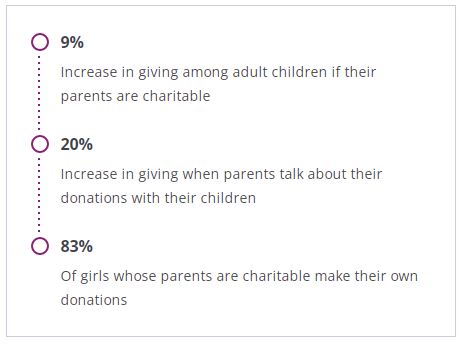
Philanthropy, experts say, can be a powerful tool for children to gain a sense of agency and hope in the face of challenging circumstances.
“It helps kids feel like, ‘I’m a doer,’” says Katie Hurley, a child and adolescent psychotherapist and author of The Happy Kid Handbook: How to Raise Joyful Children in a Stressful World. “‘The world is hard and there are big problems, but I can be a problem-solver.’”
Practicing philanthropy also plants seeds for skills that children will use well into their adult years.
“It teaches them problem-solving, financial literacy, compassion, a sense of community,” says Traci Baxley, a diversity, equity, and inclusion consultant and author of Social Justice Parenting: How to Raise Compassionate, Anti-Racist, Justice-Minded Kids in an Unjust World. “To know that their act of kindness can have ripple effects in the world can empower kids to do more.”
Parents can start cultivating their child’s inner philanthropist by modeling frequent generosity.
“And not just with things,” Baxley says, “but with their time, attention, and unconditional love — with extended family and the community. Just like everything else that we teach children — getting dressed, tying their shoes, reading — children need to see it demonstrated and practiced over and over until it becomes automatic.” One-time philanthropic acts, like making a donation or volunteering one shift during the holidays, she says, “won’t give you the results that you’re looking for.”
When her own children were younger, Baxley and her husband gave them three jars labeled “save,” “spend,” and “give” for money they received through allowance or gifts. There are also debit cards designed for young people that offer the option to automatically donate a portion of the child’s money to a charity of their choosing.
The choosing, Hurley said, is an important step in helping kids feel like philanthropists, rather than simply rule-followers. “Carve out the time to learn together about organizations and how kids want to help,” Hurley says. “When we say, ‘You have to do this,’ that’s not intrinsic motivation. That’s a mandate.”
Those conversations can be a window into your child’s passions, hopes, and fears, and can also be an opportunity to get kids thinking about larger social issues.
“Equity and injustices are topics that even young children are capable of comprehending when discussed in an age-appropriate way,” Baxley says. “Teaching our children to have a great work ethic is extremely necessary. Still, we also want our children to know that when they have an abundance of something, part of their responsibility to the human village is to share it with others.”
A few things to keep in mind
Ask, don’t assign.
Your kids may have causes on their radar that aren’t on yours, and it’s important to lean into those. “Part of raising well-rounded kids who will grow up and give back is allowing them to explore ways they can help causes that are near and dear to their hearts,” Hurley says.
Turn to books.
Incorporate reading material that introduces kids to problems in need of solutions. “For our bedtime read-aloud, my three youngest sons and I read A Long Walk to Water by Linda Sue Park,” Baxley says. “It was the first time that my children understood the privilege of having clean water in their homes. The story of Salva, the main character, moved them to start collecting loose change in a jar that they would eventually send to his foundation, Water for South Sudan.”
Money isn’t everything.
Kids don’t have to have cash in order to help their community. “If your child is passionate about inclusivity, ask what they can do on a micro level,” Hurley says. “What kind of club can you start at school that makes people feel included and welcome and understood?”
Reap the benefits.
When you establish giving as part of your core values, Baxley says, unsolicited acts of giving may show up in your home. “When one of my sons had a special lunch at school that required him to have the exact change, I watched his siblings rummaging through their personal money stash, trying to come up with dollar bills to support their brother,” she says. “When the habit is automatic, you don’t have to explain why giving is right. They just do it.”
This story originally appeared in the January 2022 issue of Rotary magazine.
Rotary Club of Santa Rosa Sunrise - Founded June 30, 1986


.png)



.png)

















 “It helps kids feel like, ‘I’m a doer,’” says Katie Hurley, a child and adolescent psychotherapist and author of The Happy Kid Handbook: How to Raise Joyful Children in a Stressful World. “‘The world is hard and there are big problems, but I can be a problem-solver.’”