One of today’s most pressing problems is feeling overwhelmed. We are checking our cellphones nearly 50 times a day and finding ourselves working all day and weekends to no avail.
It is no secret that this is happening to all of us; no one is immune. And a simple awareness of burnout is not enough to bring balance to our lives; different actions must be taken.
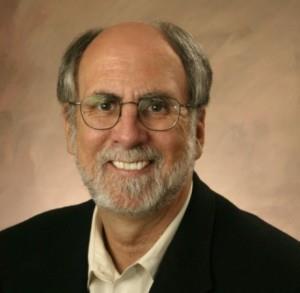
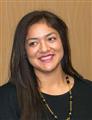
Steven Campbell, MSIS presents the astounding scientific discoveries of how our minds can be rewired and trained to find the balance we need.
He teaches how balance is, in fact, a state of mind. Steve both teaches and demonstrates the psychological discoveries of how it can be attained. He does this in the form of four key takeaways from the acronym FIND.
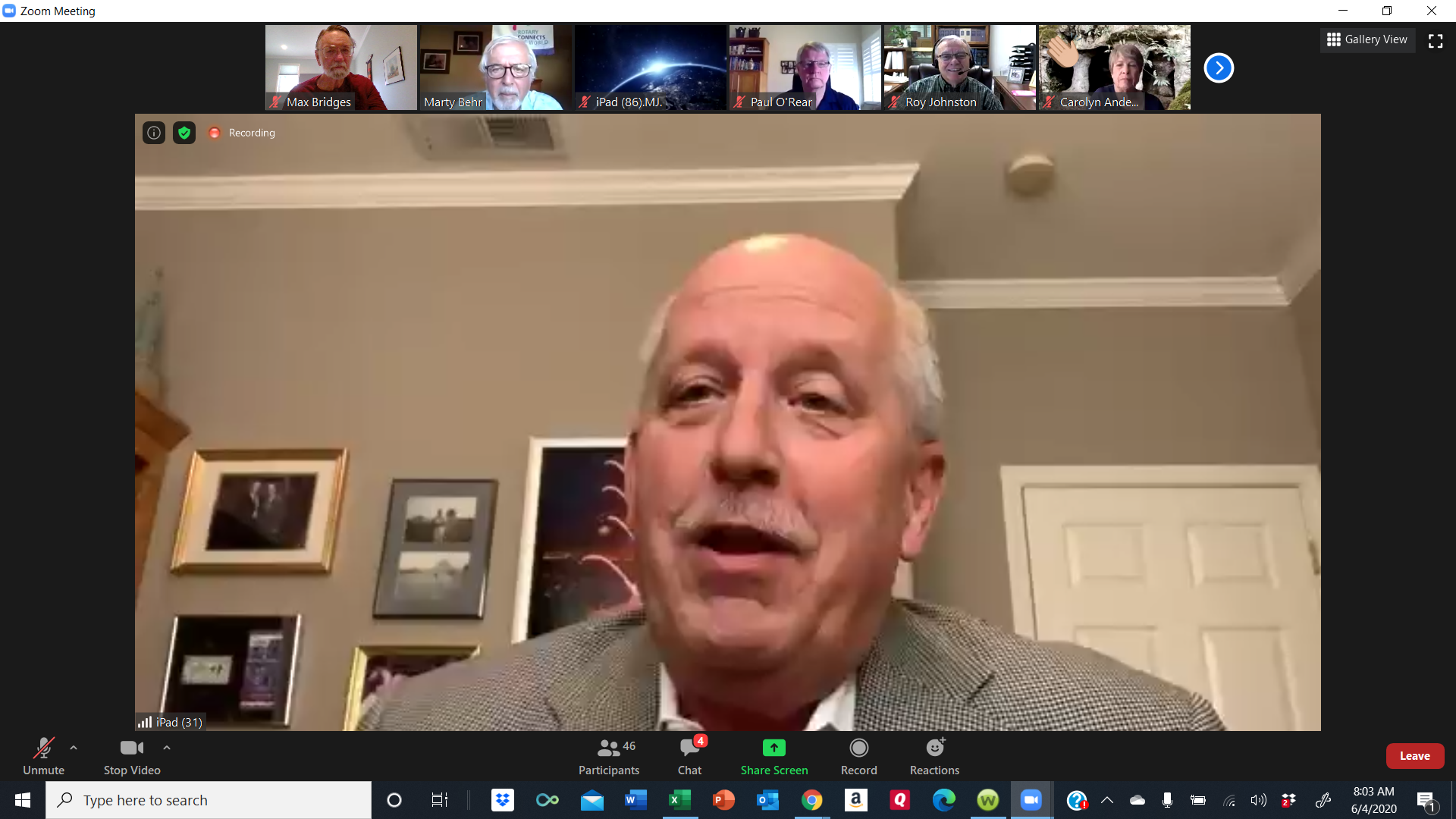
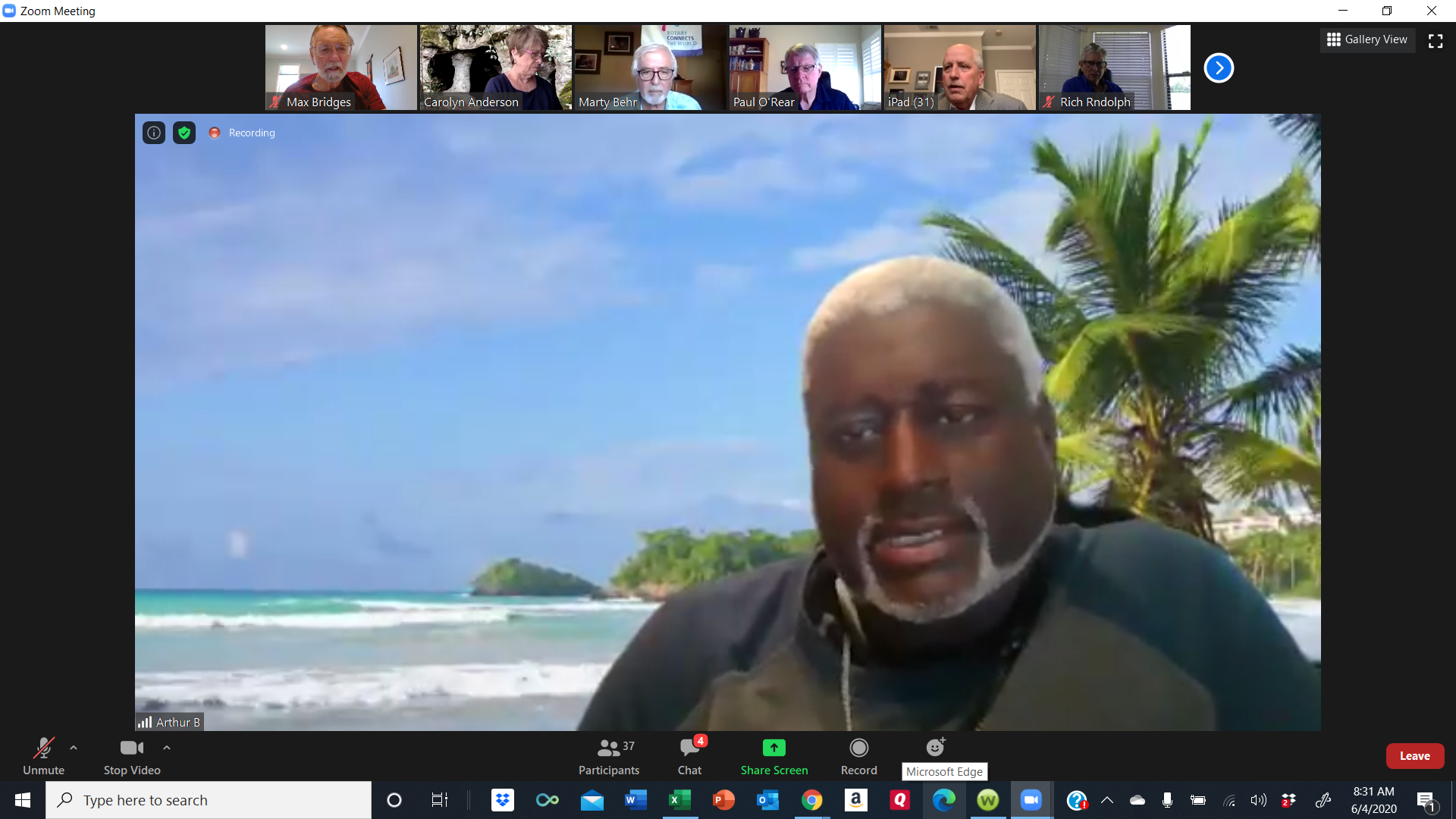
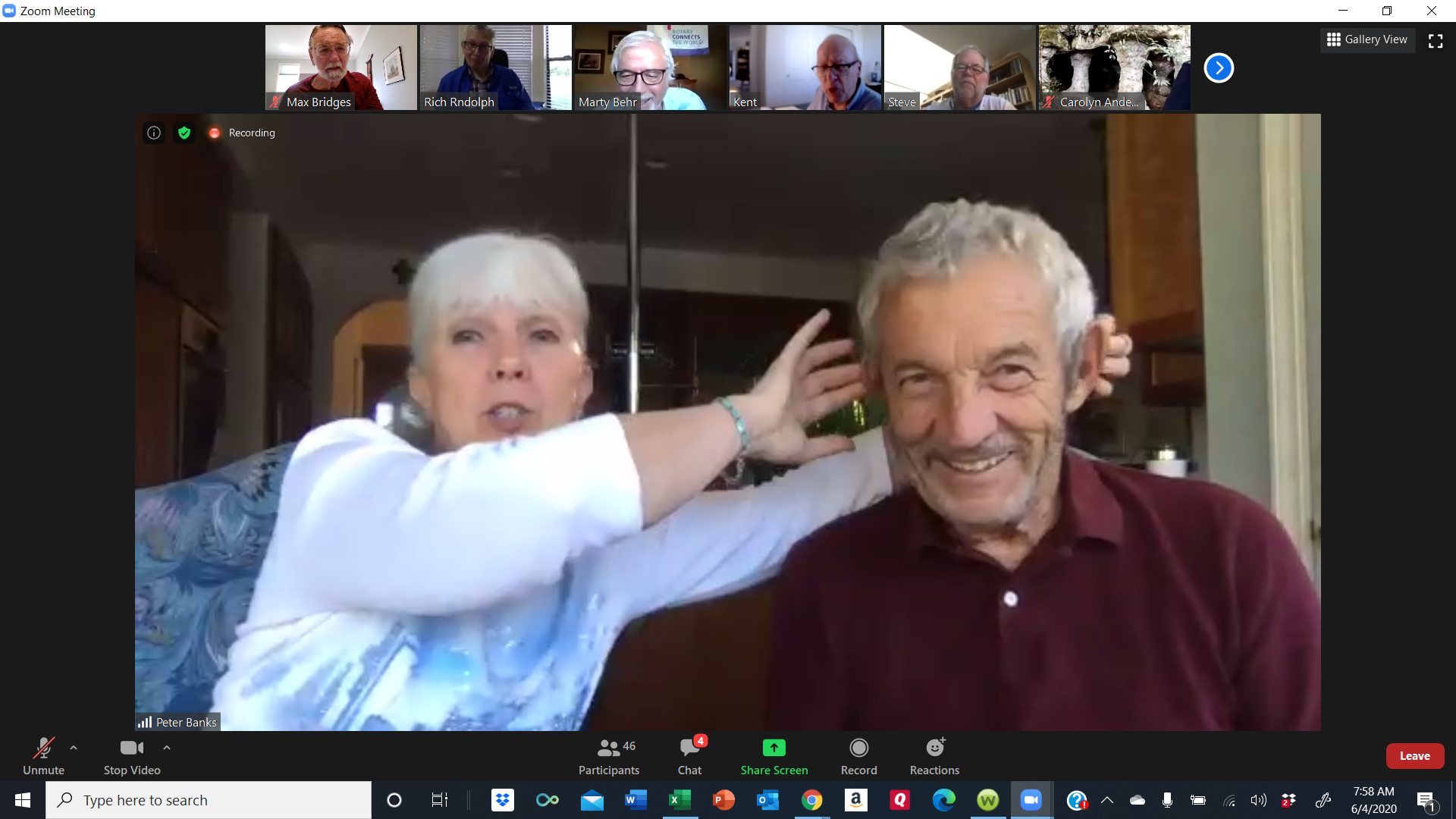
The speaker for our June 4th meeting was Brian Sobel, a consultant who has been involved in political analysis for many years. Brian’s topic was the 2020 election. He outlined some of the COVID-19-related problems that politicians have with this election, including communicating with voters. Zoom is not the same as campaign events, and politicians are struggling with it. On the other hand, with all the cable networks and social media platforms, politicians can reach a huge audience. But because of the polarization of the American populace, these outlets usually focus on a specific audience, making it difficult to get the message out to a wider variety of voters. Brian advised us to get out of the Fox, CNN, and MSNBC “echo chamber” and and read as many respected sources as we can.
Brian said that Trump voters like the fact that he knows what he wants and he goes out and gets it. Biden, however, knows Washington and has an immense constituency. Cool quote about Biden: “He’d attend the opening of an envelope!” Biden knows all the districts in the U.S. and his knowledge of the political landscape is extraordinary. His problem, and Trump’s to a lesser degree, is getting out the message.
The key issues for the election will likely be COVID-19, Black Lives Matter, collusion with Russia, the Middle East, China trade and THE ECONOMY. As an example of the importance of the economy, he spoke about the Clinton v. Bush election. Just months before the election George Herbert Walker Bush was extremely popular but the economy was not going well. Clinton beat him on the economy and possibly on the ‘war fatigue factor.’
Brian expects a huge voter turnout for the 2020 election. State actors trying to disrupt the election with false and misleading information are working overtime on Facebook, Instagram and other social media. They are very clever people and are working to sow dissent. Again, it is important to follow “discerning news sources.” Another key issue with the 2020 presidential election is Biden’s choice of a Vice Presidential candidate. Brian thinks that a spectacular candidate could have a huge impact on the race, especially because Biden and Trump are in their 70’s and as a result the VP candidate is more important than usual. He thinks the VP candidate will be a black female, such as Kamala Harris or Stacey Abrams, but he also mentioned Amy Klobuchar as a strong candidate. Trump is likely going to stay with Pence, although some analysts are suggesting other candidates.
Thank you, Brian for these insights into the 2020 election. The information you provided will help us make good decisions in the 2020 election.
On a regular basis, our resident photo pro Warren Smith, submits pictures of what is going on at the weekly meetings. You can always find the most recent pictures at the websites photo journal called "Meeting Sighting" Please note that all the meeting photos for the entire Rotary year are at this location with the most recent on the last page.
Thanks for all the great pictures Warren!Link to Meeting Sightings. The most recent are on the last page!
To further enable Sunrise Rotary to make positive change in the world, our Foundation has created the Santa Rosa Sunrise Rotary Foundation Service Fund. The Service Fund is a Donor Advised Fund (DAF) managed by the Rotary International Foundation as a long-term endowment. By utilizing R.I.’s DAF capabilities we will enjoy low-cost investment management and donor services while in the initiation phase and retain the flexibility to convert to a privately managed endowment if and when the Foundation chooses.
Objective
The objective of the Santa Rosa Sunrise Rotary Foundation Service Fund is to build a sustainable, long-term source of grant funding for the benefit of community and international programs that the club supports.
Donations to the Fund
Donations to the Service Fund can be made in several ways:
By Check, make payable to “The Rotary Foundation DAF” and include our account name Santa Rosa Sunrise Rotary Foundation Service Fund and account number 697. Mail the check to Rotary DAF c/o NRS, 12 Gill Street, Suite 2600, Woburn, MA 01801. For one-time donations, the fund requests donations of $1,000 or more.
By On-Line Donation, at the Rotary International website, as a withdrawal from a bank/investment account or credit card charge. LINK TO SITE
By On-Line Monthly Donation, at the Rotary International website with convenient monthly withdrawals from a bank/investment account or credit card charge. Recurring donations can be less than $1,000 each.
By Legacy Estate Planning, Donors’ estate planning attorneys can set up automatic inclusion of the Service Fund in a donor’s trust or will documentation.
As an endowment, annual distributions consist primarily of the earnings from donated gifts, not the principal. The amount distributed is calculated to sustain the fund and distributions over the very long term. As such, gifts made to the Service Fund are truly gifts that keep on giving…………forever.
Recognition:
Sunrise Rotary would like to recognize those who contribute to the successful launch of the Service Fund.
- Donors making gifts of $2,500+, or pledging $250+ per month for 12 months, by December 31, 2020 will be recognized as “Founders”.
- Donors making gifts of $1,000 to $2,499 or initiating contributions of $100 to $249 per month for 12 months by December 31, 2020 will be recognized as “Benefactors”.
- Donors who have included the Service Fund in their estate planning, with gifts of $5,000 or more by December 31, 2020 will be recognized as “Legacy Founders”
With Gratitude
Your support of Sunrise Rotary’s service work in the community and internationally is appreciated. Your donation to the Santa Rosa Sunrise Rotary Foundation Service Fund will make possible positive change in the lives of those less advantaged that we serve. Thank-you.
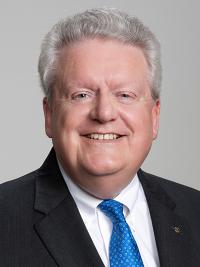
My Rotary journey began 40 years ago when I joined the Rotary Club of Decatur, Alabama, at the age of 25, and it has brought my family and me many unforgettable moments. But nothing could have prepared me for connecting with the world as president of Rotary International. My individual Rotary journey has become a shared Rotary journey with each of you.
All of the incredible people Gay and I met this year — Rotarians, Rotaractors, and the extended family of Rotary — will be an inspiration for the rest of our lives. We visited clubs and projects from Uruguay to Ukraine, from Nigeria to New Zealand, and beyond. We were privileged to crisscross the globe, circumnavigating it twice and moving back and forth between the Northern and Southern hemispheres. Each country and each stop held its own Rotary magic. While in Zimbabwe in March, we participated in a medical vocational training team mission with Rotarians from India, providing health, hope, and life itself to the thousands who came for treatment. We also felt the energy of more than 300 young people at a Rotary Youth Symposium in Harare. What a thrill it was to be with these young people!
This year Rotary launched our new Action Plan, and I trust each club is putting that plan to use. And I have been energized by the efforts to embrace the priorities I set for this Rotary year: engaging families, providing leadership opportunities for all ages, celebrating our history with the United Nations in its 75th year, and, most significantly, growing Rotary.
As COVID-19 reached around the globe, we found ourselves in a world transformed. We have been forced to connect in ways we could never have imagined, testing our ability to adapt. We have made tough decisions, including canceling club meetings, district conferences, presidential conferences, and, much to our regret, the 2020 Rotary International Convention in Honolulu. Together everyone is placing the public good and welfare first, despite the loss of meetings, events, and experiences that had been planned for years.
As we looked forward to the Rotary Convention in Honolulu, we learned about the aloha spirit. Our Rotary friends in Hawaii showed us that "aloha" means mutual regard and affection. It extends warmth and caring with no expectation of anything in return. The spirit of aloha applies wherever in the world we may live. As Rotarians, Rotaractors, and members of the family of Rotary, we are connected, and as aloha has been defined to me: Our connection to one another is based upon mutual respect for our differences as well as our appreciation for what we have in common. Community is the sum of individuals — individuals who have concern for one another, who care, share, and take responsibility.
As I have witnessed the members of the Rotary community act to care for humanity amid the coronavirus pandemic, I have seen the aloha of Rotary. We are indeed people of action. Every day, but particularly during this pandemic, the Rotary community has demonstrated its aloha spirit. It is a gift to be shared, and we are each a steward of this gift of Rotary. Gay and I have been amazed, inspired, and humbled by all of you within the family of Rotary.
Indeed, I would say that the last part of our shared Rotary year was transformational. We found new ways to make the lives of others better, new ways to move forward together. And, together, we will continue to grow Rotary so that we may increase our gift of Rotary to our local and global communities.
Gay and I will always remember and treasure our year with you, our shared journey, as Rotary Connects the World!
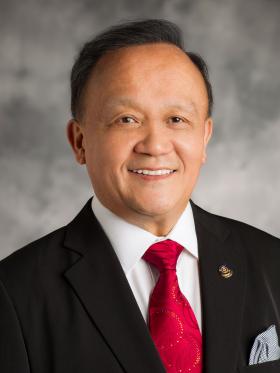
As I write this message, the world is in the grip of the COVID-19 pandemic. I want to dedicate this column to the ways that Rotary members, as people of action, have helped and can help, and share what we are doing at the Foundation to support you.
Rotary has long been a leader in fighting disease and advancing health. The polio infrastructure that Rotarians have helped build is being used to counter the new coronavirus, in addition to serving countless other health needs. In many countries, polio volunteers have been deployed to address COVID-19.
Rotary clubs and districts have mobilized quickly to curb the spread of the virus. In Italy, clubs in District 2080 are raising funds to purchase ventilators and protective gear for overcrowded hospitals. In Hong Kong, Rotary clubs have packed medical supplies, raised funds, and visited public housing buildings to distribute masks and hand sanitizer. Rotary clubs in Akwa Ibom state, Nigeria, conducted a COVID-19 awareness campaign.
At the Foundation, the Trustees took swift action to support your work. You can use district grant funds to support local activities, such as purchasing protective medical gear for health workers. You can repurpose previously planned activities as a COVID-19 response, or reimburse COVID-19 activities dating back to 15 March in your district's 2020-21 district grant.
Due to your generosity to our Foundation, the Trustees were able to quickly approve millions of dollars for the Disaster Response Fund to make a multitude of disaster relief grants immediately available for club and district projects related to COVID-19 relief efforts. As this Rotary year ends, our fight for the cause of public health is at a critical point. We must overcome COVID-19 and continue to build on the many decades of programs and projects of our Foundation.
If you have not already done so, please do whatever you can to help by making a year-end contribution to our Foundation. Your gift has never been so important.
When I think of Rotary members truly making a difference in their communities, I remember what the great Laozi once taught us about leadership: "A leader is best when people barely know he exists. ... When the work is done ... they will say: We did it ourselves." The world depends on us to lead, and for your leadership, I will be forever grateful. Thank you for your past, present, and future leadership and support of our Foundation.
The main goal is to teach leadership skills to young people between 14 and 30 years old, usually from across a Rotary district.RYLA stands for Rotary Youth Leadership Awards. So the participants are being recognized for their leadership, but many of them haven’t found their leadership style yet. We provide a program for them to enhance their skills with an emphasis on Service Above Self. A lot of them understand it already; they just need a little push to get them involved in their communities.
In our district, we have three RYLA programs, for ages 14-15, 16-18, and 19-30. All of them are three- to four-day camps, but each one is unique. Our hope is that participants go through all three and that during that time they also become involved in Interact and Rotaract. RYLA is a great steppingstone for young people beginning their Rotary journey.
2. How does your district decide who gets to go?
Rotary clubs select the participants and are responsible for paying for them to attend the program. Every club does it a bit differently. Some clubs promote the program within their school systems and then hold interviews with prospective participants at the school. The specific criteria they use are up to them. Generally, they target young people who have qualities suited to leadership.We started the RYLA camp for 14- to 15-year-olds because we saw a need for a program for young people who don’t have these kinds of opportunities.
3. How do you make the event interesting?
For our 16- to 18-year-olds, the camp is run by RYLA alumni, who are all between ages 19 and 25. They lead presentations on things like public speaking and team building, and then the participants bring that knowledge together in a group project. Each group picks an important issue in their school or community — an example from last year was vaping — and works together to come up with a project that they’d like to see implemented. They research problems, discuss what they would do to solve them, and then give a presentation to the whole group. They really enjoy being able to work collectively.
On the final evening, all of the participants come together and pass around a First Nations talking stick. It’s an opportunity for everyone to share a bit about themselves and their experience at RYLA. The person holding the stick is designated to speak and everybody else needs to listen, quietly and respectfully. It can be very powerful. Every year we incorporate more elements of First Nations culture.
4. What do the participants get out of the program?
They feel much more comfortable about their capabilities. They’re so eager to go out into their communities and start making changes. We encourage them to see if the project they worked on can be implemented in their school or community — maybe even in partnership with the club that sponsored them.
Participants also give a presentation about their experience to their sponsoring club. The club members tell us, “These young people are amazing. Their speaking skills are so much improved, and they’re interested in Rotary projects!” The participants have a huge support system within the clubs.
5. Why should clubs and districts organize a RYLA event?
It’s one of the best leadership programs that I know of. In a short time, we can see the change in each young person. It’s also an easy program to incorporate into your club and district. You can make it unique and cater it to your own communities and age groups. That’s the best part.
— JOHN M. CUNNINGHAM
• RYLA events can be organized at the club, district, or multidistrict level. Get started >
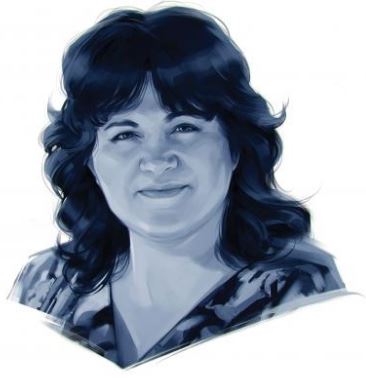
• Illustration by Viktor Miller Gausa
• This story originally appeared in the May 2020 issue of The Rotarian magazine.
Rotary Club of Santa Rosa Sunrise - Founded June 30, 1986


.png)
.jpg)