banner
Bulletin Editor
Max Bridges
Sponsors
Interested in being a sponsor?
Download the website sponsorship guide
Meeting Responsibilities
Presiding At Meeting
Behr, Marty
 
Greeter
Childs, Max
 
Pledge Leader
Rondon, Brian
 
Thought of the Day
Amend, Steve
 
Microphone Usher
Childs, Max
 
Sunshine Committee
Girard, MJ
 
Web Site Editor
Lorenzen, Dave
 
Bulletin Editor
Bridges, Max
 
Bulletin Notes
Shureen, Doug
 
Bulletin Notes
Tamanaha, Dicksie
 
Photographer
Smith, Warren
 
Speakers
Jan 09, 2020
Jan 16, 2020
Disaster Preparedness
Jan 23, 2020
Rebuild North Bay (HC)
Feb 06, 2020
Jack London Historian
Feb 13, 2020
Feb 20, 2020
Senior Nursing Options
View entire list
Upcoming Events
Game Night Potluck
Penny and Paul's
Jan 18, 2020
6:00 PM – 9:00 PM
 
HIKE - Taylor Mountain
Taylor Mountain Regional Park
Feb 16, 2020
 
Meeting at Gerard's Paella Class/Dinner
Gerard's Paella
Feb 27, 2020
5:30 PM – 7:00 PM
 
Progressive Dinner
Various Rotary Homes
Mar 28, 2020
6:00 PM – 10:00 PM
 
HIKE - Kortum Trail
Kartum Trail
Apr 18, 2020
 
SCARC Meeting -- Hosted by our Club
Franchetti's
May 28, 2020
5:30 PM – 8:30 PM
 
HIKE - Bartholomew Winery
Jun 14, 2020
 
Shone Farm Cooking Class & Dinner
Shone Farms
Jun 25, 2020
5:30 PM – 7:00 PM
 
View entire list
Birthdays & Anniversaries
Member Birthdays
Susan Glowacki
January 16
 
Rob Sanville
January 17
 
Spouse Birthdays
Wendy Floriani
January 5
 
Judith Leasher
January 7
 
Karen Rondon
January 17
 
Join Date
Ross Jones
January 6, 1999
21 years
 
Jim Kirkbride
January 10, 2002
18 years
 
Rich Randolph
January 10, 1991
29 years
 
Rob Sanville
January 18, 2007
13 years
 
Roy Johnston
January 18, 2018
2 years
 
Links
Links
Partners of Santa Rosa Sunrise Rotary
What Are My Make Up Options?
How to Contact the Sunshine Committee
SR Sunrise Facebook Page
Youth Exchange - District 5130
SCARC Meeting Schedule
Rotary International Business Portal
Latest "Rotarian Magazine"
Executives & Directors
President
 
President Elect
 
President Elect Designate
 
Secretary
 
Treasurer
 
Past President - Public Relations
 
Rock-N-Roll
 
Rotary Foundation
 
Activities
 
Club Administration
 
International Service Chair
 
Member at Large - Membership
 
Russell Hampton
ClubRunner
ClubRunner Mobile
Stories
The program for January 9th

January 9, 2020 Meeting

Club Assembly


Photo of the Week

Photo of the Week

On a regular basis, our resident photo pro Warren Smith, submits pictures of what is going on at the weekly meetings. You can always find the most recent pictures at the websites photo journal called "Meeting Sighting" Please note that all the meeting photos for the entire Rotary year are at this location with the most recent on the last page.

Thanks for all the great pictures Warren! Link to Meeting Sightings. The most recent are on the last page!

Additional photos may be found on the SR Sunrise Facebook Page.
 
 
MJ's Monthly Column

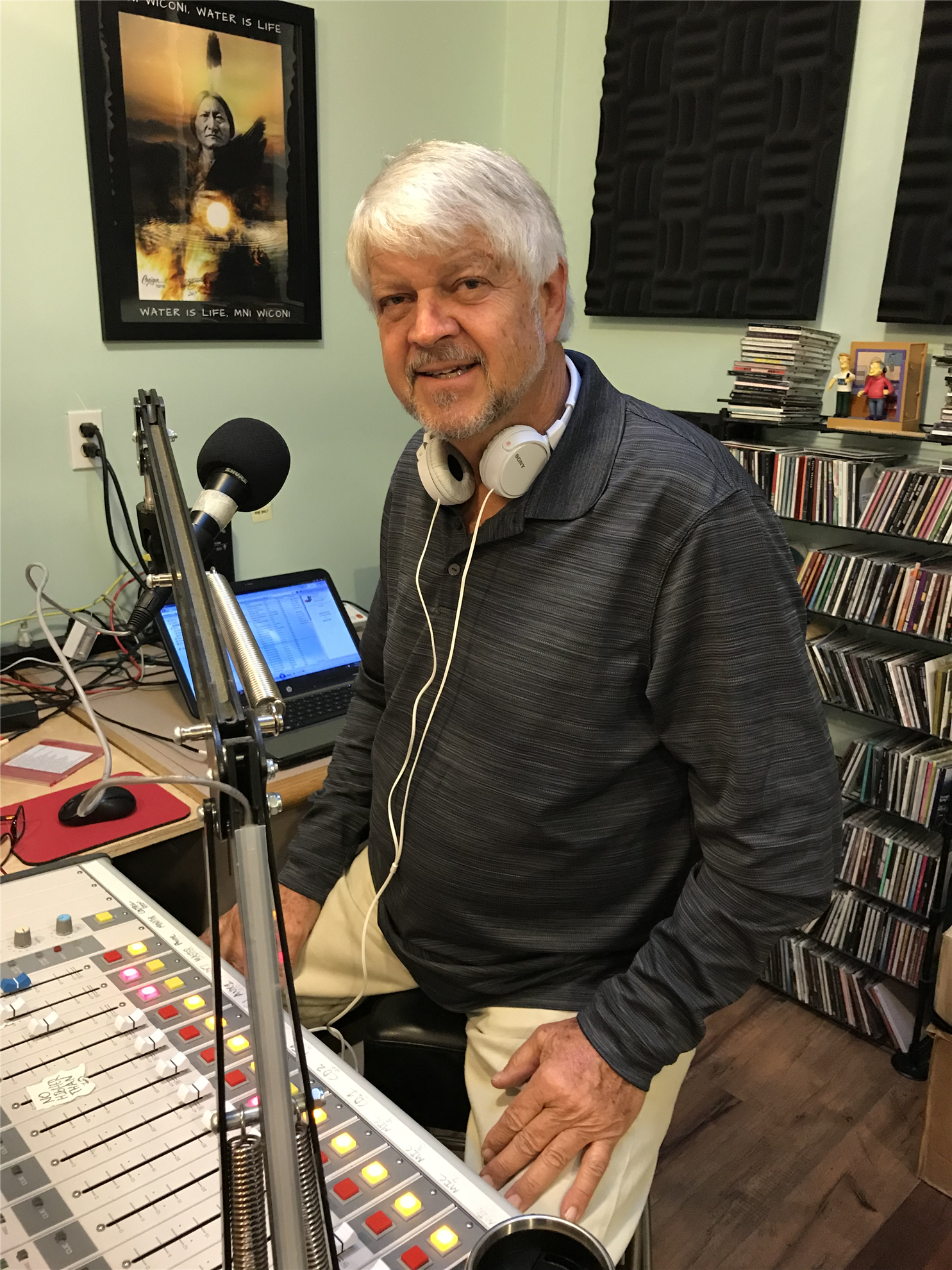
Our Own DJ/MJ

Roots of Rock  đźŽ¶đźŽµ


                                  www.GIRARD.org
 

Happy New Year, this is the year of clarity…20-20 ! If ever one needed the opportunity to see clearly…This would be the Time !

As promised prior to the holidays, we’re going to explore the early days of R&R with the artist who recorded at Sun Records.

Originally called “Rockabilly” the artist were, Johnny Cash, Elvis Presley, Carl Perkins, Roy Orbison, Jerry Lee Lewis, Ray Harris and Warren Smith to name the more memorable.

Seventy years ago, an engineer from radio studio WREC in Memphis opened the Memphis Recording Service, getting the business off the ground wasn’t easy, Sam Phillips along with his assistant Marion Keisker recorded almost anything to keep the doors open, Conventions, Choirs, Weddings, even funerals! His slogan “We Record Anything, Anywhere, Anytime.” Sam also had an open door policy, whereby anyone who walked into his studio could for a fee record their very own record. There was an initial attempt to set up a record label with a local Disc Jockey, but that effort failed.

In 1952 Sun Records was launched recording such artist as B.B. King, Rufus Thomas and Howlin’ Wolf most prominent. Sam experienced some local notoriety which prompted a young truck driver to record a record for his mother. The dual sided acetate disc was “My Happiness” and “That’s When Your Heartaches Begin”. Asked by Marion what type of singer he considered himself to be, Elvis replied, “I sing all kinds”, adding “I don’t sound like nobody.” She noted his address and added “ Good ballad singer-Hold”. He returned six months later to record “I’ll Never Stand In Your Way” and “It Wouldn’t Be The Same Without You.” Nothing came from any of these pressings.

Sam was always on the lookout for talent, longing to find an artist who would appeal to the wider audience of the deep south. Elvis was invited back to the studio to record as many sounds as he knew, Sam even invited a couple of local musicians to accompany this unknown singer, but alas, even though they recorded late into the night, nothing was “Special”. As they were about to call it a night, Elvis picked up his guitar, and jumping around acting the fool, laid into the 1949 Blues hit “That’s All Right”.

The record was played on a Memphis radio station on the show “Red, Hot, and Blue”, and the phone started ringing! The flip side of that tune was, “Blue Moon Of Kentucky”. Sam had found the singer he so desperately sought.  

Elvis’ popularity was phenomenal…however, it was limited to the South, Sam needed a national audience to expand his reach. He met with well known promoter Colonel Tom Parker, working out a deal to sell Presley’s contract for an unheard of $35,000.oo! This for an unknown, unproven artist, at least on a National basis. Elvis didn’t want to leave Sun, he was and always remained a loyal man, the Colonel was successful in signing Elvis Presley with RCA Victor late in 1955. This infusion of cash helped Sam Phillips to develop the talents of such artist as those named in the opening paragraph.  

The rest, as they say… “Is History”!

Incidentally, I broadcast every Saturday morning at 8 A.M. Contact me at: Girard.org


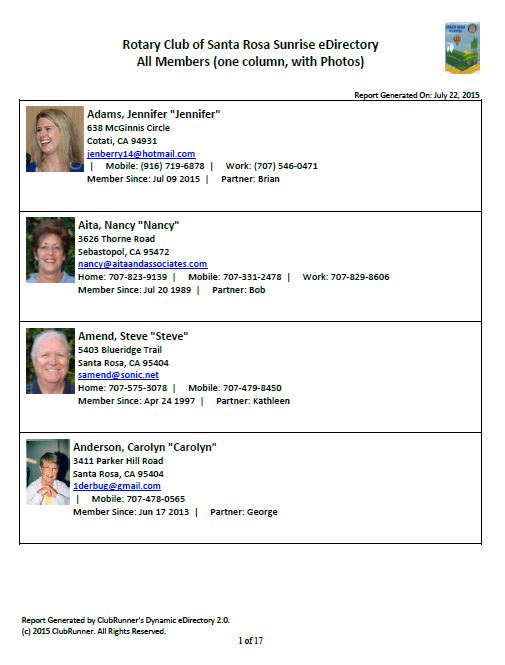
Updated Version of Club Directory

Updated Version of Club Directory Now Available

A newly updated version of the club directory, in both small binder and large page are now available from the club website;

Click on the preferred version and download.


For other formats, sizes and lists, including past members, click here. 


News From "The Rotarian"

What it’s like to...

Ordinary Rotarians can find themselves in extraordinary circumstances.

This is the fifth annual appearance of What It’s Like, a proven favorite with readers inside and outside Rotary. If you’re a Rotarian with a great story — or you know someone connected with Rotary who’s got a fantastic tale — we want to hear it. Look for the best stories in future issues of The Rotarian.

Share your story with us at rotarian@rotary.org.

Include “What it’s like” in the subject line of your email.


What it’s like to...

Fly a chopper into history

Jon Stillman

Rotary Club of Stillwater Sunrise, Minnesota

This is the first time since I came back in 1973 that I’m revisiting my experience in Vietnam. I recently found a diary I kept tucked away all this time. It brought back memories of my three tours I had forgotten.

When I went to the University of Wisconsin in Madison, I had no interest in becoming a member of the armed services. But because it was a land-grant university, male students traditionally enrolled in the Reserve Officers’ Training Corps for two years. At the end of that time, I decided to stay in the program for another couple of years. Next I went to flight school, and that’s how I ended up in the Army.

After a basic officer course at Fort Benning, Georgia, I landed at Fort Rucker, Alabama, for advanced helicopter training. While there, I received my orders to go to Vietnam. That was February 1963. At the time, Vietnam was on nobody’s mind. Most people in the United States didn’t even know where it was.

I was apprehensive, mostly because I was leaving my wife of two years, Jane. During this first tour, I wrote to her every day and called her four or five times. Later, after the MARS (Military Auxiliary Radio System) was implemented, you had to follow radio protocol when you called home. That made it awkward to have a personal conversation: “I love you, Jane, over.” “I love you too, over.”

For an impressionable 25-year-old guy who had never left the country, diving into the unknown was another source of anxiety. And it was a cultural shock: a new language, a new religion, new vegetation, new food. Fortunately, friends of mine were already there when I arrived and helped me adapt to this foreign environment.

At Tan Son Nhut, the airbase near Saigon, I was assigned to the 57th Transportation Company, which operated H-21 helicopters, an older aircraft known as the “Flying Banana.” They were challenging but fun to fly. They were designed for cooler weather than what we had in Vietnam and required a lot of concentration. That explains why we sometimes wouldn’t even notice when we were hit by enemy fire.

The situation in Vietnam was confusing at multiple levels. The war had no linear battlefields like World War II. Saigon was pretty much secured, but you could be 10 minutes from the capital and get fired at. There were pockets of Viet Cong fighters that were hard to nail down. I also had the impression that the people you were supposed to help didn’t want your help.

In June our company was redesignated as the 120th Aviation Company, and we started carrying troops from the Army of the Republic of Vietnam (ARVN) into combat. The South Vietnamese soldiers were usually friendly, albeit a little timid toward Americans. They seemed to be fighting for a cause, while some of their commanders were clearly political appointees with no knowledge of the battlefield. This was quite frustrating, because it often led to the ARVN leaving a pathway for the Viet Cong to get away.

From 2 August to 4 October, I was stationed in the Central Highlands. This is when I first encountered the Montagnards, tribesmen living in the mountains. Our advisers were trying to bring them over to our side. During our meetings with the village elders, we were invited to take part in celebrations. Men wearing loincloths sat in a house built on stilts and played tribal rhythms on gongs. They passed around a jar of rice wine topped with tree branches and river water. I declined to drink the stuff because I had to fly.

In late September I attended a briefing by Robert McNamara, the secretary of defense. He had come to Vietnam on a fact-finding tour with a few of his Whiz Kids, the number crunchers and management experts who advised him. I was impressed by the specific questions he asked and his understanding of statistical data. However, I’m not certain that his corporate approach to running a defense system was beneficial.

Shortly after the briefing, I returned to Saigon on a classified mission that kept me on standby for three weeks. We practiced a drill to evacuate the U.S. Embassy and saw truckloads of troops appear at the airbase. I should have realized something was in the offing: On 1 November, helicopters were in the air over Saigon during the overthrow of President Ngo Dinh Diem.

My first tour opened up a world to me, though it led to as many questions as answers. We were striving to do the best job we could and represent our country in a positive way. We were trying to win hearts and minds so that more of our young people at home would not have to come and fight in Vietnam.

As told to Alain Drouot

Members of the International Fellowship of Rotarian Military Veterans are promoting peace. Find out how to join them >

Read more extraordinary tales from ordinary Rotarians

MORE STORIES

• Illustration by Sébastien Thibault

• This story originally appeared in the January 2020 issue of The Rotarian magazine.


Rotary Club of Santa Rosa Sunrise - Founded June 30, 1986