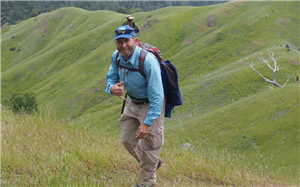
John Roney was born and raised on Hawaii's Big Island. He pursued an economics degree at Santa Clara University before dedicating four years to active duty as a U.S. Army artillery officer. After completing his active military service, John earned an MBA from UC Irvine. He then spent 15 years as a business consultant at Salomon Smith Barney.
Transitioning to the entrepreneurial world, John owned a manufacturing business for eight years. During this period, he also served in the Army Reserve in logistics, intelligence, and information warfare, ultimately retiring as a Colonel.
Since 2012, John has been Park Manager at Sugarloaf Ridge State Park, operated by the Sonoma Ecology Center (SEC). He has focused his efforts on ecological conservation and enhancing visitor experiences. John is a founding member of the North Bay Bear Collaborative and has spearheaded volunteer wildlife research initiatives. His leadership has been widely recognized, earning him accolades such as a commendation from the California Senate in 2017 for service during the 2017 fires and the SEC operations at Sugarloaf earned Park Partner of the Year award from the California League of Park Associations (CALPA) in 2022.
North Bay Bear Collaborative
The North Bay Bear Collaborative is a multi-stakeholder working group that focuses on managing the growing black bear population in California's North Bay area, which includes Sonoma, Napa, and Marin counties. Comprising public agencies, non-profit conservation organizations, landowners, and individuals, the NBBC aims to address challenges associated with human-bear interactions proactively.
Key Objectives:
1. Community Outreach & Education: One of the primary goals is public education, teaching people how to coexist safely with bears. The NBBC offers guidance on preventing issues that could attract bears into human-populated areas and promotes responsible stewardship of natural spaces.
2. Infrastructure Improvement: To minimize human-bear conflicts, the NBBC is installing bear- proof trash cans and food storage containers in regional and state parks, particularly in campgrounds and backcountry locations.
3. Data Collection & Research: NBBC is committed to understanding the behavior and movement of black bears in the North Bay. Through mapping the range and potentially undertaking DNA studies, they aim to glean insights into dispersal patterns and genetic relationships among individual bears. The NBBC is also looking at eating patterns.
4. Youth Engagement: For long-term impact, the NBBC plans to offer teen internships in wildlife conservation, monitoring, and historical ecology to raise awareness and prepare the next generation of stewards.
In summary, the North Bay Bear Collaborative serves as a proactive liaison between human and bear populations, aiming for the safe and resilient coexistence. They engage in public education,
infrastructure improvement, and scientific research to achieve their mission. www.beingwithbears.org
Sonoma Clean Power's Geo Zone Project, Presented by Miles Horton
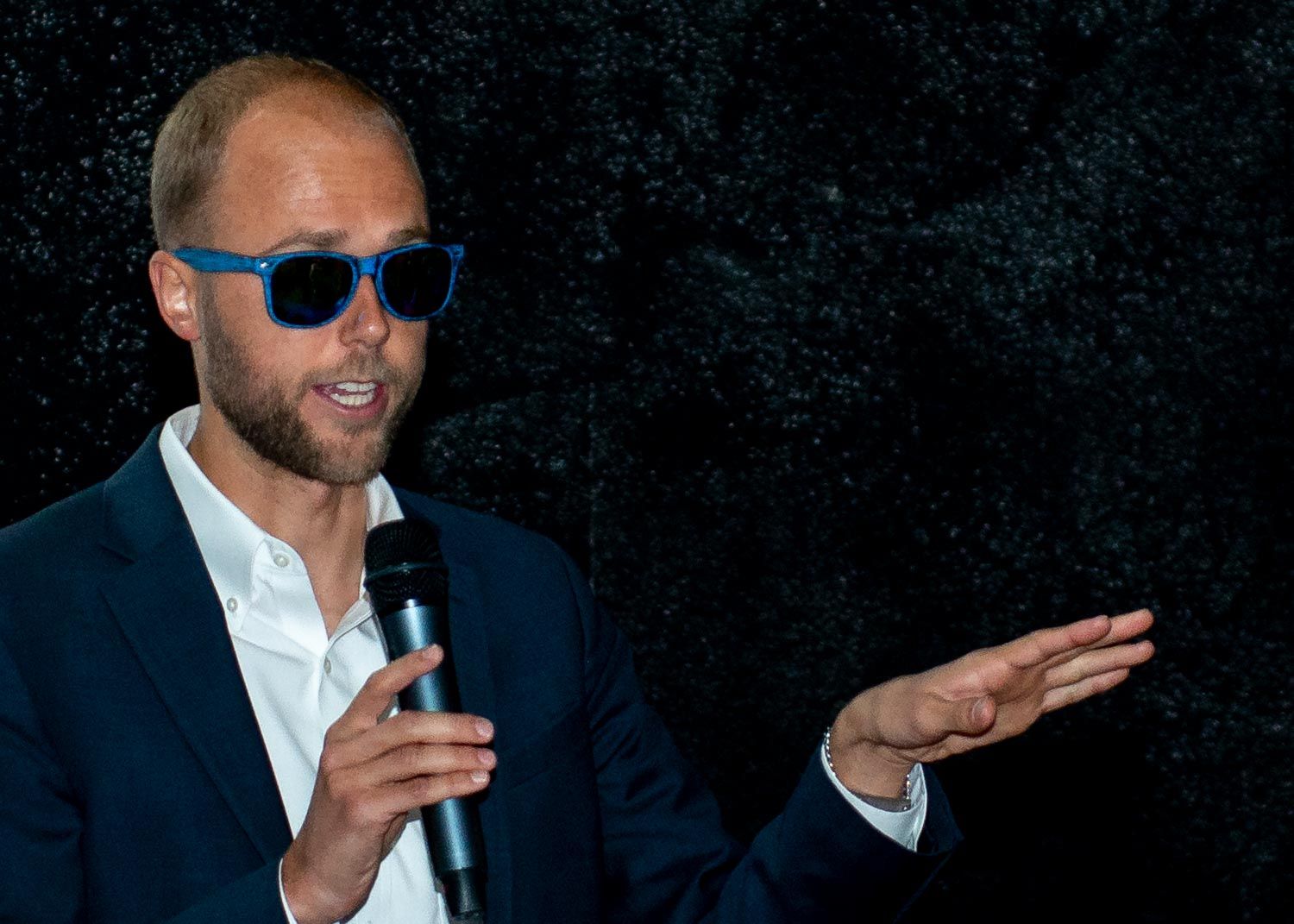
Our speaker on February 6, 2025, was Miles Horton, the Legislative Policy & Community Engagement Manager for Sonoma Clean Power (“SCP”). Miles worked for 7 years as an aide to State Senator Scott Wiener and Assembly Speaker Robert Rivas and previously as a legal assistant on the Sierra Club’s Beyond Coal Campaign. He joined SCP in January 2024. Miles’ topic was SCP’s Geothermal Opportunity Zone project at the Geysers’ geothermal fields.
The Geo Zone Project seeks to develop and implement new technology to take advantage of the Geysers’ power generation capabilities. This new technology could result in long term contracts, lots of highly skilled and well-paid union jobs, and greener energy to help fight climate change. SCP currently buys clean energy from a variety of sources, including wind, solar, geothermal, and traditional energy. This energy is sent to consumers through PG&E’s wires. 90% of SCP’s energy is green. However, SCP must also rely on traditional sources of power, including natural gas and coal. Many of the natural gas plants are located in the Los Angeles area. These plants create air pollution in the Los Angeles basin and are very expensive to operate because of their age. When green sources of power are not available, such as when the wind doesn’t blow and after the sun sets or when the sun doesn’t shine, SCP must rely on these traditional aging and polluting sources to provide consumers with electrical power.
The traditional Geysers operation is based on its unique geology; molten magma deep inside the earth superheats rocks relatively close to the surface and fractures in the rock allow the resulting steam to escape to the surface. Over time, overuse of the Geysers’ steam has depleted the natural water and the Geysers now relies on wastewater transported from Santa Rosa and Windsor to create the steam. The new Geo Zone technologies could include Eavor’s advanced closed loop geothermal system, Chevron New Energy’s own closed loop enhanced geothermal technology, and Cyrq Energy’s new energy storage technology. Miles estimates that costs to implement these technologies could be between $6 and $ billion dollars!
Many thanks to Miles for the clear, concise, and interesting presentation. SCP’s Geo Zone project could be a fantastic way to keep the Geysers operating for years to come!
Click HERE to see a limited time recording of Miles Horton's presentation.
On a regular basis, our resident photo pro Warren Smith, submits pictures of what is going on at the weekly meetings. You can always find the most recent pictures at the websites photo journal called "Meeting Sighting" Please note that all the meeting photos for the entire Rotary year are at this location with the most recent on the last page.
Thanks for all the great pictures Warren!Link to Meeting Sightings. The most recent are on the last page!
Elsie Allen Interact Club Participated with City of Santa Rosa's Park-A-Month Program.
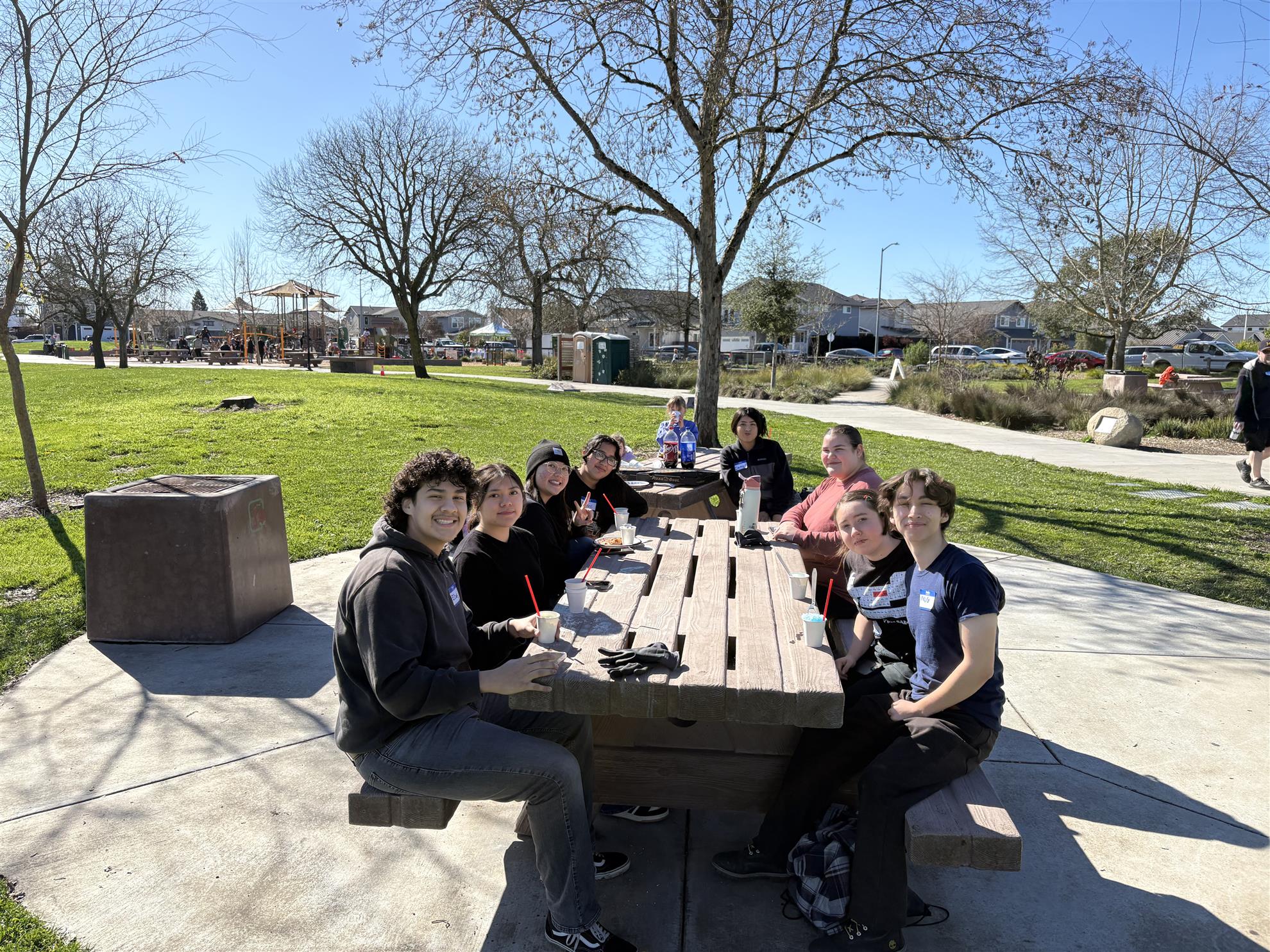
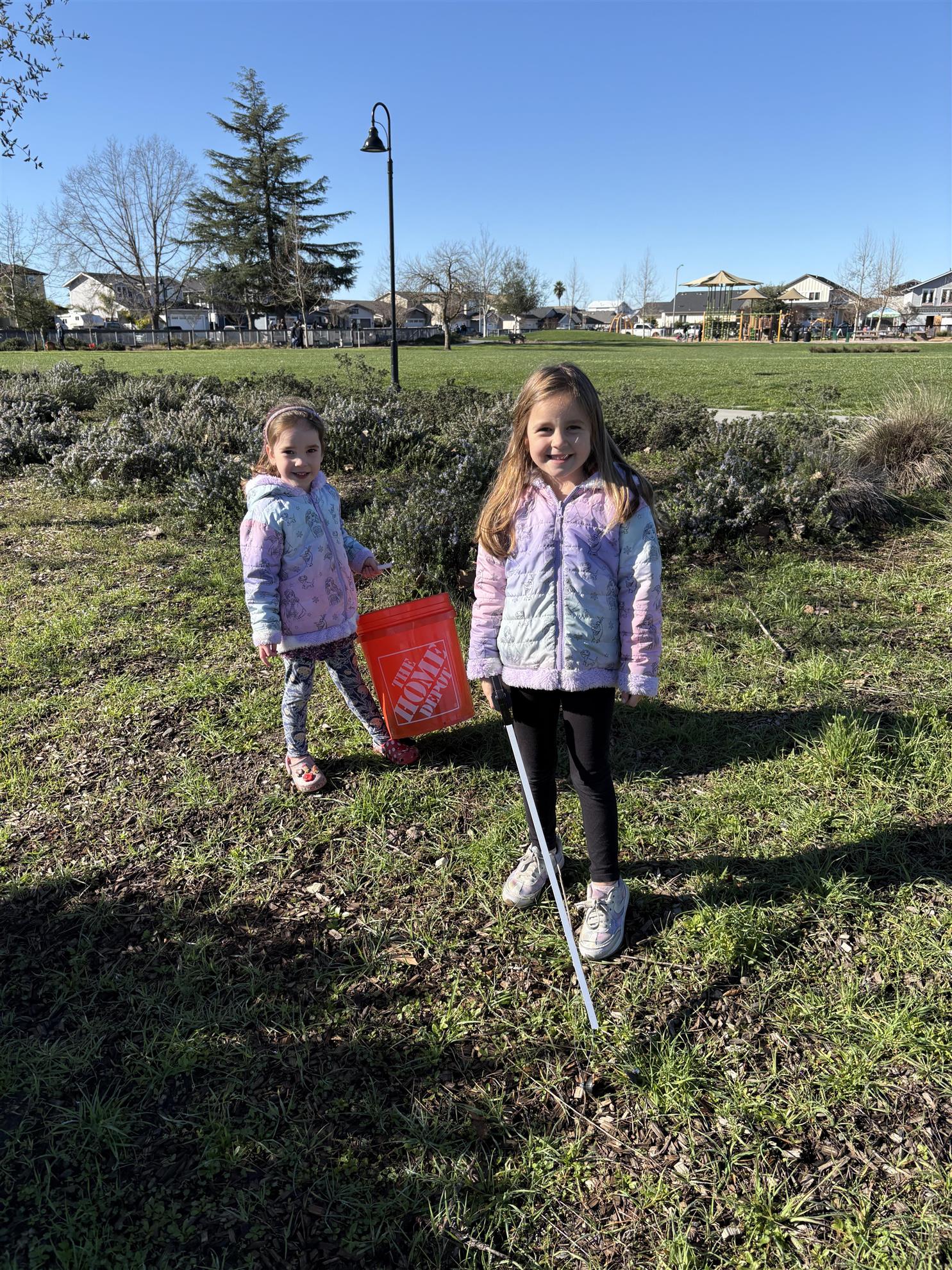
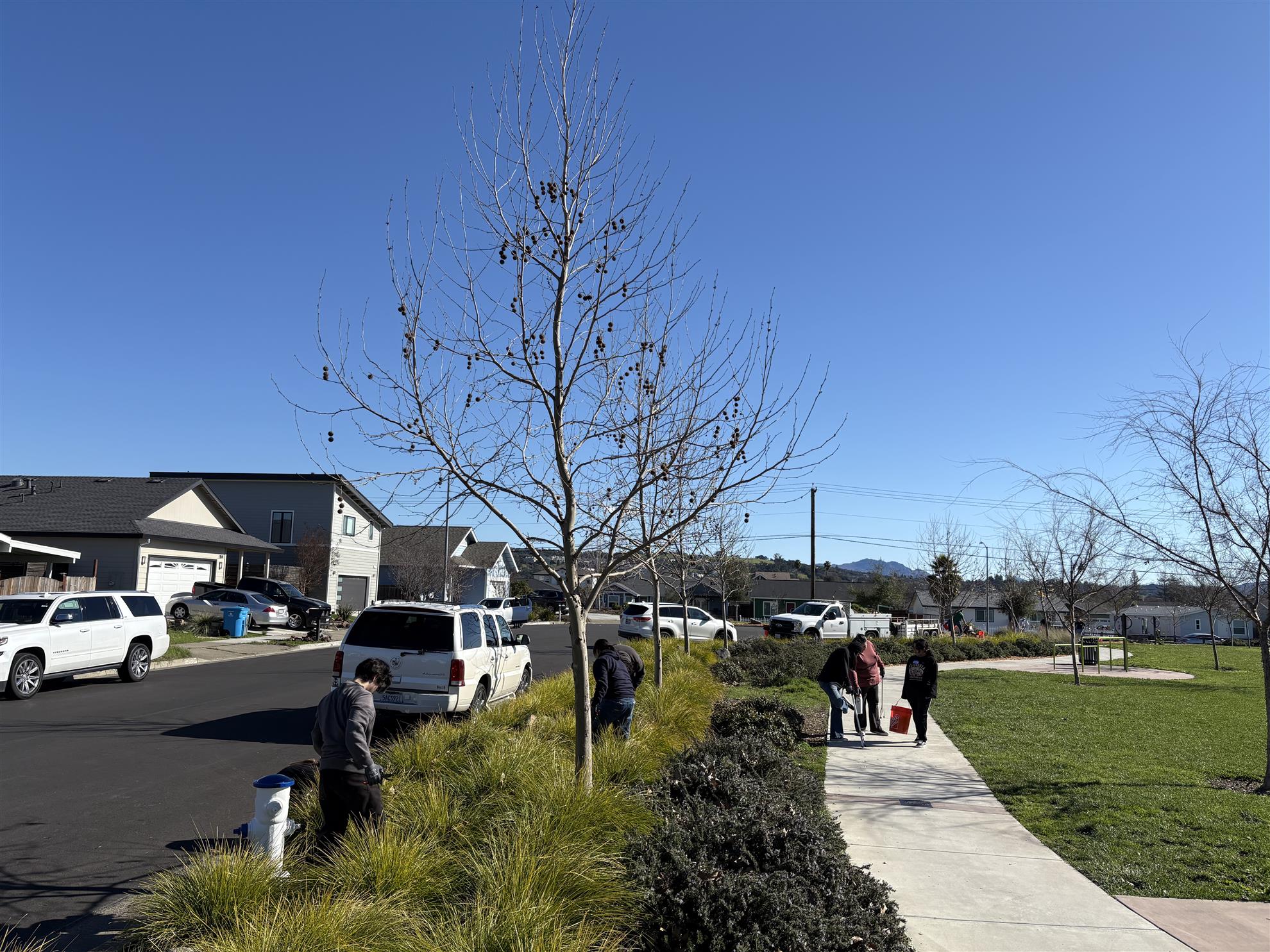
Our Interact Club volunteered for the City of Santa Rosa Park-A-Month program this last Saturday, February 8th. Below is a link to the program. On Saturday we worked at Coffey Park with landscaping, weed pulling, mulch spreading, and litter pickup.
I, Willie Billeter, with my three daughters Amelia, Faye, and Elise, helped our eight Interactors who participated.
Bring your friends and work together or come and meet new people while helping to keep our parks in great shape! These family-friendly workdays are a fun and productive way to help beautify a park or community center through tasks such as litter pickup, spreading mulch, cleaning play area equipment and picnic barbecues, weeding, and more. Hand tools and gloves will be provided or bring your own (no power tools). Children are welcome but must have adult supervision. Cleanups are held rain or shine.
Click HERE to learn more and see the schedule of upcoming parks each month.
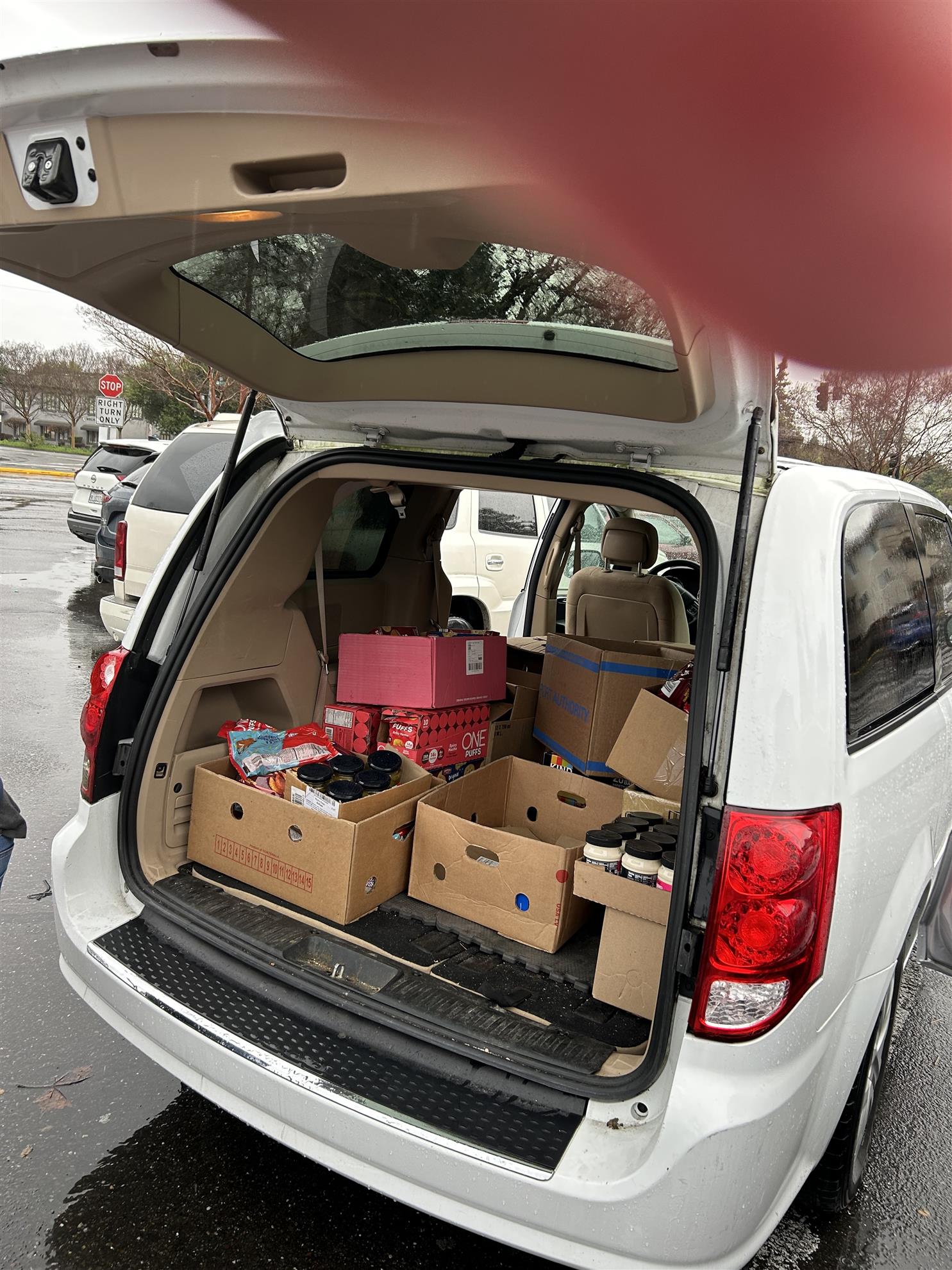
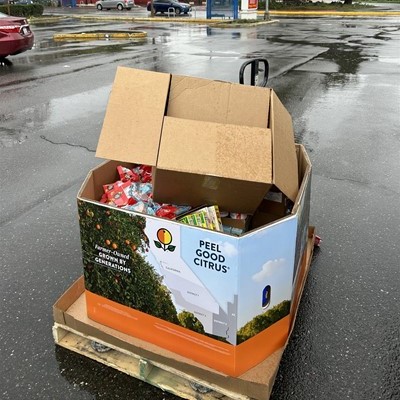
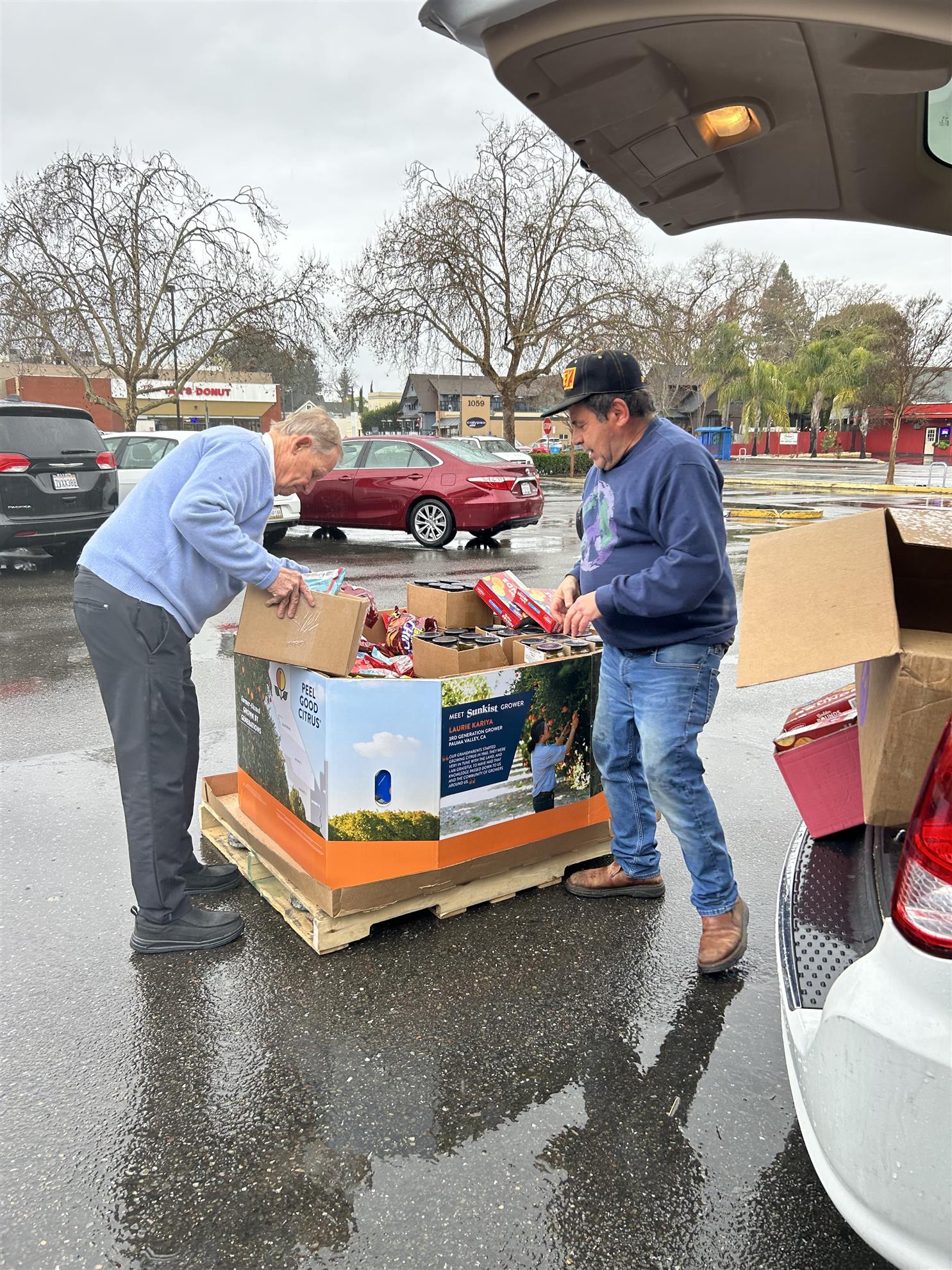
Neither rain, nor sleet or busy parking lots will stop the flow of food from in this community partner Grocery Outlet. Last Thursday Sunriser Steve Z and fellow FISH volunteer Mark loaded FISH's van with a soon to be distributed cache of food.
Grocery Outlet is one of several local partners, including Target, Safeway, Lucky, and Whole Foods who offer perishables and staple foods. Sunrise is inaugurating pick up services at the markets and delivery to the FISH distribution site at
1710 Sebastopol Road,
Steve and Mark waste no time in transferring the goods for dry ride to the F.I.S.H. Pantry..
More to follow as Sunrise partners to help reduce local food insecurity. For additional information on FISH. check out their website or talk with Paul O Rear. He has an inside track on the Pantry history.
It’s the Super Bowl, and a man makes his way to his seat right next to the 50 yard line. He sits down, noticing that the seat next to him is empty. He leans over and asks his neighbor if someone will be sitting there. ‘No,’ says the neighbor. ‘The seat is empty. ‘This is incredible,’ said the man. ‘Who in their right mind would have a seat like this for the Super Bowl and not use it?’ The neighbor says, ‘Well actually the seat belongs to me. I was supposed to come with my wife, but she passed away. This is the first Super Bowl we haven’t been to together since we got married. ’ ‘Oh, I’m so sorry to hear that. That’s terrible….But couldn’t you find someone else, a friend, relative or even a neighbor to take her seat?’ The man shakes his head. ‘No,’ he says. ‘They’re all at the funeral.’
This month, as we come together for the International Assembly and the Presidential Peace Conference, we celebrate The Magic of Rotary — a unique blend of global connection, vision, and action that empowers us to create lasting change.
One of the most inspiring examples is our Rotary Peace Fellowship program, a cornerstone of Rotary’s mission to build a more peaceful and just world.
For more than 23 years, Rotary Peace Fellowships have been transforming communities. Our Rotary Peace Centers, hosted at leading universities around the globe, have educated over 1,800 fellows who now work in more than 140 countries.
These centers cultivate expertise in fields like conflict resolution, sustainable development, and peacebuilding, preparing fellows to tackle some of the world’s most pressing challenges. This program exemplifies how Rotary turns vision into action, creating a ripple effect of hope and change.
This month during the Presidential Peace Conference, we celebrate a significant milestone with the opening of our newest peace center in Istanbul. This center will focus on training leaders to address peacebuilding challenges in the Middle East and North Africa, further extending Rotary’s impact.
Peace fellows are dedicated champions of transformation, addressing critical issues such as refugee resettlement, youth and women’s empowerment, and reconciliation in conflict zones. Many founded vital organizations or hold leadership roles in governments, nongovernmental organizations, and international institutions like the United Nations and World Bank.
One inspiring story is that of Ntang Julius Meleng, a 2024 Rotary Peace Fellow at Makerere University in Uganda. Through his Social Change Initiative, Julius has worked to empower young people in Cameroon to take active roles in peacebuilding and leadership.
His project provided training in conflict prevention, civic engagement, and leadership to youths and community officials in areas affected by conflict, equipping people to drive sustainable peace efforts.
Julius harnessed Rotary’s global network to overcome obstacles, including limited funding and security risks, and make a meaningful impact.
The Rotary Peace Fellowship gave Julius the tools and support to turn his vision into reality. His work embodies The Magic of Rotary — the transformative power of connecting people, sharing resources, and uniting for a common purpose.
As we reflect on the achievements of our peace fellows and celebrate Rotary’s enduring commitment to peace, let us also recognize the role that everyone in our network of 1.2 million members plays in creating magic through service.
Together, we can amplify our impact, inspire new generations of leaders, and build a brighter, more peaceful future.
You can find all prior "RI President's Messages" at this LINK
By some measures, great progress has been made in building more peaceful societies around the world. Yet the reality of ongoing regional wars, skirmishes, and violence globally reminds us how far we still have to go. These conflicts affect the humanity of us all, whether they occur far from us or in our own communities.
So, what can Rotary do to build peace?
As a global force for peace and conflict prevention, Rotary addresses the root causes of conflict. Our role at the 1945 United Nations charter is a testament to this enduring commitment.
Another cornerstone of this work is the Rotary Peace Centers program. Through The Rotary Foundation, these seven centers provide fully funded fellowships, empowering individuals to address the complex challenges of conflict and development.
More than 1,800 alumni now work in over 140 countries as champions of peace, creating lasting change in their communities. Consider alumni like Pablo Cuevas, a 2015 peace fellow who leads the Paraguay office of the International Organization for Migration, aiding those displaced by crises. Leni Kinzli, a 2023 graduate, advocates for Sudan’s humanitarian needs with the United Nations World Food Programme. Yuki Daizumoto, a 2007 peace fellow, supports life-changing agricultural and livelihood projects in Afghanistan with the Japan International Cooperation Agency. These individuals embody Rotary’s investment in peace.
This month, the Foundation Trustees will consider a plan to establish our eighth Rotary Peace Center, in Asia, as part of our vision to have peace centers on every inhabited continent by 2030.
But our commitment extends beyond the peace centers. Through Rotary’s partnership with the Institute for Economics and Peace, we have trained over 300 Positive Peace Activators from 60 countries. Our forgiveness and social cohesion curricula help members heal communities. Through our Foundation grants and service, Rotary members are fostering peace by engaging with youths, strengthening civil society, and resolving core issues that can lead to conflict.
At President Stephanie Urchick’s Peace Conference in Istanbul this month, we will celebrate this work and the first class of the Otto and Fran Walter Rotary Peace Center at Bahçeşehir University.
Remember that you are also ambassadors of peace through service projects, exchange programs, and as supporters of The Rotary Foundation.
My wish for 2025 is for peace to take root and flourish ever more widely, with Rotary playing an increasingly meaningful role in that noble pursuit.
You can find all prior "Messages from the Foundation Trustee Chair" at this LINK
Rotary leaders from both countries reflect on the challenges and opportunities of peacebuilding across borders
By Seoha Lee and Reiko Tokiyama
Korea and Japan share a complicated history and sometimes have different views on historical issues. Yet Rotarians from these neighboring countries are determined to transcend such differences by building strong friendships.
For more than 40 years, Rotarians from Korea and Japan have come together through the Korea-Japan Rotary Friendship Conference, a tradition aimed at building peace, understanding, and friendship between the neighboring countries. This year, after a four-year pause due to the pandemic, the 16th Korea-Japan Friendship Conference was held on October 24-25 in Seoul. The conference, attended by 220 Japanese Rotarians and numerous Korean Rotarians, included a keynote speech by former United Nations Secretary-General Ban Ki-moon on the theme of “International Peace and Rotary.”
“In an era of global instability, the five ‘Ps’ — person, planet, peace, prosperity, and partnership — are essential virtues for Rotary,” Ki-moon said. “I hope all members will strive for the peace and prosperity of humanity.”
To mark this milestone event, we spoke with Past District Governors Kiho Hong of Korea and Hironori Sugawara of Japan, both of whom serve as vice-chairs of the Friendship Committees in their respective countries. In a conversation the day before the conference, they shared their experiences, the importance of collaboration, and their vision for future cooperation.
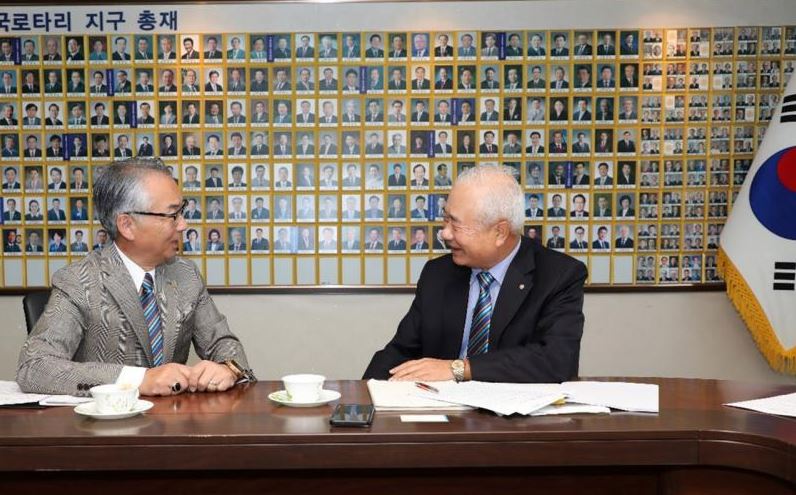
Past District Governor Hironori Sugawara (left) and Past District Governor Kiho Hong converse at the Rotary Center in Seoul, Korea.
Photo credit: Jong-Min Park, Rotary Korea magazine
Q: How did you get involved with the Japan-Korea Friendship Committee?
Sugawara: My family and I love Korea, so I’ve been visiting the country at least once a year. My club has a sister club in Korea, and that was how I first became involved. My district (D2520) and Mr. Hong’s district (D3640) are sister districts, so I also got involved at the district level. In 2019, the Japan-Korea Friendship Conference was held in my hometown, Sendai, and many Rotarians, including myself, participated. Now I am involved in this conference at a national level.
Hong: I’ve also been deeply involved in the exchange between Korea and Japan. The relationship is so close that, in my mind, I can’t distinguish between Japanese and Korean Rotarians.
Not only I, but many members in my district have relationships with Japan, especially through sister clubs. Members come and go like families and build friendships. What we gain from these experiences is not something we can buy with money.
Sugawara: About 220 Japanese Rotarians are coming to Seoul to attend this year’s conference. I would like to see more members attend. I know they need to pay and make time to travel, but this isn’t just any trip. Like Rotary’s international conventions, this is a wonderful opportunity to experience the significance of Rotary. I hope that all new members can experience this and feel the excitement like I do.
Q: What have you each learned from working with Rotarians from the other country? How has the collaboration contributed to building peace and understanding?
Sugawara: What I learned through my involvement in the exchanges is that Rotarians in both countries are the same, because we share the spirit of Rotary.
In Rotary, we don’t have representatives of a country, such as a representative of Korea or Japan. In Rotary, about 530 district governors deliver the president’s messages to their clubs. Those messages change slightly from year to year, but the underlying philosophy is the same. It has been the same since its founding.
Yesterday, I happened to have dinner with a group of four Korean friends. I first met them in Sendai when they visited us. They could only speak a few words in Japanese, but we were all happy for two to three hours at the dinner table. In Rotary, we all respect and understand each other, despite our differences, because we all feel and think in the same way.
Hong: Rotary’s philosophy and mission truly encompass everyone. As Sugawara mentioned, that’s why four friends could communicate in basic Japanese and still understand each other: because the way of thinking, the way of life, is the same. That’s peace. Take, for instance, past Rotary International President Sakuji Tanaka’s theme of “Peace through Service.” Peace is not just the absence of war. This peace starts with one person and gradually spreads, and for that, I’m grateful to Rotary.
Sugawara: When the Great East Japan Earthquake struck in 2011, we received a lot of support from all over the world, especially from Korean members. Likewise, if I hear about disasters in Korea, I worry about them and send emails or contact them immediately. There might have been political issues between our countries, but our continued friendship across the border will promote peace.
Q: Besides the conferences, how have Rotarians from Korea and Japan been working together?
Sugawara: On October 25, the second day of the conference, Rotarians from Korea and Japan will gather, wearing polio-themed T-shirts, to clean up the local area. This will also be reported at the Rotary Institute in Japan, sending a powerful message. This is a step forward from just holding a conference or enjoying the friendship.
Hong: Japan used to provide support to South Korea. Korea provided support to Japan after the Kobe Earthquake and the East Japan Earthquake. This kind of mutual support is not only financial, but also emotional. Today, Japan and Korea rank among the top countries in membership and contribution within Rotary International. Korea engages in service on a global scale, often contributing more than it has received. It would be even better if we could work together on joint projects, where both Japan and Korea could support other countries as partners.
Q: Looking ahead, what are your hopes for the future of Rotary collaboration between Korea and Japan?
Sugawara: I would like this event to be not only a time to say, “Hi, it’s been a long time”, but also an opportunity to discuss practical matters. We can have breakout sessions on topics like increasing membership. Through such discussions, we will be able to share challenges and ideas and further develop Rotary in both countries.
In terms of membership, the number of members has been increasing in Korea; in neighboring Japan, the number is decreasing. Korean members embrace changes such as new club models and focus on young people and DEI. Japanese members can learn from Korean members. There could be a sense of competition, but in a good way: to improve each other. My motto is “Persistence is power.” My job is to get more people involved in our friendship conferences. We do not live forever, so it is important to make sure that our efforts will be passed on to the next generation, like my predecessor did to me.
We have already decided on the dates and the location of the next conference. It will be held in Kobe, Japan in October 2026. It will be announced tomorrow.
Hong: Today’s world is completely different from the world in the past. We see more globalization and the world is becoming borderless. Global companies such as Google, Microsoft, and Samsung are emerging. The meaning of a country is much less, like you see in Europe. In the next 20 or 30 years, the values and ways of thinking of people around the world may become similar to Rotary’s.
If we continue our efforts between Japan and Korea, and if we do it well, I think we can become a role model in the world. The Japan-Korea Friendship Conference has strengthened our hopes, our mutual growth, and our friendship over time.


.png)






.png)