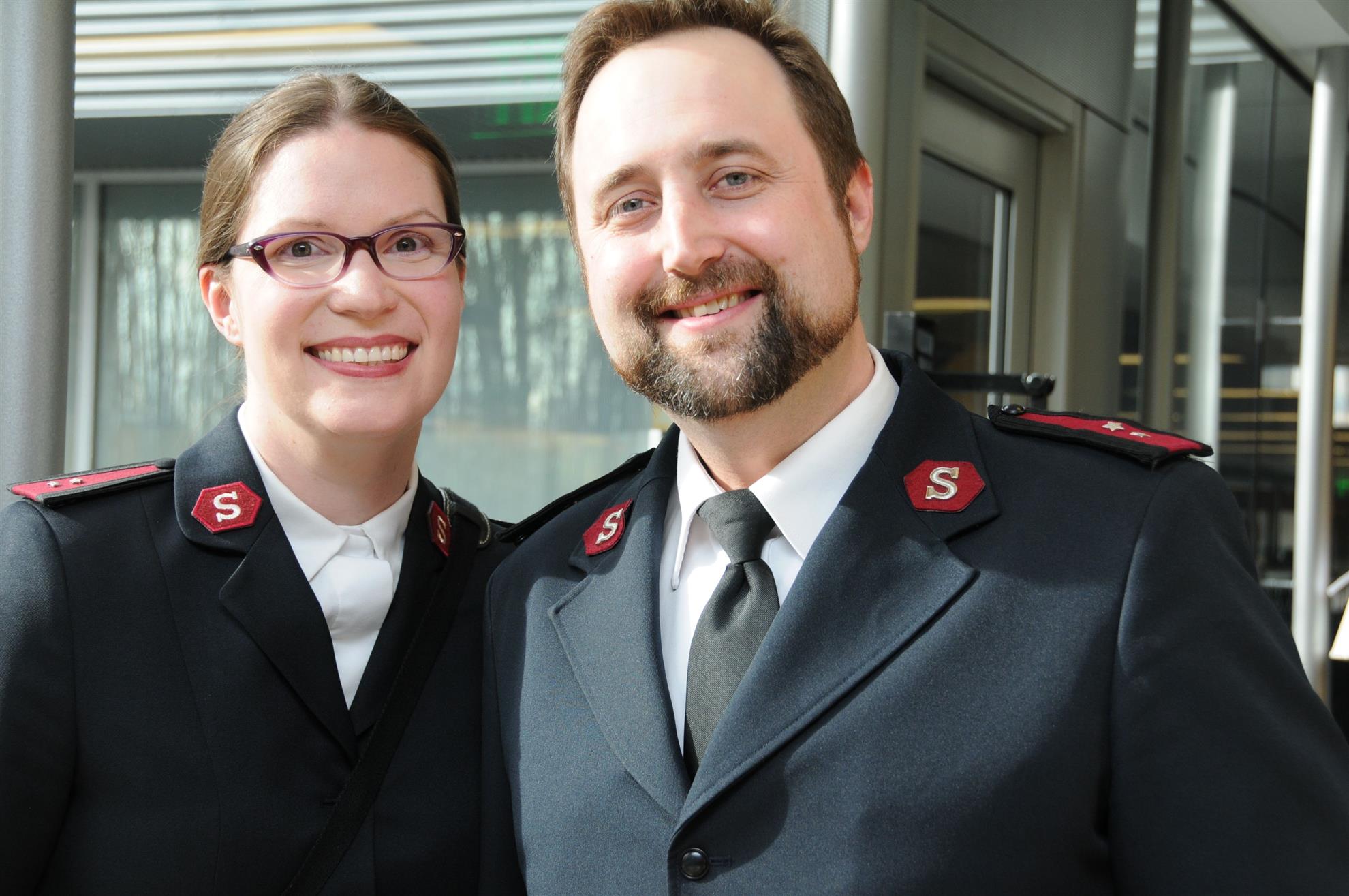
The Salvation Army has been in Santa Rosa since 1889. Major Rio Ray will be discussing the Programs offered by our local unit and how COVID-19 has affected their services. The Salvation Army has been quick to adapt and change to affectively serve its community in this time of great need.”
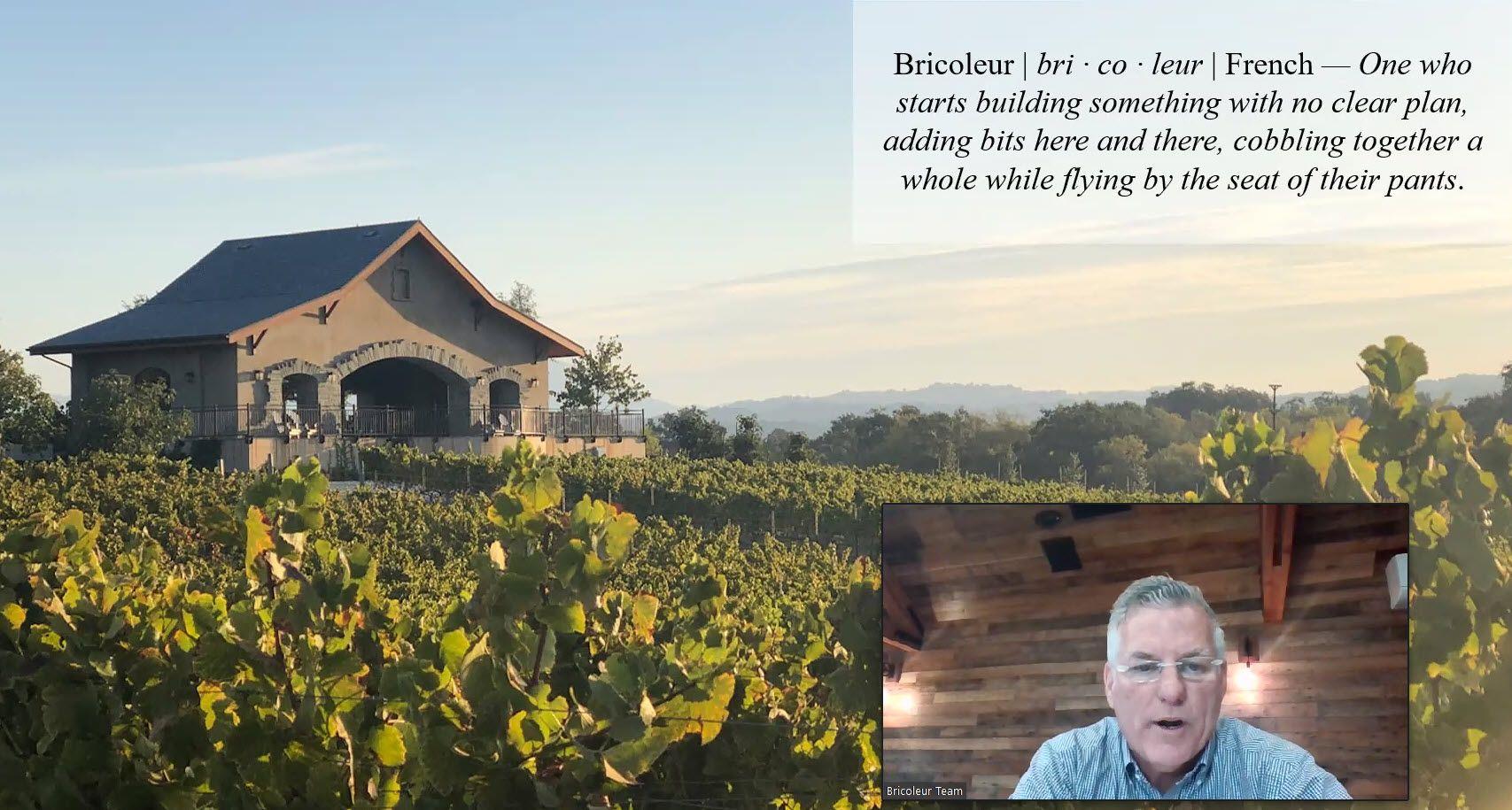
Our speaker for December 3, 2020, was Mark Hansen, co-owner of Bricoleur Vineyards on Starr Road in Windsor. Mark’s topic: “How I Went from Tech to Owning a Vineyard.” Mark is a native Santa Rosan who spent is working career in sales and management in the Silicon Valley, including growing four start-up software companies. Mark’s wife, Elizabeth, a native San Franciscan, spent many of her summers as a child at her family’s vineyard north of Cloverdale, developing a love of both Sonoma County and vineyards. Seven years ago Mark and Elizabeth bought their 40-acre vineyard on the south end of Starr Road. It is a working vineyard with 20 acres of grapes.
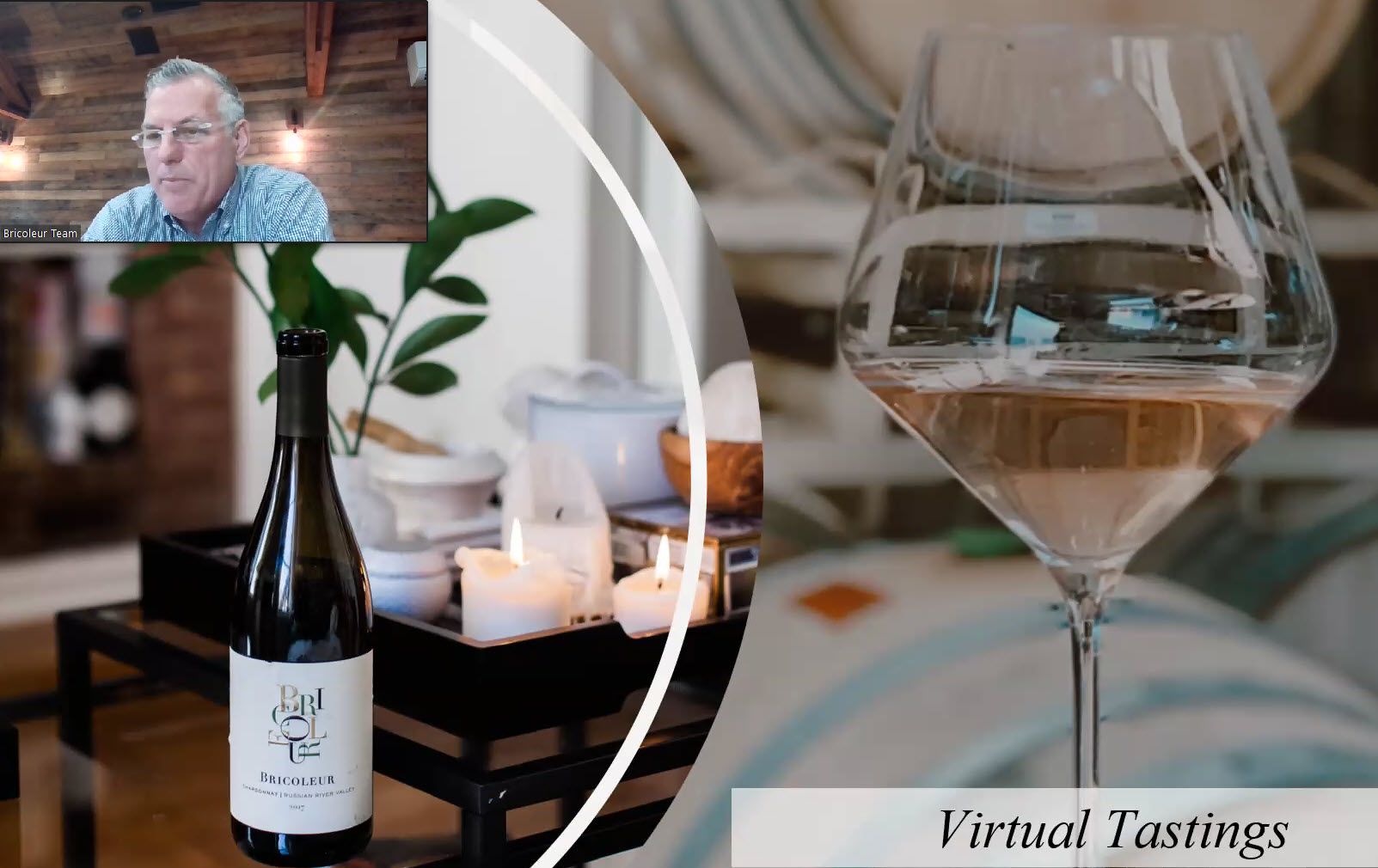
Their vision was to develop the vineyard property into a premier corporate and charity event center. Mark, Elizabeth, and their daughter and partner, Sara, turned a 12,000 square foot barn on the property into a fully functioning winery barn, complete with a restaurant-style kitchen and space for 250 people. Their Grand Opening was set for the first Saturday of May 2020 but was interrupted by COVID-19! The plan was to hold charity auctions, wine tastings, weddings, anniversaries, banquets, corporate meetings, and other events, but they, like many of us, have had to scramble to keep the doors open. They developed an active social media presence (thanks largely to Sara, an e-commerce specialist) and now hold many virtual events, including virtual tastings, happy hours, holiday parties, cooking lessons, and take-out food and wine. The Bricoleur site also has lots of outdoor space and facilities for outdoor events, which they have been holding regularly. They will be hosting an auction and tasting for the San Francisco Symphony this week!
They also began making their own wine in 2017. They use grapes from their own vineyard and from other Sonoma County vineyards, including Kick Vineyards and two Russian River vineyards. They are currently making 15 varietals, including Rose of Grenache, Rose of Pinot Noir, Sauvignon Blanc, Viognier, Chardonnay, and “Flying by the Seat of Our Pants” Brut! Mark says that Bricoleur has put a new meaning to “farm to table.” Bricoleur is “plant to plate,” that is, they grow many of their own vegetables (in 28 raised beds), olive trees, chickens, and bees. They have also brought in a world-class chef and experienced winemakers.
Mark told an interesting story about how they came up with the name “Bricoleur.” Sara and her husband found the name in a dictionary of hard-to-translate names. “Bricoleur” apparently means “someone who has no plans,” which they thought perfectly captured Mark’s vineyard enterprise! Mark, however, seems to take it as a compliment, because you have to change, evolve, and keep moving to stay ahead!
Bricoleur has regular outdoor tastings from Thursday through Monday each week. They also serve food, including wood fire pizzas and sandwiches. The property is so large you can order your food and find a place for a picnic on the grounds. They also started a highly successful cooking instruction show, “Quarantine Kitchen,” at the beginning of the pandemic. They have re-started the program as “Cooking with Country” on specified Sunday nights.
Many thanks to Mark on his presentation. An amazing story and hopefully a fixture in Sonoma County for years to come.
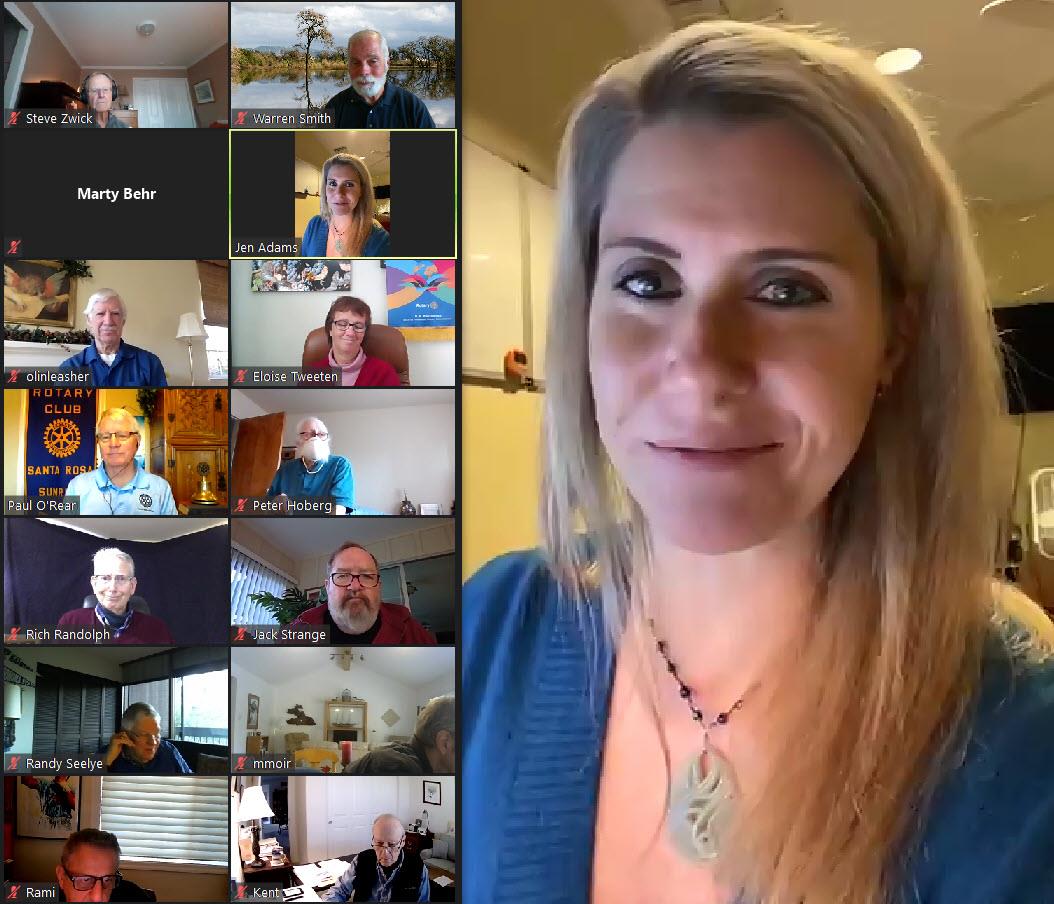
President Elect Jennifer Adams has a depth and width of experience onboard to move us forward to new dimensions of Service and Self.
The strength of commitment and diversity of backgrounds is remarkable.
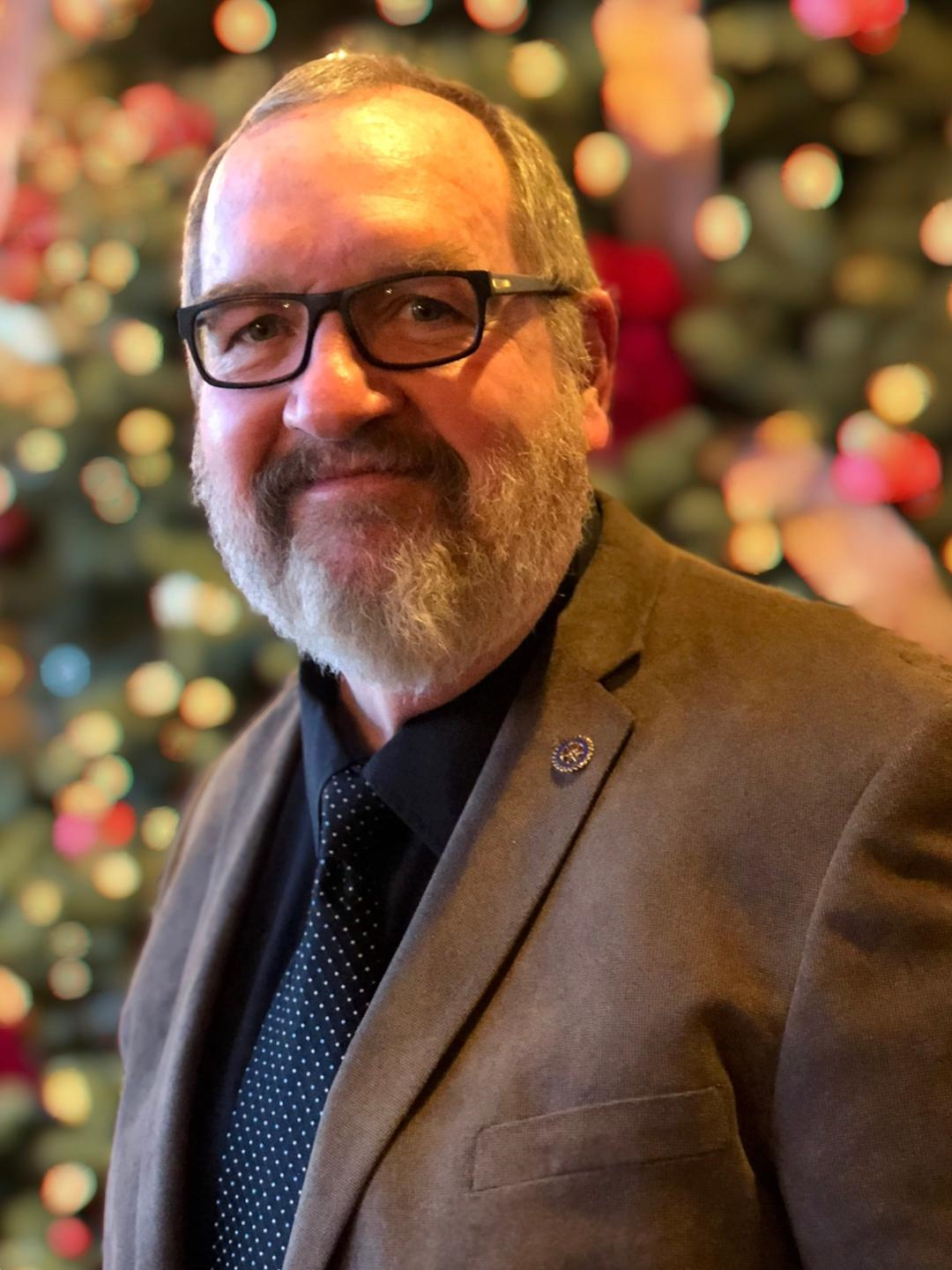
President Elect Nominee, Jack Strange, is no stranger to innovation and challenge. Professionally, an Educator most recently at Saint Isabella School in San Rafael, Jack mentored the school's dynamic Interact Club, including a project to Costa Rica. Here in Sonoma County Jack helped charter Rotary Clubs in Glen Ellen and the NewGen concept clubs. Jack's vision and drive to deliver Rotary's message far and wide resulted in drawing Past Rotary International President, Rick King, to a District event at Paradise Ridge Winery. He guided Interactors from Saint Isabella to participate in tree replanting near Middleton.
Sunrise future continues secure in the hearts, hands and heads of our upcoming, ongoing collage of creative, committed colleagues!!!
On a regular basis, our resident photo pro Warren Smith, submits pictures of what is going on at the weekly meetings. You can always find the most recent pictures at the websites photo journal called "Meeting Sighting" Please note that all the meeting photos for the entire Rotary year are at this location with the most recent on the last page.
Thanks for all the great pictures Warren!Link to Meeting Sightings. The most recent are on the last page!
Stacy Drucker-Andress is a Rotary hero this month. She developed the concept of the Mike Kelly Warm Clothing and Food Collection Drive as an outgrowth of the work she has done Saturday mornings serving breakfasts to the homeless at the Unitarian Universalist Congregation. She brought the idea to the Service Committee, enlisted enthusiastic support from several people and kicked the Collection Drive off last week with an email blast to the club. Isn’t that what being in Rotary is about? Taking your passion and leveraging the energy of 65 good friends to help make positive change in the community? Send Stacy a “Thanks, great job!” email when you get a chance, and be sure to support her efforts by collecting warm coats, scarves, socks, underwear and shirts to be distributed, and canned and dry goods food to go to the F.I.S.H. foodbank. Call or email Stacy for a drop-off point near you.
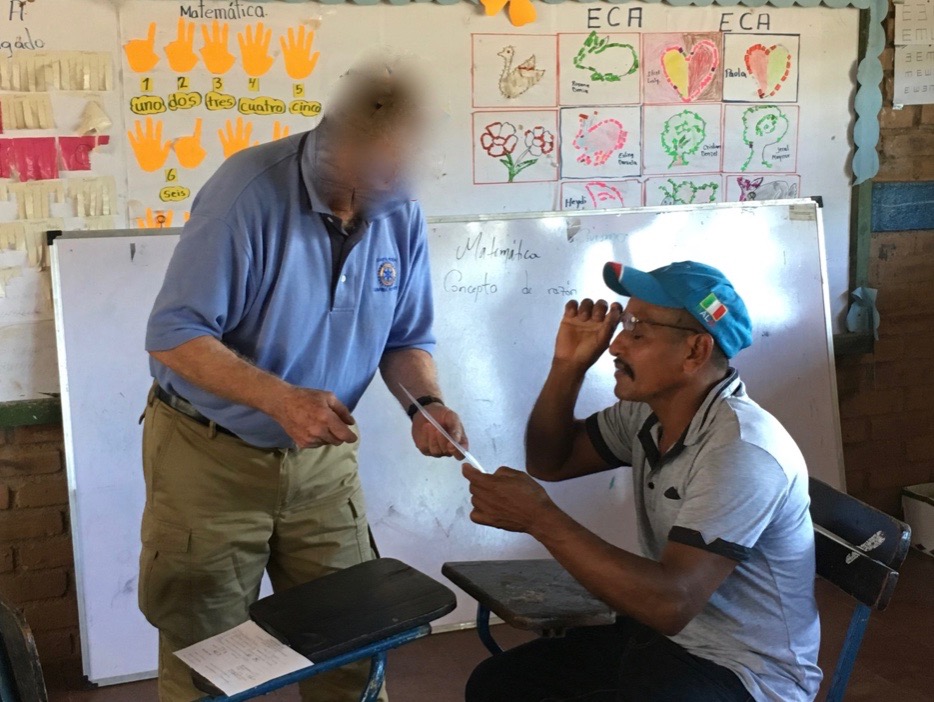
How did a Peace Corps Volunteer become a renowned Spanish-speaking banker and loyal Sunriser?
He's a Rotarian with a son, daughter and two grandchildren, whoretired to Sonoma County after obtaining his MBA from Stanford and working in banking, while his wife, with a Masters in Education, taught school. He serves on the Santa Rosa Junior College Board as well as financial advisor for The First United Church. And you know him well through his outstanding work on a major fundraising project for the Sunrise Rotary. Sounds familiar. But...
Did you know that he met his wife while both served with the Peace Corps in Ecuador -- an experience which catapulted him into a carrier as aninternational financier with City Bank in several Latin American counties.
He speaks fluent Spanish and his wife also serves the community as an English as a Second Language teacher.
Who is this outstanding internationally recognized banker? How has he managed to keep a modest profile while using his expertise to benefit our Sunrise bank accounts? Can you guess who he is and which of the club's fundraising efforts he has headed for many years?
And can you join all of us in thanking him for his continuing service to local and international projects in Nicaragua?
Steve Herron will be providing a quick update on our Raffle during the meeting this coming Thursday- don’t miss it! Tickets will be distributed to Team Captains by mid-week and Sunrise Rotary will be off to the races.
As I look back on 2020, I reflect on how our lives have changed. The global COVID-19 pandemic brought pain and loss to many of us. And for almost all of us, our daily lives, family time, and work also changed this year. But we've made it to the end of this difficult year, not on our own but by reaching out to one another, as we always do in Rotary. With each passing year, I become prouder of our organization. I will choose to remember 2020 as a year of great change and strength for us; Rotary didn't stop, despite the pandemic. We removed obstacles, found new ways to connect, and embraced new approaches to service, such as online projects and virtual fundraising. I have invited two Rotarians to share their stories about how Rotary grew stronger this year.
When the pandemic shut everything down, our emerging e-club was already providing digital service, including internationally. Fourteen U.S. women and I, members of multiple Rotary clubs, were using WhatsApp to mentor women entrepreneurs in rural Costa Rica, helping them to grow their ecotourism business, RETUS Tours [the subject of the magazine's May cover story, "Nature & Nurture"]. The project has grown, with 30 Rotarians now providing consulting and help with the RETUS website and social media. Most importantly, we continue building relationships and empowering these women to transform their own lives, and we are doing it online. I've even helped one of the women, Rosa, prepare a presentation in English for an online international conference. While our engagement with the Costa Rican women still requires some hands-on activity, the most transformative impacts haven't had to be in person. — Liza Larson, Rotary E-Club Engage and Rotary Club of Plano East, Texas
I was president of my club when COVID-19 hit, and many members didn't yet have Zoom. Only 10 of our 53 members participated in the first Zoom meeting during the pandemic. I thought that reaching out and getting guest speakers from around the world to engage our members would help. Many Rotary leaders, a Rotary Peace Fellow, and even RI President Holger Knaack visited virtually and spoke to our club. Meeting attendance improved, while we reduced running costs by cutting out meals. Some members who worked outside our city and had missed our meetings even rejoined us. Registering our online meetings on My Rotary enhanced contacts with clubs across the world, and the joint meeting addressed by Holger attracted more than 300 visitors. We also raised more funds as members and visitors contributed to our projects. To continue being flexible for all, we are now offering hybrid meetings. For me, 2020 has been the best year in Rotary as I've made many new friends. — Blessing Michael, Rotary Club of Port Harcourt North, Nigeria
These stories should give us all reasons to be optimistic about Rotary in the year ahead. We are not just surviving; we are gaining strength. We are discovering how resilient our organization truly is. We are seeing for ourselves how Rotary Opens Opportunities — even during pandemics — to grow, connect, and engage our members and the communities we serve.
From our home in Ratzeburg to yours, Susanne and I would like to bid you and your family the warmest of season's greetings. We can't wait to see the good things that 2021 will bring.
On a foggy Christmas Eve in Victorian London, the old miser sits at his desk.
Bitter and disillusioned with the world, Ebenezer Scrooge has only one interest: his bottom line. He declines his nephew's invitation to Christmas dinner, refuses to support the poor and deprived, and reluctantly grants his underpaid clerk, Bob Cratchit, time off for Christmas Day.
After he arrives home, strange things begin to happen. Jacob Marley, his deceased business partner, appears as a ghost tethered to a chain, telling Scrooge to change his self-centered ways, lest he meet the same fate.
That is the premise of A Christmas Carol, Charles Dickens' classic tale of a man's transformation from hardened recluse to generous humanitarian. To me, it offers valuable lessons for all, regardless of belief or time of year.
In one of my favorite passages, a spirit magically transports Scrooge to the Cratchit household. There, he sees his clerk from a new vantage point, observing a humble but heartfelt holiday gathering. Scrooge then understands that gifts like friendship, family, and gratitude can't be recorded into any ledger. By the end of the story, Scrooge has learned the most important lesson of all: that as long as we are still alive, it's not too late to devote ourselves to serving humankind.
The year-end holidays are upon us. It is a time of giving and sharing, but it is not limited to our loved ones. It is also for the people we have never met and will never see, for those who are not so fortunate as we and could use a helping hand. The miracle of giving that Scrooge discovered on Christmas Eve is exactly what The Rotary Foundation does 365 days a year.
Our Foundation serves simultaneously as charity and performer in the field; Rotarians are on the ground, volunteering their skills and business expertise in support of grants that are funded by you. In this way, we carry out some of Rotary's most important work, such as protecting mothers and their babies and helping communities recover from the shocks of COVID-19.
Please remember The Rotary Foundation during this season of generosity. Remember that your gifts to the Foundation amplify our work in all areas of focus. They are perpetuated, not just today but long after we are gone. And the Foundation will continue to work its miracles in service to others tomorrow as long as we keep supporting it today. On behalf of The Rotary Foundation Trustees, I thank you for sending your generous contribution before 31 December.
The Rotary Foundation’s Global Grants Director Abby McNear explains answers common questions about applications
By Nikki Medanovic Illustration by Viktor Miller Gausa
The Rotary Foundation introduced global grants in the 2013-14 Rotary year to fund large-scale, sustainable activities that are aligned with one or more of Rotary’s areas of focus. Abby McNear, a member of the Rotary Club of Evanston, Illinois, and grants manager for the Foundation, has seen the program grow tremendously. The number of grants awarded increased by over 50 percent during this time; in 2019-20, 1,350 global grants were awarded, totaling over $100 million. McNear, who has worked at Rotary for 25 years, shares her tips for a successful global grant application.
1. What does the ideal global grant application look like?
It’s one where the host community does a nice job with the community assessment. By talking to the people they want to help, Rotarians can find out more about residents’ hopes for their communities. This way, Rotarians can leverage the skills, creativity, and knowledge of the local residents to make the most impact with their project. Ideally, Rotarians will design the project with the people they want to help. Successful projects capitalize on the strengths a community already has.
2. What is a common mistake you see in grant applications?
Not focusing on the right goal. Rotarians should ensure their project falls within the Foundation’s goals for one of the areas of focus ; these are outlined in our policy statements. These are big goals, but often applicants have much smaller goals in mind — for example, to provide furnishings for a community center. District grants are ideal for those kinds of projects. Ensuring that your project aligns with one of the Foundation’s bigger goals, and that you’ve completely thought through how to achieve it, is the key to securing global grant funding.
"By talking to the people they want to help, Rotarians can find out more about residents’ hopes for their communities."
3. What kinds of ineligible expenses should people be aware of?
Rotarians often want to help an excellent organization within their community. They run into a challenge when their projects are just a list of things the organization needs. Projects involving schools, for example, frequently include equipment. However, the focus of a global grant project should be professional development for the teachers. If your school project is primarily focused on providing equipment, it won’t be eligible for global grant funding. Involving community members in a project is one of the best ways to ensure that it is sustainable over the long term.
4. What is the top question you get from Rotarians?
“How can we can find a partner for our project?” We tell them to look on Rotary Showcase where they can research global grant projects in need of partners. They can narrow their search by location, district, and club. There are also project fairs where Rotarians can explore different initiatives to get involved in; this year, fairs are being held virtually. Rotarians can also contact Rotary Action Groups to learn about projects and clubs they could partner with.
5. Where can Rotarians go for help during the application process?
Start in your own district. Each district usually has an international service chair who can connect you to people with expertise in your area of interest. Applicants can also contact the Foundation directly. We have a list of grant officers for all districts who can vet project ideas and put you in touch with members of The Rotary Foundation Cadre of Technical Advisers , who are professionals in the areas of focus. Regional grants officers can do a preliminary review of project ideas you are considering, help with project design, and advise you on eligibility. They are a talented group who have international experience and speak more than one language. And Rotary’s areas of focus managers can do a deep dive to help you design your project to get the most success.
• This story originally appeared in the November 2020 issue of Rotary magazine.
An Irishman went to London and found himself in the Underground late one night. Seeing a notice “DOGS MUST BE CARRIED ON THE ESCALATOR”, he moaned to himself, “And where would I be getting’ hold of a dog at this hour of the night?”
Rotary Club of Santa Rosa Sunrise - Founded June 30, 1986


.png)

.jpg)