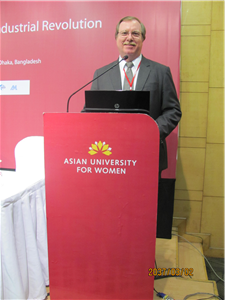
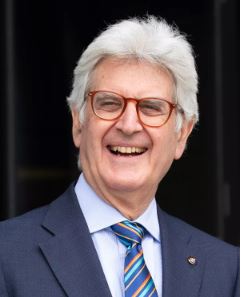
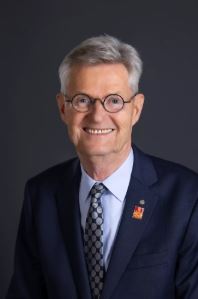
David O’Rear moved from his native California to Asia in 1980, first to Taiwan for further language study. After completing his Master’s Degree in Asian Studies at the University of California, he returned to Taiwan for a year of market research. In 1984, he accepted a position in Hong Kong with Business International analyzing political, economic, and regulatory trends. Amid his rise to Regional Economist, Asia-Pacific, the company was acquired by The Economist Group. After 18 years (1984-2001) covering the broad Asia-Pacific region, David in 2002 accepted the post of Chief Economist at the Hong Kong General Chamber of Commerce.
At the Chamber, David managed overall economic policy with an emphasis on taxation, laws and regulations, and major industrial sectors (shipping, transport, real estate, infrastructure). While much of the work involved policy lobbying, he also conducted hundreds of seminars on an extremely broad range of topics of interest to the business and academic community: government finance, labor law, monetary policy under a fixed exchange rate, GATT and the WTO, balance of payments crises, stock market regulation, competition policy, and infrastructure investment priorities, to name but a few. He was responsible for drafting and presenting many of the Chamber’s submissions to government on these and other issues. His responsibilities included daily interaction with C-level executives in the public and private sector, elected politicians, and the media.
In both of his prior roles, David spoke at or chaired hundreds of conferences worldwide, including in 15 nations in Asia, as well as Australia, Europe and the US. He has appeared in print or electronic media regularly, both as a commentator and in the op-ed format. Guest lecturing at the university level has been a regular feature of his career.
After 13 years advising business and government on a range of policy issues, David resigned from the Chamber in September 2015 to follow his wife as she moved on to an exciting new phase of her career, in London. He then spent time distilling his 30+ years of experience into a book on Hong Kong political challenges and prescriptions for the way forward. After three COVID-related years looking after family in Florida, they subsequently moved to San Francisco, and now Santa Rosa.
David has bachelor’s and master’s degrees from the University of California, Berkeley.
Redefining the Middle School and High School Experience by Gia Biaggi, the founder of the Magnolia Project
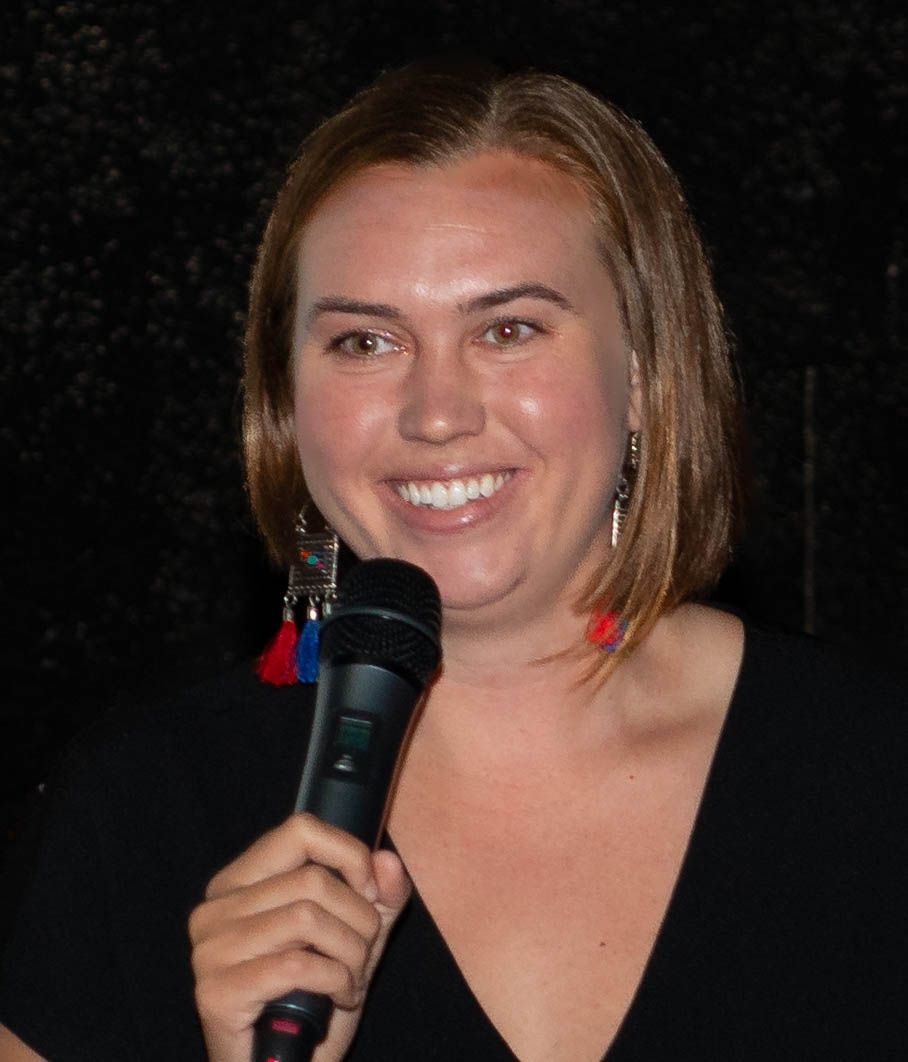
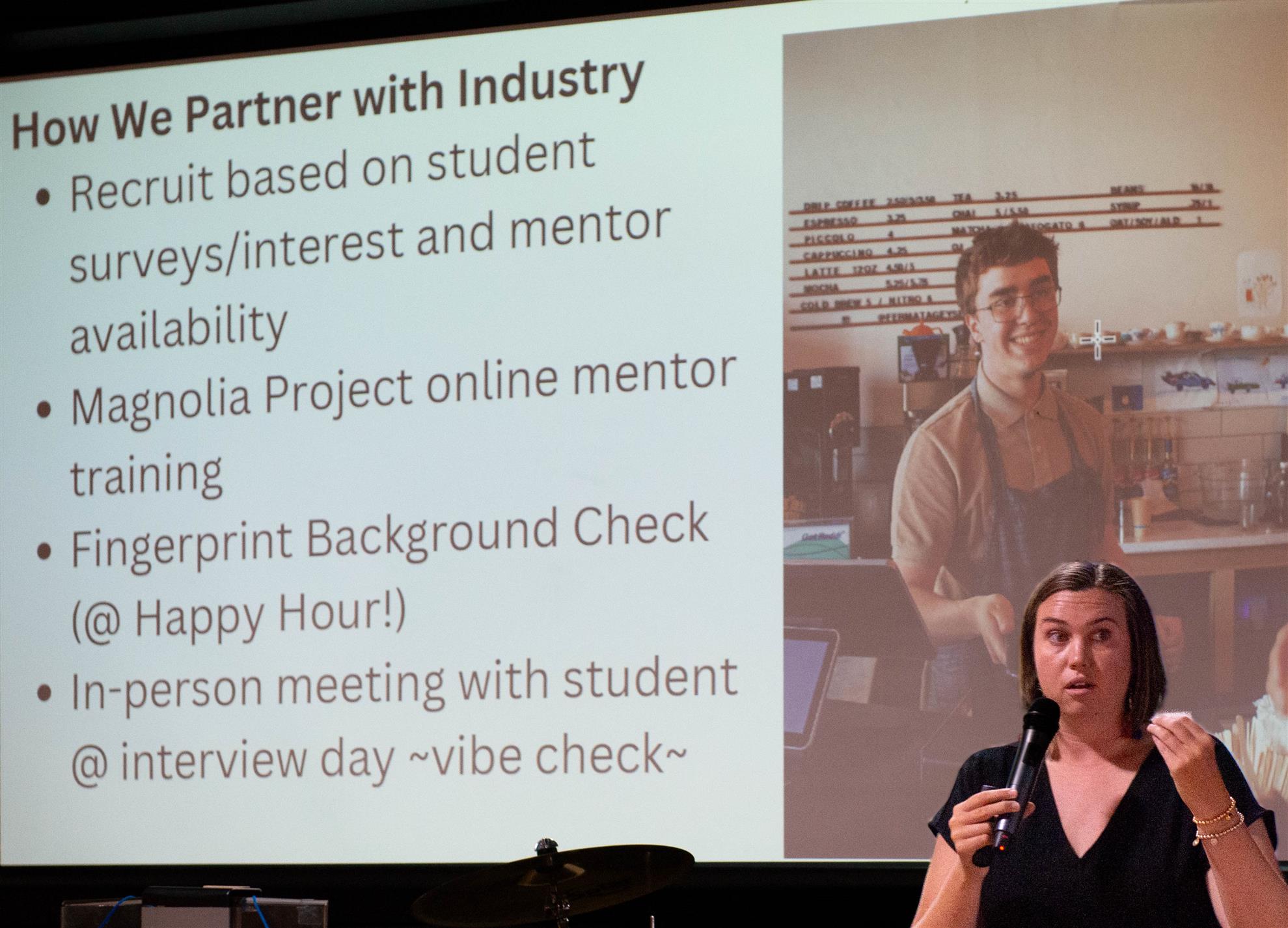
Gia Biaggi of the Magnolia Project was our speaker for August 28, 2025. Gia is the founder of the Magnolia Project, a program that partners with schools in Sonoma and Marin Counties to include hands-on career exploration and apprenticeship pathways into the school day. Gia has a bachelor’s degree in international studies, a master’s degree in education, and a CTE (career technical education) credential. She is a former teacher and administrator.
Gia outlined some of the key problems in current middle and high school education that led her to start the Magnolia Project: an upsurge in absenteeism since the pandemic and the lack of direction many students feel when entering the junior and senior levels of high school. Since the pandemic, 30% of students are considered chronically absent! Prior to the pandemic, that number was 13%. 75% of high school juniors do not feel ready to make decisions about career and college. Schools and teachers are busy teaching traditional subjects and unable to significantly help students with their post-high school education and career choices. The Magnolia Project was created to give students ways to evaluate their potential choices and start learning how to embark on many careers.
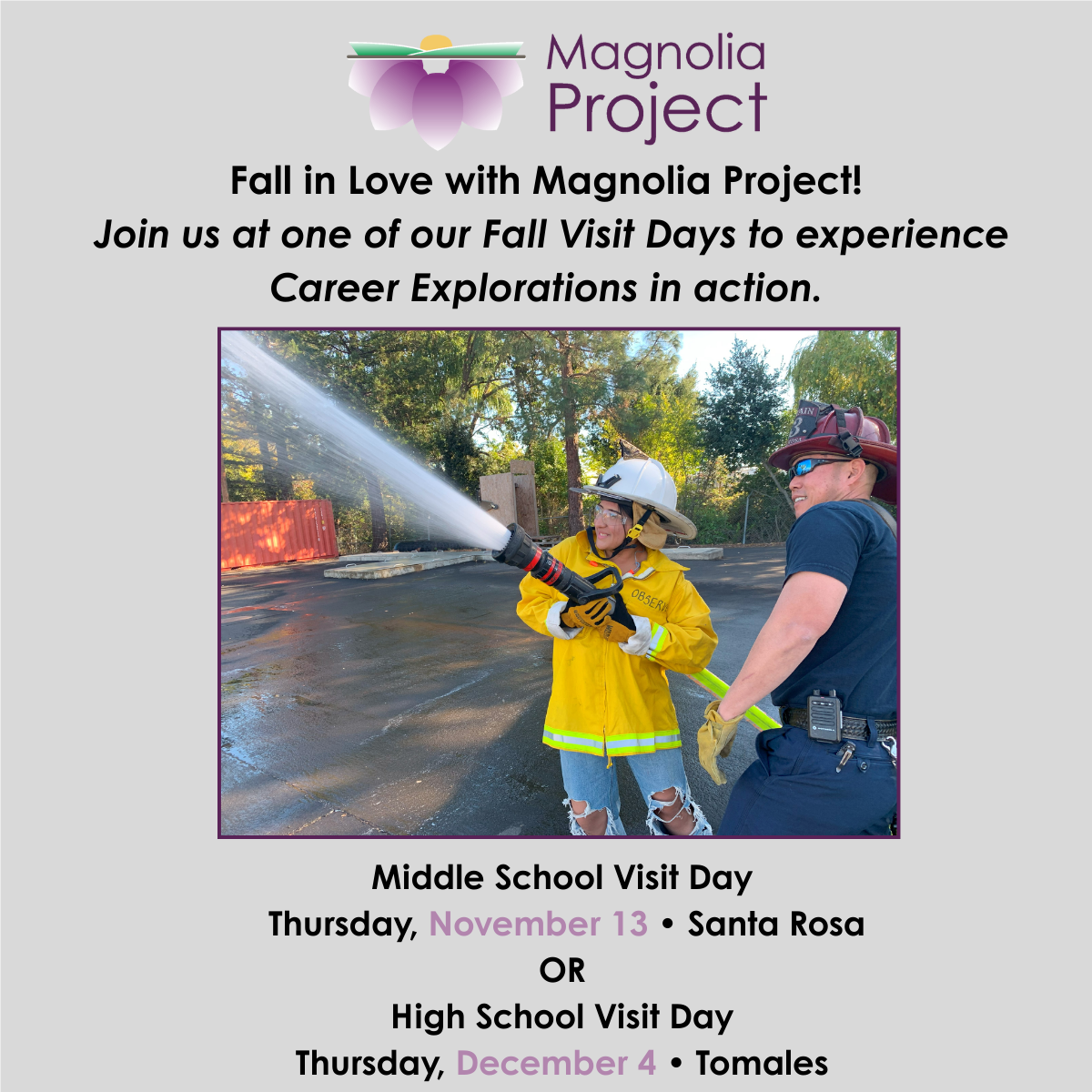
The Magnolia model has 3 stages: pre-workforce skill building, including the identification of a student’s strengths and goals; an immersive experience in a particular career; and post-work reflection and next phase planning. Each of these stages takes place under the auspices of an English class and monitored by a teacher. The program is consistent with common core English programs. The first stage is an on-campus experience for 7th to 10th grade students and allows each student to explore a variety of programs, including culinary, fashion, law, health, entrepreneurship, and many others. The immersive experience is for 11th-12 grade students and is similar to a 1-2 week apprenticeship program where the student works in with industry mentors to identify interests and develop skills in the industry chosen by the student.
Studies show that the Magnolia Project’s programs are working. Engagement of participating students has improved from 30% to 75%. 95% of students in focus groups believe that they are learning something valuable and support the expansion of the program. The project has received $1.4 million in financial support from large Bay Area educational philanthropies! And, the Magnolia Project is now working in 19 schools in Sonoma and Marin Counties!
Our thanks to Gia Biaggi for her excellent presentation and for working so hard to develop a program aimed solely at helping students identify and take first steps in career pathways.
Click HERE to view a limited time recording of Gia's presentation.
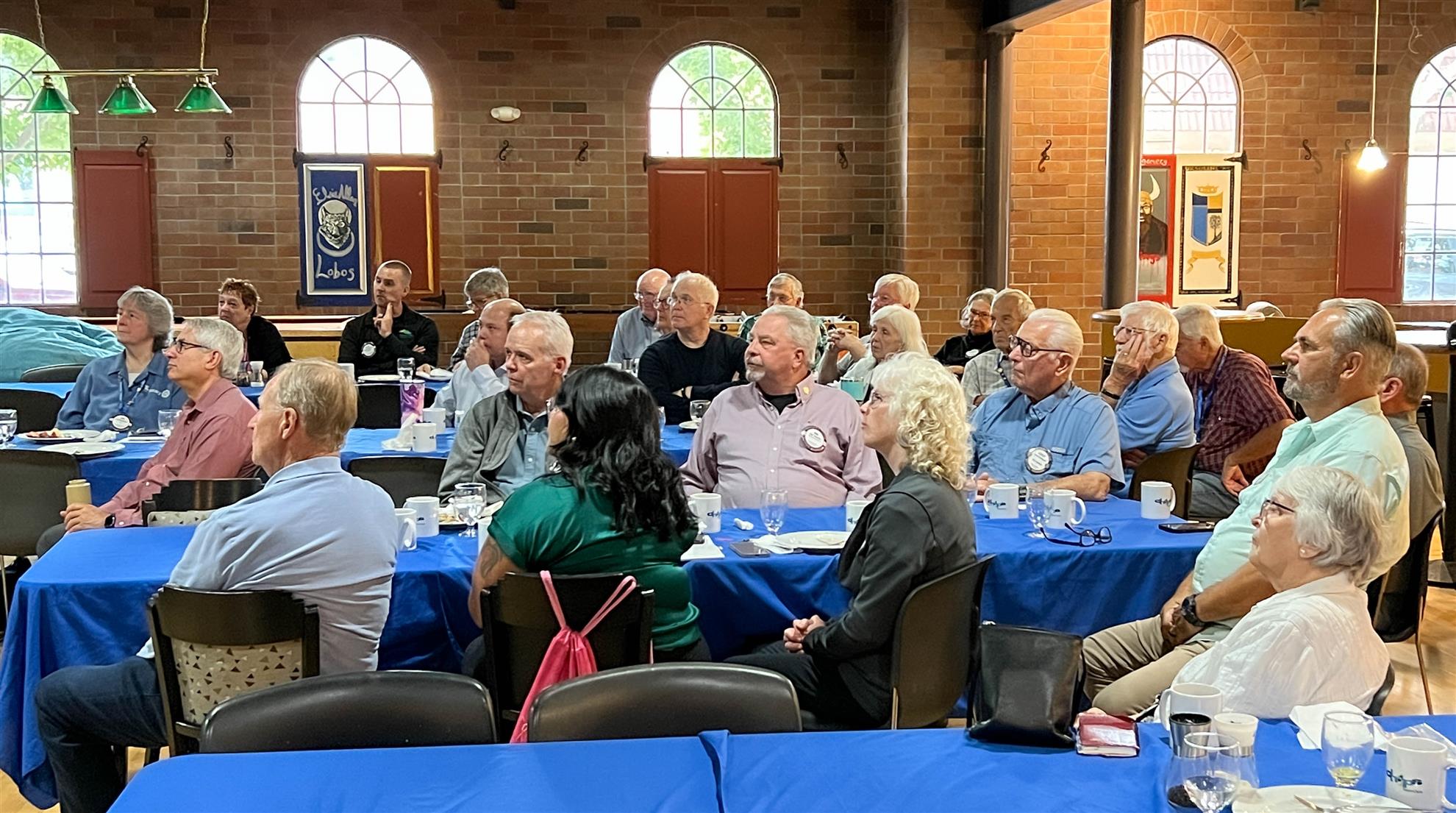
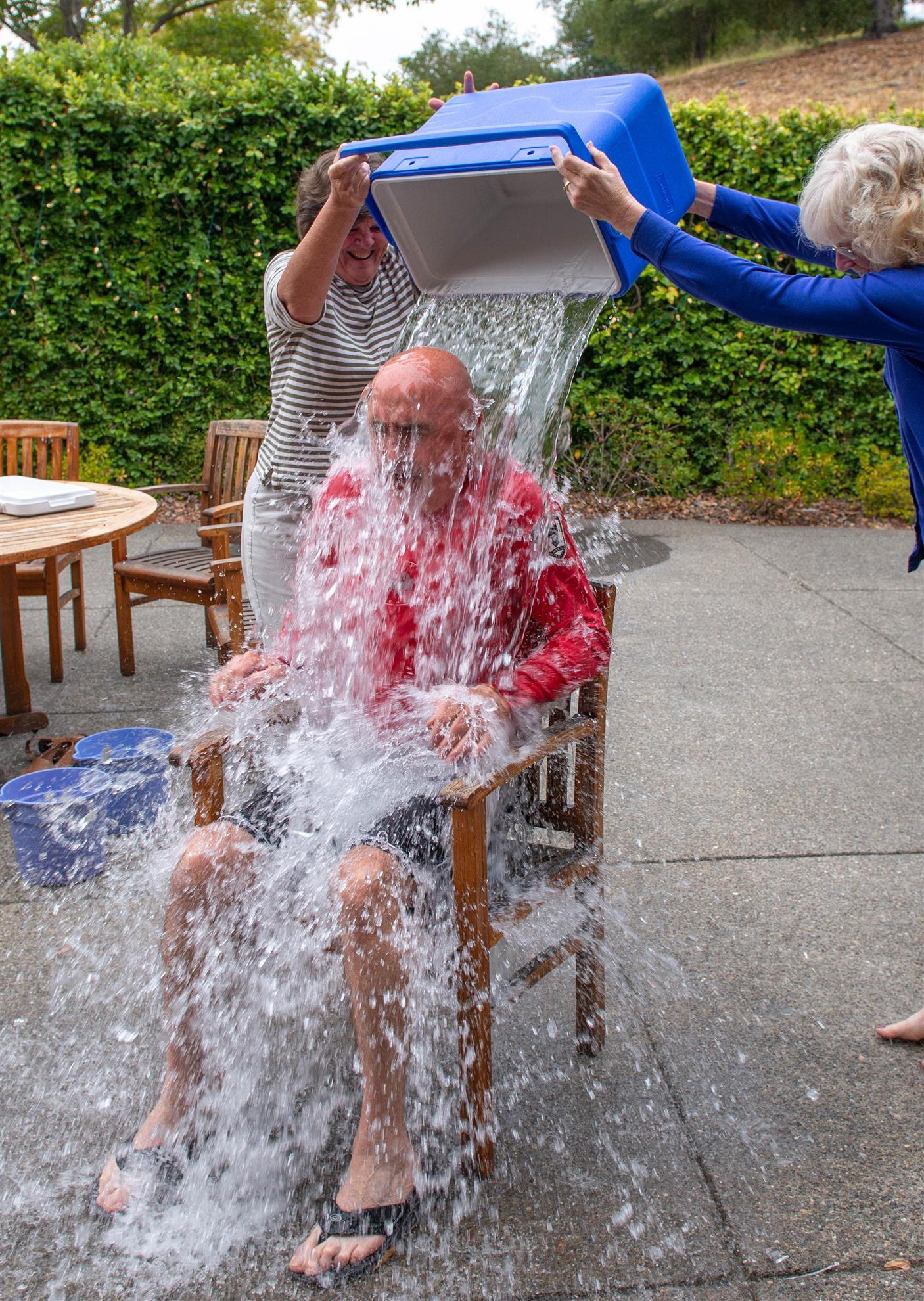
On a regular basis, our resident photo pro Warren Smith, submits pictures of what is going on at the weekly meetings. You can always find the most recent pictures at the websites photo journal called "Meeting Sighting" Please note that all the meeting photos for the entire Rotary year are at this location with the most recent on the last page.
Thanks for all the great pictures Warren!Link to Meeting Sightings. The most recent are on the last page!
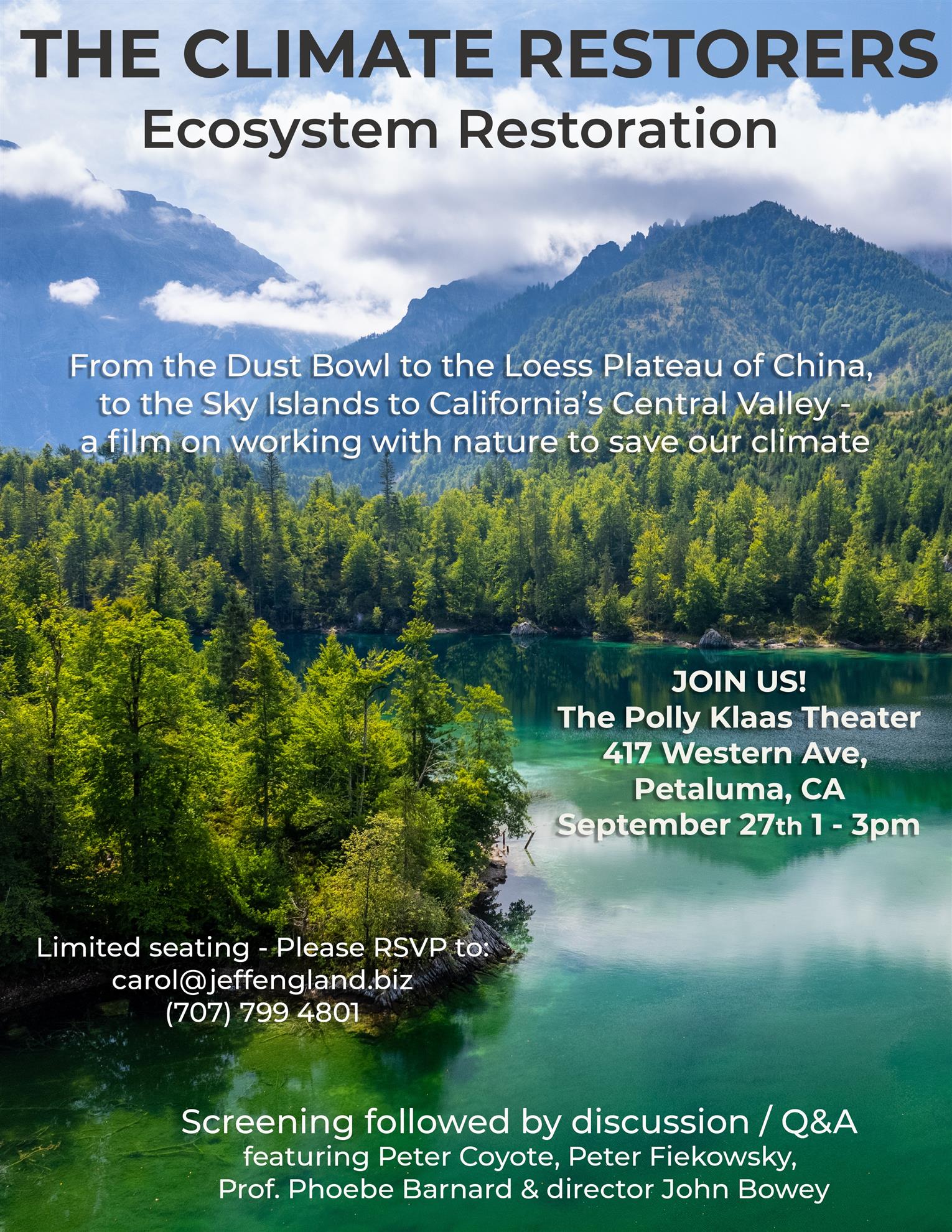
Professor Phoebe Barnard and Documentary Director John Bowey invite us to view their production described below.
Our Rotary District 5130 Governor Kristine Redko is promoting and supporting the event, Saturday September 27, 1-3 PM at the Polly Klaas Theater in Petaluma.
Dr. Barnard is the Professor of Conservation Biology and Environmental Futures at the University of Washington.
Seating is limited. For your ticket contact Rich Randolph.
August is Membership Month, but our commitment to growth and connection is year-round. When we focus on growing Rotary, we grow our ability to serve, to lead, and to bring lasting change.
Membership growth isn’t just about numbers. It’s about opening doors. It’s about inviting more people who are ready to give their time, talents, and hearts to a cause greater than themselves. When we welcome new members, we bring in fresh ideas and new energy. We expand our impact, strengthen our clubs, and ensure that Rotary continues to evolve with the world around us.
Remember, there is now great flexibility in fashioning nontraditional club models. I’m inspired when I see these innovative clubs thrive by offering new and prospective members more ways to connect and serve.
In Korea, the growth of satellite clubs has created opportunities for nearly 1,000 new members to find their place in Rotary. In Romania, the close collaboration between Rotarians, Rotaractors, and Interactors has built a pipeline of future leaders. In India, some Rotarians gather around a shared interest — whether it’s professional development or a passion for service — and those connections deepen their commitment and their joy in being part of Rotary. And we’ve seen cause-based clubs thrive in regions as diverse as Southeast Asia, Africa, and Europe.
There’s a common thread: Where clubs are growing, membership is a priority and there is a willingness to try something new. Rotary is not limited to one structure or tradition. We are a global network of people of action, and that means there is room for many kinds of clubs, many ways to serve, and many paths into our organization.
This spirit of innovation is also guiding our efforts to reach new communities. In places where there has never been a Rotary club — or where a club once existed and faded — Rotarians are finding ways to grow Rotary. They are identifying areas of potential and building clubs that reflect the character and needs of their communities.
Every member plays a part in this journey. Whether you introduce a friend to your club, support a new meeting format, reconnect with program alumni, or simply share your Rotary story, you are helping our organization grow stronger and more vibrant.
No one owns a Rotary club. It is a gift we pass on to the next generation. When we nurture that gift, when we invite others to share in it, we ensure that Rotary continues to be a force for good.
Let’s prioritize membership growth — not just in August but every month of the year. Together, through friendship, creativity, and shared purpose, we will grow Rotary and Unite for Good.
You can find all prior "RI President's Messages" at this LINK
When most people join Rotary, they know little, if anything, about The Rotary Foundation.
Membership Month is a great time to highlight the powerful connection between membership and our Foundation.
People who are drawn to Rotary care deeply about their communities and want to make a substantive difference. They’re looking for meaningful, hands-on ways to serve — and the Foundation helps make those opportunities possible.
Cause-based Rotary clubs are one exciting way new members are finding purpose in Rotary, and these clubs also bring fresh energy and activity to our Foundation. I invited Marisol Chianello, president of one such club, to share her perspective:
“As a nonprofit attorney, I long believed I didn’t have the time to be part of Rotary. But when I heard about a new cause-based e-club — the Rotary Club of Mental Health and Wellness District 5280 — I felt I had to be part of it.
In just three years, our club has done a lot to support mental health needs in Southern California and awarded thousands of dollars in scholarships to graduate students in the field, including one this year to a student in Uganda.
Just a few months ago, we were approved for our first global grant to provide a mix of in-person and digital mental wellness support to survivors of the 2023 earthquakes in southeastern Turkey.
Through our service, we’ve attracted new members from across the United States, including women and younger members who might not have otherwise joined Rotary. Cause-based clubs like ours offer a meaningful entry point for people committed to a specific cause — backed by the global reach and Foundation support of Rotary.”
Marisol’s story reminds us what’s possible when Rotary service meets Foundation support. I wonder how many cause-based club members knew the full extent of Foundation resources when they began. How many existing clubs could partner with these groups on grants?
As we build new Rotary and Rotaract clubs and welcome new members, let’s keep The Rotary Foundation at the forefront. The Foundation enriches the membership experience, supports club growth, and deepens our impact.
The Rotary Foundation is more than just a source of funding; it is an invitation to endless opportunities. It’s a living expression of who we are as Rotary.
The Foundation, too, can be a vital part of every member’s experience when they join us or start a new club.
You can find all prior "Messages from the Foundation Trustee Chair" at this LINK
By Go Tamitami and Wen Huang Photography by Minmin Wu
Update: Genshitsu Sen, a grand master of the Urasenke tea tradition, died on 14 August at age 102. A member of the Rotary Club of Kyoto, Japan, he served as a Rotary International director and a Rotary Foundation trustee.
In July 2011, Genshitsu Sen, the former grand master of the Urasenke tea tradition and a member of the Rotary Club of Kyoto, Japan, traveled to Hawaii.
On that trip, Sen had a special mission. He had been invited to perform a devotional tea offering ceremony at the USS Arizona Memorial in Pearl Harbor to console the souls of all the war dead. The media hailed the ceremony as a symbol of the healing process between the United States and Japan, whose bitter enmity had cost so many lives and caused so much destruction during World War II.
For Sen, this tea offering ceremony was also very personal.
In 1943, he was a sophomore at the Kyoto-based Doshisha University when he entered the Imperial Japanese Navy’s air force division. A year later, in October 1944, with Japan losing the war, the Navy began forming the Special Attack Force.
According to the Mainichi Shimbun, a newspaper in Japan, Sen joined 200 of his comrades in training for suicide missions designed to sink enemy ships with aircraft filled with explosives. Sen feared that he would soon suffer a tragic fate, as had one of his ancestors, Sen no Rikyū, who was ordered by a 16th century feudal lord to perform the samurai ritual of seppuku, a self-disembowelment and painful death.
On the day appointed for his suicide run, as Sen was braced for death, a superior officer, out of the blue, scratched Sen’s name off the mission roster. The officer ordered him to stand down despite his repeated pleas to join his comrades. Instead, Sen was dispatched to a military unit in western Japan.
Before he could discover who had kept him from climbing into a cockpit for the last time, the end of the war arrived. Many of his comrades had plunged to their deaths, taking the lives of an estimated 7,000 American, British, and Australian sailors. The toll among the attacking pilots was also severe — as many as 3,800 flew to certain death.
After the war, Sen met with a former senior officer and asked why he had been spared. The officer replied, "Think of it as your destiny." This is the burden Sen now carries with grace. The faces of those comrades still live in his memory, along with the other ghastly consequences of war.
"It was a terrible feeling to have survived," he says. "For this reason, I often have an inexplicable feeling that I have inherited the time of my comrades and those who should have lived. They transferred their lives to me. For their sake, I must also persevere, live well, and live long enough to fulfill my destiny."
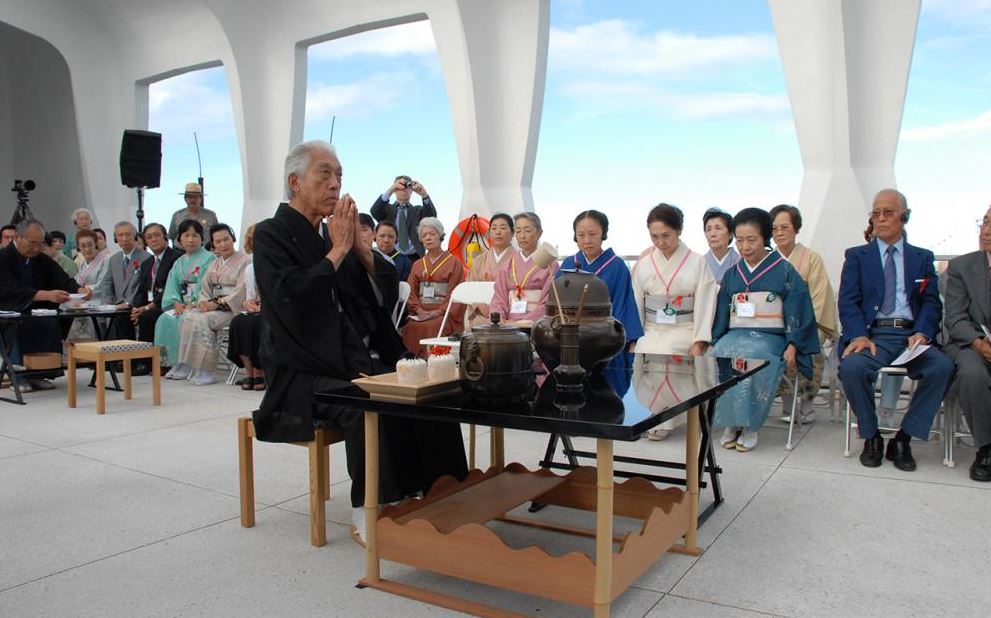
Sen performs a devotional tea offering ceremony in the assembly room at the USS Arizona Memorial in Pearl Harbor.
Photo credit: Courtesy of the Urasenke Foundation
After the war, Sen dedicated his life to rebuilding peace and harmony in the world, an ideal deeply embedded in the tea ceremony. At Pearl Harbor, early in the morning of 19 July 2011, Sen was ushered into the gleaming white, open-air memorial that is built above the sunken hull of the Arizona. Nearly half of those killed in Japan's surprise attack on 7 December 1941 were members of the Arizona crew. Of the 1,177 fatalities aboard the ship, the remains of 1,102 crew members still lie entombed in the wreck.
A news clip of Sen's visit shows the grand master moving purposefully, dressed in a black kimono which hung starkly beneath his solemn expression and thick mane of silver hair. He wore white split-toed socks in the Japanese tabi fashion. The elaborate tea service was laid out on a lacquered black table in the center of the assembly room, where more than 200 Japanese and American guests, including politicians, war veterans, civic leaders, and Urasenke chadō practitioners, were gathered to witness the time-honored Japanese ritual.
Employing a piece of square silk cloth known as fukusa, he purified the tea implements before placing green tea powder in a ceremonial bowl and ladling in hot water from a steaming kettle. With a bamboo whisk, Sen prepared two sacred portions — one koicha, or "thick tea," and one usucha, or "thin tea."
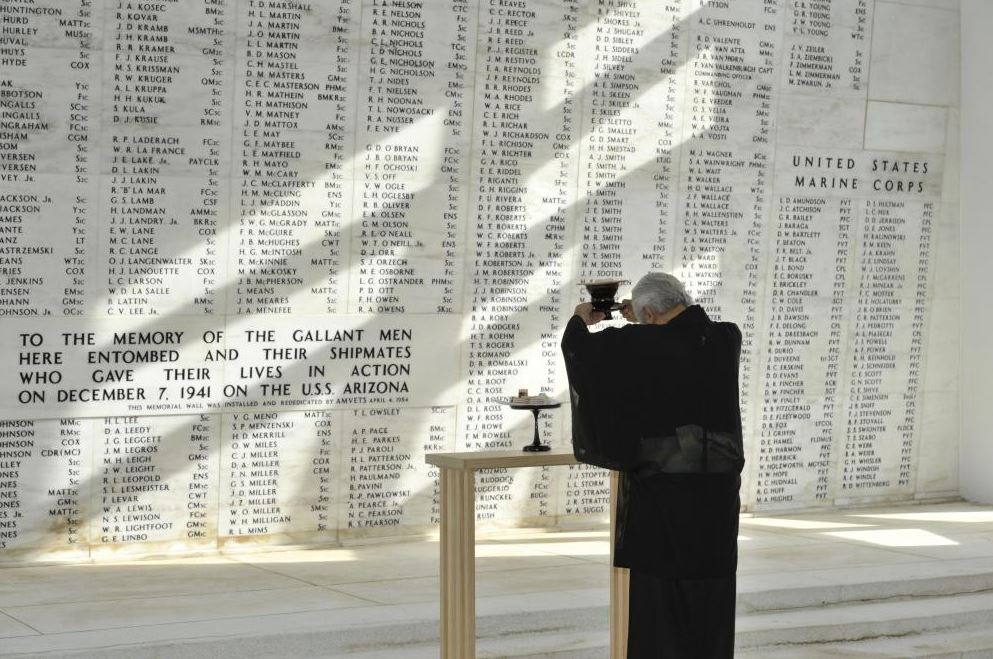
Sen offers up a bowl of tea at the USS Arizona Memorial to console the souls of all the war dead.
Photo credit: Courtesy of the Urasenke Foundation
Once each bowl was prepared, he carried them to the memorial's inner shrine, where the names of American sailors who perished during the attack are carved into a towering memorial wall. There, he lifted his head toward the heavens and raised the bowl in outstretched arms as an offering to those lost souls. Then, Sen joined his hands in prayer to make a final silent entreaty. He called into that hall, and into the hearts of the congregation, the spirit of peace and reconciliation.
"I have lived 88 years, and this event is going to be the most memorable event for myself personally," Sen said at the end of the ceremony, adding that it is the responsibility of those alive today to confront the past and carry its lessons into the future.
For the rest of this story …… please go to this LINK
Rotary Club of Santa Rosa Sunrise - Founded June 30, 1986

.png)