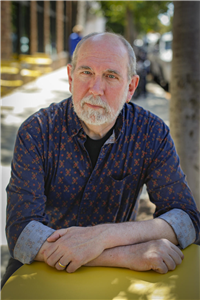
An award-winning journalist, currently the Community Editor of the Petaluma Argus-Courier newspaper, and an arts and entertainment contributor to the Pulitzer-winning Press Democrat, David is also a storyteller himself, whose theatrical works have been performed on both coasts and in the UK.
David was also the co-host of 'You Don't Know Peanuts,' the only officially licensed Peanuts podcast, produced by Peanuts Worldwide and The Press Democrat. You can check it out at www.youdontknowpeanuts.com
Our speaker for August 14, 2025, was Dr. Ed Bauman, a nutrition and integrative health specialist with master’s degrees in education and nutrition, as well as a PhD in community health promotion. He’s a teacher, author, nutritional evaluator, and founder of Bauman Wellness.com. He also sees clients at Bauman Solutions, LLC. His topic Thursday was “How to Age Well.” He is the author of “Eating for Health.”
Ed gave us a brief introduction into the aspects of living that allow us to live better, longer lives, as well as some of the key challenges (and solutions to those challenges) to aging well. Five “blue zones” in the world have the highest number of centenarians: Okinawa; a region in Sardinia; Ikaria, Greece; the Nicoya Peninsula in Cost Rica; and 7th Day Adventists. People in these blue zones have several characteristics in common. The #1 characteristic is an abundance of social connections; generally, people with strong social connections tend to live longer than more isolated people. These connections are often faith or spiritual-based, family, and social circles that support healthy behaviors. Successful centenarians put their families first! Healthy eating is also an important factor in longevity and life-long health. Ed stressed that eating plants is the key to health. Moderate wine drinking also is a characteristic in centenarians in these blue zones (other than 7th Day Adventists). Exercise is also tremendously important, and you don’t need to go to a gym to get the right exercise. Be physically active and involve yourself in environments that nudge you into moving.
One of the main challenges to aging well is stress. Stress causes chronic inflammation, which in turn can cause a variety of life-threatening illnesses. Ed stresses that blue zone centenarians develop routines that shed stress. Some pray, others acknowledge their ancestors, and all stay busy. Lifelong learning and spiritual intelligence are other factors that help alleviate stress. Ed suggests that we all try to give up the past, see the power in focusing on the present, find routines that help us out of stressful situations, make new friends, and eat healthy! Ed also asked Sunrisers to identify some of the activities that help us live in the moment. Katharine Anderson plays the violin, Harry Coffee loves to travel to distant lands, and others agreed that retirement is the key to avoiding stress!
Thank you, Ed, for the helpful and informative presentation. Now all we have to do is put some of your strategies into place!
Click HERE to view a limited time recording of Ed's engaging talk.
On a regular basis, our resident photo pro Warren Smith, submits pictures of what is going on at the weekly meetings. You can always find the most recent pictures at the websites photo journal called "Meeting Sighting" Please note that all the meeting photos for the entire Rotary year are at this location with the most recent on the last page.
Thanks for all the great pictures Warren!Link to Meeting Sightings. The most recent are on the last page!
The Family Justice Center's Camp Hope and Santa Rosa Sunrise Rotary
Did you catch this front-page article in the August 5th Press Democrat newspaper?
Camp Hope, venture of Sonoma County’s Family Justice Center, offers adventure, support and resources for children in need
It’s horses and rafting and zip lines, but Camp Hope, funded by the Family Justice Center of Sonoma County, also offers trusted adults and fellow campers who understand that life is not always ‘picture perfect.’
Harry Coffey mentioned to our club - recently- that Camp Hope - which our club supported for this very camp year- will be one of his priorities this year as Fund Raising Chair.
With our clubs' efforts- and other clubs he will encourage to join us- we can fill the camps enrollment of 48 children.
Click HERE for a link to the Press Democrat article.
Santa Rosa Sunrise Members explored the Islands in the Sky
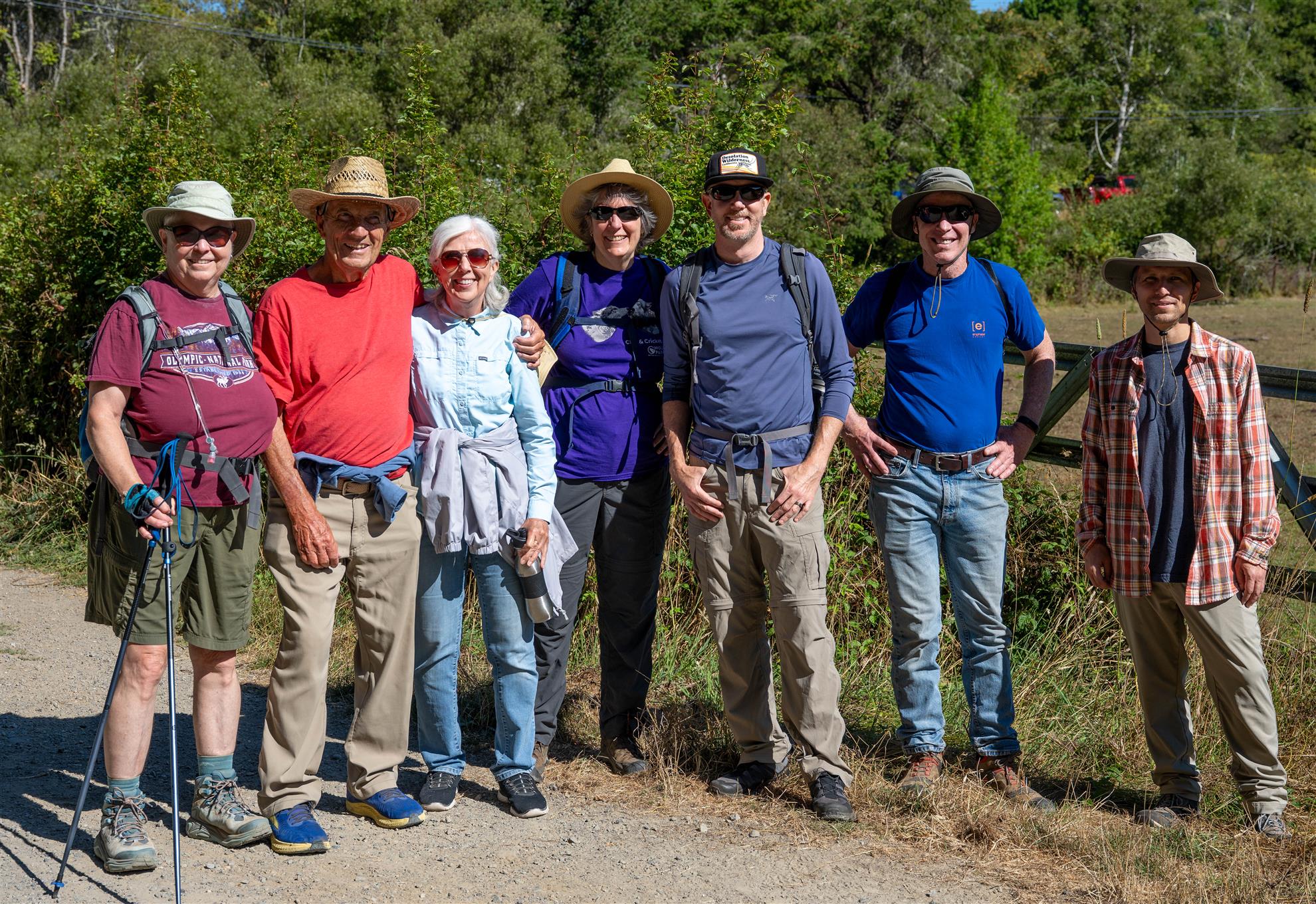
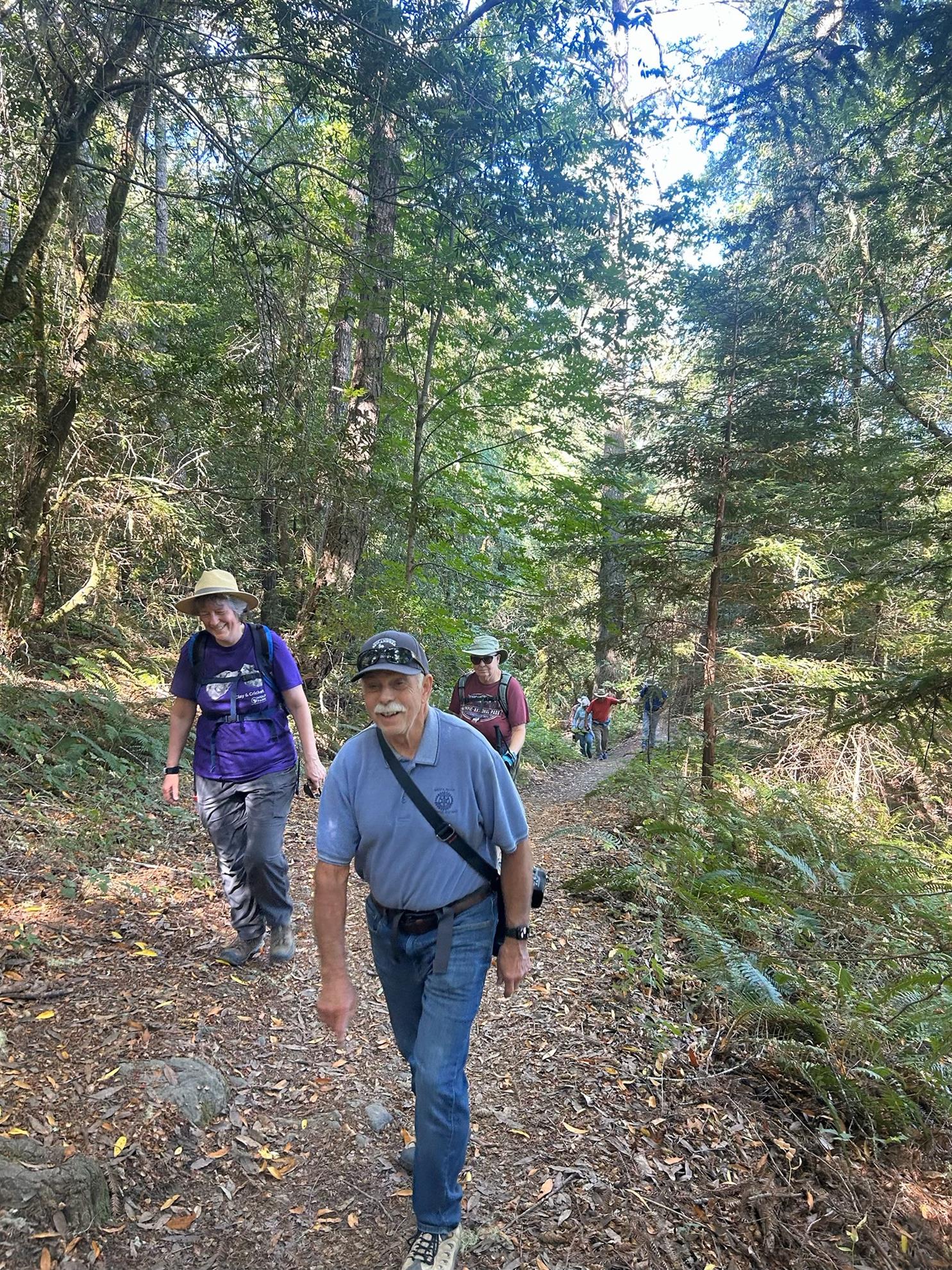
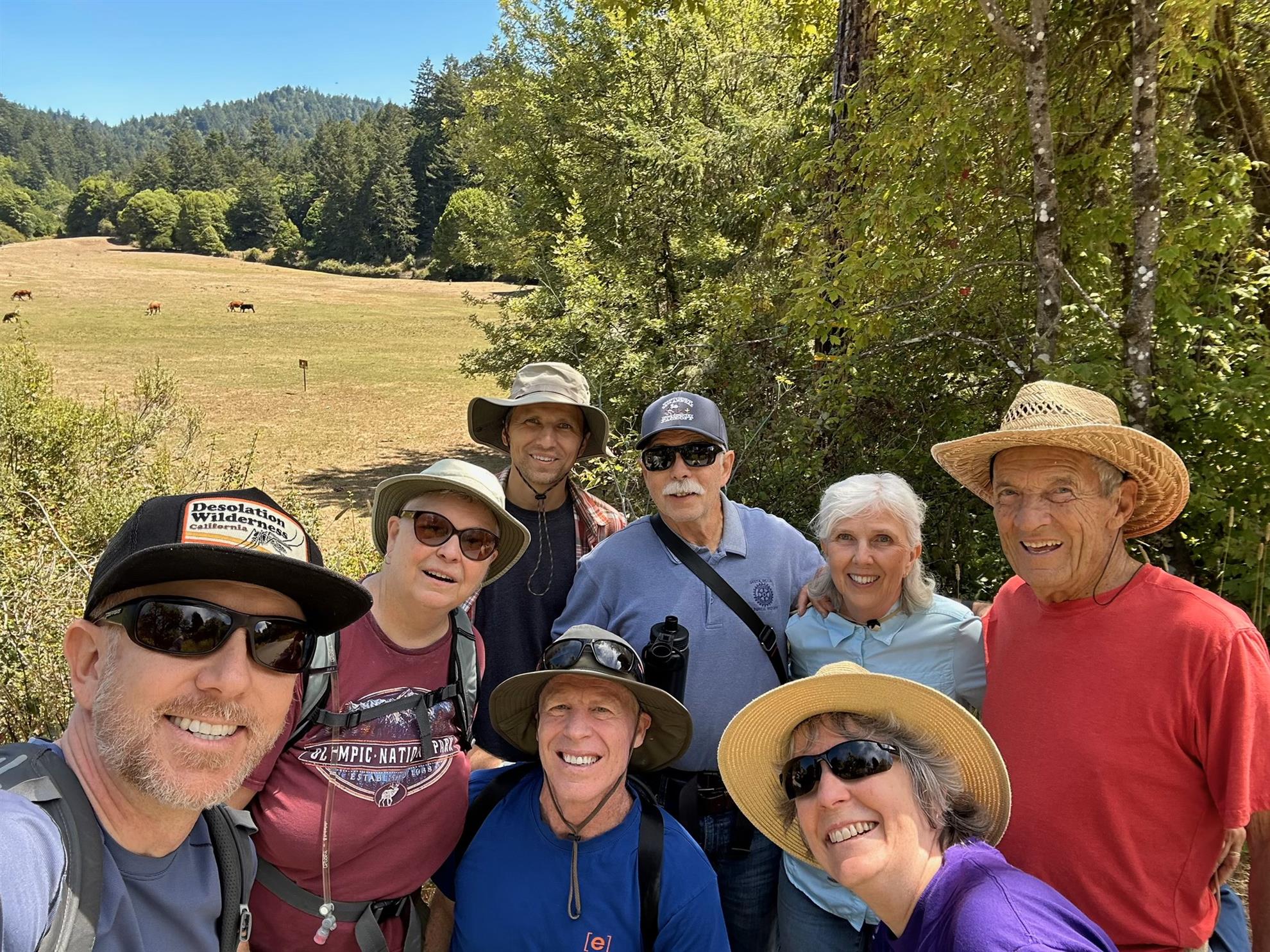
Rotarians and friends had a great hike this past Sunday up above Duncan’s Mills. We did the popular "Islands in the Sky" trail with wonderful scenic views of the coastal hills.
It was beautifully sunny, but when we got to the overlook for the Pacific Ocean, there was too much fog to see the ocean at all, so we couldn't quite get the "islands in the sky" view exactly, but we knew they were out there!
It was just over four miles and a good amount of climbing. We all earned our Sunday afternoon naps.
Participants included President Lori Rodrigues with wife, Mary Ann Sacksteder, Warren Smith, Dan Rosaschi, Peter Hoberg, Peter and Mary Banks and their son, Mark.
Here is the original article from the Archives by Darrell Thompson
More than 60 years ago, in the midst of the Great Depression, a U.S. Rotarian devised a simple, four-part ethical guideline that helped him rescue a beleaguered business. The statement and the principles it embodied also helped many others find their own ethical compass. Soon embraced and popularized by Rotary International, The 4-Way Test today stands as one of the organization’s hallmarks. It may very well be one of the most famous statements of our century.
Herbert J. Taylor, author of the Test, was a mover, doer, a consummate salesman and a leader of men. He was a man of action, faith and high moral principle. Born in Michigan, U.S.A., in 1893, he worked his way through Northwestern University in Evanston, Illinois. After graduation, Herb went to France on a mission for the YMCA and the British Army welfare service and served in the U.S. Navy Supply Corps in World War I. In 1919, he married Gloria Forbrich, and the couple set up housekeeping in Oklahoma, U.S.A., where he worked for the Sinclair Oil Company. After a year, he resigned and went into insurance, real estate and oil lease brokerage.
With some prosperous years behind him, Herb returned to Chicago, Illinois, in 1925 and began a swift rise within the Jewel Tea Company. He soon joined the Rotary Club of Chicago. In line for the presidency of Jewel in 1932, Herb was asked to help revive the near-bankrupt Club Aluminum Company of Chicago. The cookware manufacturing company owed $400,000 more than its total assets and was barely staying afloat. Herb responded to the challenge and decided to cast his lot with this troubled firm. He resigned from Jewel Tea, taking an 80 percent pay cut to become president of Club Aluminum. He even invested $6,100 of his own money in the company to give it some operating capital.
Looking for a way to resuscitate the company and caught in the Depression’s doldrums, Herb, deeply religious, prayed for inspiration to craft a short measuring stick of ethics for the staff to use.
As he thought about an ethical guideline for the company, he first wrote a statement of about 100 words but decided that it was too long. He continued to work, reducing it to seven points. In fact, The 4-Way Test was once a Seven-Way Test. It was still too long, and he finally reduced it to the four searching questions that comprise the Test today.
Next, he checked the statement with his four department heads: a Roman Catholic, a Christian Scientist, an Orthodox Jew and a Presbyterian. They all agreed that the Test’s principles not only coincided with their religious beliefs, but also provided an exemplary guide for personal and business life.
And so, “The 4-Way Test of the things we think, say or do” was born:
Is it the TRUTH? Is it FAIR to all Concerned? Will it build GOODWILL and BETTER FRIENDSHIPS? Will it be BENEFICIAL to all concerned?
Profound in its simplicity, the Test became the basis for decisions large and small at Club Aluminum.
But any test must be put to the test.
Would it work in the real world? Could people in business really live by its precepts? One lawyer told Herb: “If I followed the Test explicitly, I would starve to death. Where business is concerned, I think The 4-Way Test is absolutely impractical.” The attorney’s concerns were understandable. Any ethical system that calls for living the truth and measuring actions on the basis of benefits to others is demanding. Such a test can stir bitter conflict for those who try to balance integrity and ambition. Sizzling debates have been held in various parts of the world on its practicality as a way of living. There are always some serious-minded Rotarians, not to mention skeptics and negative thinkers, who view The 4-Way Test as a simplistic philosophy of dubious worth, contradictory meaning and unrealistic aims. The Test calls for thoughtful examination of one’s motives and goals. This emphasis on truth, fairness and consideration provide a moral diet so rich that it gives some people “ethical indigestion.”
But at Club Aluminum in the 1930s, everything was measured against the 4-Way Test. First, the staff applied it to advertising. Words like “better,” “best,” “greatest” or “finest” were dropped from ads and replaced by factual descriptions of the product. Negative comments about competitors were removed from advertising and company literature.
The Test gradually became a guide for every aspect of the business, creating a climate of trust and goodwill among dealers, customers and employees. It became part of the corporate culture, and eventually helped improve Club Aluminum’s reputation and finances.
One day, the sales manager announced a possible order for 50,000 utensils. Sales were low and the company was still struggling at the bankruptcy level. The senior managers certainly needed and wanted that sale, but there was a hitch. The sales manager learned that the potential customer intended to sell the products at cut-rate prices. “That wouldn’t be fair to our regular dealers who have been advertising and promoting our product consistently,” he said. In one of the toughest decisions the company made that year, the order was turned down. There was no question this transaction would have made a mockery out of The 4-Way Test the company professed to live by.
By 1937, Club Aluminum’s indebtedness was paid off and during the next 15 years, the firm distributed more than $1 million in dividends to its stockholders. Its net worth climbed to more than $2 million.
Too idealistic for the real world? The 4-Way Test was born in the rough and tumble world of business, and put to the acid test of experience in one of the toughest times that the business community has ever known. It survived in the arena of practical commerce.
In 1942, Richard Vernor of Chicago, then a director of Rotary International, suggested that Rotary adopt the Test. The R.I. Board approved his proposal in January 1943 and made The 4-Way Test a component of the Vocational Service program, although today it is considered a vital element in all four Avenues of Service.
In March, the largest wildfires in Korea’s history swept across the country’s southeast, scorching nearly 120,000 acres and forcing more than 37,000 people to evacuate. Rotary districts swiftly assessed the needs and delivered food, water, hygiene kits, and other essential supplies to shelters and affected communities. Rotarians were able to reach even more people in need through $100,000 in funding from The Rotary Foundation. Rotary members also assisted with clearing orchards and with home demolition in devastated areas. Some even provided heavy equipment, including to assist with reconstruction of the historic Gounsa temple in Uiseong. “Disasters like these strike without warning,” says Ung Seop Jeong, immediate past governor of District 3590. “No one is truly prepared, but Rotary is always there for the community.”
This story originally appeared in the August 2025 issue of Rotary magazine.
Rotary projects make a difference in communities around the world.


.png)












 In March, the largest wildfires in Korea’s history swept across the country’s southeast, scorching nearly 120,000 acres and forcing more than 37,000 people to evacuate. Rotary districts swiftly assessed the needs and delivered food, water, hygiene kits, and other essential supplies to shelters and affected communities. Rotarians were able to reach even more people in need through $100,000 in funding from The