On a regular basis, our resident photo pro Warren Smith, submits pictures of what is going on at the weekly meetings. You can always find the most recent pictures at the websites photo journal called "Meeting Sighting" Please note that all the meeting photos for the entire Rotary year are at this location with the most recent on the last page.
Thanks for all the great pictures Warren!Link to Meeting Sightings. The most recent are on the last page!
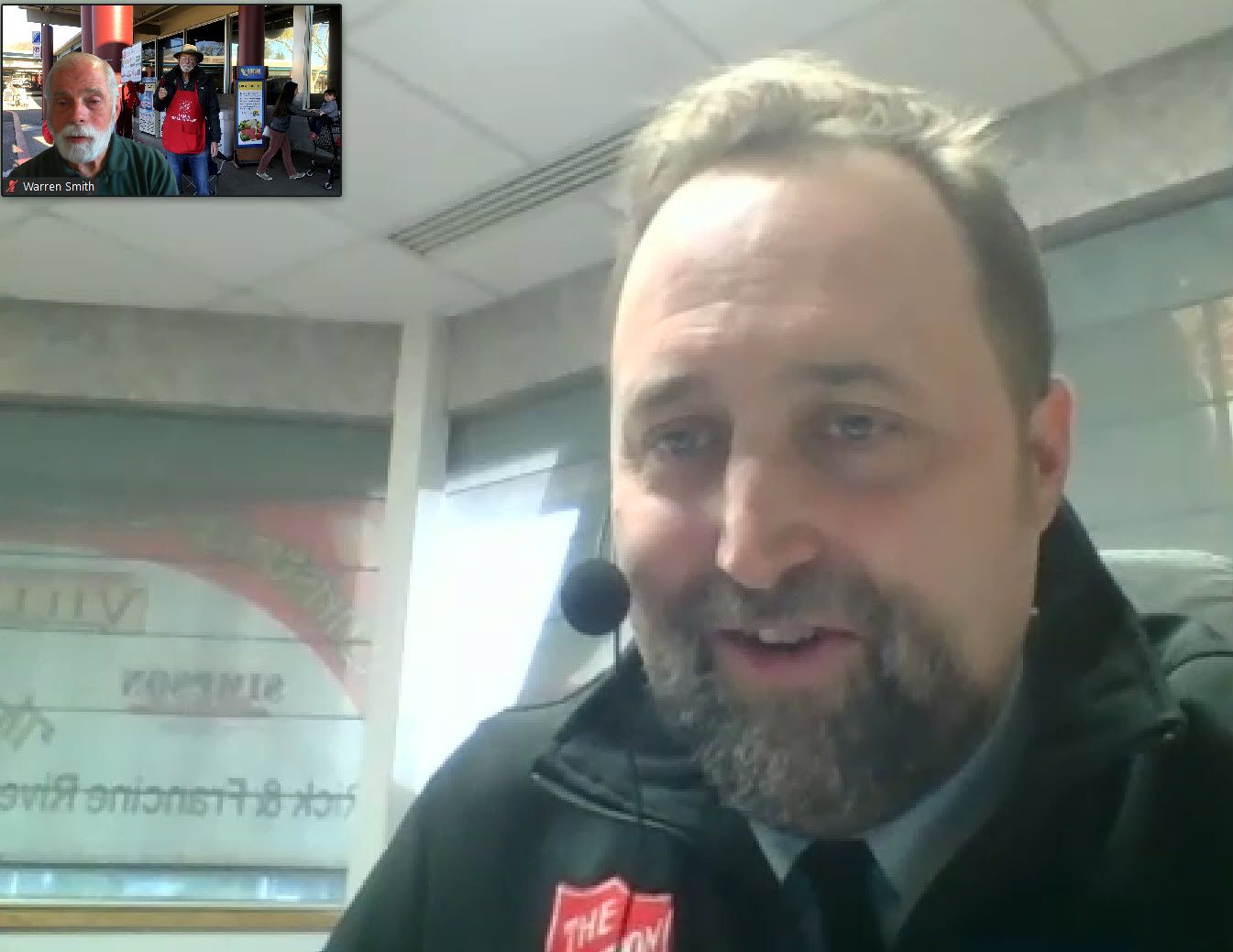
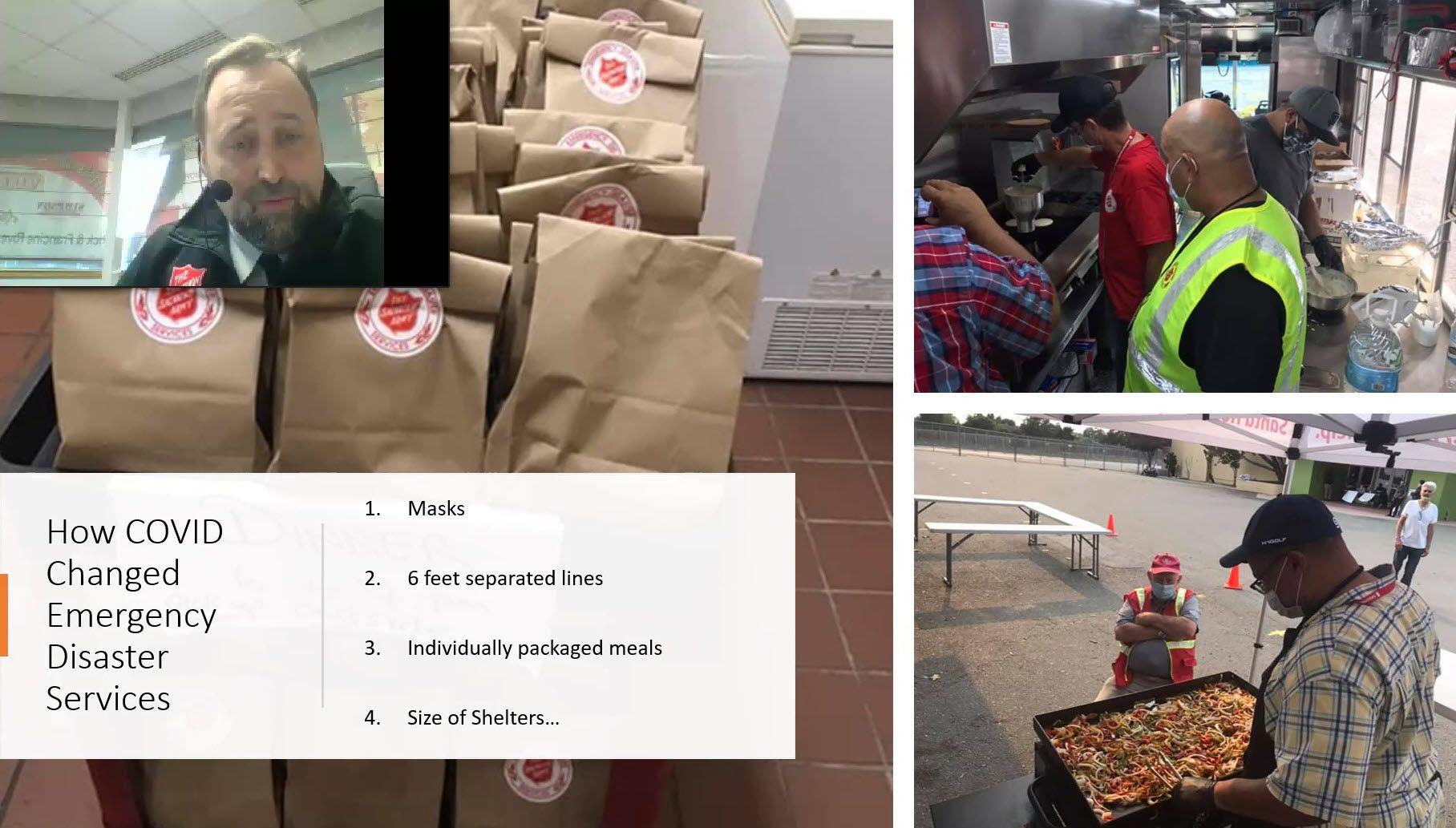
The speaker for our meeting on December 10, 2020, was Major Rio Ray of the Salvation Army. Major Ray is currently responsible for a variety of Salvation Army projects in Santa Rosa, including Double Punches (kids’ boxing), Tutoring and Mentoring, Transitional Living, Senior Services, and the Family Services Office. He gave us a wonderful overview of these programs and other services provided by the Salvation Army in Santa Rosa.
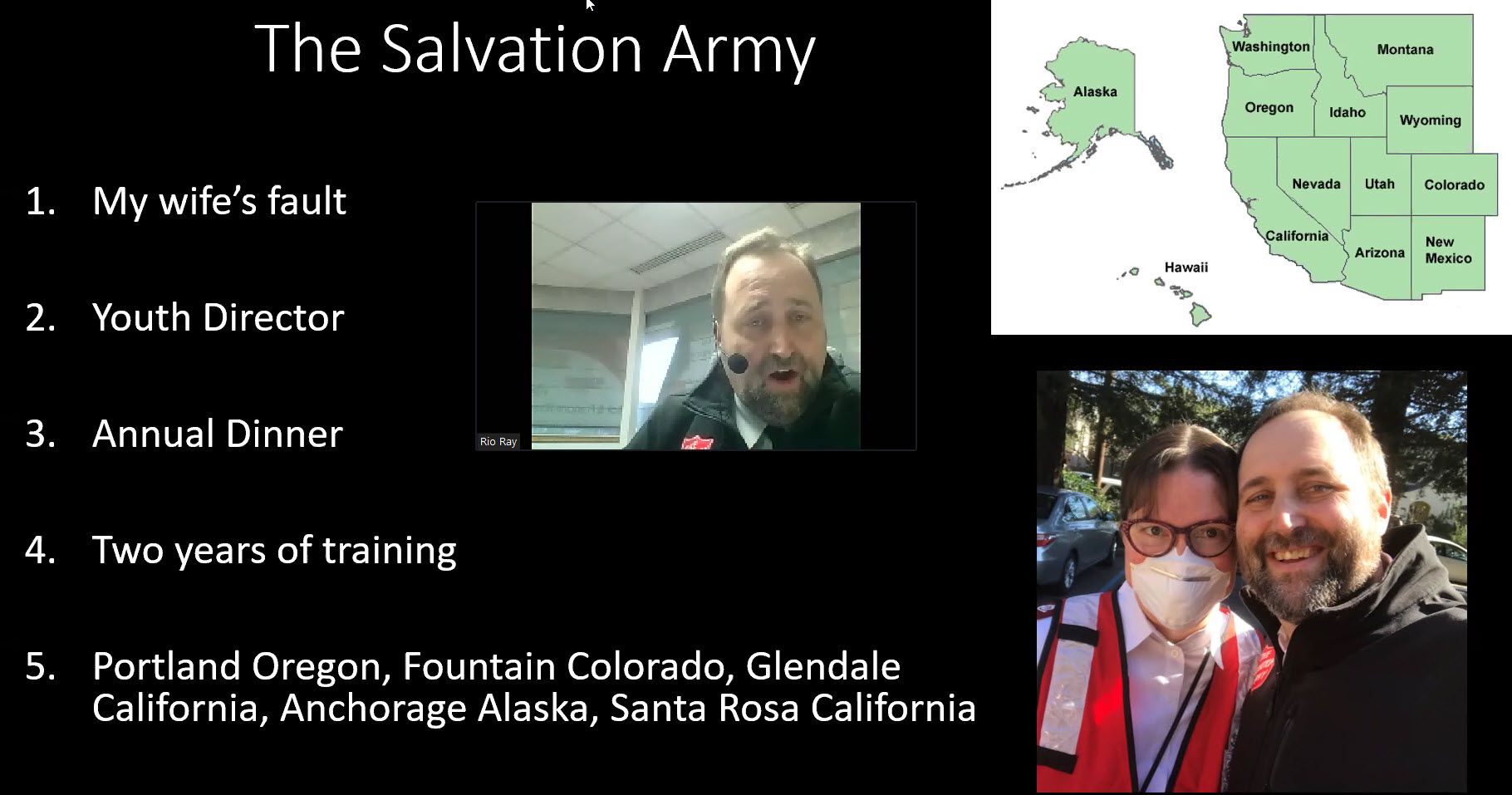
Some personal information: Major Rey was raised by hippies in a one-room cabin in the Santa Cruz Mountains with no electricity and no running water! He had both good and bad times but eventually ended up in college, where he met his wife and went from hard working hippie to cleaned up groom! And, according to him, he was “adorable” as a child and always a nerd! After college he took a “temporary” job as youth director for the Salvation Army. His wife ultimately convinced him that he should join the “Army” full time. He has been stationed at such diverse locations as Portland, Colorado, Glendale, Anchorage, and now Santa Rosa.
Rio is especially proud of the Salvation Army’s Double Punches program for youth. While not the most peaceful of sports, the program has dedicated students, some of whom might be tempted to become involved in gang activities if not for the program. They have not had any Olympian boxes, but they have had some Silver Sluggers and, more importantly, many high school and college graduates and professionals have come out of the program. The Tutoring and Mentoring program also focuses on at-risk and struggling youth. They have a back-to-school shopping program that typically involves 150 kids per year. They also bought 9,000 Christmas toys 9k last year!
The Family Services & Transitional Living programs include the purchase of fresh and nutritious foods, bus passes, the Thrift Store, and transitional living for those who have completed the recovery program. The recovery program usually lasts between one and six months. The “safe and sober” living program of two years, which drastically increases the chances for long term drug and/or alcohol recovery.
The Army’s Senior Services program in Santa Rosa includes 186 units of low-income senior housing and an adjacent Senior Center with crafts, filed trips, games a computer lab, holiday parties, and workshops. The Emergency Disaster Services program has provided thousands of meals for local disasters, including the Tubbs (83,000 meals), Kincade, and Walbridge Fires, Guerneville Floods, and PG&E power outages.
The Salvation Army’s responses to the Covid-19 pandemic have included a much greater emphasis on food delivery, some unfortunate limitations and changes to transitional living programs, and an increase in “Red Kettle” drop off giving to replace the reduced bell ringing problem.
Thank you so much, Rio, for sharing the Salvation Army’s programs and goals with us. We appreciate everything you do for this community and know that you and the Army will persevere in these very trying times.
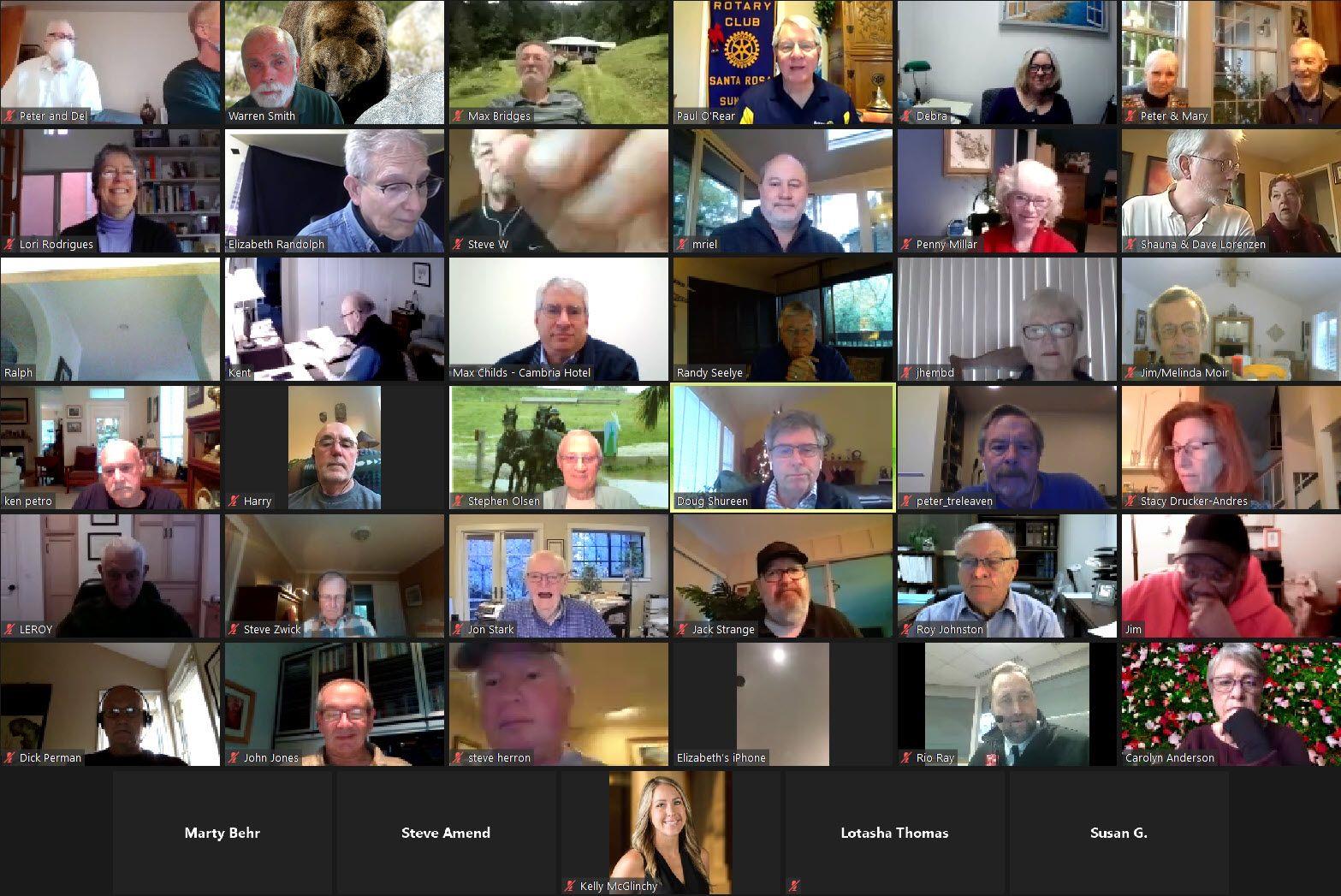
Welcome Lori Rodrigues!! Second row, far left, Sunrise' newest member!! Sponsored by Penny Millar, Lori brings a wealth of experience in her interests and background. from a Yosemite National Park employee in various roles, to entrepreneur and CPA, Lori's love of challenge and variety pair perfectly with her next venture in service and community engagement. Welcome Lori!
Here we go again, hopefully for the last time before vaccines are available to everyone. "Science" said don't get complacent even though it's been nine months now, but many did and the price is being paid. We're almost there but we can't be any more complacent now or in February or April than if it were still August. As Science also says, "the virus really doesn't care" about why you're taking a chance, just that you're looking more and more like lunch."
While the human toll has been staggering, what have some of the positives we can take away from life during the last nine months?
1. We've learned Zoom and I hope we never go back to having the volumes of meetings we used to have in person, driving all over the place one person per car, warming the planet and polluting our commonly shared air. Zoom makes Rotary less personal but so much easier and less time-consuming. Think about what that means for attracting members on a tight time budget, or for attendance (we're averaging 45-50 members per week vs. 40-ish pre-March). 2. We're looking after each other more because we don't see each other in person much. Our small group initiative is common throughout the District in clubs that are holding their membership together. The District Presidents get together once a month and every club that has a way for small groups of people to safely socialize, whether by Zoom, phone or sitting on a deck masked and 10 feet apart, is enthusiastic about the results. I hope your group has one or two people you didn't used to socialize with at Rotary, like mine. I'm sitting at a new Rotary table, virtually. 3. We're able to have incredible speakers who weren't in our backyard- Bob Tobin from Shelterbox, Michael Perman from NBC Sports, Bonnie Landers from Florida on socially responsible investing and coming up, Fran Ulmer from Alaska speaking on climate change in the Artic. 4. We've dreamed more about where we want to travel to when we get out of this situation! I have a list of 10 places I'm going in the first 10 months- how about you?
We're almost there- stay safe, where a mask and listen to Science!
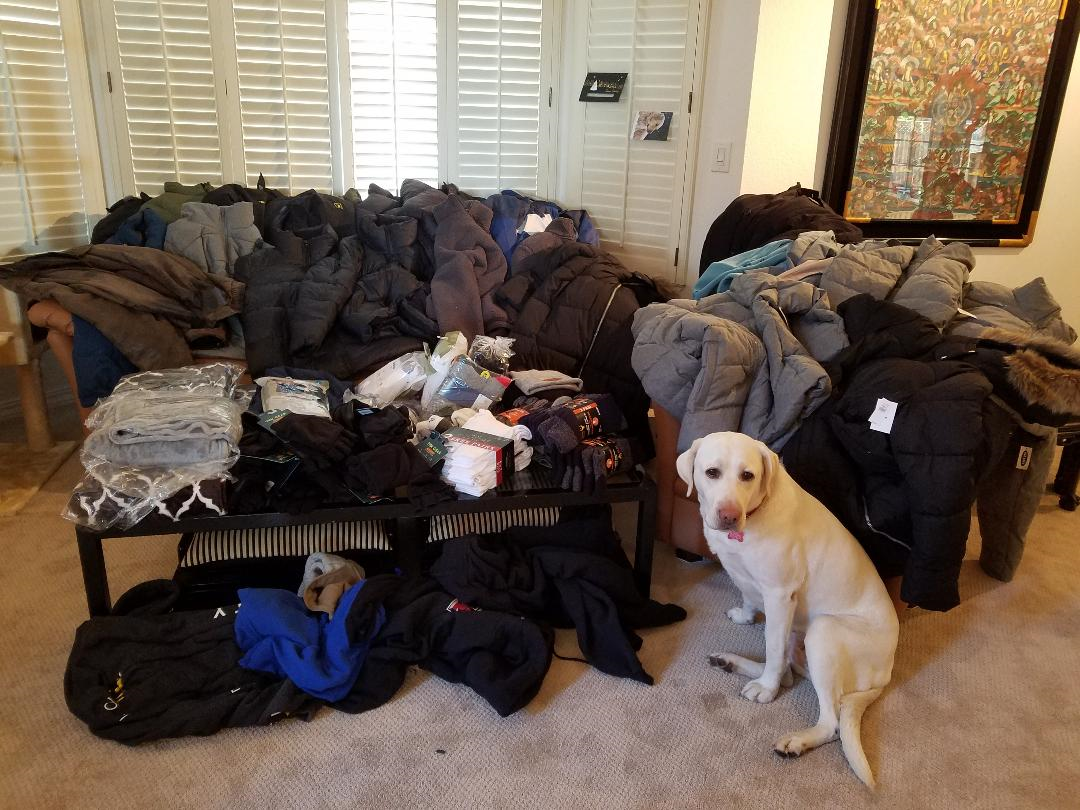
Stacy (and her dog, Bella) survey the collections and purchases made so far. Stacey has already distributed 15 coats and the contributions are still coming in. Keep them coming!
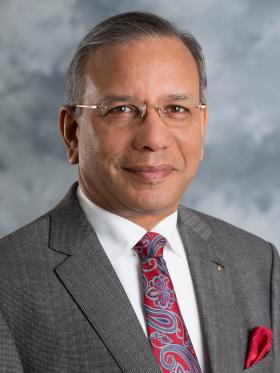
As I look back on 2020, I reflect on how our lives have changed. The global COVID-19 pandemic brought pain and loss to many of us. And for almost all of us, our daily lives, family time, and work also changed this year. But we've made it to the end of this difficult year, not on our own but by reaching out to one another, as we always do in Rotary. With each passing year, I become prouder of our organization. I will choose to remember 2020 as a year of great change and strength for us; Rotary didn't stop, despite the pandemic. We removed obstacles, found new ways to connect, and embraced new approaches to service, such as online projects and virtual fundraising. I have invited two Rotarians to share their stories about how Rotary grew stronger this year.
When the pandemic shut everything down, our emerging e-club was already providing digital service, including internationally. Fourteen U.S. women and I, members of multiple Rotary clubs, were using WhatsApp to mentor women entrepreneurs in rural Costa Rica, helping them to grow their ecotourism business, RETUS Tours [the subject of the magazine's May cover story, "Nature & Nurture"]. The project has grown, with 30 Rotarians now providing consulting and help with the RETUS website and social media. Most importantly, we continue building relationships and empowering these women to transform their own lives, and we are doing it online. I've even helped one of the women, Rosa, prepare a presentation in English for an online international conference. While our engagement with the Costa Rican women still requires some hands-on activity, the most transformative impacts haven't had to be in person. — Liza Larson, Rotary E-Club Engage and Rotary Club of Plano East, Texas
I was president of my club when COVID-19 hit, and many members didn't yet have Zoom. Only 10 of our 53 members participated in the first Zoom meeting during the pandemic. I thought that reaching out and getting guest speakers from around the world to engage our members would help. Many Rotary leaders, a Rotary Peace Fellow, and even RI President Holger Knaack visited virtually and spoke to our club. Meeting attendance improved, while we reduced running costs by cutting out meals. Some members who worked outside our city and had missed our meetings even rejoined us. Registering our online meetings on My Rotary enhanced contacts with clubs across the world, and the joint meeting addressed by Holger attracted more than 300 visitors. We also raised more funds as members and visitors contributed to our projects. To continue being flexible for all, we are now offering hybrid meetings. For me, 2020 has been the best year in Rotary as I've made many new friends. — Blessing Michael, Rotary Club of Port Harcourt North, Nigeria
These stories should give us all reasons to be optimistic about Rotary in the year ahead. We are not just surviving; we are gaining strength. We are discovering how resilient our organization truly is. We are seeing for ourselves how Rotary Opens Opportunities — even during pandemics — to grow, connect, and engage our members and the communities we serve.
From our home in Ratzeburg to yours, Susanne and I would like to bid you and your family the warmest of season's greetings. We can't wait to see the good things that 2021 will bring.
On a foggy Christmas Eve in Victorian London, the old miser sits at his desk.
Bitter and disillusioned with the world, Ebenezer Scrooge has only one interest: his bottom line. He declines his nephew's invitation to Christmas dinner, refuses to support the poor and deprived, and reluctantly grants his underpaid clerk, Bob Cratchit, time off for Christmas Day.
After he arrives home, strange things begin to happen. Jacob Marley, his deceased business partner, appears as a ghost tethered to a chain, telling Scrooge to change his self-centered ways, lest he meet the same fate.
That is the premise of A Christmas Carol, Charles Dickens' classic tale of a man's transformation from hardened recluse to generous humanitarian. To me, it offers valuable lessons for all, regardless of belief or time of year.
In one of my favorite passages, a spirit magically transports Scrooge to the Cratchit household. There, he sees his clerk from a new vantage point, observing a humble but heartfelt holiday gathering. Scrooge then understands that gifts like friendship, family, and gratitude can't be recorded into any ledger. By the end of the story, Scrooge has learned the most important lesson of all: that as long as we are still alive, it's not too late to devote ourselves to serving humankind.
The year-end holidays are upon us. It is a time of giving and sharing, but it is not limited to our loved ones. It is also for the people we have never met and will never see, for those who are not so fortunate as we and could use a helping hand. The miracle of giving that Scrooge discovered on Christmas Eve is exactly what The Rotary Foundation does 365 days a year.
Our Foundation serves simultaneously as charity and performer in the field; Rotarians are on the ground, volunteering their skills and business expertise in support of grants that are funded by you. In this way, we carry out some of Rotary's most important work, such as protecting mothers and their babies and helping communities recover from the shocks of COVID-19.
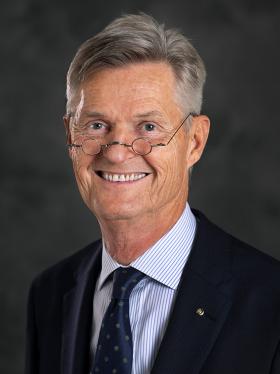
Please remember The Rotary Foundation during this season of generosity. Remember that your gifts to the Foundation amplify our work in all areas of focus. They are perpetuated, not just today but long after we are gone. And the Foundation will continue to work its miracles in service to others tomorrow as long as we keep supporting it today. On behalf of The Rotary Foundation Trustees, I thank you for sending your generous contribution before 31 December.
Giving Tuesday has turned philanthropy into an event for everyone
Participating in the online giving phenomenon makes altruism simpler
by Whet Moser
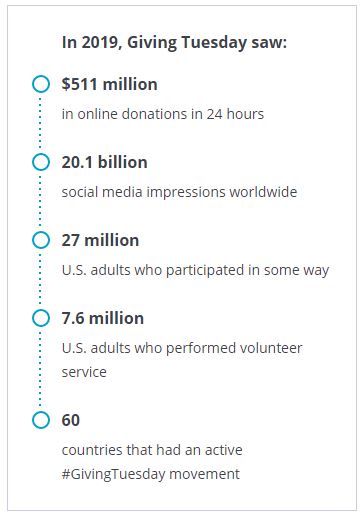
In 2019, the philanthropic event known as Giving Tuesday raised nearly $2 billion. And eight years after its inception, what began in the United States as a day focused on monetary donations has expanded across the globe and transformed to include volunteering, finding ways to show gratitude, and educating people about the value of altruism. For Rotary, as for many other nonprofit organizations, Giving Tuesday has become an important part of the philanthropic calendar.
The idea came out of the 92nd Street Y (short for the 92nd Street Young Men’s and Young Women’s Hebrew Association), a 146-year-old New York City institution similar to the YMCA that is well known for its cultural programming. The organization’s reputation helped it get 1,400 other entities on board for the first Giving Tuesday. Several months before its 2012 debut on the Tuesday after Thanksgiving in the U.S., the idea was rolled out on Mashable, a tech news website that had partnered with the 92nd Street Y on previous undertakings.
“The idea was extremely simple,” says Asha Curran, CEO of GivingTuesday, a spinoff nonprofit that organizes the event. “Black Friday, Cyber Monday, Giving Tuesday: a day to give following two days of consumption.” The organizers reasoned that a weekday would work well because people are more likely to be in front of computers and on phones, making it easier to donate in response to a reminder. And the late-in-the-year date has another advantage: Research shows that philanthropists make a higher proportion of donations in the last three months of the calendar year, whether it’s because they are focusing on tax write-offs or attuned to the arrival of the holiday season.
The event tapped into online giving culture by making the idea open to all. Giving Tuesday was shared and open-source: Beyond the event’s thousands of partners, anyone could take up the Giving Tuesday banner and carry it forward for their own organization or any group they wanted to support.
“We were thinking about the idea of co-ownership: When you build things, those things are far more powerful when you build them in coalition with other people,” Curran says. “If you came up with a concept and you gave it to the world and said, ‘Change this, do what you want with it, make sure you’re doing something good, but use it in the way that you want to. Change the name, change the logo, be creative,’ you’re going to end up with something exponentially better than if you create an idea and guard it and send lots of cease-and-desist letters.”
Rotary has embraced the concept, encouraging the use of Giving Tuesday as a fundraising opportunity for clubs and for The Rotary Foundation. Since 2017, Rotary has also used Giving Tuesday to reach out directly to prospective and current donors, and the campaign has grown each year. In 2019, Rotary raised over $550,000 from donors all over the world in response to a Giving Tuesday email campaign.
And though financial giving is central to the movement, many people have taken the idea of giving in a different direction, using the day to volunteer or otherwise focus on altruism. In 2019, for instance, elementary schools in Guam participated in #GivingTuesdayKids by introducing a kindness curriculum, in which students organized food and toy drives and visited nursing homes. In Liberia, because many couples lost their wedding pictures during the civil war, GivingTuesday leaders found donors in the United States to send wedding dresses to Liberia and worked with local photographers and salons to re-create wedding photo shoots in remote parts of the country.
Thanks to its organic, flexible nature, Giving Tuesday has spread to at least 70 countries, adapting in profound ways to different cultures. “In the United States, there’s a lot of focus on generosity as a form of civic engagement,” Curran says. “A lot of our Giving Tuesday leaders here are using it as connective tissue at a community level. In Russia, they have a strong ethic of donation, but no one talks about it. So one of the interesting things they’ve done is to run a whole campaign around people confessing to what they’ve given … and they have moved the needle on taking giving into the public square, and donations have increased. Colombia and Venezuela — two countries that are really in crisis — are some of the most fascinating examples, because they’re seeing Giving Tuesday as a way to rebuild society post-conflict. It’s nothing that we ever would have anticipated. When something like that starts happening, you realize this has the capacity to be so much more meaningful and impactful than this fun, one-day viral idea we had.”
• This story originally appeared in the November 2020 issue of Rotary magazine.


.png)

.jpg)















 The idea came out of the