Baseball season has officially ended, and fall sports are in full swing. What is YOUR favorite team sport? Team? Show your team colors (and maybe your sports kit?) this coming Thursday, Nov 17, for a fun and interactive discussion about what it means to be part of a team. Zoomers: grab your cup of coffee and plan to participate!
For starters:
“See” why masters-level artistic swimming is the ultimate team sport (at least according to this Rotarian)…
Have you ever participated in a team sport? Coached?
How has participation on a sports team (or any team if you can't relate to sports) helped shaped you as an individual?
Why are so many people anxiously awaiting the next (final?) season of Ted Lasso?
What do team sports and Rotary have in common?
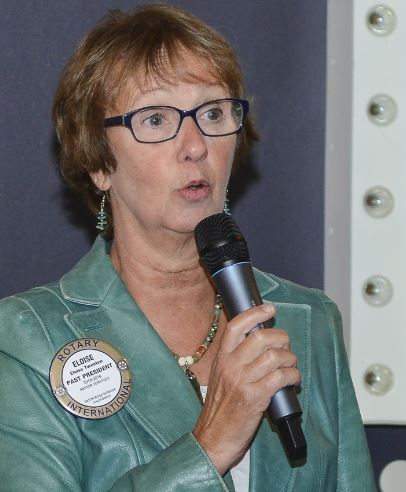
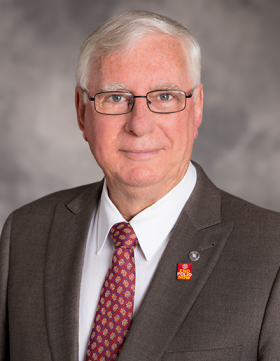
Eloise Tweeten has been a Sunrise Rotarian since 2006 and has competed in masters-level synchronized swimming (now known as artistic swimming) since 2004. Her “aging” team received the coveted high point trophy at the US Masters National Artistic Swimming competition in Waterville, Maine in October.
A Female Officer's Perspective on Military Service and the First Gulf War by Ann Gospe
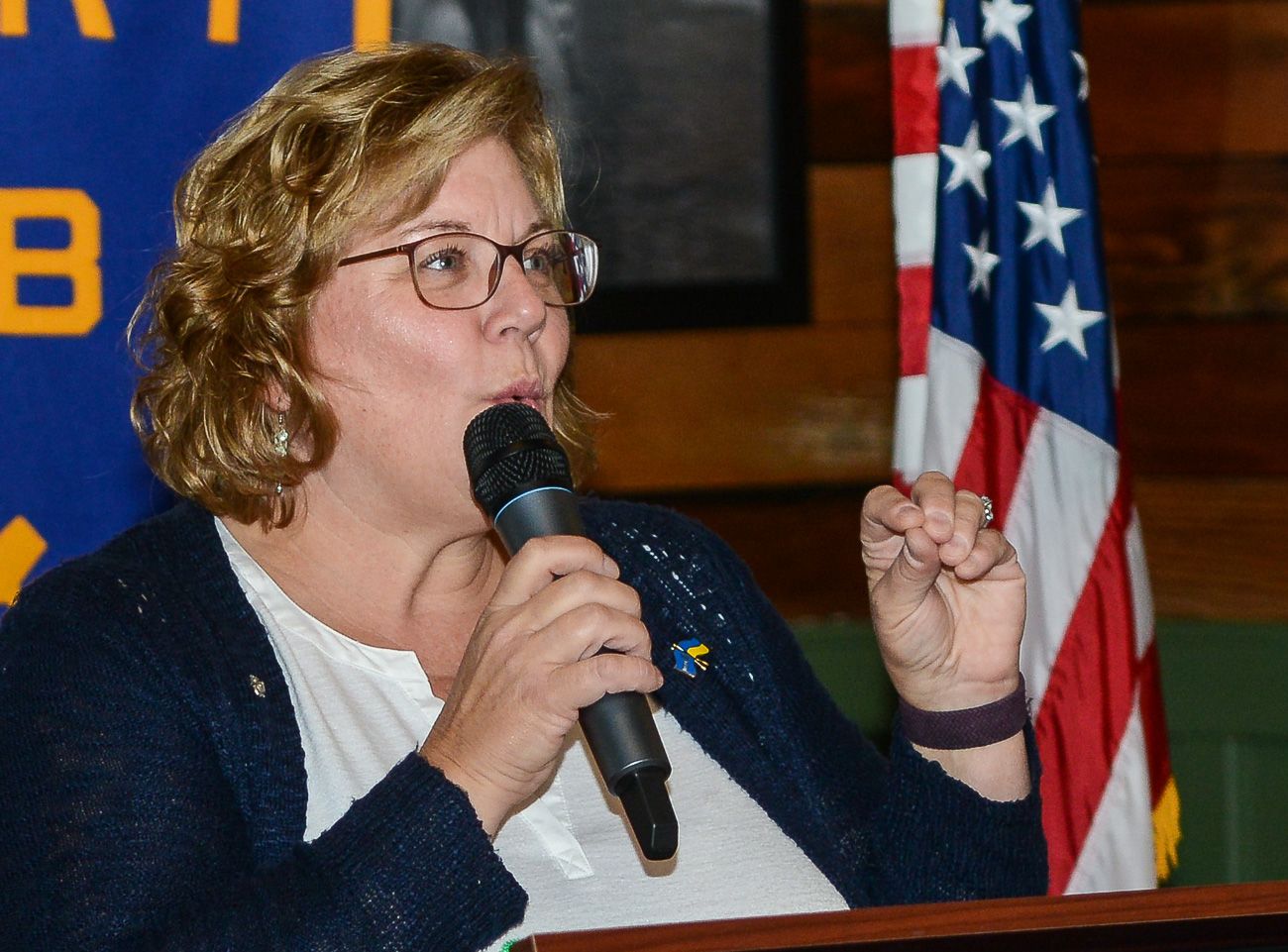
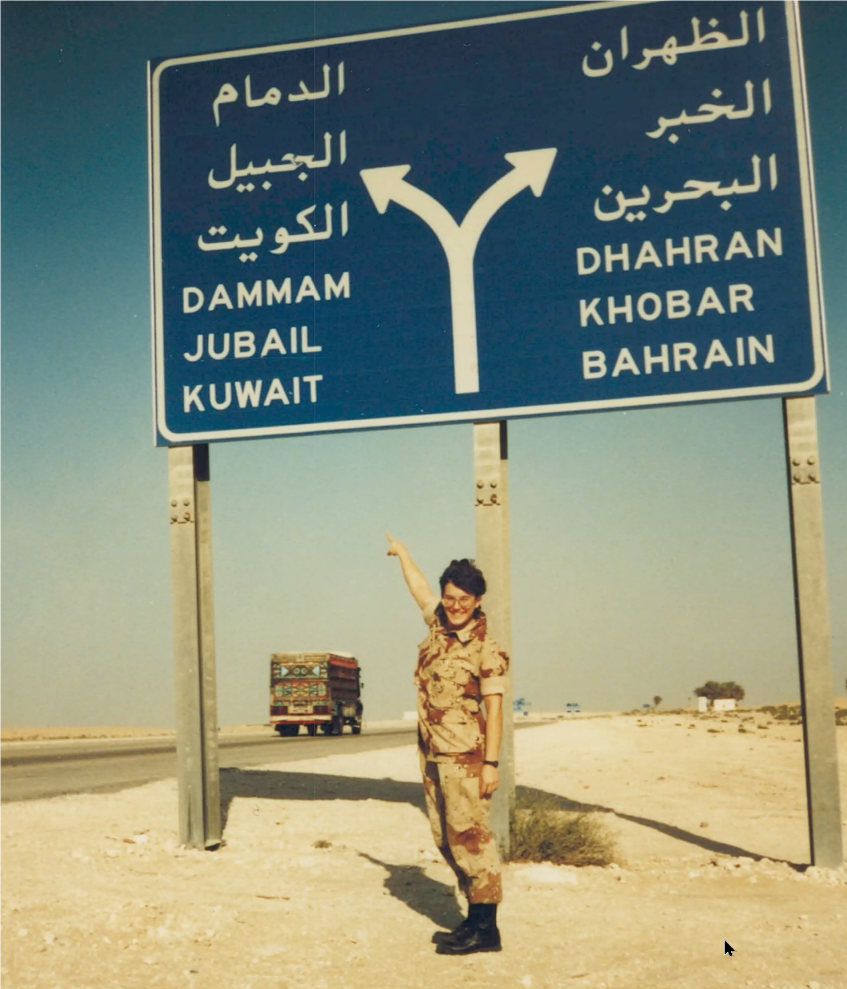
Our Speaker for our Thursday, November 10, 2022, Veteran’s Day program was Ann Gospe, who served as an officer in the Marine Corp for 11 years, including a deployment to the Middle East in the First Gulf War from 1990-1991 as an intelligence officer. Ann’s presentation focused on her perspective as a female officer in the USMC. Ann is currently President-Elect of the downtown Santa Rosa club and has a long history of focusing on local and international service projects and hopes to raise the profile of Rotary in our community. Ann is a native of Sonoma County.
As a woman in the USMC Ann experienced sexism, discrimination, and outright hostility. She ignored much of that when she was in the service, but these issues have kept coming back to her over the years. Nevertheless, she thinks joining the service was the best decision she ever made. She has tremendous pride in her achievement, and in the Corp in general, despite the drawbacks. Ann attended the USMC’s Officer Candidate School in 1986. The school is hard to get into and 60% of the candidates do not make it through. Ann, however, was determined to graduate. She told us that 2 weeks before graduation she tripped on something during a night hike and suffered a compound hand fracture. She went into the hospital and when she returned to Quantico her bags had been packed because everyone expected her not to finish. She told herself “I AM NOT GOING TO QUIT.” She had a perfect score in the final fitness tests!
When Ann joined the USMC in 1987, 3.2% of active duties officers were female. By 2022, 86% of active duty officers were female. She felt unwelcome after graduation from Officer Training School and entering Cryptologic school. She experienced outright hostility at Camp Lejeune. She recalls that her commander promoted her to Company Commander for the sole purpose of watching her fail. At one point her company was selected to receive the first ever variation of a light armored vehicle for intelligence operations, without receiving any training or information about the vehicles. Fortunately, she had a great team and they all learned how to operate the vehicle together and performed well (other than the time she drove it into a mud pit while the commanding officer was in the vehicle – earning her the nickname “Capt. Mud Pit”).
One of her most disheartening experiences was the call-up to Desert Storm. Although her company was well trained and organized, she was not allowed to take the company to Middle East because at the time women were not allowed in combat. She was ultimately sent to Saudi Arabia where she served in an ancillary position but was allowed a 3-day trip to see her old unit in a forward position. When she got back to Saudi Arabia her boss allowed her to transfer a more forward position. The conditions in the desert were horrible, but she loved it!
There have been changes to women’s roles in the Marine Corp. In 1987 they could not engage in combat operations. By 2020, there were 23 women in combat positions. In fact, in 2022, Colonel Nicole Mann launched the International Space Station as commander of NASA’s SpaceX Crew-5 mission!
Many thanks to you, Ann, for the presentation and for your service in the armed forces! What an amazing and frightening experience!
Click HERE to see Ann's presentation. It will be available for a limited time.
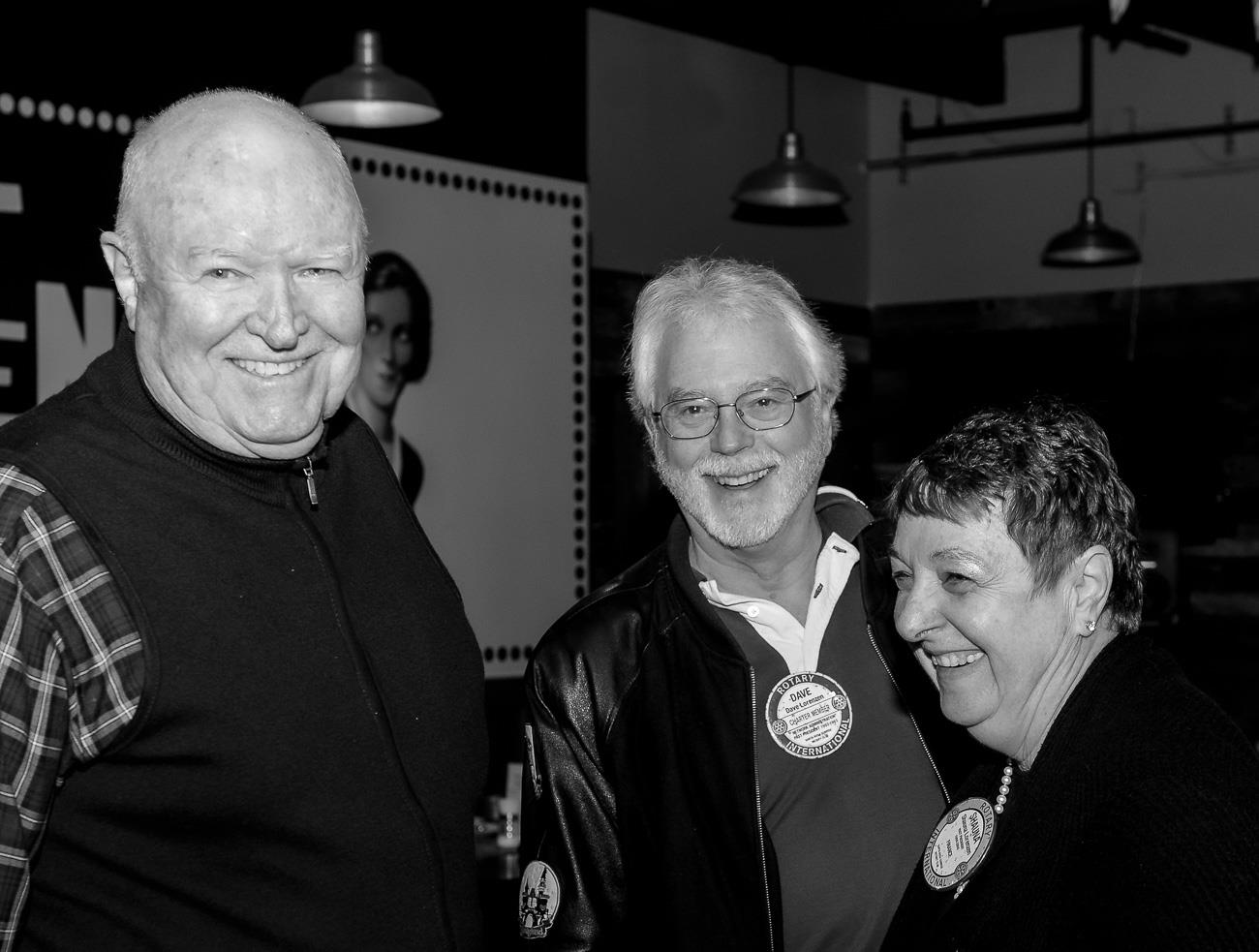
On a regular basis, our resident photo pro Warren Smith, submits pictures of what is going on at the weekly meetings. You can always find the most recent pictures at the websites photo journal called "Meeting Sighting" Please note that all the meeting photos for the entire Rotary year are at this location with the most recent on the last page.
Thanks for all the great pictures Warren!Link to Meeting Sightings. The most recent are on the last page!
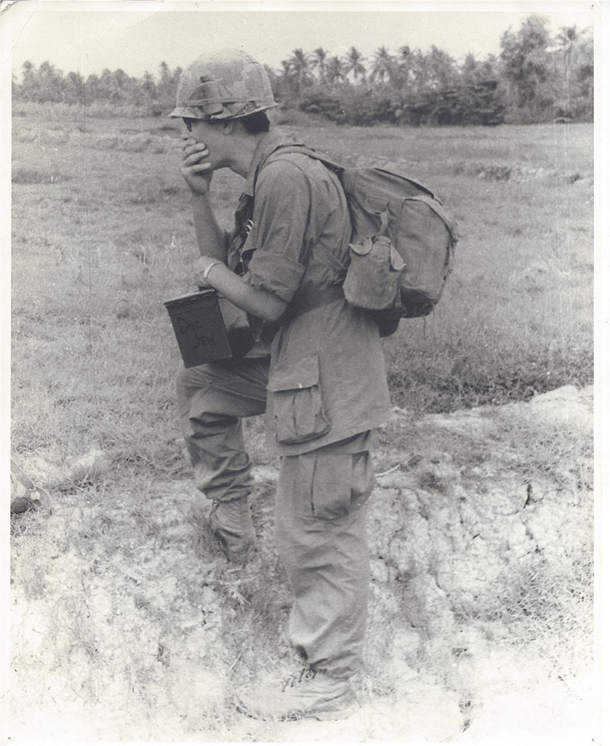
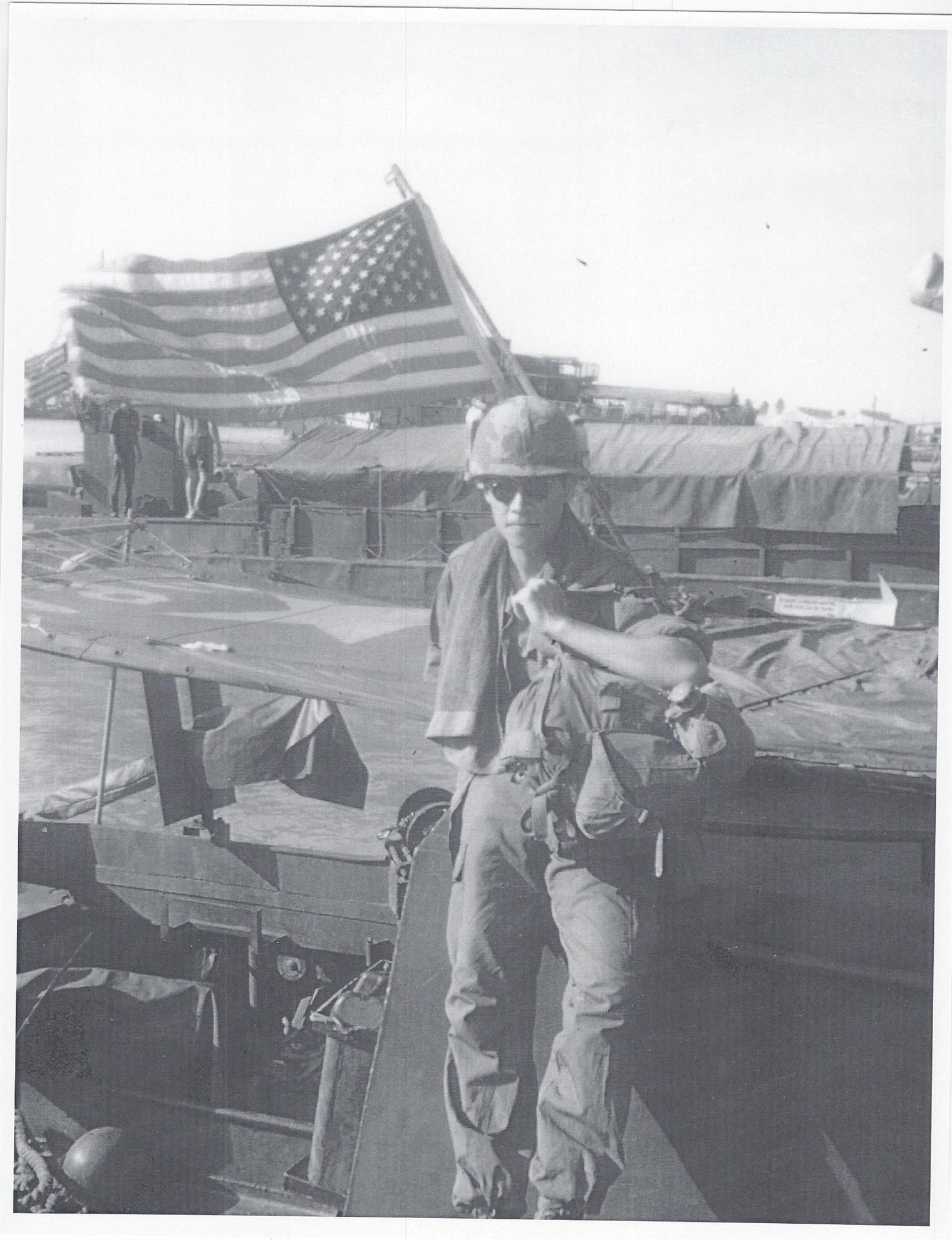
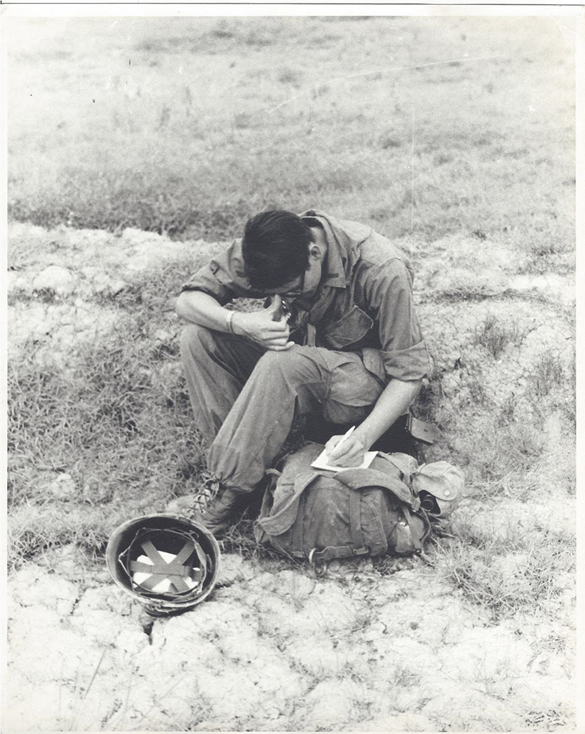
Ezbon Jen served in the U.S. Army as a Medic in Vietnam for 13.5 months between 1968 and 1970. With "1A0" status he served in combat areas without having to carry a weapon.
Drafted in 1968 Ezbon's Teaching skills were recognized by superiors and plans were made to have him teach Nursing recruits at Fort Sam Houston in Texas. As fate would have it, Ezbon's education career would have to wait until discharge as his orders came through for deployment to Vietnam.
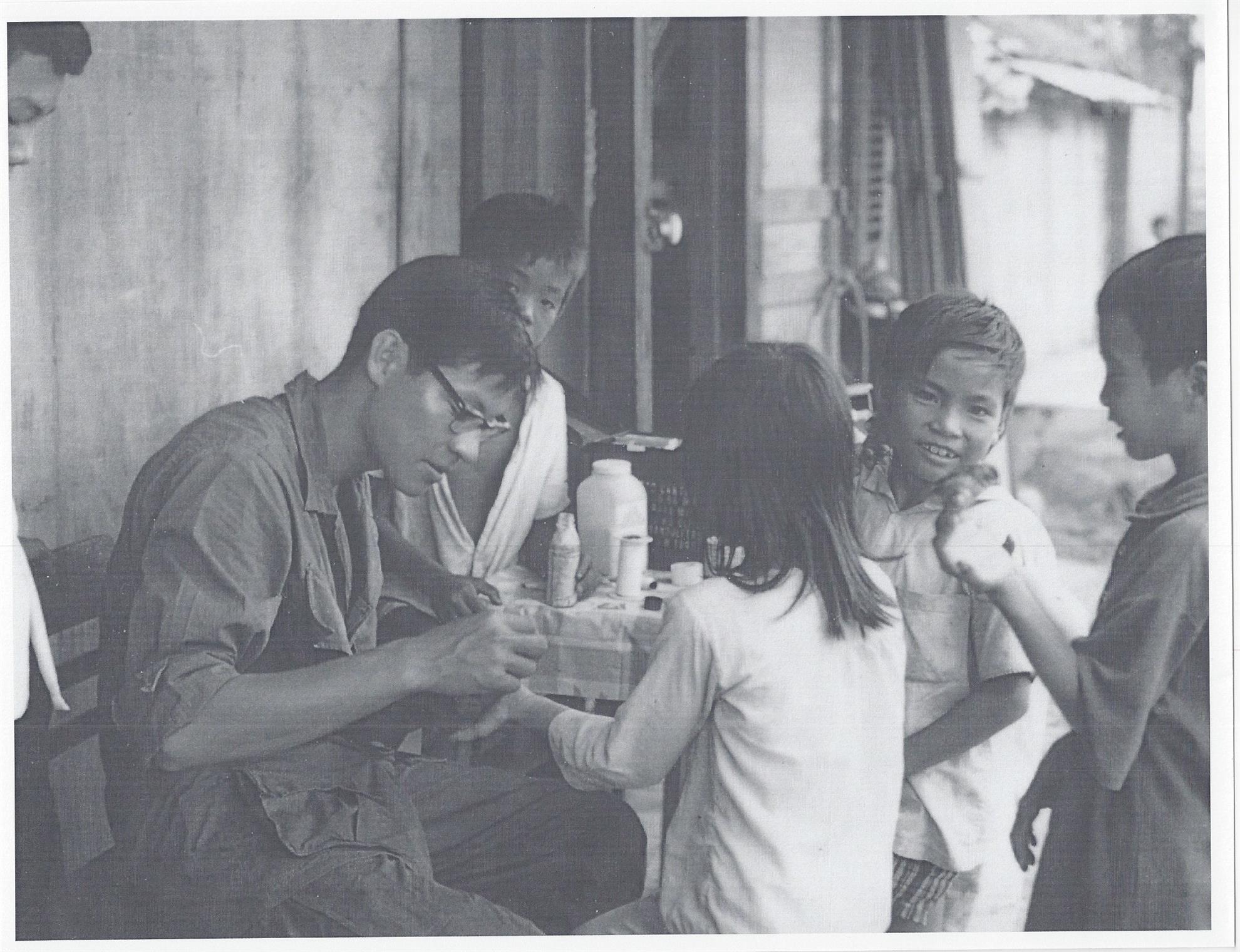
While serving in Vietnam Ezbon's call to serve resonated well in the role of Medic. Treating his brothers (there were no U.S. women combatants) and with his commanders permission, Vietnamese civilians on occasion, had a career changing detour effect: Following discharge, Ezbon switched from his pre-draft PhD path in Oceanography to one in Public Health.
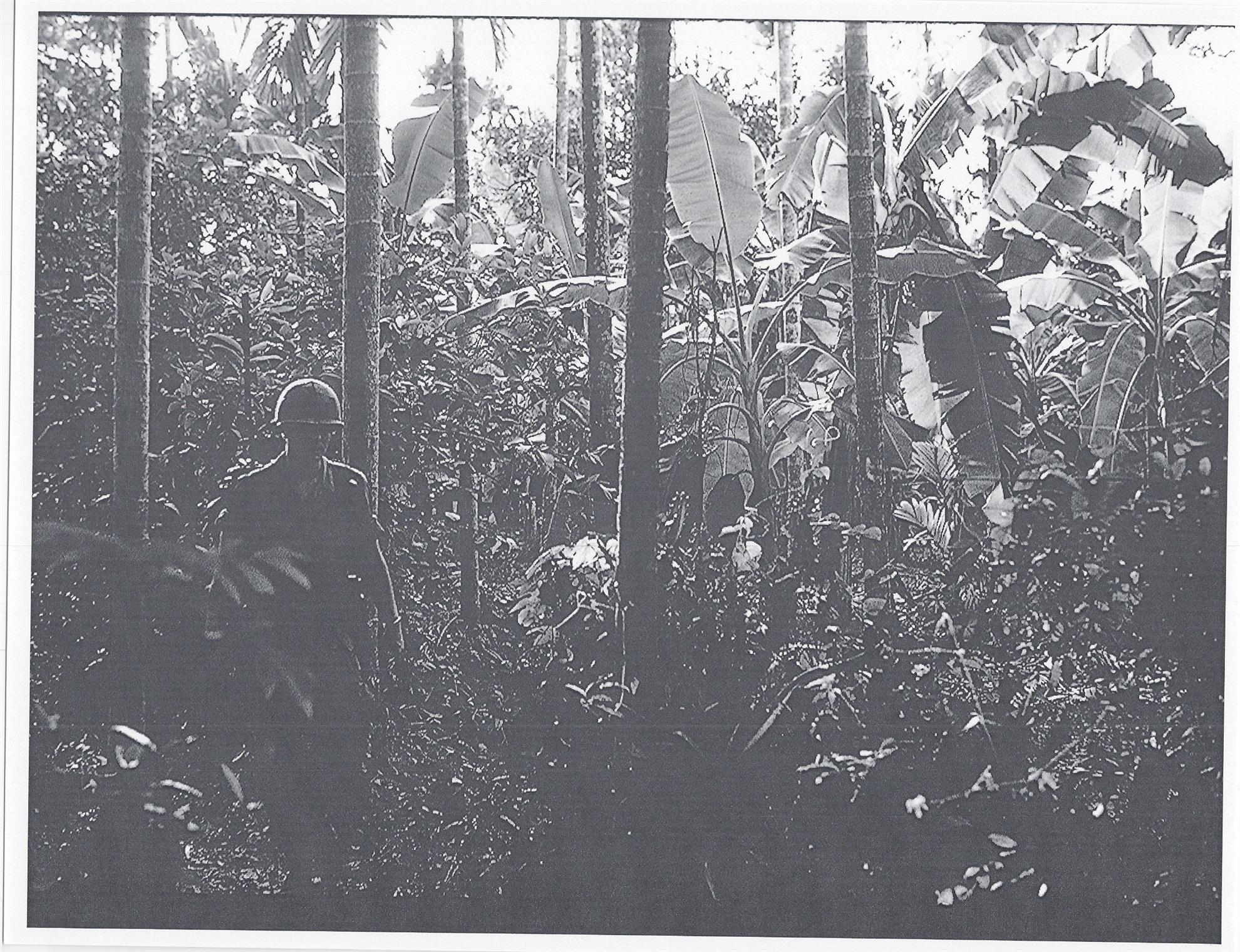
In the thick of it. Tangled jungle growth created much cover for booby traps and ambushes. The absence of any children in villages also was a red flag warning that the enemy was near.
Ezbon found opportunity as did other enlistees including Army Nurses to treat civilians He knew his first priority were his brothers in arms, and kept his 65 pound backpack pharmacy prepared for combat casualties,
The heat was relentless.
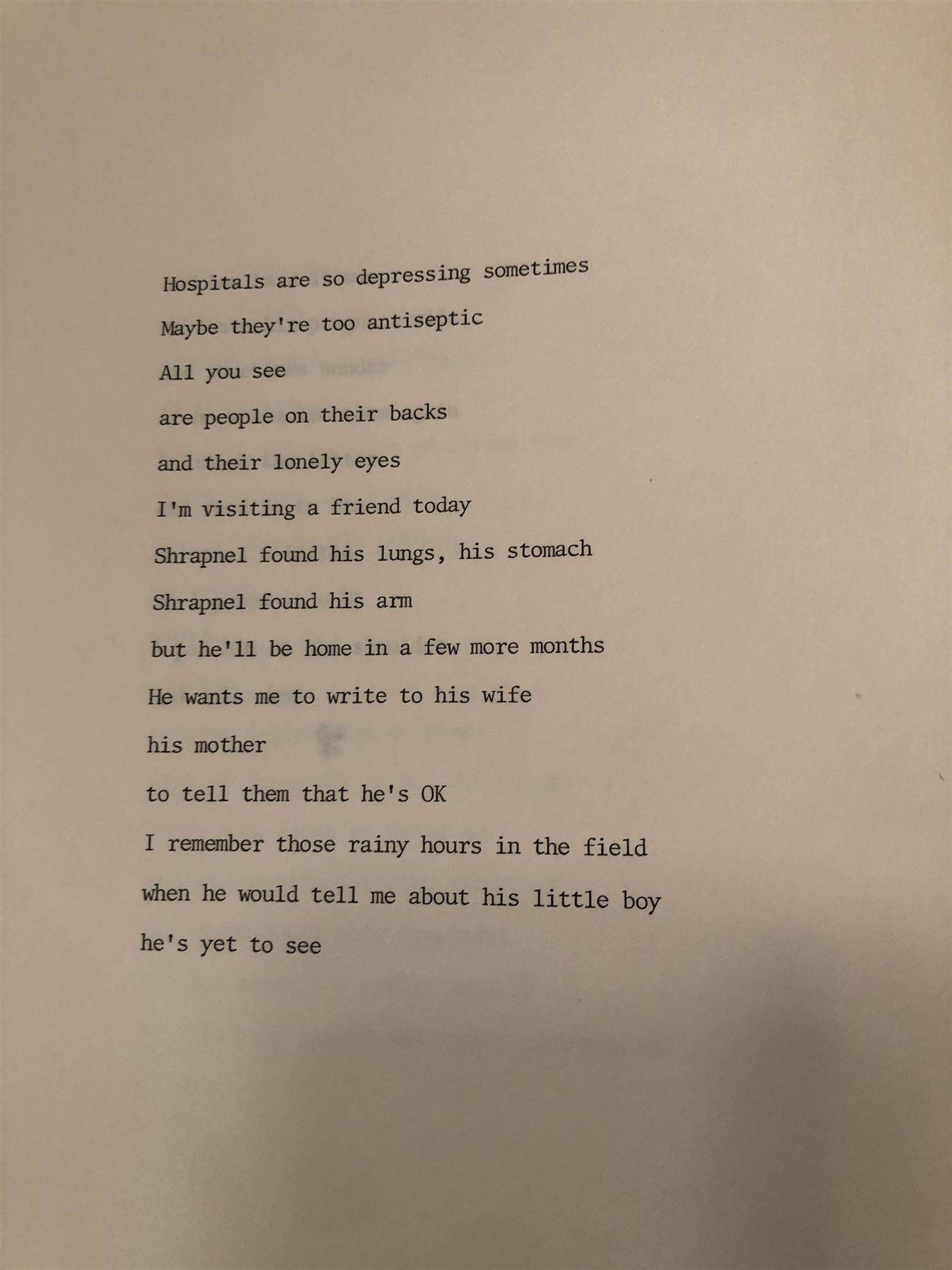
Reflecting and recording the multitude of new memories, Ezbon describes in his journal has preserved much of those 13.5 intense and life changing months. Inserted below is the account read at our Veterans Day recognitions last week. Peter Banks, MJ Girard, Steve Olsen, Del Raby, ,John Stark, Peter Treleaven, and my apology to the Coast Guardsman whose name eludes me.
The days are growing shorter and temperatures outside are dropping. There certainly is a chill in the air. It is time to turn the heater on, put another blanket on the bed, and make a pot of minestrone soup. We are the lucky ones who get to do this. Our homeless neighbors however, are living in the elements. They are hungry and cold and in need of our assistance. One way we as Rotarians can help is by donating warm clothing.
The Mike Kelly Warm Clothing Drive. Mike Kelly was a past president and member of our club who passed away in recent years. Every winter he collected warm coats for the homeless. In his honor, let's keep this tradition alive and expand upon this idea.
Let's collect quality used and new warm clothing for the homeless. Waterproof coats and socks are the two items most needed. However, sweaters, sweat suits, hats, gloves, long sleeve shirts, ponchos, and sleeping bags are important. The clothing will be distributed by me to the homeless population at the Unitarian Universalist Glaser Center in downtown Santa Rosa and West County Services in Guerneville with our partner Tim Miller of Guerneville club.
All you have to do is clean out a closet or purchase some thick socks or a warm coat next time you go shopping.
Of course if you prefer to send cash, I will be more than willing to do the shopping for you. And.....Don't forget to pass this email on to your friends and neighbors. Get the word out. I have an extra bedroom that I intend to fill to the brim!!!
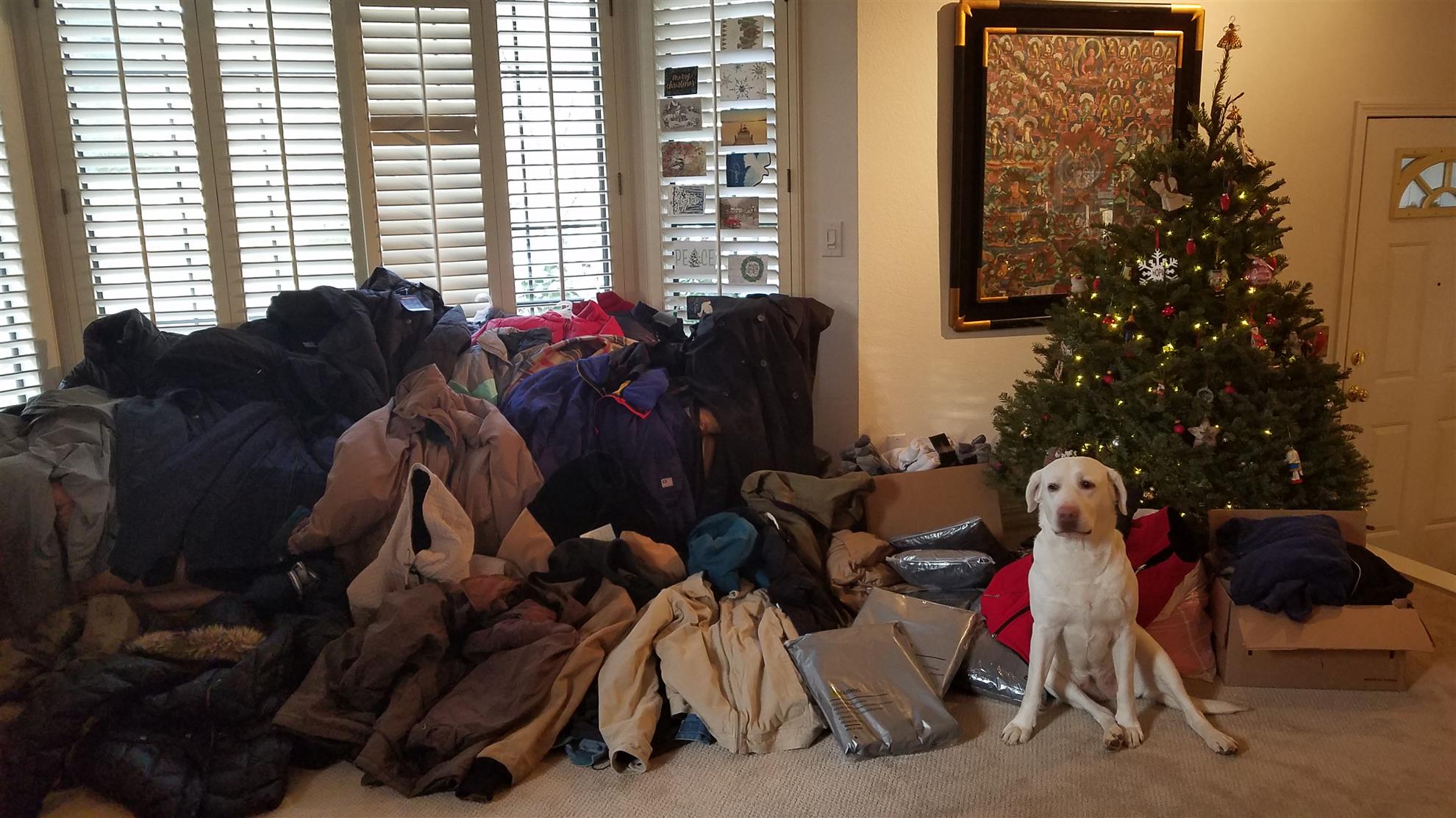
December 20th is the immediate deadline. However, this drive will continue throughout the cold Winter months. You can drop off items at my house and leave them at the front door in the Larkfield/Wikiup area. I am also willing to pick up items at your house, just give me a call. Last year, we were able to collect and distribute well over 200 clothing items. Check out a picture from last year!!!
I thank you in advance for your support and caring. Peace be with you and your loved ones this holiday season.
Being asked to Imagine Rotary can seem like a big, heady exercise, but the most important element of it is something quite small, even personal.
Not too long ago, Rotary members were expected to perform our acts of service quietly. I understood and appreciated the thought behind that — humility is a wonderful trait, and we should continue to nurture it in other ways.
But keeping Rotary to ourselves has a cost. and by sharing our Rotary moments, we are being generous with others and giving them an opportunity to understand the impact of Rotary.
It brings to mind that wonderful aphorism: “People will forget what you said. People will forget what you did. But people will never forget how you made them feel.”
So how do we make people feel Rotary? The best way is to share our Rotary moments. We have all had them — when the ordinary collides with intention to create something extraordinary.
Some people have those Rotary moments the first time they go to a meeting. For others, it can take years, before seeing the joy in the eyes of someone we serve. Or perhaps in hearing from another member something that hit close to home.
As Nick and I share this journey, we are amazed at the work you are performing and the lives that are transforming. Throughout the year, I’m going to share with you the sights and the stories that made those tours meaningful for us.
I hope you can do the same in your corner of Rotary. It can be something you share in meetings or on social media. For the most savvy and ambitious, it could be an event you publicize with local media. Even sharing your stories with friends has impact.
We need ambassadors for Rotary’s message and our dreams for a better world. The best ambassadors are you. The more you share stories — and share them from the heart — the more you encourage others to partner with us, to join us, and to stay.
To give you just one small example, in the months ahead, I will be turning over this column to Rotary members who will share their personal stories as they relate to diversity, equity, and inclusion in our organization. It’s important that we hear these stories directly from the people who experienced them as a way of feeling the importance of DEI for the future of Rotary.
In everything we do, what people feel about Rotary will shape our future. I can only imagine what you will inspire through the stories you’ll tell.
Many of you will recall my challenge to Rotary clubs when I was RI president in 2017-18: to plant one tree per member to help the environment. Thanks to you, we estimate over 4 million trees went into the ground in Rotary’s name — quite a forest indeed.
This month, as we celebrate The Rotary Foundation, let’s remember that each Foundation project is much like planting a tree. With each sapling of hope, health, and peace we plant through the Foundation, we make an investment in the future that will one day grow into something even greater.
Such a tree was planted by Rotary in Sri Lanka, where more than 2,000 children born annually with a congenital heart defect can now get a corrective surgery that allows them to survive to adulthood. Local Rotarians identified the need to make the surgery more available and effective, and rallied 17 Rotary districts around the world to contribute District Designated Funds. After the Foundation matched those funds, a total global grant of $365,000 was used to create the first human heart-valve tissue bank in Sri Lanka, with the government providing the building, staffing, and supplies to ensure its sustainability.
Visiting this life-saving facility in 2017 was an unforgettable experience for me. But I have seen countless other great “trees” planted across our seven areas of focus. We planted PolioPlus in 1985 and it has grown into one of the greatest public health initiatives in history, helping reduce cases of wild poliovirus by 99.9 percent. Seven Rotary Peace Centers around the world have also taken root and are now bearing fruit as scores of peacebuilders and community leaders go forth with the skills to make the world more safe and secure.
Charity Navigator, an independent agency, has given The Rotary Foundation its highest ranking for more than a decade. Why? Our overhead expense level is much lower than most similar organizations — 91 percent of gifts to the Foundation go to programs and operations. Not only are we efficient stewards, but Rotary’s requirement of a community-needs assessment for global grants helps ensure the sustainability of our projects over the long term. And the Foundation is a charity you can trust because it is run by your fellow Rotarians.
However, only about 38 percent of members actively support our own organization’s great charity. We can and should do better. Just as I challenged you to plant trees as president, as Foundation trustee chair I would like to challenge each club to make a giving plan for our Rotary Foundation this year.
Imagine our impact — Rotary’s great forest of hope and peace that will flourish — and please give today.
Virtual visit: Uganda club paying it forward with microloans
By Evelyn Lirri
Once a group of enterprising women in the far northwest of Uganda had lifted their families out of poverty using microloans, they quickly turned their attention to helping others. Their first step? They formed a Rotary club.
The Rotary Club of Yumbe was chartered in April. But even before that, while the club had provisional status, its members were hard at work. Yumbe, a town of about 50,000 people with a busy main street lined with workshops, food stalls, and markets, is located between a branch of the Nile and the borders with the Democratic Republic of Congo and South Sudan. The surrounding rural region faces challenges ranging from malaria to unsafe drinking water. Adding to the strains, the nearby Bidi refugee settlement is home to nearly a quarter of a million people — most of them women and children — who fled civil war in South Sudan. And household incomes in the region amount to a little over a dollar a day.
The club, which has 24 members, put out a call by radio for proposals for its first community project and decided to help in Achiba, a nearby village of about 600 people with homes made of mud walls and thatched roofs, surrounded by vegetable gardens. Since 2021, club members have undertaken ambitious service projects there as a pilot for their community intervention plans.
Rukia Driciru, the club’s charter president, who runs a boutique shop in Yumbe, says the group’s aim is to empower women and enable them to benefit economically. To achieve that, members are trying to lower the burden involved in accessing key services, including safe drinking water, to reduce waterborne disease, improve hygiene and sanitation, and fight malaria.
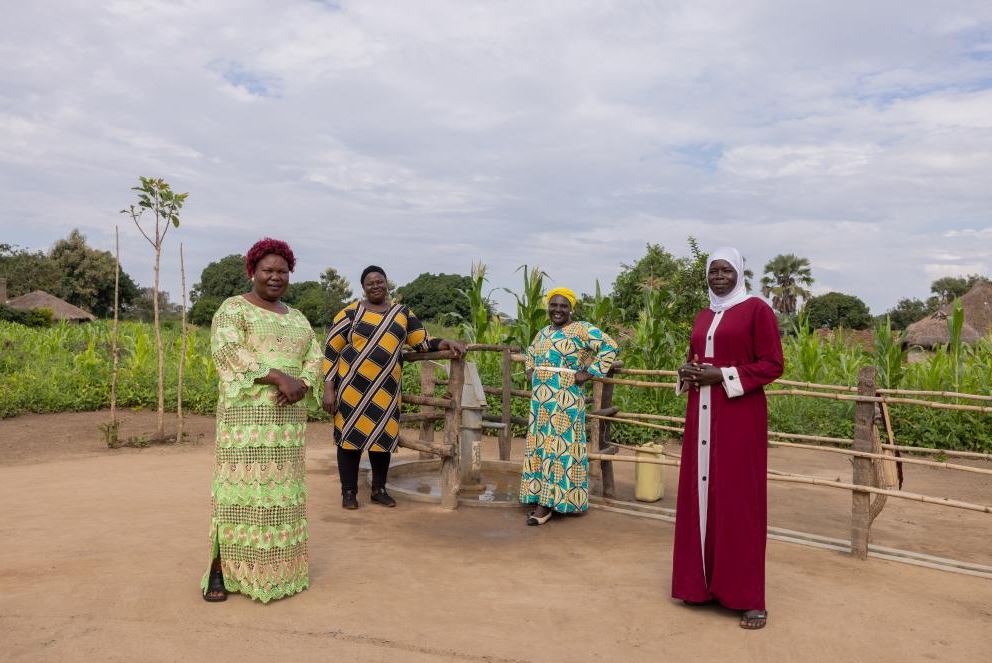
Members of the Rotary Club of Yumbe (from left): Emily Candiru, Rukia Driciru, Christine Oyajiru, and Sumbua Zabibu at a handwashing station their club installed.
Photography by Esther Ruth Mbabazi
The club is distinctive in several ways. For one, all members are women, including some who until recently were struggling financially themselves. It draws its membership from an existing network of women who belong to local village savings and loan association groups. The collectives usually include 10-30 people who pool savings and take out microloans to invest in income-generating enterprises. The interest is invested back into the community. The savings associations are supported by TCP Global, a program with close ties to the Peace Corps and Rotary communities. TCP Global supplies funding to increase the loan pools. In Yumbe, the women used their initial loans to stabilize their businesses and ensure their children had enough to eat and could go to school. Now in a position to help others, that’s exactly what they’re doing.
“The club’s membership is made up of women of all ages from the grassroots level, mostly from the lower economic standing,” Driciru says. “We have farmers, others run retail and wholesale shops, and others are tailors. As members of the savings group, we wanted to contribute something impactful to our community, and the best way we would do it is through Rotary.”
In one recent project, the club bought and distributed systems that turn 5-gallon buckets into water filters for households in Achiba. “The women were so excited when they drank water from the buckets for the first time. To them, it was a dream come true,” Driciru says.
After a demonstration, 28 women who are leaders in the community were trained to install the buckets and keep them clean. “With the buckets, the women can treat the water instead of boiling it, and it kills more than 99.9 percent of the germs,” Driciru says.
Annual membership dues, which fund the club’s activities, are collected from interest on loans from the savings groups. To make membership more affordable, the Rotary Club of Topeka, Kansas, covers the Yumbe club’s Rotary International fee, according to Chris Roesel of the Rotary E-Club of WASH, D9980, a group focused on water, sanitation, and hygiene. Roesel helped the Yumbe club to become chartered. The club is also sponsored by the Rotary Club of Arua, a larger community in northern Uganda, whose members attend the Yumbe club’s meetings virtually.
For its efforts in Achiba, the club teamed with two nongovernmental organizations, Roesel’s P2P Inc., which works on disease prevention, and a local operation called Care Community Education Centre that empowers rural women and children. Through those partnerships, the work in Achiba is paying off. The village was for a long time served by just one water source, a borehole that was not centrally located, meaning some people had to walk more than an hour roundtrip to collect water. About 87 percent of residents reported accessing water from unprotected sources, according to a community baseline survey, conducted in August 2021 before the Yumbe club started its work there. With the help of the club and its partners, a second borehole was made available, connecting the entire village to protected water.
The club constructed more than 40 latrines and installed tippy taps, simple hands-free hand washing stations made with a large jug and operated by a foot pedal. Access to clean water and sanitation has dramatically reduced cases of waterborne ailments such as diarrhea, a problem that affected about half of children under age 5 in August 2021 but just 5 percent of children about a year later, according to a follow-up community survey.
The club has tested for malaria and administered antimalarial treatment to village residents by setting up and enlisting the help of a Rotary Community Corps, a group of non-Rotarians who support Rotary club projects. RCC team leader Innocent Buran Ajagà says the district health office trained Rotarians and members of Uganda’s volunteer Village Health Teams to carry out rapid malaria diagnostic tests. “Since we received medicines for malaria treatment, the number of people referred to hospital for malaria has reduced from about two dozen to two or three a week,” says Salila Pirio, a Village Health Team worker.
With access to basic services closer to the community, Driciru says women can engage in other income-earning activities. “In the coming years, we want to see a community of economically empowered women who are able to invest in business and purchase their own land,” she says.
This story originally appeared in the November 2022 issue of Rotary magazine.
Rotary Club of Santa Rosa Sunrise - Founded June 30, 1986


.png)






.png)