Holiday Bingo, winter backgrounds, wild headgear "Zoom" onscreen at the Rotary Holiday Party - A jolly good time had by all!
Our photographer was so blown away by the glitter and glam in each Zoom square that he could not tear himself away from the Rotary Christmas party scene to take photos. However, we all remember the stalwart Tin Soldier, the lady with green Christmas-tree glasses, all the wild ties and incredible hats, furry faces, with wintery wonderlands and wrapped presents in the backgrounds -- blazing all across our Rotary Zoom squares. And, in small groups we learned a lot about each other while playing Zoom Bingo. Smiles and raised glasses assured that fun was had by all. Thank you Liz, Mary and party committee.
The next two weeks will be dark for Sunrise Rotary. Our next meeting will be January 7th and we will be kicking off 2021 in a BIG way. Save the Date & Time- we will be meeting from 12:00 to 1:30 by Zoom and we are hosting a plethora (don’t you love saying that word?) of Rotarians from at least six clubs plus non-Rotarians guests. I hope everyone will embrace this multi-club meeting when we will have one of the best speakers of the year, Fran Ulmer. Ms. Ulmer is currently Global Chair of The Nature Conservancy, an expert on the impact of climate change on the Artic and past Lt. Governor of Alaska, Mayor of Juneau and Chancellor of the University of Alaska. She will speak on how climate change in the Arctic will affect everyone, not just those up north. There will be time for Q&A as well as some talk between clubs on what everyone is involved in. I would urge you to invite prospective Rotarians who would benefit from seeing what Rotary is about as well as anyone who is interested in the most important environmental issue of our lifetime.
Also, don’t forget to make a contribution to the Sunrise Rotary Foundation Service Fund before December 31st and be forever a Founder! The Service Fund is structured similar to an endowment and contributions generate income to fund our projects in perpetuity- literally, “the gift that keeps on giving.” Let Marty Behr or I know if you are interested in helping to grow the Service Fund with a contribution.
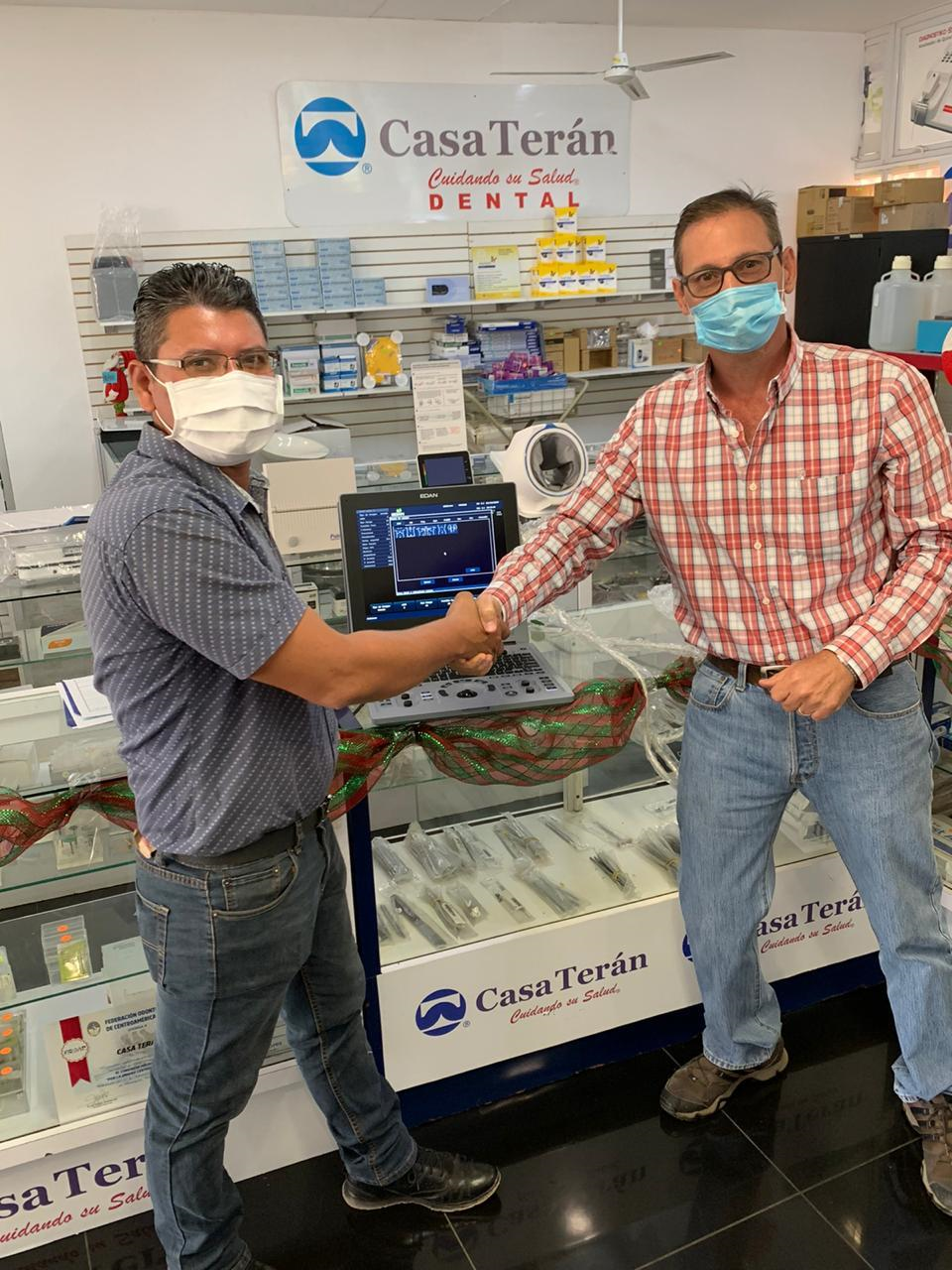
The portable ultrasound will be the first of its kind in the Sabalos region of 40,000 people. This was funded directly by Sunrise Rotary and part of our club’s dream for a surgery facility and advanced diagnostics. In the picture are Rafael (our boots on the ground for all Nicaragua work) and the doctor in charge of the Sabalos Health Center which is adjacent to our Surgery Center, Dr. Melvin Montenegro. The doctor is receiving training at the company headquarters in Managua on the use of the ultrasound.
Good nutrition and health care before a child's second birthday are vital to their future
Rotary clubs partner with the Maya Health Alliance to help 140 Guatemalan mothers and children avoid malnutrition
by Annemarie Mannion
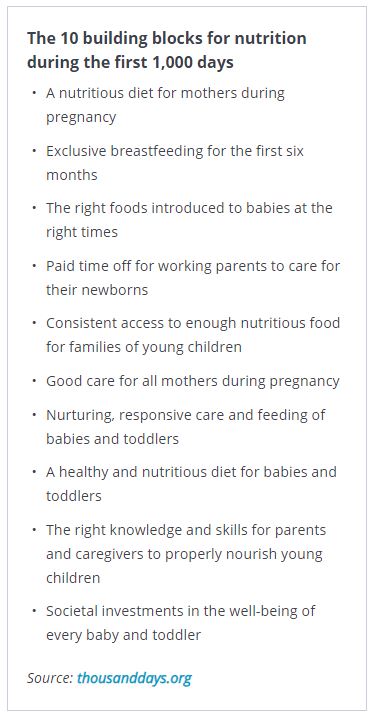
Most new parents mark their baby’s progress in a series of milestones: first smile, first word, first steps. But pediatricians are focused on a milestone that might be less familiar: the first 1,000 days.
The phrase is shorthand for the period between conception and a child’s second birthday, a critical time frame when nutrition, or lack thereof, can have lifelong consequences. Research in child development has shown that when mothers and infants are poorly nourished during this stage, the adverse impact on children’s physical and mental development can have ripple effects throughout their lives. And much of that damage can never be undone, even with later interventions.
In 2010, with the support of the governments of the United States and Ireland, the Bill & Melinda Gates Foundation, and other organizations, a nonprofit called 1,000 Days was founded with the goal of making child nutrition and health a funding and policy priority around the world. Roger Thurow, a former reporter for the Wall Street Journal, also examined this concept in his 2016 book, The First Thousand Days. A senior fellow on global food and agriculture at the Chicago Council on Global Affairs, Thurow says stunting is a complex problem that requires multipronged solutions. Even when food is plentiful, he says, poor sanitation or a lack of clean water can cause diarrhea or other illnesses that prevent a child from retaining nutrients.
In one mountainous, rural area of Guatemala, where staple crops (primarily corn) don’t provide sufficient nutrients, hunger and malnutrition are common. Around 1 million Guatemalan children under age five experience stunted development in their brains and bodies. Children are considered stunted when their height for their age is more than two standard deviations below the World Health Organization’s Child Growth Standards median, but the problem goes beyond simply being small for their age. “They are slower to walk, talk, and read,” says Anne Kraemer Diaz, the executive director of Wuqu’ Kawoq, also known as the Maya Health Alliance. “Stunting impacts their lifelong learning possibilities. It makes them prone to type 2 diabetes and to hypertension. They are looking at a lifetime of poverty and major impediments.”
In addition to persistent poverty, the effects include higher health care costs and weaker economies, according to Diaz. In 2010, the Maya Health Alliance started working specifically to help mothers and children avoid malnutrition.
The alliance sends health workers to the homes of more than 750 families — to interview them, measure and weigh their babies, and provide food, such as eggs and beans, deworming medication, education about healthy ways of living, and micronutrient packets.
“The impact of malnutrition on brain development is crucial in those first two years of a child’s life. That’s when massive brain development occurs,” says Joanne Rosener, a member of the Rotary Club of Rochester Risers in Minnesota, which is working with the Maya Health Alliance on an ambitious, long-term global grant project to improve nutrition for 140 Guatemalan families. More than a dozen Rotary clubs are involved.
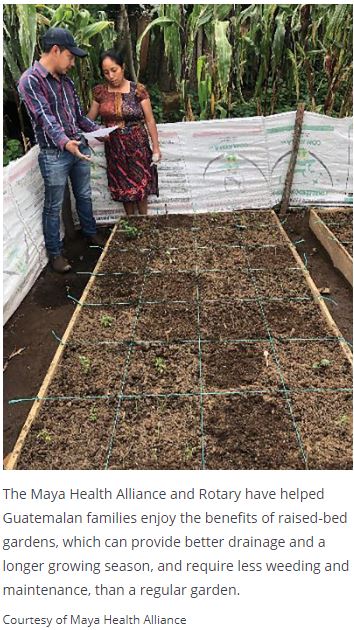
Steps toward improving nutrition can be as simple as encouraging people to plant gardens. The clubs have provided funding for raised-bed gardens that supply families with a range of healthful foods that they otherwise do not have access to.
Diaz describes the region as a food desert: “Even though there is food all around them, it is all one crop.” That crop is corn, which is a staple of the traditional diet but which alone does not provide enough of the nutrients a child needs to thrive.
The Maya Health Alliance works with the families to choose what they will plant and to help them build the gardens and learn to grow the crops. Health workers also teach them about sustainable practices such as seed saving and intercropping, a practice that involves growing different crops in close proximity to each other to produce a greater yield.
The Rotary clubs have covered the cost of materials and supplies for the gardens, the purchase and maintenance of a truck and a laptop computer, and the services of an agronomist and community health workers.
The gardens, which are located at the families’ homes, are designed to flourish with as little labor and expense as possible. “They are raised gardens, so they need less water and they aren’t so prone to weeds,” says Rosener, whose club connected with the alliance via a dietitian in Rochester who had learned about the problem of stunting while visiting Guatemala.
Diaz reports that their efforts are having a positive impact. The percentage of households that were likely to be food insecure fell from 51 percent of the baseline over the past year to 30 percent at a six-month follow-up, then rose slightly to 31 percent at the 12-month follow-up. “At six months after the gardens were initiated, families had more diverse diets and more frequent meals,” she says.
One of the participants in the program is Maria (not her real name), a mother of three young children, including an infant. She and her husband, a bricklayer, live with 14 members of their extended family. While Chuti Estancia, the small village in southern Guatemala where Maria lives, has many farmers, Diaz says most of the food grown there is for export, and farmers aren’t skilled in growing a variety of produce.
Speaking through an interpreter, Maria says the family’s new garden has helped her children in many ways. “They develop much better in height and weight,” she says. “They get sick less now, and I believe that’s because they are consuming more vegetables and healthier foods.”
The program also has helped the family save money on food. “We learn to produce and to harvest, and we consume everything,” Maria says. “We save money by not buying vegetables, and we are able to eat organically, as we do not use any chemicals.”
Rosener says the Rotary clubs involved are committed to supporting the Maya Health Alliance for the long haul, and she is pleased that the gardens have produced positive results. “We know the kids aren’t slipping,” she says. “We know they’re making progress. But reversing the effects of malnutrition doesn’t happen overnight.”
The problem of stunting is not limited to Guatemala. According to the Global Nutrition Report released in 2018, the countries with the most children who are stunted are India with 46.6 million, Nigeria with 13.9 million, and Pakistan with 10.7 million.
Roger Thurow applauds the Rotarians’ approach to addressing the problem of stunting in Guatemala. Gardens for the residents will help now and will continue to help into the future. By looking at long-term, sustainable solutions, he says, Rotarians will be “supporting a community, not just giving handouts.”
• This story originally appeared in the November 2020 issue of Rotary magazine.
Rotary Club of Santa Rosa Sunrise - Founded June 30, 1986


.png)

.jpg)













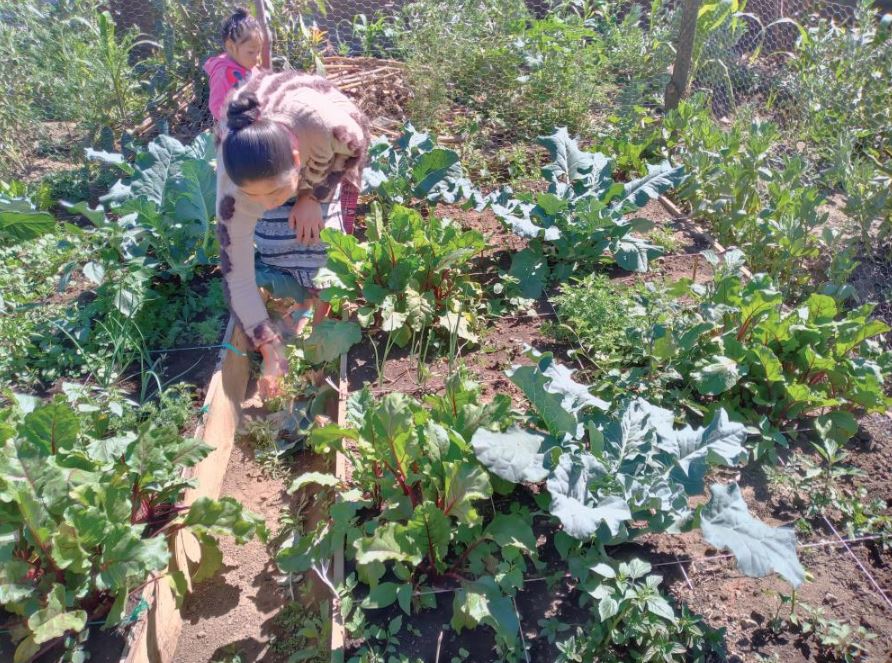

 Steps toward improving nutrition can be as simple as encouraging people to plant gardens. The clubs have provided funding for raised-bed gardens that supply families with a range of healthful foods that they otherwise do not have access to.