In the early morning hours of April 26, 1986, a reactor at the Chernobyl nuclear power station exploded, sending a plume of radioactive fallout over northern Europe and creating the world's worst civilian nuclear disaster. In the immediate aftermath, over 116,000 people were evacuated from a 1,000 square mile area, including over 50,000 from the now-abandoned city of Pripyat. In the months that followed over 600,000 "liquidators" worked heroically under hazardous conditions to clean up the most heavily contaminated areas, and the remains of the reactor and its nuclear fuel were covered with a hastily built concrete sarcophagus. Entry to the Exclusion Zone remains restricted, and some areas may not be habitable for over 20,000 years.
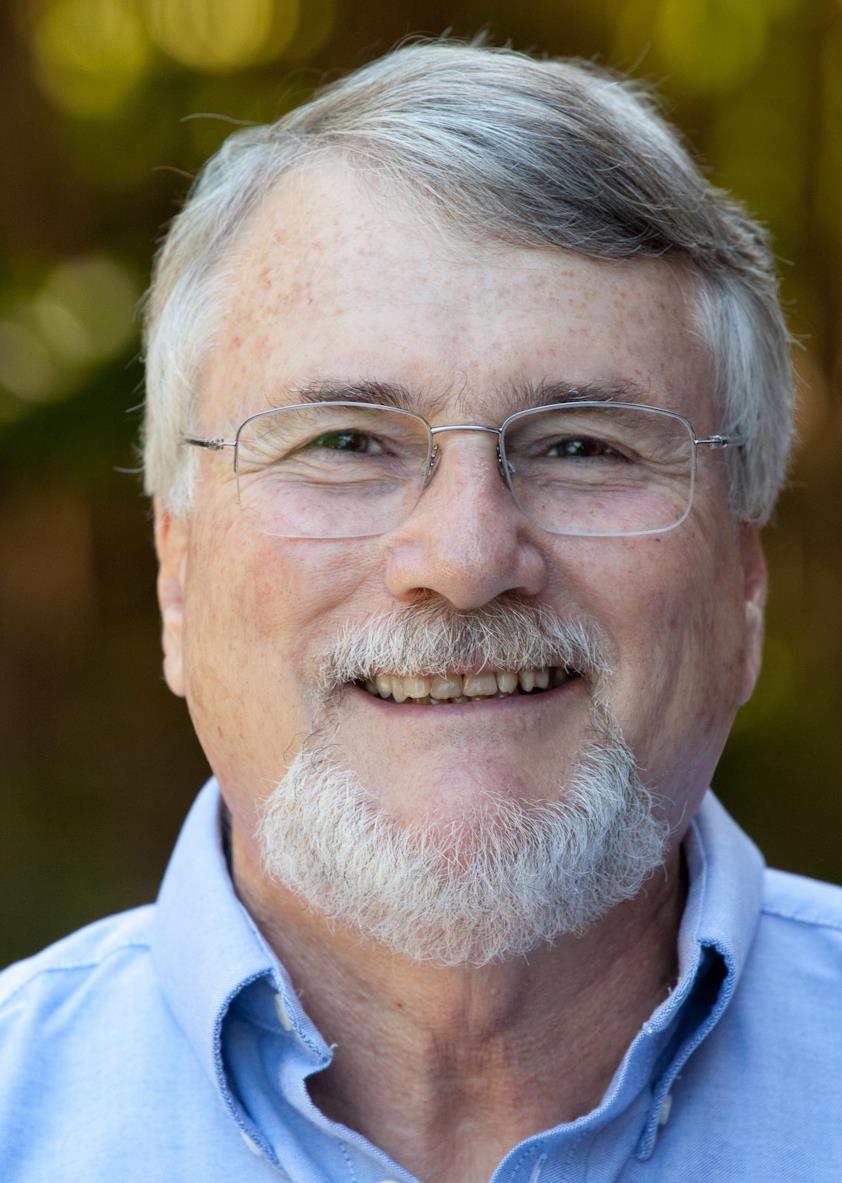
Sebastopol Rotarian Jack Blasco recently spent four days photographing inside the exclusion zone, including inside the decommissioned power plant and the abandoned city of Pripyat. He'll share his visual impressions of how the area has changed in the 34 years since the explosion, along with a brief summary of why the accident occurred and the status of ongoing efforts to safely contain the remains of the damaged reactor.
Jack Blasco’s Bio
Jack was born and raised in New York City, and came to California just too late for the Summer of Love and just in time for Peoples Park, tear gas, and the summer of bad vibes. After graduating from UC Berkeley he spent most of his career as an environmental scientist in America's industrial underbelly cleaning up hazardous waste sites and helping his clients do the right thing for the environment, or at least stay out of jail. Jack lives in Graton with his wife Marie, three koi, and hundreds of gophers.
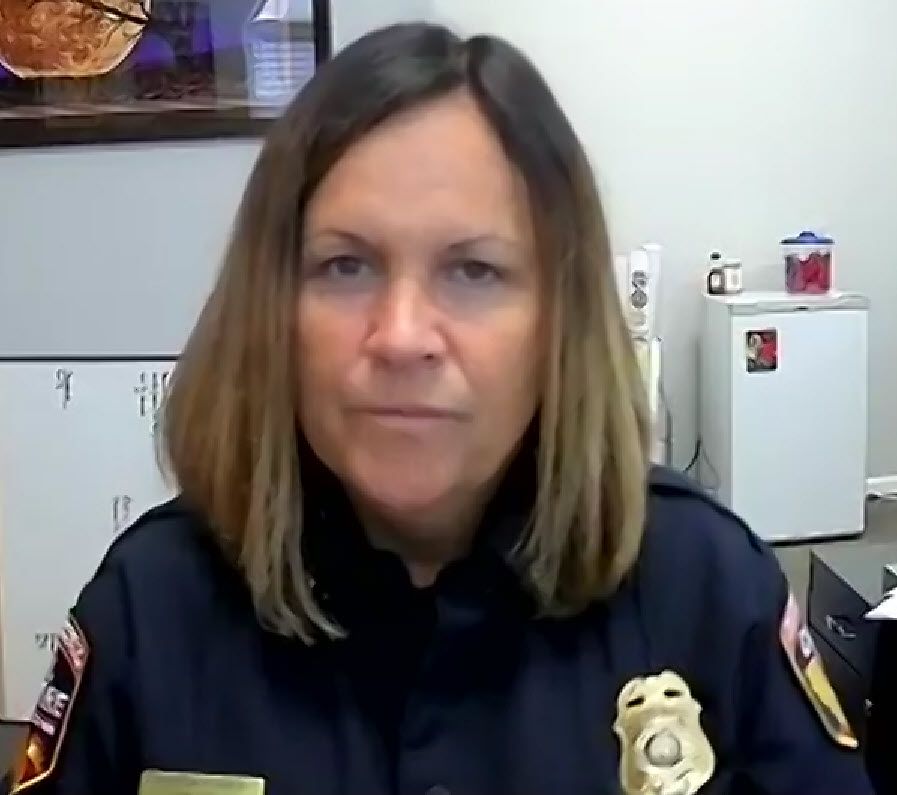
Our speaker for August 6, 2020 was Chief Shana Jones of CAL FIRE. Chief Jones has had a long career with CAL FIRE culminating with her current assignment as Unit Chief of the Sonoma-Lake-Napa Unit. She also served as the Agency Administrator for the October 2017 Tubbs Fire and the 2019 Kincade Fire. She is a registered Professional Forester.
CAL FIRE (California Dept. of Forestry & Fire Protection) is responsible for 31 million acres of land. It is the 3rd largest fire department in the United States. It operates 21 separate fire units and contracts with 6 counties to provide fire protection. It has 806 fire stations, 39 conservation camps, 13 air attack bases, more than 5,000 full-time fire fighters, and 1,095 fire engines. Ten of the twenty most devastating California fires have happened in the last 5 years; 4 of them in our area, including the Tubbs (no. 2 on the list), Valley, Nuns and Atlas Fires! Chief Jones discussed the 2019 Kincade Fire in depth. It burned 77,758 acres, destroyed 374 structures, required 5,200 responders, and caused the evacuation of 186,500 residents (including many of us!). The Fire included 3 “Red Flag Wind Events,” one of which was a Historical Event! CAL FIRE used 43 aircraft, 1,594,182 gallons of retardant and 3,655,215 gallons of water! Chief Jones also mentioned that the day she and her team gave the Kincade Fire Evacuation Order was one of the most frightening days of her life! Yes, the past few years have brought miserable fires, but the bad news is that so far in 2020 there have been approximately 2,000 more fires than in 2019! We have very dry vegetation and fire season has already started!
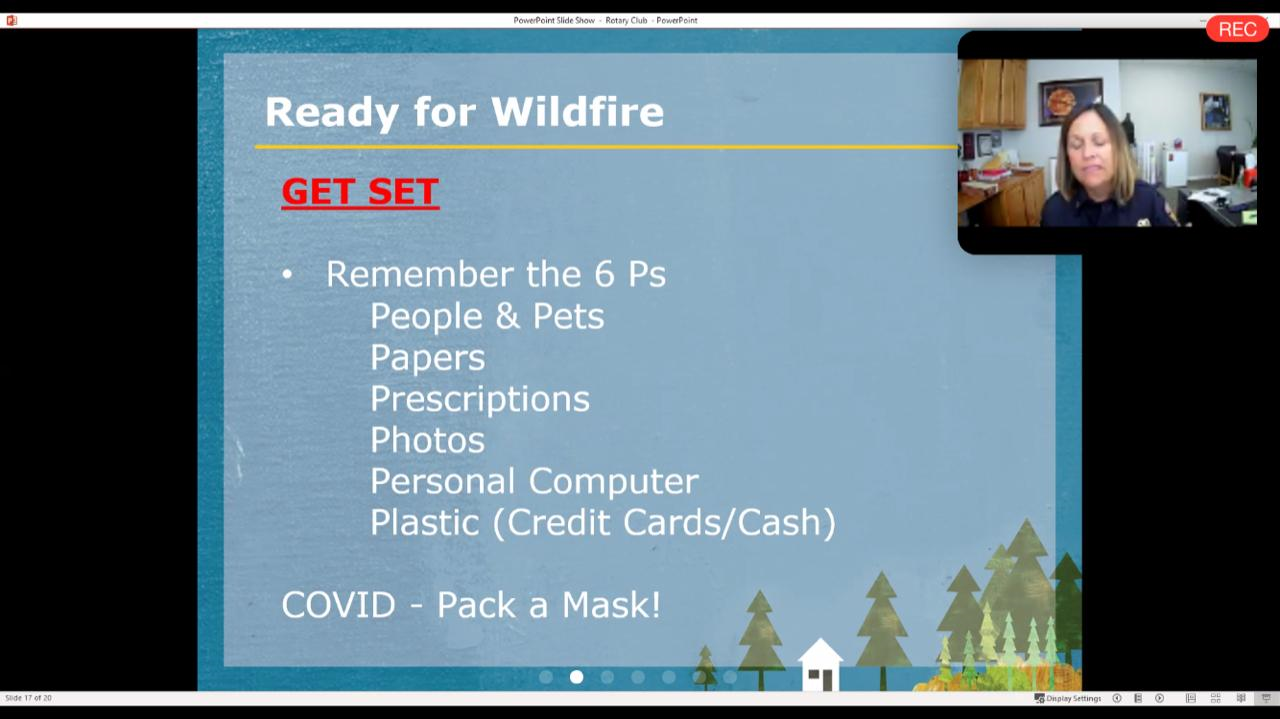
What can we do to avoid or limit fire damage to our property? “Ready, Set, Go.” That is, Get Ready by creating 100’ of defensible space around our homes by removing all dead vegetation and mowing our lawns before 10:00 a.m. (and never on hot or windy days). And, if we have an opportunity, use home hardening technology, including ember-resistant building materials and closed eves. “Get Set” by having a family evacuation plan, including a designated meeting spot. Prepare an emergency evacuation supply kit containing at least a 3-day supply of food and medical supplies. Get a generator and learn how to use it. “Go” by leaving when necessary: “Don’t Wait, Evacuate.” Sign up for County Alerts and “Go!” when an evacuation order is issued. Do us all a favor and do not hang around after an evacuation order!
Chief Jones also reminded us of some important information sources, including readyforwildfire.org and fire.ca.gov. We can also download the “readyforwildfire” app.
Thank you, Chief Jones for the amazing and important information and for your well-prepared and delivered presentation. Thank you most of all for protecting us all every day! You and your staff and crew are heroes!
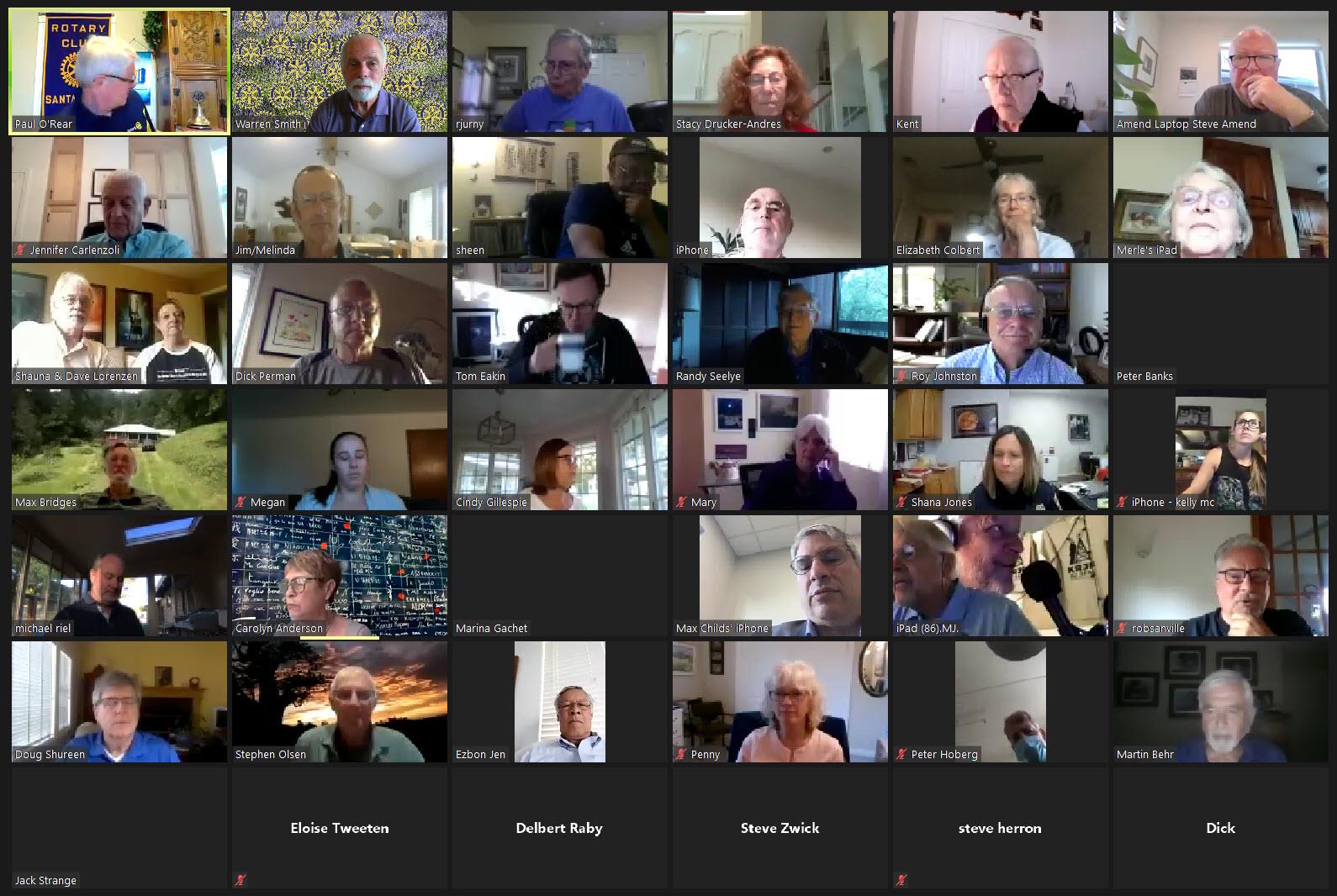
On a regular basis, our resident photo pro Warren Smith, submits pictures of what is going on at the weekly meetings. You can always find the most recent pictures at the websites photo journal called "Meeting Sighting" Please note that all the meeting photos for the entire Rotary year are at this location with the most recent on the last page.
Thanks for all the great pictures Warren!Link to Meeting Sightings. The most recent are on the last page!
Norman is 89 years old. He's played golf every day since his retirement over 20 years ago. One day he arrives home upset. "That's it," he tells his wife. "I'm giving up golf. My eyesight is so bad that once I hit the ball I can't see where the dang thing goes."
His wife sympathises and makes him a hot cup of tea. As they sit down she says, "Why don't you take my brother with you and give it one last try."
"That's a terrible idea" says Norman, "your brother's 102 years old. How could he help?"
"He may be 102 years old", says the wife, "but his eyesight is perfect."
Norman figured he'd give it a try So the next day he heads off to the golf course with his brother-in-law. He tees up, takes a mighty swing and squints down the fairway.
He turns to the brother-in-law and says, "Did you see the ball?"
"Of course I did!" replied the brother-in-law. "I have perfect eyesight".
Rotary’s first virtual convention inspires members to innovate and stay connected
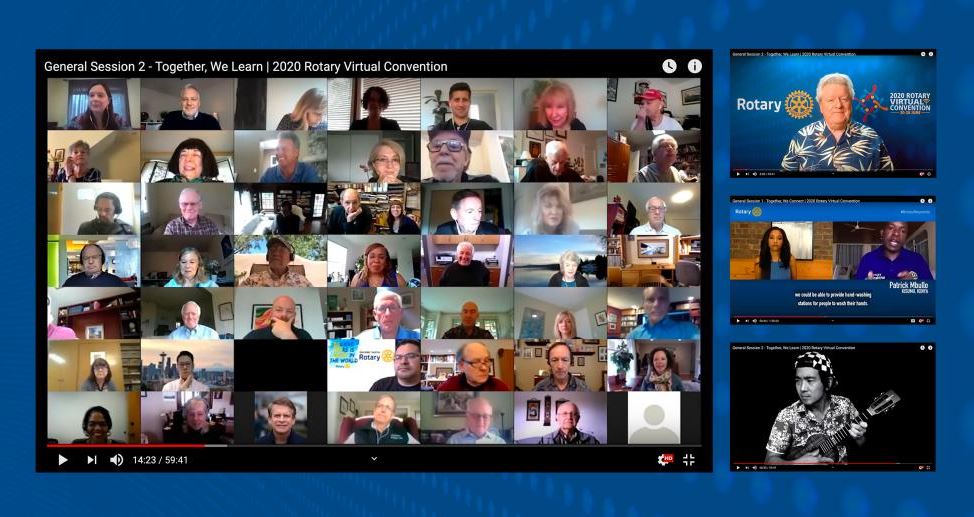
Rotary’s first-ever virtual convention attracted more than 60,000 registrants and 175,000 viewers during its weeklong program. The robust participation shows that Rotary members are finding ways to experience fellowship and fun, key parts of Rotary’s annual international convention, despite the COVID-19 pandemic that forced the cancellation of the in-person convention planned for Honolulu, Hawaii, USA, this year.
The first general session was 20 June. Virtual attendees made nearly 19,000 chat comments during the 75-minute session, showing that members used the opportunity to engage and stay connected with each other.
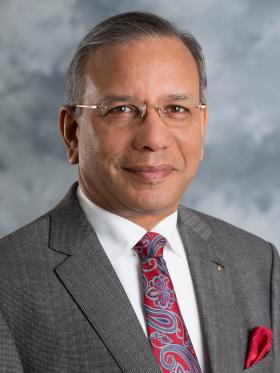
RI President Mark Daniel Maloney acknowledged that canceling the convention in Honolulu was a difficult decision but said he was inspired by how members worldwide have stayed connected, adapted to their changing circumstances, and helped those in need during the crisis.
Maloney said that unusual times have forced Rotary to adapt and look for different ways to grow Rotary.
“Now we are experiencing in real time how important it is to create new club experiences,” he said.
Maloney also said, “We had hoped to hold the most environmentally friendly convention in Rotary history [in Honolulu]. Guess what? We succeeded. We are holding a Rotary Convention like no other, with no air travel, no hotel rooms, leaving a remarkably small carbon footprint.”
We all have a better understanding of growing Rotary by extending our reach beyond regular meetings.
— RI President Mark Maloney
In a reflection of that fact that the environment is increasingly important cause to Rotary’s members, just after the convention, Rotary announced that it had adopted supporting the environment as one of its areas of focus.
He added that, at the beginning of his term a year ago, Rotary was promoting the importance of increasing our ability to adapt, one of the goals of Rotary’s strategic plan, known as the Action Plan. “We are putting that plan into action out of necessity,” Maloney said. “We all have a better understanding of growing Rotary by extending our reach beyond regular meetings.”
In addition to Maloney, a number of world leaders and partner organizations spoke about how we are all coming together to help each other through the pandemic. In a video address, United Nations Secretary-General António Guterres said we need to work together to find solutions to the problems that are weakening our societies.
“Your [Rotary’s] efforts have made a significant difference — in eradicating polio, in strengthening communities around the globe, in alleviating the suffering of vulnerable populations, and in building a safer, healthier, and more peaceful world,” Guterres said.
A panel of global health experts also discussed how the infrastructure that Rotary and its partners use for polio eradication has helped communities tackle the needs that have emerged from the COVID-19 pandemic.
Dr. Christopher Elias, president of the Global Development Division of the Bill & Melinda Gates Foundation, said the polio eradication effort has incredible assets, including laboratory testing capabilities, surveillance, and hundreds of thousands of health workers.
“In pretty much every country where the polio eradication initiative is active, which is over 50 countries, those assets have been dedicated to the COVID-19 response,” Elias said. “The world is benefiting, particularly in the poorest countries where we’ve been chasing down the last cases of polio; we’re greatly benefitting from the infrastructure that the polio initiative has built over the last three decades.”
Panelists included Henrietta H. Fore, executive director of UNICEF; Rebecca Martin, director of the Center for Global Health at the U.S. Centers for Disease Control and Prevention; and Dr. Bruce Aylward, senior adviser to the director-general at the World Health Organization.
Emmy Award-winning television journalist Alisha Davis introduced a video collage of Rotary members around the world taking action against COVID-19 in their communities. She also interviewed members on how they’re adapting to meeting online.
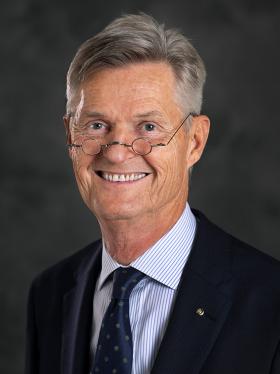
RI President-elect Holger Knaack, who became Rotary’s president on 1 July, said that clubs must continue to respond and innovate during these uncertain times.
“[Responding and adapting] brings many new opportunities for us, to innovate and to learn from our experiences,” Knaack said. “Let us seize this moment and value it for what it is, the opportunity for Rotary to build on what we’ve learned, to embrace this new reality, to embrace new faces, to find new and better ways to shine and to have a continuing impact on the world.”
The year 2020 has brought monumental changes that have already included a global pandemic and a renewed call for social justice. We are reminded that we live in a constantly changing world, and Rotary is a reflection of that world.
We must be ready to listen and adapt, always drawing upon our core values of service, fellowship, diversity, integrity, and leadership. If we live these values and apply The Four-Way Test to all aspects of our lives, we will be prepared to lead at all times.
I am proud of how we have proven our ability to adapt. Faced with a pandemic, Rotary has not stopped. We moved meetings online and found new ways to serve. We turned the canceled 2020 Rotary International Convention in Honolulu into our first virtual convention. Each week, we are proving that Rotary is a flexible gathering that happens anywhere — in traditional meetings, on cellphones, and on computers. Rotary offers a way to connect for everyone who wants to, at any time, and will continue to do so.
Some have even told me that they enjoy Rotary's mix of online and in-person meetings more now than before! How can we build on this momentum and seize the opportunity to embrace change so that Rotary keeps thriving?
For me, supporting new types of clubs is key. They are no longer just experiments but a real part of Rotary today. In addition to traditional clubs, we have e-clubs, Rotaract clubs, cause-based clubs, and passport clubs. These help make Rotary more inclusive, more flexible, and more attractive to new members. Visit these clubs, exchange ideas and partner with them, and promote them to one another and to our communities.
We all agree that we need to grow Rotary, but sometimes we can get caught up in the numbers game and lose sight of the bigger picture. After all, an increase in membership is meaningless if next year, those new members leave our clubs. Let's grow Rotary sustainably. Rotary's flexible options for participation will engage members and show the community how we're different from any other club. Let's celebrate that Rotary is now less about rules and more about joining together in a variety of ways besides traditional meetings.
I recommend that each club hold an annual strategy meeting to ask — and honestly answer — if we are doing all we can for our members and if our club reflects the community we serve. We are taking this approach at the international level, too. I am proud that six women are serving with me on the RI Board of Directors this year, the most we have ever had. Let's keep Rotary moving in this direction at every level. We need more perspectives, more diversity, for Rotary to thrive.
It's fascinating to imagine how we will find new ways to adapt and stay nimble this year and beyond. But I am also inspired about what hasn't changed and never will in Rotary: the friendships, the networking, the ethics, and the service. Indeed, these are the values that make Rotary attractive to all.
As Rotary's founder, Paul Harris, said, we have to be revolutionary from time to time. Now is such a time. Rotary Opens Opportunities — countless ones — for us to embrace change that will strengthen us even as we remain true to our core values.
There is a world of difference between a problem and a challenge.
If a honeybee faces a giant hornet alone, the bee has a problem. But if the honeybee faces the hornet with a swarm of other bees, then it is the hornet that has a problem.
This is true in nature, but it is also the human predicament. So when the situation I confront is greater than the resources I have, then it can be termed as a problem. However, if the resources I have are greater than the situation I am faced with, then it is just a challenge. Sometimes we overestimate our problems and underestimate our ability to overcome them.
The COVID-19 pandemic seemed like a situation that might overwhelm The Rotary Foundation. But as things have progressed, we have not allowed it to do so. As of 4 June, we have funded 208 disaster response grants for $5.2 million and 169 new global grants at $13.8 million — all in three months. We have leveraged individual Rotarians' generosity with Foundation funds and in many cases other corporate funds to make projects larger and more impactful.
We never allowed the pandemic to overpower us. Indeed, history shows that Rotarians are a curious breed. We are visionaries, an idealistic lot that dreams big dreams of a better world. At the same time, we are resilient and able to withstand challenges that others might succumb to.
We were not idle during the pandemic lockdowns. We raised funds and did projects just as we would have if there had been no lockdown. We remembered that it's the same business that we always do — reaching out to people in distress — except the methodology by which we did it changed.
Our process of preparing and delivering the projects changed.
The way we communicated what we did changed.
The Rotary Foundation is more than 100 years old and has already weathered many storms — some of them mild and others devastating to the world. Thanks to the strength, sacrifice, and compassion of Rotarians and the level to which they have extended themselves, I believe the Foundation will continue to face the future with renewed hope and inspiration.
Our Foundation will emerge from this pandemic much stronger and more resilient as long as you continue to have trust and faith in it.
Rotary Club of Santa Rosa Sunrise - Founded June 30, 1986


.png)

.jpg)