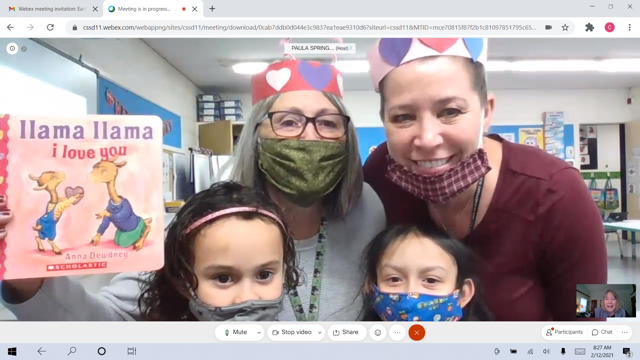
What does Rotary do when there's a pandemic and we can't go into Queen Palmer and read to the students? We improvise!! Reading is happening by video and our club bought each child a book. For Valentine's Day, the club provided the staff with a beverage of their choice at Starbucks! Thank you, Rotarian Carol Bach, for making this happen!
1. Where were you born and where did you grow up? I was born and raised in Austin, Texas. After graduating from the University of Texas, I spent two years as an officer in the Navy (I had been in NROTC at UT) home ported in San Diego, but spent most of the time aboard ship in the Pacific. Seven years in business in Houston before coming to Colorado Springs in 1970. Am I considered a "native" yet?
3. Coffee or tea? I do both ; coffee in the morning and tea in the afternoon. Decaf in both.
4. Do you currently or have you ever played a musical instrument? I played clarinet, or rather tried to play the instrument, and quit the minute I graduated from high school. By now I have forgotten how to read music.
5. Favorite sport to watch? Favorite sport to play? Favorite sports teams? I enjoy watching college football, especially when Texas plays. Also watch ice skating since it was something I tried to learn later in life, so appreciate how hard it really is.
7. Do you speak any languages besides English? Not really. I studied Spanish my first year at UT and it was a miserable experience, so I changed my major! I can still read and understand some. A few years back I tried to learn a little French before a trip there using CD's. I did manage to ask how to get to the toilet!
13. What was your first job? My first job at age 14 was as an usher at a movie theater. I saw lots of movies and ate lots of leftover popcorn at the end of the day. After a year the theater closed and I got a job in a grocery store.
14. How long have you been in Rotary? Have you ever been a Rotarian in another club? If so, where? My father was a Rotarian and I grew up reading the Rotarian magazine. I have been in the Rotary Club of Colorado Springs for 38 years and my sponsors were Cres Fleming and Steve Stiles.
19. What board positions have you held in our club or in prior clubs? I have been on the board several times and count my time as club treasurer and director of club service as the highlights. Very active positions and also very rewarding
Rotary fosters understanding across cultures. We train adults and young leaders to prevent and mediate conflict and help refugees who have fled dangerous areas.
Promoting Peace: Rotary’s peacebuilding history around the world
From a pre-World War I resolution calling for “the maintenance of peace” to our continuing support for Rotary Peace Centers, Rotary and its members have a long history of promoting peace and working to address the underlying causes of conflict in communities around the world.
Lending our influence
Rotarians from Hamilton, Ontario, Canada, proposed before the 1914 Rotary Convention that the International Association of Rotary Clubs (now Rotary International) “lend its influence to the maintenance of peace among the nations of the world.” Delegates at the convention, which took place just weeks before Europe became engulfed in war, agreed.
It was a bold statement for a relatively young organization that had become international only two years earlier and had a presence in just a handful of countries.
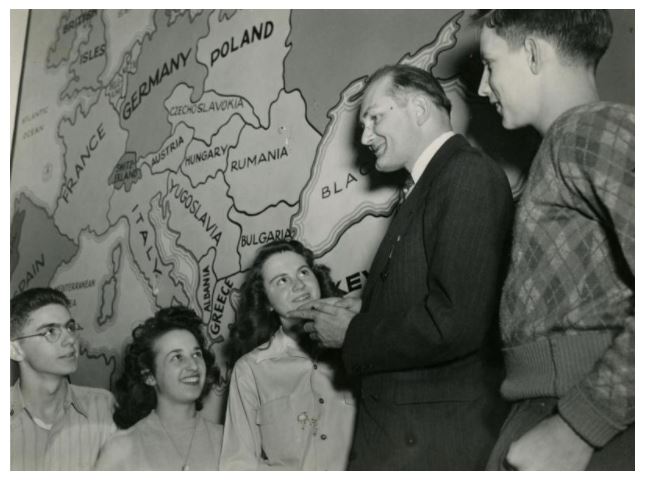
Chester Williams, a British expert on Anglo-American relations, answers questions from high school students during an Institute of International Understanding event in Michigan, USA, circa 1943.
The Objects of Rotary
With memories of the Great War fresh in their minds, delegates to the 1921 convention in Edinburgh, Scotland, amended the association’s constitution to include the goal “to aid in the advancement of international peace and goodwill through a fellowship of business and professional men of all nations united in the Rotary ideal of service.”
Delegates to the 1922 convention made sweeping changes to the Rotary International and club constitutions. Separate objectives for each were replaced with the Objects of Rotary (now called the Object of Rotary). The new approach, however, retained the vision for peace.
Institutes of International Understanding
An early effort to achieve this objective involved Rotarians in Nashville, Tennessee, USA, who organized a program in 1934 to encourage and foster international understanding. It included 11 days of public community meetings, bringing in prominent authors, economists, scientists, politicians, and commentators to discuss issues such as the economy, world peace, and scientific advances.
The idea, which came to be known as Institutes of International Understanding, was well-received, and in 1936, Rotary International suggested that other Rotary clubs emulate it. While clubs were responsible for arranging local institutes, The Rotary Foundation helped pay for speakers’ expenses beyond what clubs could afford. Over the next decade, 965 clubs in the Americas, Australia, and New Zealand sponsored hundreds of institutes that drew thousands of people eager to learn more about the world beyond their own borders.
World War II
During World War II, Rotary members looked for ways to create a stable and peaceful world. In 1940, convention delegates adopted a statement, Rotary Amid World Conflict, which emphasized that “where freedom, justice, truth, sanctity of the pledged word, and respect for human rights do not exist, Rotary cannot live nor its ideal prevail.” Walter D. Head, then Rotary International’s president, remarked that there must be a better way to settle international differences than violence and called on Rotarians to find it.
"Peace Is a Process,” a 1944 compilation of articles from The Rotarian magazine, focused on the new opportunities for international cooperation that would appear when the war ended. In “Setting the Pattern for Peace,” historian and diplomat James Shotwell explained the differences between the failed League of Nations and the approach taken to form the United Nations.
The Rotarian magazine ran essays by authors, politicians, and other well-known figures that encouraged discussion on the topic of peace. Rotary published collections of these essays as “A World to Live In” (1942) and “Peace Is a Process” (1944). Recognizing that the end of the war didn’t eliminate the need to discuss these topics, Rotary continued the series with “Peace Demands Action” in 1947.
The United Nations
Rotary was present at the start of the United Nations in 1945. Rotary International was one of 42 organizations invited to serve as consultants to the U.S. delegation to the United Nations Conference on International Organization in San Francisco, California, USA (commonly called the UN charter conference). Additionally, many Rotary members and honorary members from around the world attended the conference as members of and consultants to their nations’ delegations.
Rotary and the United Nations remain committed to creating lasting change that enhances international relationships, improves lives and communities, and creates a more peaceful world.
Today, Rotary International holds the highest consultative status offered to a nongovernmental organization by the UN’s Economic and Social Council (UNESCO). The Rotary Representative Network, established in 1991, maintains and furthers this relationship with several UN bodies, programs, commissions, and agencies.
Scholarships
Rotary founder Paul Harris recognized the connection between international understanding and peace. In a message to the 1921 convention, Harris had written, “Rotary believes that the better the people of one nation understand the people of other nations, the less the likelihood of friction, and Rotary will therefore encourage acquaintance and friendships between individuals of different nations.”
Scholarships for graduate study in other countries became the first program of The Rotary Foundation in 1947. The idea of sending a student abroad for at least a year of university study was part of an effort to encourage higher education and promote greater understanding between people of different cultures and nationalities.
After Harris’ death that year, donations to The Rotary Foundation (Harris had requested them in lieu of flowers) began flooding in to Rotary headquarters. The Paul Harris Memorial Fund was designated for the newly created scholarship program.
Called the Paul Harris Foundation Fellowships For Advanced Study, it supported 18 scholars in its first year. Later it became known as the Ambassadorial Scholarships and lasted until 2013, when graduate-level scholarships were incorporated into district and global grants.
Peace Forums
To raise awareness about issues that cause conflict and activities that promote peace, Rotary created Peace Forums as a three-year pilot program. Rotary leaders and invited guests explored topics such as “Nongovernmental Organizations and the Search for Peace” at the first Peace Forum held in 1988 in Evanston, Illinois, USA.
In 1990, the Trustees of The Rotary Foundation broadened the program and changed the name to Rotary Peace Programs.
Rotary Peace Centers
At various times, Rotary members had proposed creating a university to promote peace, but the concept never seemed feasible. In the 1990s, Rotary leaders were inspired by the 50th anniversary of Harris’ death to consider an alternate approach.
The idea was simple, but the impact would be tremendous: Rotary would encourage people already engaged in peacebuilding as a career to apply for graduate-level study in the field, and The Rotary Foundation would provide scholarships to peace fellows that would allow them to enroll in established peace programs at existing universities.
Rotary approved the creation of Rotary Peace Centers program in 1999, and the inaugural class of Rotary Peace Fellows began their studies in 2002.
Rotary Peace Centers, located at universities around the world, develop leaders who become catalysts for peace in local communities and on the global stage. They study the causes of conflict and build practical skills exploring innovative solutions to real-world problems in areas such as human rights, international relations, and global health and development.
Rotary is not a university and yet it has an educational task to perform, and that task is to divert the world mind to thoughts of friendly cooperation. — Arch Klumph, father of The Rotary Foundation, in a speech to the 1921 convention
Peace for all time
Rotary’s goal today is to create environments where peace can be built and maintained through sustainable and measurable activities in communities worldwide. Peacebuilding remains a cornerstone of our mission as a humanitarian service organization.
Exploring the Black Experience in Rotary on Thursday, 25 February at 2 pm MST.
“My humanity is bound up with yours, for we can only be human together.” -Archbishop Desmond Tutu-
Dear club and district leaders, Humans are composed of unique and intersecting sets of social identities, defined by our physical, social, and mental characteristics. Examples include race/ethnicity, gender, social class/socioeconomic status, sexual orientation, disabilities, and religion/religious beliefs. By considering each other’s lives, experiences, and perspectives, we allow a community to be not only about what we have in common but what makes us different.
Register now for, Exploring the Black Experience in Rotary on Thursday, 25 February at 15:00 Chicago time (UTC-5), and submit your questions to our experts. A recording of the session will be available to everyone who registers.
Through hearing stories of Black Rotarians around the word, we will:
· Open ourselves to talking about race and identity.
· Become aware and acknowledge how our own social identities impact the club and community experience.
· Allow space for all Rotarians to bring their full, most authentic selves to our organization.
We look forward to hearing your thoughts and questions.
Sincerely, The Membership Development Team Rotary International
P.S. Throughout 2020-2021, Rotary will host a webinar series to explore diversity, equity, and inclusion. Read more about the sessions that will be offered.
Many of you have noticed a "familiar" face on our weekly meetings. Karen Mooty is our new club administrator! Her face may look familiar because she is a twin sister to our current club secretary and President Elect Nominee, Kay Rendleman!
Karen is training with our amazing Claudine Dickson so you know she's becoming the invaluable GO-TO for all things rotary! - She can be reached at administration.manager@coloradospringsrotary.org if you have club administration issues to discuss.
In February we are partnering with Peak Vista Community Health Centers and The Men’s Exchange for a clothing and item drive.
Peak Vista is in need of the following:
Used: blankets if in good shape and laundered
New: tents, sleeping bags, flashlights, backpacks, hand warmers, socks, grocery gift cards, puzzle books, pencils, new coats, hats, and gloves for adults
Donations can be dropped off at the Health Center at 340 Printers Parkway, Colorado Springs, CO 80910 or coordinate a pickup with Samantha Chapman.
The Men’s Exchange will accept used professional clothing which can be dropped off at the physical location downtown, 409 N. Tejon St. Colorado Springs, CO.
Please share any pictures of your donations and let Samantha Chapman know if you donate.
In other news, mark you calendars for March 10-13 and join us in volunteering with Pikes Peak Habitat for Humanity during their International Women’s Build Week. All Rotarians are welcome to volunteer and there are options between a morning/afternoon or all day shift. Encourage a spouse, significant other, or friend to join you as we assist a local home in our Colorado Springs area.
Are you missing seeing your other Rotarians in person? Feel free to join Jordan Davis and Kay Rendleman with some of your other fellow Rotarians on Fridays over at Sportivos inside the Antlers hotel. Arrive starting at 11:30 for socially distanced socializing and bring your laptops and headphones to participate in the meeting on Zoom at 12:15! Questions? Contact Jordan or Kay."
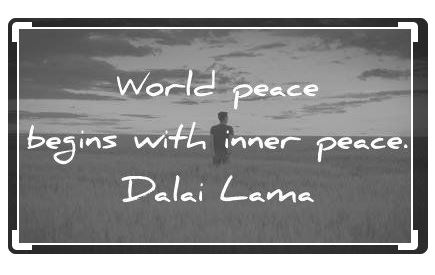
I once heard someone say "To find inner peace, imagine your best self. Start showing up as that person." It's simple yet very powerful.
As we celebrate the month of Rotary Peace and Understanding and Conflict Resolution, l'm going to think about who my best self is and how I can be more like her.
If you have makeups you would like to turn in to be counted for your attendance, please email me with the date and purpose of the meetings! KSaltmarshVoss@yahoo.com
If you have bulletin announcements, please email the EXACT WORDING of your announcement to KSaltmarshVoss@yahoo.com by Wednesday at 5 pm. I don't write your announcements but I do make them nice 'n' fancy!
As you're doing your shopping online, did you know that you can support our Rotary Club with every Amazon purchase? Here’s how:
Go to smile.amazon.com (not amazon.com). Amazon Smile is the same company, same account, same password, but the Amazon Smile program gives one half of one percent of every purchase to charity. No, it’s not a lot, but it’s also not nuthin’ (to be exact: about $150 for the Club so far). So again, go to smile.amazon.com
Sign into your Amazon account as you normally would
On the very top left of the page, next to the AmazonSmile logo, are three horizontal bars. Click there for the drop-down menu.
Scroll ALL the way down to “Your AmazonSmile”; it should be the last option right before “Sign Out”; Click on “Your AmazonSmile”
On the right side of the page, click on the “change charity” box under Your current charity (Note: If you are currently supporting another charity, that’s awesome! These instructions are for those who are not doing so. Also, if you have not previously selected a charity, your default option will be St. Judge Children’s Research Hospital.)
Type in Community Service Fund of the Rotary Club of Colorado Springs; click Select
That’s it. You’re all set. Just remember to go to Smile.Amazon.com when you shop from now on.