Synopsis
Angela Dorothea Kasner, better known as Angela Merkel, was born in Hamburg, West Germany, on July 17, 1954. Trained as a physicist, Merkel entered politics after the 1989 fall of the Berlin Wall. Rising to the position of chairwoman of the Christian Democratic Union party, Merkel became Germany's first female chancellor, and one of the leading figures of the European Union, following the 2005 national elections.
Early Years
The daughter of a Lutheran pastor and teacher who moved his family east to pursue his theology studies, Merkel grew up in a rural area north of Berlin in the then German Democratic Republic.
She studied physics at the University of Leipzig, earning a doctorate in 1978, and later worked as a chemist at the Central Institute for Physical Chemistry, Academy of Sciences from 1978 to 1990.
First Female Chancellor
After the fall of the Berlin Wall in 1989, Merkel joined the Christian Democratic Union (CDU) political party and soon after was appointed to Helmut Kohl's cabinet as minister for women and youth and later served as minister for the environment and nuclear safety. Following Kohl's defeat in the 1998 general election, she was named secretary-general of the CDU. In 2000, she was chosen party leader, but lost the CDU candidacy for chancellor to Edmund Stoiber in 2002.
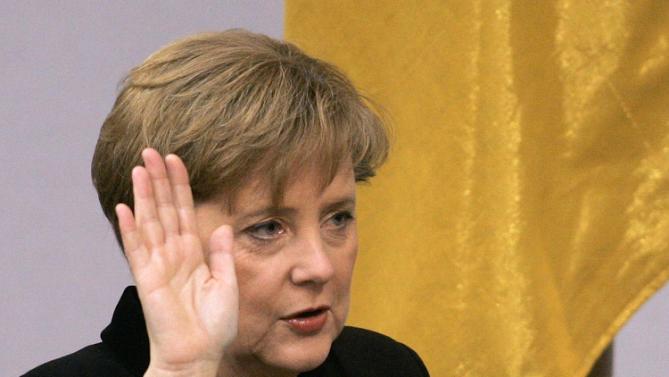
In the 2005 election, Merkel narrowly defeated Chancellor Gerhard Schröder, winning by just three seats, and after the CDU agreed a coalition deal with the Social Democrats (SPD), she was declared Germany's first female chancellor.
Merkel is also the first former citizen of the German Democratic Republic to lead the reunited Germany and the first woman to lead Germany since it became a modern nation-state in 1871. She was elected to a second term in 2009 after forming a coalition with the small “ Freie Demokratische Partei (FDP)”. In 2013 she was reelcted for a 3rd term, but had to share the power with the SPD, because the FDP had missed the 5% mark, which is required to be represented in the Bundestag. Only two post-war German leaders have achieved a third term previously - Konrad Adenauer and Helmut Kohl.
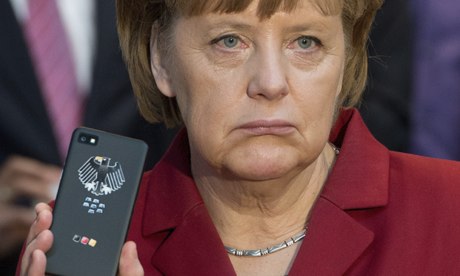
Merkel made headlines in October 2013 when she accused the U.S. National Security Agency of tapping her cell phone. At a summit of European leaders she chided the United States for this privacy breech, saying that "Spying among friends is never acceptable." Later reports revealed that the NSA may have been surveilling Merkel since 2002.
not happy: cel phone hacked
Image
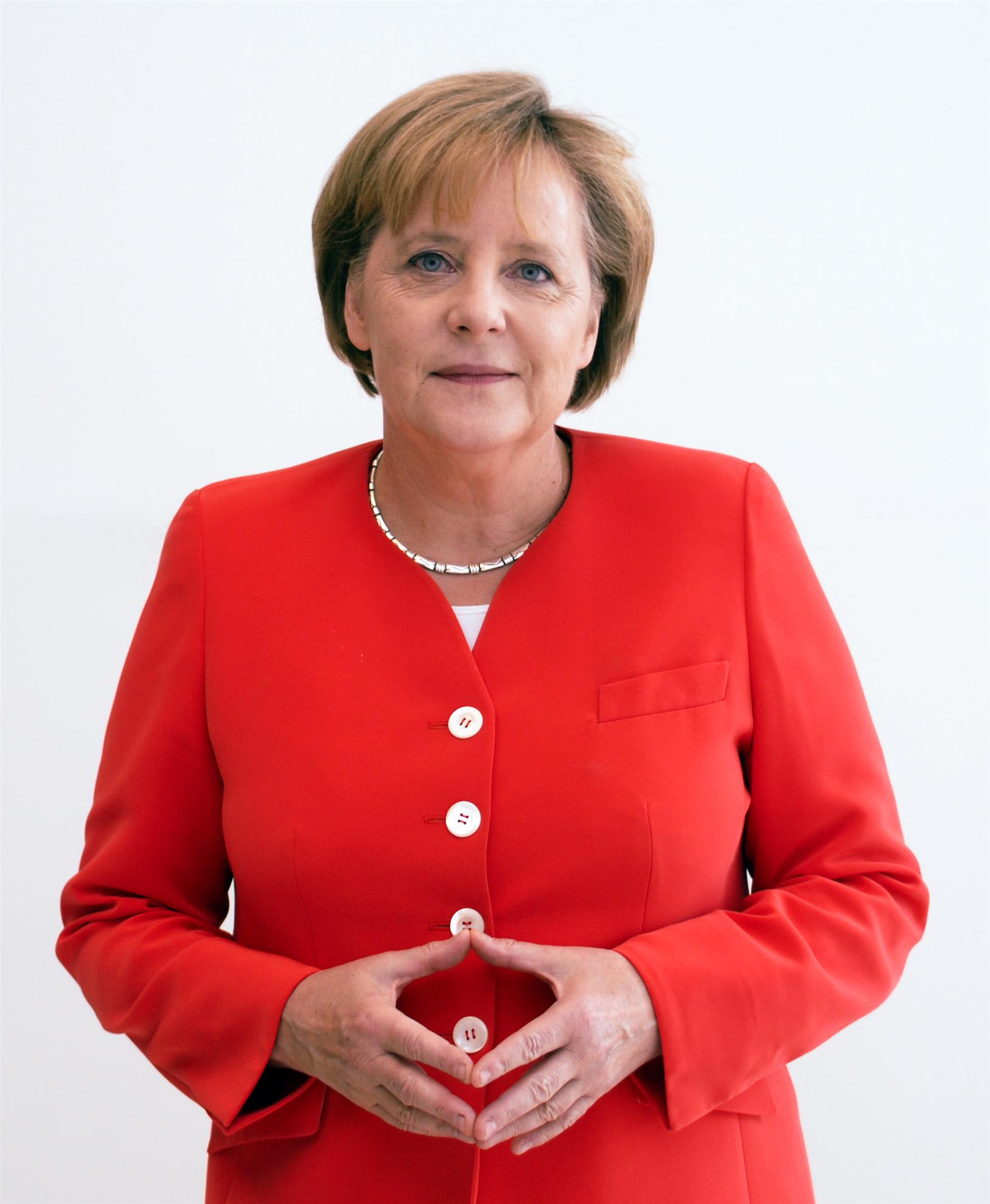
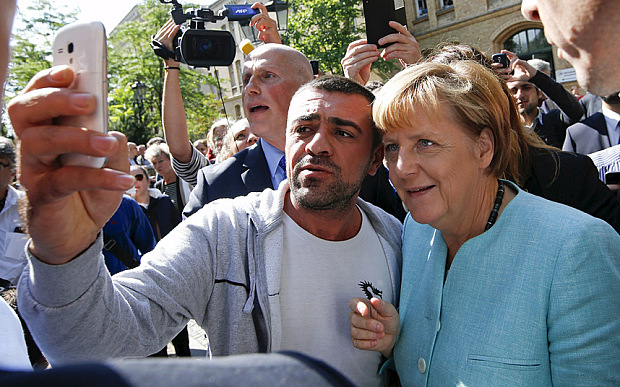
Chancellor Merkel is seen as more pragmatic than charismatic. Earlier in her political career some saw her as boring, provincial and rather dowdy - an image she tried to shake off with bright, colourful outfits and a new hairstyle.Over time Mrs. Merkel has developed image of a prudent, pragmatic and down-to-earth leader, earning her the nickname "Mutti" – (=Mommy) mother of the nation. Also called "Angie".
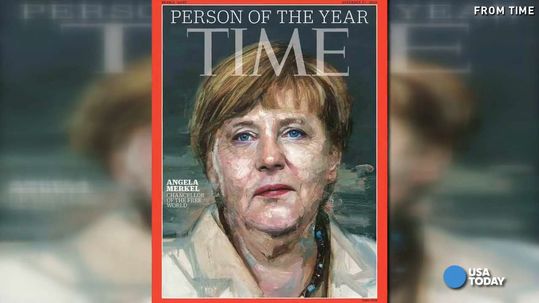
In November 2015, Forbes magazine ranked Mrs Merkel the second most powerful person in the world - the highest ranking ever achieved by a woman - and later that year she was named Time magazine's "Person of the Year", citing her role in Europe's crises over migration and Greek debt.
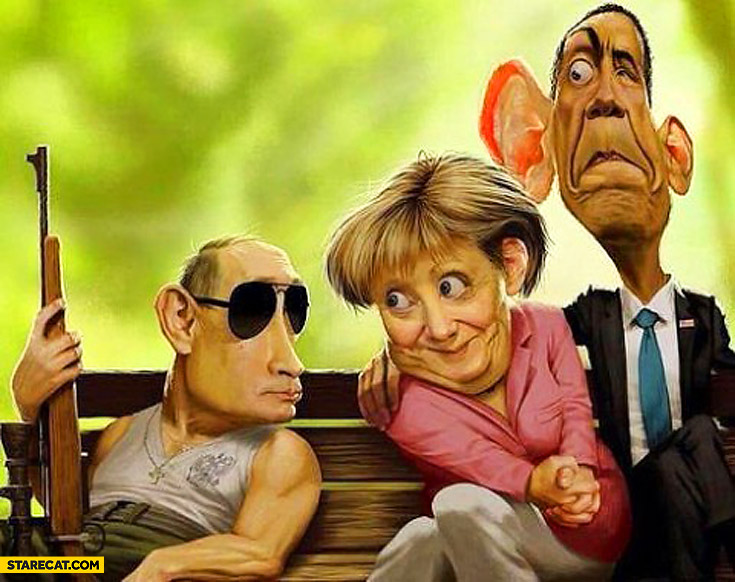
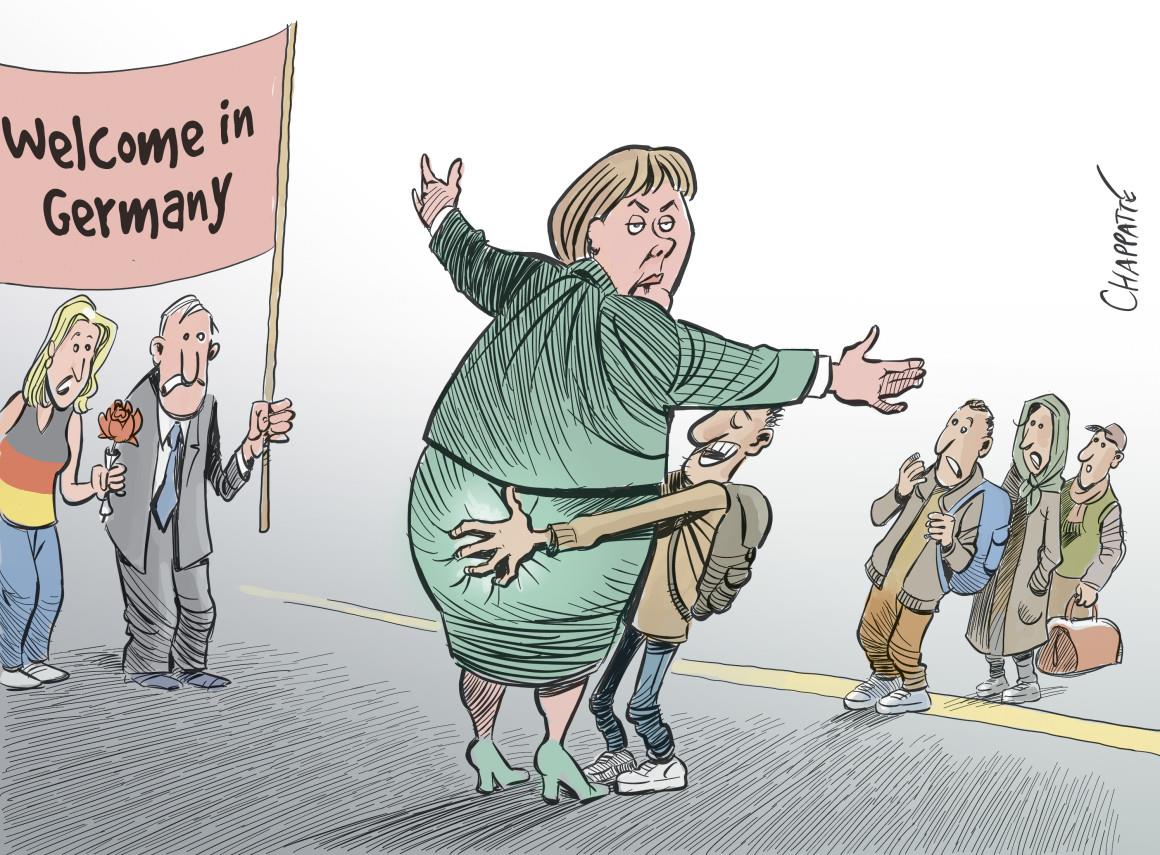
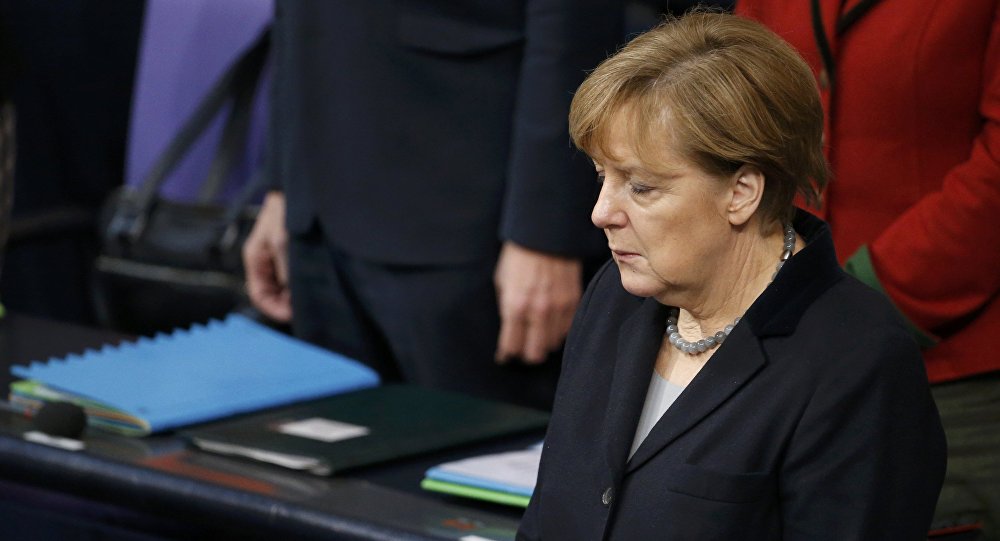
not very flattering !
The USA
U.S. President Barack Obama recent visited to Germany in April 2016 to meet with Chancellor Angela Merkel and other European leaders.
Obama heaped praise on the German leader, telling German newspaper Bild that Merkel was "courageous" in her response to Europe's refugee crisis and he highlighted the importance of the U.S.' relationship with Europe's largest economy.
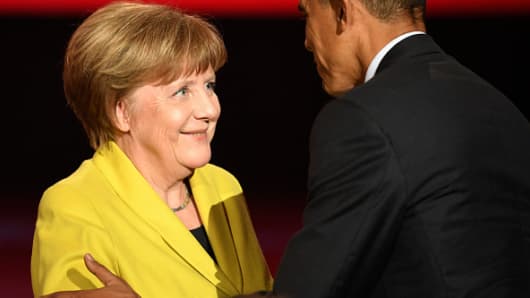
U.S. Barack Obama and German Chancellor Angela Merkel
at the opening evening of theHannover Messe trade fair on
April 24, 2016 in Hanover, Germany.
"Germany remains one of America's closest and strongest allies - an indispensable partner not only for our own security and those of our NATO allies, but also for the security, the prosperity and the dignity of people across the whole world," he told Bild in an interview published on Saturday. "With Chancellor Merkel, Germany has raised the stakes and plays an even bigger role on the international stage," he said, with her work to tackle terrorism, reaching a nuclear deal with Iran and her dominating role in the EU.
Obama's trip to Germany had not gone without a hitch, with thousands of protesters gathering in Hanover to protest a planned but unpopular free trade agreement between the U.S. and EU, known as the Transatlantic Trade and Investment Partnership (TTIP). Critics of TTIP fear it threaten public services, the environment and consumers. While in Germany Obama also met with Merkel, French President Francois Hollande, Italian Prime Minister Matteo Renzi and that time U.K. Prime Minister David Cameron to discuss security and humanitarian concerns over Libya and fragile Syrian peace talks.
The European Union (EU) & The Euro Crisis
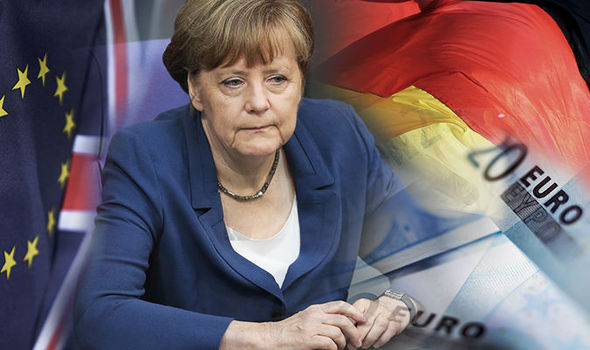
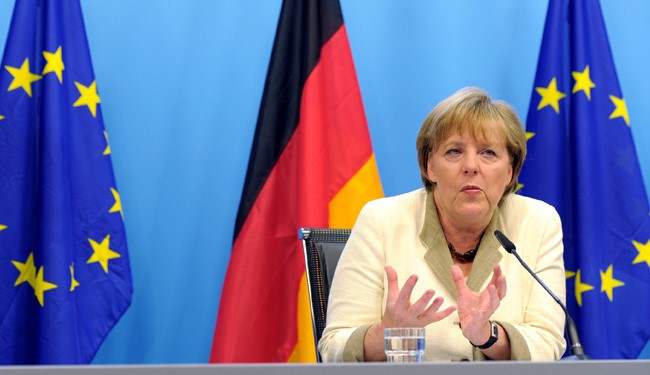
Germany - Europe's most powerful economy - is the biggest paymaster for the EU…and in particular …for eurozone bailouts, so Mrs Merkel has to a great extent driven the agenda during the EU's efforts to restore confidence in the euro.She has become the symbol of fiscal austerity, prescribing sweeping budget cuts and tight supervision by the EU as the cure for southern Europe's chronic debts.
Her message is that the heavily indebted countries - Greece, the Republic of Ireland, Italy, Spain and Portugal - will only become globally competitive by putting their national budgets in order and slashing the money spent on public services.But her role in setting tough conditions for bailing out stricken eurozone "periphery" countries triggered widespread hostility in those EU states. Some protesters in Greece and Spain even likened her to Hitler, suggesting that Germany was again imposing its agenda on the rest of Europe.Critics say her reluctance to resort to bailouts weakened the eurozone's credibility when the debt crisis escalated in 2010. Investors shunned the sovereign debt issued by Greece, Portugal and other ailing eurozone economies, pushing their costs of borrowing to unsustainable levels.Many European politicians believed her insistence on austerity was pushing Europe deeper into recession. Eventually Mrs Merkel decided that fiscal austerity was only part of the solution, and that more fundamental EU reform would be necessary.
The eurozone crisis has tested her talent for consensus-building to the limits - and she never fails to remind Europeans that the crisis is far from over. However,Germany's resilience, low unemployment and healthy export success have boosted her popularity at home, where she is widely seen as a safe pair of hands in tough times.
.jpg)

.gif)
.gif)