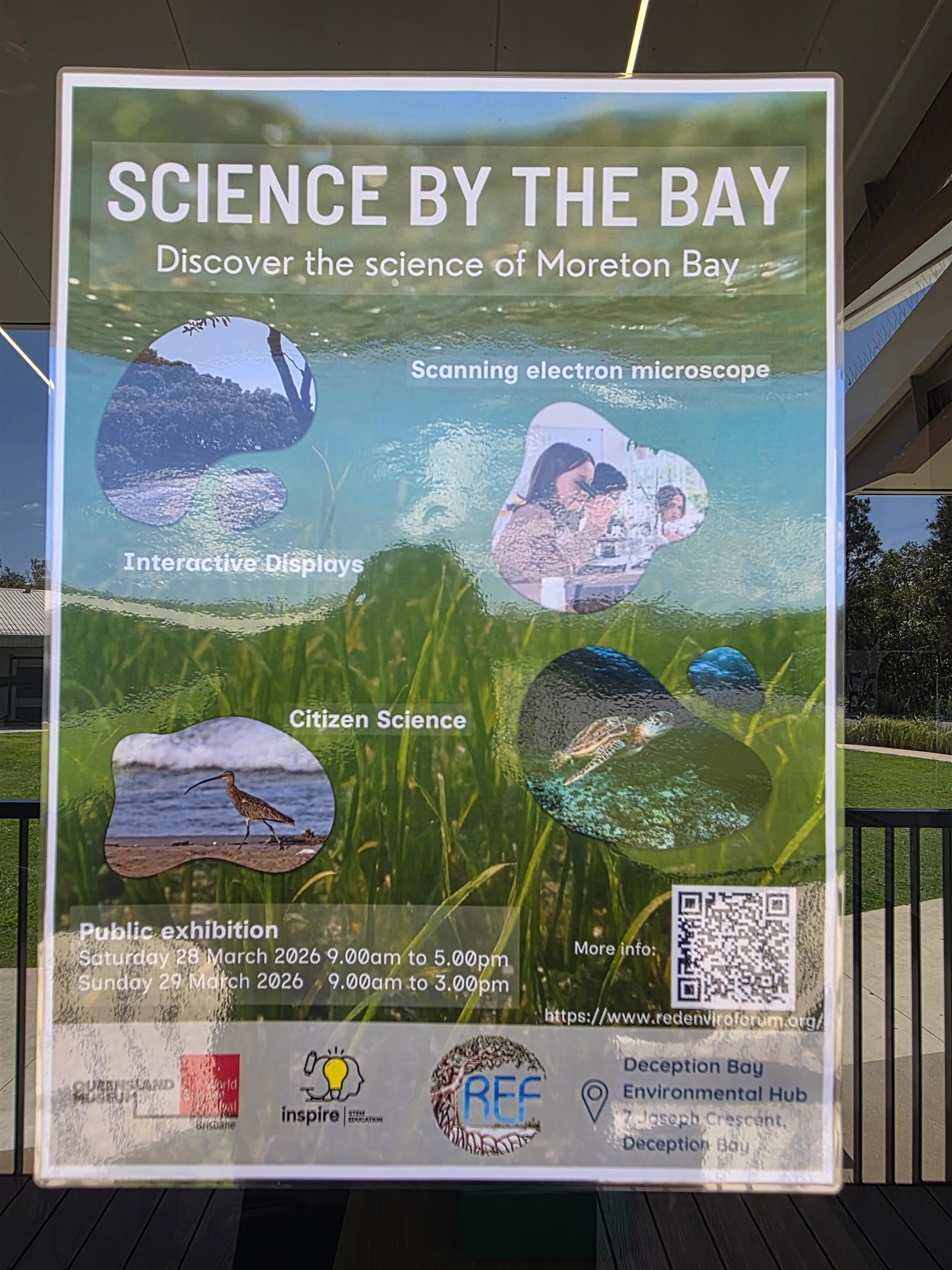
 Moreton Bay is an incredibly important area for wildlife and fishing, supporting a wide range of marine and coastal life while also playing a big role in the culture, livelihoods, and everyday experiences of locals and visitors alike.
Scientific research has been key to helping us better understand and protect this unique coastal environment.
Science by The Bay is happening from Thursday, March 26 to Sunday, March 29.
The first two days are just for high school students, and then it opens up to everyone on the last two days so the general public can come along and enjoy it too.
Science by the Bay brings some of this research to life, showcasing discoveries from across the region all in one place. Visitors can explore interactive displays on marine turtles, shorebirds, invertebrates, shellfish reefs, and wetlands, look at tiny hidden worlds through microscopes, see how water quality is tested, and learn how both researchers and citizen scientists gather and use data to help care for the Bay.
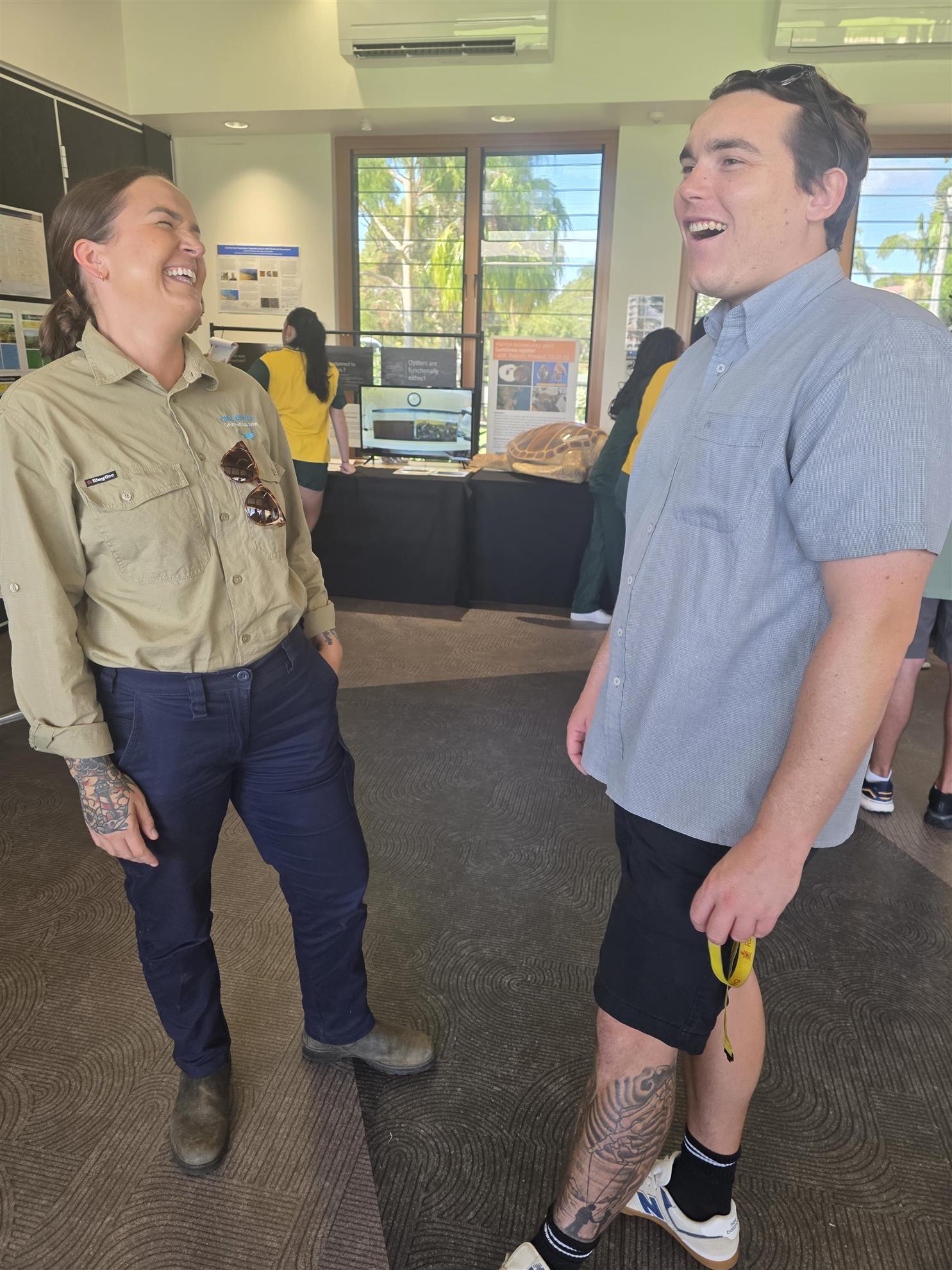 On day one, two Year 11 Biology classes from Clontarf Beach State High School (CBSHS), guided by their science teachers Jasmine Munroe and Dan Hobbs, got stuck into the experience by taking part in all seven displays.
Venue host and REF Environmental President Bob Crudgington, along with display hosts Dan Pagotto and Lou Klatte from the Pine Rivers Catchment Association (PRCA), Susie Bedford from Turtles of Moreton Bay and Peter Row from the Redcliffe Sunrise Environmental Sustainability Rotary Action Group and the Shellfish Reef Restoration Reference Group, shared their knowledge and insights across six of the seven science displays.
Lou Klatte from PRCMA and teacher, Dan Hobbs from CBSHS
Science Displays:
- The Turtles of Moreton Bay
- Freshwater invertebrates and water quality in the Moreton Bay Catchment
- Shellfish restoration in Moreton Bay
- The ecology of the intertidal flats of Moreton Bay
- Monitoring the international migratory birds of Queensland
- Stingray feeding pits and their role in prawn and whiting production in Moreton Bay, and
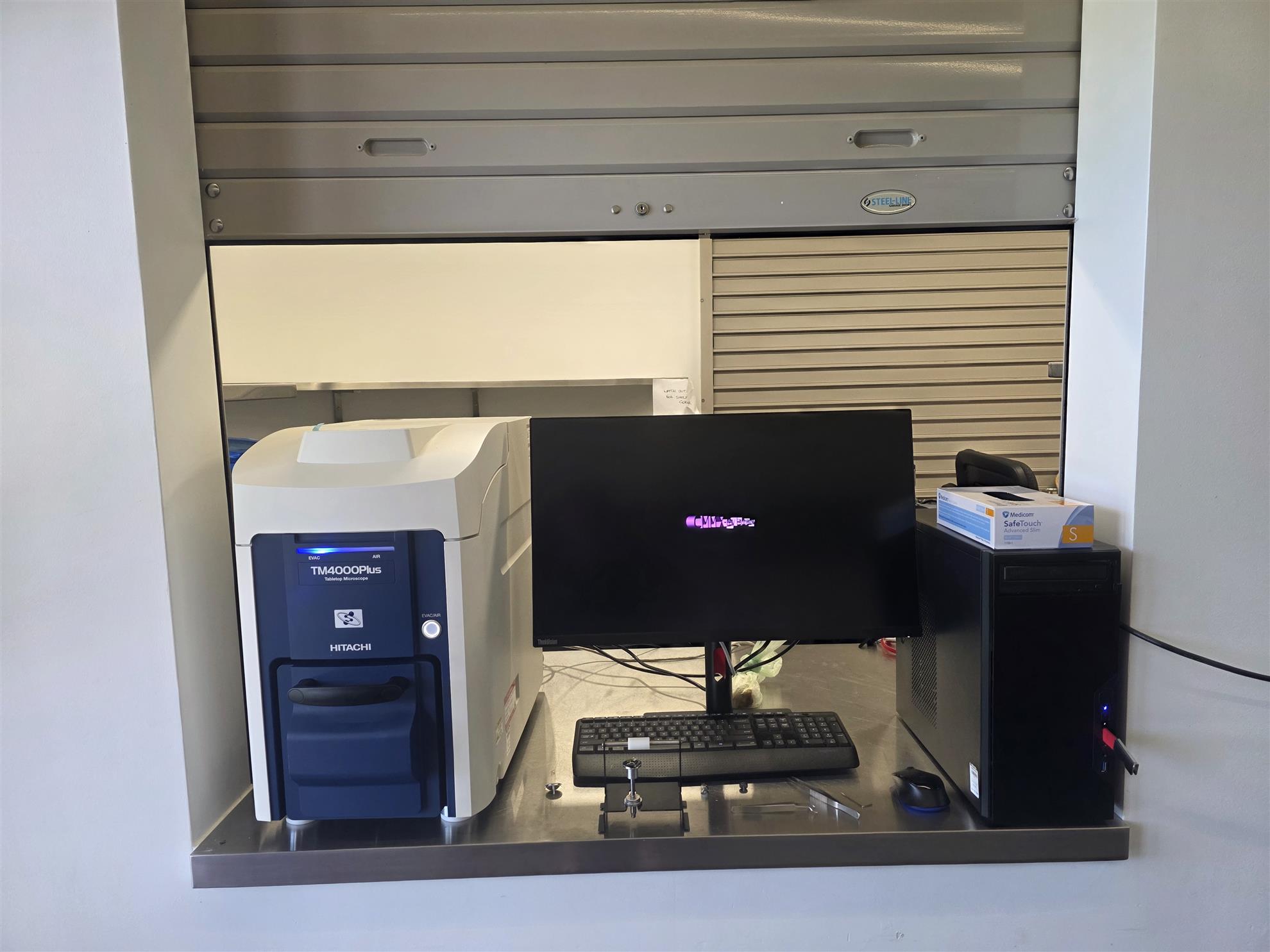
- The science of hidden worlds through a Scanning Electron Microscope
 Jessica Jones, Lily Whelehan
The SEM is a powerful benchtop scanning electron microscope that lets you quickly capture really detailed, high-resolution images and analyse what things are made of, all the way up to 100,000x magnification.
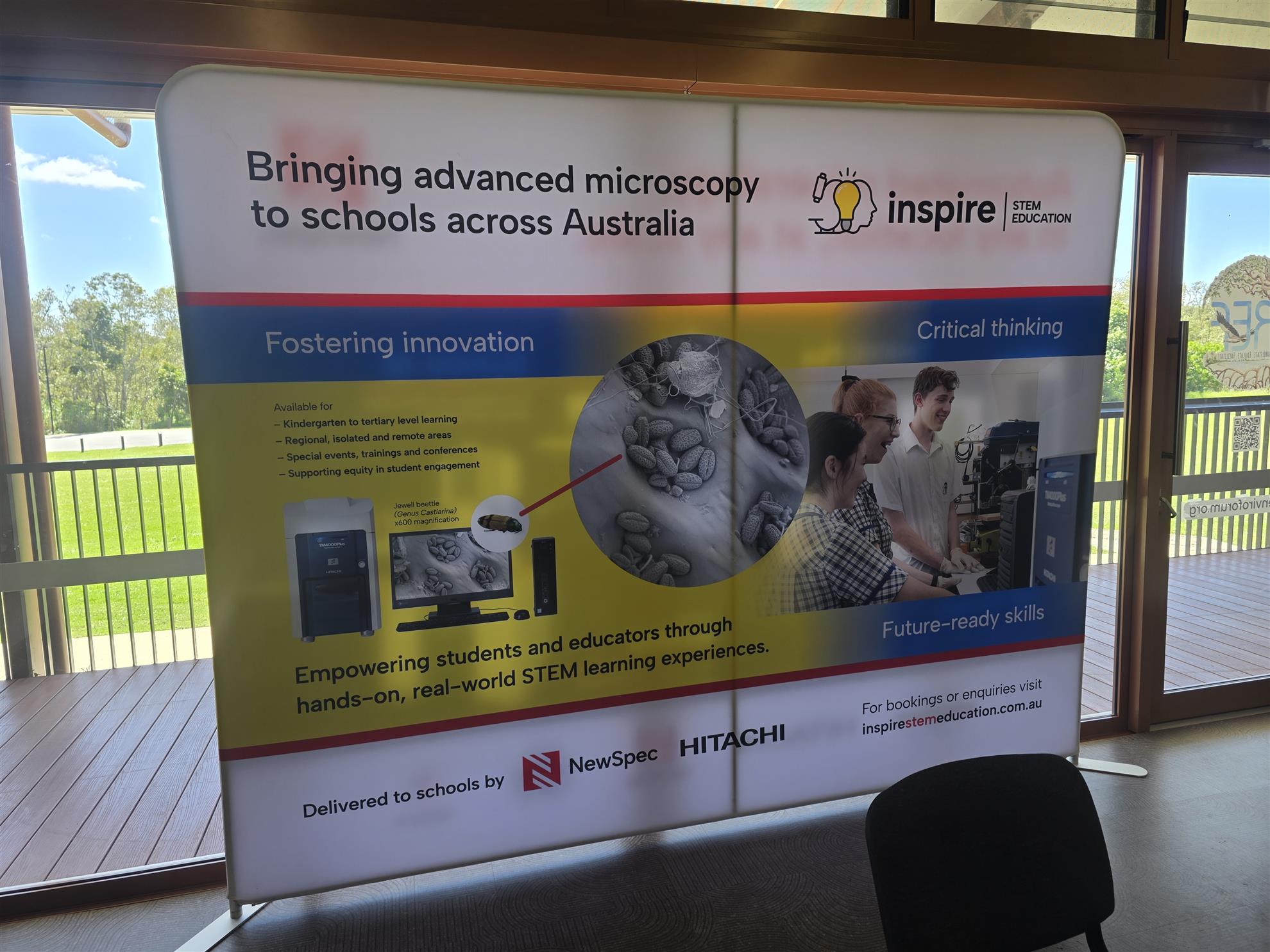
Inspire STEM Education also offers schools the chance to use the SEM for a week at no cost, and they provide teacher training as part of the program. It’s all about hands-on, project-based learning, giving students the chance to learn by doing and making electron microscopy a fun and engaging addition to the classroom.