
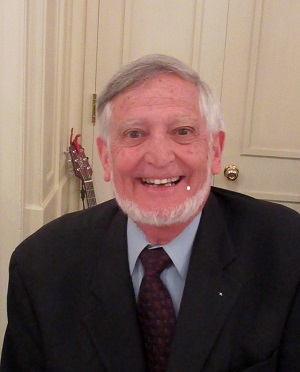
 Our Speaker Ruben Nelson .jpg) Tom Tait Thanks Our Speaker |
| President-Elect Rick Erven introduced our speaker Ruben Nelson who updated us on a presentation he gave to the club in 2008. His earlier presentation, entitled Calgary 2058 - Alternate Pathways, Choices and Futures, provided some insights into what Calgary could look like fifty years into the future. Mr. Nelson introduced us to the idea of a VCUA world from a term first used by the U.S. military to describe extreme conditions encountered in Afghanistan and Iraq. VCUA has since become a widely accepted term in management consulting to recognize that the world has become more volatile, uncertain, complex and ambiguous. He noted that the twenty-first century will not be a replay of the twentieth. On the tenth anniversary of his predictions, the noted futurist, observed that Calgary still has a great twentieth century culture. However, this should not be unexpected as culture always lags behind the times, and people usually "try to build a better version of yesterday to serve us tomorrow". He noted that the first visible sign that Calgary is moving into the twenty-fist century is the iconic Peace Bridge, a focus of division right until it opened, which has now become one of the main symbols of the city. The bridge can be seen as evidence that Calgary is rising to the challenge of being "of" the twenty-first century, rather than to merely living "in" it. Mr. Nelson told us that society needs to reimagine itself for the twenty-first century, and warned that there are currently too few people who are taking on this important work. Referring to the work of the 9/11 commission, he pointed out that the commission's chief finding was that the attacks were not anticipated due to a failure of imagination. He also pointed out that our political leaders, and aspirants to elected office, are not equipped to imagine or articulate a new vision for the twenty-first century. He proposed that Rotary is better placed than most organizations to imagine paths to the future in the face of the overwhelming change that is upon us now. Pointing out that the places become important historically are those that are successful in their own time, he asked us to think about whether Calgary could be a historically significant city given our successes in the late twentieth century. He encouraged the Rotary Club of Calgary to think about how we could make a positive contribution to the important work of imagining the twenty-first century, and suggested two steps that we could take. First, we could invite two speakers who work in this area to address the club each year. Second, we could authorize an ad hoc working group to collaborate with Foresight Canada in imagining the future. After a lively question and answer session, Tom Tait thanked our speaker on behalf of the club. |