Page Stories
In today’s fast-paced digital world, being tech-savvy is no longer optional—it’s a necessity. From navigating social media and interacting with AI to managing daily tasks like banking and grocery shopping online, the digital shift has transformed how we live. While younger generations adapt quickly, many seniors find themselves excluded from this new reality. The irony is stark: what’s marketed as “life improvement” often benefits corporations more than the individuals it claims to serve—especially older adults.
 
Yet, seniors are far from passive observers in society. They hold a wealth of wisdom, experience, and skills that are essential for shaping a more inclusive and resilient future. Older adults contribute meaningfully as workers, volunteers, mentors, and community leaders. Their involvement in policy-making and community design ensures that technologies and services remain human-centered and age-friendly.
The human story remains a profound paradox: extraordinary achievements shadowed by unfathomable despair. Today’s headlines overflow with violence, displacement, and suffering, forcing us to confront an uncomfortable question: Are we still trapped in primitive cycles of supremacy and exploitation, unable to transcend our ancestral instincts?
Uniting for Common Solutions
 
It is easy, nowadays, to see how divergent political views can create divisions among people. Just open any social media platform, and you could see how antagonistic and radicalized certain views are. However, instead of driving individuals apart, these differences should be harnessed to foster appreciation and collective problem-solving.
 
Diverse political perspectives are an integral part of a healthy society. They represent the varied experiences, beliefs, and values of different groups, contributing to a more comprehensive understanding of complex issues. Embracing this diversity encourages open dialogue and mutual respect, enabling us to see problems from multiple angles and devise more effective solutions. Having Clubs in Rotary where vocations, gender, age, backgrounds, and often nationalities are different contribute to effective problem solving.
 
When individuals with opposing or different views come together, their unique contributions can lead to innovative solutions to common problems. Instead of focusing on what divides us, we should recognize the potential for diverse viewpoints to complement each other. This collaborative approach ensures that no single perspective dominates the discussion, allowing for a balanced and inclusive resolution.

 
In 2025 my Rotary Club will make environmental awareness and personal choices a major focus of our contribution to the climate and the planet.

Let’s be practical and realistic here. No matter how many times me and my club members prefer public transport over cars, regulating the temperature of the air conditioners, eating vegetarian, etc. the reduction in carbon emission we alone will achieve will be negligeable. 
 
Yet, this is not the point.
"Moving is always a challenging experience, whether it's your home or office. It's not just about relocating furniture and equipment; it's about leaving behind memories and an entire ecosystem. You part ways with neighbors, favorite shops, and restaurants, and even the familiar routes you used to take. 
 
Everything changes with a new address.
You may remember that I concluded Part 1 of this contribution by stating that:
 
“We must support appropriate legislation that protects our personal information, that protects minors from inappropriate content and adults from scams and addiction.”
 
Unfortunately, corporations, as noted by The Centre for Human Technologies (www.humantech.com) are caught in an arms race to deploy their new technologies and get market dominance as fast as possible. They are releasing and incorporating in their platforms new algorithms not tested for safety.
In turn, the narratives they present are shaped to be more about innovation and less about potential threats. AI and social media companies are quickly deploying their work to the public instead of testing it safely over time. They are in a race for market dominance. 
The attention economy is made up of anything trying to capture our limited attention. Because companies can profit from our attention, there is intense competition within the attention economy.
Talking about the environment is deceptive and reductive. We shall now talk of survival, the survival of our species. The President of my Club, Ambaree Majummder has a “green” agenda thus we will have many opportunities to talk about what we could do to postpone the dramatic consequences that years of greed and irresponsible behavior have caused to the planet but ultimately the branch on which we are seated on have been irreversibly compromised and we will fall! July 2023 has been the worst month ever recorded in terms of climate upheaval. 

Would we die from the fall? This will depend on how prepared we are, which measure of protection we have put in place and on our attitude. Let frame these statements from a Rotarian perspective.
Yes, times are uncertain, established models crumble, bad news overwhelm the good ones, and hope is battered. Nothing new, thou, we just do not remember, or we didn't witness similar historical precedents.

 
The crypto currencies are collapsing after a “bubble”, so did the Dutch tulip bulb market during the early to mid-1600s, when speculation drove the value of tulip bulbs to extremes. At the market’s peak, the rarest tulip bulbs traded for as much as six times the average person’s annual salary. It became one of the most famous market bubbles and crashes of all time. 
Over the last 100 years prosperity, as in affordability of “things” has increased enormously as consequence of technological progress, cheap energy, and productivity.
 
This is good but it is not enough, and it came at a cost that we are still coming to terms with. Let’s proceed in order.
 
The poverty line is an arbitrary measure of poverty established by the World Bank to indicate what is required for a person to meet his/her basic needs. Nowadays the poverty line stands at $2.15 per day and, according to the 2023 release, 1.1 billion out of 6.1 billion people live in acute multidimensional poverty across 110 countries. Sub-Saharan Africa (534 million) and South Asia (389 million) are home to approximately five out of every six poor people.
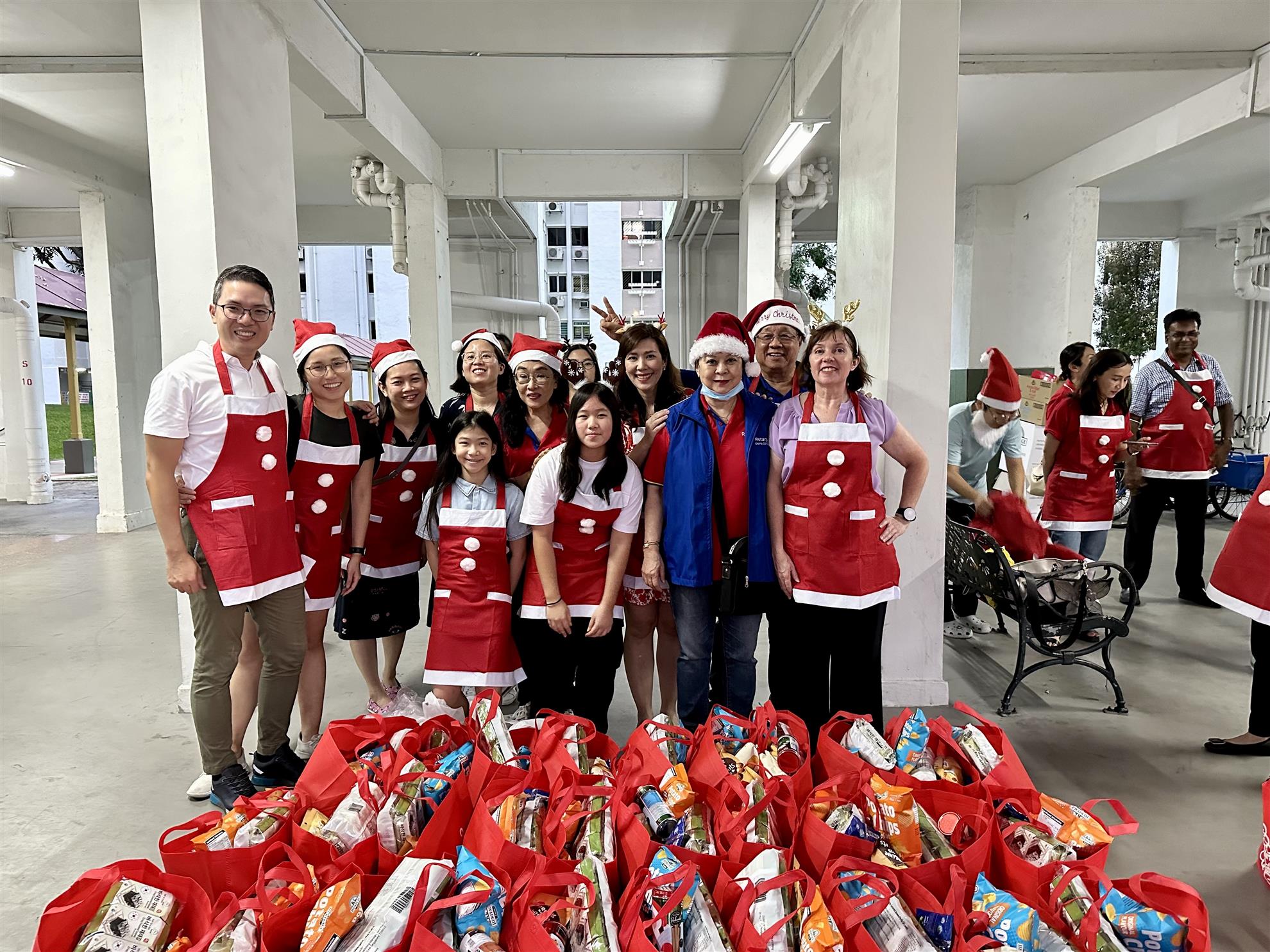
The festive season is over, and charity was, once again brought in the limelight.
 
How convenient to be charitable once a year and feeling good with it. On no, don’t get me wrong, better to be good once a year than never at all. The problem is that, unless in very particular instances and circumstances is not charity that saves the day, but empowerment.
Why is it so important?
We all have friends. School and childhood friends, friends who serve with us in the army or in any other organizations, and friends at work. The level of confidence, trust and sharing may be different as each relationship was formed and grew under different circumstances. Yet, these are our friends, a group distinct from all the people we meet daily.

We are getting old, our body first and then, often much later our mind.
 
Nothing wrong with it as it is a natural and necessary process of substitution, the old goes to make room for the new. In fact, once we accept the inevitability of this process, we find new ways to use our age as a powerful tool to contribute in our clubs and in the community. As senior Rotarians, we have seen it all, we have seen what works and what doesn’t, and why.

 
Far from telling others how to run their lives, we can share how we ran ours, the challenges we met with and how we overcame them. We are, obviously, all different because of different circumstances, place of birth, parents, friends, etc. yet we all in our own way went through emotions like love, anger, desertion or empathy. Most importantly we learned to deal with these emotions and we understood how they impacted and affected our decisions.

Imagine…you start asking yourself if you actually met your daughter or you imagined it, you cannot remember whether your house is the third on the left or at the end of the road, and why you went outside in the wrong attire.

Why is your son telling you what to do? You jolly know what to do and how to do it, you have done it all your life. You don’t need to be told, or not?