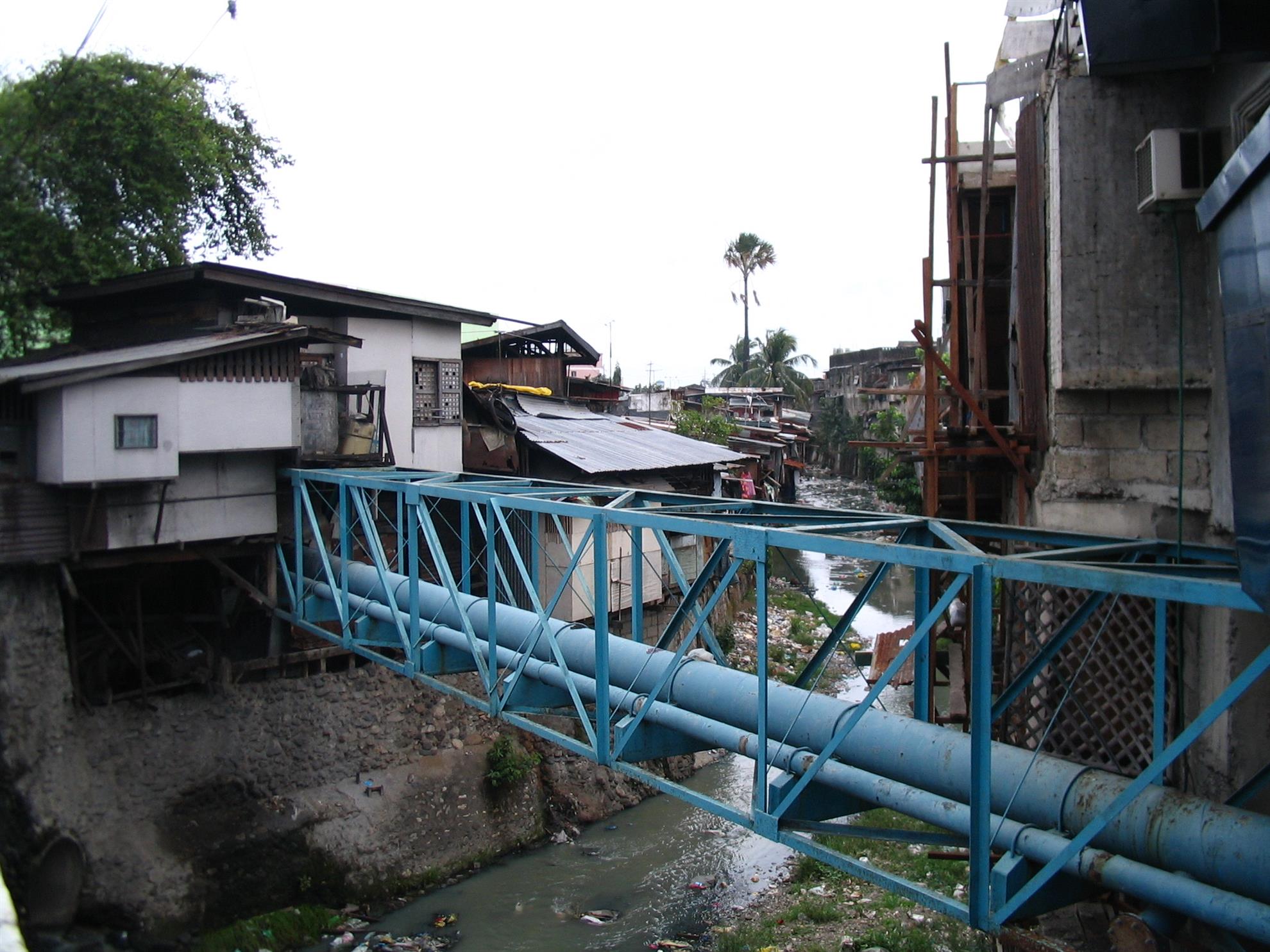
 Over the last 100 years prosperity, as in affordability of “things” has increased enormously as consequence of technological progress, cheap energy, and productivity.
This is good but it is not enough, and it came at a cost that we are still coming to terms with. Let’s proceed in order.
The poverty line is an arbitrary measure of poverty established by the World Bank to indicate what is required for a person to meet his/her basic needs. Nowadays the poverty line stands at $2.15 per day and, according to the 2023 release, 1.1 billion out of 6.1 billion people live in acute multidimensional poverty across 110 countries. Sub-Saharan Africa (534 million) and South Asia (389 million) are home to approximately five out of every six poor people.
There are too many poor people around the world! To end extreme poverty in all its forms everywhere cannot be done by charity alone, it must be done by empowerment. Empowerment is the only sustainable solution. Let’s see first which are the main (not the only) causes of poverty and how Rotarians can help.
Inequality
When one group has fewer rights and resources based on an aspect of their identity compared to others in a community, that's inequality. This marginalization could be based on caste, ability, age, health, social status or — most common and most pervasive — gender. When people are given fewer rights or assets based on their ethnicity or tribal affiliation, that means they have fewer opportunities to move ahead in life.
To address inequality, we must consider all groups in a community. What's more, to build equality we must consider equality of results, as opposed to equality of resources.
Rotarians – Our clubs shall be all inclusive in race, gender, social status, professions, and age.
Conflict
At the top of the list of risks for poverty is conflict. Large-scale, protracted crises, such as in Syria, in Gaza or in Sudan can grind an otherwise thriving economy to a halt. As the fighting continues millions have fled their homes, often with nothing but their clothes on their backs. Public infrastructure has been destroyed. The nature of conflict has changed in the last few decades, and violence has become more localized. This has a huge impact on communities, especially those that were already struggling. Fighting can stretch out for years, if not decades, and leave families in a permanent state of alert. This makes it hard to plan for the long-term around family businesses, farms, or education.
Rotarians
Life is more important than rights, always. There are no rights when we are dead. We shall avoid conflicts, antagonizing people with different views, we shall be patient, respectful and remove violence in our words and interactions.
Hunger, malnutrition, and stunting
If a person doesn’t get enough food, they’ll lack the strength and energy needed to work. Or their immune system will weaken from malnutrition and leave them more susceptible to illness that prevents them from getting to work.
This can lead to a vicious cycle, especially for children. From womb to world, the first 1,000 days of a child’s life are key to ensuring their future health. For children born into low-income families, health is also a key asset to their breaking the cycle of poverty. However, if a mother is malnourished during pregnancy, that can be passed on to her children thus the costs of malnutrition may be felt over a lifetime.
Rotarians
Here our intervention shall be two-pronged: addressing the cause, and this can be done by partnering Clubs in poor countries or with good “impact” in these countries and remedying the effects as we did in the past with interventions on eye cataracts, or The River Doctors project in Myanmar.
Poor healthcare systems
The effects of hunger, extreme poverty and poor health go together. Easily preventable and treatable illnesses like malaria, diarrhea, and respiratory infections can be fatal. Especially for young children.
When people must travel far distances to clinics or pay for medicine, it drains already vulnerable households of money and assets. This can tip a family from poverty into extreme poverty. For women in particular, pregnancy and childbirth can be a death sentence. Maternal health is often one of the most overlooked areas of healthcare in countries that are still built around patriarchal structures. New mothers and mothers-to-be are often barred from seeking care without their father's or husband's permission. Adolescent girls who are pregnant (especially out of wedlock) face even greater inequities and discrimination.
Rotarians
We are fortunate living in Singapore, a country with an excellent healthcare system thus we can only work together with sister clubs to assist people in isolated communities and/or during emergencies by donating medicines and facilitating access to emergency clinics.
The global effort made by Rotarians to eradicate polio was in this direction. Our small contribution to the Dialysis Centre in Pontian (Malaysia) was another project towards this goal.
Climate change
Climate change causes poverty, working as an interdependent link between not only extreme poverty but also many of the other causes on this list — including hunger, conflict, inequality, and a lack of education.
Many of the world’s poorest populations rely on farming or hunting and gathering to eat and earn a living. They often have only enough food and assets to last through the next season, and not enough reserves to fall back on in the event of a poor harvest. So, when climate change or natural disasters (including the widespread droughts caused by El Niño) leave millions of people without food, it pushes them further into poverty, and can make recovery even more difficult.
Rotarians
The causes for climate change are many and often complex. Some are inherently associated with the nature of cosmic events and others are contributed by human activities. Our first duty is to increase the resilience and robustness of farming and husbandry techniques adopted in poor countries to increase both yield and value of their produce. This will require more energy in these countries, and cheap, reliable energy is still carbon based. We can however reduce our footprint in rich and developed countries by doing 3 simple things: reduce waste, extend the life of the items we use by repairing them rather that disposing them (this will also increase employment), and by modifying our eating habits to a more sustainable practices, for example by choosing products in season and grown or produces as close as possible to where they will be consumed.
Lack of education
Not every person without an education is living in extreme poverty. But most adults living in extreme poverty did not receive a quality education. And, if they have children, they're likely passing that on to them. There are many barriers to education around the world, including a lack of money for uniforms and books or a cultural bias against girls’ education.
But education is often referred to as the great equalizer. That's because it can open the door to jobs and other resources and skills that a family needs to not just survive but thrive. According to UNESCO, if all students in low-income countries had just basic reading and writing skills (nothing else), an estimated 171 million people could escape extreme poverty. If all adults completed secondary education, we could cut the global poverty rate by more than half.
Rotarians
As we did in the past we can donate PC, tablets, handphones and books to student living in poor and remote communities.
Poor public works and infrastructure
A lack of infrastructure — from roads, bridges, and wells to cables for light, cellphones, and internet — can isolate communities living in rural areas. Living off the grid often means living without the ability to go to school, work, or the market to buy and sell goods. Traveling further distances to access basic services not only takes time, but it also costs money, keeping families in poverty. Isolation limits opportunity. Without opportunity, many find it difficult, if not impossible, to escape extreme poverty.
Rotarians
As we did in the past we can support and contribute to sanitation projects, low-cost housing, mushroom farming, etc. together with our sister clubs.
More than ever, when we are pushed in isolation, in eco-chambers by social media, divided by deep fakes, the more Rotary matters. We are a community; we live in communities; we help each other and all those who need help.
I wish to acknowledge the material published by Concern Worldwide that I used for this article.