
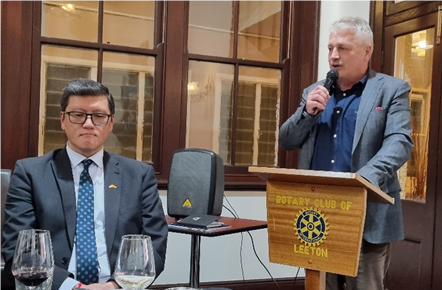
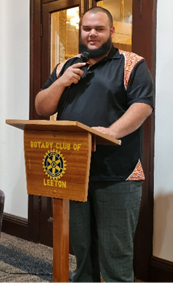
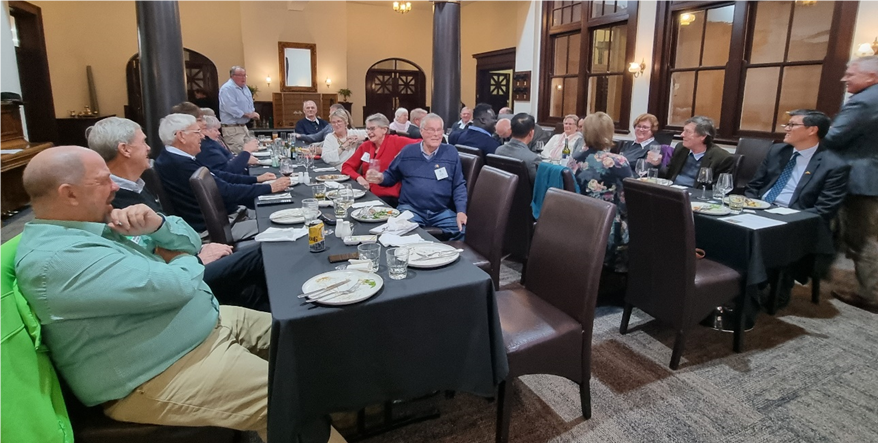
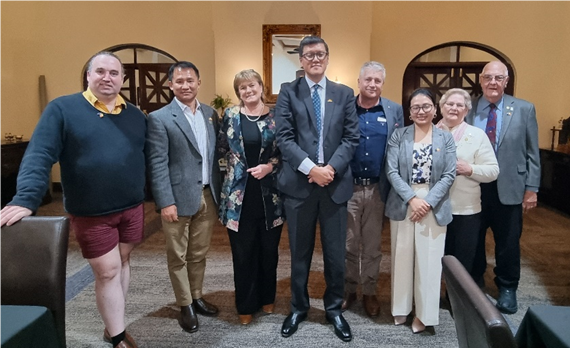
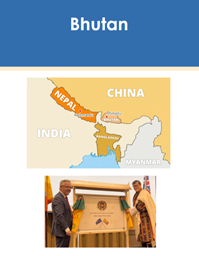
We were privileged last week to have some very special guests share a meal with us including His Excellency the Bhutanese Ambassador, Sonam Tobgay; Minister Counsellor, Jigme Tenzin and First Secretary, Metho Dema. A bit closer to home our guests included Elijah Ingram, past youth exchange student & member of Wiradjuri FNP, Jackie Kruger, Leeton Shire GM, Maryanne Lattimore, Lyn Brown, Carol Chiswell, Peggy Taylor, Una Williams, Liz Taylor, Mary Errey and Cathy McMahon.
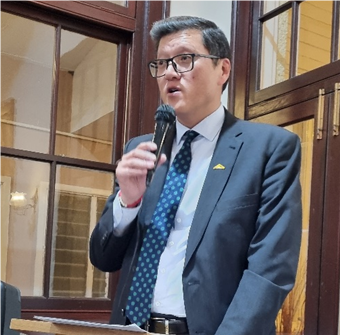
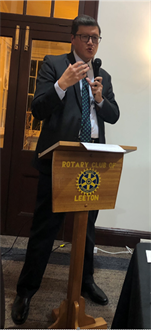
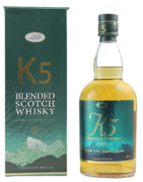
Our guest speaker His Excellency the Bhutanese Ambassador, Sonam Tobgay informed us why Bhutan was the Happiest Country in the World. Our Bhutan guests gave attendees a small token gift as well as shouting us to a taste of Bhutan Whiskey K5, very smooth drop, a Bhutanese recipe assembled by distillers from The Gelephu Distillery, under the Bhutanese Army Welfare Project.
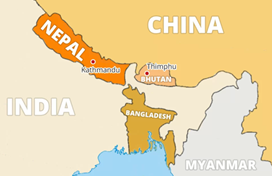
Bhutan officially the Kingdom of Bhutan is a landlocked country in South Asia. It is situated in the Eastern Himalayas, between China in the north and India in the south. A mountainous country, Bhutan is known locally as "Druk Yul" or "Land of the Thunder Dragon", a name reflecting the cultural heritage of the country. The country has a population of over 727,145 and territory of 38,394 square kilometres. Bhutan is a constitutional monarchy with a king (Druk Gyalpo) as the head of state and a prime minister as the head of government. Vajrayana Buddhism is the state religion and the Je Khenpo is the head of state religion.
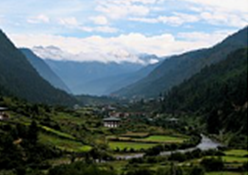
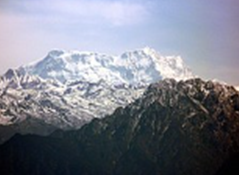
The subalpine Himalayan mountains in the north rise from the country's lush subtropical plains in the south. In the Bhutanese Himalayas, there are peaks higher than 7,000 metres (23,000 ft) above sea level. Gangkhar Puensum is Bhutan's highest peak and is the highest unclimbed mountain in the world. The wildlife of Bhutan is notable for its diversity including the Himalayan takin and golden langur. The capital and largest city is Thimphu, holding close to 1/7th of the population.
Bhutan and neighbouring Tibet experienced the spread of Buddhism which originated in the Indian subcontinent during the lifetime of Gautama Buddha. In the first millennium, the Vajrayana school of Buddhism spread to Bhutan from the southern Pala Empire of Bengal.
During the 16th century, Ngawang Namgyal unified the valleys of Bhutan into a single state. Namgyal defeated three Tibetan invasions, subjugated rival religious schools, codified the Tsa Yig legal system, and established a government of theocratic and civil administrators. Namgyal became the first Zhabdrung Rinpoche and his successors acted as the spiritual leaders of Bhutan like the Dalai Lama in Tibet.
During the 17th century, Bhutan controlled large parts of northeast India, Sikkim and Nepal; it also wielded significant influence in Cooch Behar State. Bhutan ceded the Bengal Duars to British India during the Bhutan War in the 19th century. The House of Wangchuck emerged as the monarchy and pursued closer ties with the British in the subcontinent. In 1910, a treaty guaranteed British advice in foreign policy in exchange for internal autonomy in Bhutan. The arrangement continued under a new treaty with India in 1949 (signed at Darjeeling) in which both countries recognised each other's sovereignty. Bhutan joined the United Nations in 1971. It has since expanded relations with 55 countries. While dependent on the Indian military, Bhutan maintains its own military units.
The 2008 Constitution established a parliamentary government with an elected National Assembly and a National Council.
In the 18th century, the Bhutanese invaded and occupied the kingdom of Koch Bihar. In 1772, the Maharaja of Koch Bihar appealed to the British East India Company which assisted by ousting the Bhutanese and later attacking Bhutan itself in 1774. A peace treaty was signed in which Bhutan agreed to retreat to its pre-1730 borders. However, the peace was tenuous, and border skirmishes with the British were to continue for the next hundred years. The skirmishes eventually led to the Duar War (1864–65), a confrontation for control of the Bengal Duars. After Bhutan lost the war, the Treaty of Sinchula was signed between British India and Bhutan. As part of the war reparations, the Duars were ceded to the United Kingdom in exchange for a rent of ₹50,000. The treaty ended all hostilities between British India and Bhutan.
During the 1870s, power struggles between the rival valleys of Paro and Tongsa led to civil war in Bhutan, eventually leading to the ascendancy of Ugyen Wangchuck, the penlop (governor) of Trongsa. From his power base in central Bhutan, Ugyen Wangchuck defeated his political enemies and united the country following several civil wars and rebellions during 1882–85.
In 1907, an epochal year for the country, Ugyen Wangchuck was unanimously chosen as the hereditary king of the country by the Lhengye Tshog of leading Buddhist monks, government officials, and heads of important families, with the firm petition made by Gongzim Ugyen Dorji. The British government promptly recognized the new monarchy, and in 1910, Bhutan signed the Treaty of Punakha, a subsidiary alliance which gave the British control of Bhutan's foreign affairs and meant that Bhutan was treated as an Indian princely state. This had little real effect, given Bhutan's historical reticence, and also did not appear to affect Bhutan's traditional relations with Tibet. After the new Union of India gained independence from the United Kingdom on 15 August 1947, Bhutan became one of the first countries to recognise India's independence. On 8 August 1949, a treaty similar to that of 1910, in which Britain had gained power over Bhutan's foreign relations, was signed with the newly independent India.
In 1953, King Jigme Dorji Wangchuck established the country's legislature—a 130-member National Assembly—to promote a more democratic form of governance. In 1965, he set up a Royal Advisory Council, and in 1968 he formed a Cabinet. In 1971, Bhutan was admitted to the United Nations, having held observer status for three years. In July 1972, Jigme Singye Wangchuck ascended to the throne at the age of sixteen after the death of his father, Dorji Wangchuck.
Bhutan's political system has recently changed from an absolute monarchy to a constitutional monarchy. King Jigme Singye Wangchuck transferred most of his administrative powers to the Council of Cabinet Ministers and allowed for impeachment of the King by a two-thirds majority of the National Assembly.
In 1999, the government lifted a ban on television and internet, making Bhutan one of the last countries to introduce television. In his speech, the King said that television was a critical step to the modernisation of Bhutan as well as a major contributor to the country's gross national happiness, but warned that the "misuse" of this new technology could erode traditional Bhutanese values.
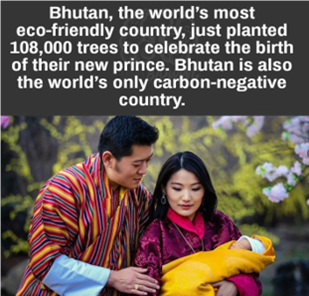
A new constitution was presented in early 2005. In December 2005, Wangchuck announced that he would abdicate the throne in his son's favour in 2008. On 9 December 2006, he announced that he would be abdicating immediately. This was followed by the first national parliamentary elections in December 2007 and March 2008. On 6 November 2008, 28-year-old Jigme Khesar Namgyel Wangchuck was crowned king.
In July 2021 during the COVID-19 pandemic, Bhutan became the first world-leading nation in its role of vaccinating 470,000 out of 770,000 people with a two-dose shot of AstraZeneca vaccines.
********************************
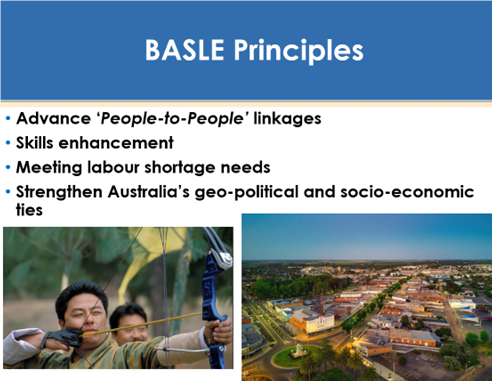
BASLE – Leeton Pilot
Bhutan-Australia Skills and Leadership Exchange (BASLE)

********************************
Free Training Opportunity
There is an opportunity for individuals to attend a free course including First Aid, CPR, RSA or RSG course. The Western Riverina Community College (WRCC) has been funded to deliver a certain number of courses for free and has to get them completed by the end of financial year.
If interested in signing up or for additional information please contact Ron Arel, WRCC Leeton Campus Manager on 02 6953 3777 or mobile 0456 444 574 or alternatively email Ron at r.arel@wrcc.nsw.edu.au
********************************
Graeme’s Something to Smile About
“Gross National Happiness is more important than Gross Domestic Product.”
Butan's King - Jigme Singye Wangchuck
********************************
Carmel’s Brain Teaser
What was the biggest island in the world before the discovery of Australia by Captain Cook?
********************************
Director’s Roundup
- Rotary Club of Leeton Board Meeting – commences 7.00pm Tuesday 16 May 2023, SunRice Koshi Room.
- “Stories of Resilience” – Grant funding event to be held in conjunction with Leeton Business Chamber. Wednesday 31 May 2023, Historic Hydro, 7.15-9.00am. Panel discussion, all Rotarians welcome.
- Yanco Ag Institute 50yr Reunion – Club has been invited to cater for 50yr reunion on 27 August 2023.
********************************
Sergeant’s Session
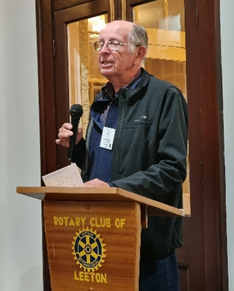
Well I don’t know if it has ever happened before, but last week we had a couple of members putting up their hand for Sergeant. In the end Laurie yielded for this week and Andrew taking the honour as sergeant for the night. Well Andrew as always a job very well done, who says fines need to be current, they can date back a few weeks if they haven’t already been used. Answer: Australia was always the biggest island in the world, even before it was discovered.
********************************
Silly Joke / Meme

********************************
Carmel’s Optical Illusion Photo
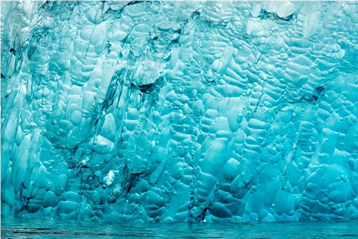
Blue clay?
Or a big, cold reason to turn your boat around? This stunning blue piece of Arctic ice has broken off a glacier and drifted down into the North Sea, off the coast of England to pose for this optical illusion photo. With up to 90 percent of an iceberg’s mass hidden underwater, it’s best to take a wide berth. One of the largest bergs ever reported was more than 12,000 square miles—that’s larger than Belgium!
********************************
Graeme’s Quote of the Week
********************************