

Vocational Visit: Rice Breeding Australia
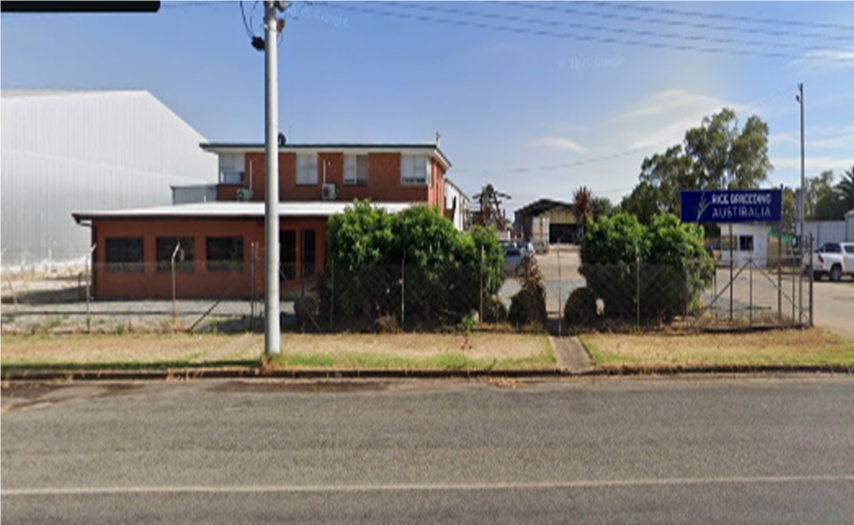
We were welcomed to the Rice Breeding Australia (RBA) Head office by Scientist Dr. Chris Proud and Technical Officers, Esther van Meeuwen and Kylie Elliott. Dr Proud described the structure of RBA.
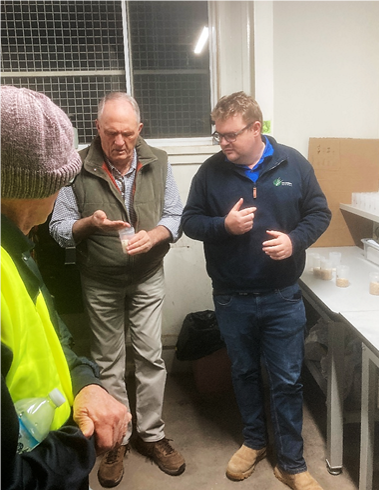
Rice Breeding Australia is a private rice breeding company with three partners – SunRice, Ricegrowers’ Association of Australia and AgriFutures. Agrifutures is the semi-Government entity that manages grower levy funds and the Government grant funds.
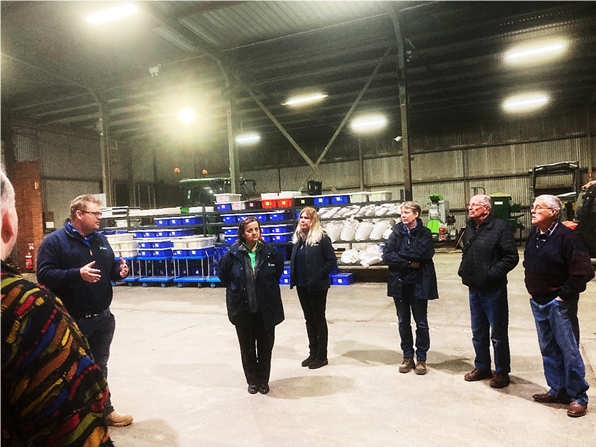
After some preliminary discussion, we were taken into the cavernous shed attached to the office. Here we were introduced to some of the intricacies of rice breeding.
On a previous visit to the glasshouse, we were introduced to crossing – where rice varieties are chosen as parents and hybridised to create enormous variability. The science of rice breeding is to select amongst this variability over 6 – 8 generations to produce better varieties.
Some important selection criteria are yield, quality, cold and heat tolerance and, now, the ability to grow without standing water. In our environment, water provides protection from cold and heat.
Dr Proud took us through some of the steps in selecting the best lines and preparing for seeding. Thes included:
- Milling Quality: Lines are harvested from trials and samples put through a test milling machine. This first removes the hulls (about 20%) to produce brown rice. It then uses abrasion to take off the bran (about 10%) to produce white rice. The white rice is then separated into whole and broken grain via an indent cylinder. The proportion of whole grain is an important factor in determining the quality of the rice line.
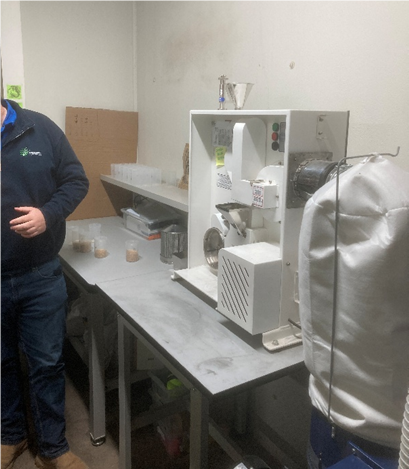
- Other Aspects of Quality. Other aspects determining the quality of rice include the amount of chalky grain, the texture of cooked rice, the temperature that the rice gelatinises on cooking and the taste. Cooked rice texture is determined in an instrument called RVA (Rapid Visco-Analyser).
- Grain Cleaning. Once decisions are made about the seed to sow in the next generation, the paddy rice must be cleaned in preparation for sowing. This is done using a range of machinery – depending on the amount of seed available.
- Seed Preparation. Once the seed is cleaned, it is counted into lots of 1000 seeds for planting.
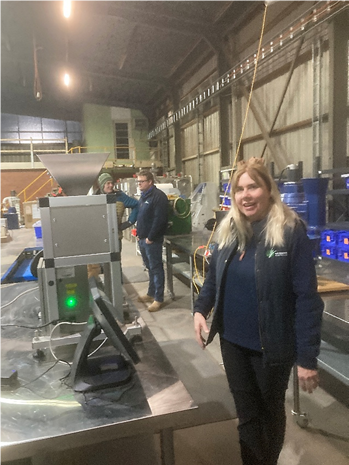
- Field Analysis. Trials are sown in the field over a number of sites using a cone seeder, and harvested for yield testing with a special harvester that completely cleans itself between samples.
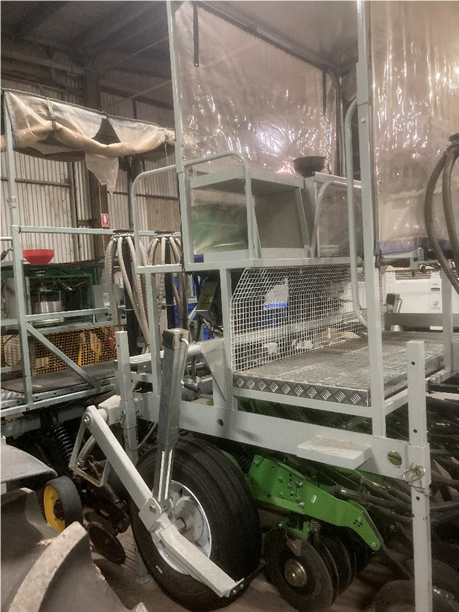
- Outside Testing. Specialised tests are conducted by other groups. These include chemical tests of amylose content, gelatinization temperature and, particularly, special molecular markers to indicate characteristics such as grain quality, cold tolerance, resistance to water stress and disease resistance.
There was much discussion following the inspections and this was followed by pizza. Thank you to Dr. Proud, Kylie, Esther and Carmel for an informative visit (and Matt for the pizzas).
******************************
Brain Teaser
What is 3/7 chicken, 2/3 cat and 2/4 goat?
*******************************
Market Day
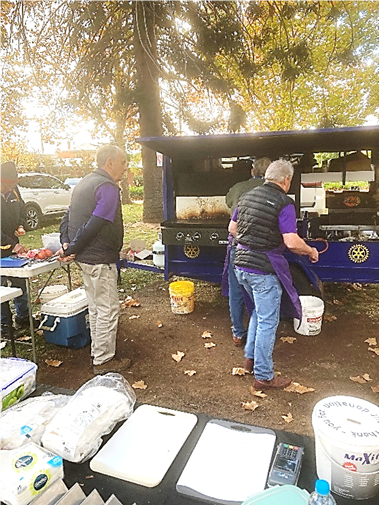
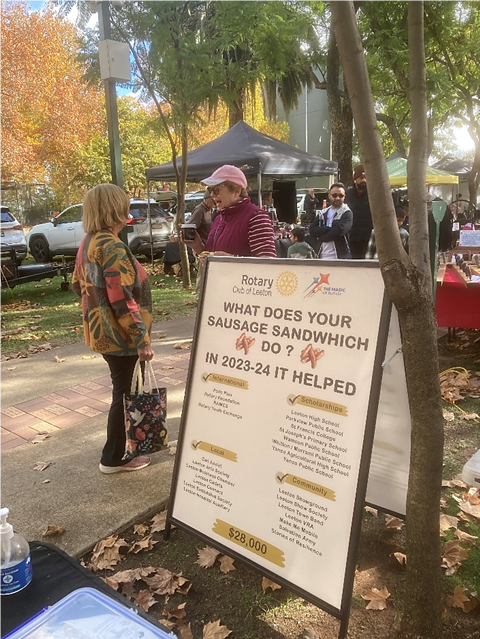
It was a cold and somewhat blustery day on Saturday for the Market Day. Despite the weather, there was plenty of support from Rotarians. There were a steady supply of customers on the day, although stall and visitor numbers were down.
*******************************
Seattle Orchestra
A number of years ago, the Seattle Symphony was doing Beethoven's Ninth under the baton of Milton Katims.
At this point, you must understand two things:
- There's a long segment in this symphony where the bass violins don't have a thing to do. Not a single note for page after page.
- There used to be a tavern called Dez's 400, right across the street from the Seattle Opera House, rather favoured by local musicians.
It had been decided that during this performance, after the bass players had played their parts in the opening of the Ninth, they were to quietly lay down their instruments and leave the stage rather than sit on their stools looking and feeling dumb for twenty minutes.
Once they got backstage, someone suggested that they trot across the street and quaff a few brews. After they had downed the first couple rounds, one said, "Shouldn't we be getting back? It'd be awfully embarrassing if we were late."
Another, presumably the one who suggested this excursion in the first place, replied, "Oh, I anticipated we could use a little more time, so I tied a string around the last pages of the conductor's score. When he gets down to there, Milton's going to have to slow the tempo way down while he waves the baton with one hand and fumbles with the string with the other."
So they had another round and finally returned to the Opera House, a little tipsy by now. However, as they came back on stage, one look at their conductor's face told them they were in serious trouble. Katims was furious! And why not? After all...
It was the bottom of the Ninth, the score was tied, and the basses were loaded.
********************************
Editor’s Note
I apologise for last week’s brain teaser. If you remember it was:
“Add me to myself and multiply by 4.
Divide me by 8 and you will have me once more.
What number am I?”
I either copied it wrong or it is a red herring because it works for any number (thanks Bruer and Len):
i.e. n+ n = 2n
then: 2n * 4 /8 =n
The answer this week is Chicago (I hope)